
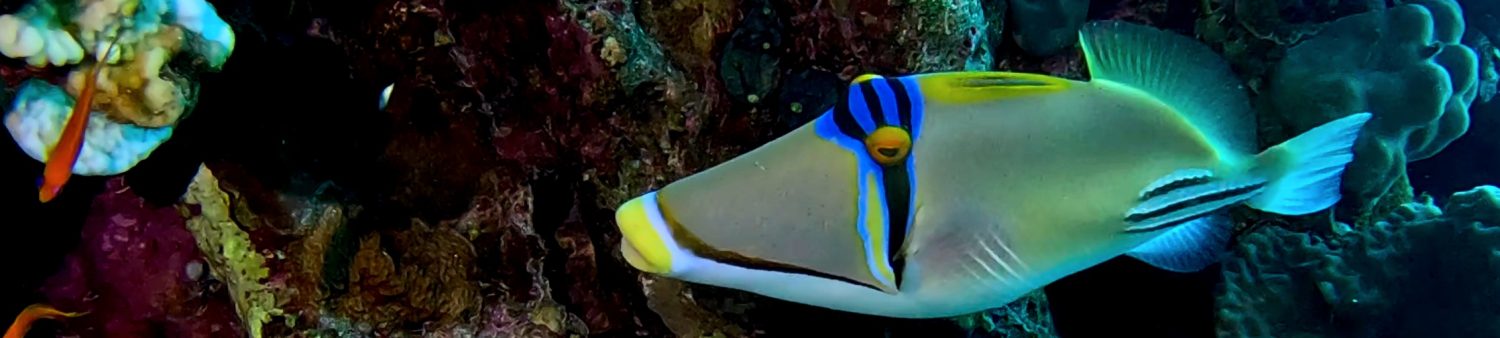
Tropical fish gallery / Tropske ribe slike
Egypt, Red Sea SOUTH 2023
Bonaire, DUCH Caribbean 2018, 2024
Egypt, Red Sea Hurghada to South SINAI, Ras Muhammad, Sharm el Sheik 2024
Egypt, Red Sea DAHAB 2025
Egypt, Red Sea Elphinstone, Brothers and Daedalus 2025
foto by Ales Sulic All rights reserved©
HAWKSBILL TURTLE
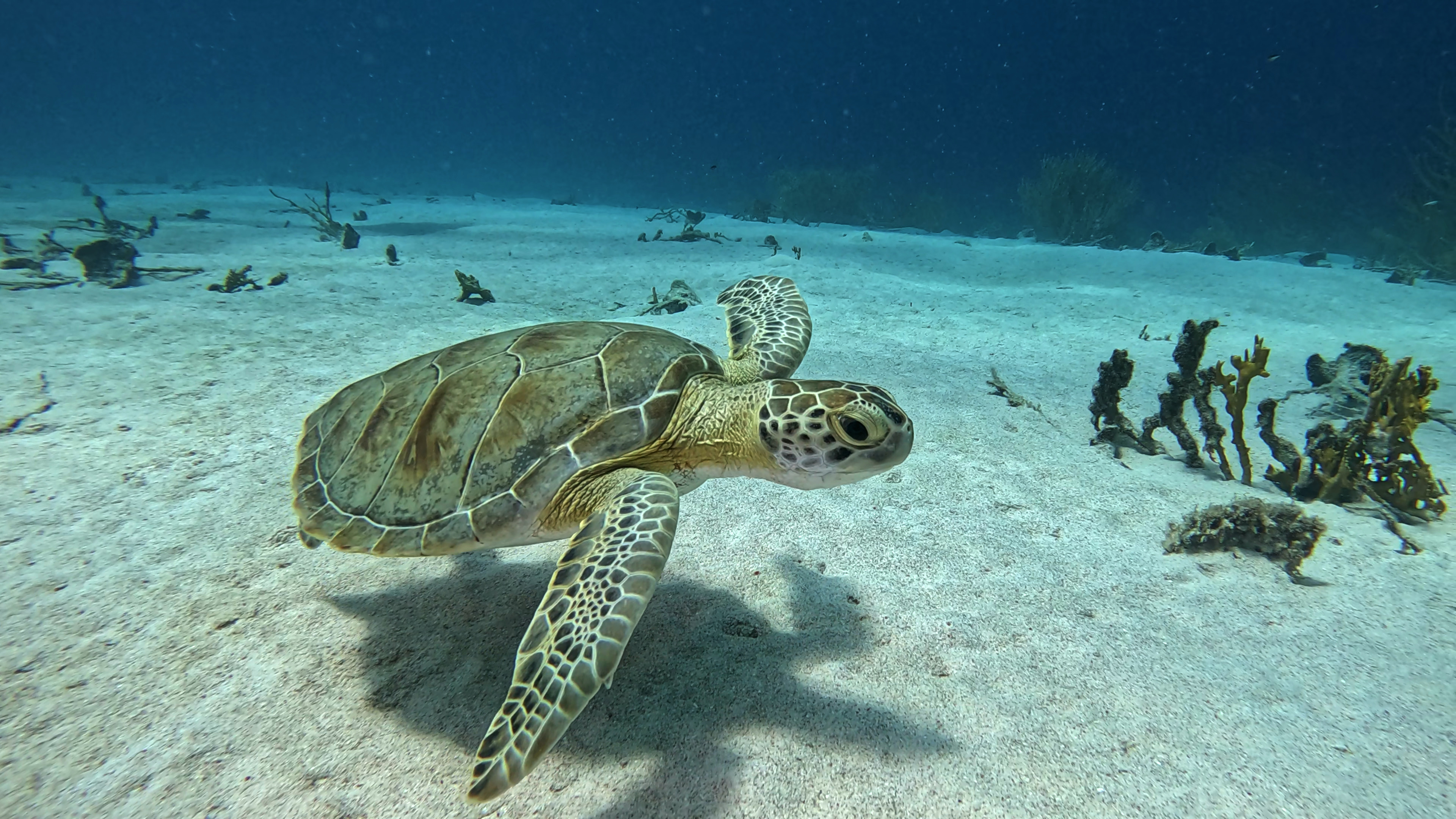
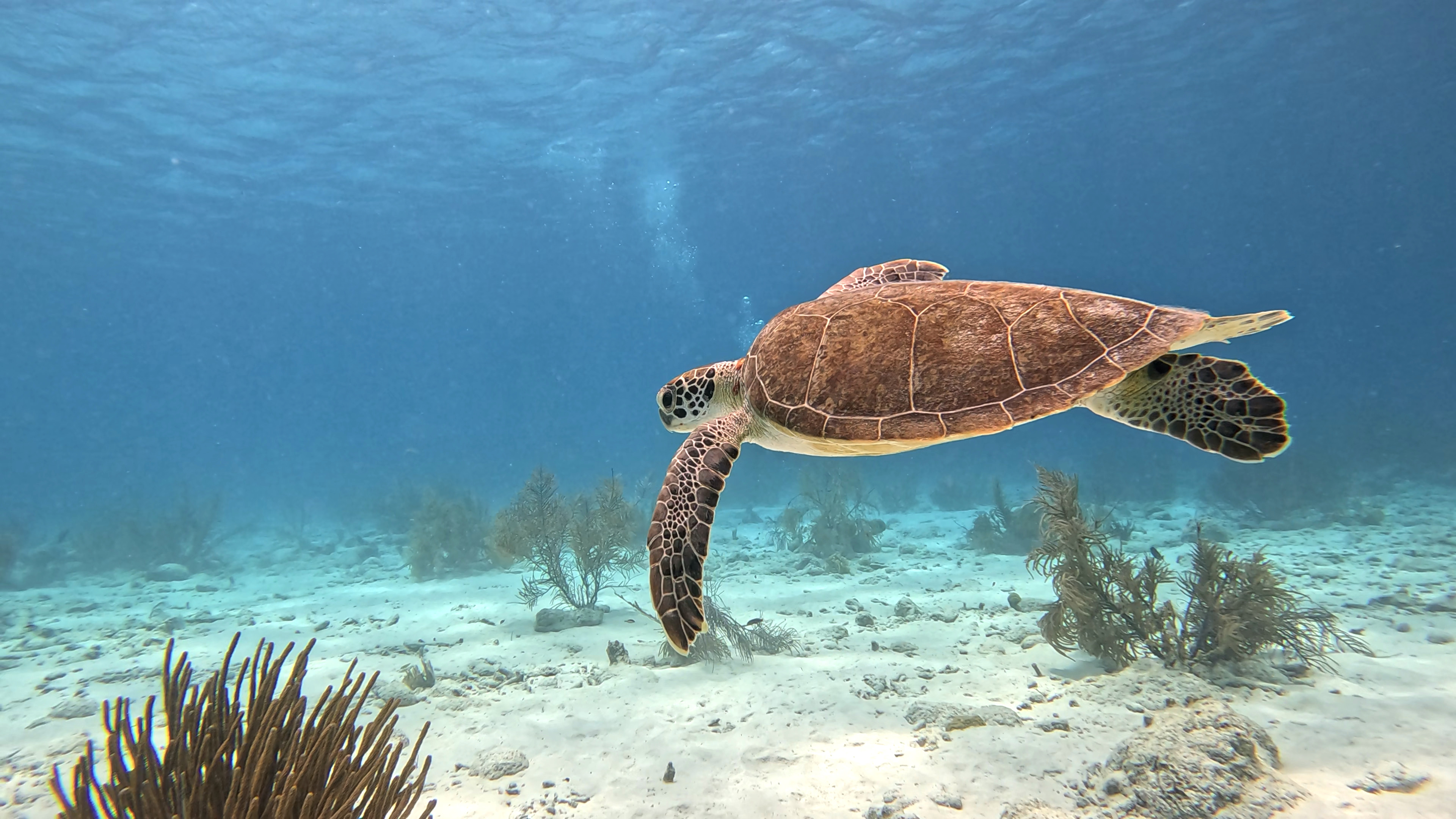
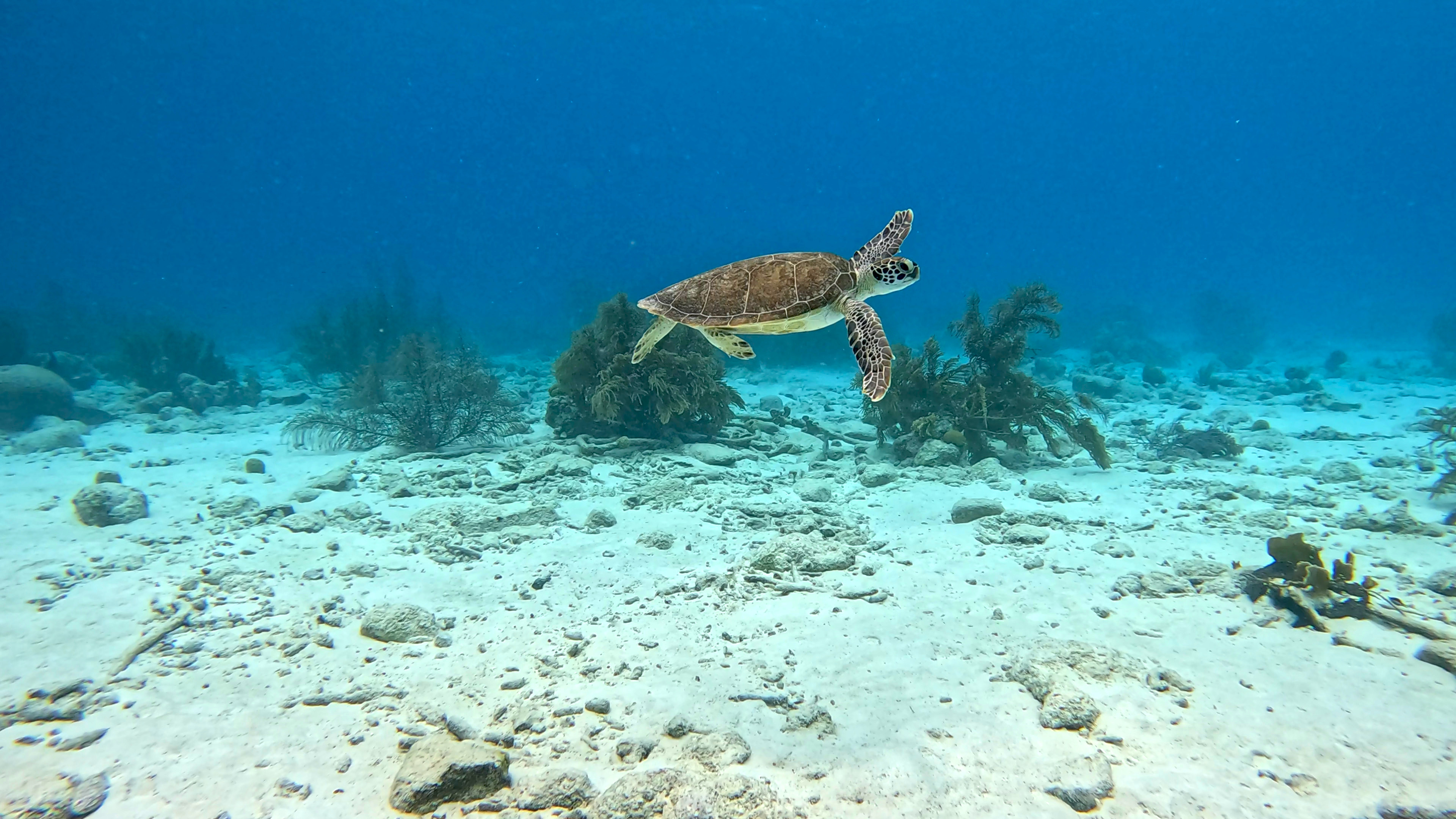
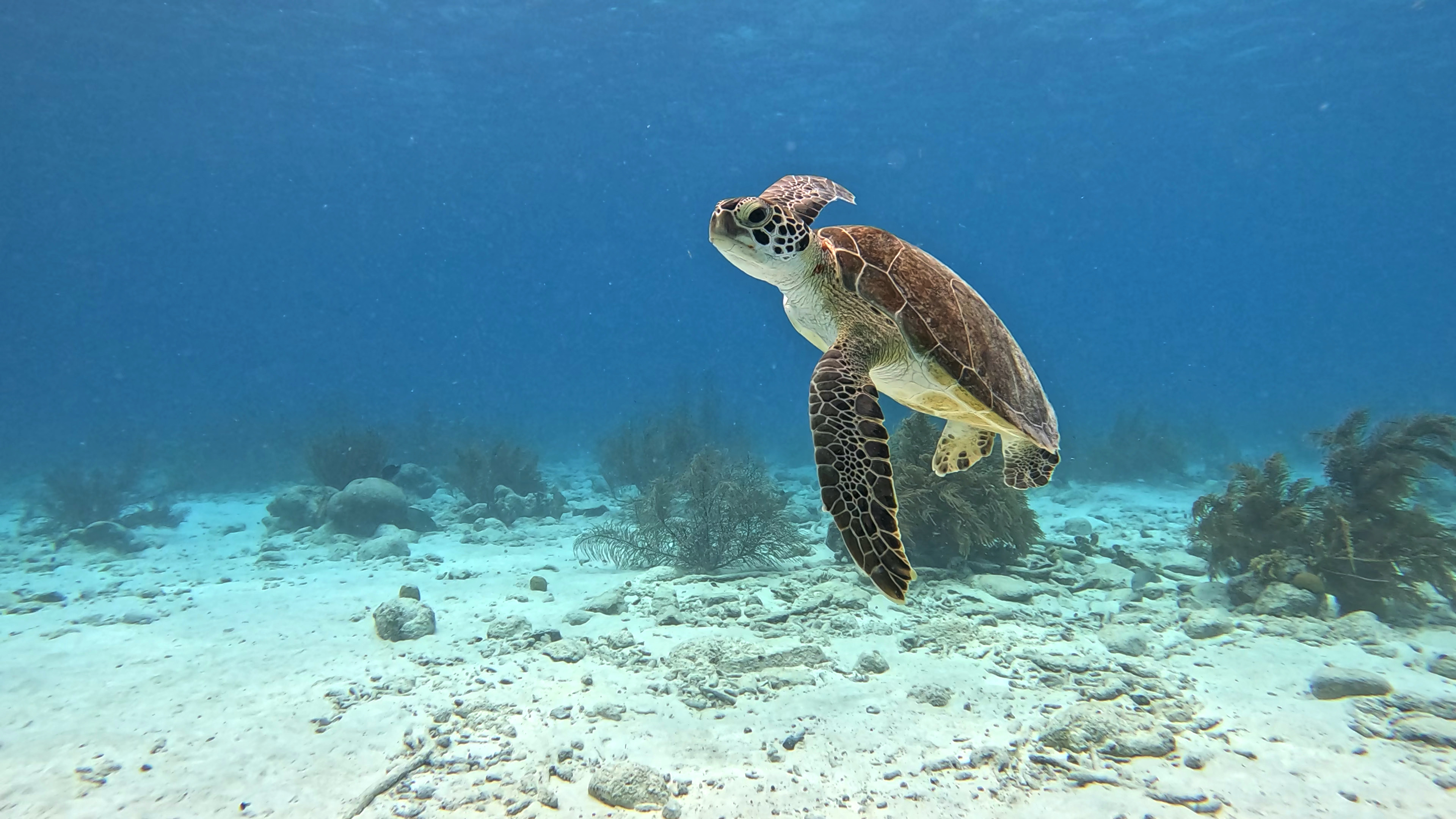
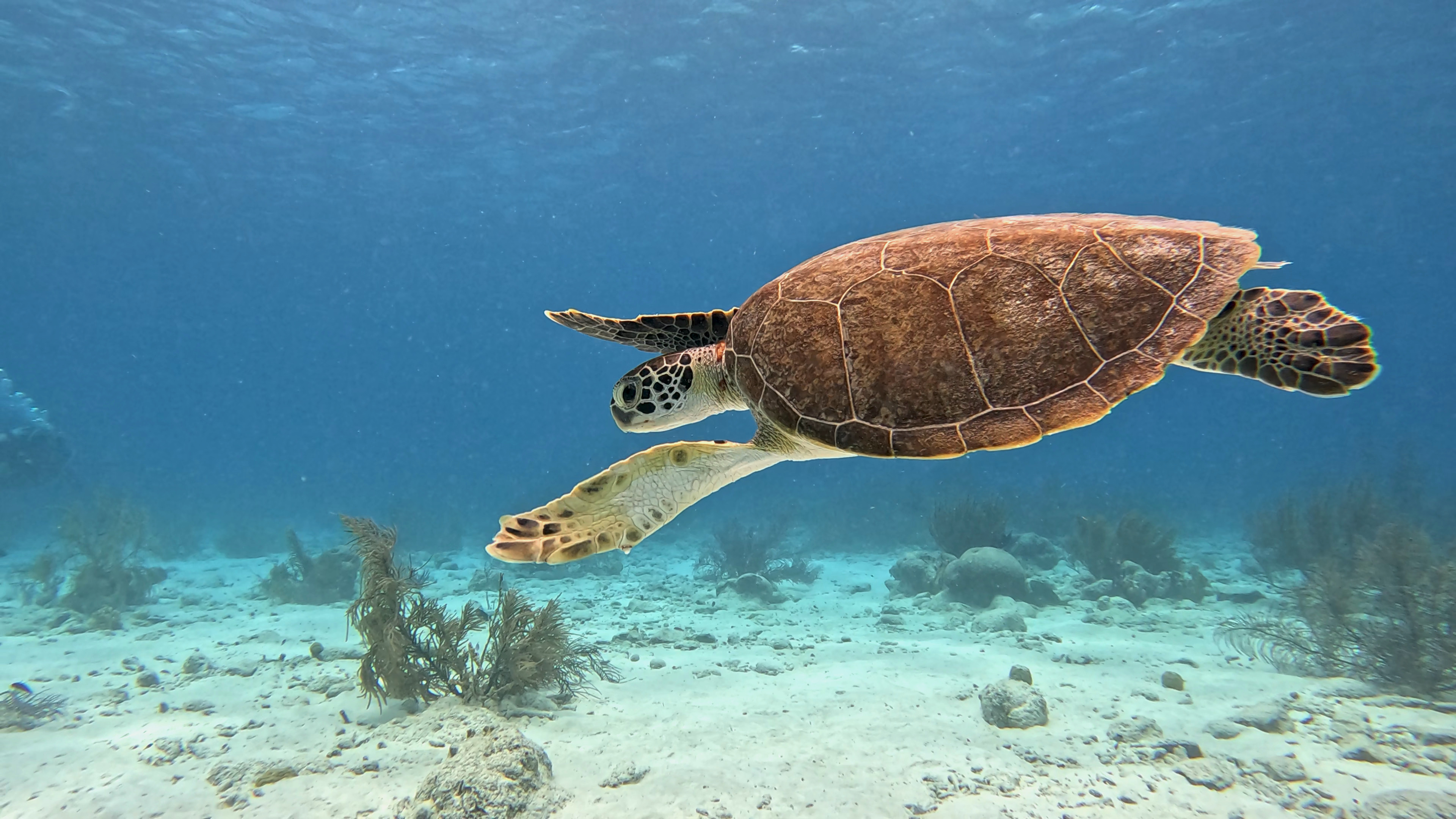
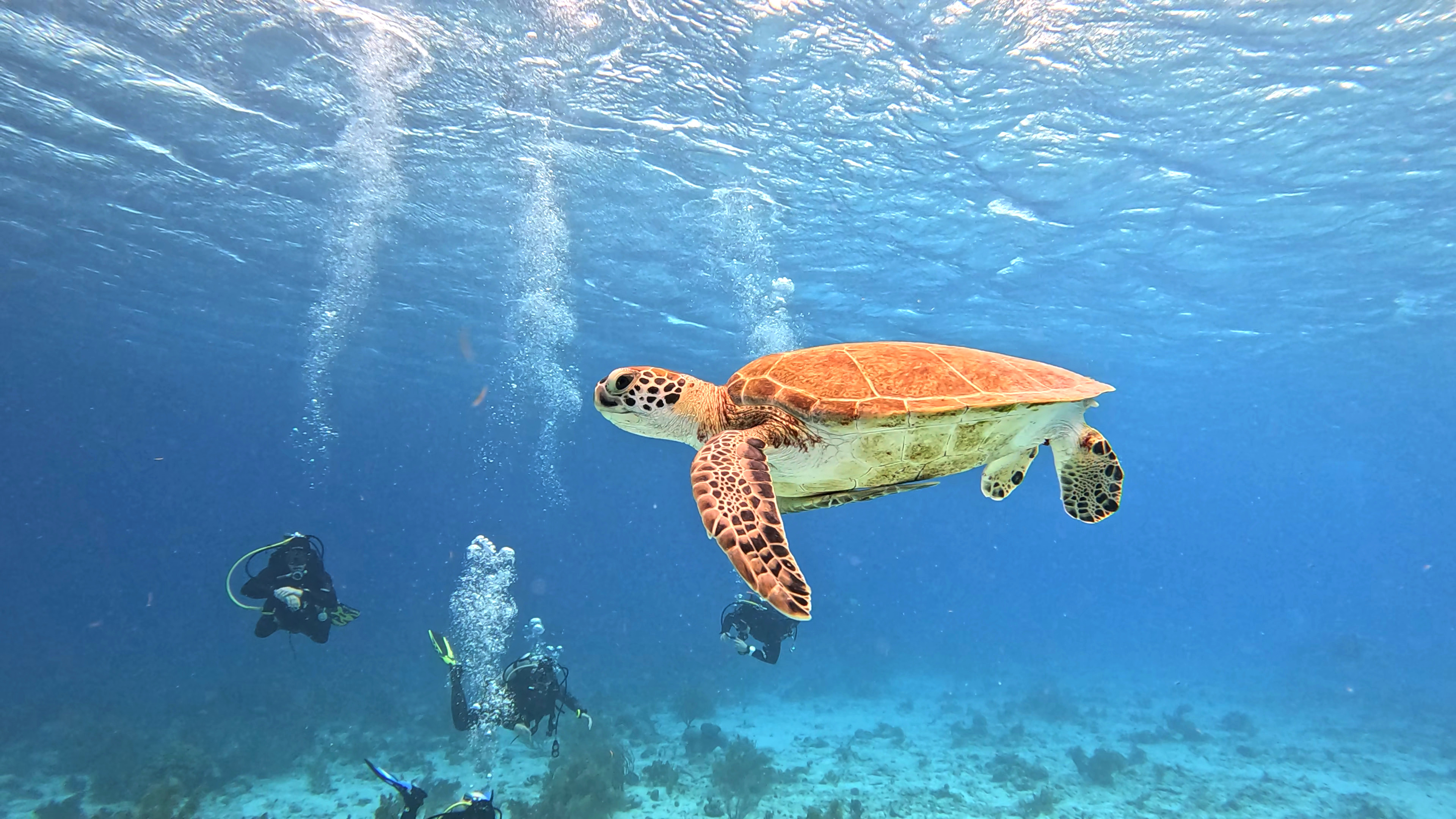

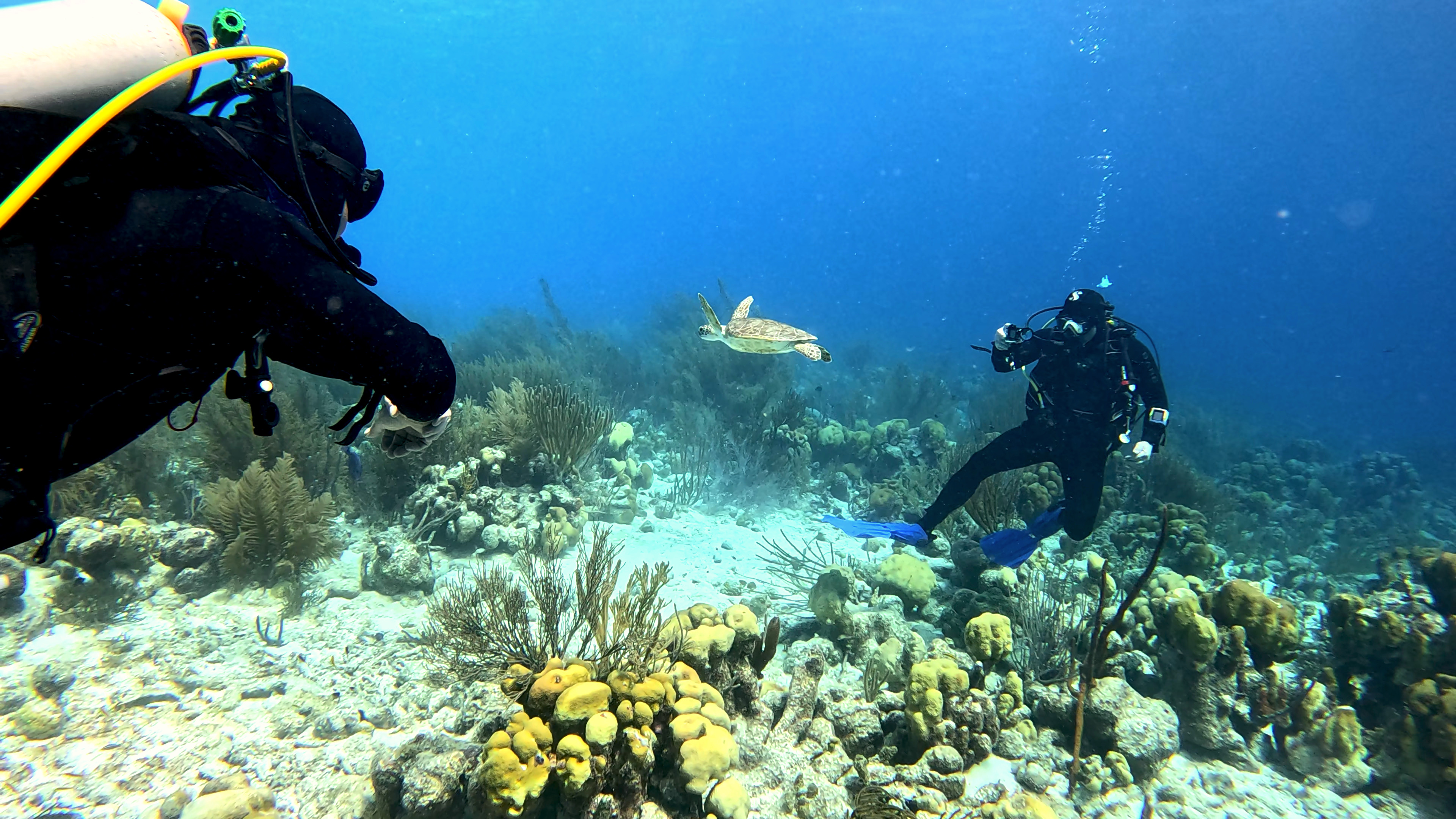
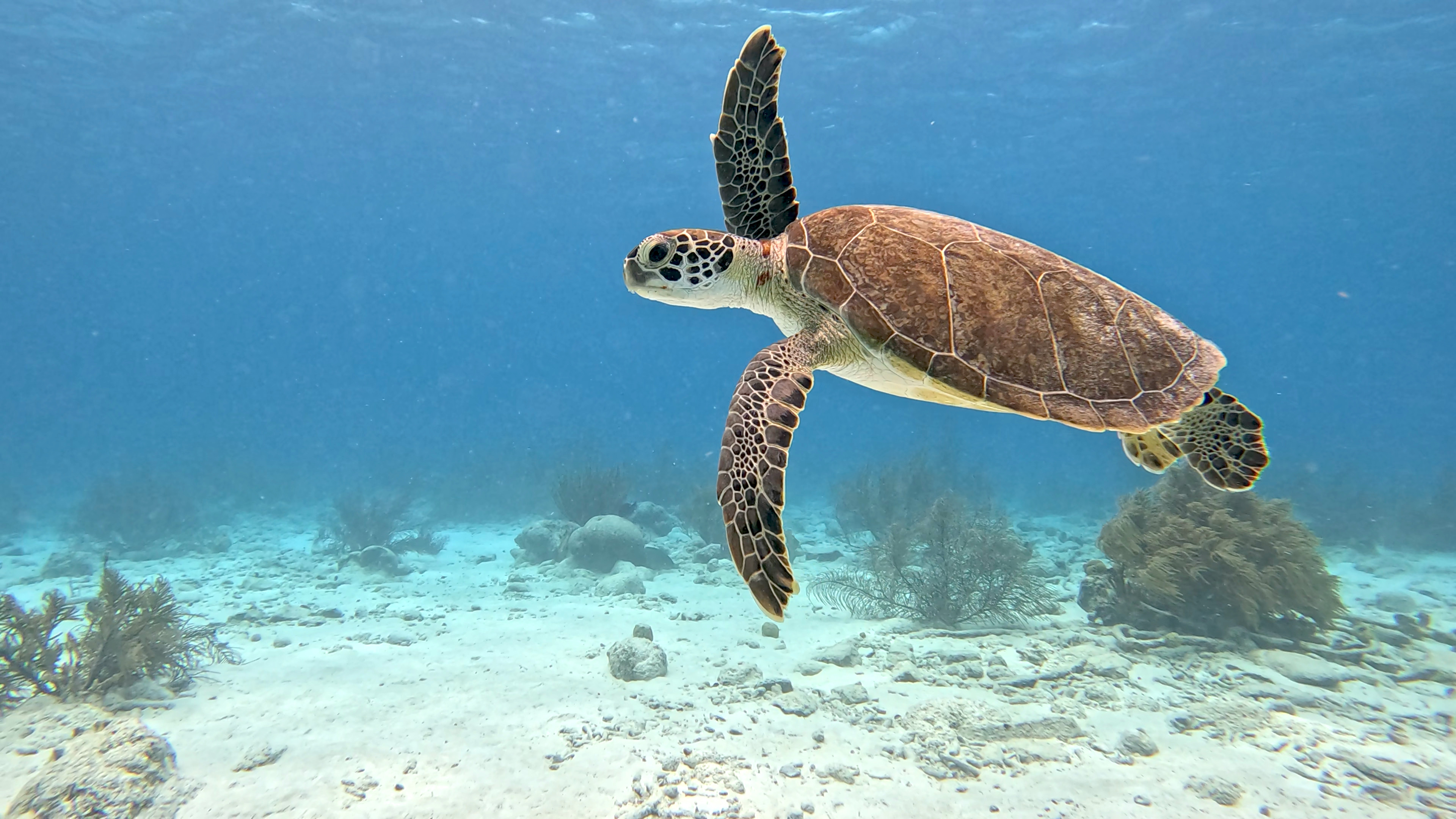
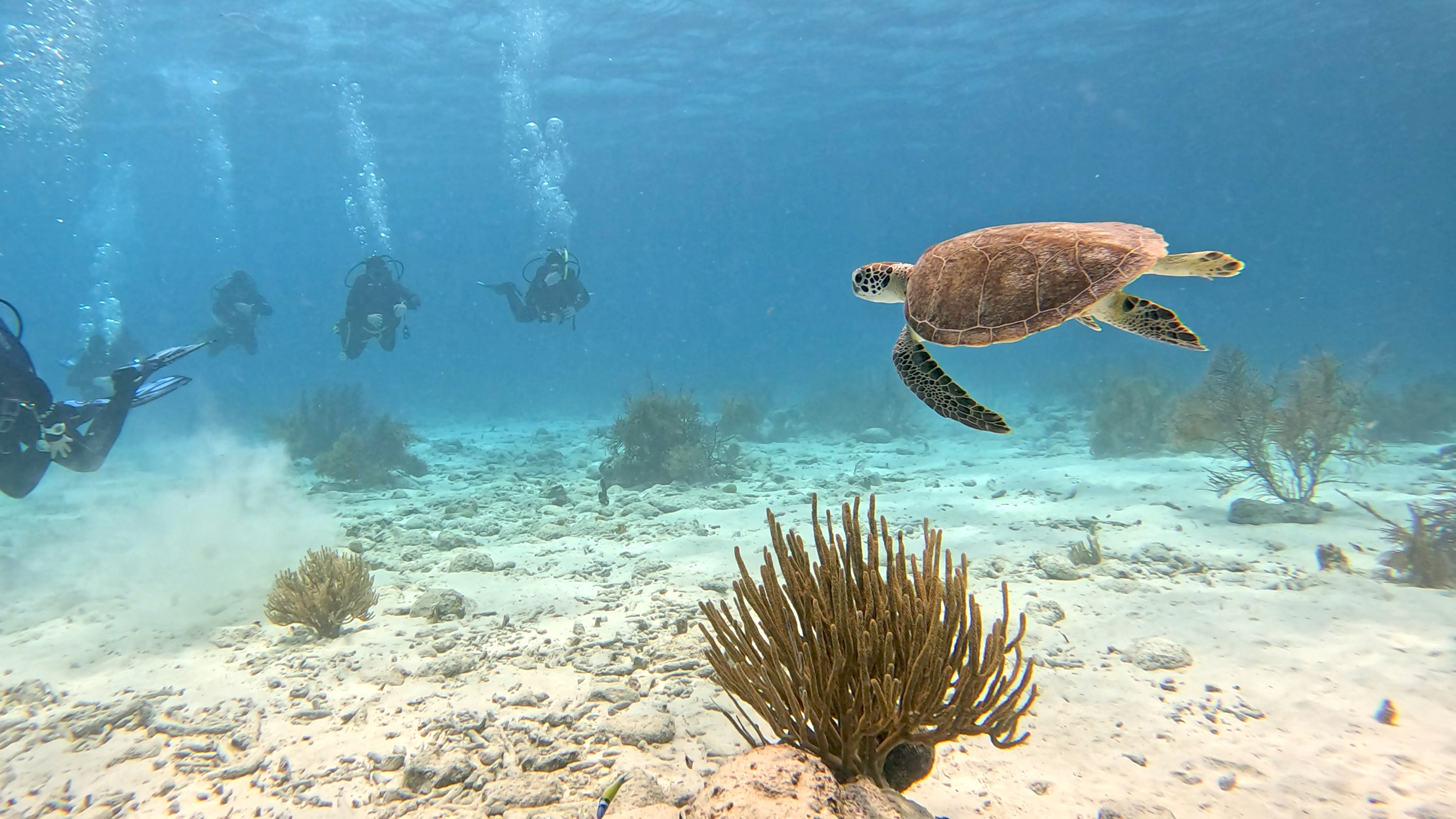
Hawksbill Turtle – lat. Eretmochelys imbricata – Želva Kareta
Želva kareta je srednje velika morska želva, prepoznavna po ostrem, kljunastem ustju in lepem vzorčastem oklepu. Živi predvsem na tropskih koralnih grebenih Atlantskega, Indijskega in Tihega oceana. Hrani se predvsem z morskimi spužvami, s čimer pomaga ohranjati ravnovesje v koralnih grebenih. Vrsta je kritično ogrožena, predvsem zaradi nezakonite trgovine z njenim oklepom, uničevanja habitatov in onesnaževanja morja.
The hawksbill turtle is a small to medium-sized sea turtle known for its sharp, beak-like mouth and beautifully patterned shell. It lives mainly in tropical coral reefs in the Atlantic, Indian, and Pacific Oceans. Hawksbills feed mostly on sponges, helping keep coral reefs healthy. This species is critically endangered, mainly because of illegal trade in its shell (known as “tortoiseshell”), habitat loss, and ocean pollution.
Foto: Aleš Sulič, Bonaire, Salt Pier
GREEN SEA TURTLE
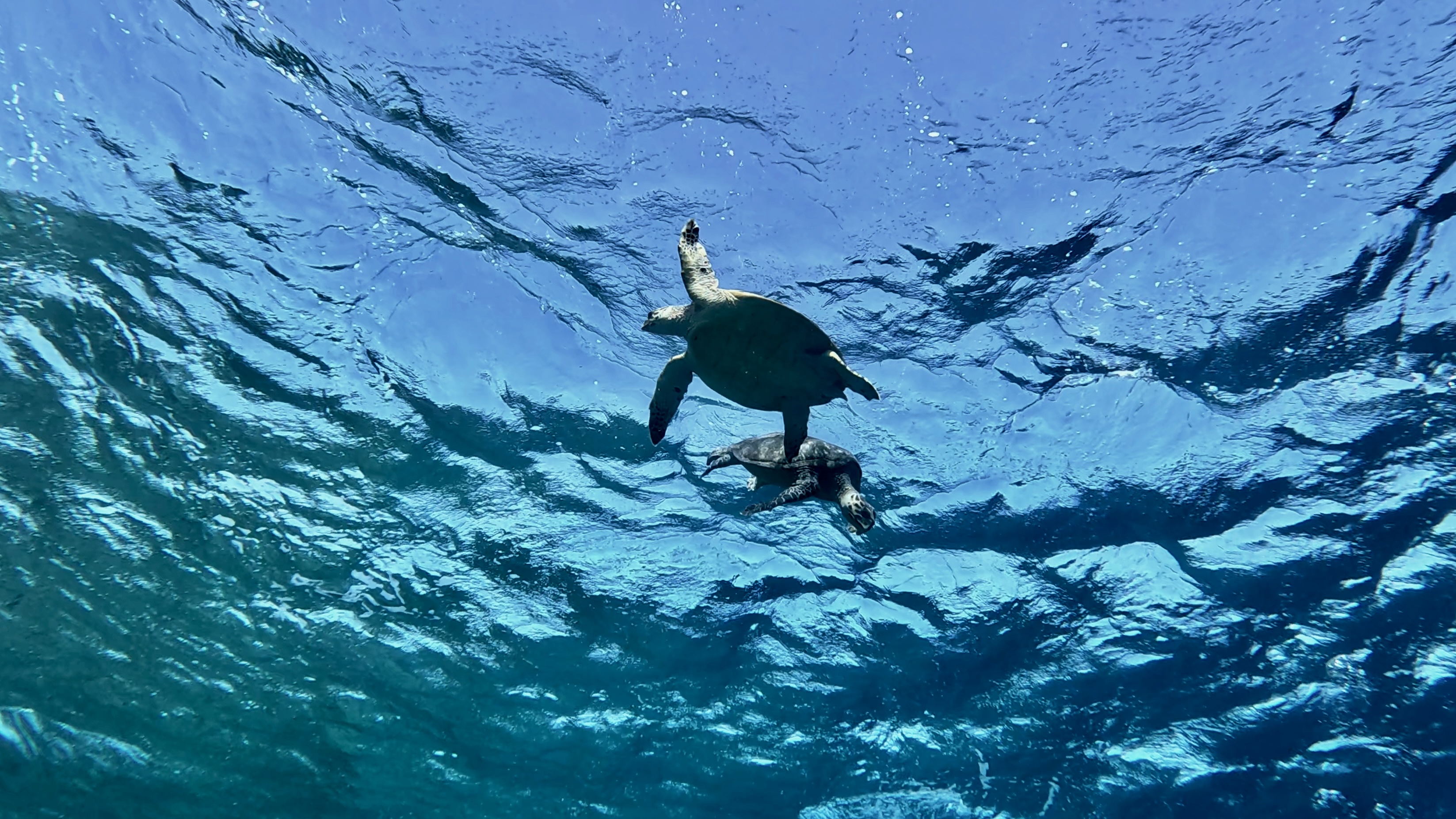
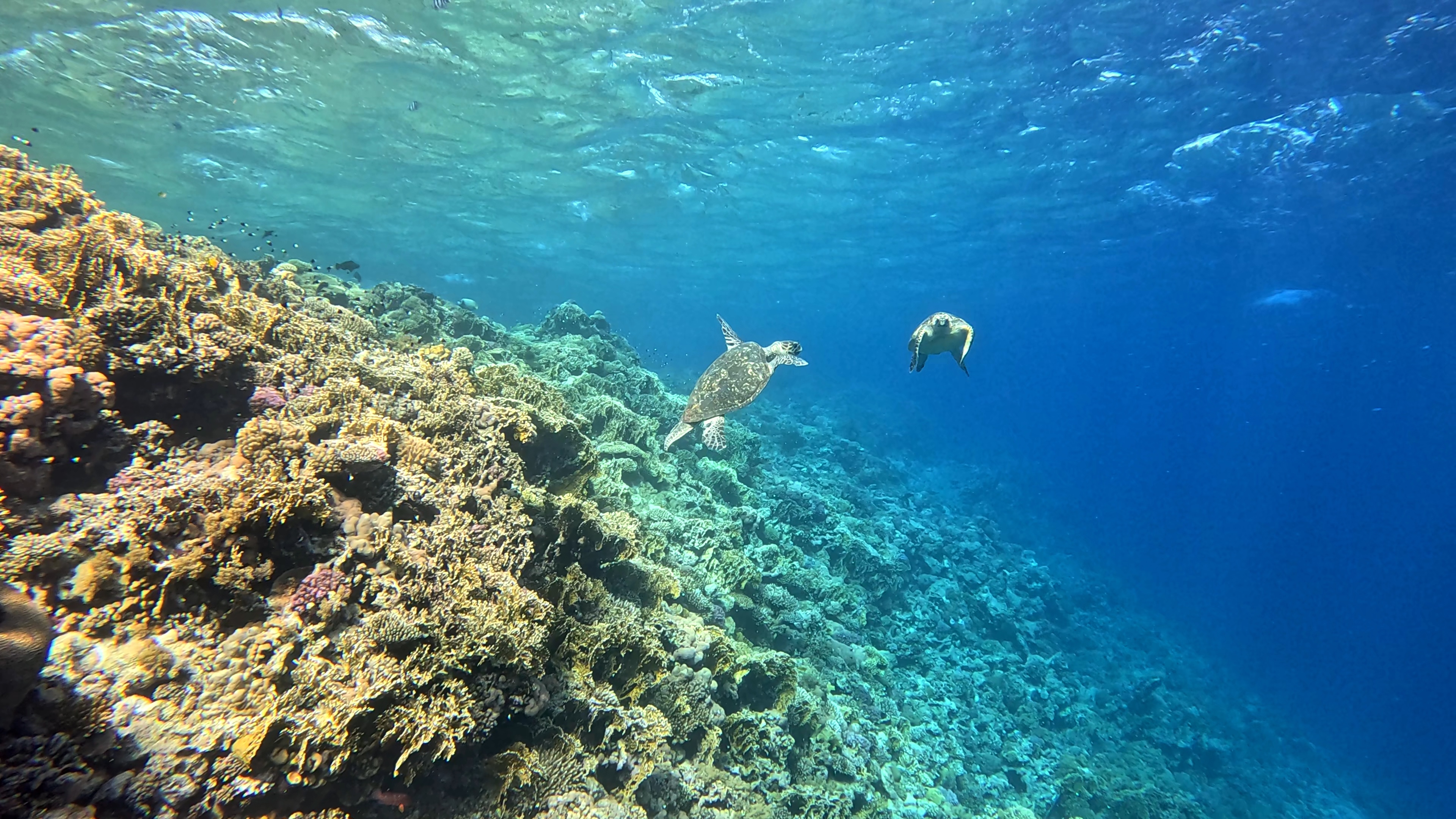
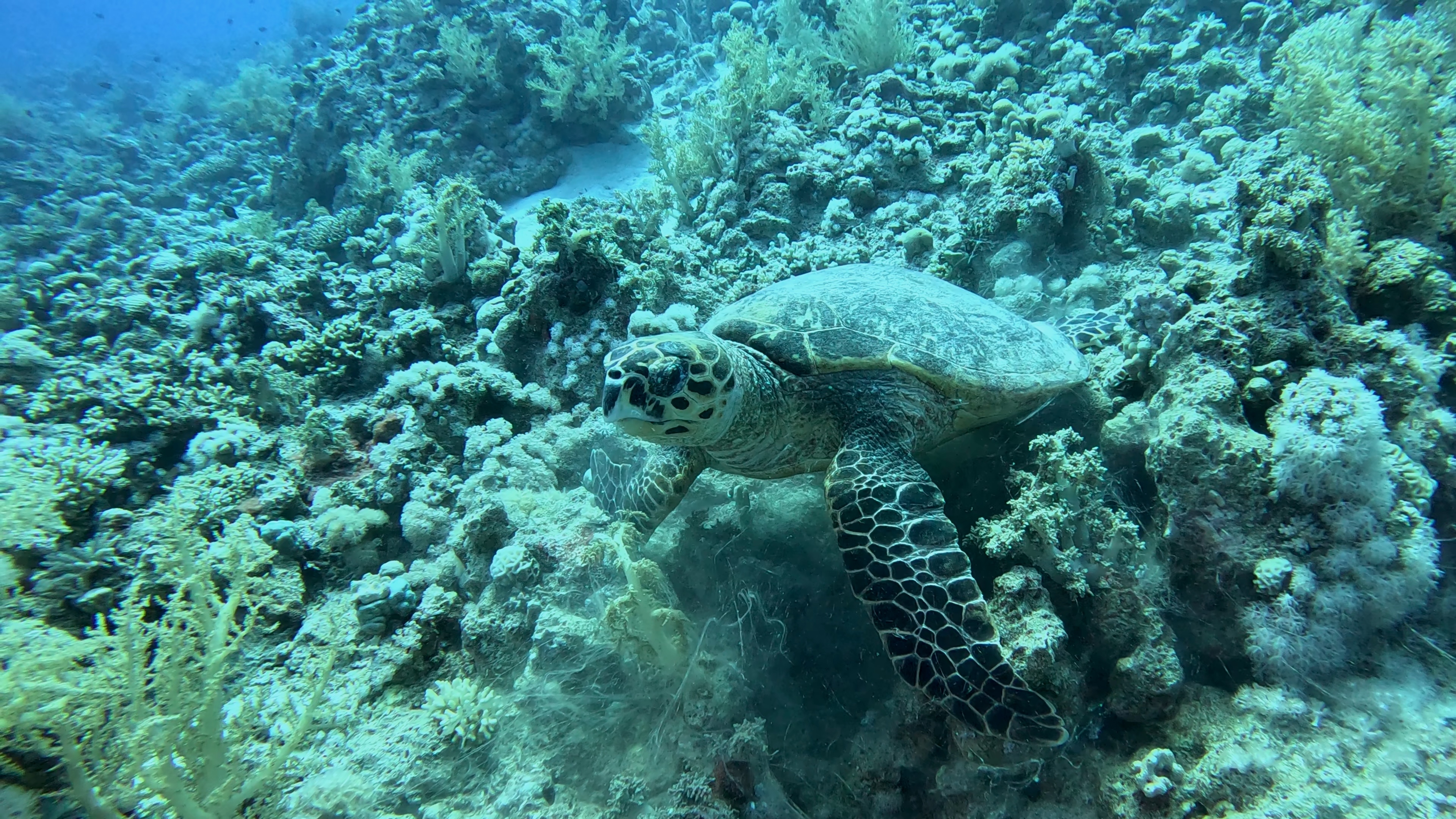
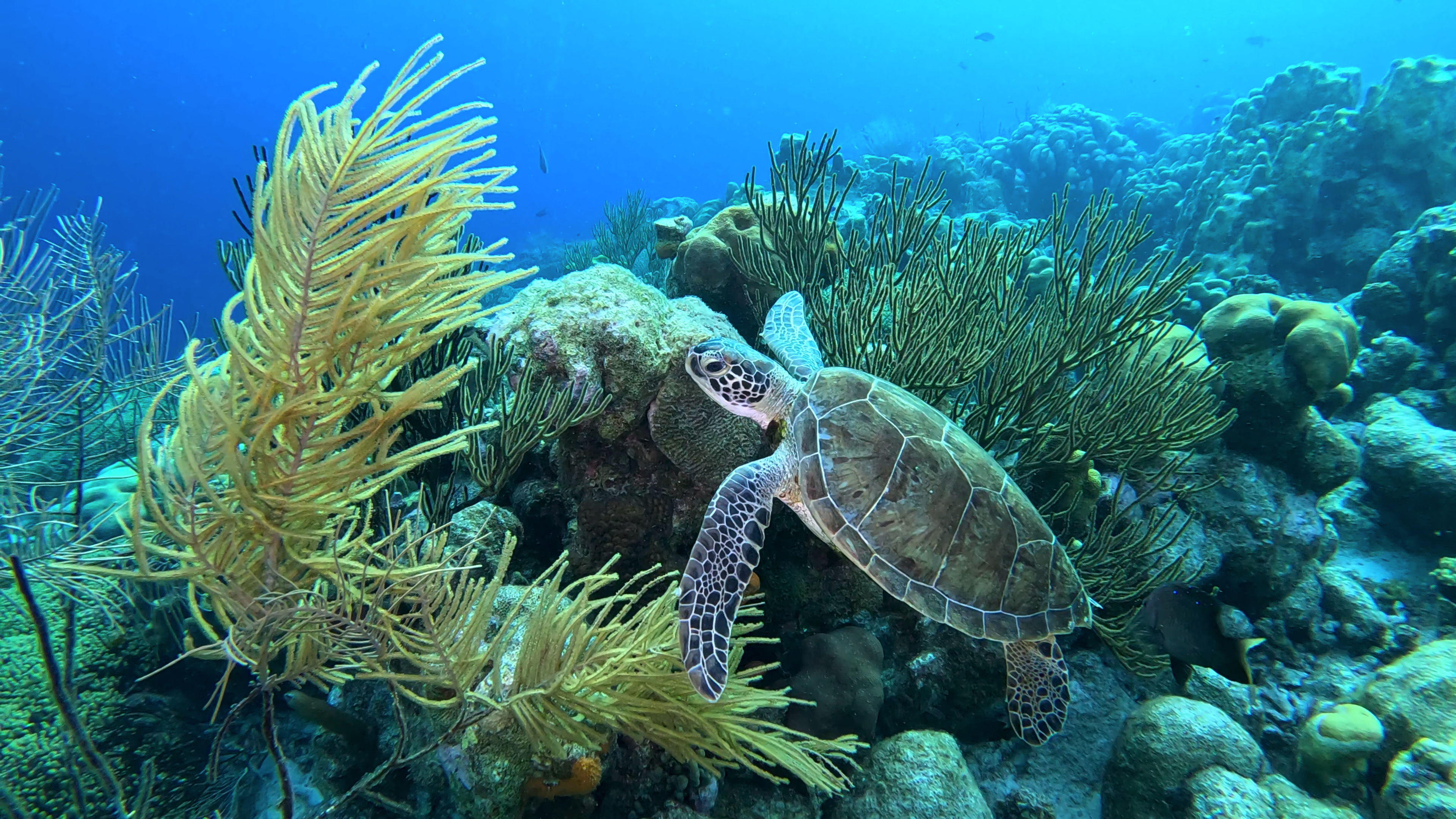
Green Sea Turtle – lat. Chelonia mydas – Zelena morska želva
Zelena morska želva je ena največjih vrst morskih želv. Ime je dobila po zelenkasti barvi maščobnega tkiva, ne po barvi oklepa. Živi v toplih morjih po vsem svetu in se kot odrasla prehranjuje predvsem z morskimi travami in algami.
The green sea turtle is one of the largest sea turtle species. It is named after the greenish color of its body fat, not its shell. It lives in warm oceans around the world and, as an adult, feeds mainly on seagrass and algae, making it mostly herbivorous. The species is endangered due to pollution, habitat loss, and accidental capture in fishing gear.
foto: Aleš Sulič, Hurghada, red sea
SMALL & GREAT BARRACUDA
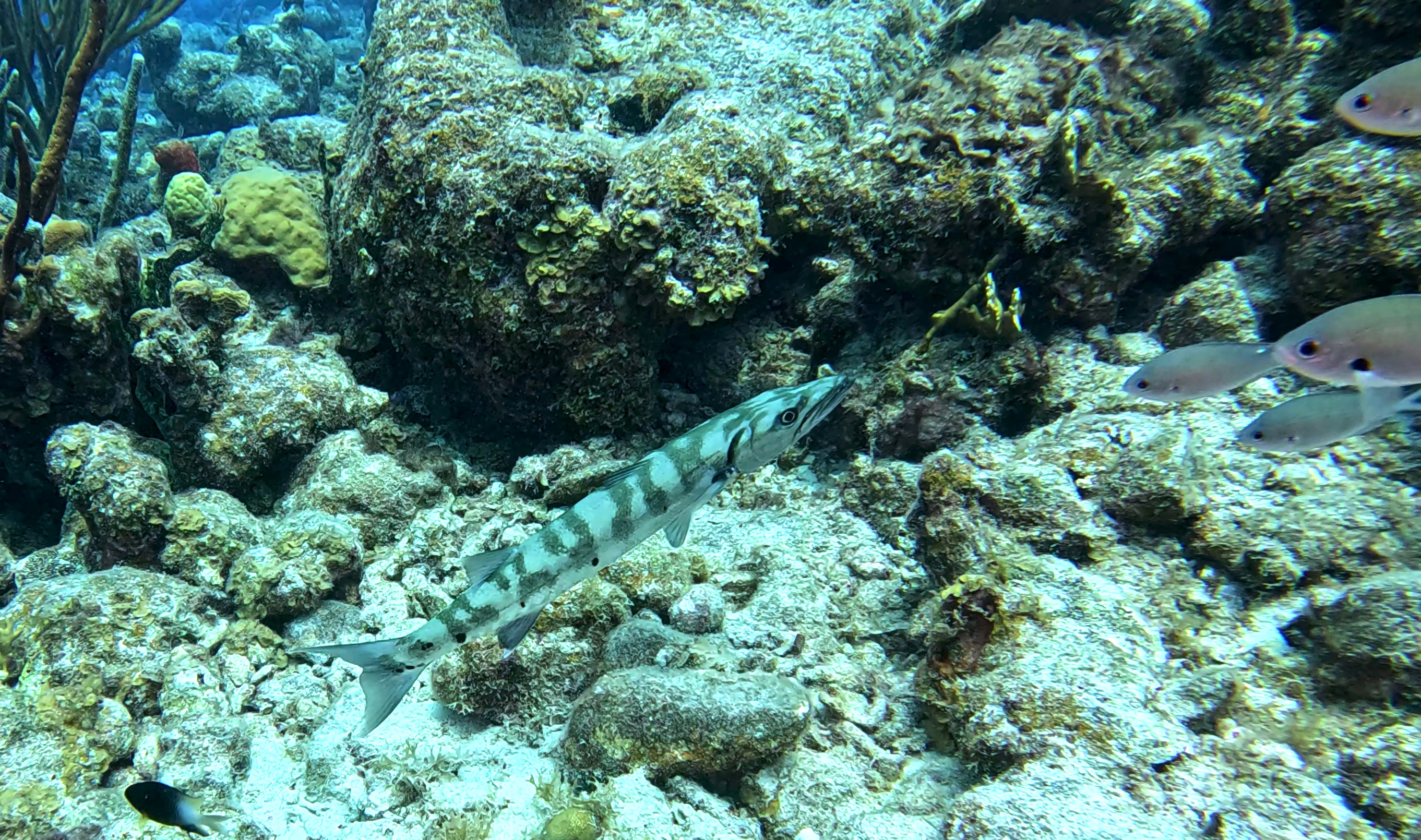
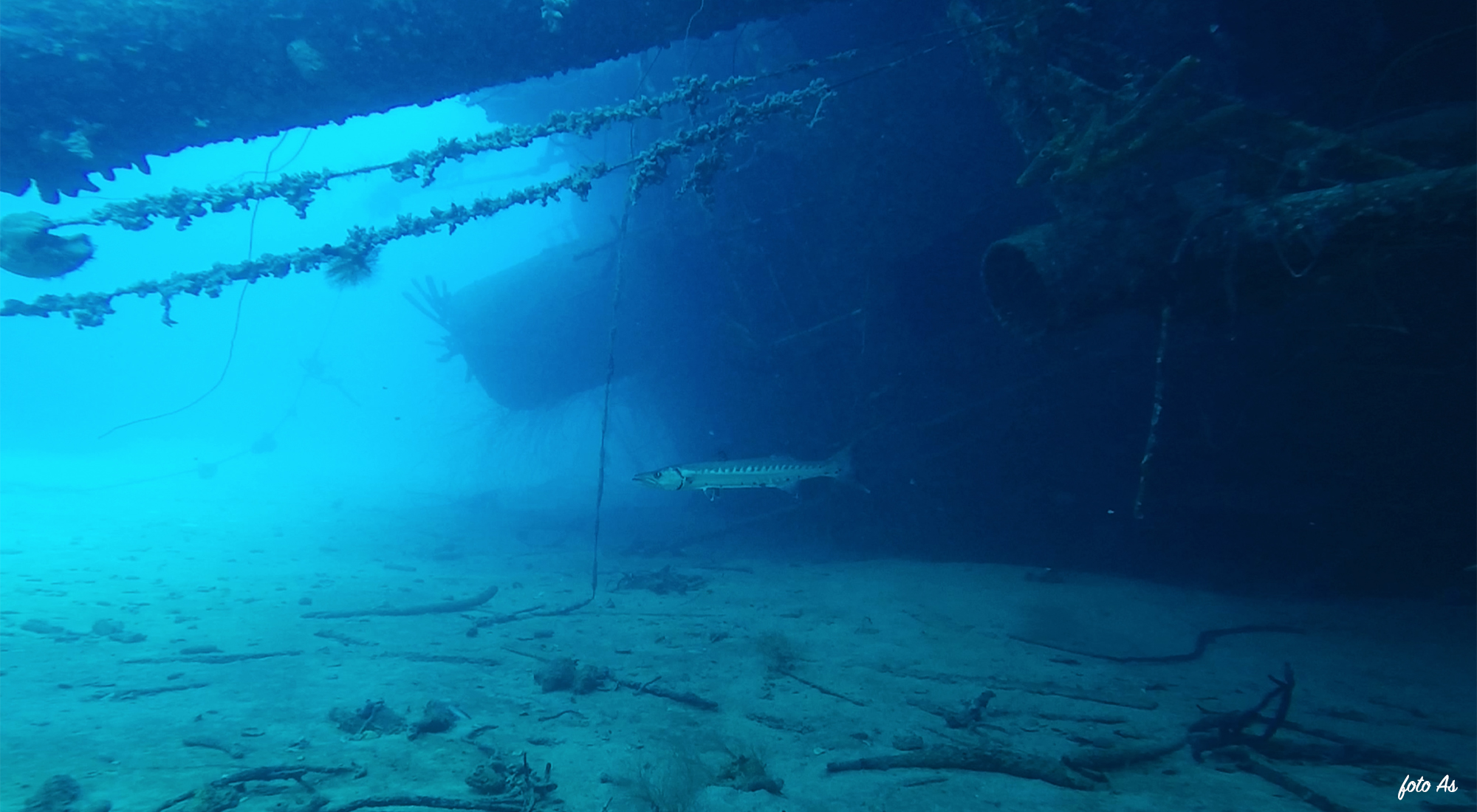
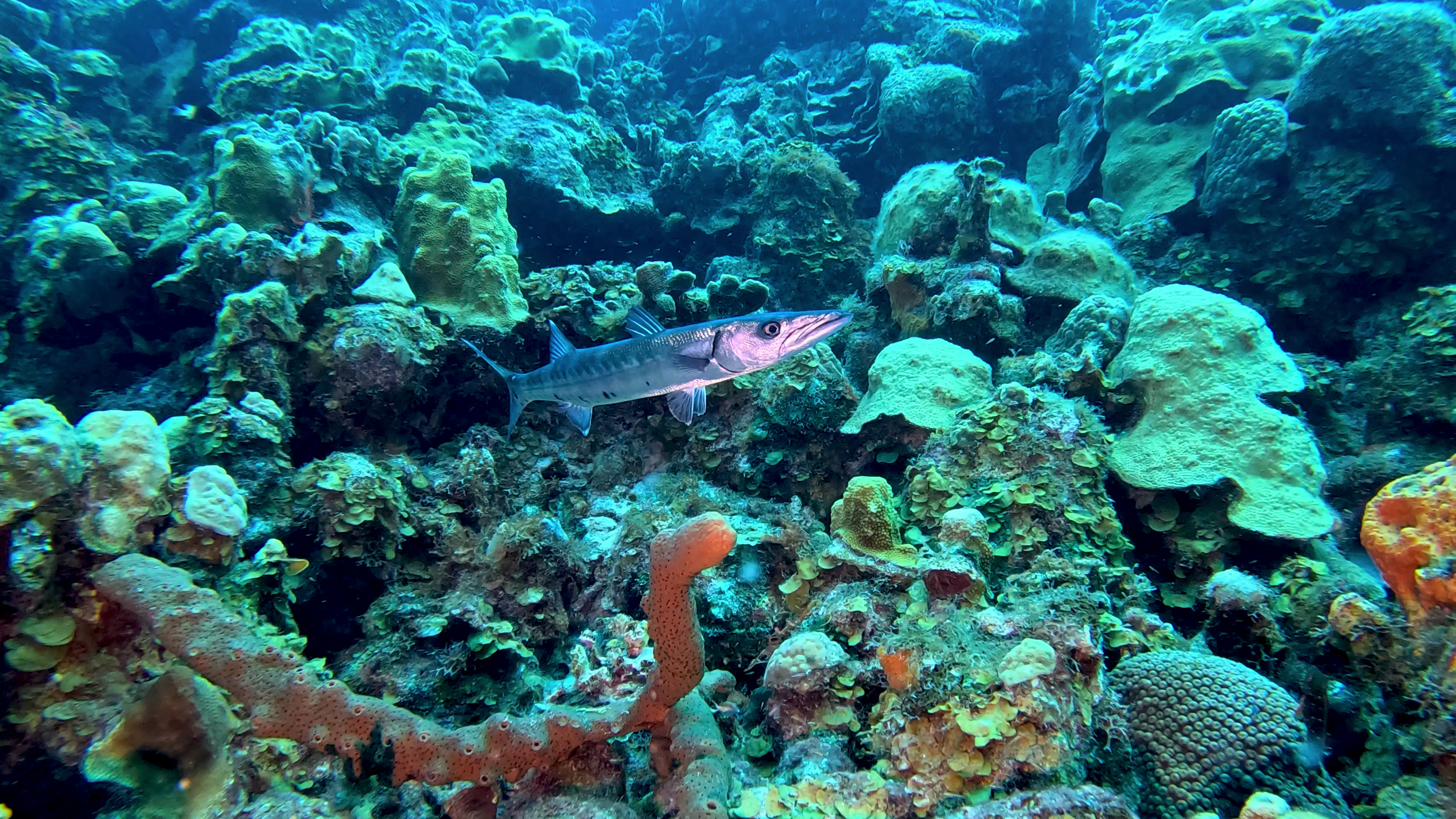
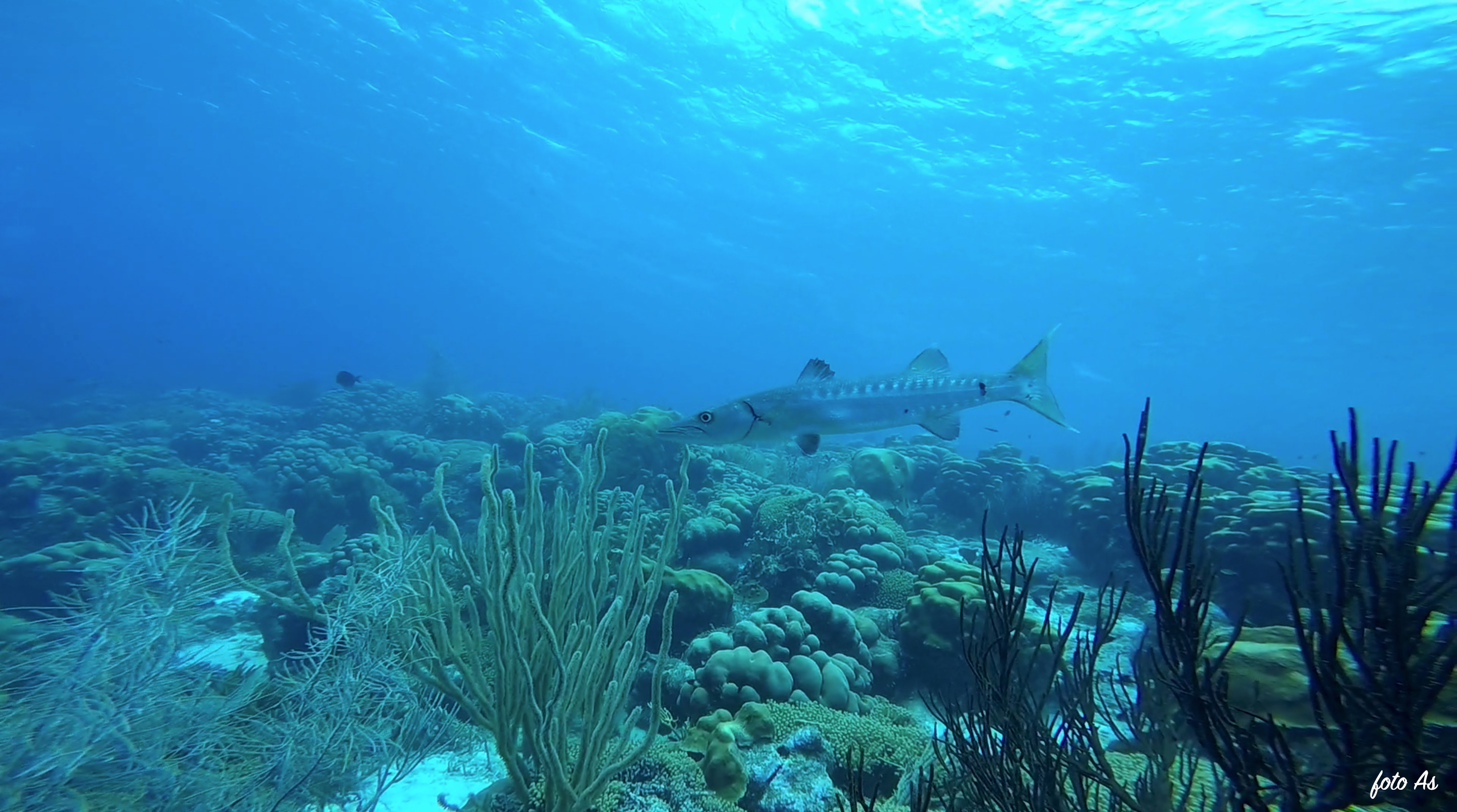
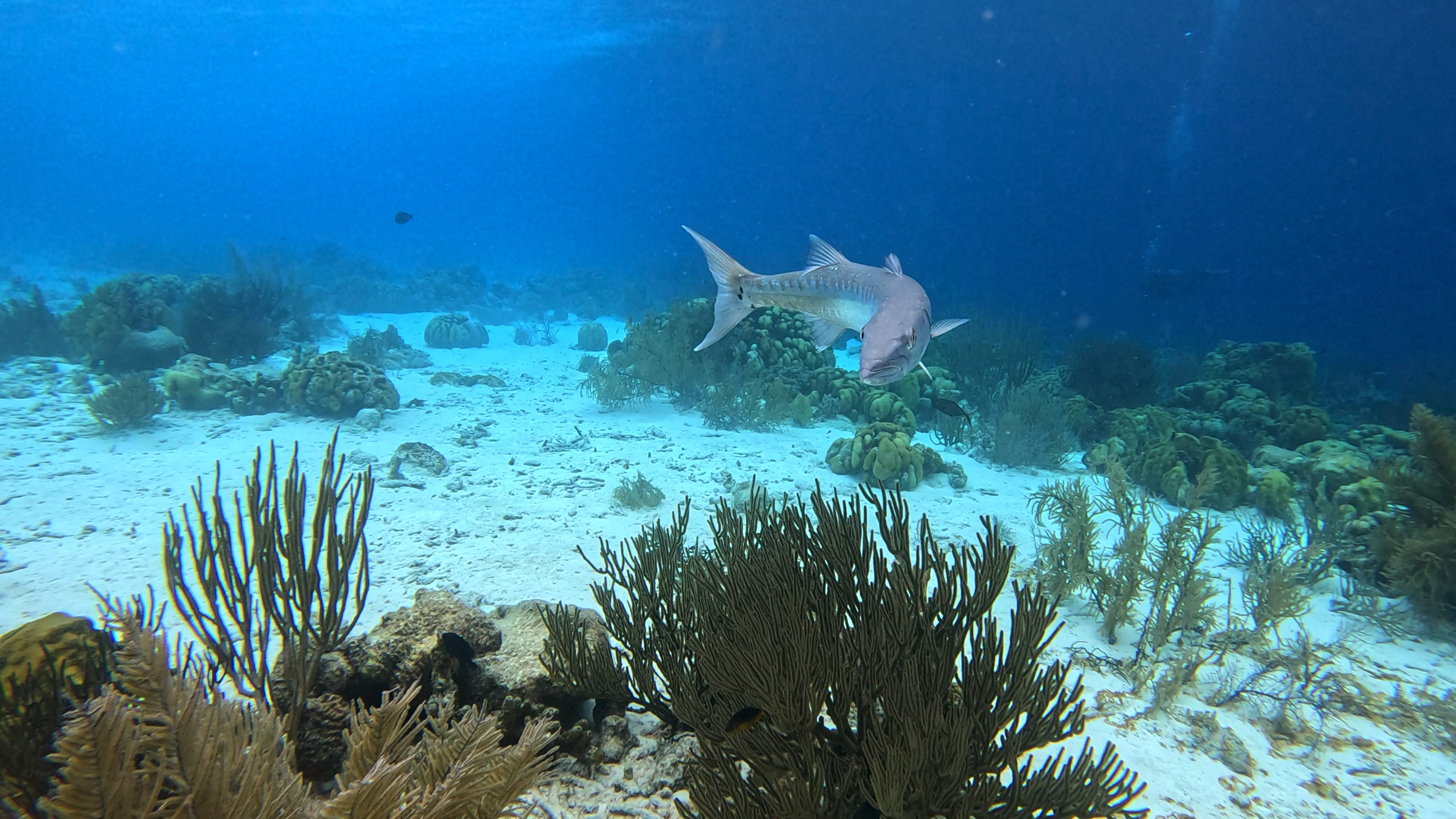
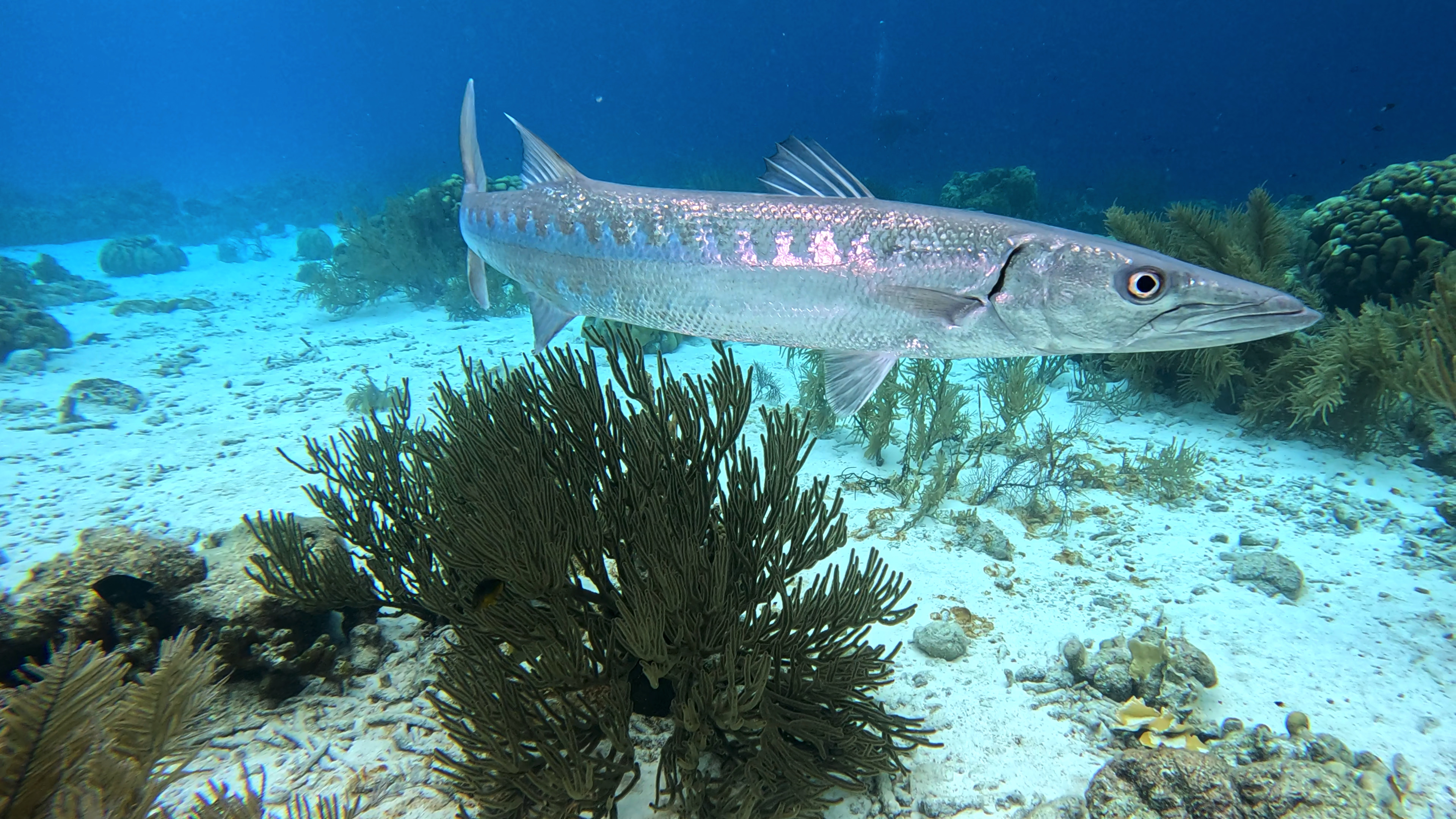
Small & Great Barracuda – lat. Sphyraena barracuda – Barakuda
Velika barakuda je velika plenilska riba z dolgim, vitkim telesom in ostrimi zobmi. Živi v toplih morjih, predvsem v Atlantskem oceanu in Karibskem morju, pogosto v bližini koralnih grebenov. Hrani se z manjšimi ribami, ki jih lovi z veliko hitrostjo. Znana je po svojem zastrašujočem videzu, vendar napadi na ljudi niso pogosti.
The great barracuda is a large predatory fish with a long, slender body and sharp teeth. It lives in warm tropical oceans, especially in the Atlantic and the Caribbean, often near coral reefs. It feeds on smaller fish and is known for its speed and powerful hunting skills. Attacks on humans are rare.
foto: Aleš Sulič, Dahab Egypt, Bonaire Hilma Hooker
WHITESPOTTED FILEFISH
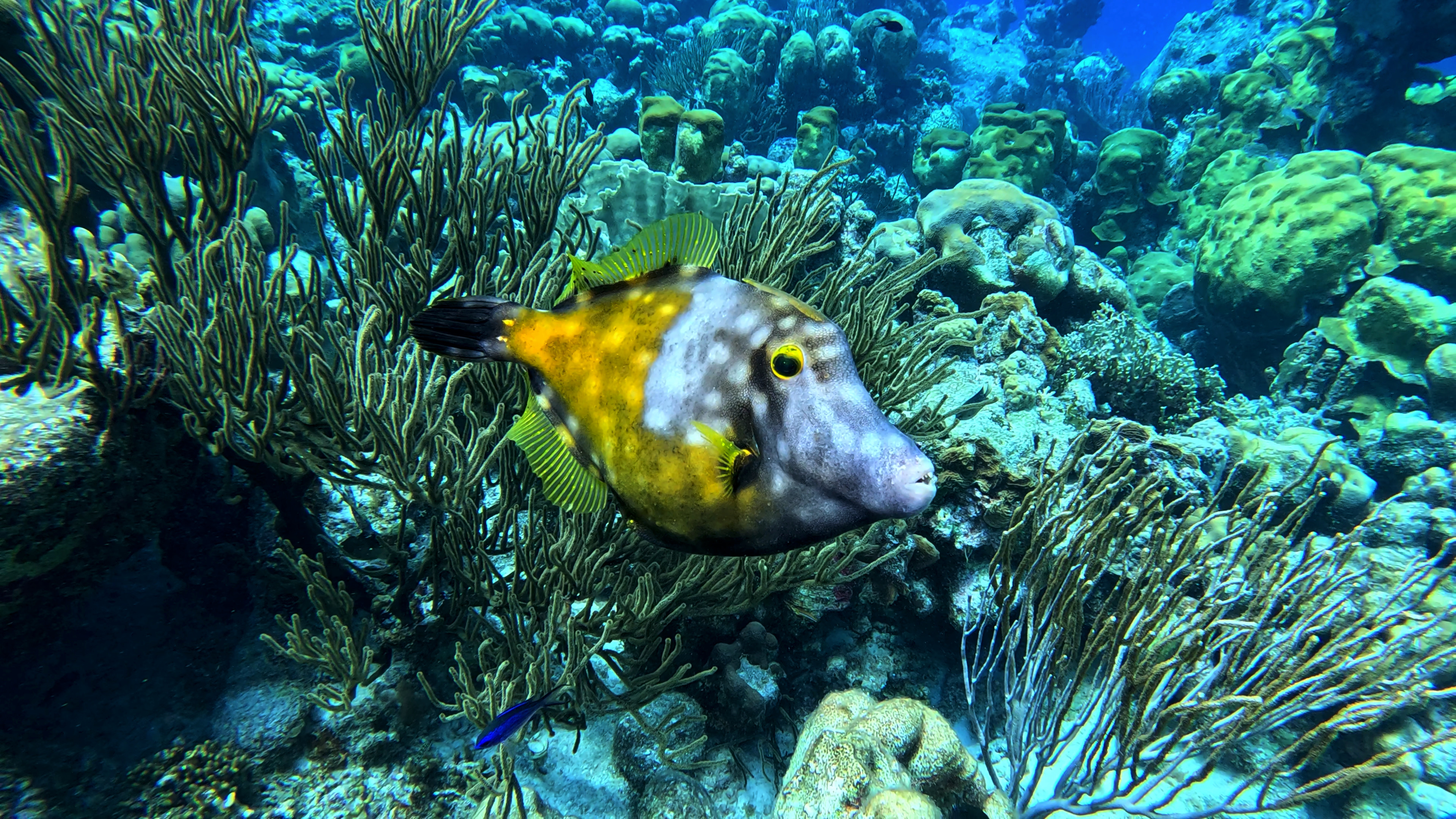
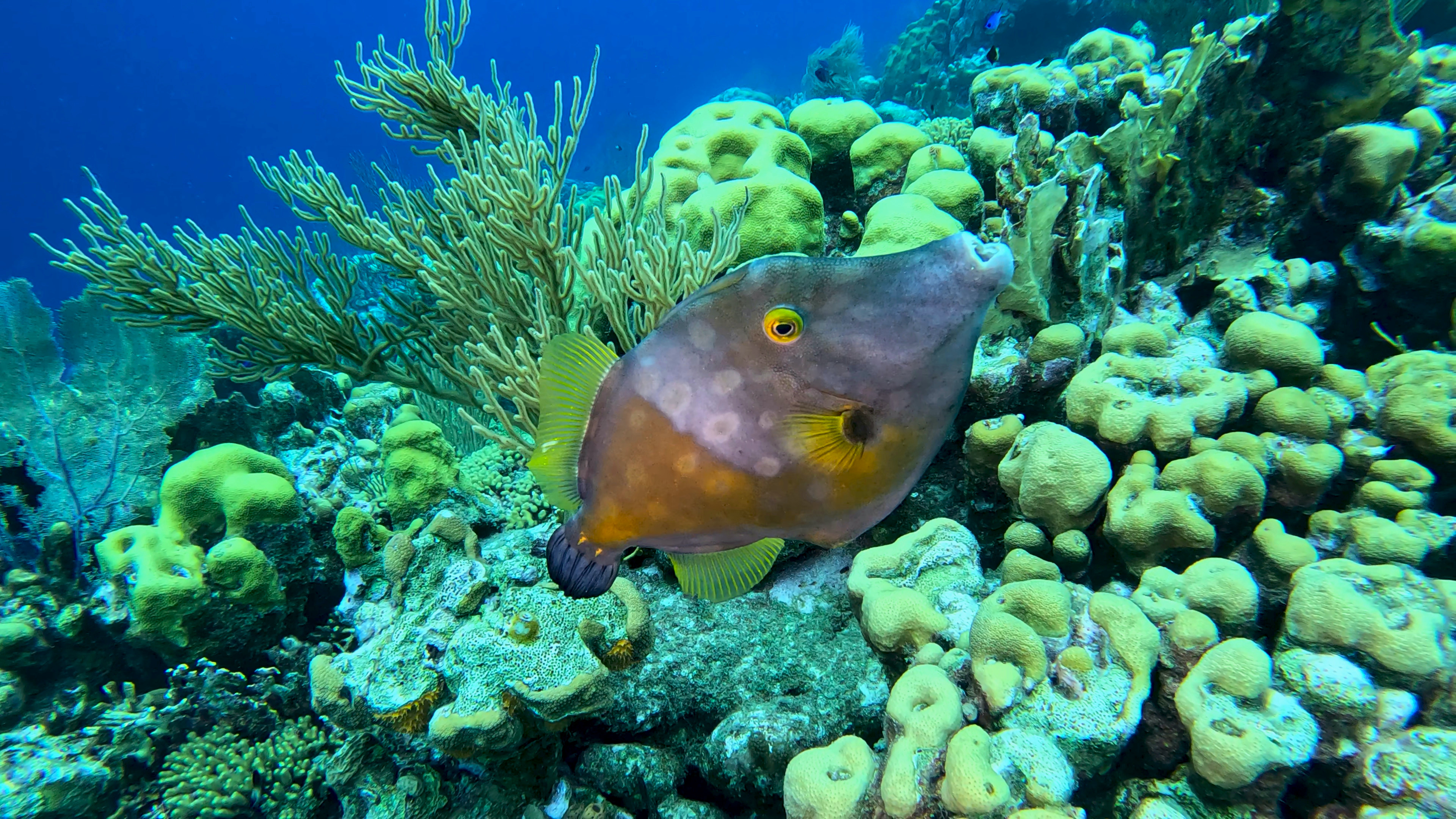
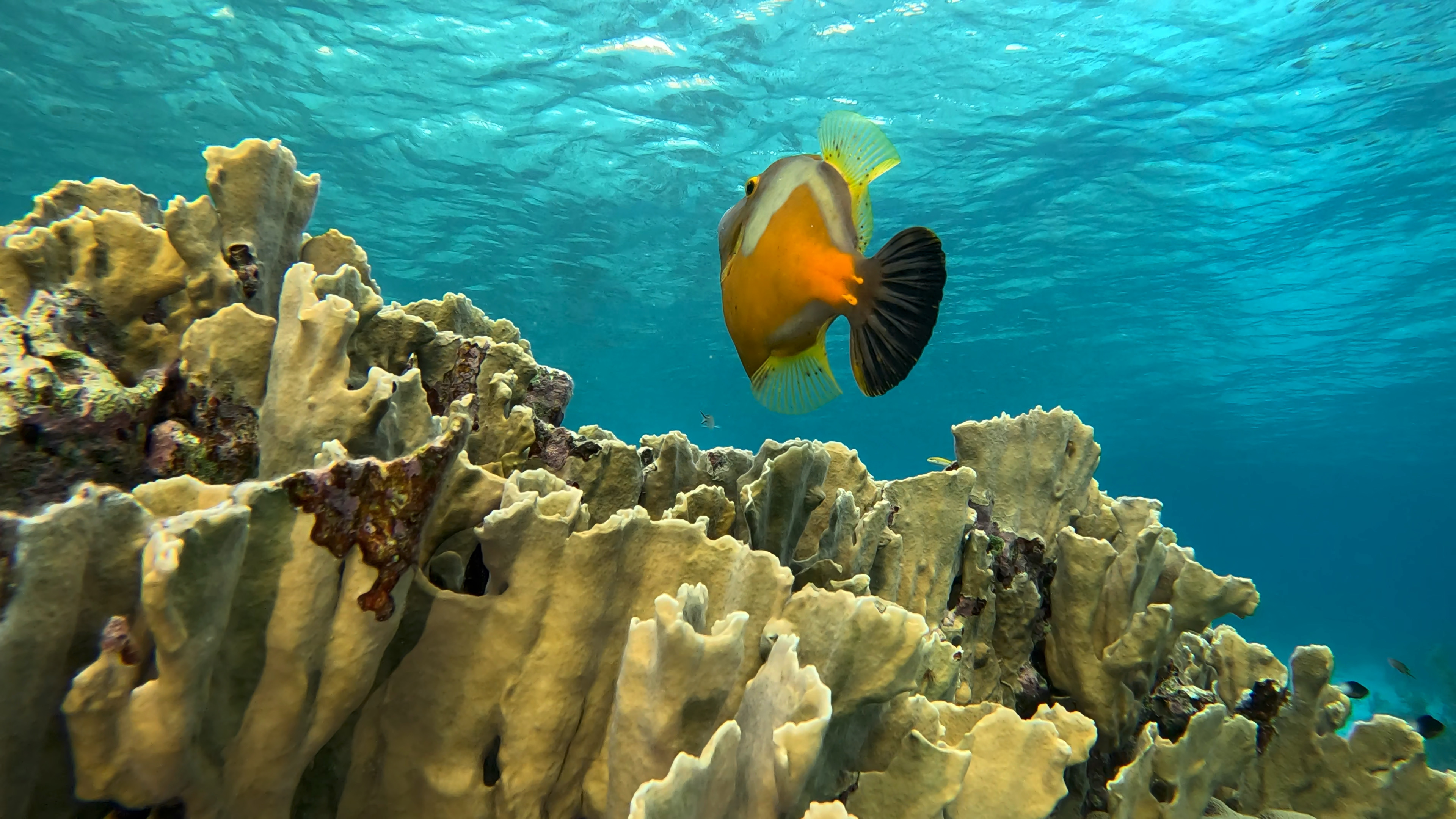
Whitespotted Filefish – lat. Cantherhines macrocerus – Belopečnati “filefish”
Belopečatni filefish je srednje velika tropska riba s ploščatim telesom in značilnimi belimi lisami po telesu. Živi predvsem v tropskih koralnih grebenih Atlantskega oceana. Hrani se z algami in drobnimi nevretenčarji, pogosto se skriva med koralami za zaščito pred plenilci. Vrsta trenutno ni ogrožena, je pa občutljiva na uničenje koralnih grebenov in onesnaževanje morja.
The whitespotted filefish is a medium-sized tropical fish with a flattened body and distinctive white spots across its body. It is commonly found in tropical coral reefs of the Atlantic Ocean. Its diet consists of algae and small invertebrates, and it often hides among coral to avoid predators. The species is not currently endangered but is sensitive to coral reef degradation and ocean pollution.
foto: Aleš Sulič, Bonaire Alice in wonderland
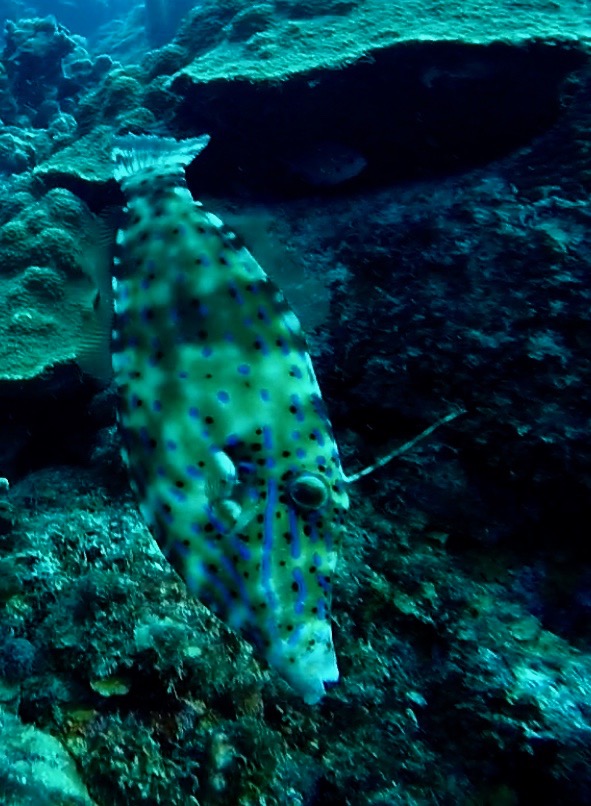
SCRAVLED FILEFISH
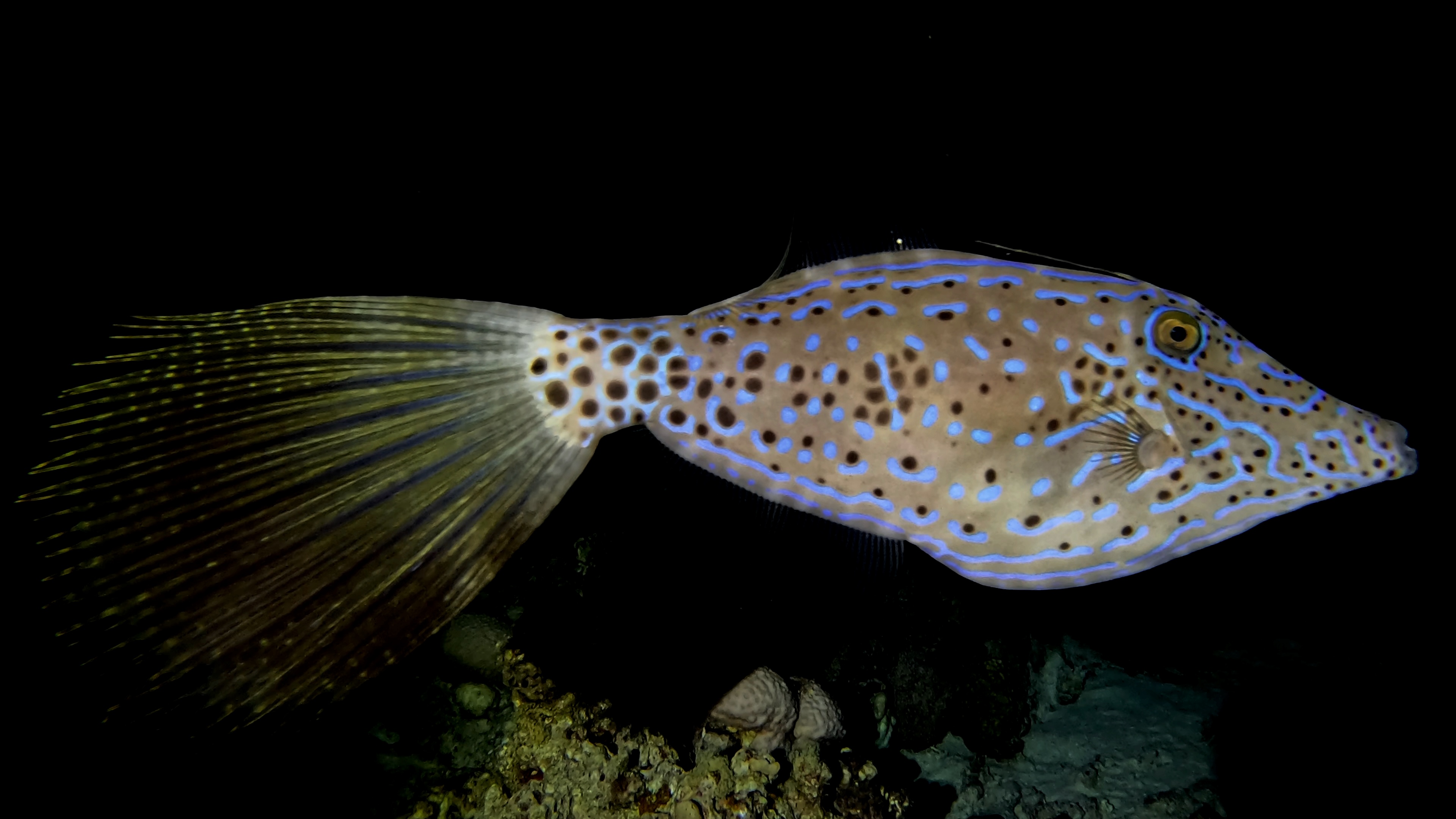
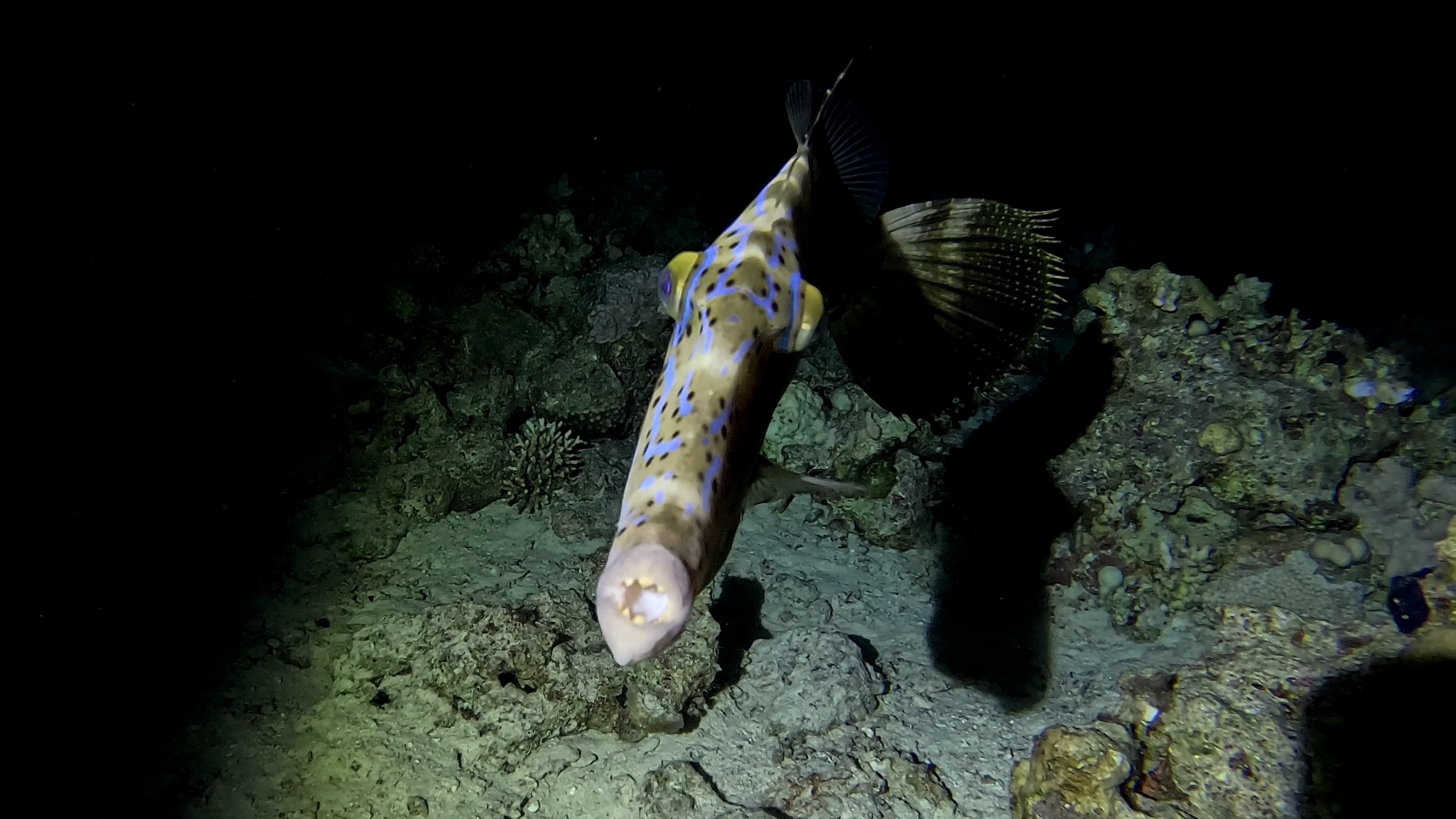
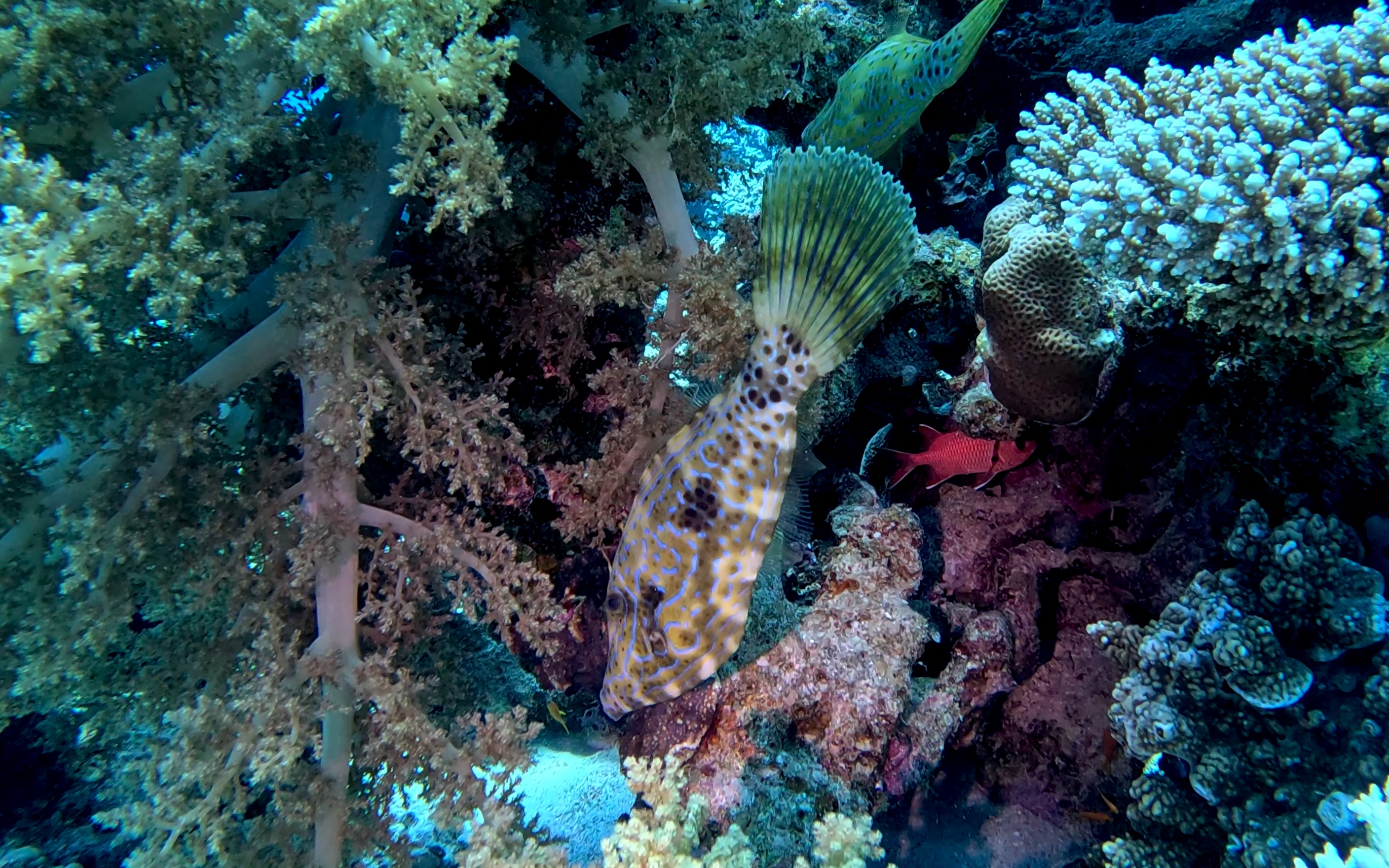
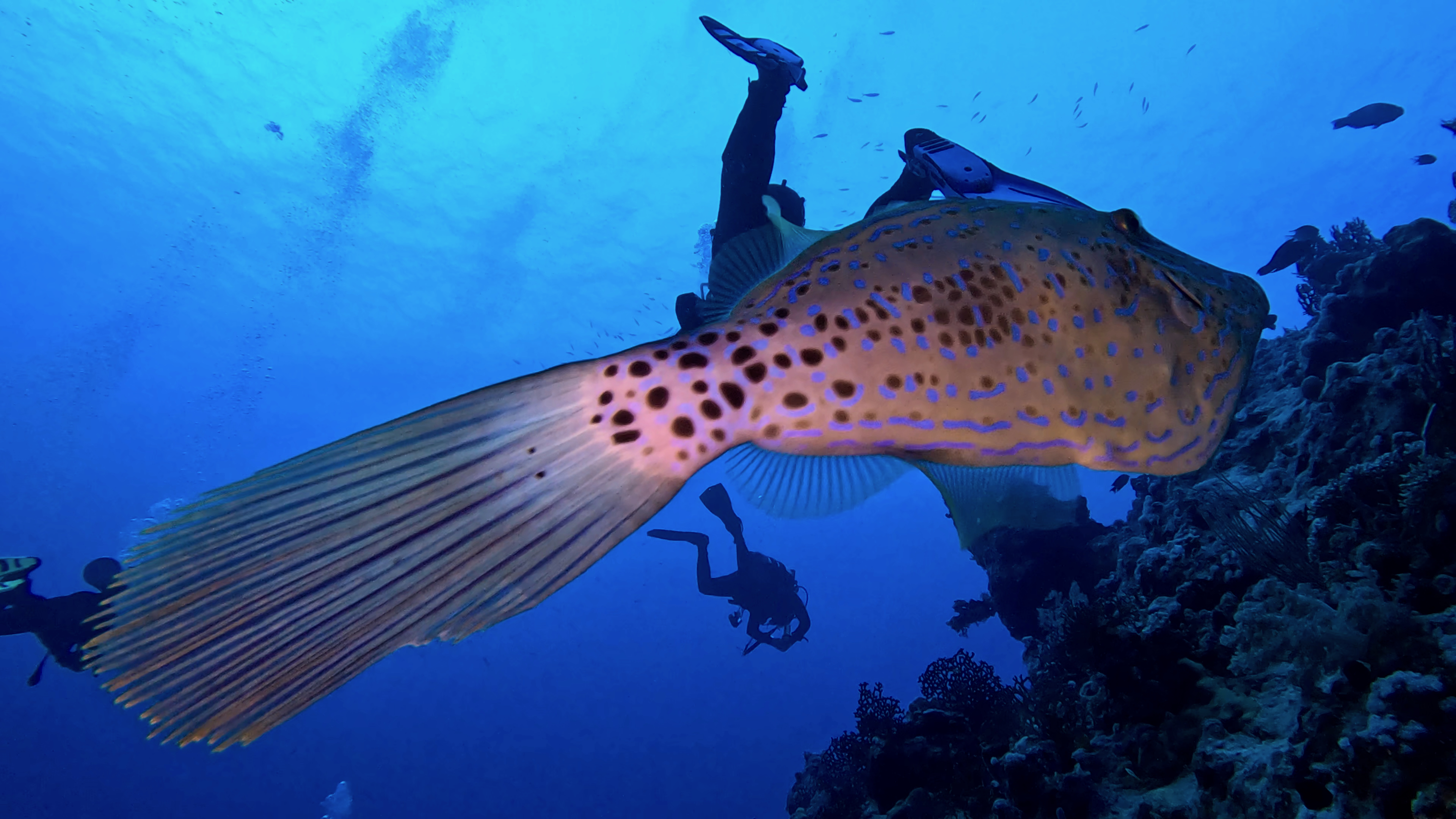
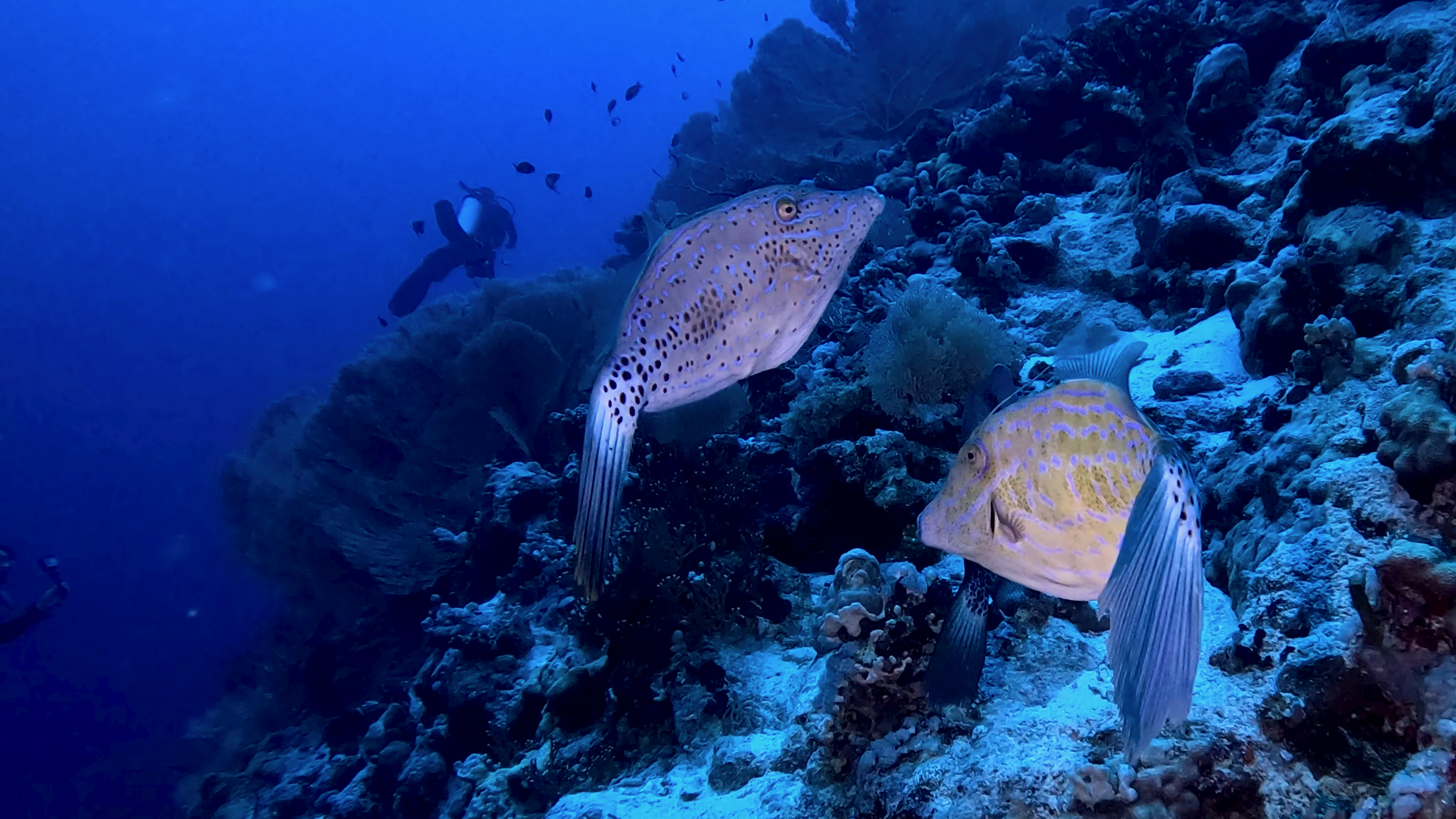
Scravled filefish – lat. Aluterus scriptus – Tobi
Scravled filefish je velika tropska riba s podolgovatim telesom in značilnim vzorcem črt ali “črtastih” lis po telesu. Živi v tropskih in subtropskih morjih po vsem svetu, pogosto v bližini koralnih grebenov in morskih travnikov. Hrani se z algami, koralami in drobnimi nevretenčarji. Vrsta ni ogrožena, vendar je občutljiva na uničenje koralnih grebenov in degradacijo morskega okolja.
The scrawled filefish is a large tropical fish with an elongated body and distinctive streaked or “scrawled” patterns on its skin. It is found in tropical and subtropical seas worldwide, often near coral reefs and seagrass beds. Its diet includes algae, coral, and small invertebrates. The species is not endangered but is sensitive to coral reef destruction and marine habitat degradation.
foto: Aleš Sulič, Elphinstone reef Egypt
SPOT-FIN PORCUPINEFISH – PORCUPINE PUFFER
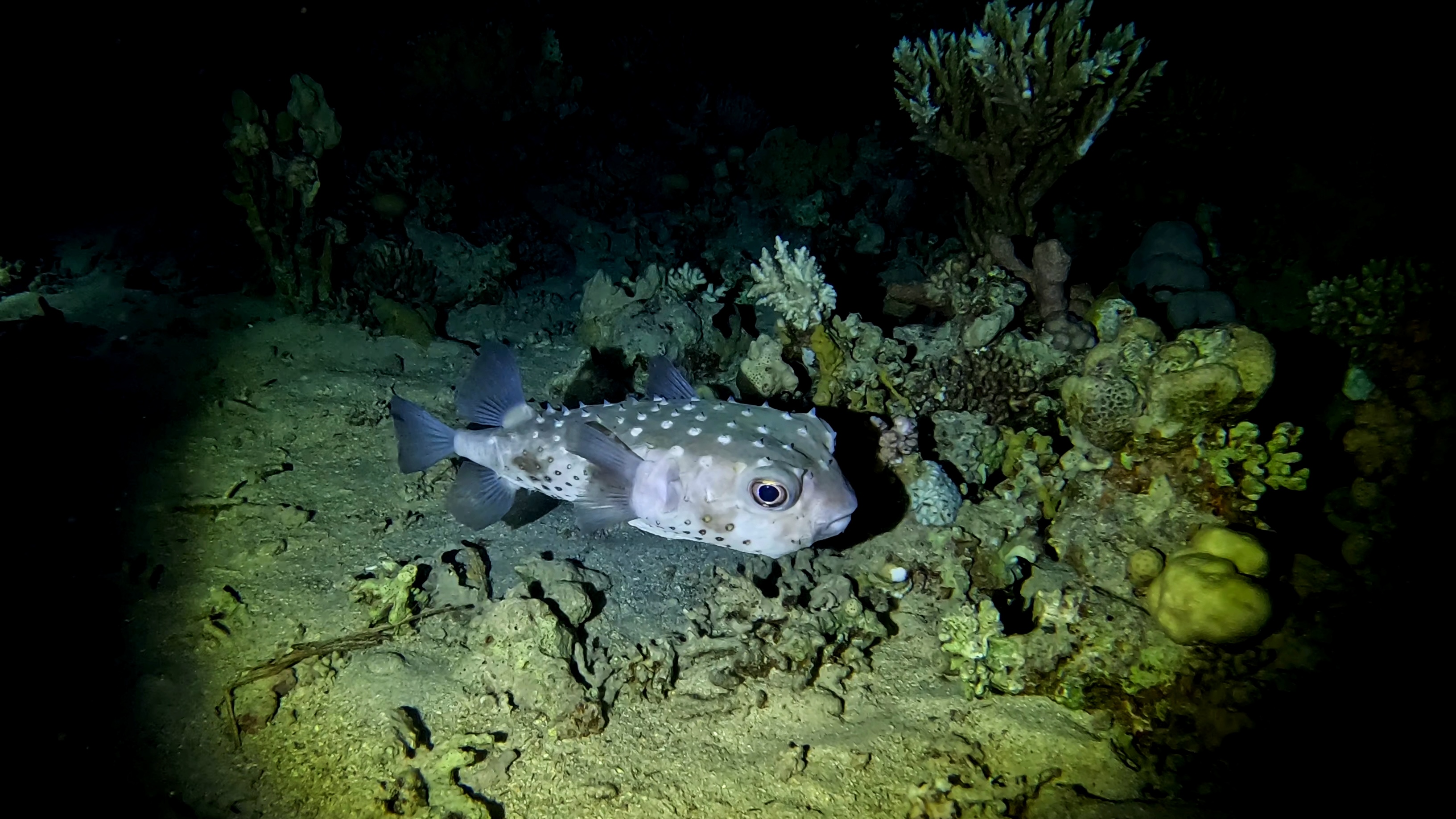
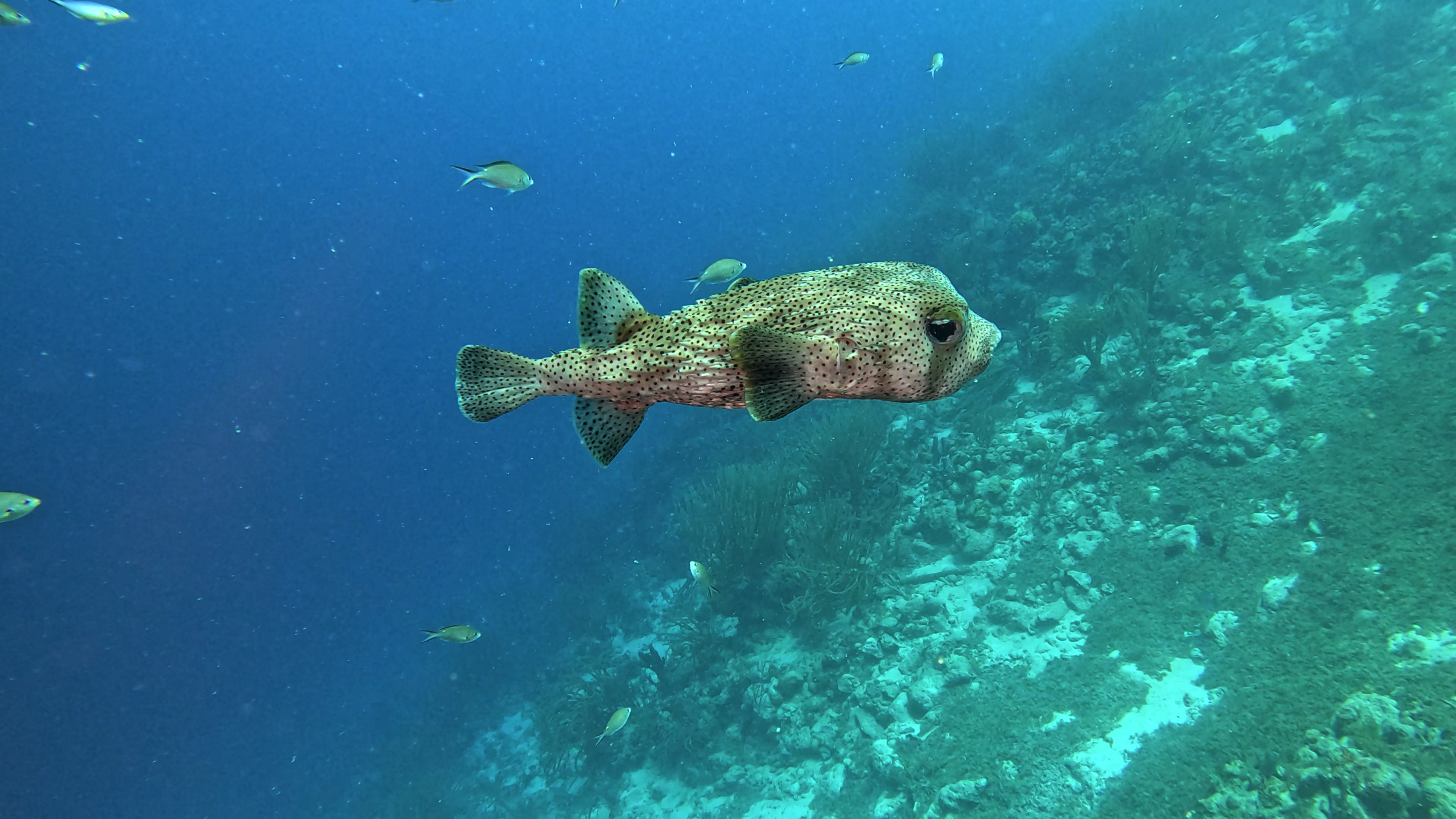
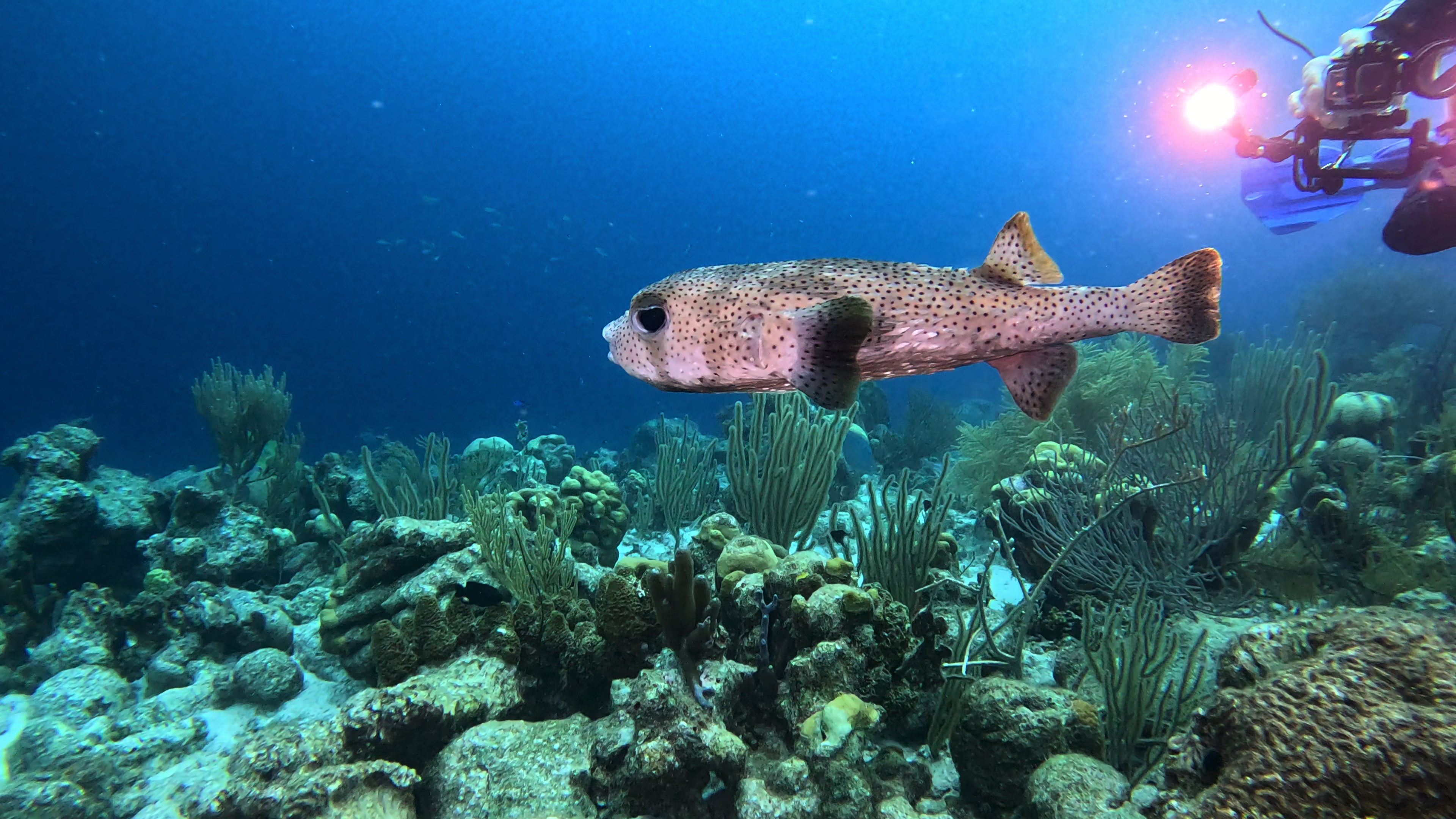
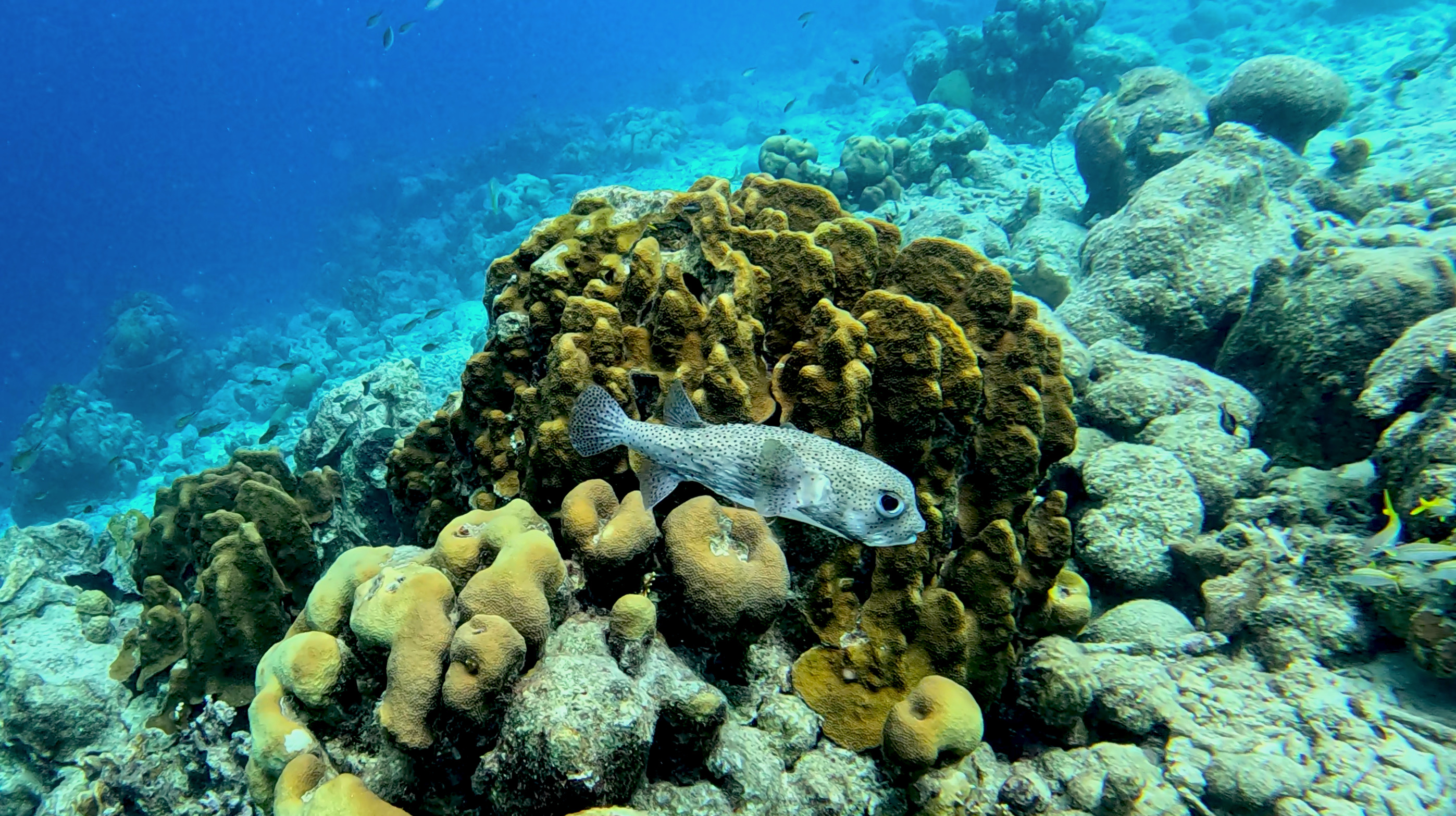
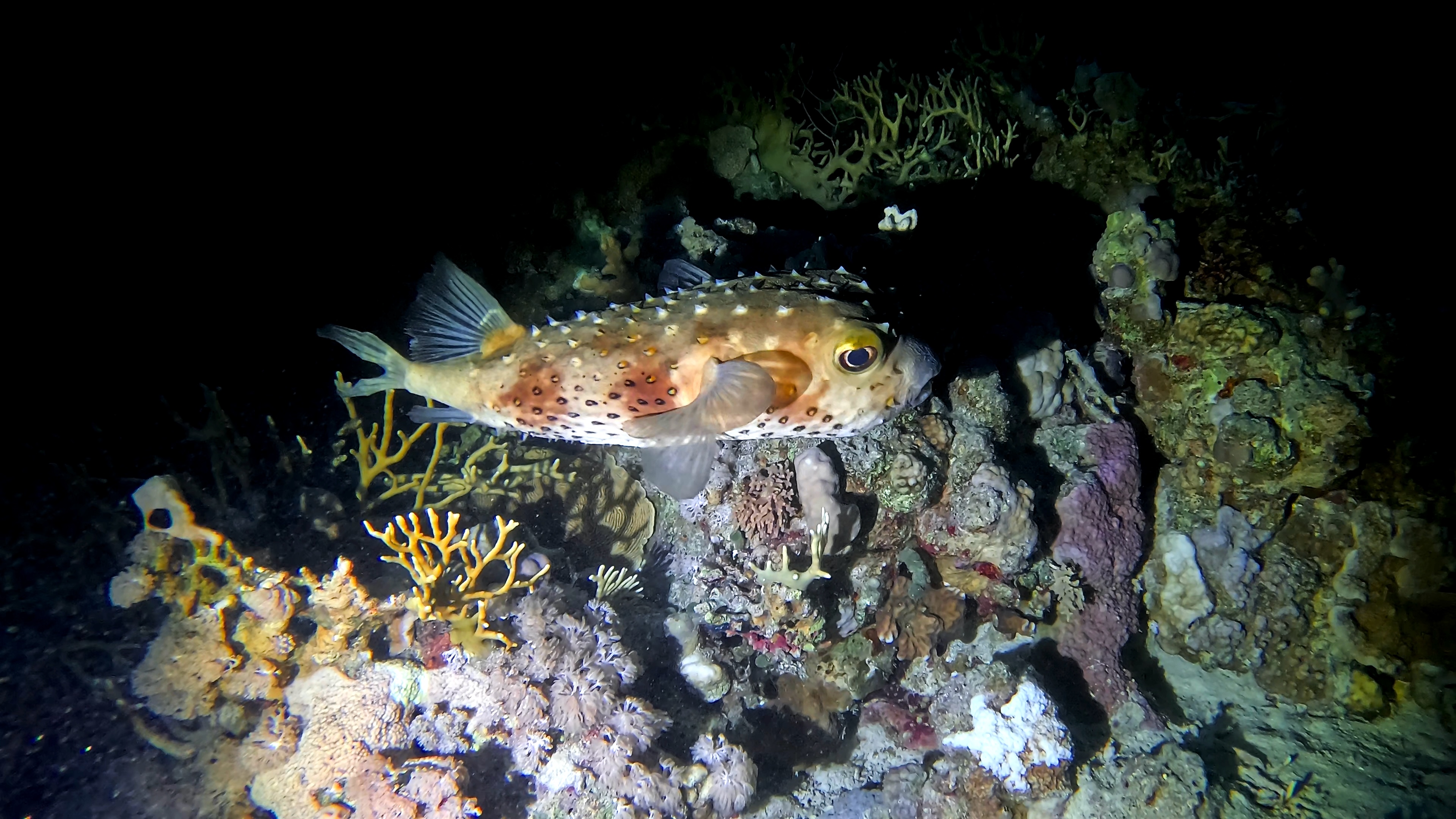
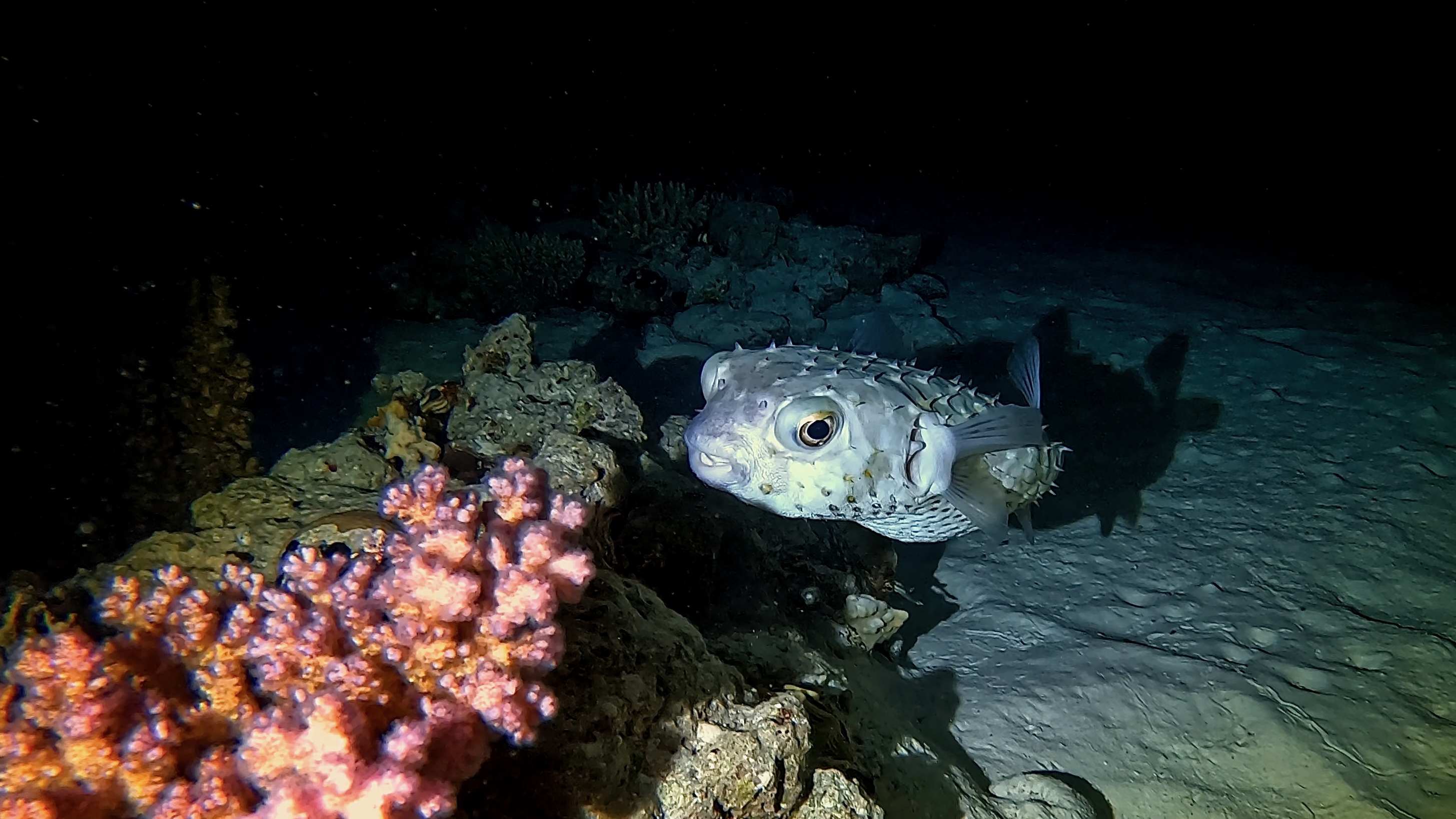
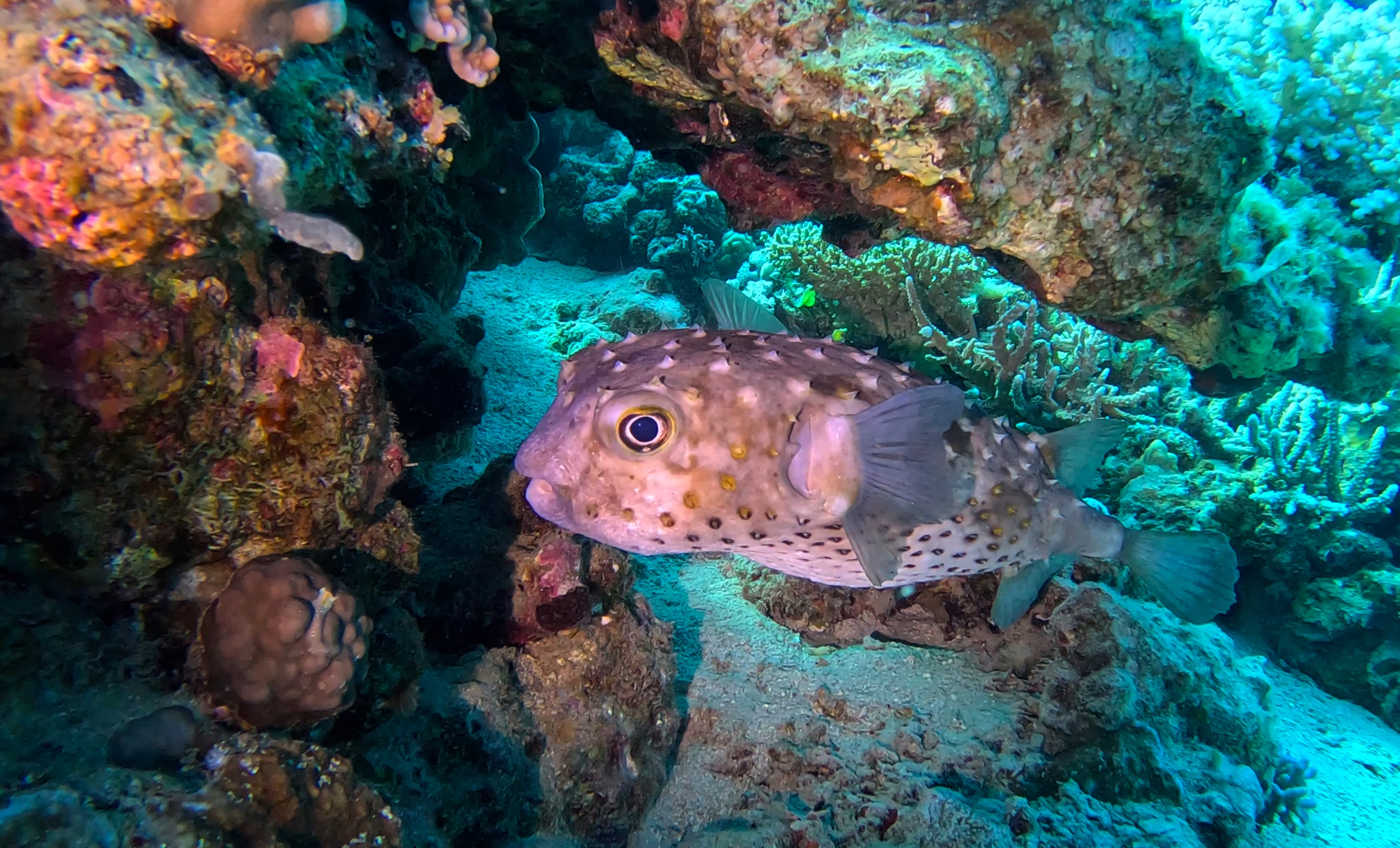
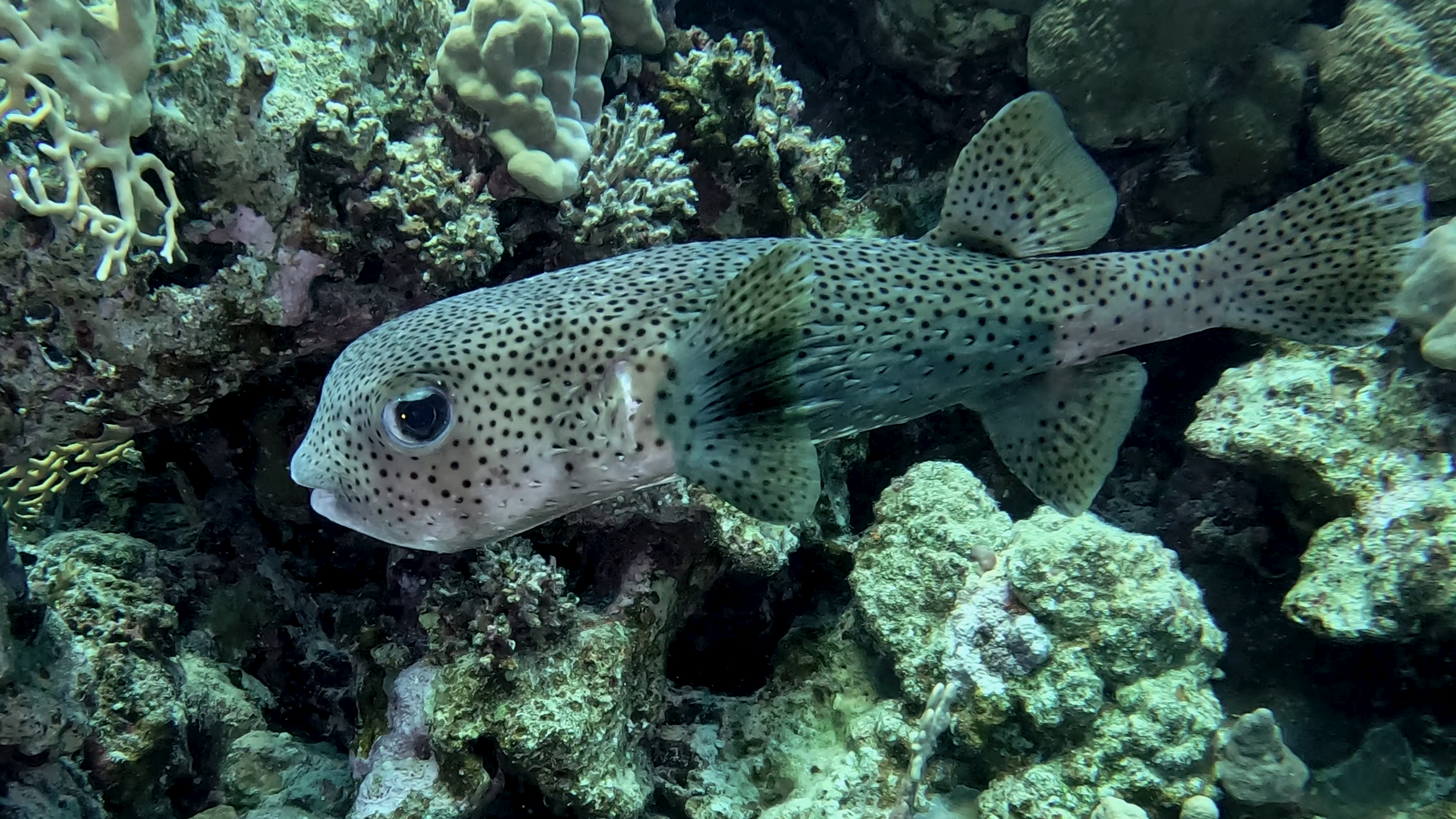
Spot-fin porcupine fish – lat. Diodon hzstrix – Bodičasta napihovalka
Znan tudi kot navadni bodičasti napihovalec ali »porcupinefish«, je velika morska riba iz družine Diodontidae. Prepoznaven je po sposobnosti napihovanja telesa in dolgih bodicah, ki delujejo kot obrambni mehanizem proti plenilcem. Živi v tropskih in subtropskih morjih po vsem svetu.
Also known as the spot‑fin porcupinefish, is a tropical marine fish from the family Diodontidae, recognizable by its spiny body and its ability to inflate as a defense mechanism against predators.
foto Aleš Sulič, North Egypt Sharm el Sheik, Dolphin house
WHITE SPOTTED PUFFERFISH – MASKED PUFFER
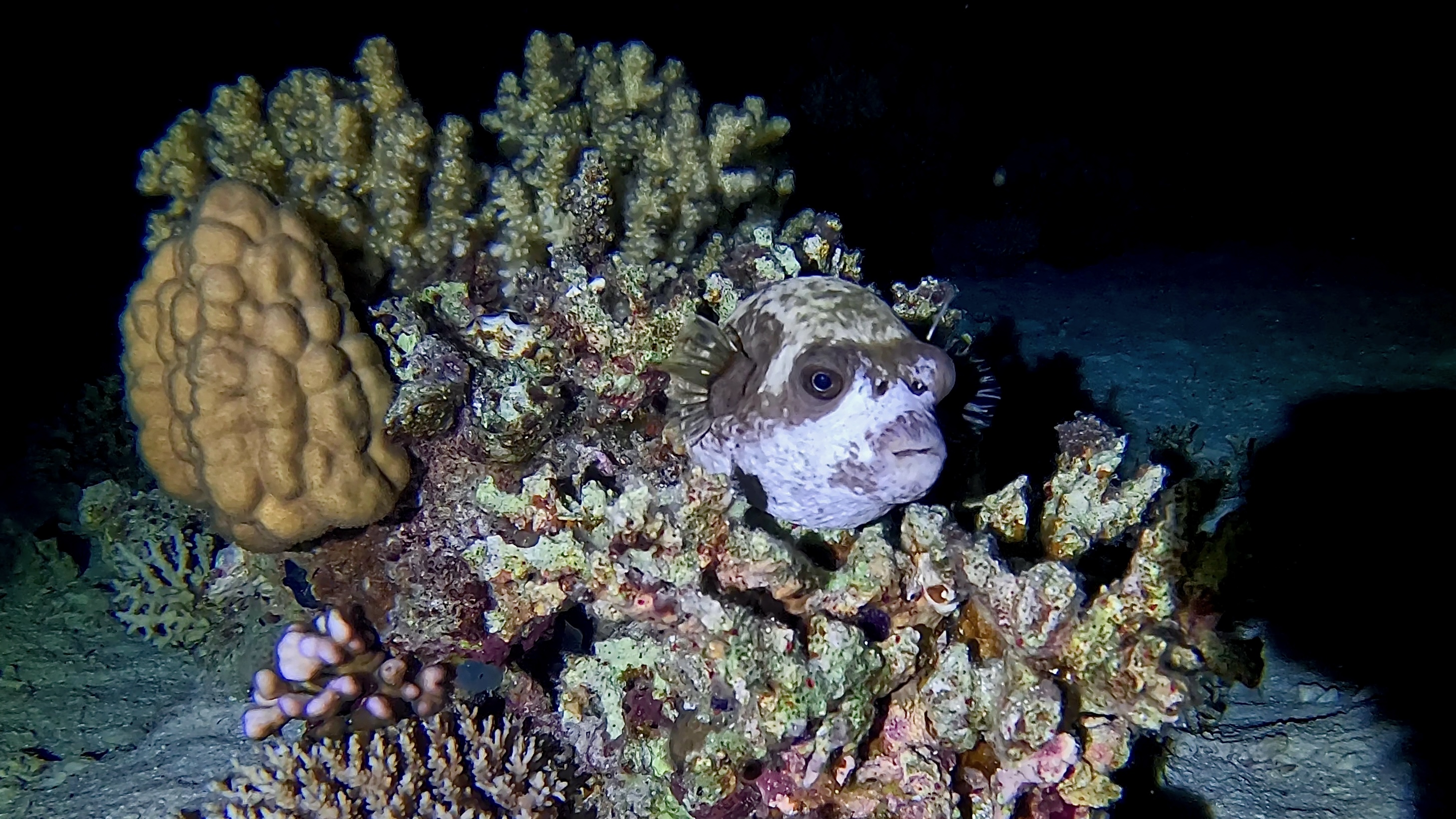
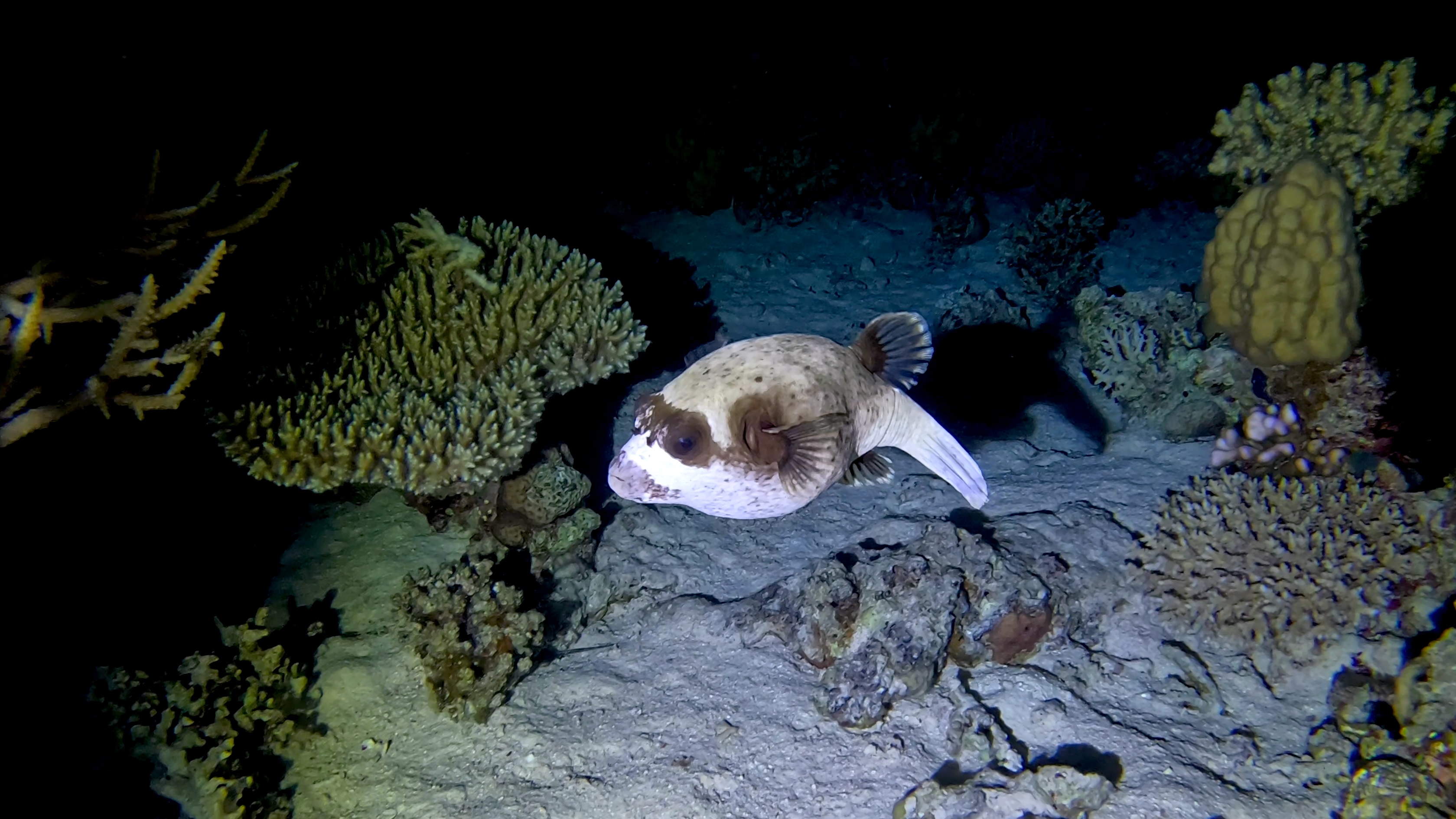
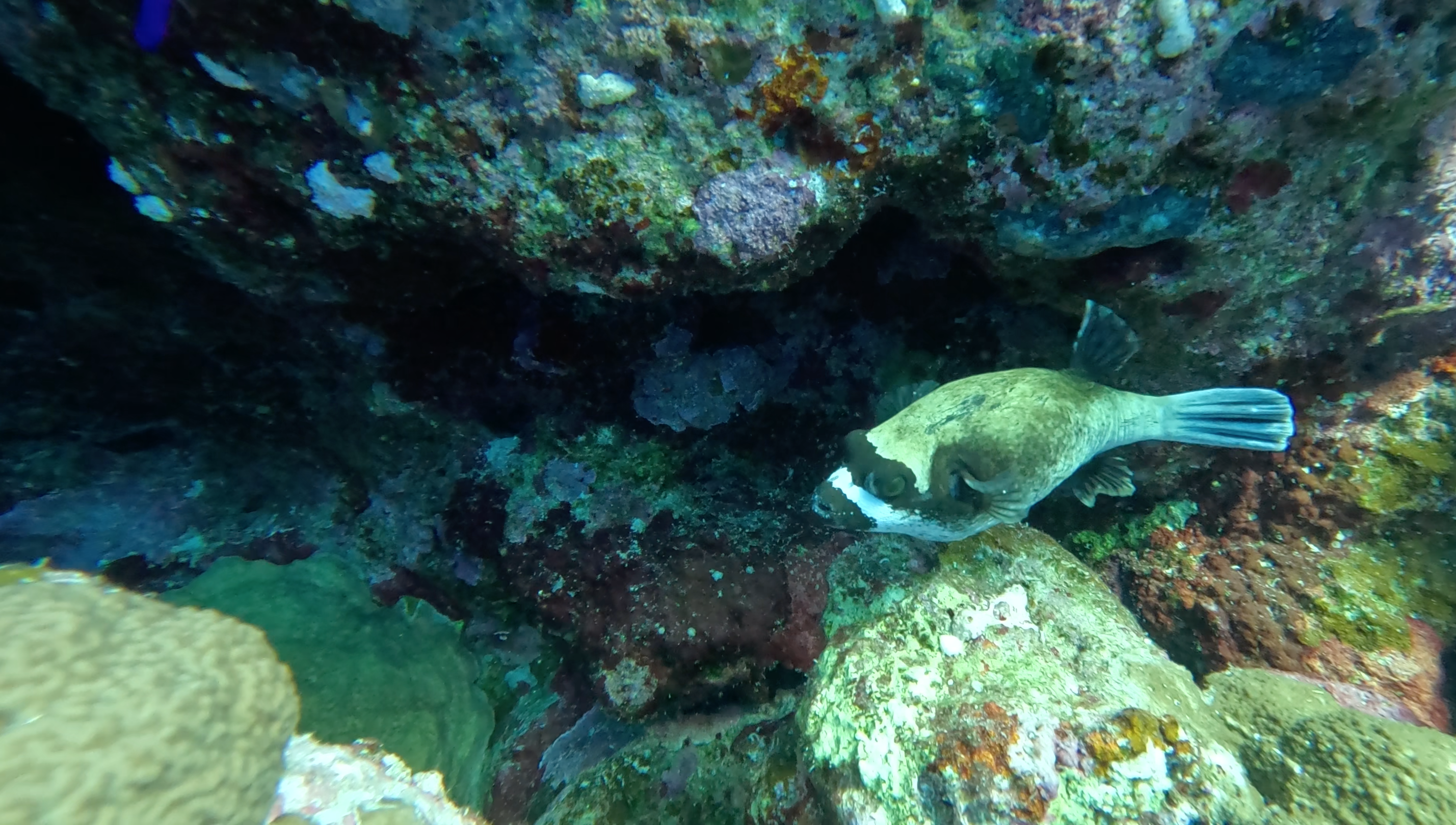
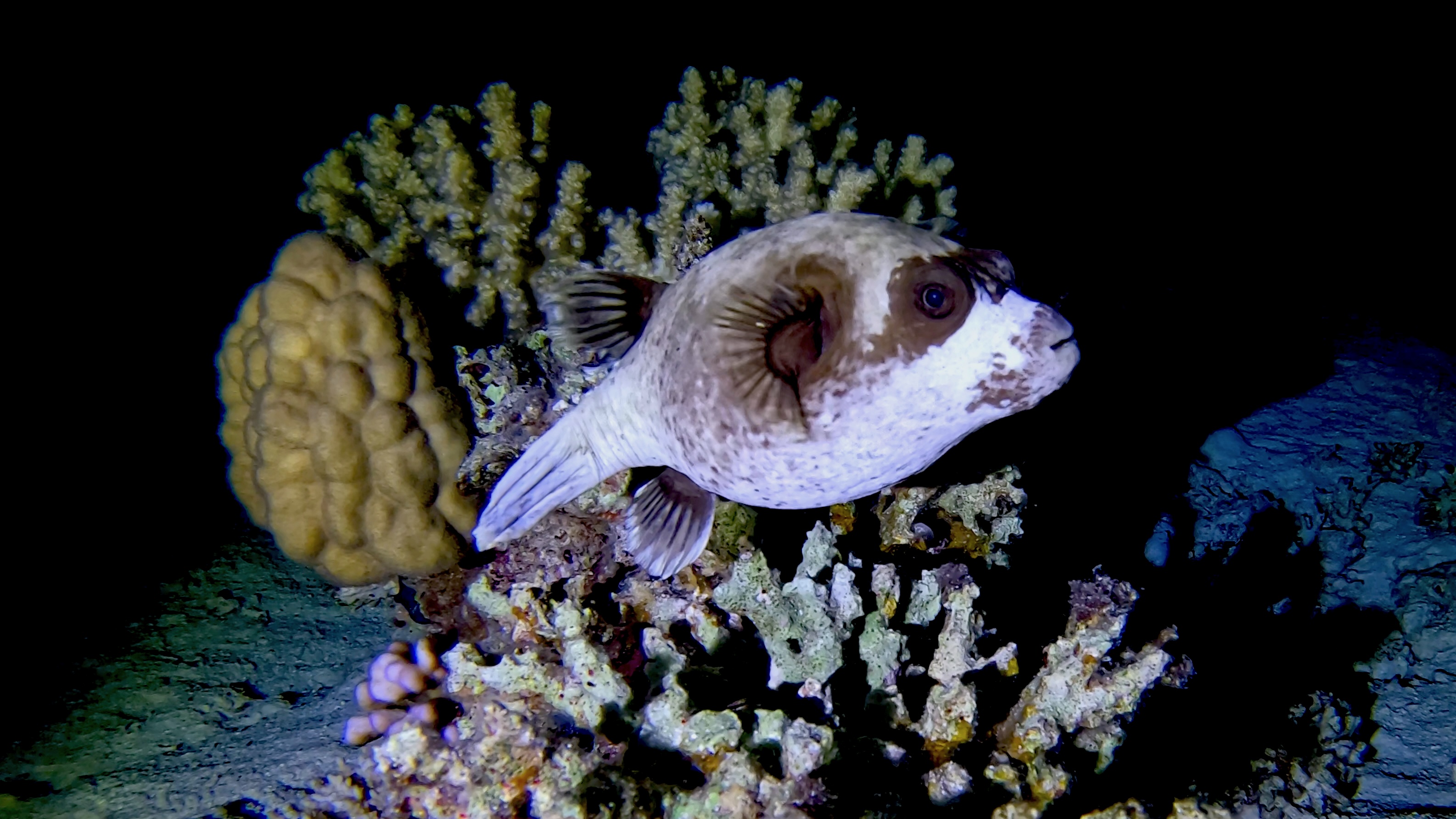
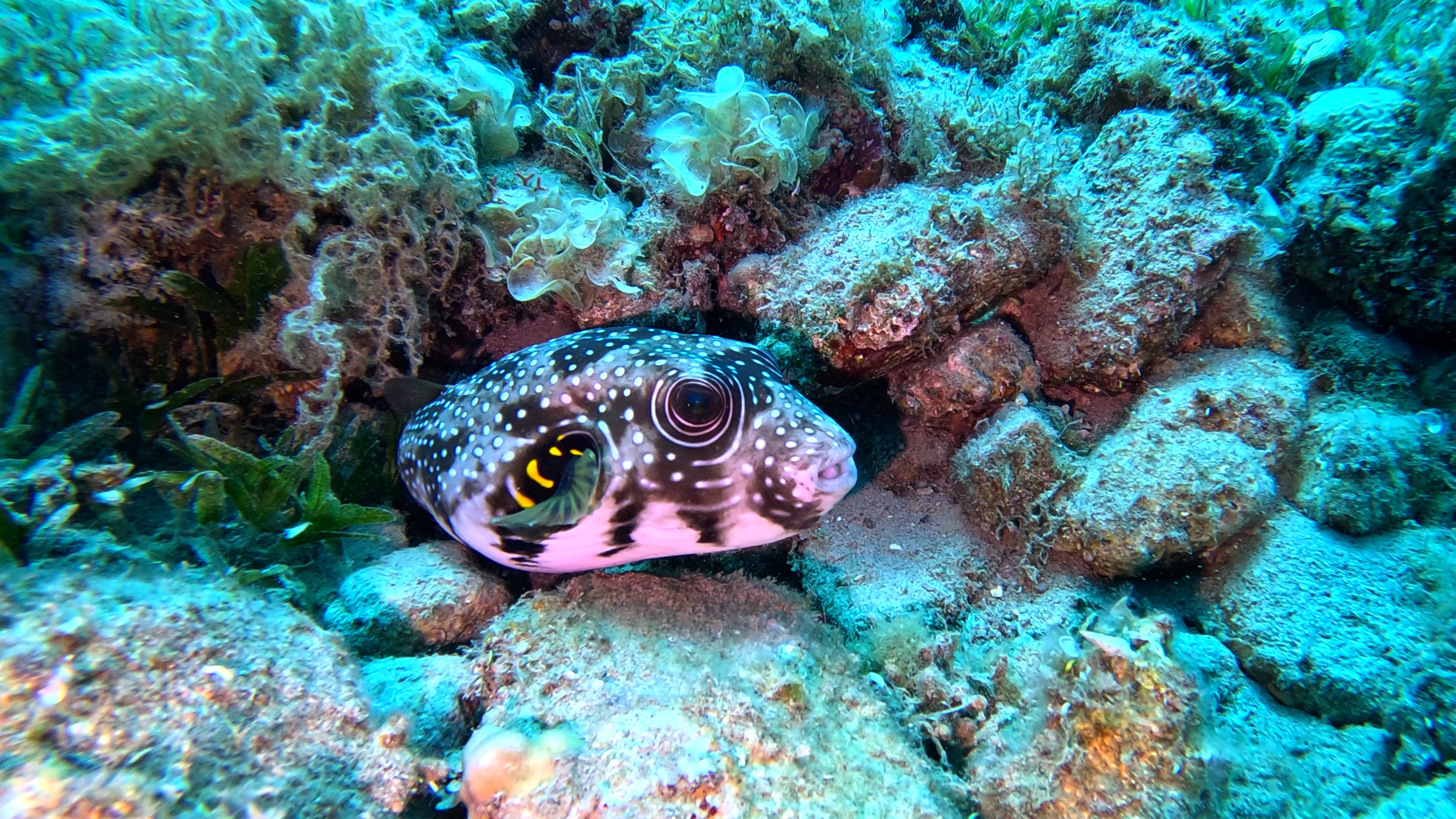
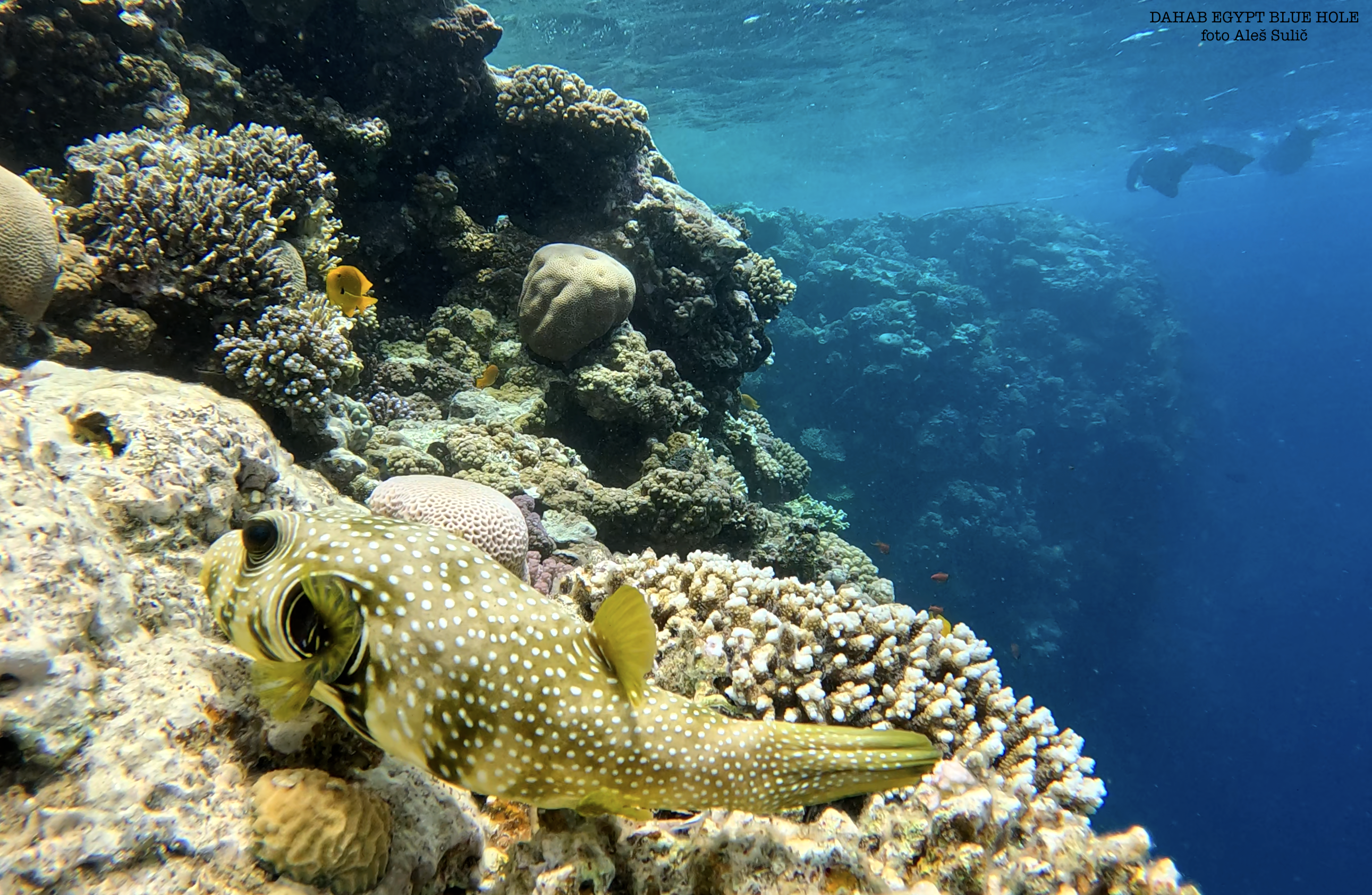
Masked Puffer / White‑spotted Pufferfish – lat. Arothron hispidus – Maskirna napihovalka
Maskirana napihovalka ali belopečatna napihovalka (Arothron hispidus) je srednje velika tropska riba z robustnim, bodičastim telesom in značilnimi belimi lisami. Živi v tropskih in subtropskih koralnih grebenih po vsem svetu, pogosto v bližini skal in koral. Hrani se z algami, nevretenčarji in spužvami. Vrsta trenutno ni ogrožena, je pa občutljiva na uničenje habitatov in degradacijo koralnih grebenov.
The white‑spotted pufferfish, also known as the masked puffer (Arothron hispidus), is a medium to large tropical pufferfish with a stout, spiny body and characteristic white spots. It inhabits tropical and subtropical coral reefs worldwide, often near rocky areas and coral heads. Its diet consists of algae, invertebrates, and sponges. The species is not currently endangered, but it is sensitive to habitat destruction and coral reef degradation.
foto: Aleš Sulič, Egypt Blue hole, Dahab
NAPOLEON HUMPHEAD WRASSE
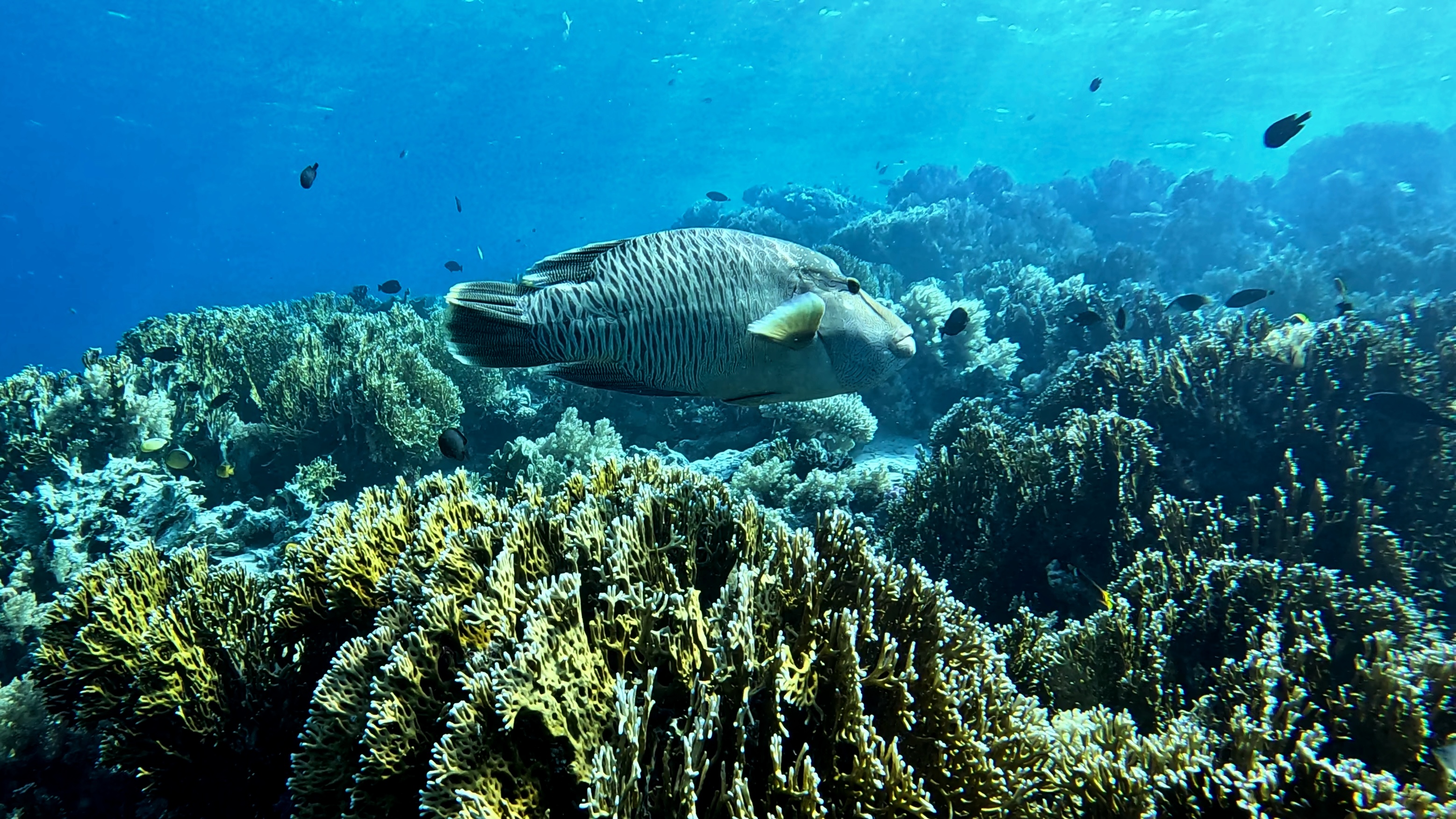
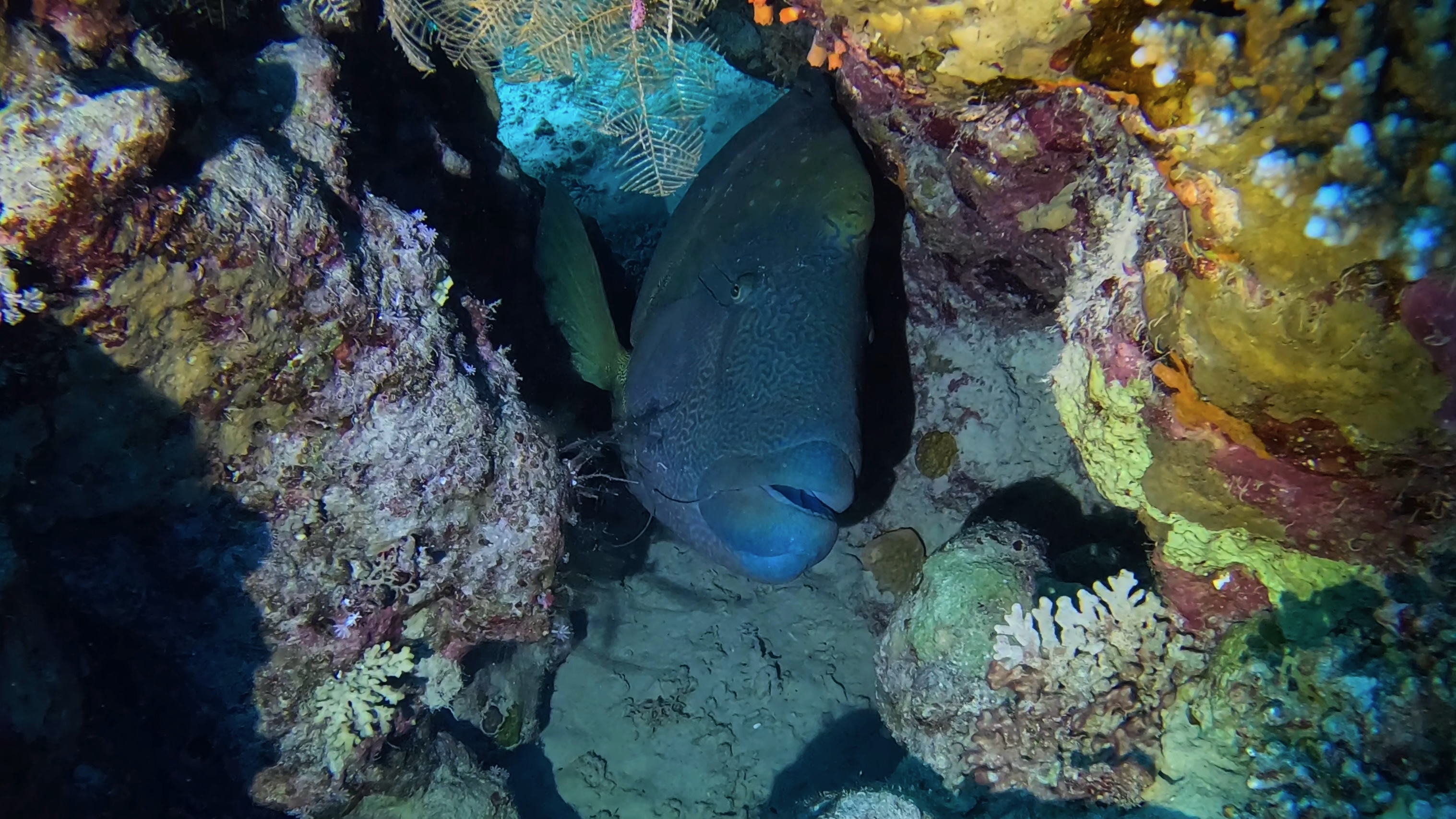
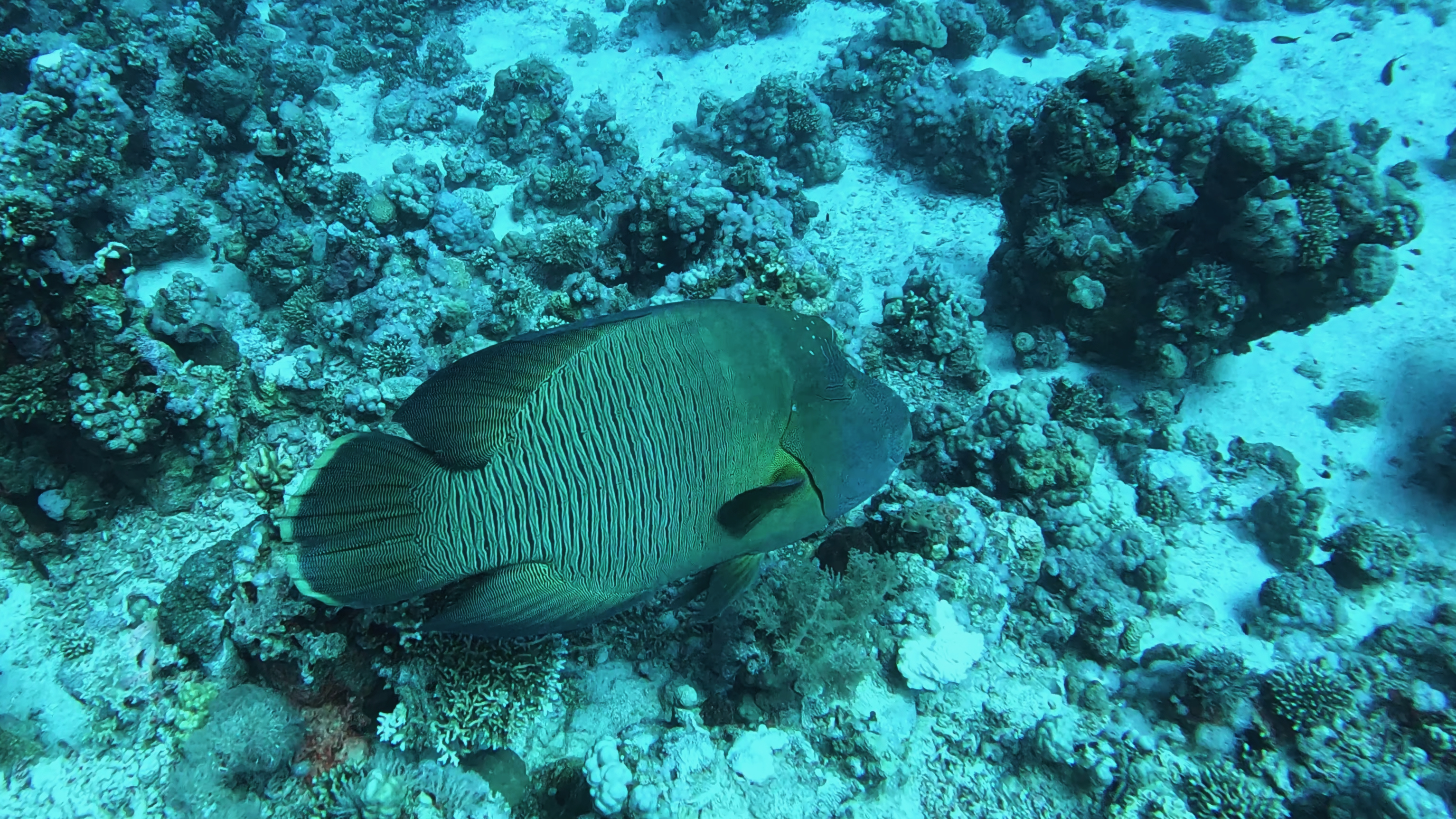
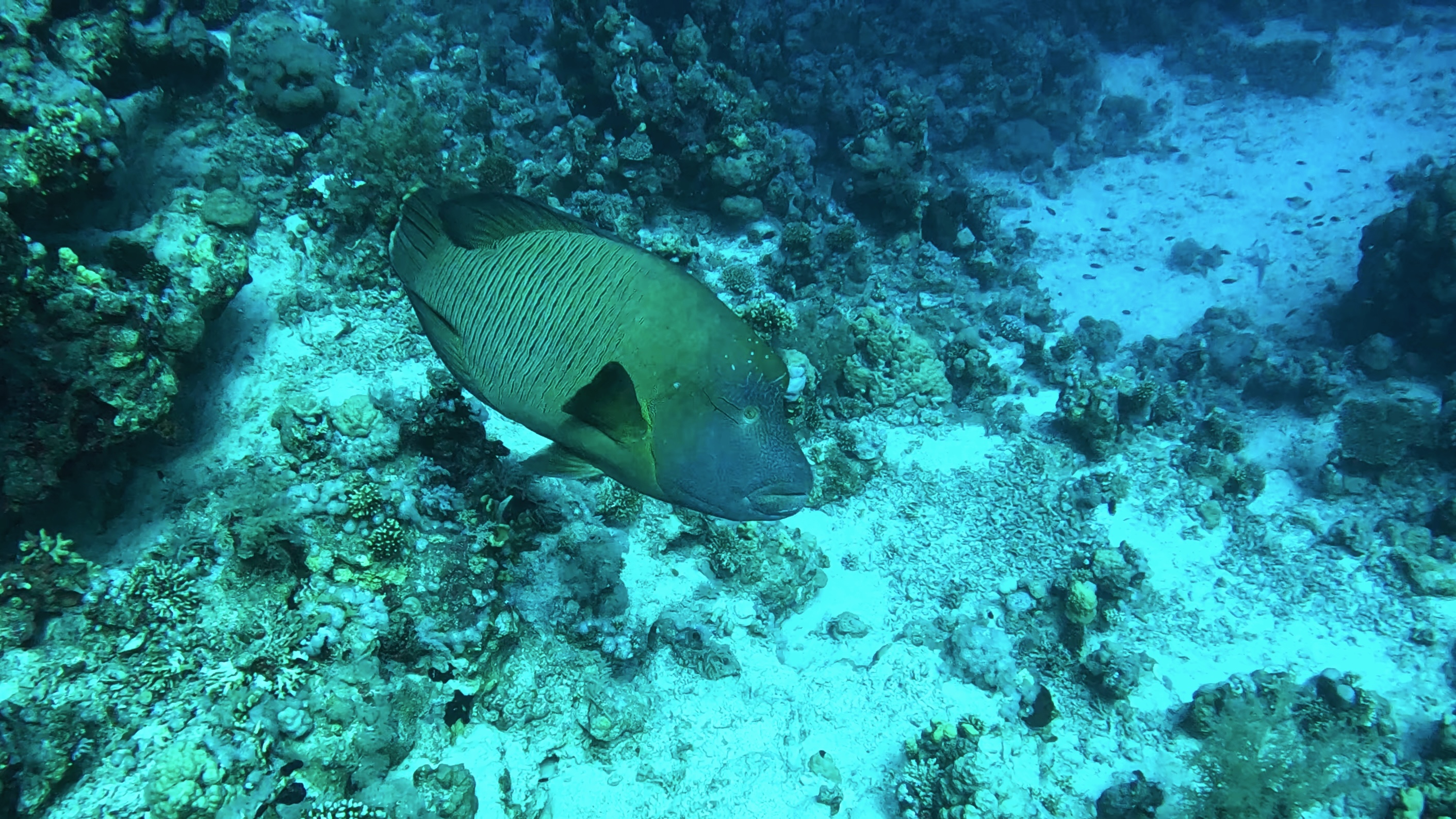
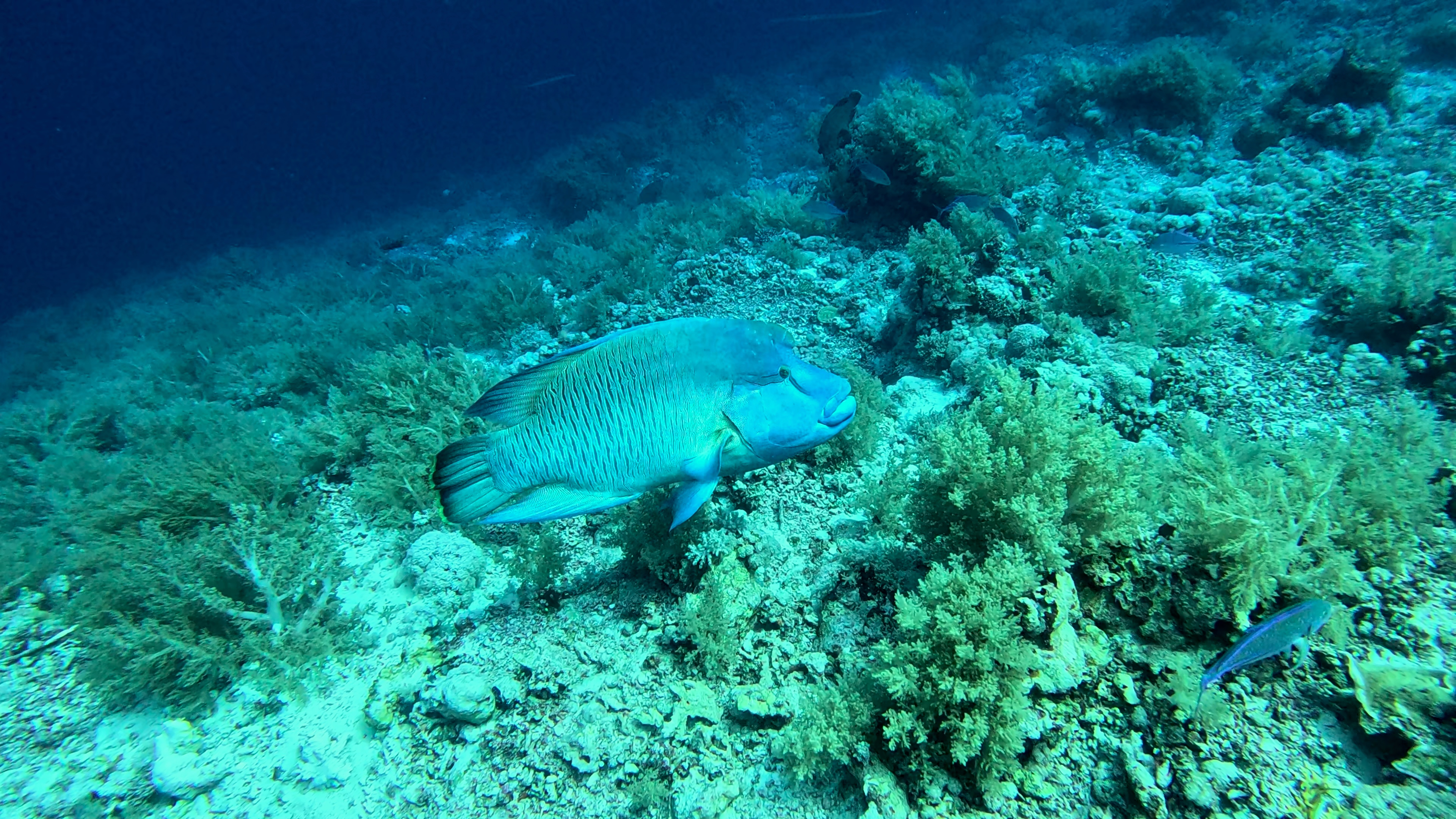
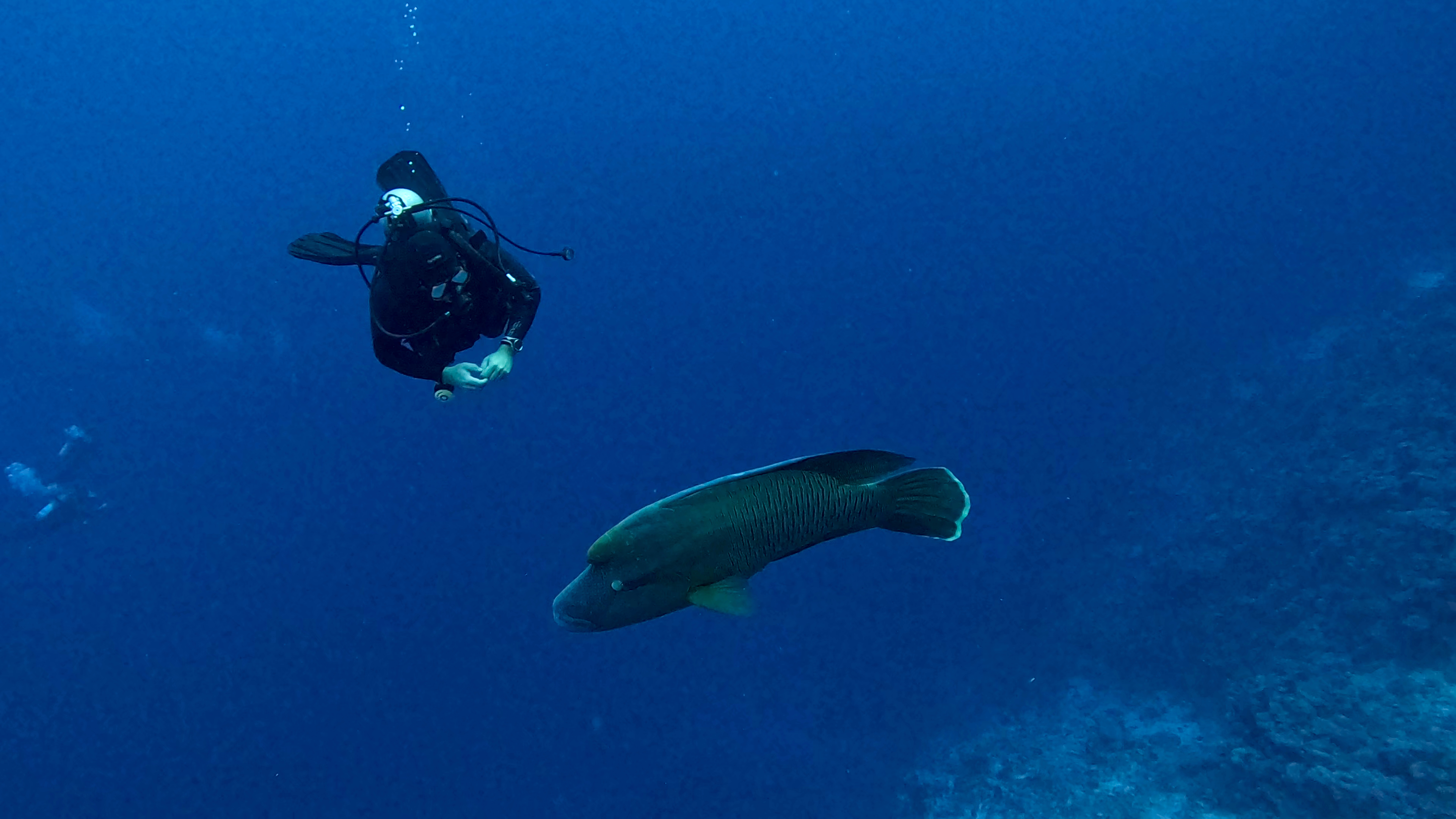
Humphead wrasse – lat. Cheilinus undulatus – Napoleon
Napoleonova bradavičasta babica, znana tudi kot humphead wrasse, je ena največjih koralnih rib. Zraste lahko do 2 metra dolžine in doseže težo preko 180 kg. Živi v tropskih koralnih grebenih Indo‑Pacifiškega območja. Hrani se z rakci, mehkužci, zrezanimi koralami in strupenimi vrstami, kot so kamenice in kraki. Vrsta je kritično ogrožena zaradi prekomernega ribolova, nezakonite trgovine in uničevanja koralnih grebenov.
The Napoleon humphead wrasse is one of the largest reef fish, growing up to 2 meters long and weighing over 180 kg. It inhabits tropical coral reefs of the Indo-Pacific region. Its diet includes crustaceans, mollusks, coral-eating invertebrates, and toxic species like crown-of-thorns starfish. The species is critically endangered due to overfishing, illegal trade, and coral reef destruction.
foto: Aleš Sulič, Egypt, Sharm el Sheik, Brothers islands
ORANGEFACE BUTTERFLY
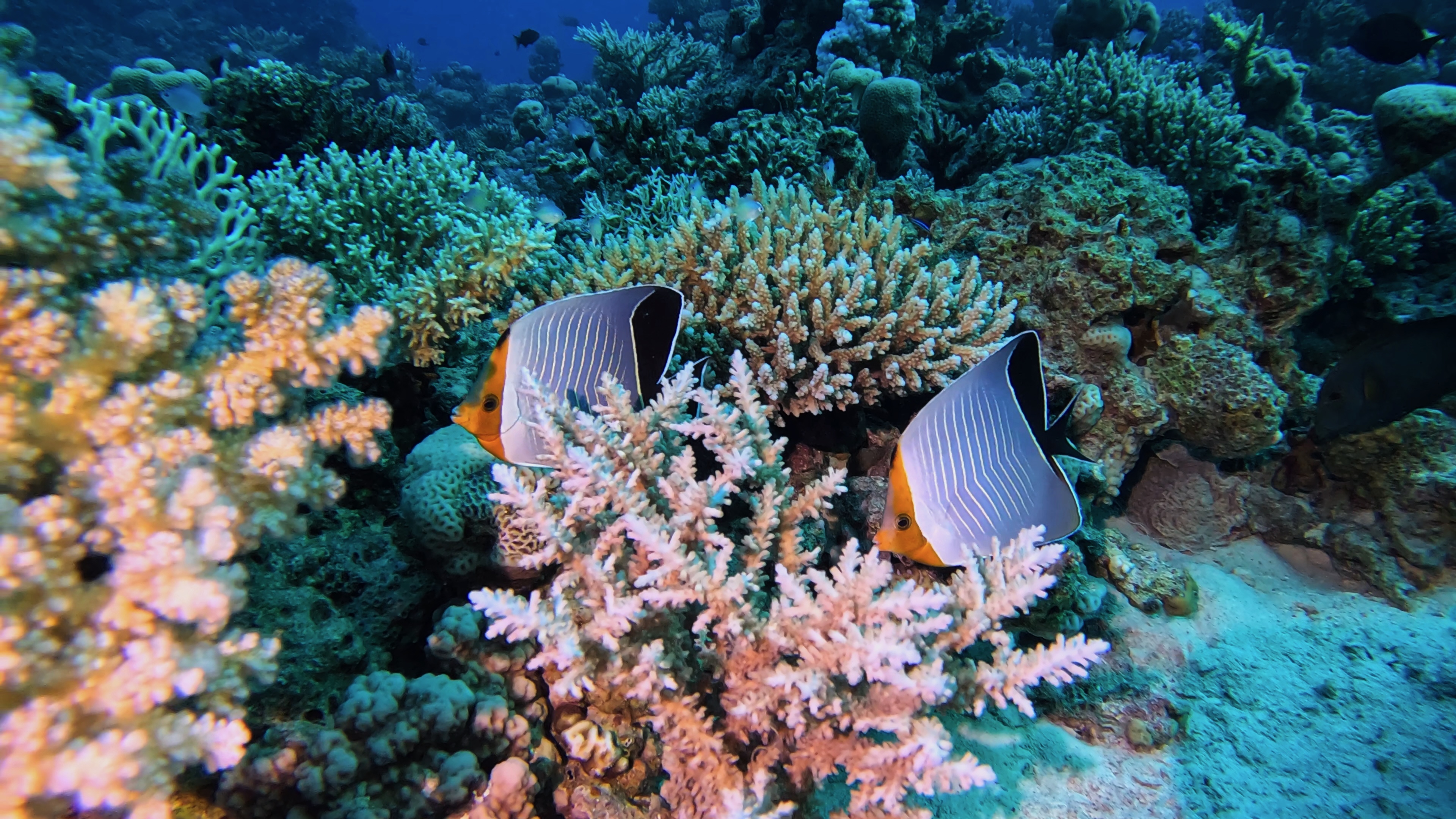
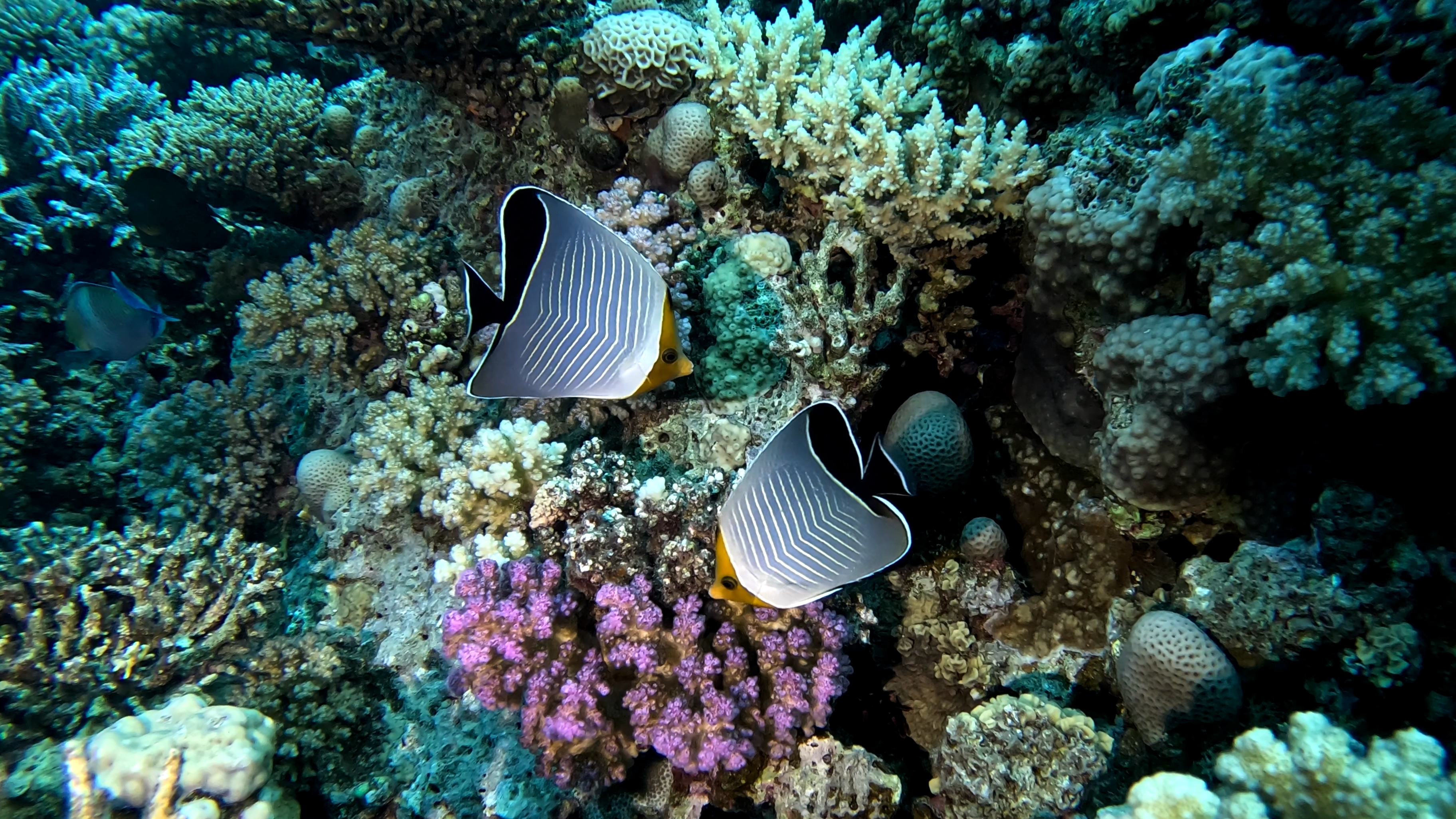
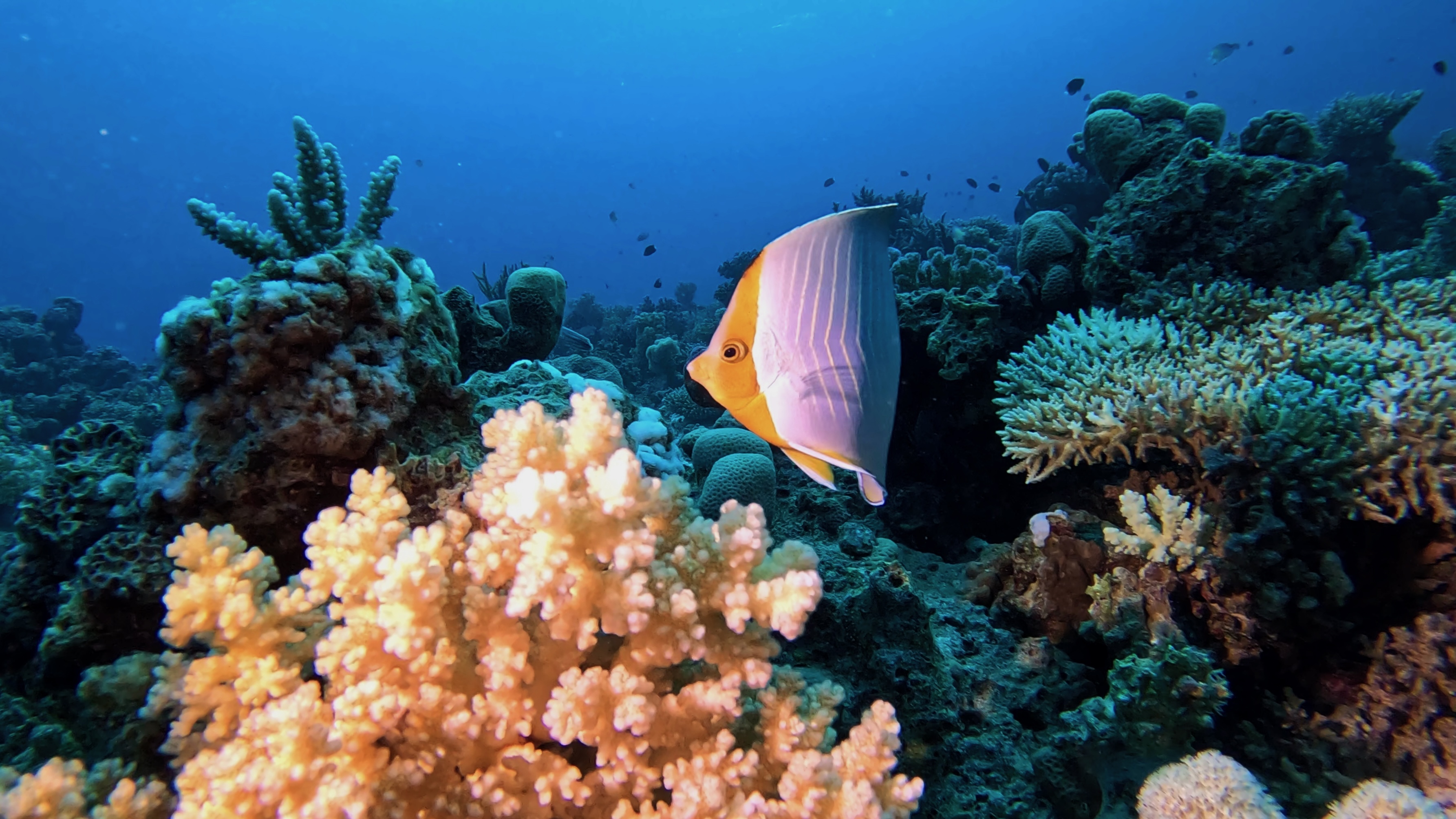
Orangeface Butterflyfish – lat. Chaetodon auriga – Oranžno glavati metuljček
Je srednje velika tropska riba z značilnim oranžnim obrazom in kontrastnimi črnimi črtami po telesu. Živi v tropskih koralnih grebenih Indo‑Pacifiškega območja in se prehranjuje predvsem z algami, drobnimi nevretenčarji in koralnimi polipi.
The Orangeface Butterflyfish is a medium-sized tropical reef fish, recognizable by its orange face and contrasting black markings across its body. It inhabits tropical coral reefs of the Indo-Pacific region and feeds primarily on algae, small invertebrates, and coral polyps. The species is not currently endangered, but it is sensitive to coral reef destruction and ocean pollution.
foto: Aleš Sulič, North Egypt
ATLANTIC BLUE TANG FISH
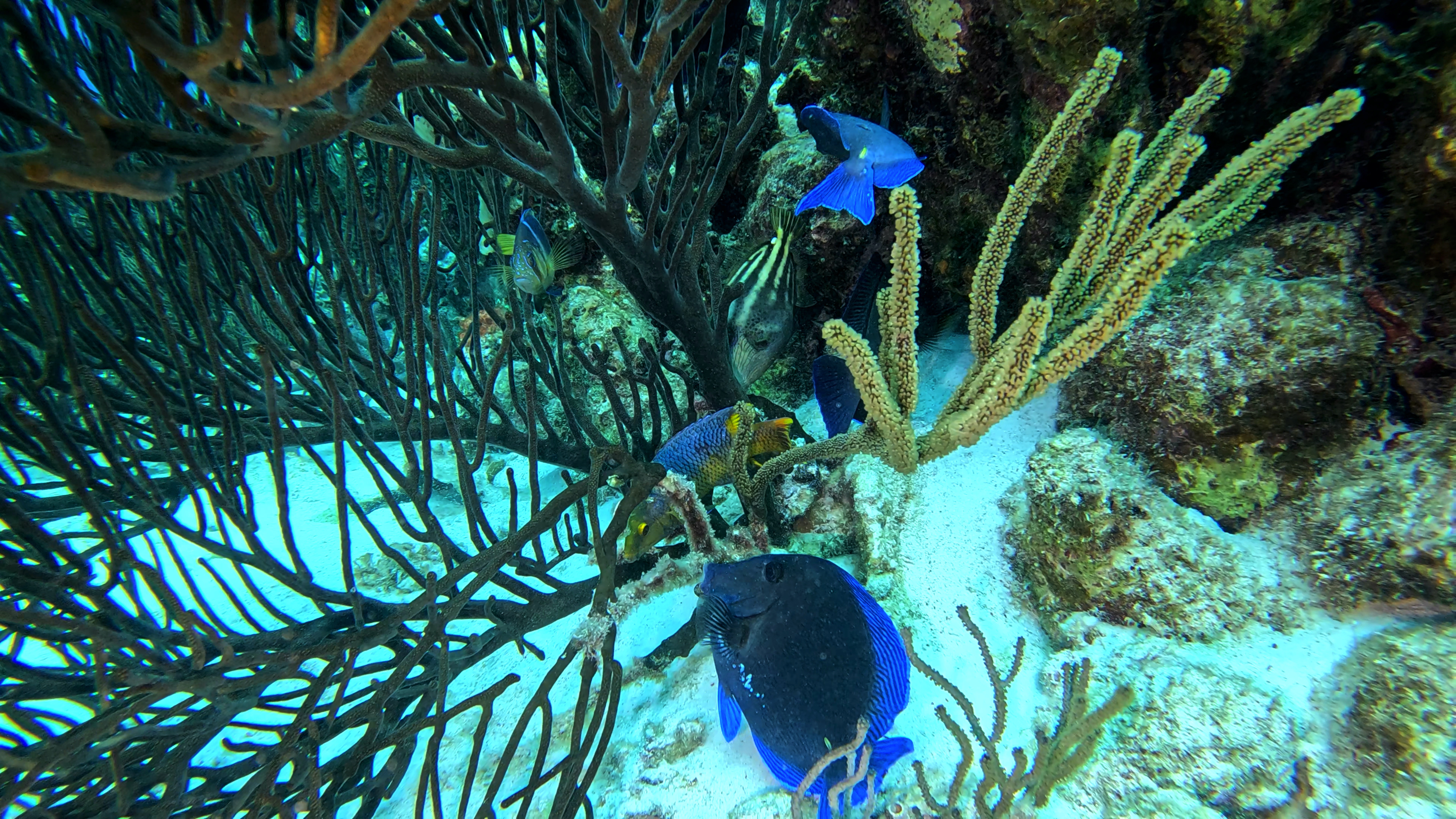
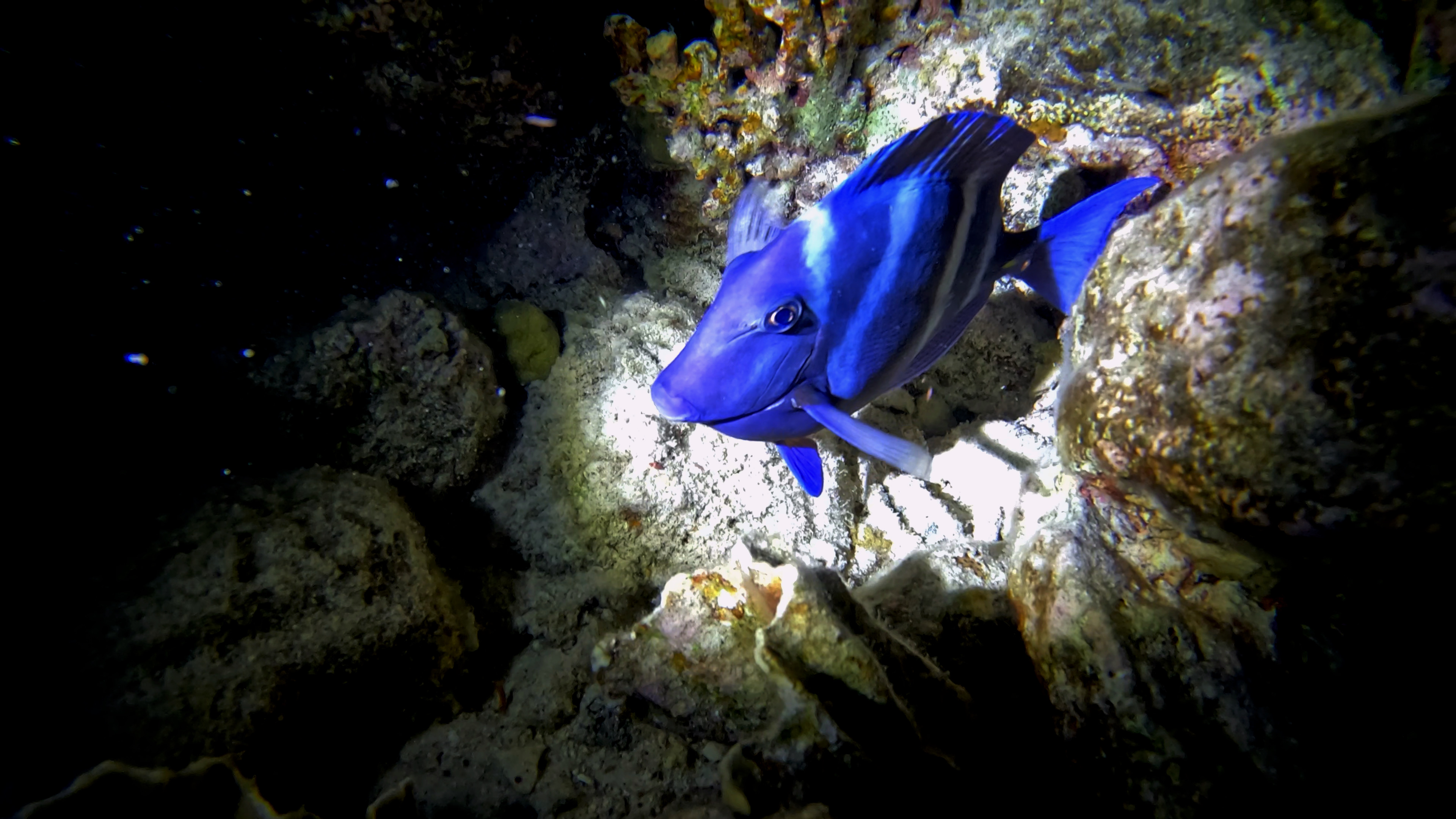
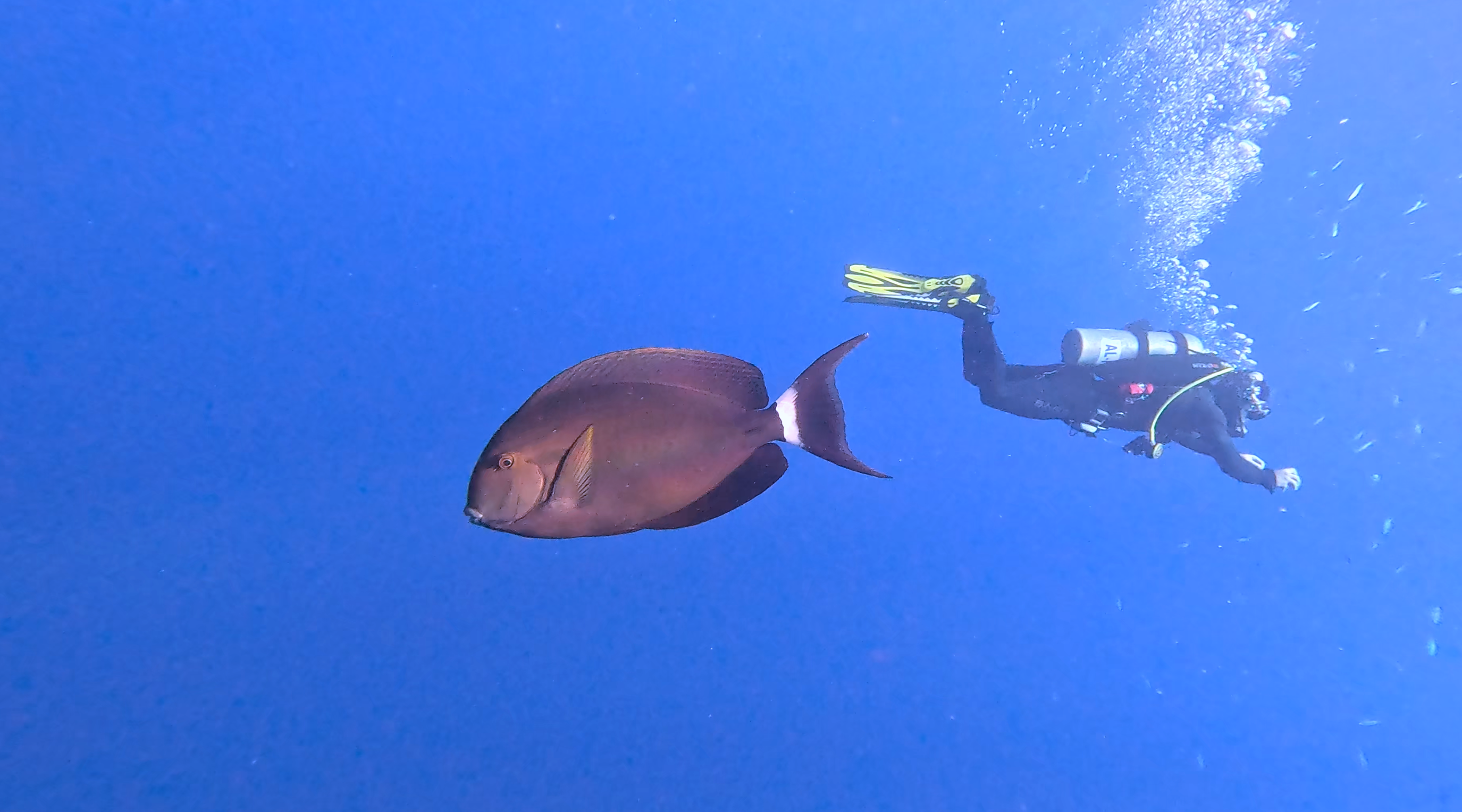
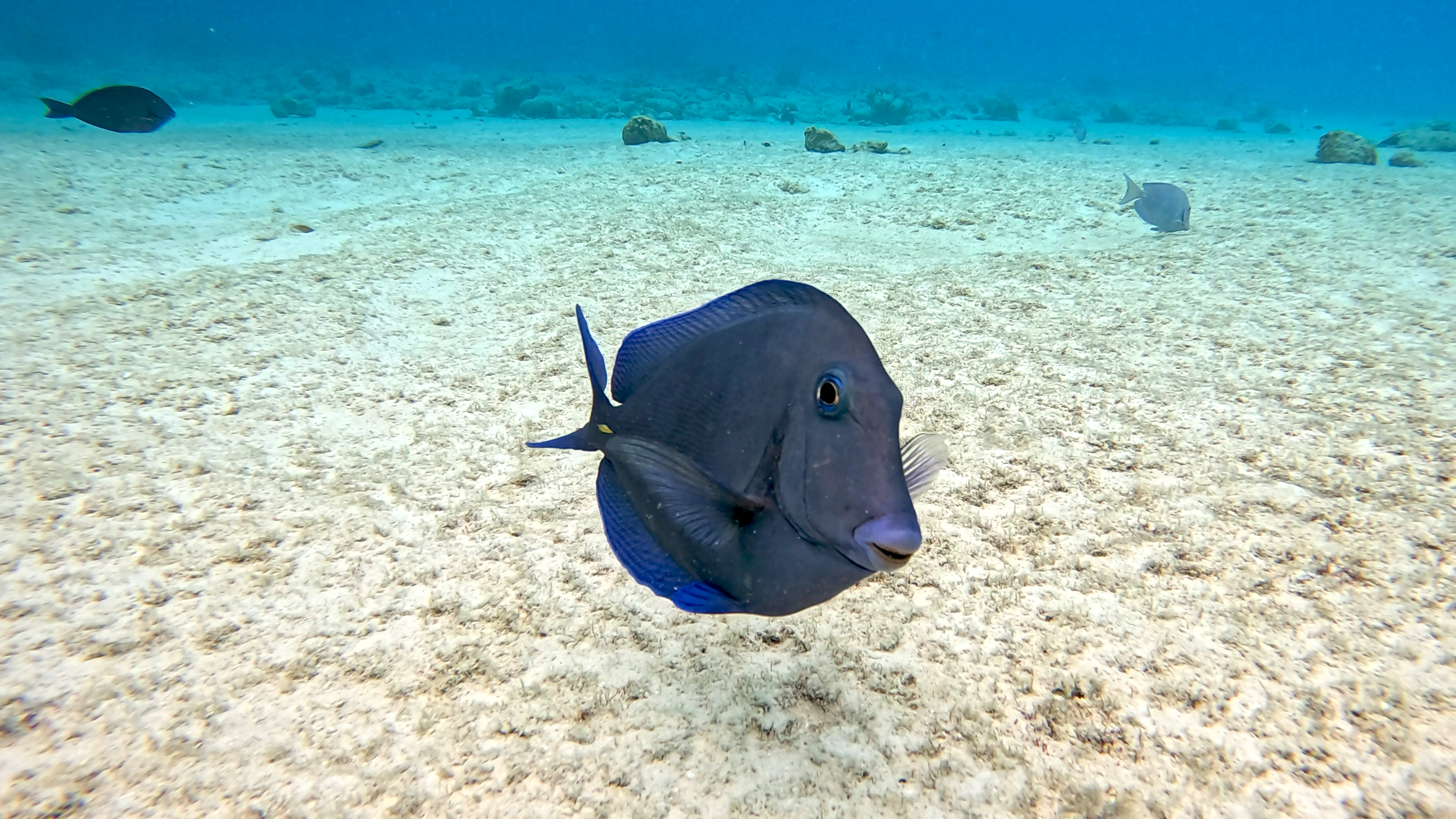
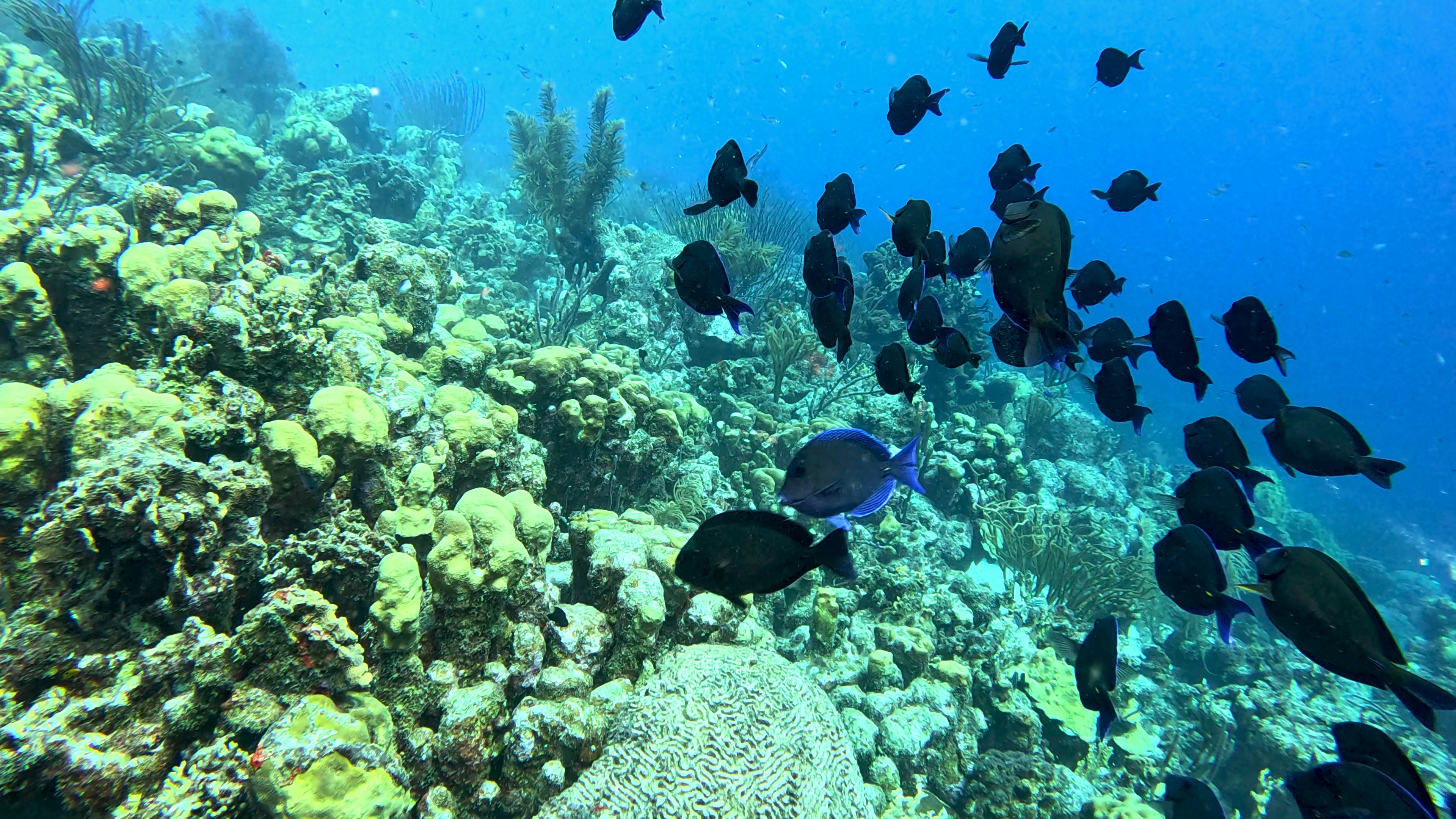
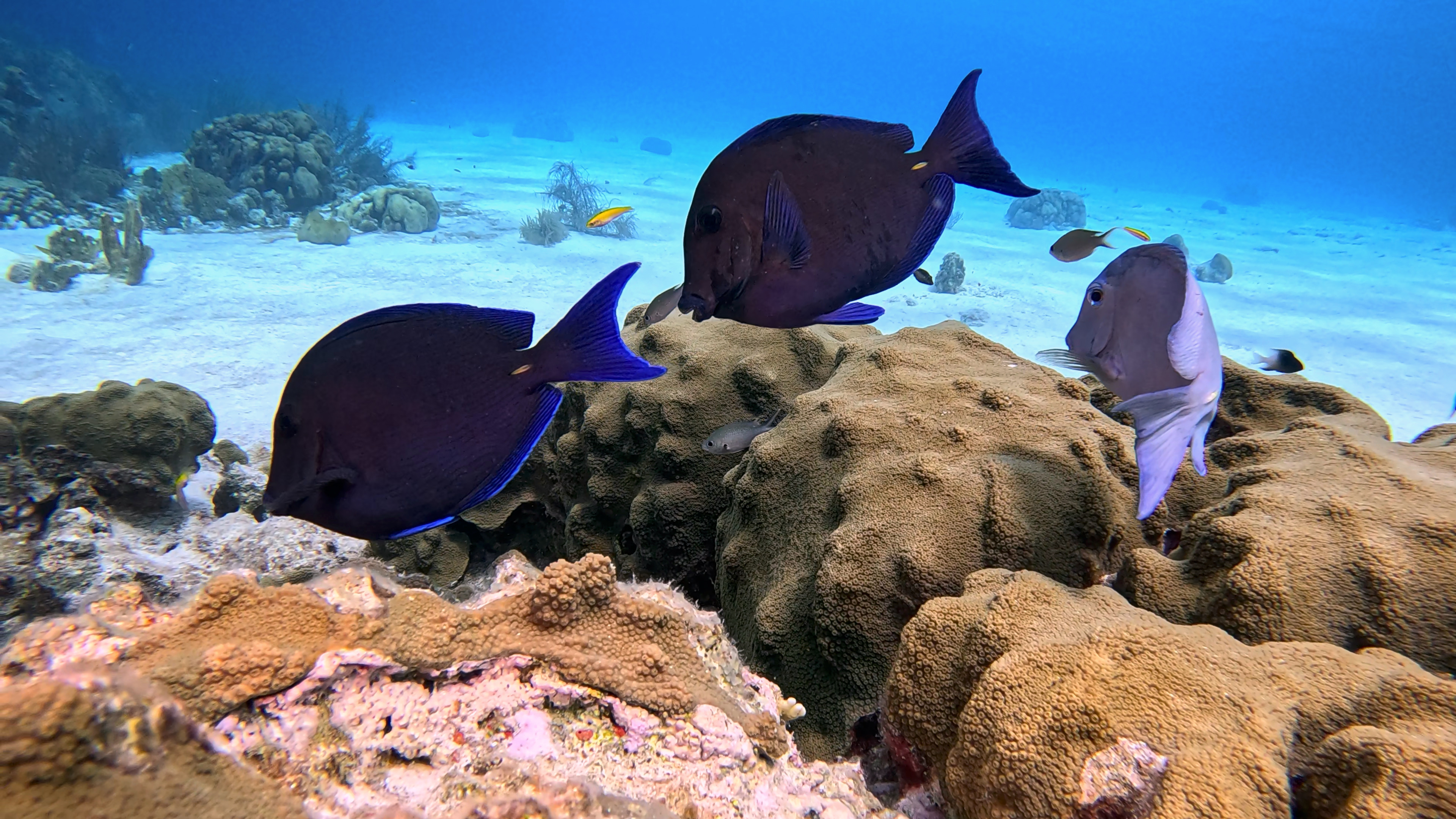
Atlantic blue tang – lat. Acanthurus coeruleus – Atlantski modri kirurg
Atlantski modri kirurg je svetlo modra tropska riba iz družine Acanthuridae, prepoznavna po vitkem telesu in ostrih “skalpelih” na repu. Živi v tropskih atlantskih koralnih grebenih, predvsem v Karibskem morju, ob obalah Floride, Bahamov in obale Južne Amerike. Prehranjuje se predvsem z algami, kar pomaga ohranjati koralne grebene zdrave. Vrsta ni ogrožena, vendar je občutljiva na onesnaževanje morja, uničevanje koralnih grebenov in prekomerno ribarjenje.
The Atlantic Blue Tang is a bright blue tropical fish from the family Acanthuridae, recognizable by its slender body and sharp “scalpel” on the tail. It inhabits tropical Atlantic coral reefs, mainly in the Caribbean Sea, along the coasts of Florida, the Bahamas, and parts of South America. Its diet consists primarily of algae, helping maintain healthy coral reefs. The species is not endangered, but it is sensitive to pollution, coral reef destruction, and overfishing.
foto: Aleš Sulič, Bonaire 1000 steps, Egypt Rocky island
YELLOWTAIL SNAPER
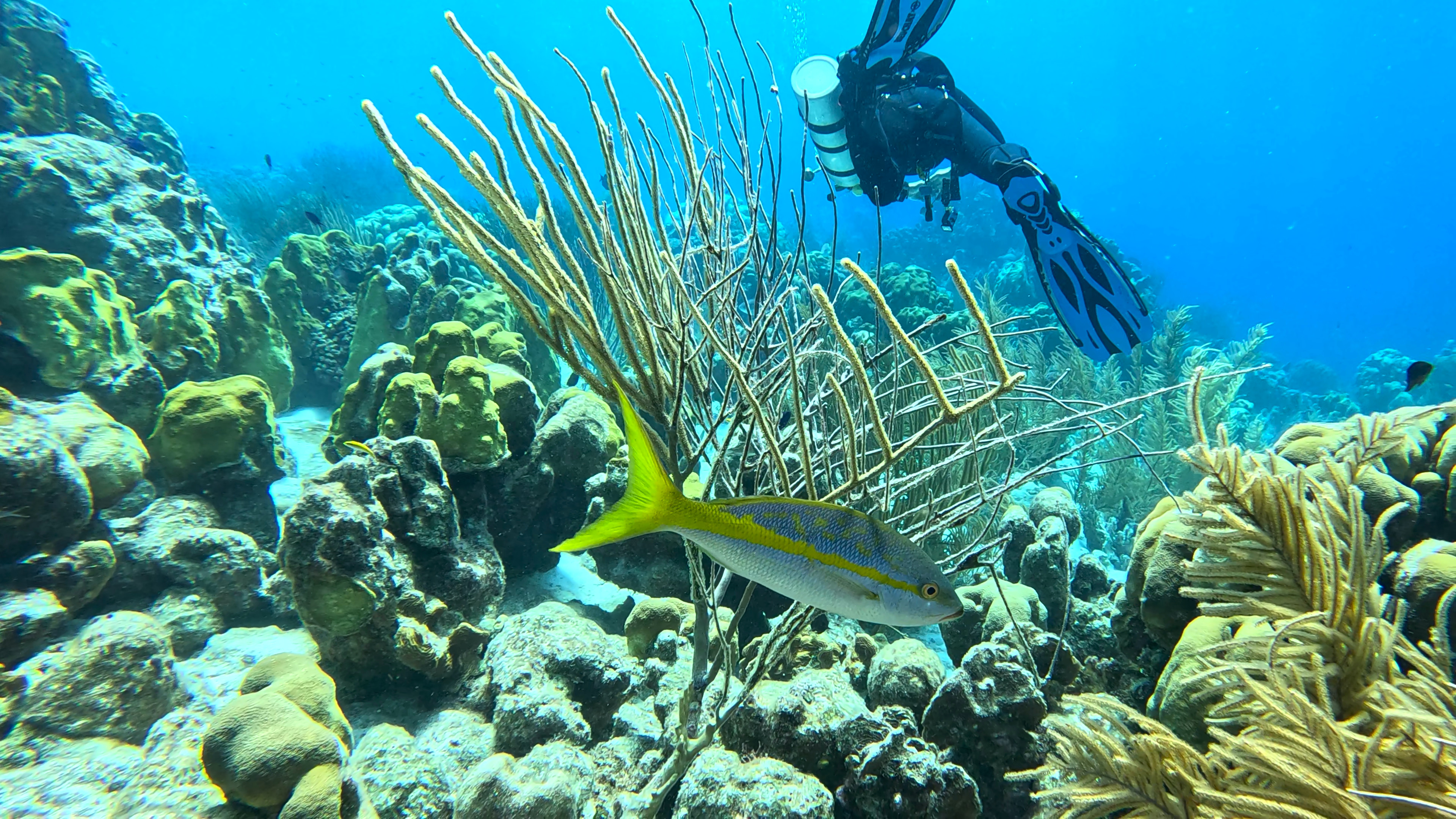
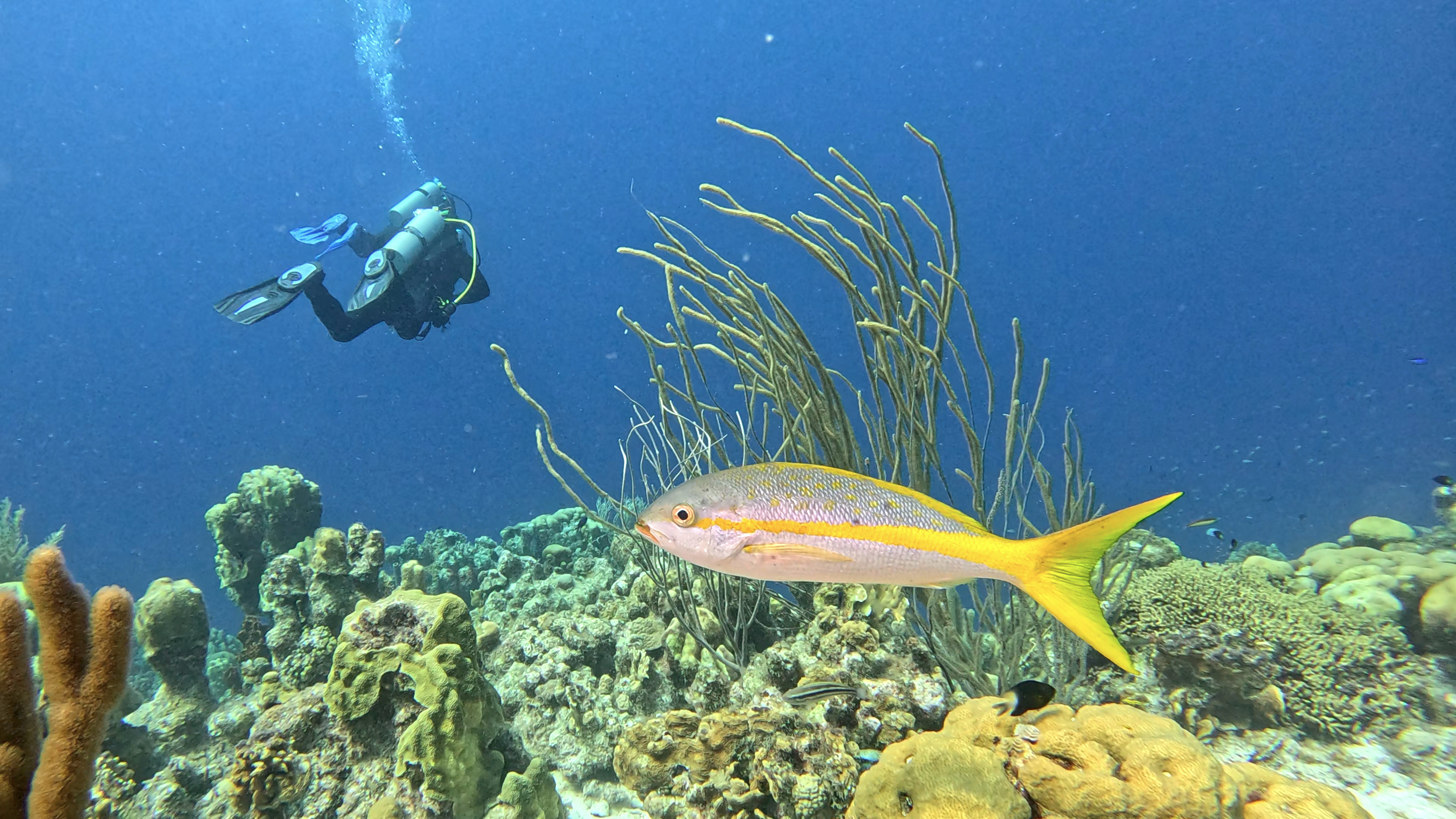

Yellowtail Snapper – Ocyurus chrysurus – Rumenorepa ščuka
Rumenorepa ščuka, znana tudi kot yellowtail snapper, je srednje velika tropska riba s podolgovatim telesom, srebrno-modrim hrbtom in značilno rumeno repno plavutjo. Živi v tropskih atlantskih koralnih grebenih, predvsem v Karibskem morju in ob obalah Floride ter Bahamov. Hrani se z majhnimi ribami, rakci in planktonom.
The Yellowtail Snapper is a medium-sized tropical fish with a slender body, silvery-blue back, and a distinctive yellow tail fin. It inhabits tropical Atlantic coral reefs, mainly in the Caribbean Sea and along the coasts of Florida and the Bahamas. Its diet consists of small fish, crustaceans, and plankton. The species is not endangered, but it is sensitive to overfishing and coral reef degradation.
Foto: Aleš Sulič, Bonaire Red slave
YELLOW GOATFISH
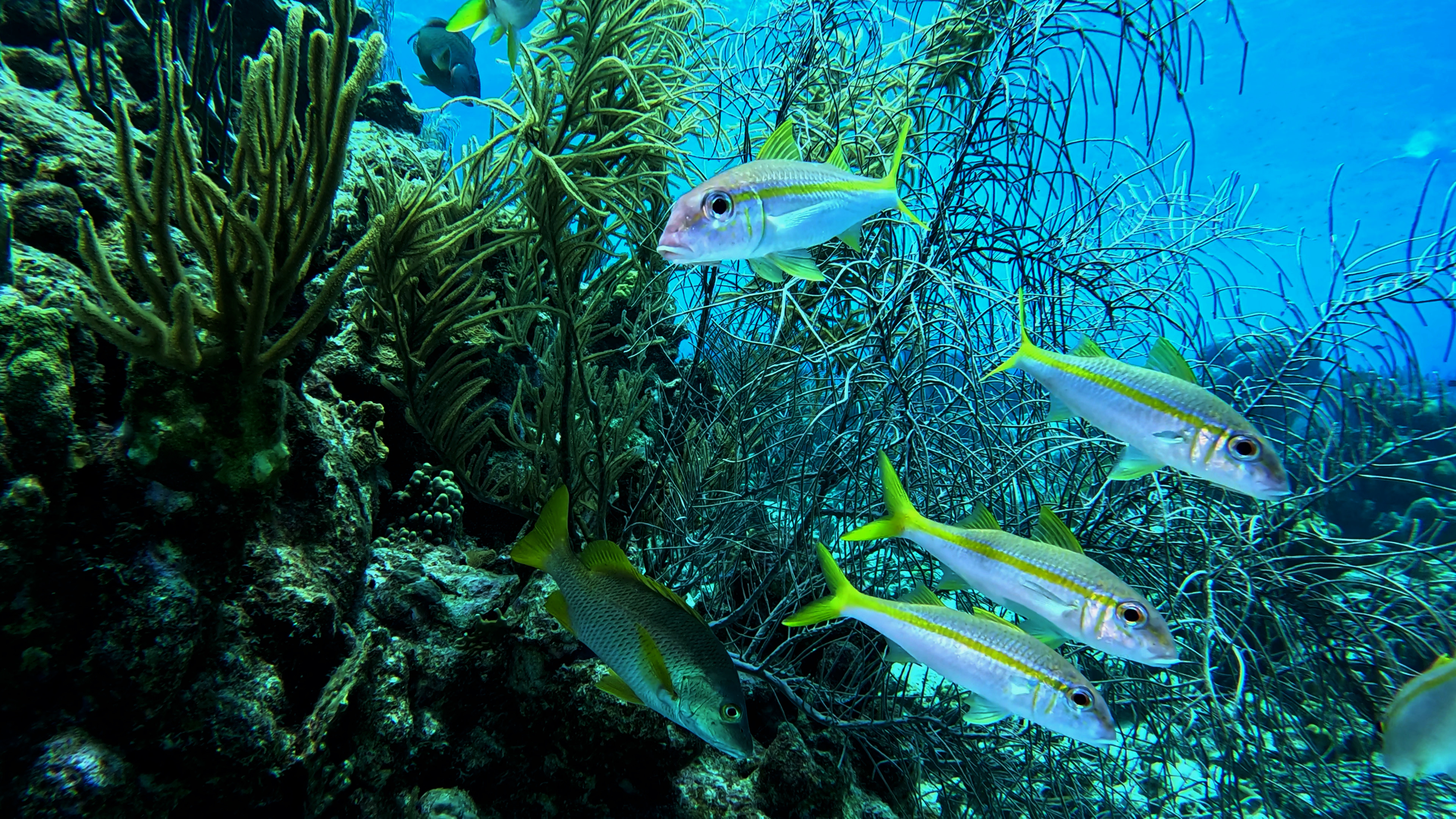
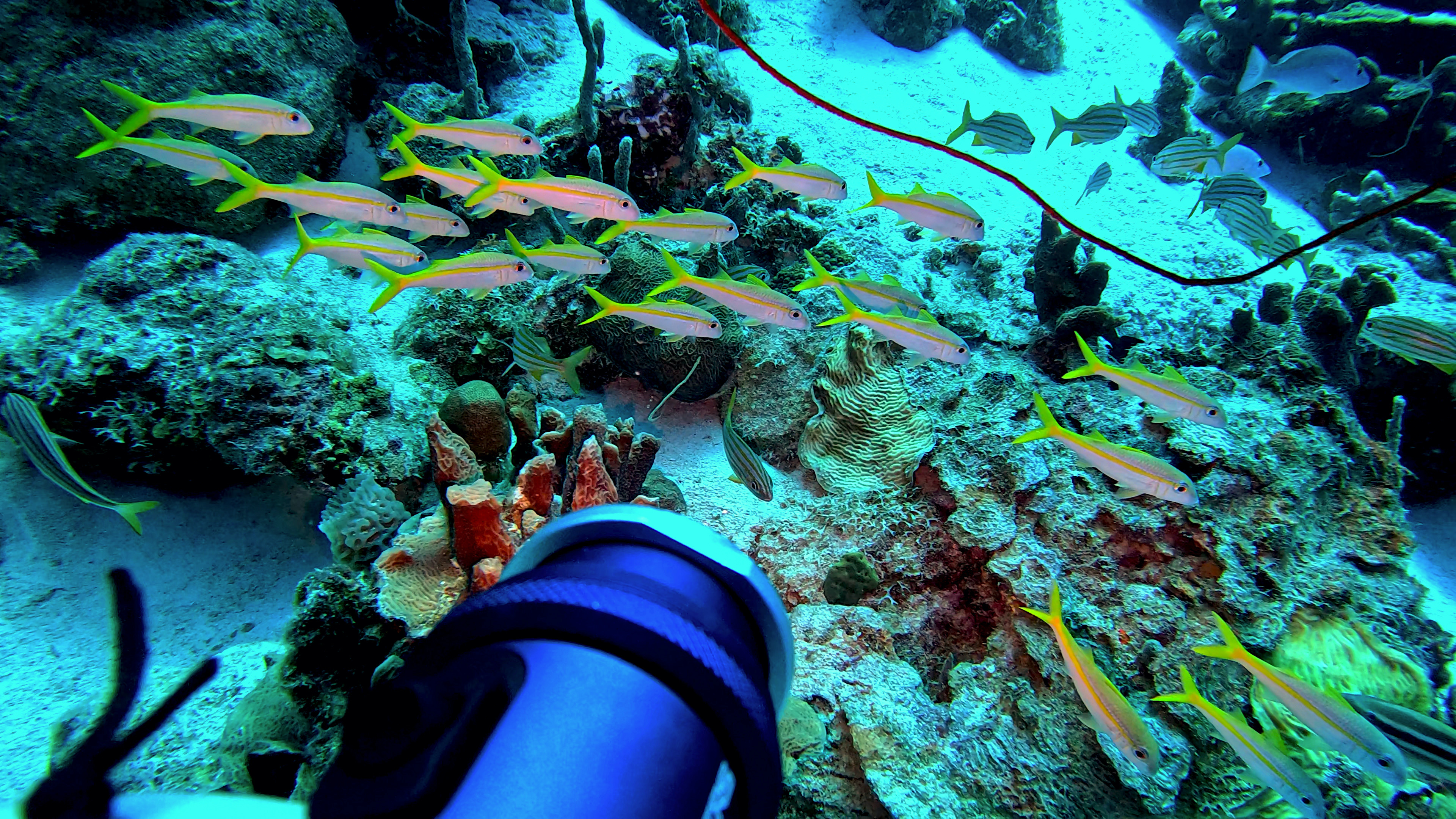
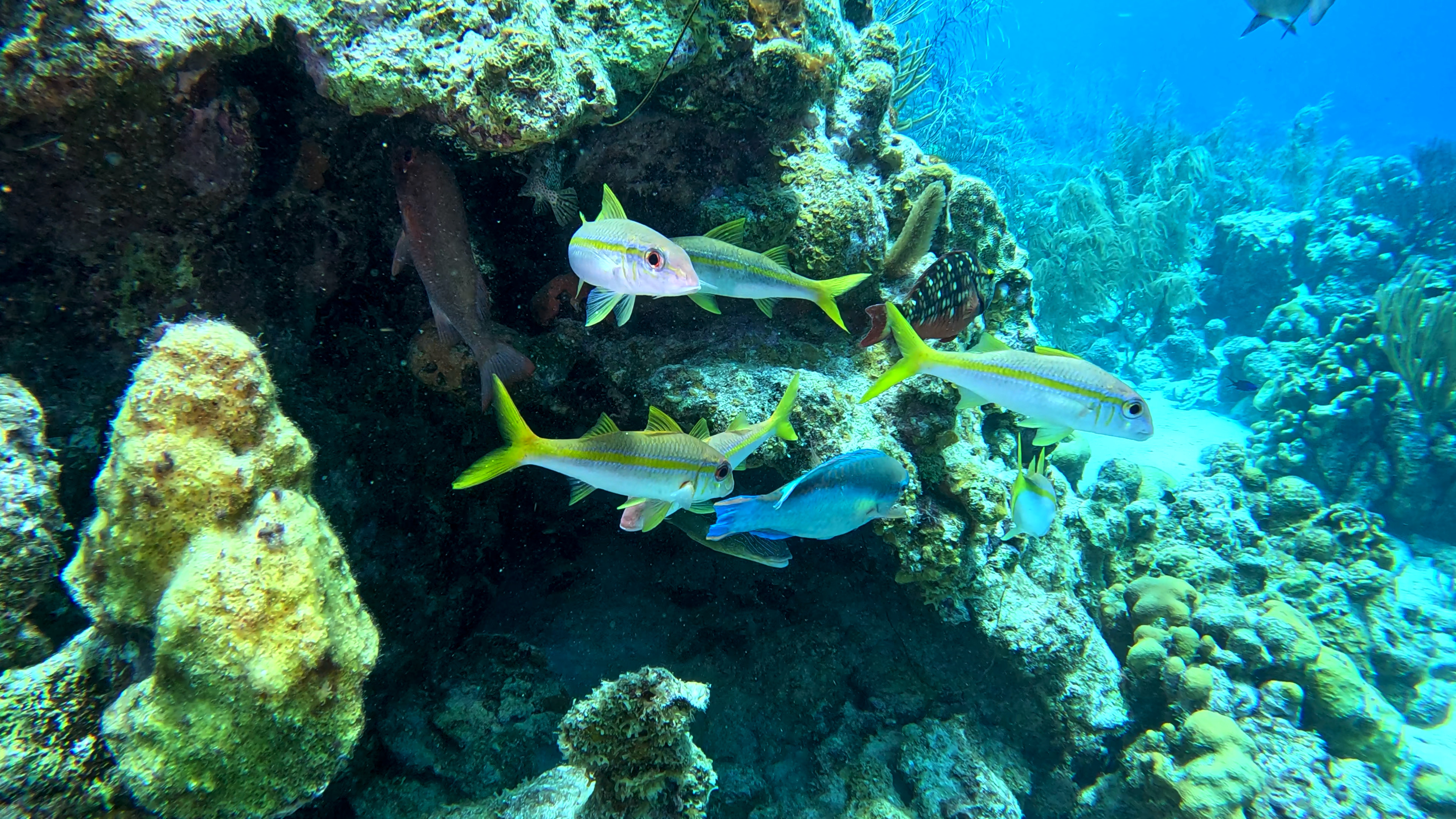
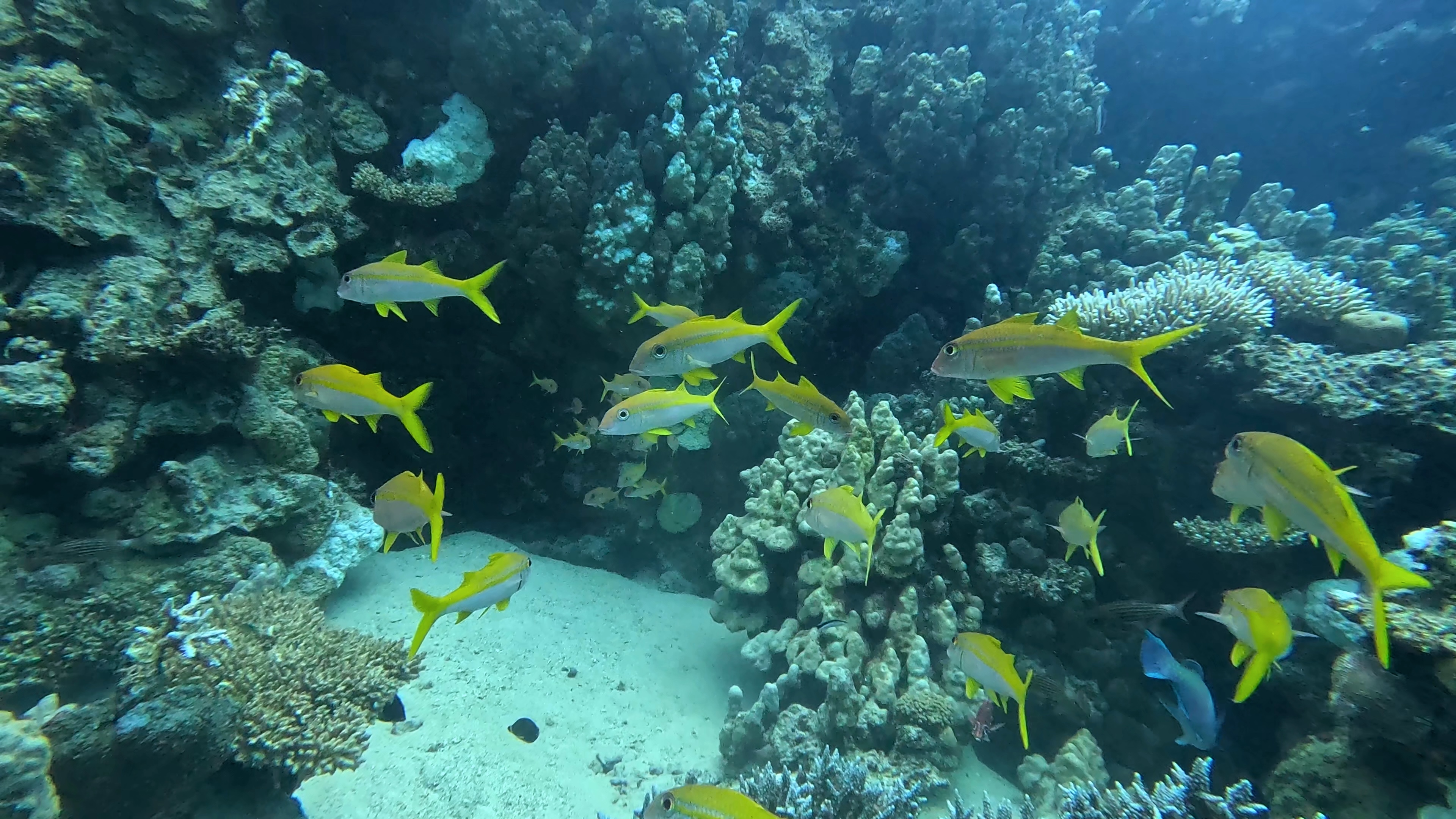
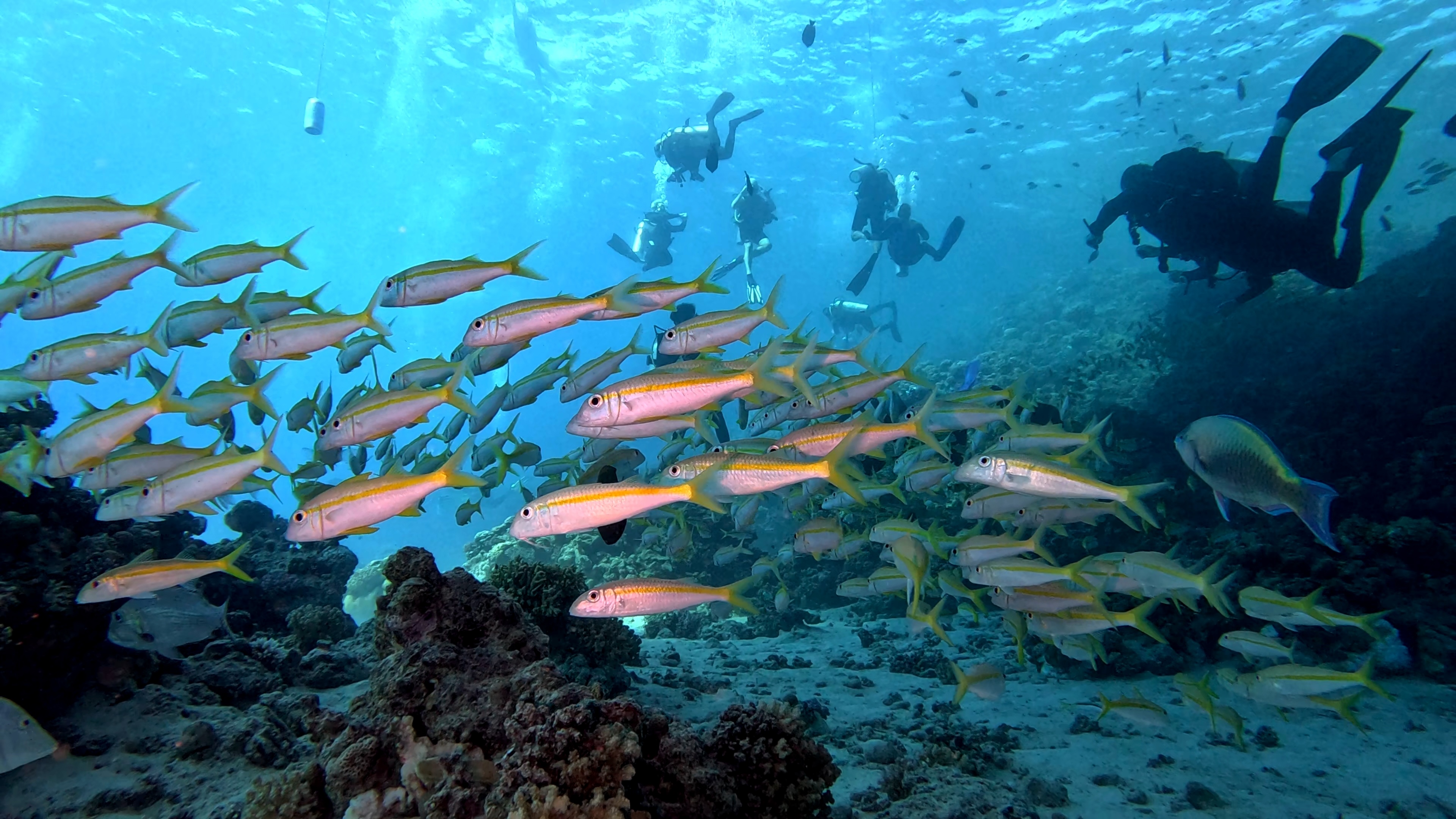
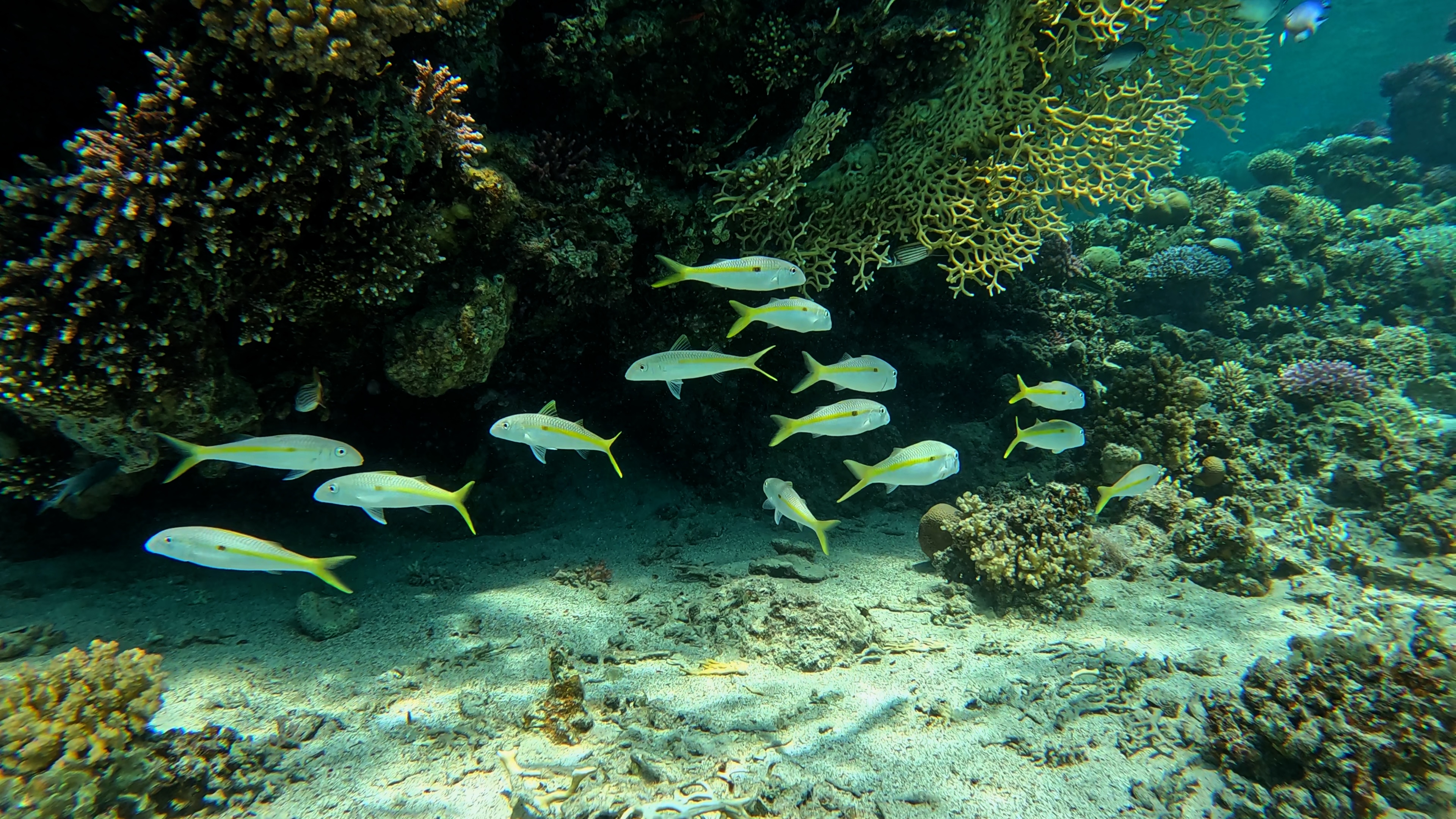
Yellow Goatfish – lat. Mulloidichthys martinicus – Rumeni kozliček
Rumeni kozliček, znan tudi kot yellow goatfish, je tropska riba z podolgovatim telesom, svetlo rumeno barvo in značilnima dolgima brkoma, ki ju uporablja za iskanje hrane na morskem dnu. Živi v tropskih koralnih grebenih Atlantskega oceana, predvsem v Karibskem morju in ob obalah Floride ter Južne Amerike. Prehranjuje se z majhnimi rakci, mehkužci in drugimi nevretenčarji, ki jih išče v pesku in med koralami.
The Yellow Goatfish is a tropical fish with a slender body, bright yellow coloration, and distinctive long barbels used to search for food along the sea floor. It inhabits tropical Atlantic coral reefs, mainly in the Caribbean Sea and along the coasts of Florida and South America. Its diet consists of small crustaceans, mollusks, and other invertebrates found in sand and among corals.
foto: Aleš Sulič, Bonaire Karpata
TROUMPETFISH
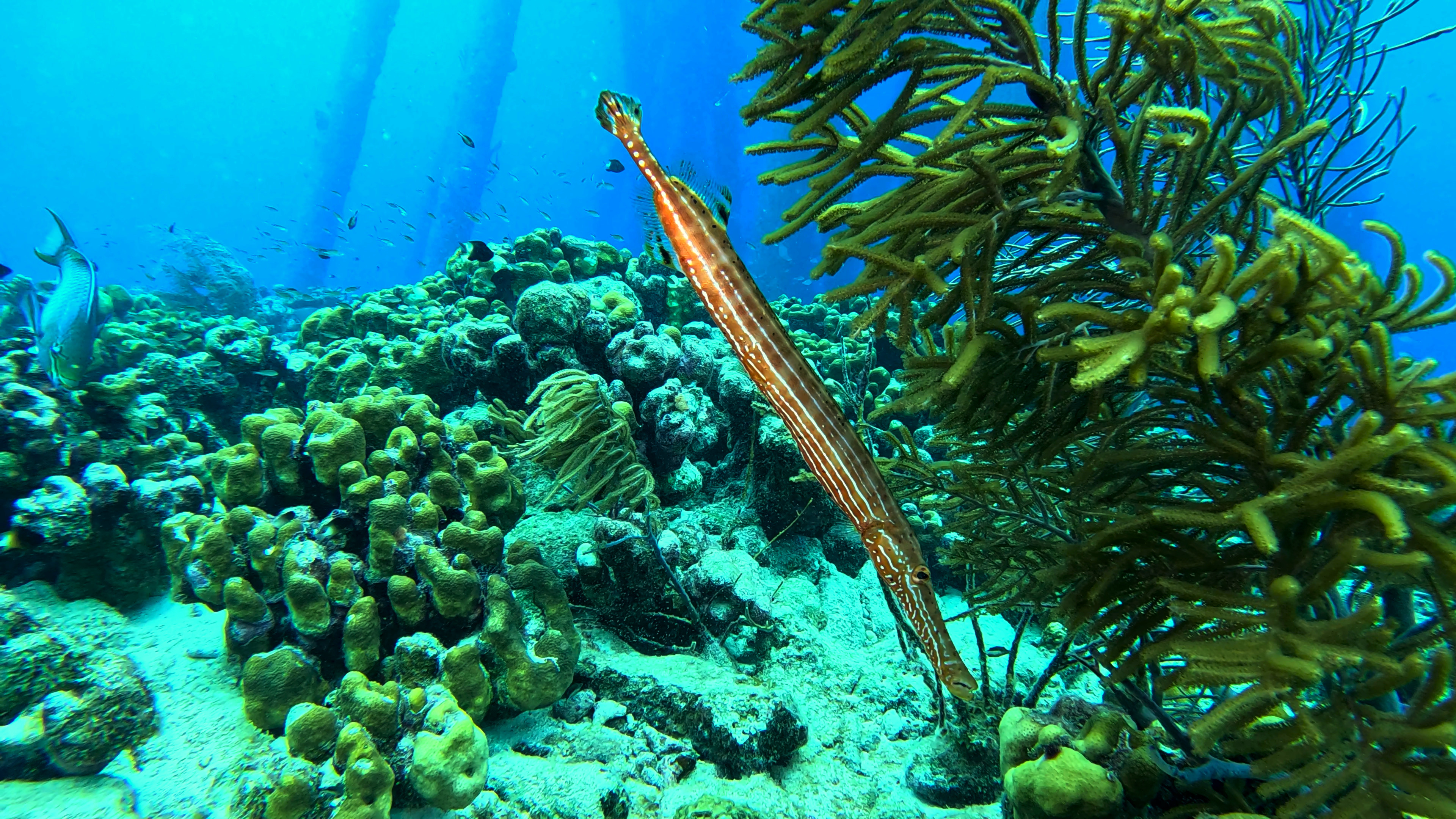
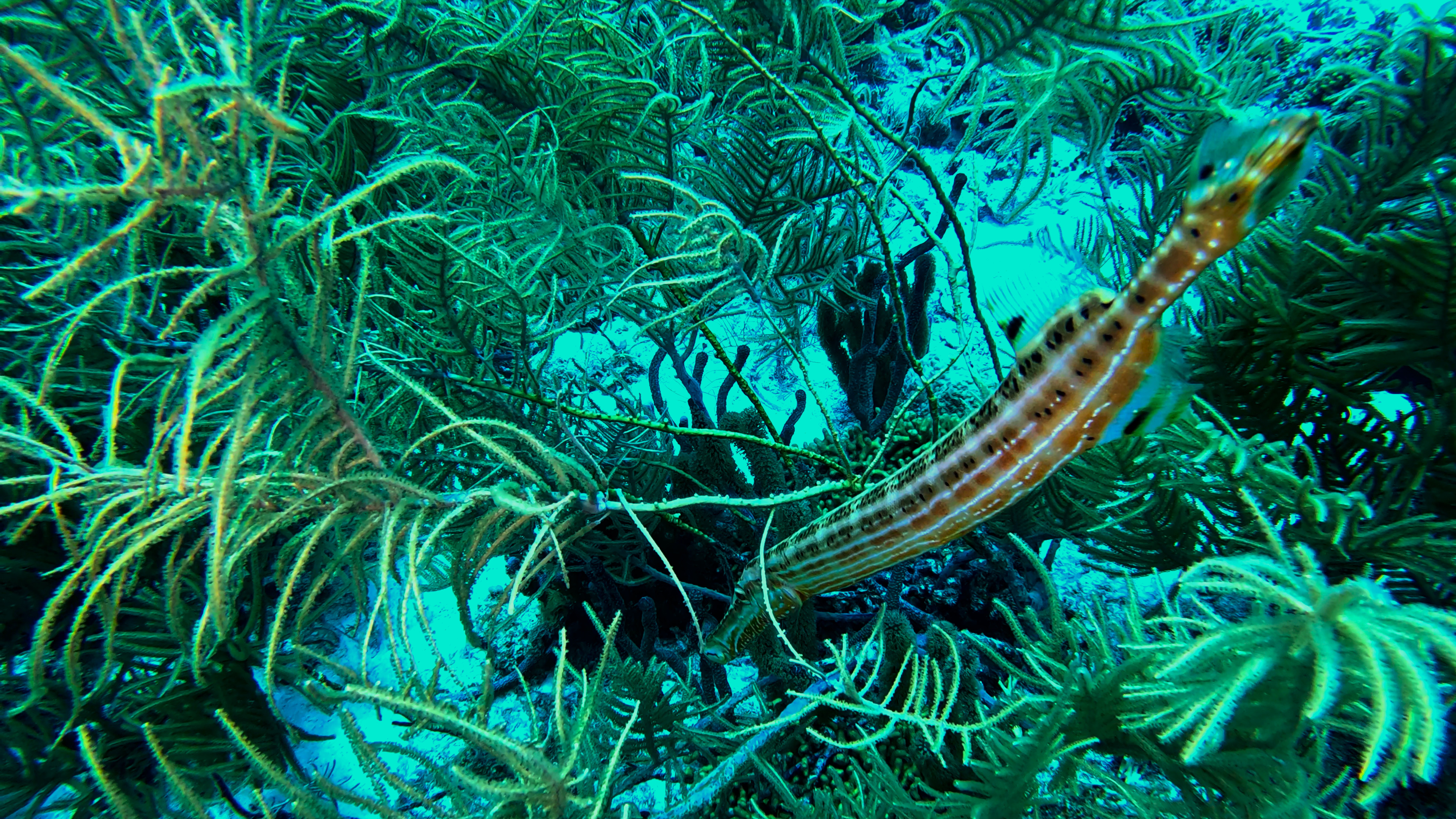
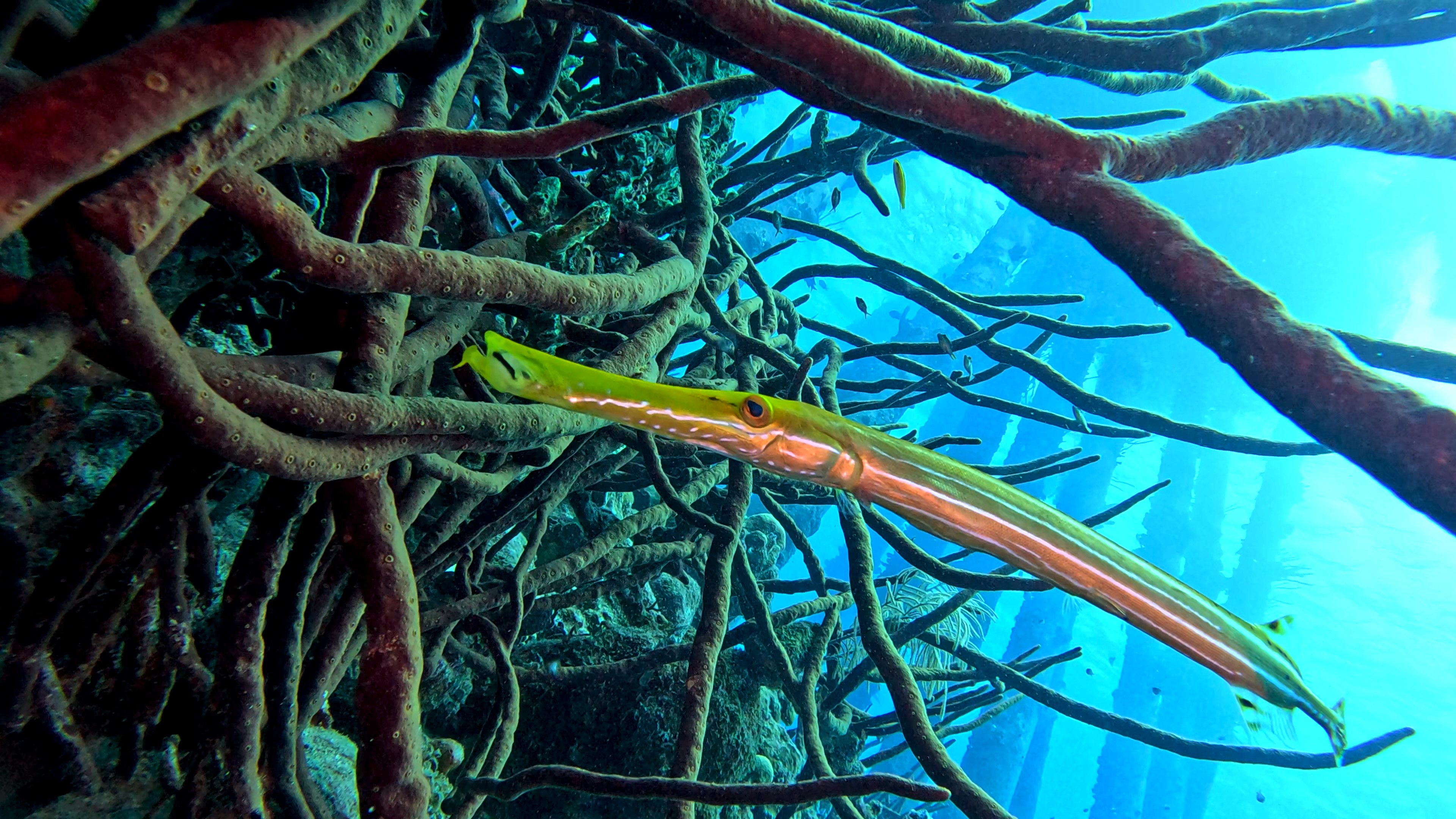
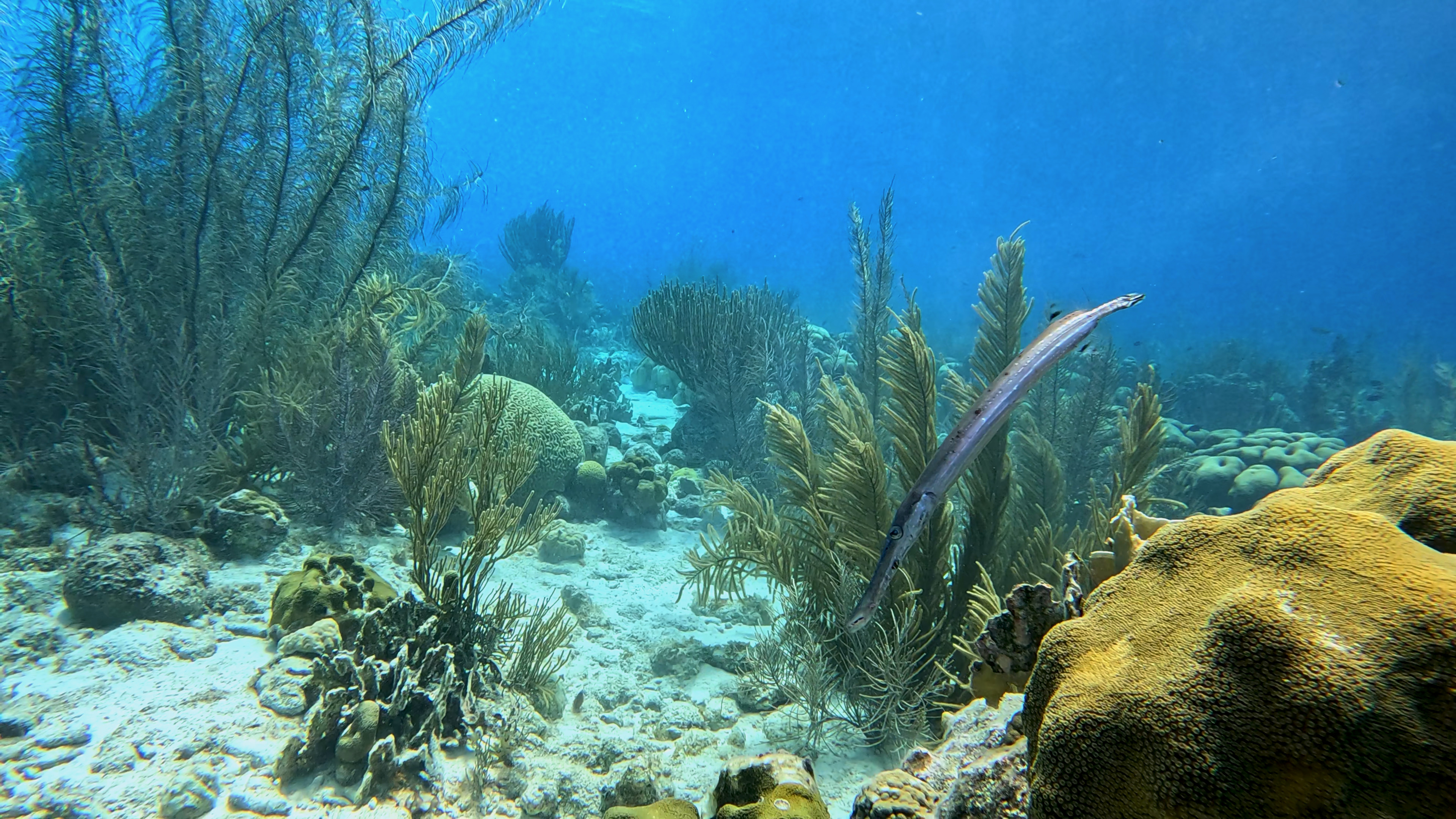
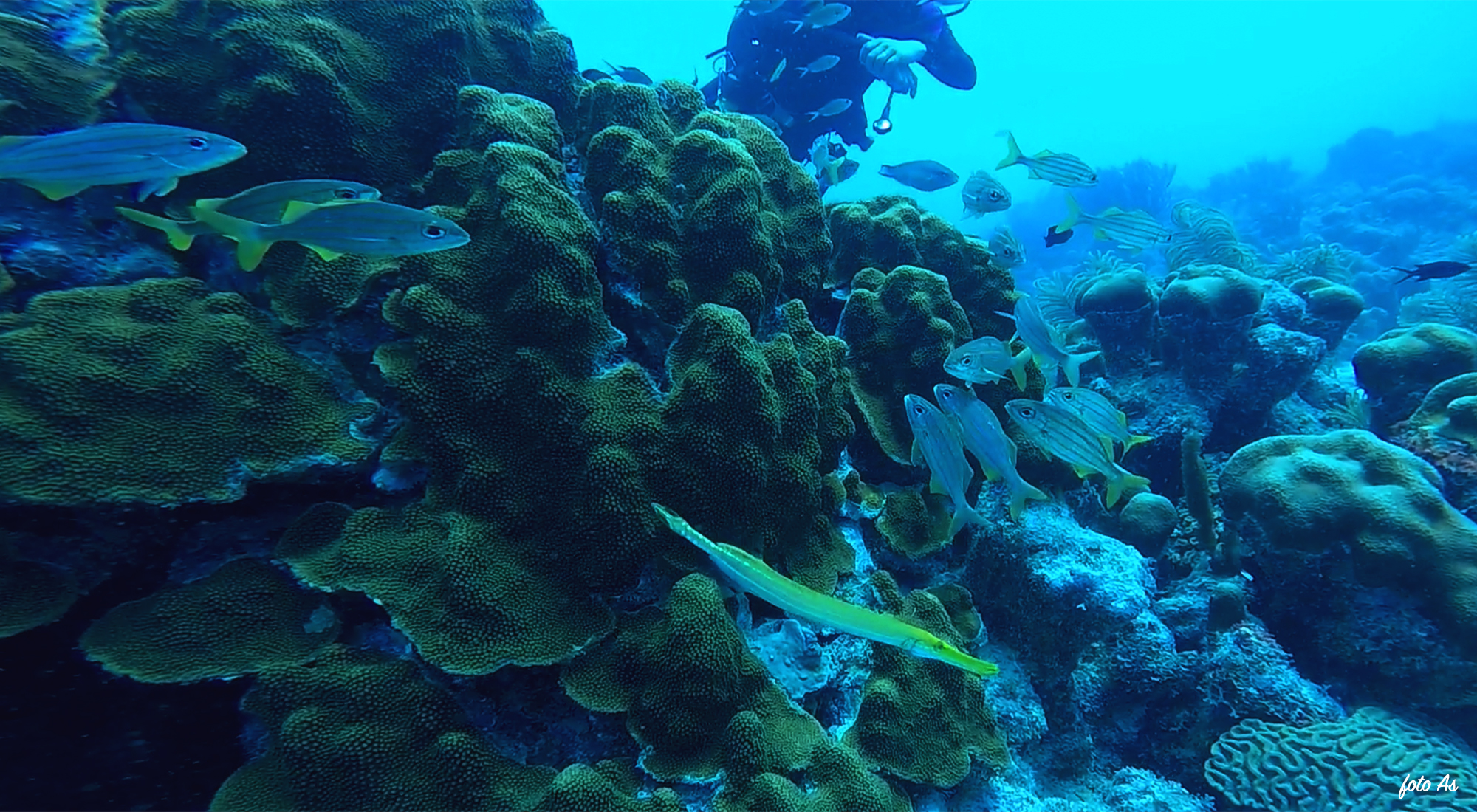
Trumpetfish – lat. Aulostomus maculatus – Trubač
Trubač, znan tudi kot trumpetfish, je dolga in vitka tropska riba z značilnim podolgovatim telesom in dolgim cevastim gobcem, ki ga uporablja za lov na majhne ribe. Živi v tropskih koralnih grebenih Atlantskega oceana, predvsem v Karibskem morju in ob obalah Floride ter Južne Amerike. Hrani se z majhnimi ribami in nevretenčarji, ki jih lovi s prikrito zasledovalno tehniko. Vrsta ni ogrožena, vendar je občutljiva na uničenje koralnih grebenov in onesnaževanje morja.
The Trumpetfish is a long, slender tropical fish with a distinctive tubular snout used to hunt small fish. It inhabits tropical Atlantic coral reefs, mainly in the Caribbean Sea and along the coasts of Florida and South America. Its diet consists of small fish and invertebrates, which it captures using a stealthy ambush strategy. The species is not endangered, but it is sensitive to coral reef destruction and ocean pollution.
Foto: Aleš Sulič, Bonaire Toris reef
BLOOD SPOT SQUIRRELFISH
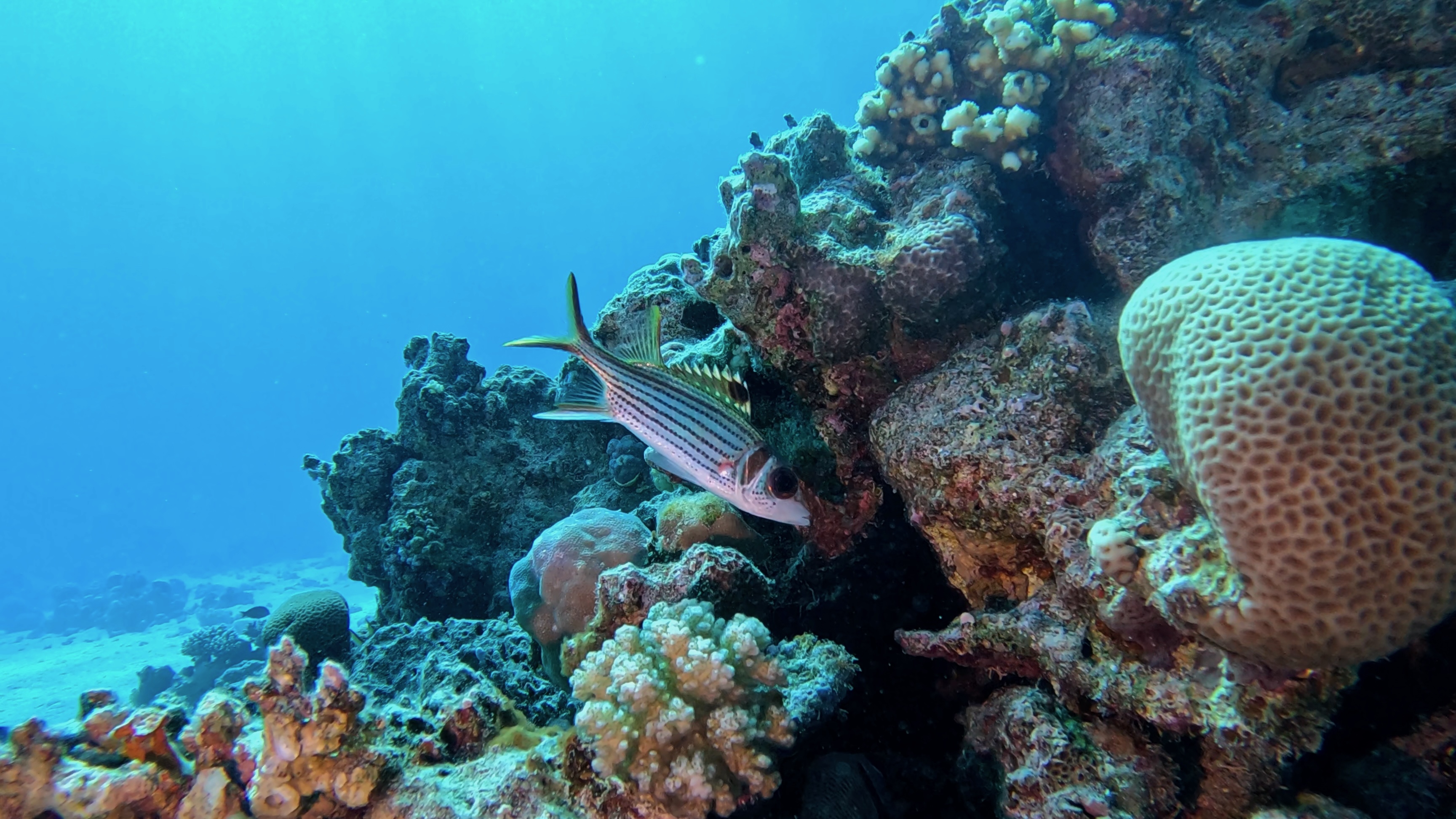
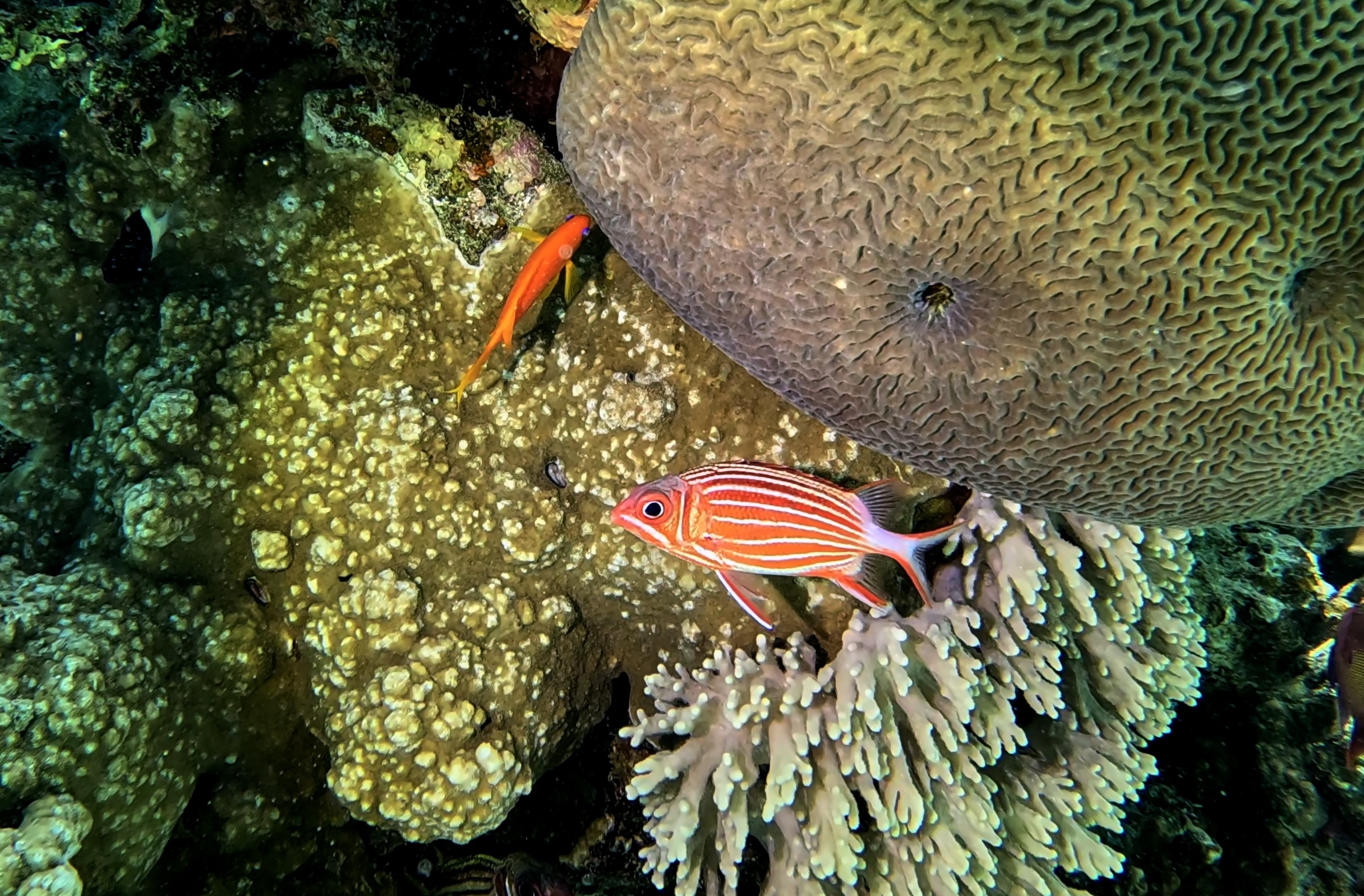
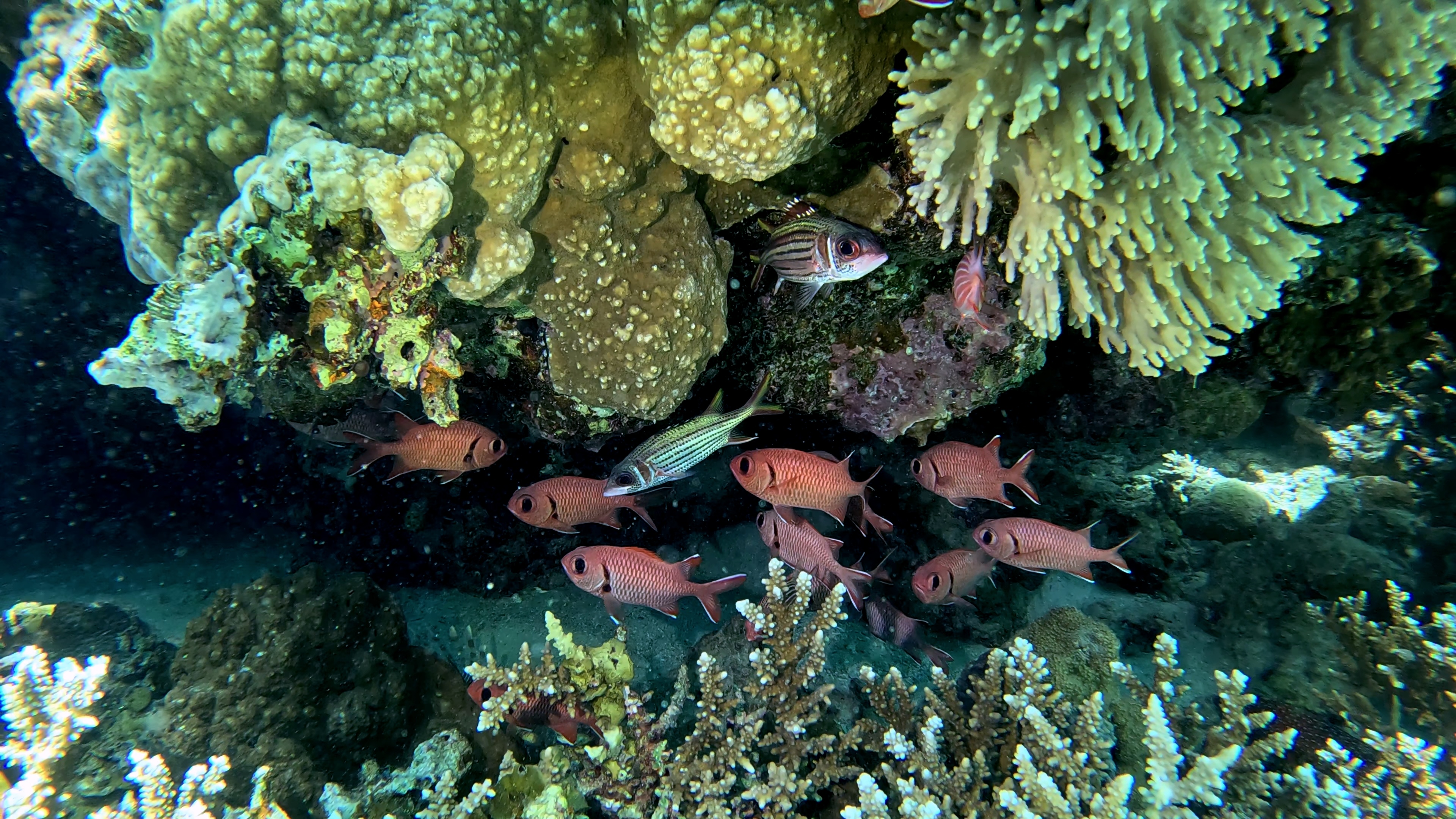
Bloodspot Squirrelfish – lat. Sargocentron cornutum – Rdečepikasta veveričja riba
Rdečepikasta veveričja riba, znana tudi kot bloodspot squirrelfish, je srednje velika tropska riba z rdečkastim telesom in značilno temno pikico za očesom. Živi v tropskih koralnih grebenih Indo-Pacifiškega območja, predvsem okoli skalnatih in koralnih habitatov. Prehranjuje se z majhnimi nevretenčarji in planktonom, predvsem ponoči, saj je nočna vrsta. Vrsta ni ogrožena, a je občutljiva na uničenje koralnih grebenov in onesnaževanje morja.
The Bloodspot Squirrelfish is a medium-sized tropical fish with a reddish body and a distinctive dark spot behind the eye. It inhabits tropical coral reefs of the Indo-Pacific region, mainly around rocky and coral habitats. It feeds on small invertebrates and plankton, primarily at night, as it is a nocturnal species. The species is not endangered, but it is sensitive to coral reef destruction and ocean pollution.
Foto: Aleš sulič, Egypt Dahab
REDTOOTHED TRIGGER FISH
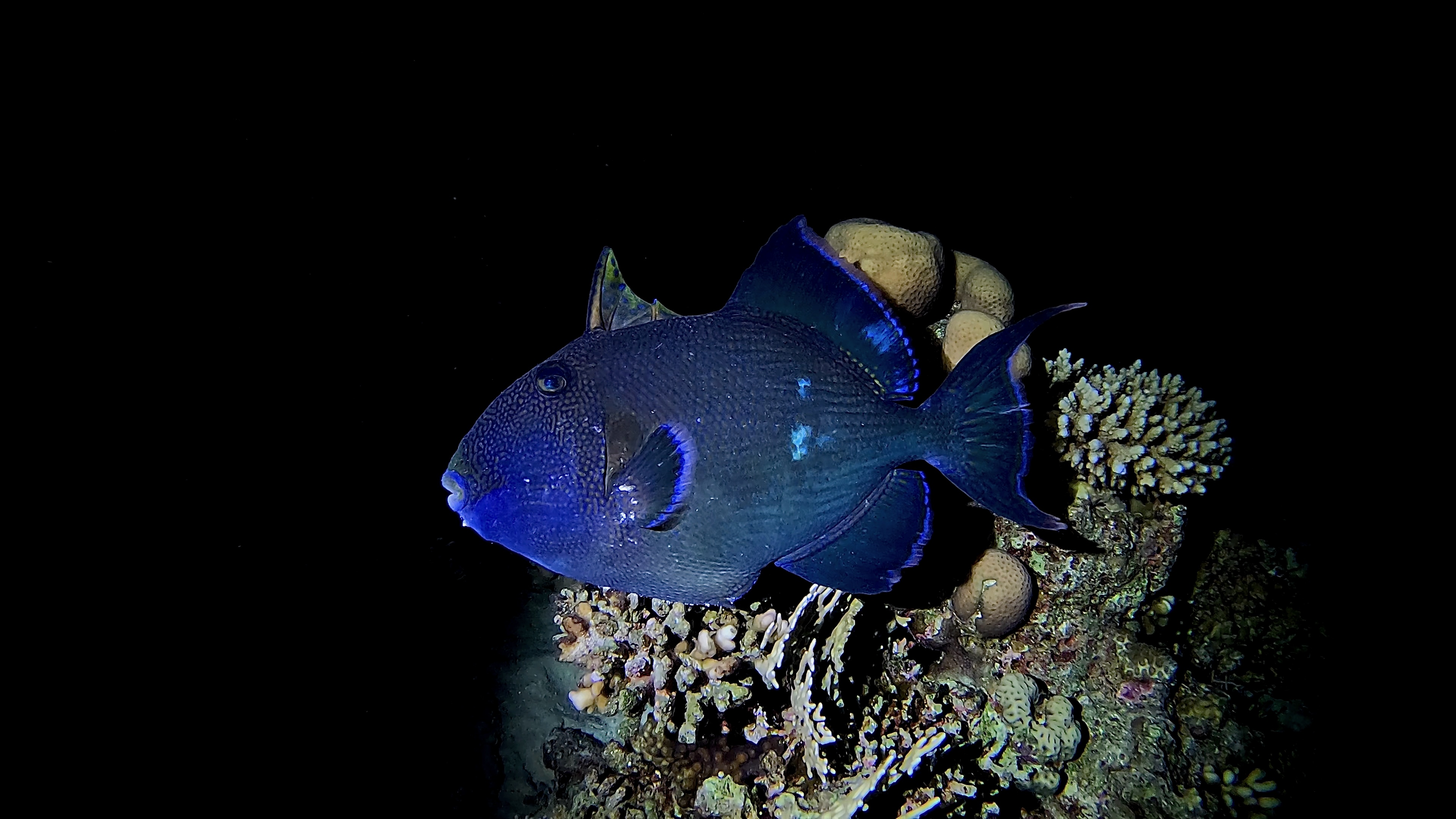
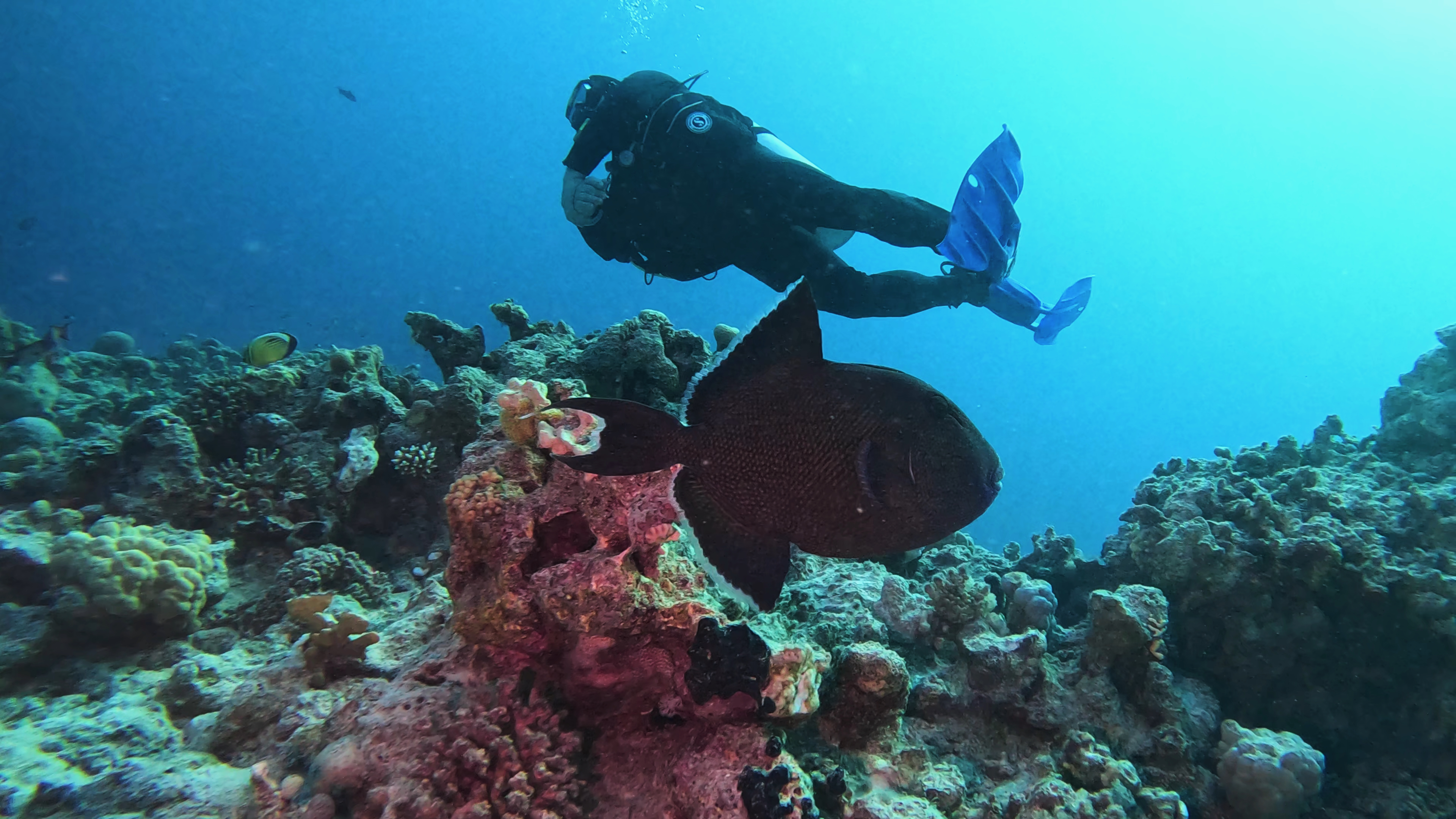
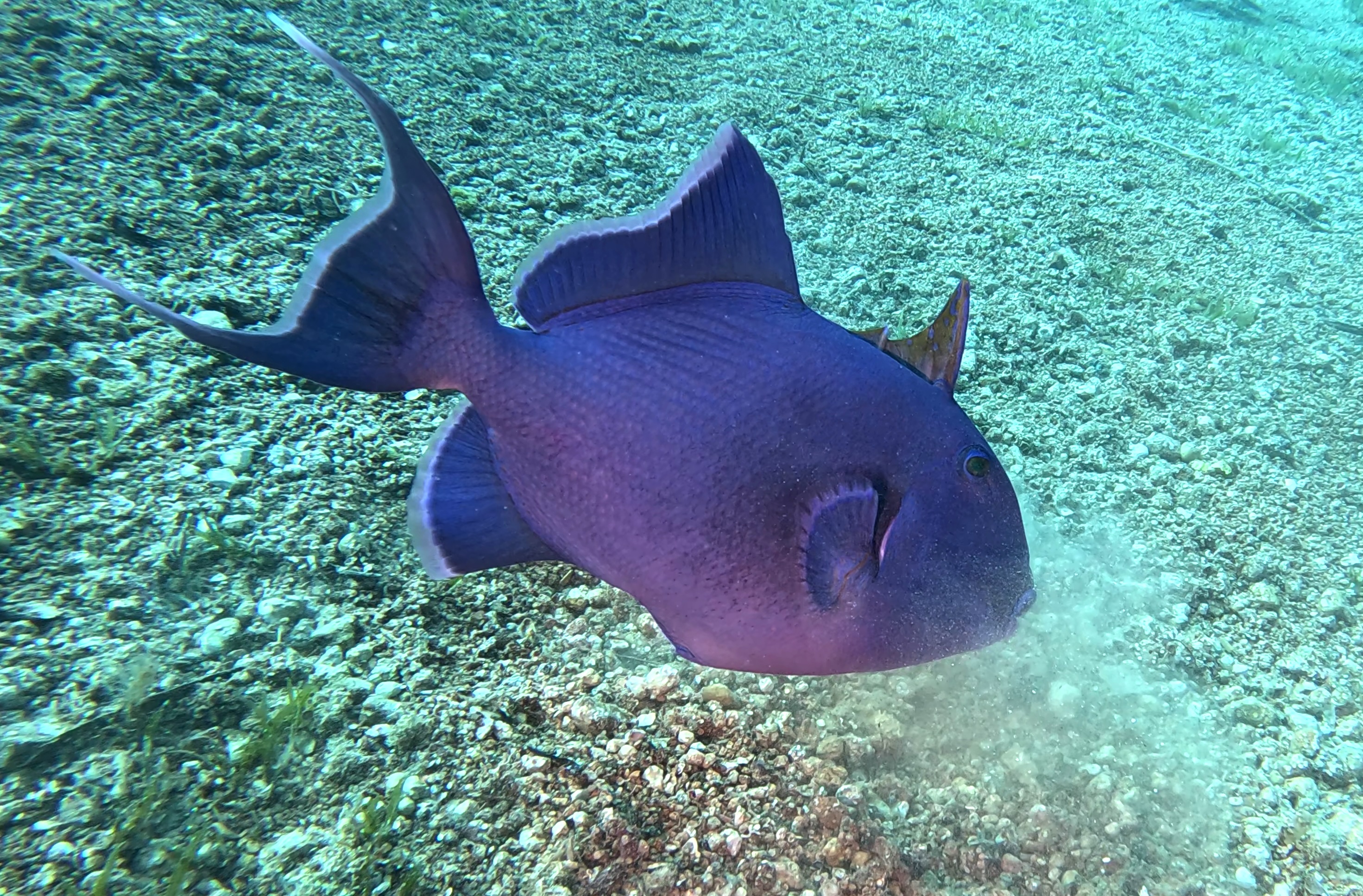
Redtoothed Triggerfish – Odonus niger – Rdečozoba balestra
Rdečozobata balestra, znana tudi kot redtoothed triggerfish, je velika tropska riba z robustnim telesom, modrikasto do vijolično barvo in značilnimi rdečimi zobmi. Živi v tropskih koralnih grebenih Indo-Pacifiškega območja, pogosto v jatah nad koralnimi grebeni. Prehranjuje se z nevretenčarji, mehkužci in planktonom, ki ga išče na koralnih grebenih in v pesku. Vrsta ni ogrožena, vendar je občutljiva na onesnaževanje morja, uničenje koralnih habitatov in prekomerno ribarjenje.
The Redtoothed Triggerfish is a large tropical fish with a robust body, bluish to purplish coloration, and distinctive red teeth. It inhabits tropical coral reefs of the Indo-Pacific region, often swimming in schools above coral formations. Its diet consists of invertebrates, mollusks, and plankton, which it forages for on reefs and in sandy areas. The species is not endangered, but it is sensitive to ocean pollution, coral habitat destruction, and overfishing.
Foto: Aleš Sulič, Egypt Lighthouse
TARPON
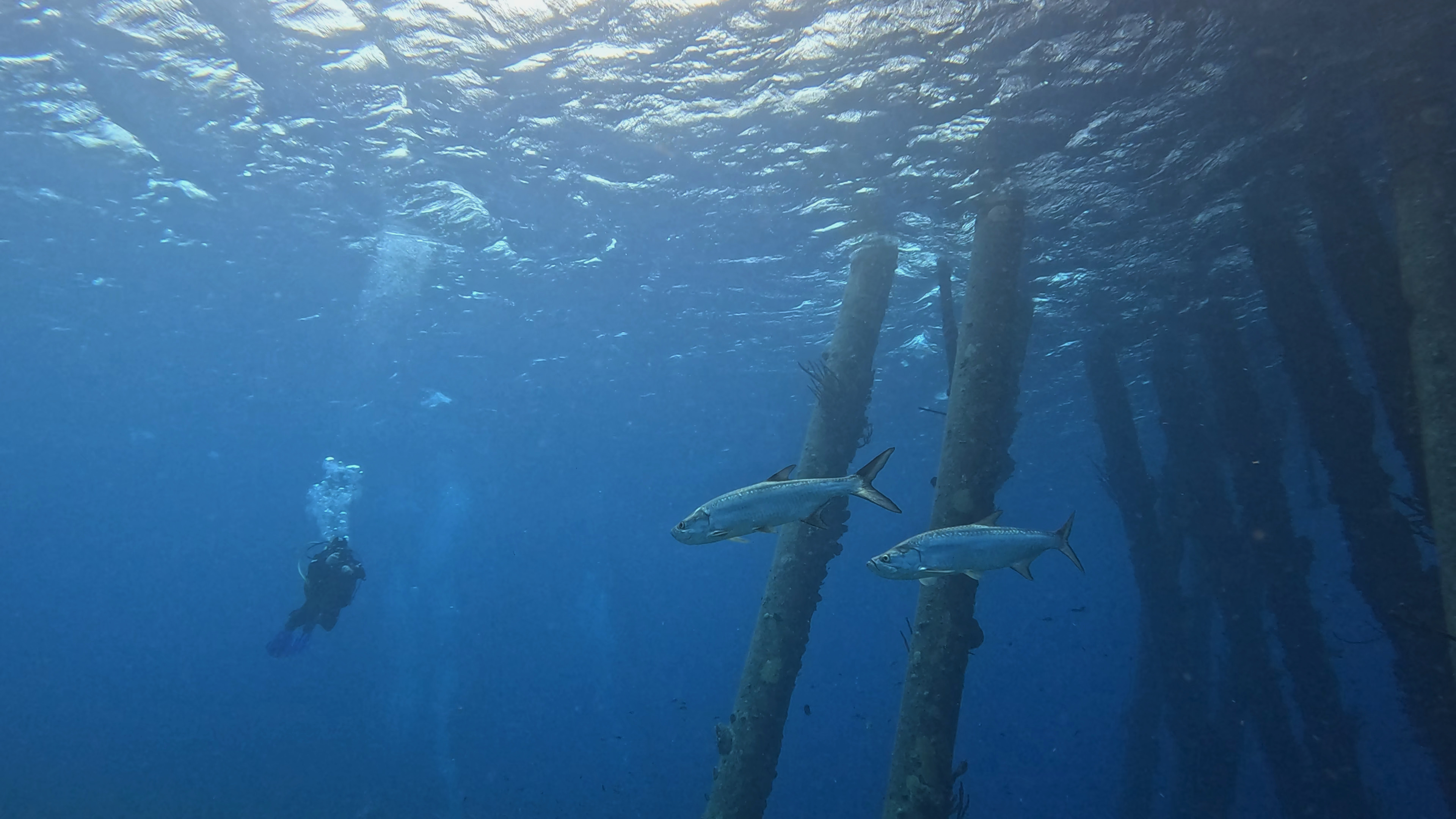
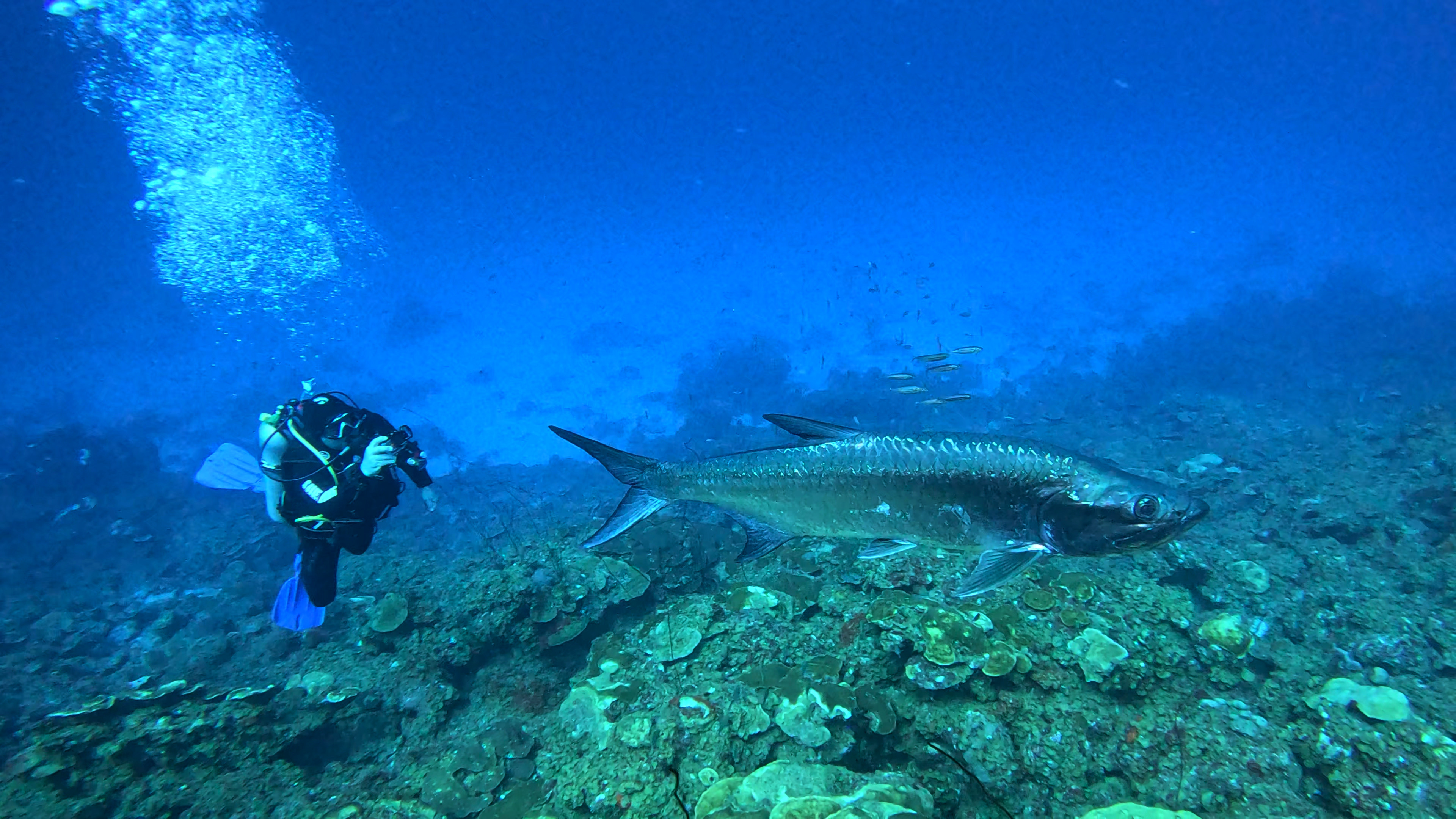
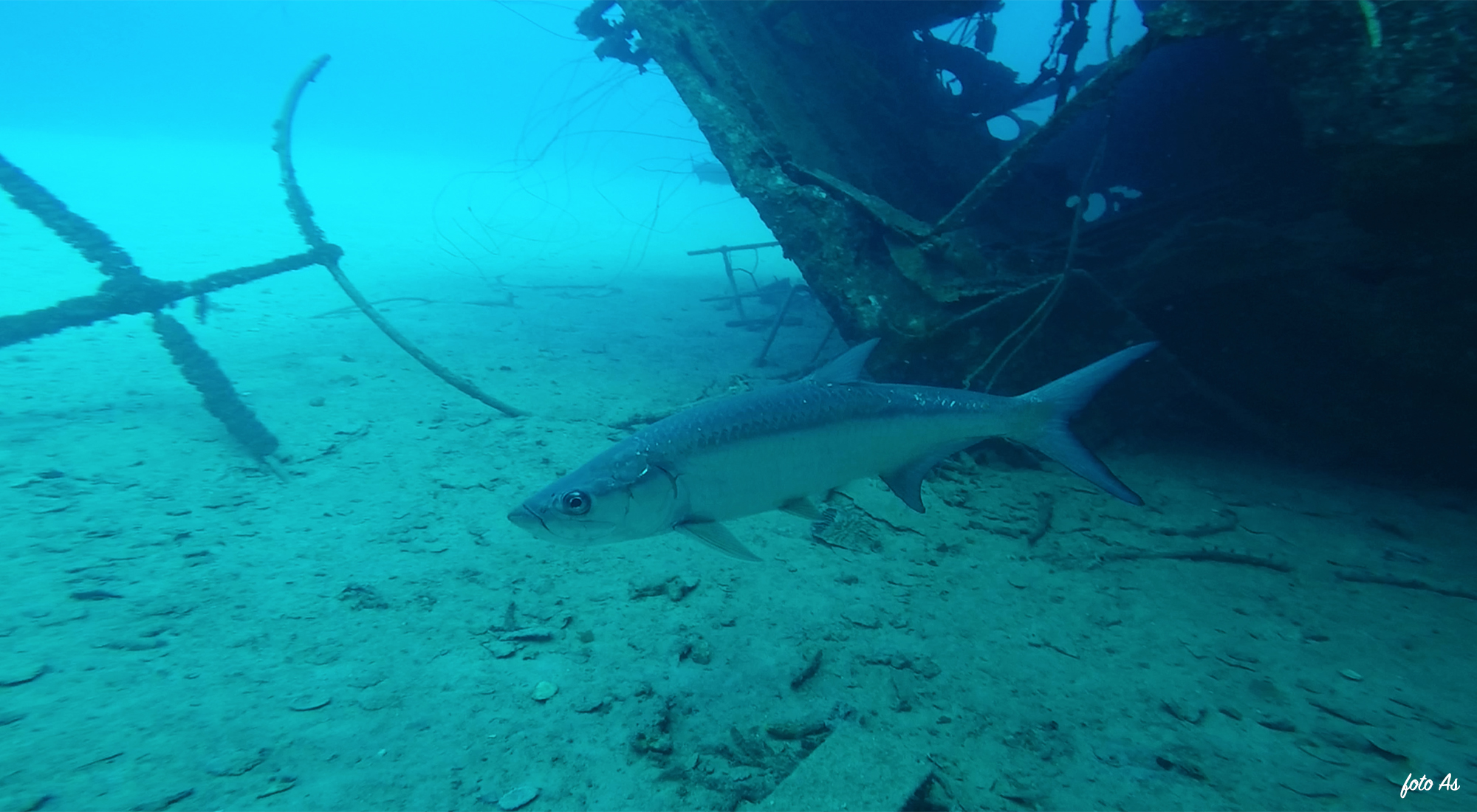
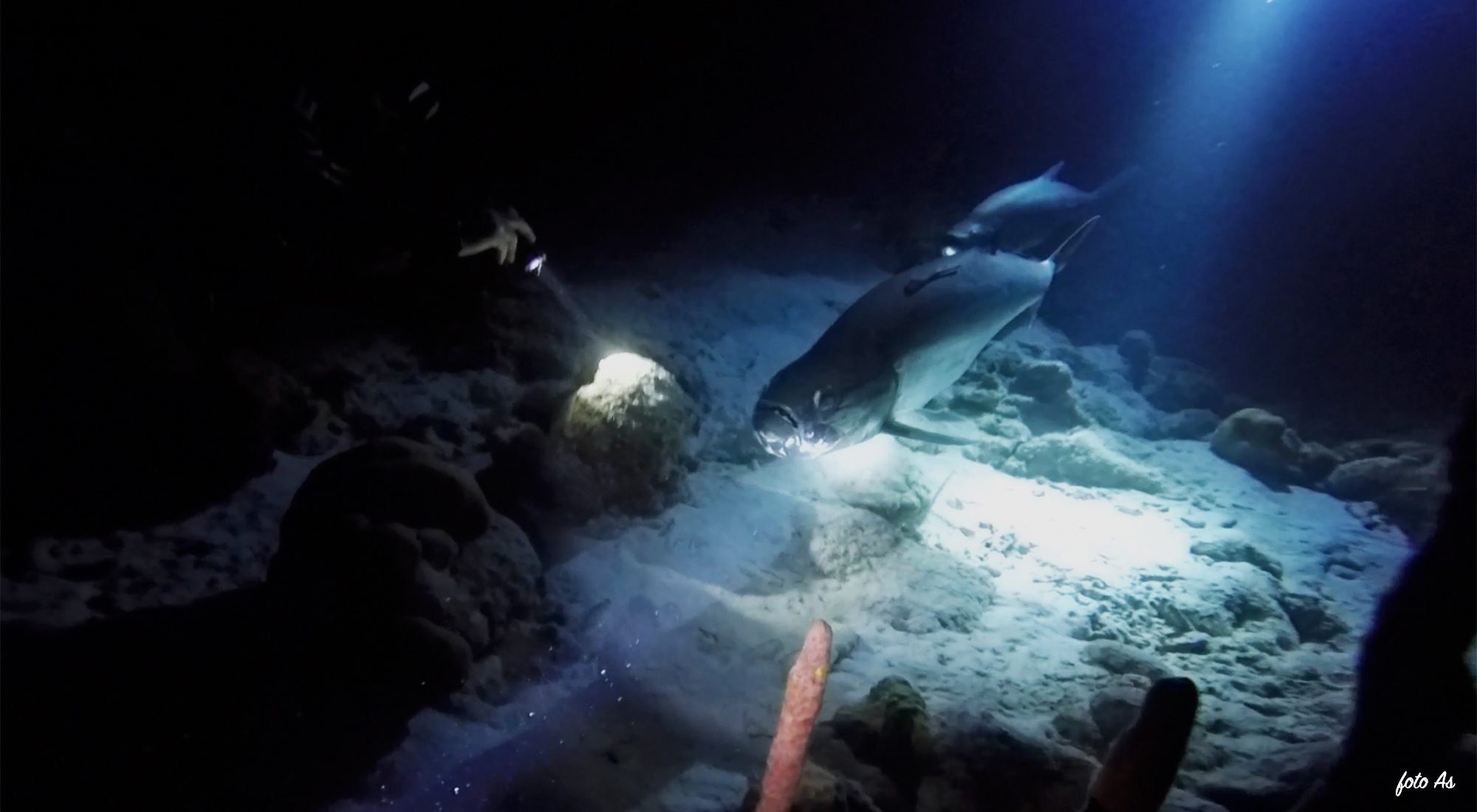
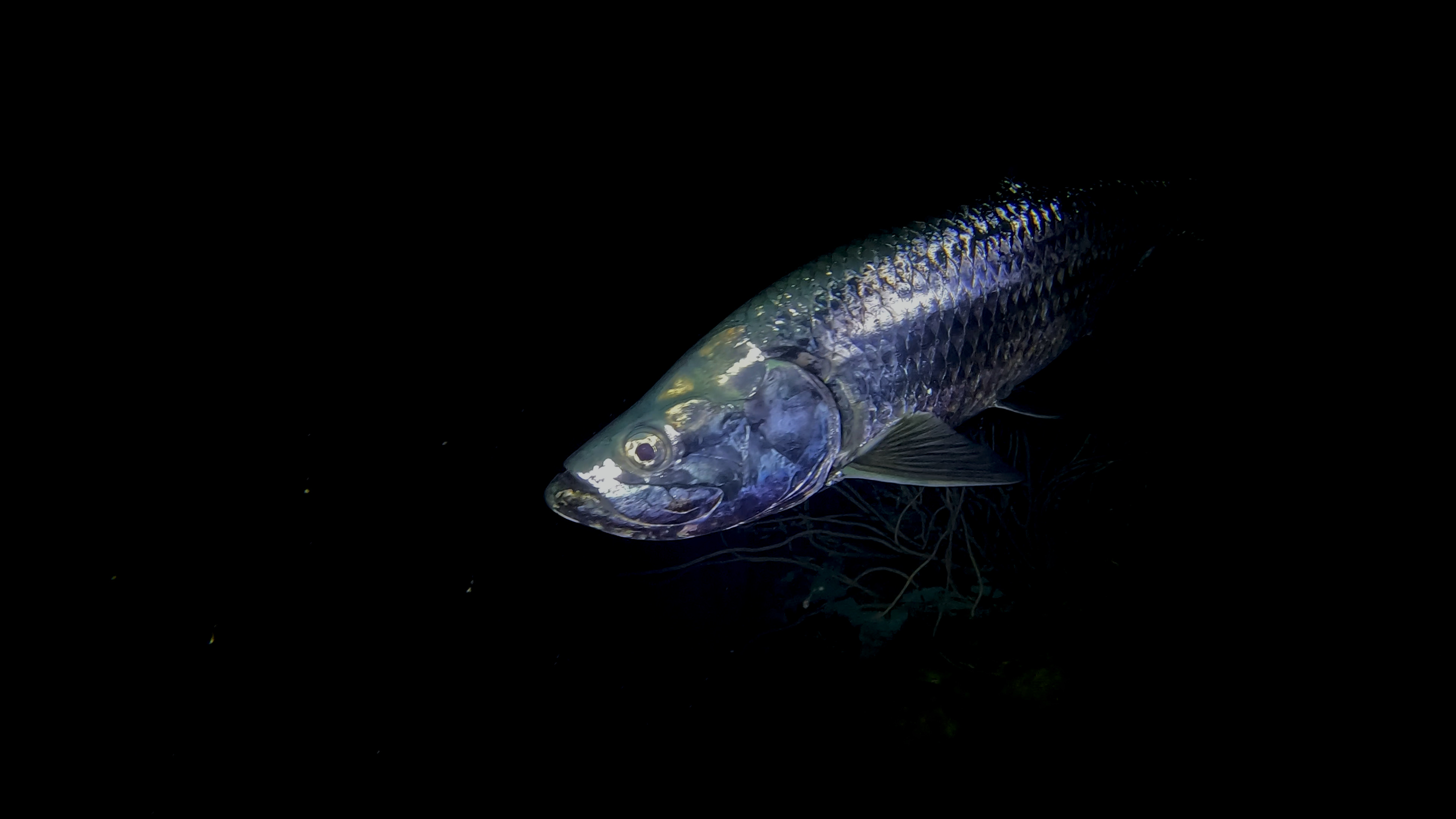
Tarpon – lat. Megalops atlanticus – Tarpon
Tarpon je velika tropska riba, znana po svoji srebrni barvi, velikih očeh in sposobnosti spektakularnih skokov iz vode. Živi v tropskih in subtropskih obalah Atlantskega oceana, predvsem v Karibskem morju, obalah Floride in Srednje Amerike. Je plenilska riba, ki se prehranjuje z manjšimi ribami in planktonom.
The Tarpon is a large tropical fish, known for its silvery body, large eyes, and spectacular leaping ability. It inhabits tropical and subtropical Atlantic coastal waters, mainly in the Caribbean Sea, Florida, and Central America. It is a predatory fish that feeds on smaller fish and plankton. The species is not endangered, but it is sensitive to pollution, habitat destruction, and overfishing for sport.
Foto: Aleš Sulič, Bonaire Salt Pier, Karpata night dive
PARROT FISH & QEEN PARROT FISH
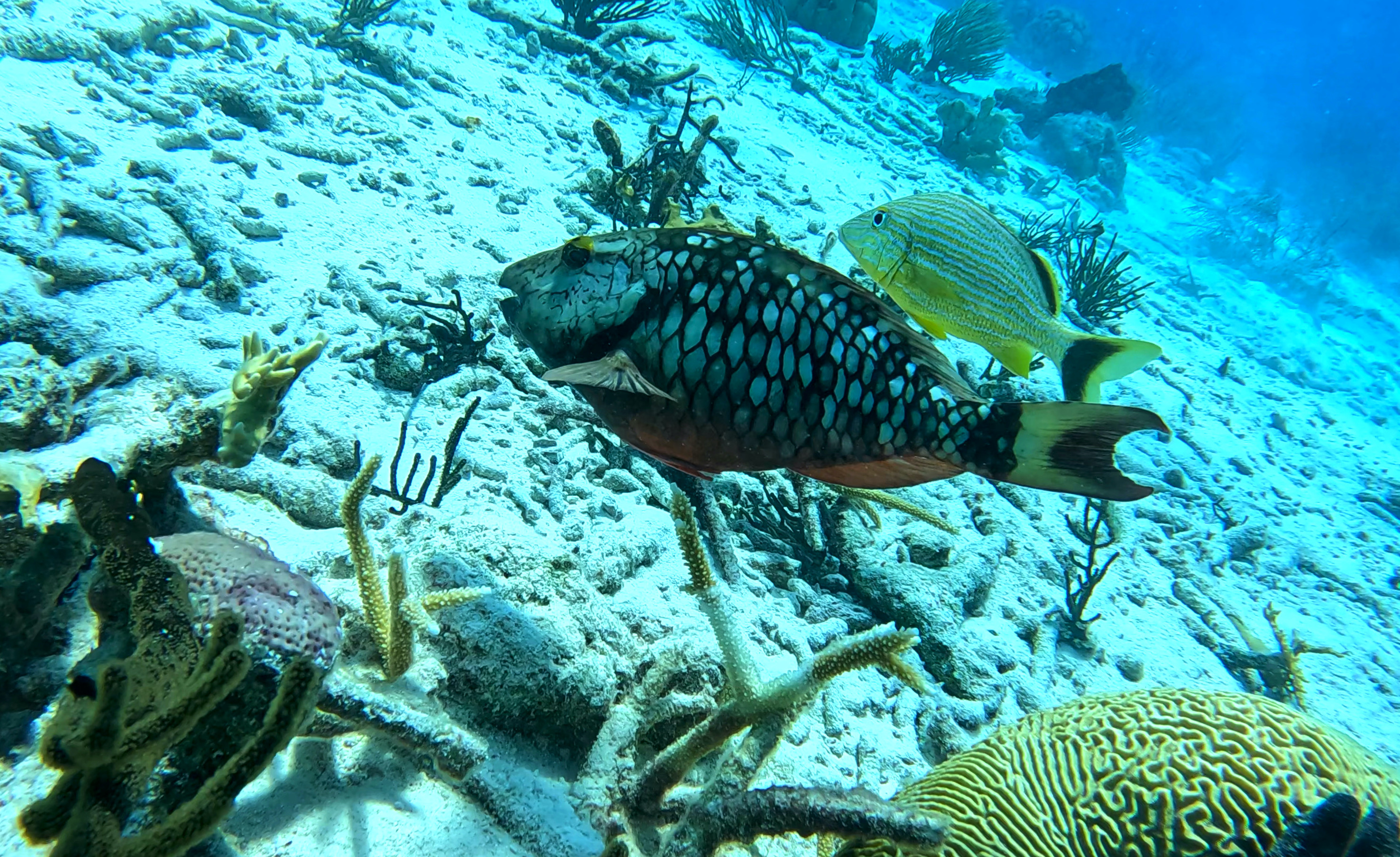
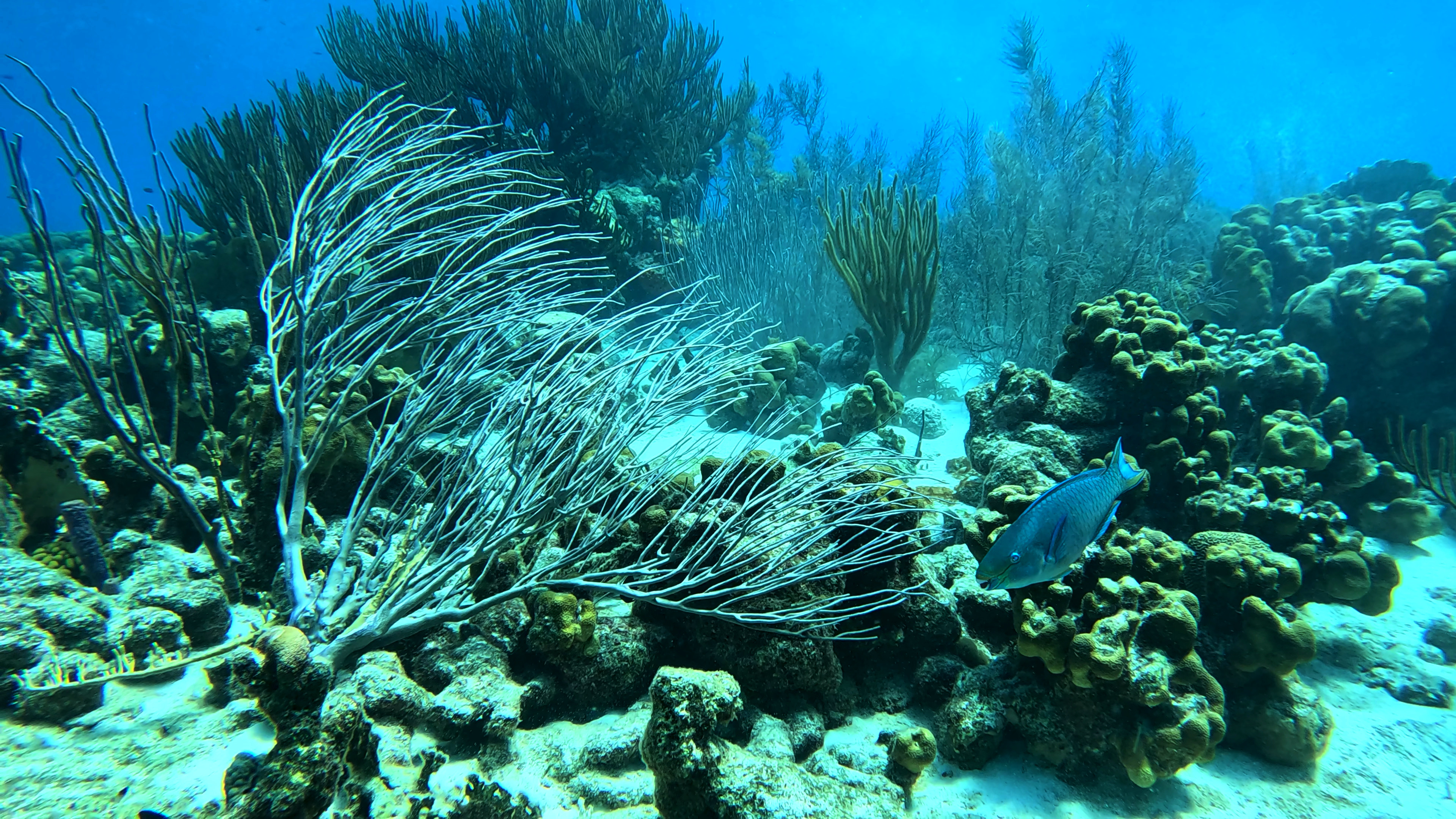
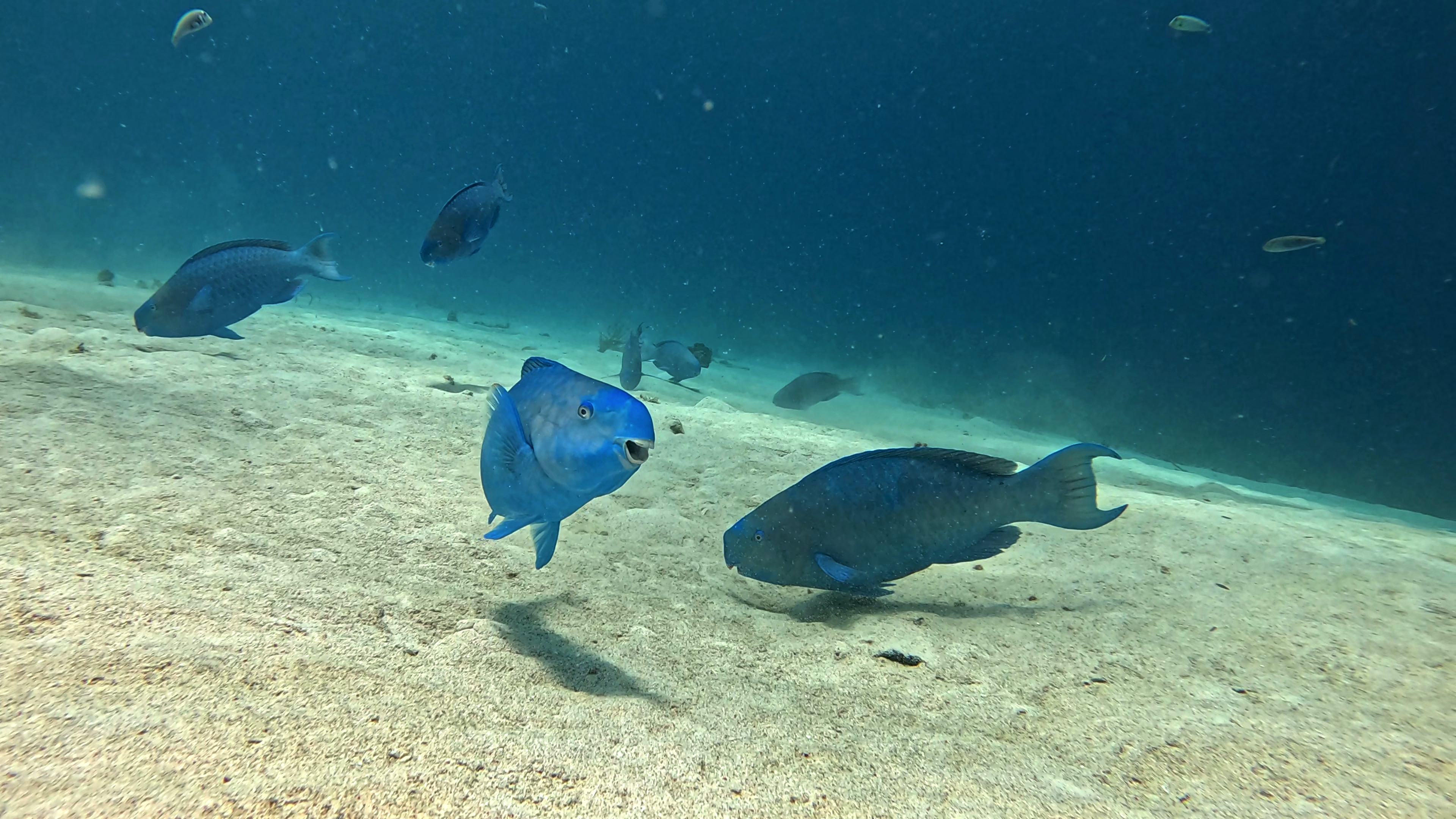
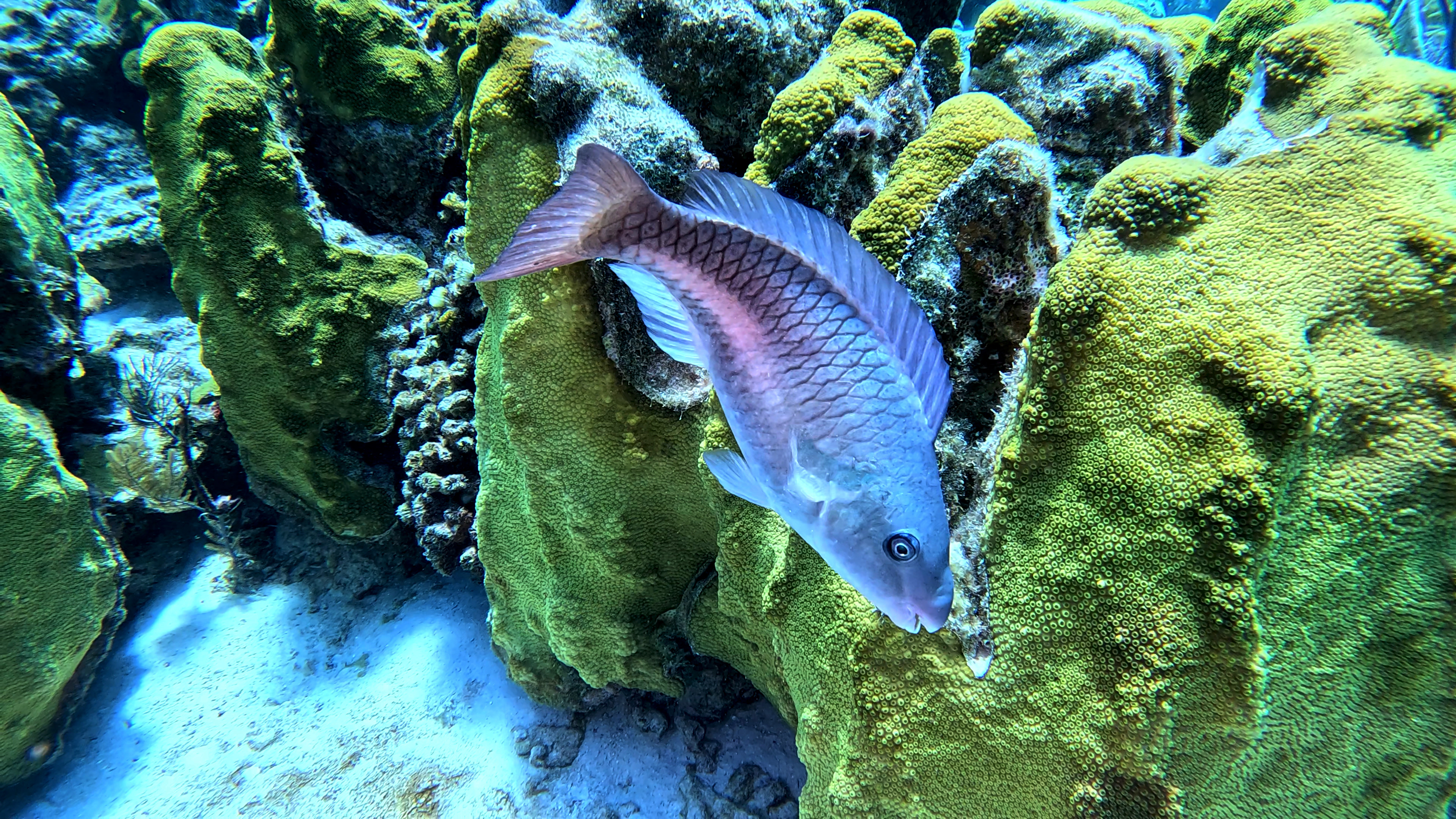
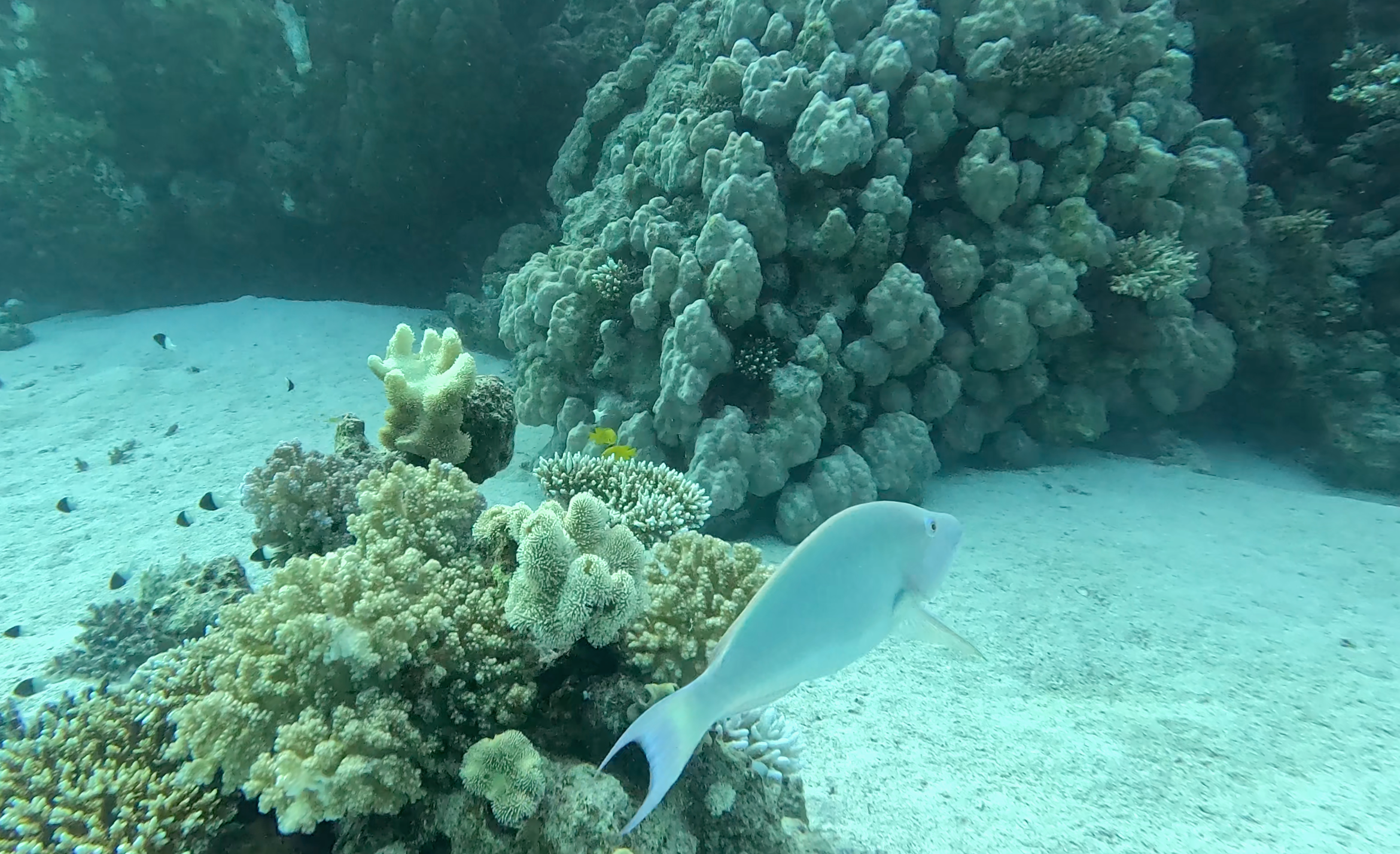
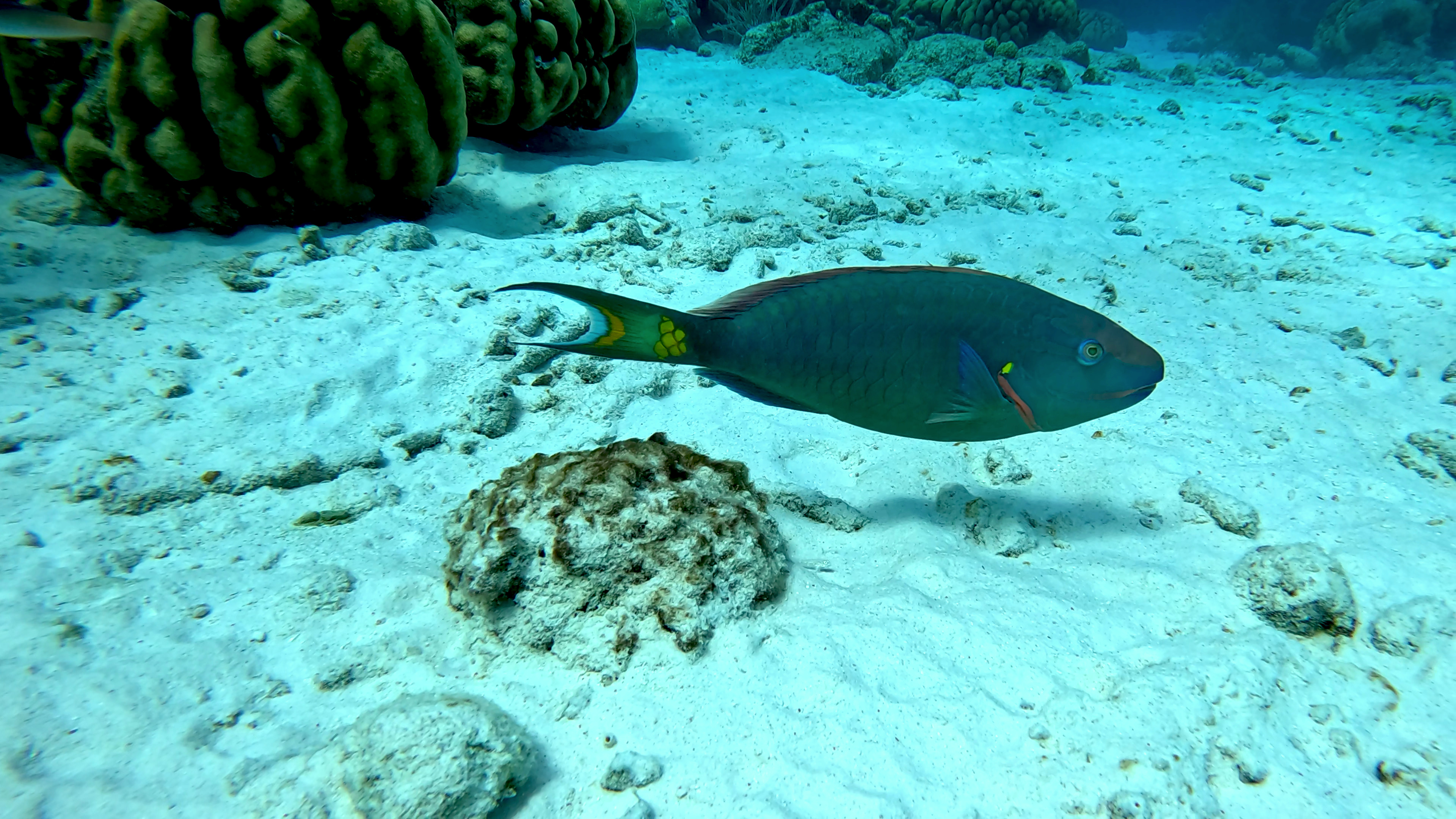
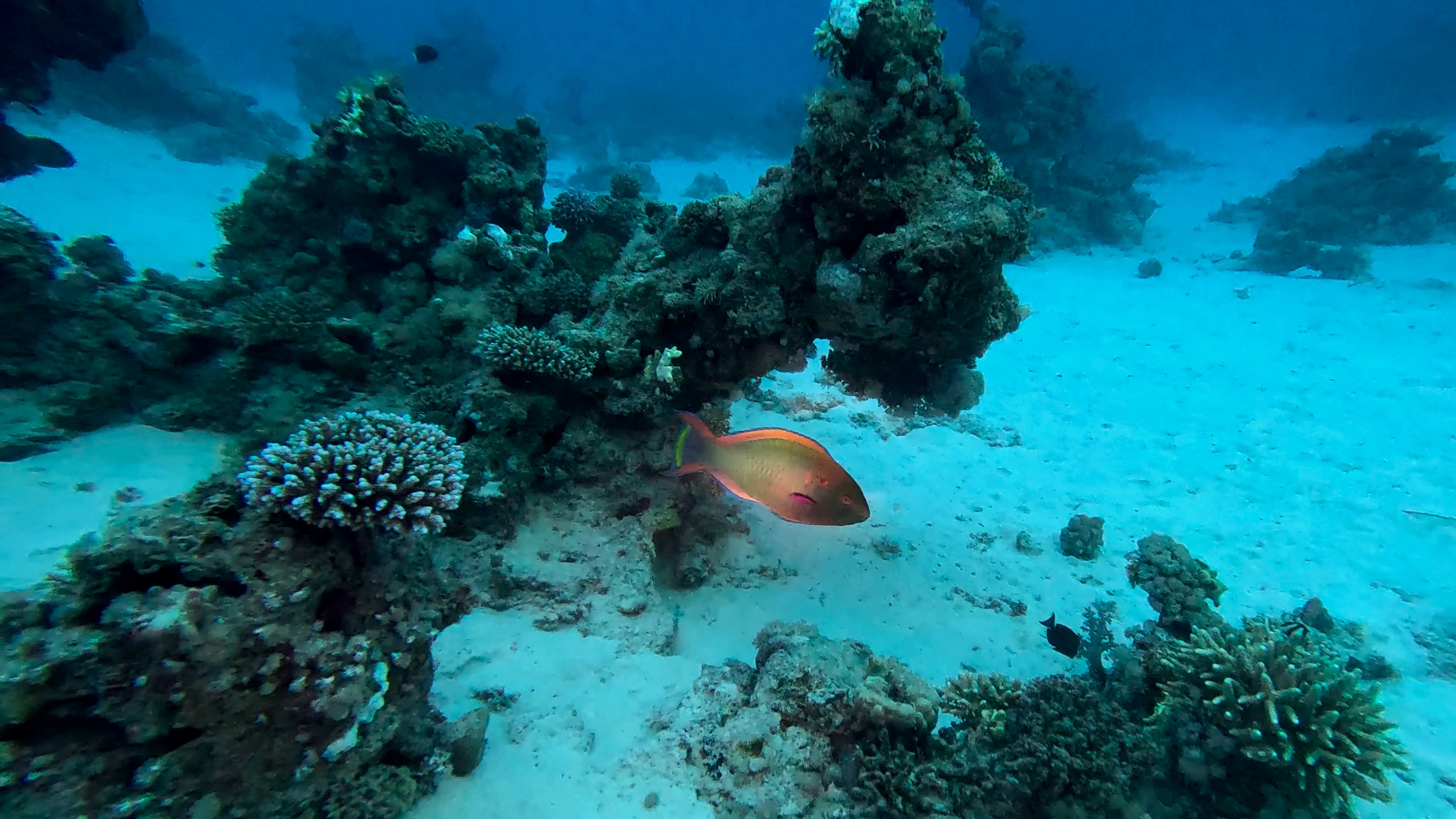
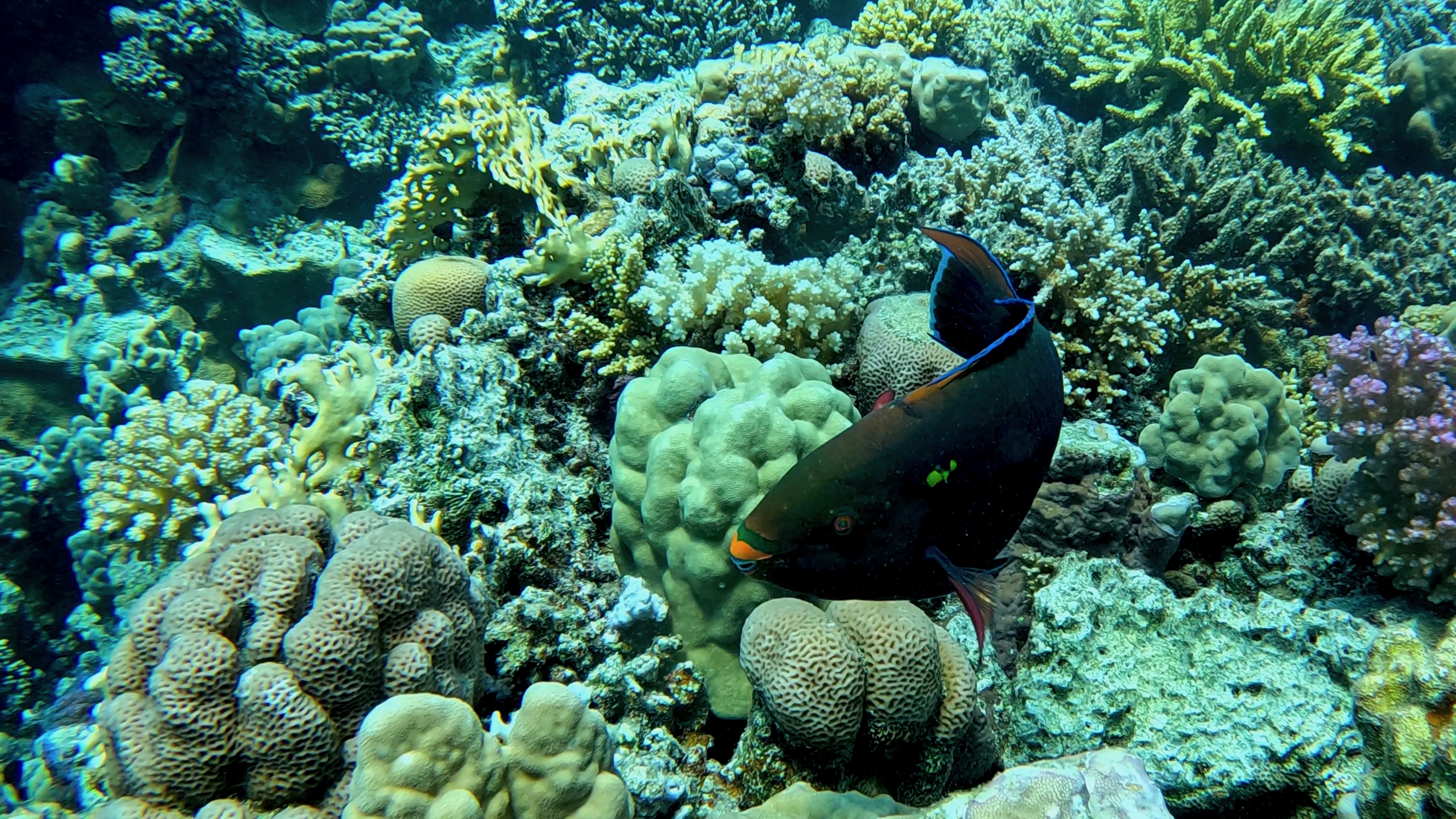
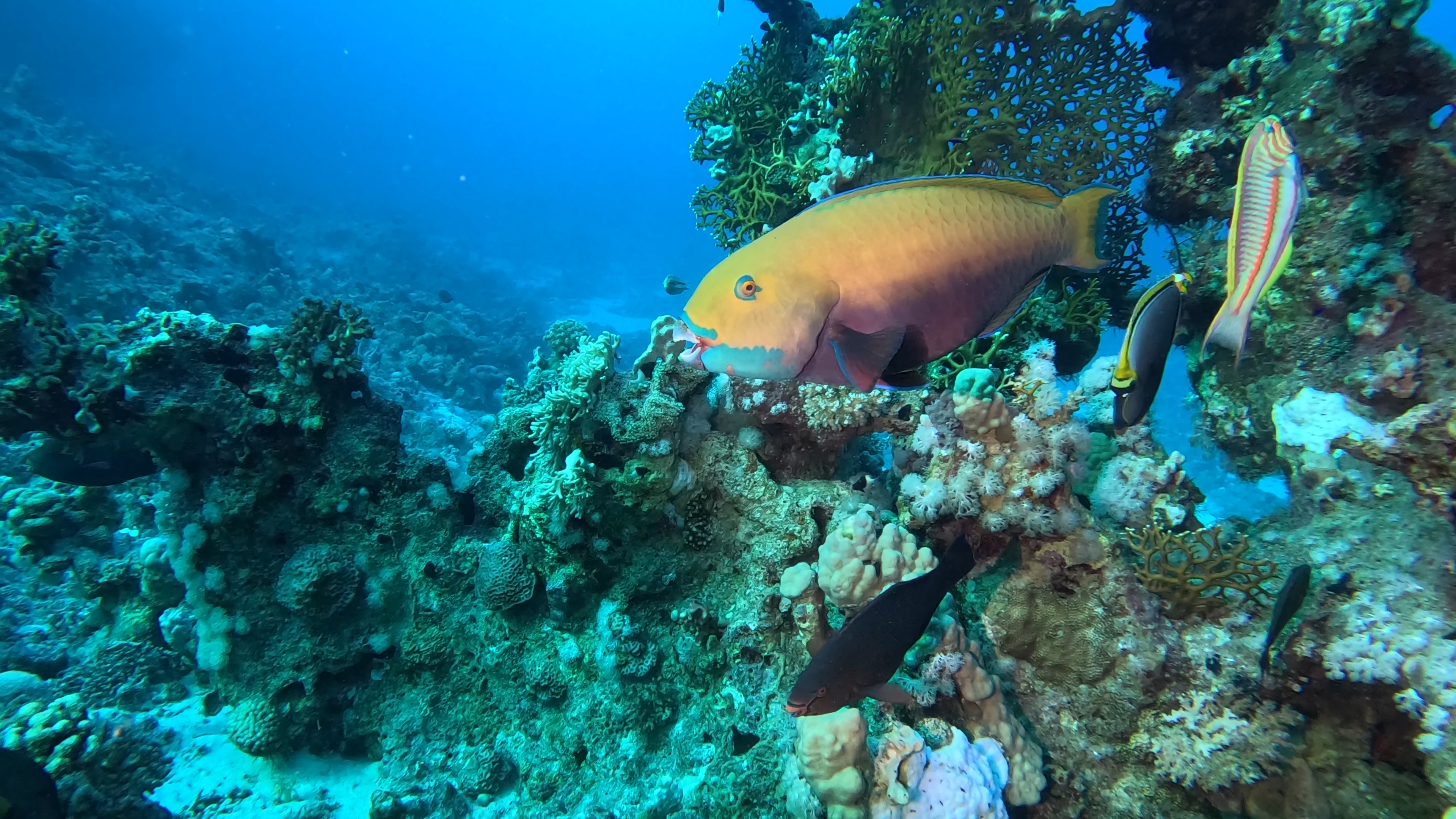
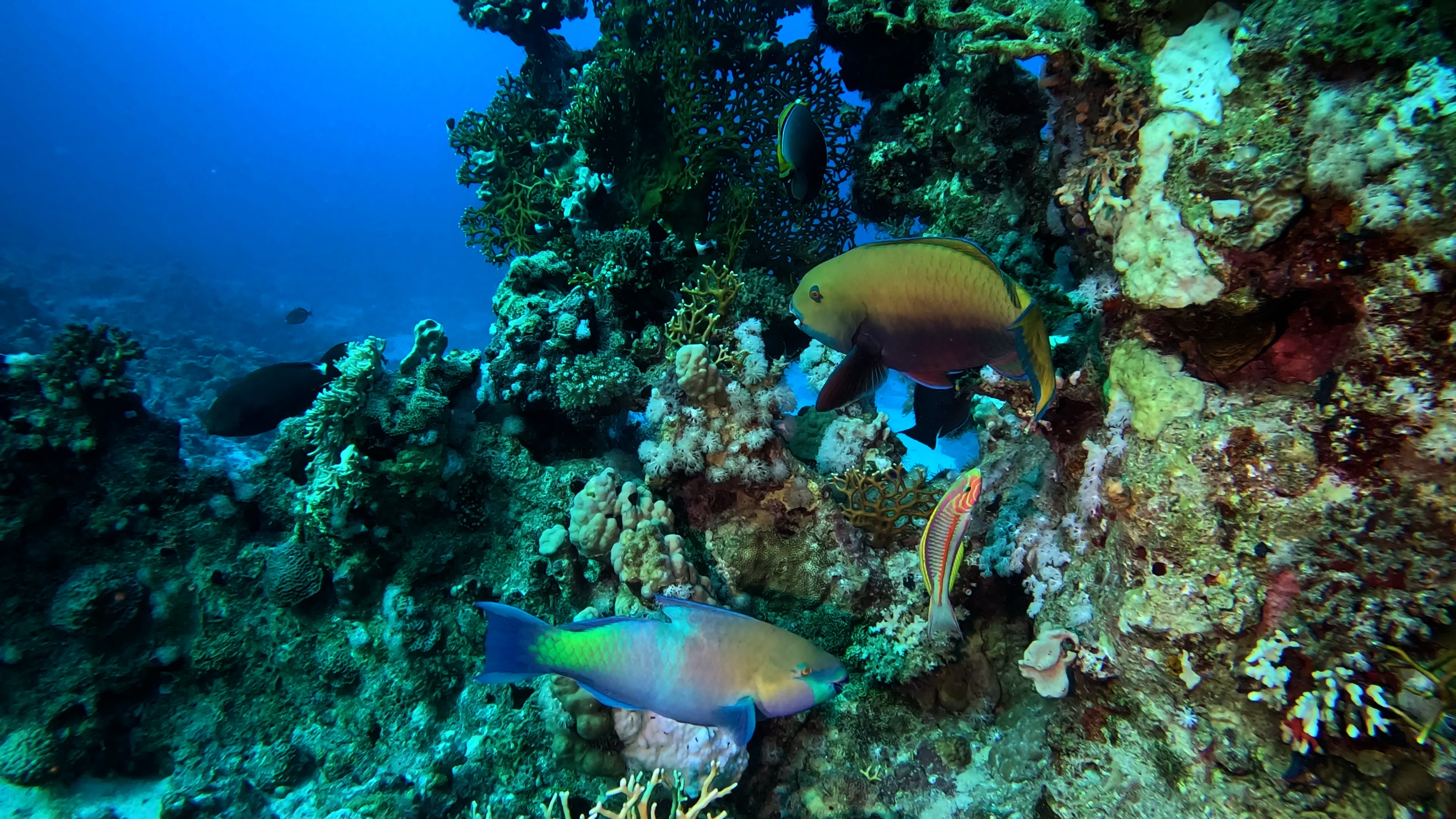
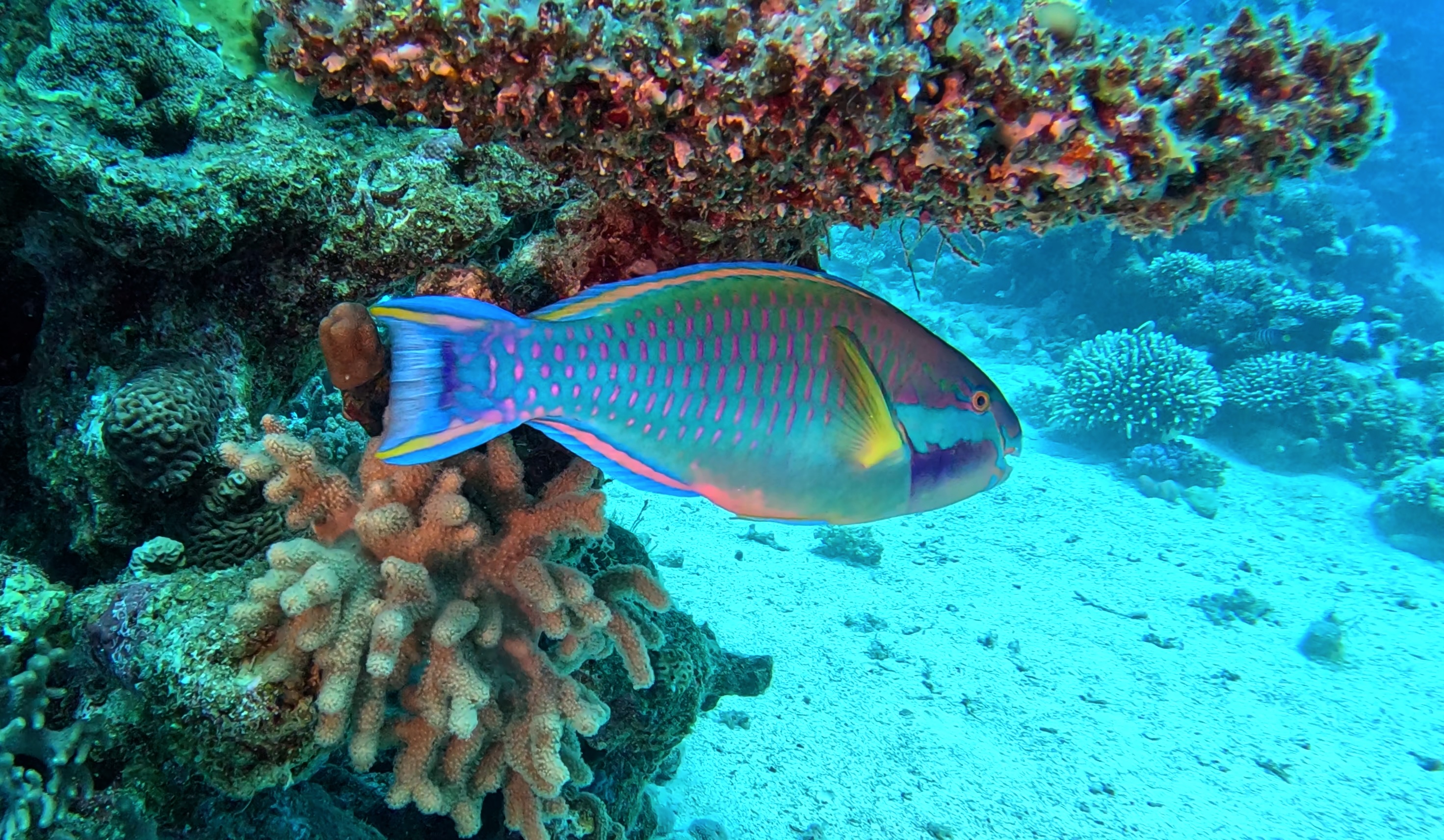
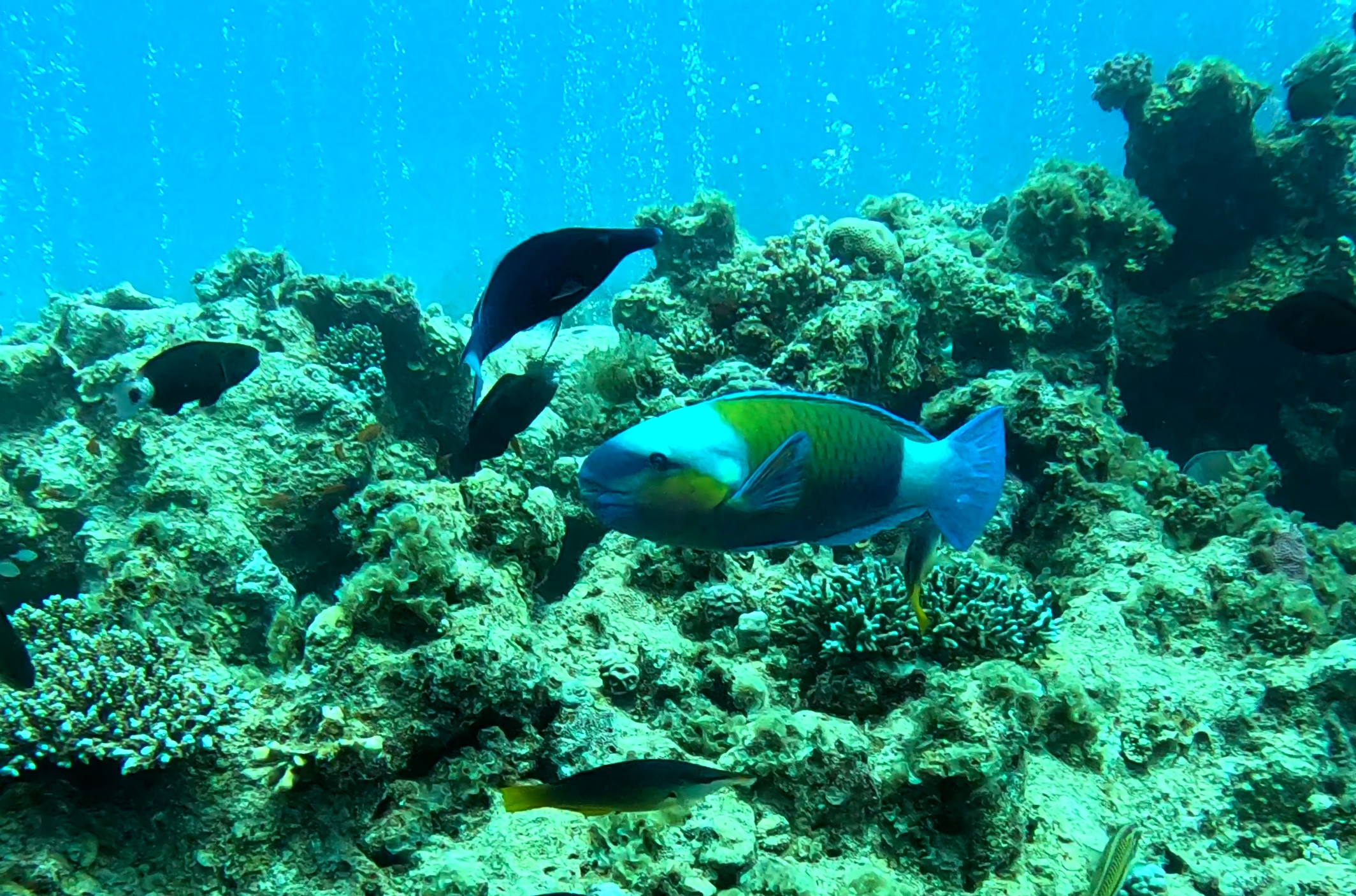
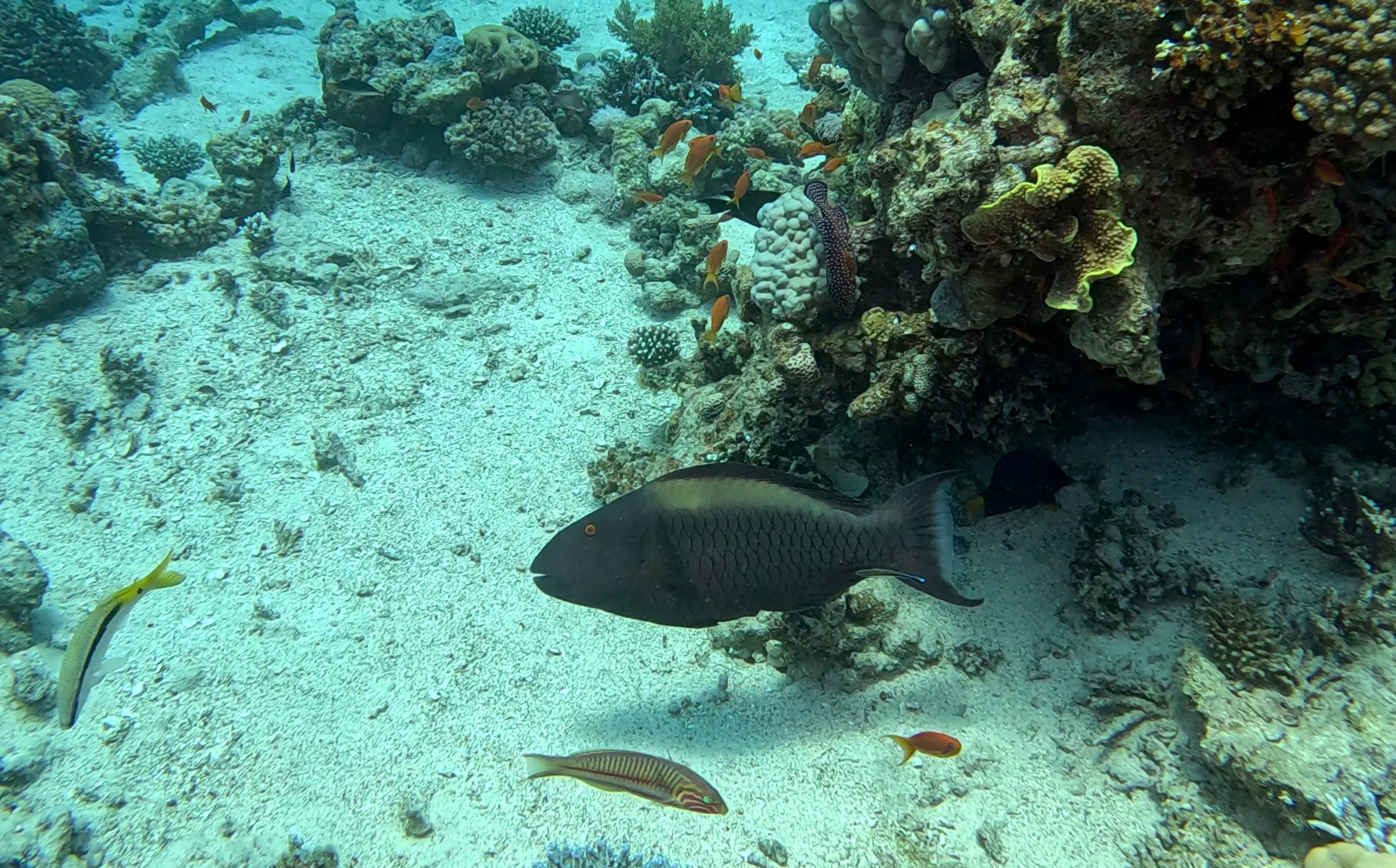
Parrotfish – lat. family Scaridae – Papagajska riba
Papagajske ribe so tropske koralne ribe, prepoznavne po močnih zobeh, ki jih uporabljajo za strganje alg in koral. Njihova telesa so pogosto svetlo obarvana, pri nekaterih vrstah pa se barva spreminja s starostjo in spolom. Živijo v tropskih koralnih grebenih po vsem svetu. Prehranjujejo se predvsem z algami in koralnimi polipi, s čimer prispevajo k zdravju koralnih grebenov. Vrste niso ogrožene, vendar so občutljive na uničenje koralnih grebenov in onesnaževanje morja.
Parrotfish are tropical reef fish recognizable by their strong beaks, which they use to scrape algae and coral. Their bodies are often brightly colored, and some species change color with age or sex. They inhabit tropical coral reefs worldwide and feed mainly on algae and coral polyps, helping maintain healthy reef ecosystems. The species are not endangered, but they are sensitive to coral reef destruction and ocean pollution.
Foto: Aleš sulič, Bonaire Bari reef, Egypt Sharm el Sheik, Marsa Alam
PICASSO FISH
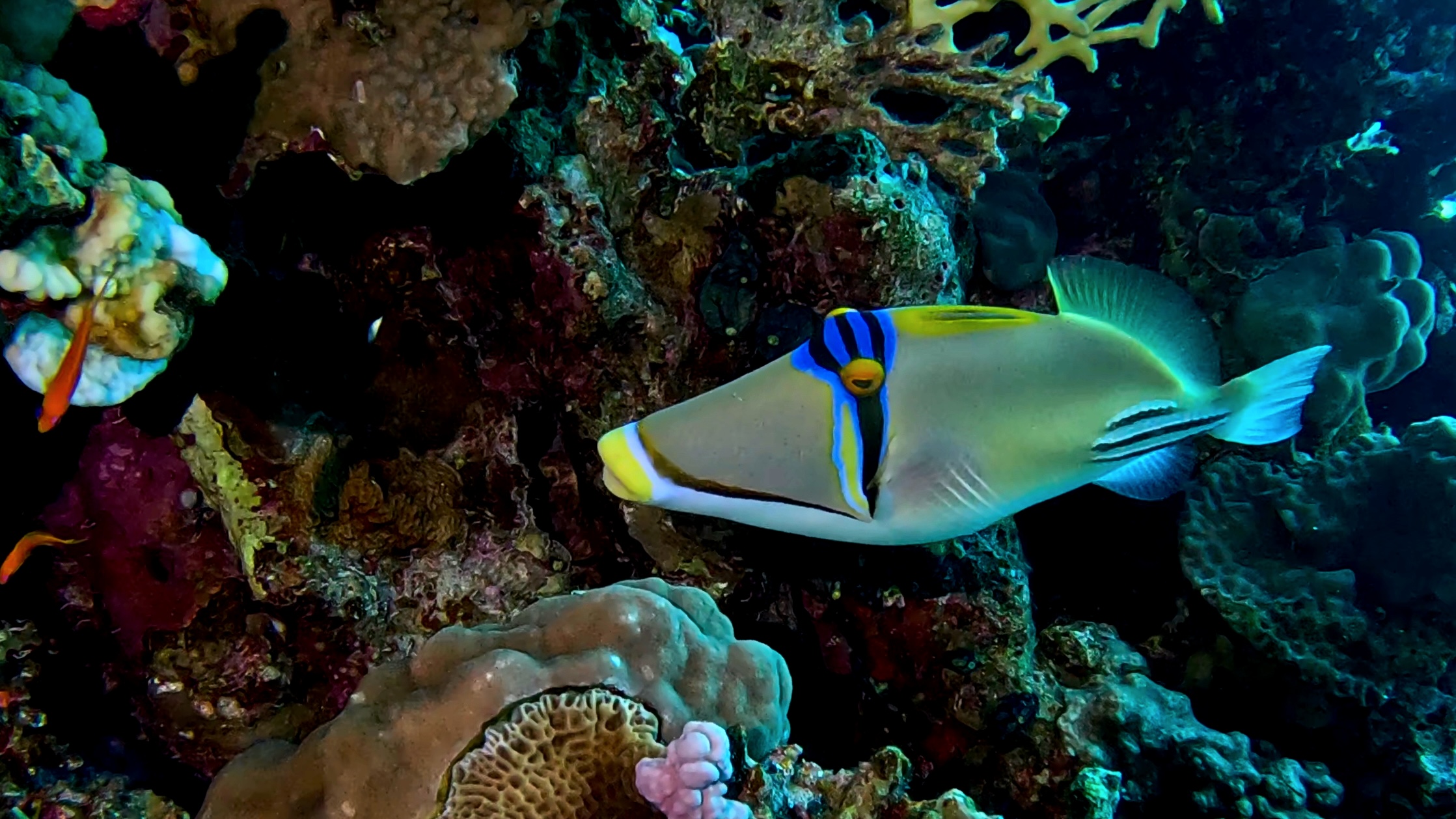
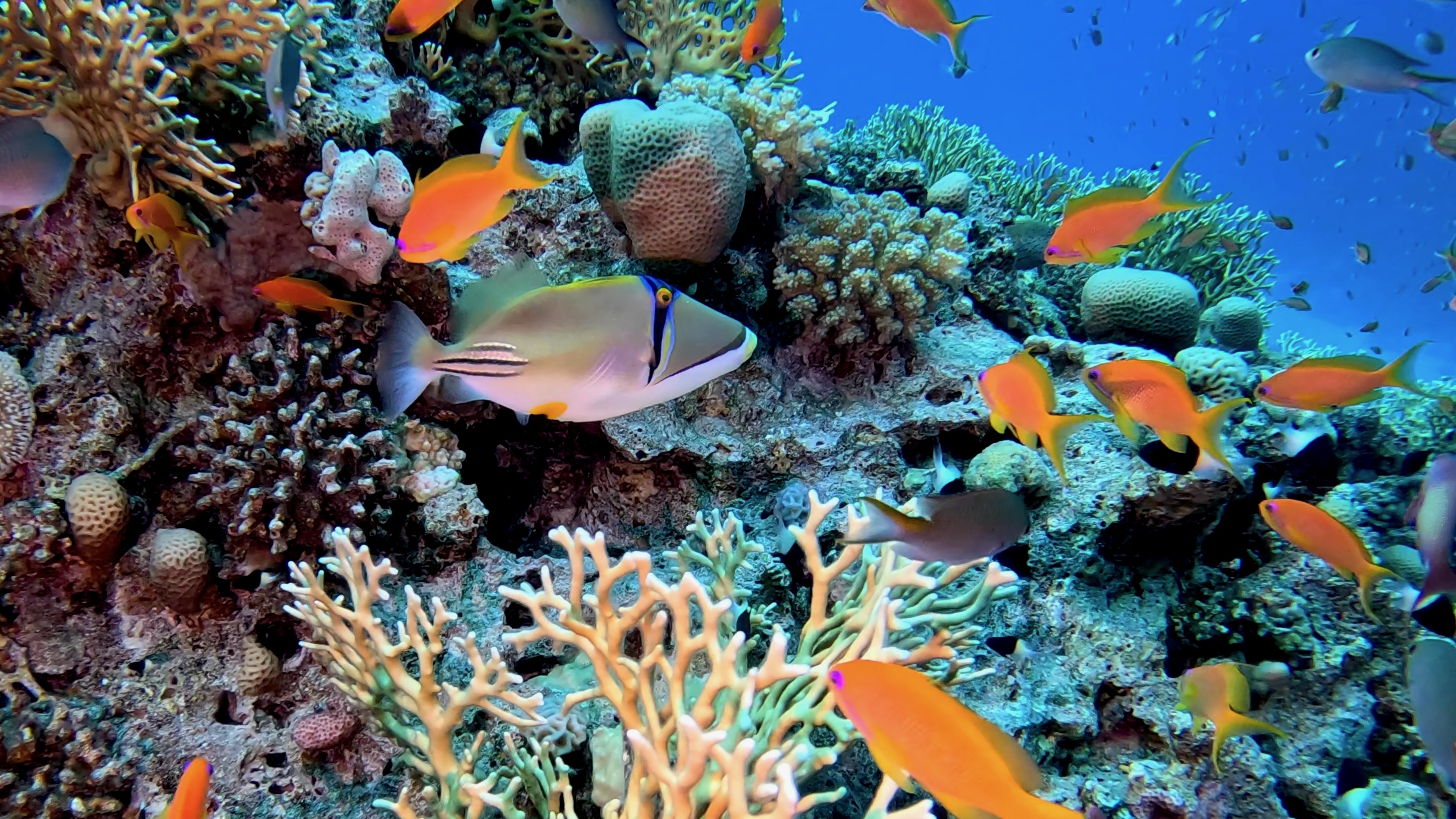
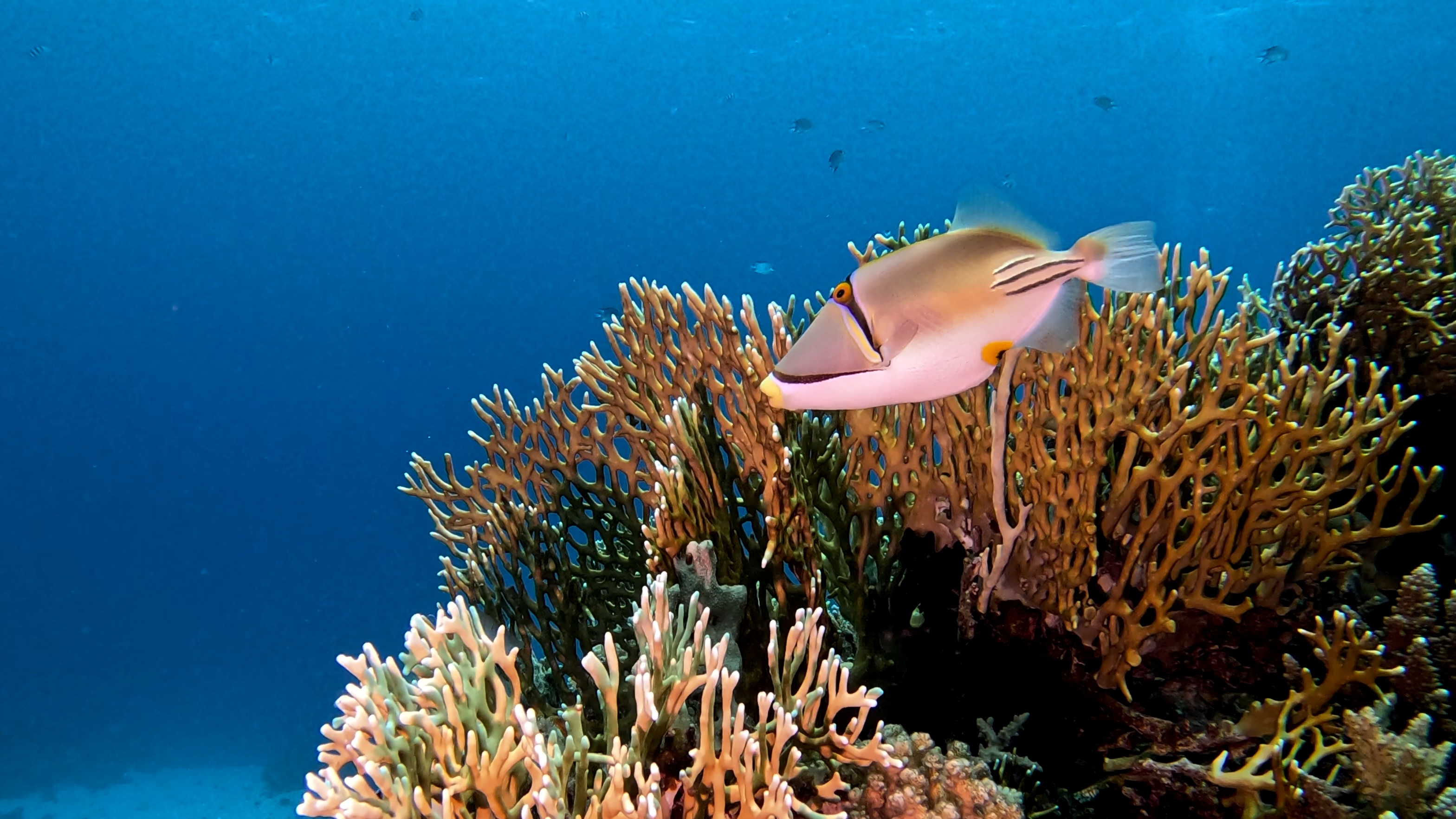
Picasso Fish – Rhinecanthus aculeatus – Pikasova riba
Picasova riba, znana tudi kot Picasso triggerfish, je tropska riba z značilnim, barvitim vzorcem, ki spominja na umetniške poteze, po katerih je dobila ime. Živi v tropskih koralnih grebenih Indo-Pacifiškega območja, pogosto okoli skal in koral. Prehranjuje se z nevretenčarji, majhnimi rakci in planktonom. Vrsta ni ogrožena, vendar je občutljiva na uničenje koralnih grebenov in onesnaževanje morja.
The Picasso Fish, also known as the Picasso Triggerfish, is a tropical fish notable for its striking, colorful patterns that resemble artistic brushstrokes, which give it its name. It inhabits tropical coral reefs of the Indo-Pacific region, often around rocks and corals. Its diet consists of invertebrates, small crustaceans, and plankton. The species is not endangered, but it is sensitive to coral reef destruction and ocean pollution.
Foto: Aleš Sulič, Egypt Sataya, Hurgada
TITAN TRIGGER FISH
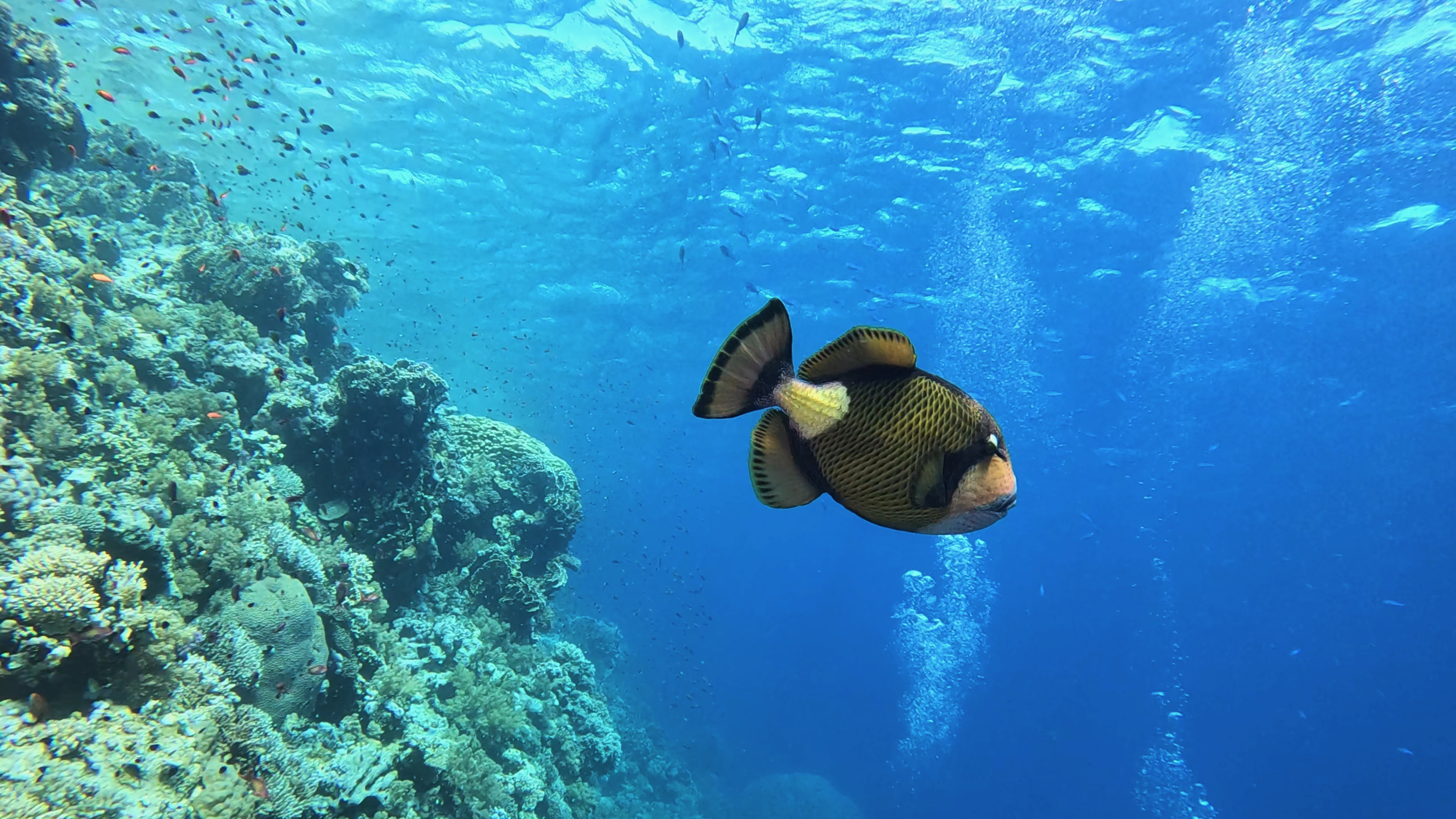
Titan Triggerfish – Balistoides viridescens – Titanova balestra
Titanova balestra, znana tudi kot Titan Triggerfish, je ena največjih tropskih triger rib, z robustnim telesom in močno čeljustjo, sposobna razbiti lupine in koralne školjke. Živi v tropskih koralnih grebenih Indo-Pacifiškega območja, pogosto okoli skalnatih področij in grebenov. Prehranjuje se z nevretenčarji, mehkužci in koralami.
The Titan Triggerfish is one of the largest tropical triggerfish, with a robust body and powerful jaws capable of crushing shells and coral. It inhabits tropical coral reefs of the Indo-Pacific region, often around rocky areas and reef structures. Its diet consists of invertebrates, mollusks, and coral. The species is not endangered, but it is sensitive to coral habitat destruction and ocean pollution.
Foto: Aleš sulič, North Egypt
THREESPOT DAMSELFISH FISH AND BICOLOUR DAMSELFISH
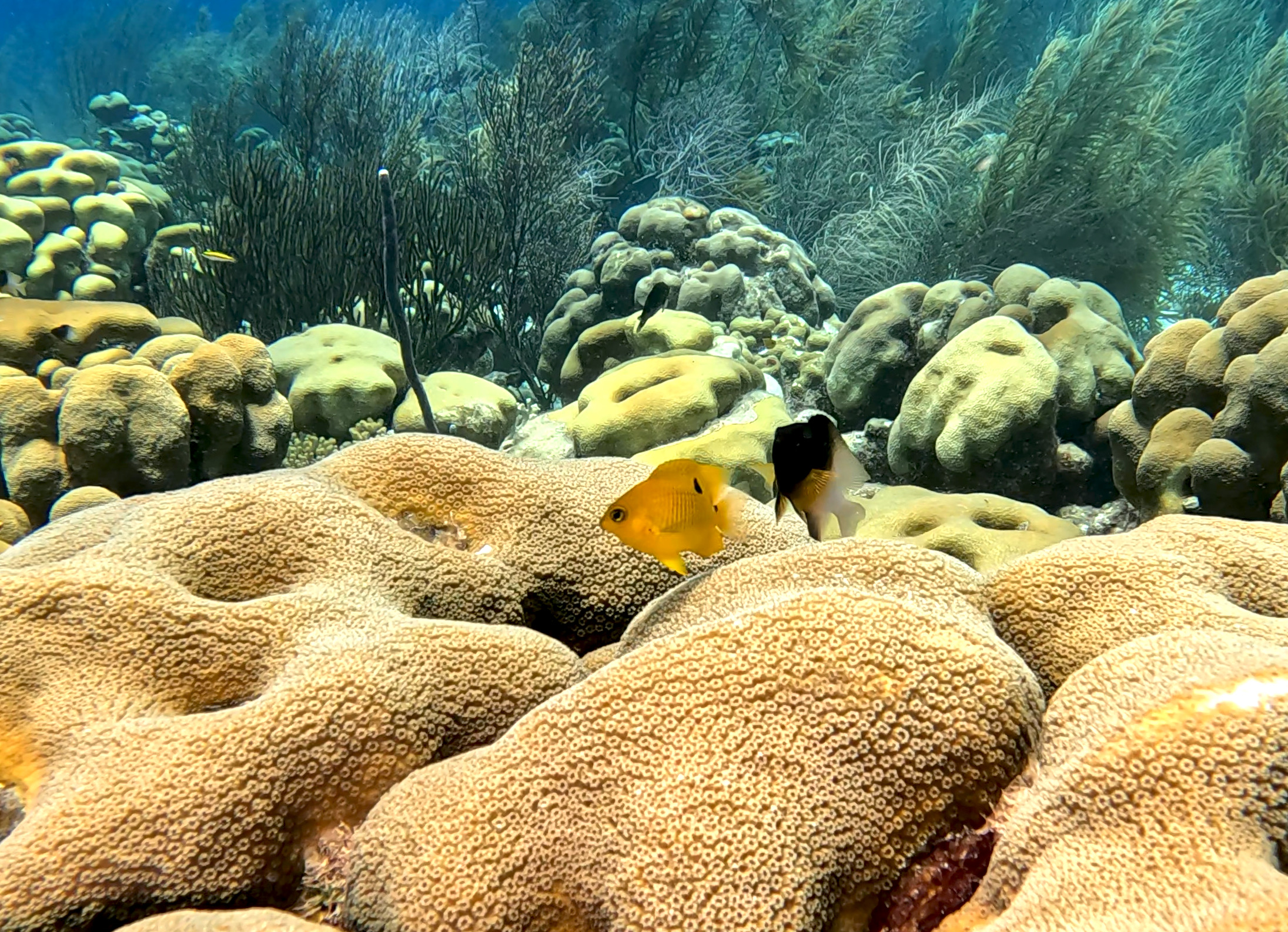
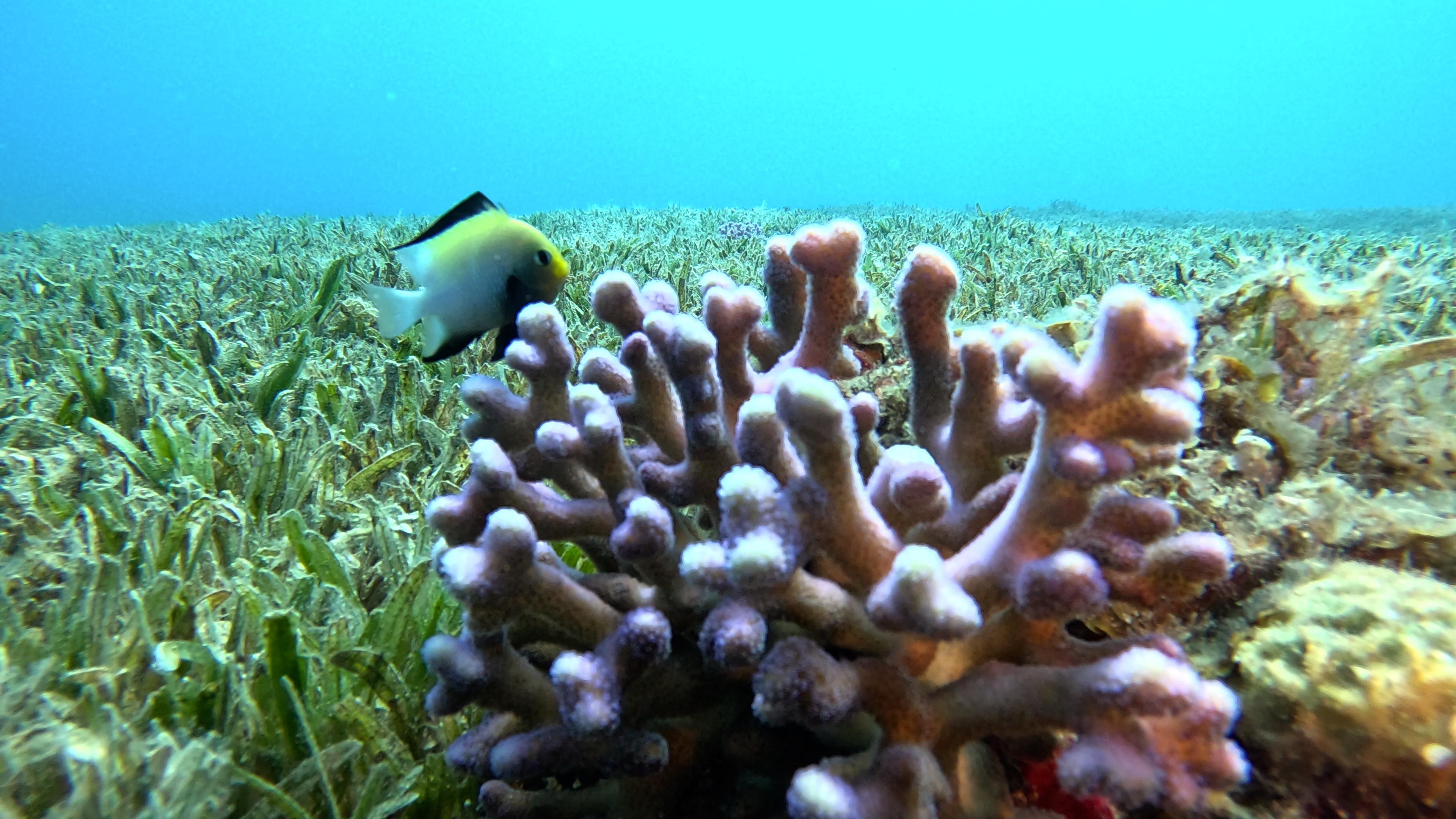
Damselfish – Pomacentrus partitus – Dvobarvna črnika
Dvobarvna črnika, znana tudi kot Bicolour Damselfish, je majhna tropska riba z dvobarvnim telesom – običajno temnejši hrbet in svetlejši trebuh. Živi v tropskih koralnih grebenih Atlantskega oceana, predvsem v Karibskem morju in ob obalah Floride. Prehranjuje se z algami in drobnimi planktonskimi organizmi. Riba z izrazitimi teritorialnimi lastnostmi.
The Bicolour Damselfish is a small tropical fish with a two-toned body, typically darker on the back and lighter on the belly. It inhabits tropical Atlantic coral reefs, mainly in the Caribbean Sea and along the coasts of Florida. Its diet consists of algae and small planktonic organisms.
Foto: Aleš Sulič, Bonaire Alice in wonderland, Egypt Dahab bridge
SPOTTED MORAY
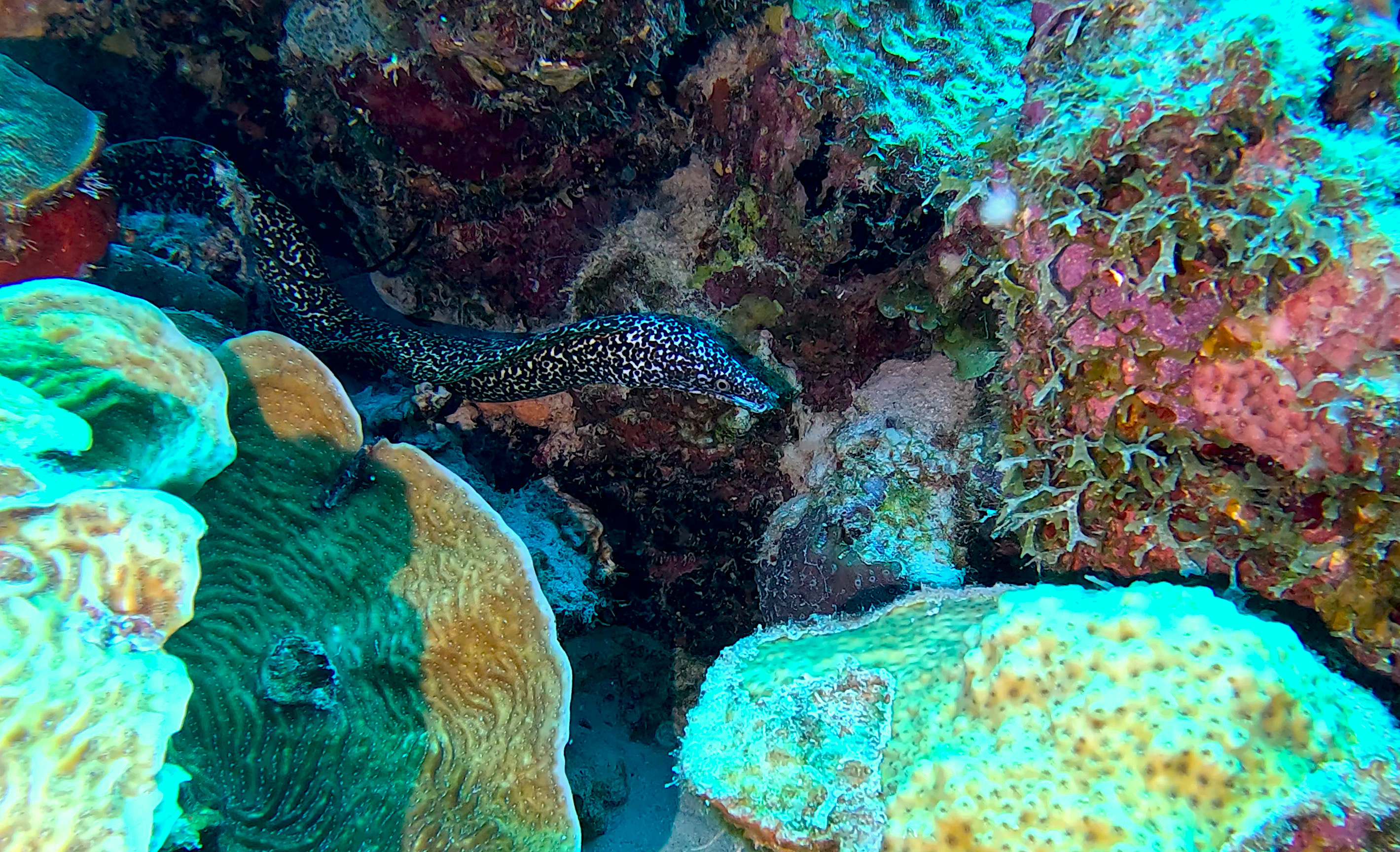
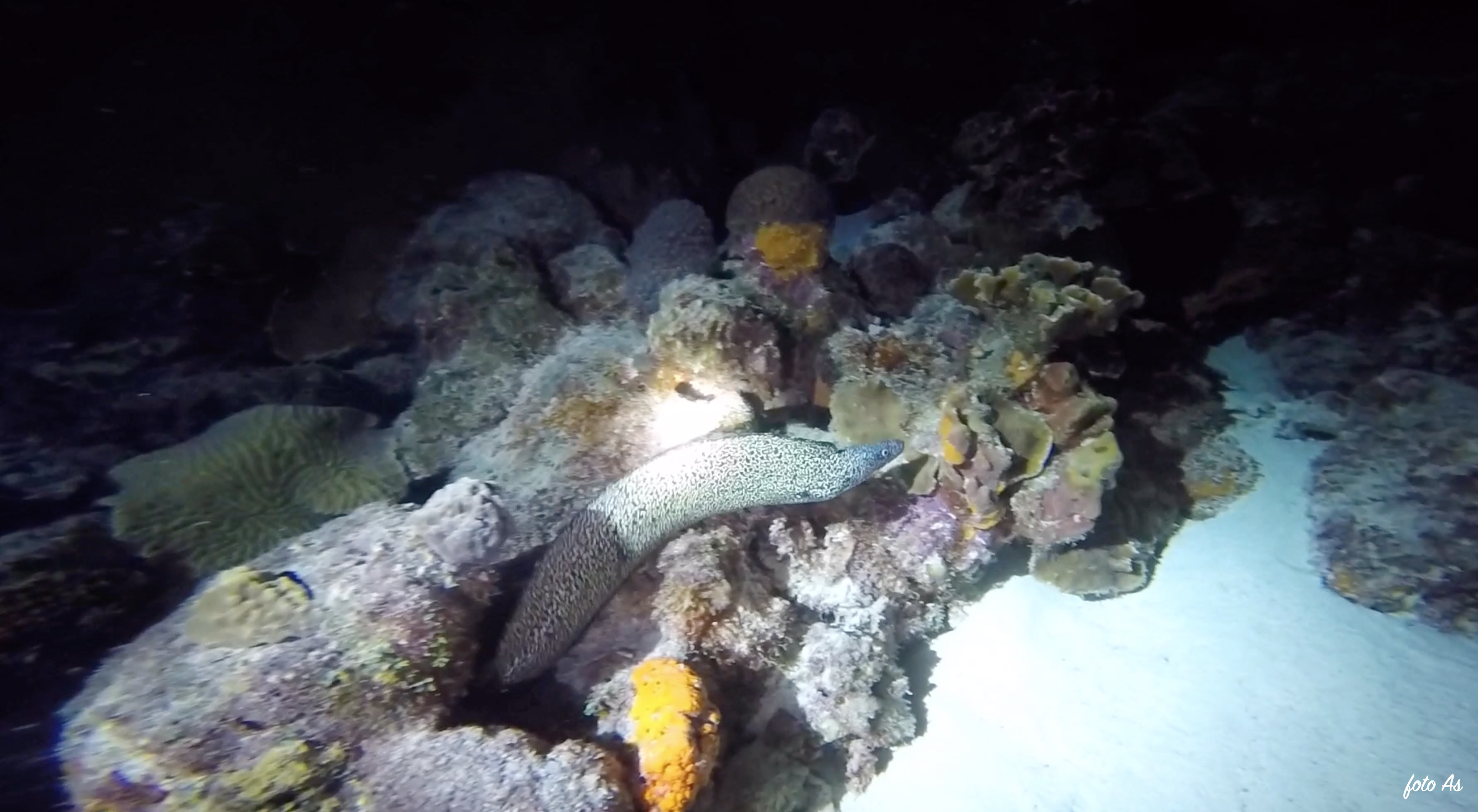
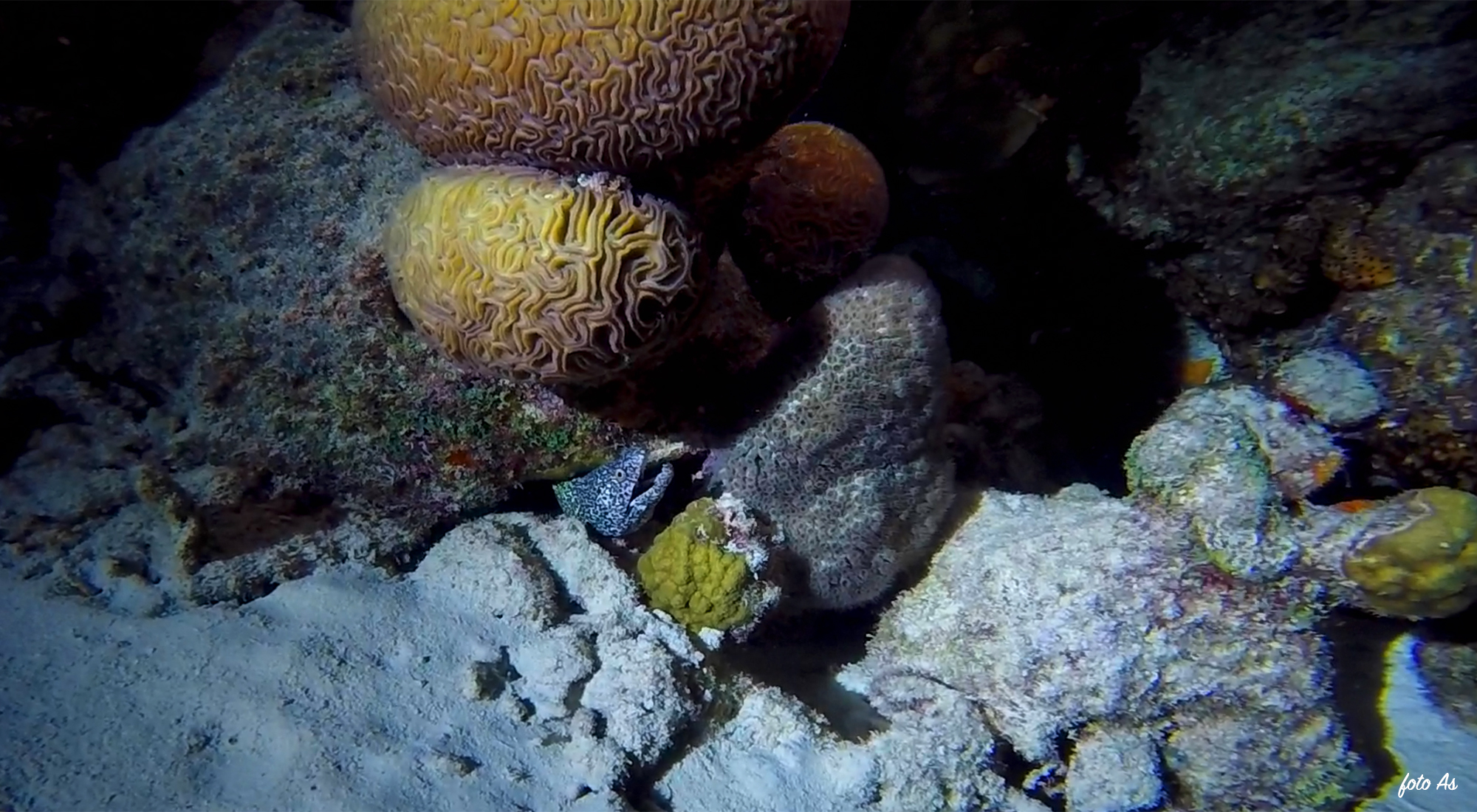
Spotted Moray – Gymnothorax moringa – Pikasta murena
Pikasta murena, znana tudi kot Spotted Moray, je dolga in vitka tropska riba z značilnimi temnimi pikami po svetlejšem telesu. Živi v tropskih koralnih grebenih Atlantskega oceana, predvsem v Karibskem morju in ob obalah Floride ter Srednje Amerike. Prehranjuje se z ribami, rakci in mehkužci, ki jih lovi v razpokah in med koralnimi strukturami. Vrsta ni ogrožena, vendar je občutljiva na uničenje koralnih grebenov in onesnaženje morja.
The Spotted Moray is a long, slender tropical fish with distinctive dark spots on a lighter body. It inhabits tropical Atlantic coral reefs, mainly in the Caribbean Sea and along the coasts of Florida and Central America. Its diet consists of fish, crustaceans, and mollusks, which it hunts in crevices and among coral structures. The species is not endangered, but it is sensitive to coral reef destruction and ocean pollution.
Foto: Aleš Sulič, Egypt south
SEA GOLDIE
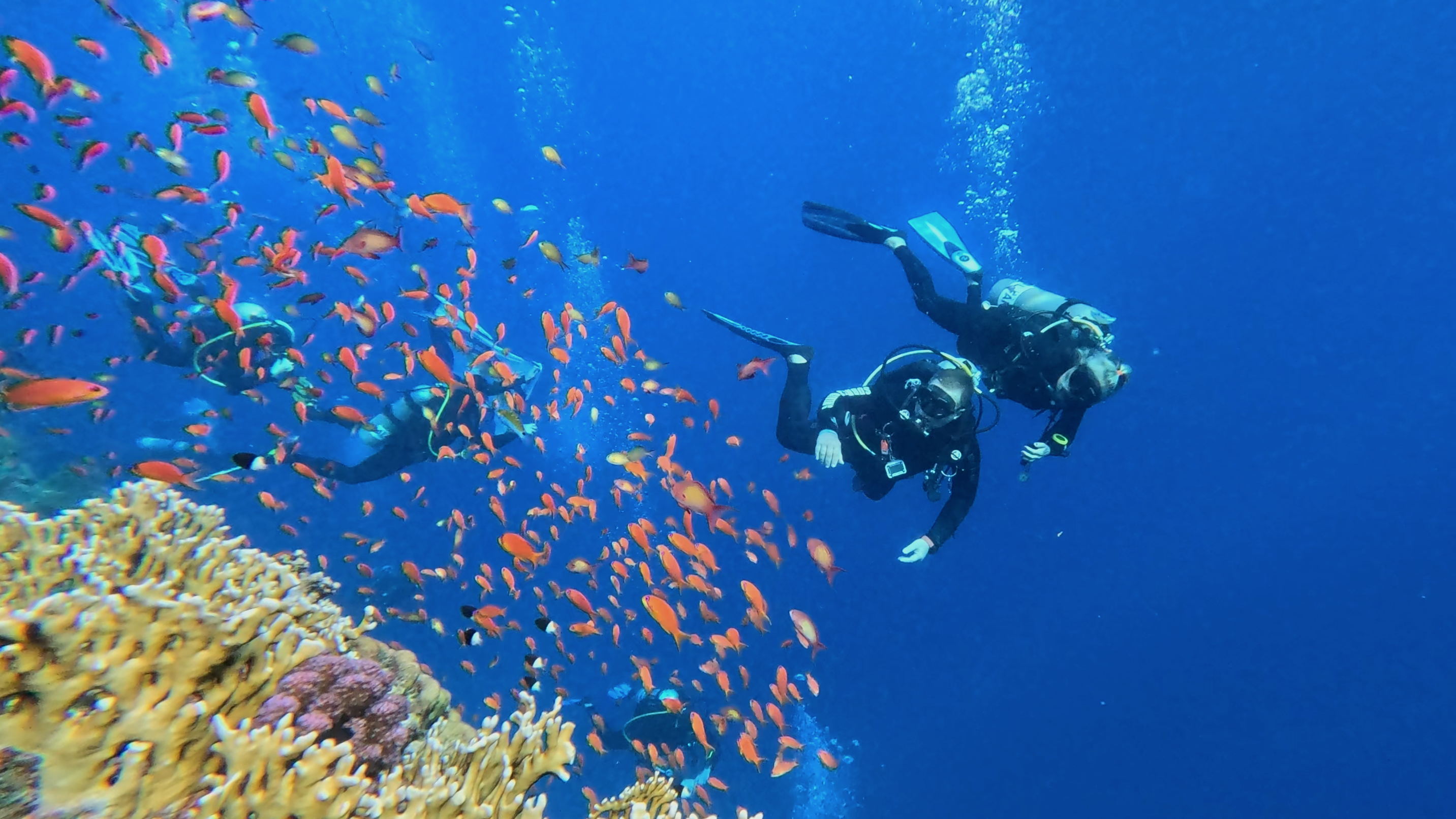
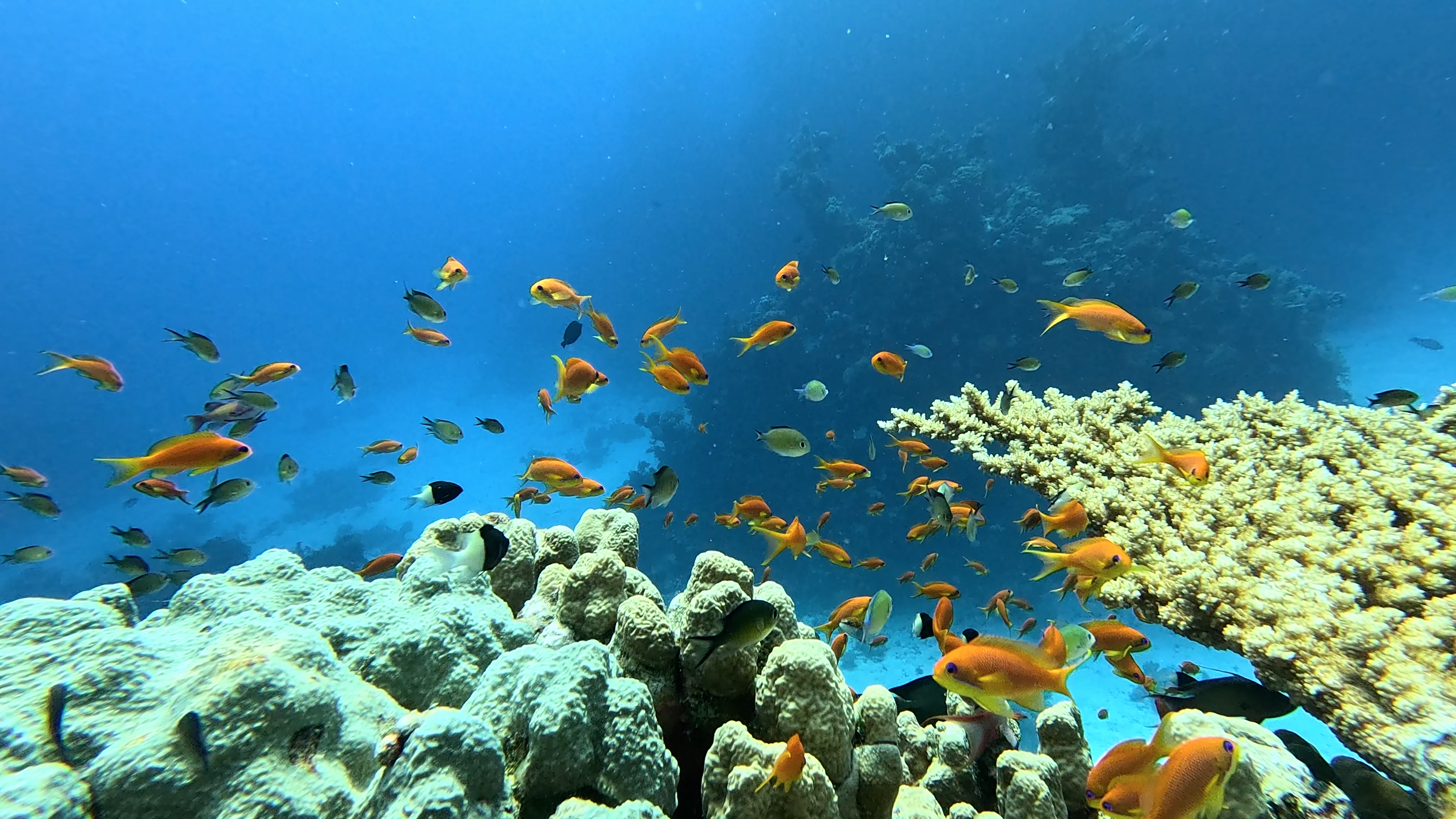
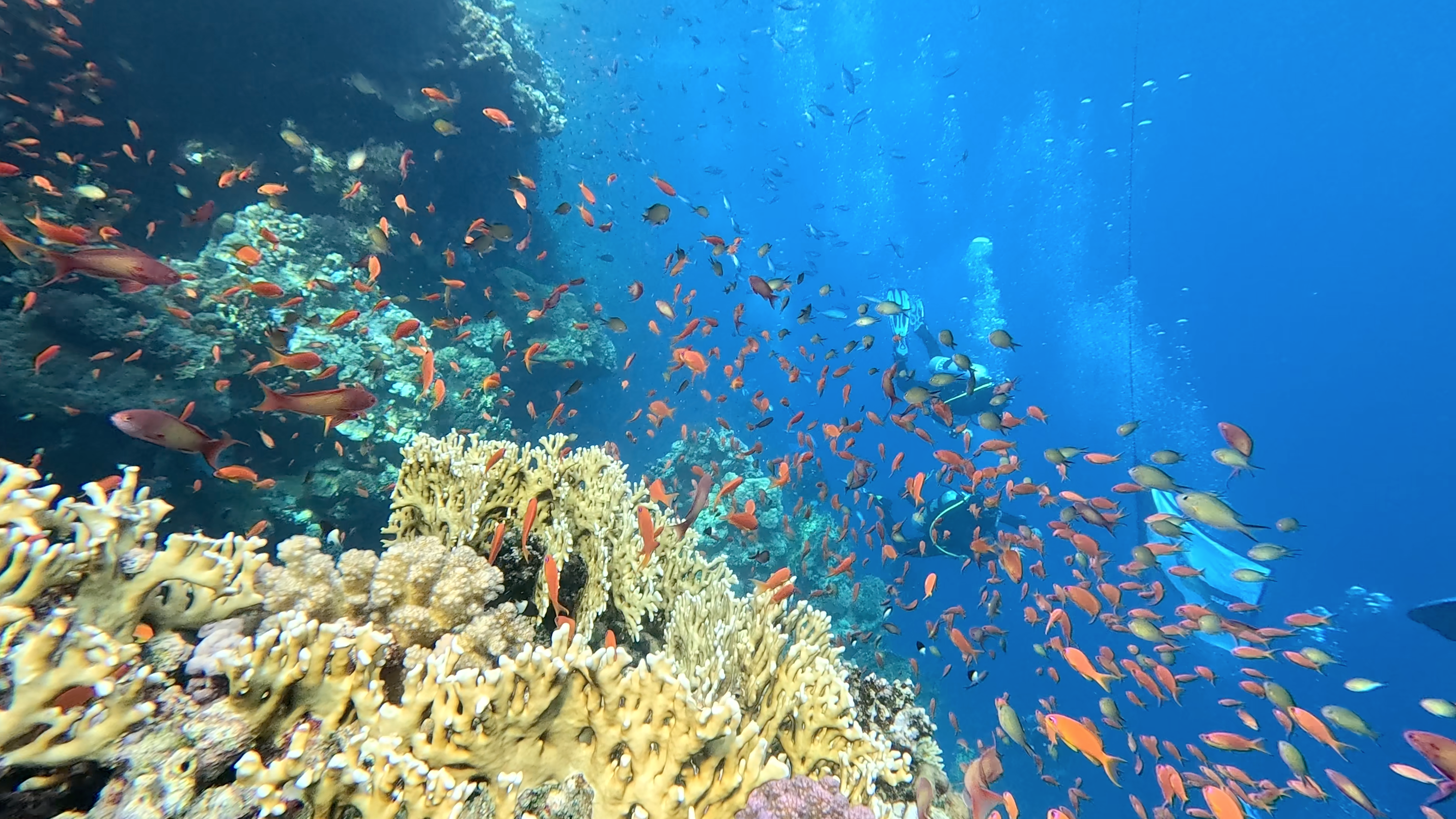
Sea Goldie – Pseudanthias squamipinnis – Zlata morska ribica
Zlata morska ribica, znana tudi kot Sea Goldie, je majhna, svetlo oranžno-rumena tropska riba z vitkim telesom in značilnim jatnim vedenjem. Živi v tropskih koralnih grebenih Indo-Pacifiškega območja, pogosto nad koralnimi grebeni v velikih jatah. Prehranjuje se z zooplanktonom.
The Sea Goldie is a small, bright orange-yellow tropical fish with a slender body and characteristic schooling behavior. It inhabits tropical coral reefs of the Indo-Pacific region, often forming large schools above coral formations. Its diet consists of zooplankton.
Foto: Aleš Sulič, Egypt Rocky island, south
ELEGANT UNICORNFISH – ORANGESPINE
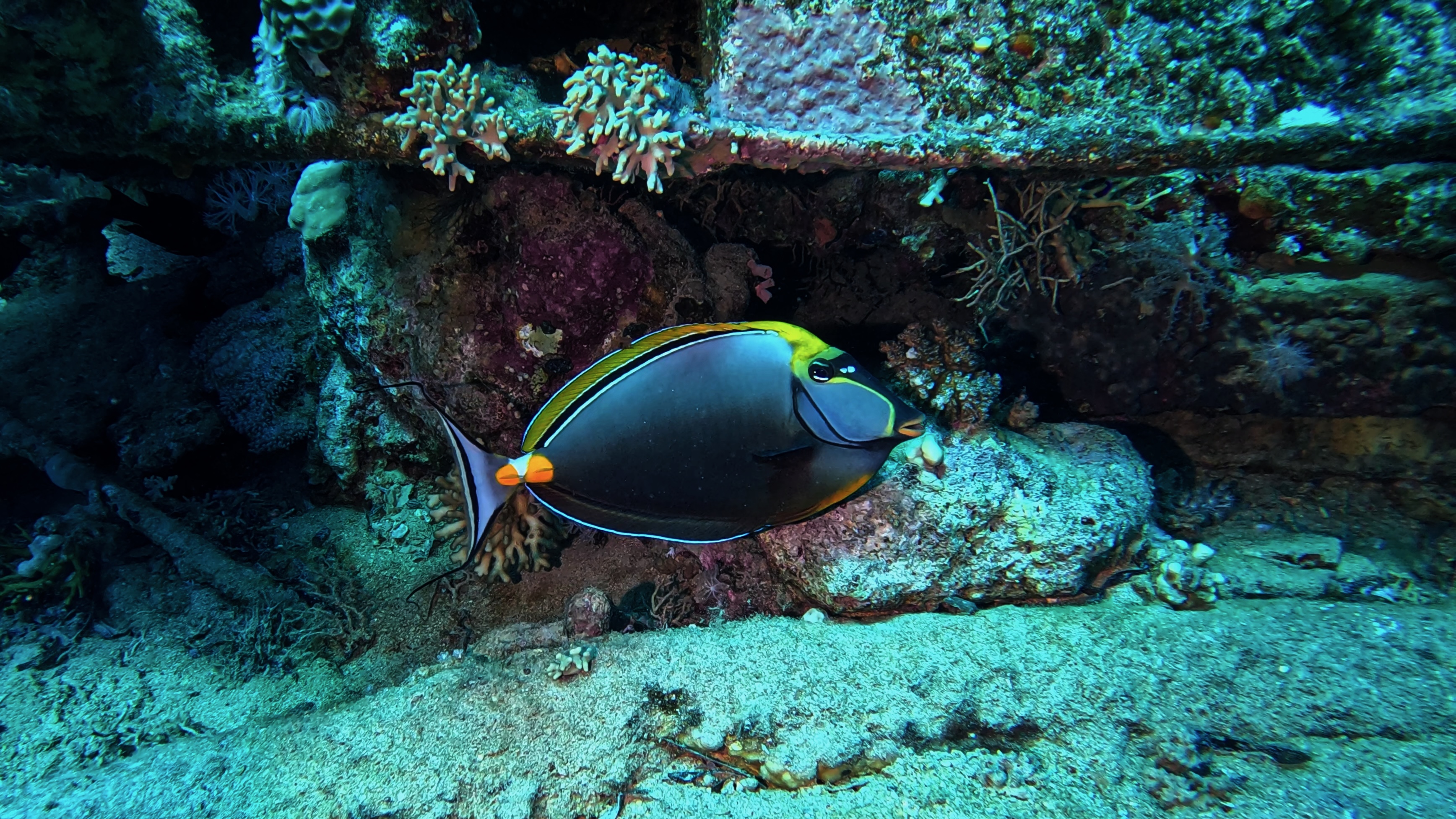
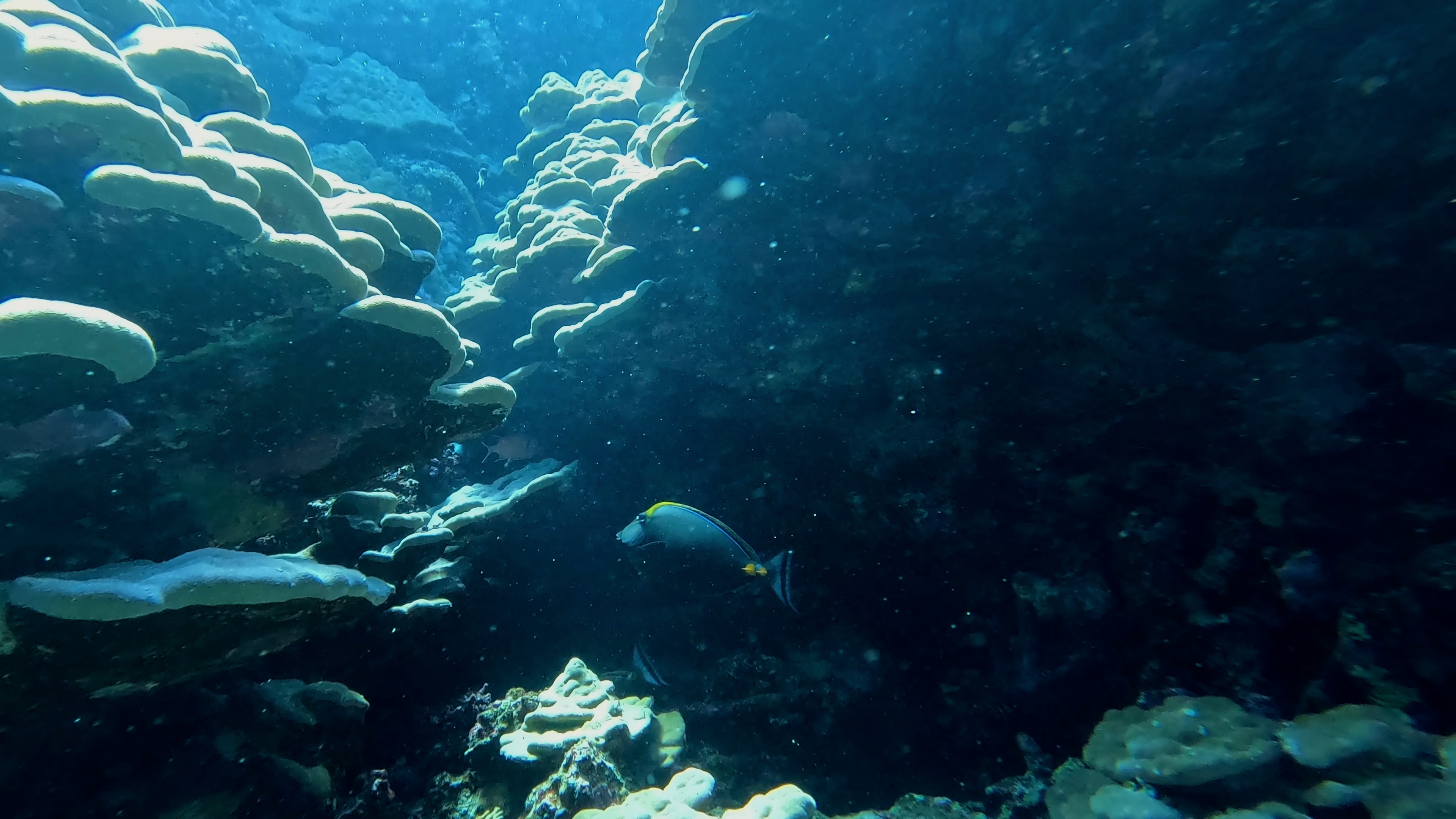
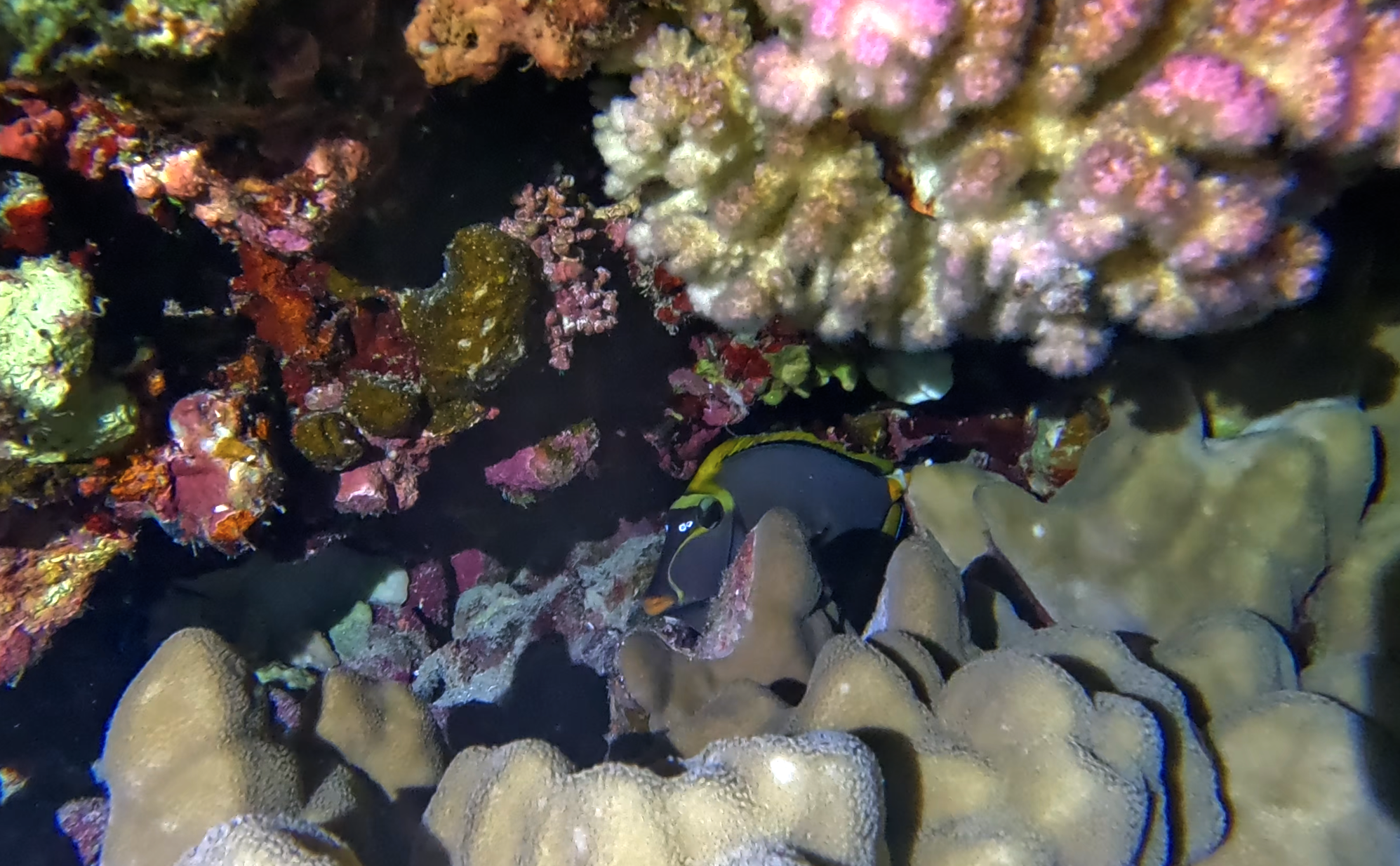
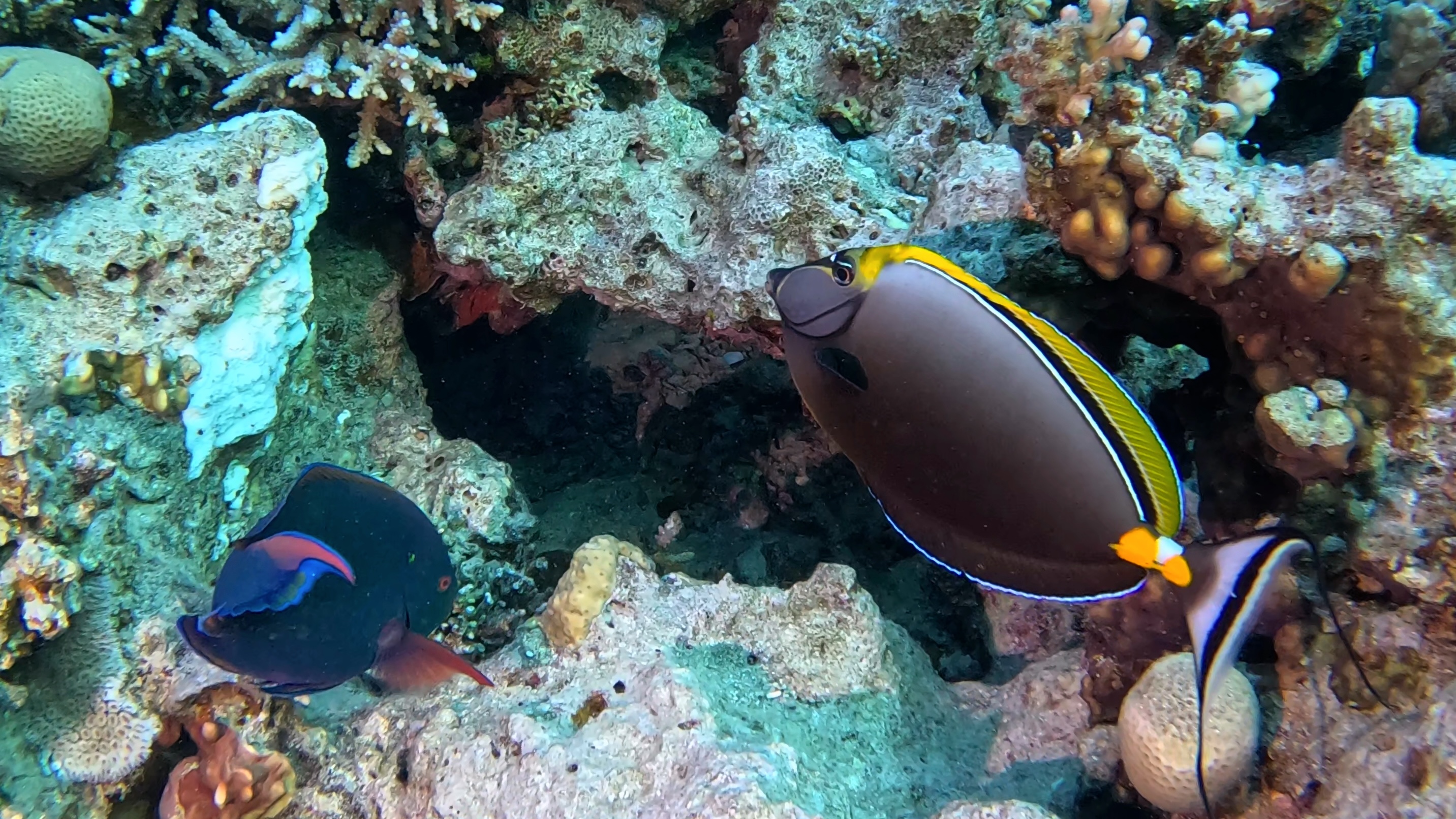
Elegant Unicornfish – Orangespine lat. Naso elegans – Elegantni enorog
Elegantni enorog, znan tudi kot Elegant Unicornfish – Orangespine, je srednje velika tropska riba s podolgovatim telesom, značilno izbočeno čeljustjo in oranžno barvane hrbtne in stranske plavuti. Živi v tropskih koralnih grebenih Indo-Pacifiškega območja, pogosto v skupinah nad grebeni. Prehranjuje se predvsem z algami.
The Elegant Unicornfish – Orangespine is a medium-sized tropical fish with a slender body, distinctive protruding forehead, and bright orange-edged dorsal and lateral fins. It inhabits tropical coral reefs of the Indo-Pacific region, often forming groups above reef structures. Its diet consists mainly of algae.
Foto: Aleš Sulič, Egypt Dahab Canyons
BLUECHEEK BUTTERFLYFISH – MASKED BUTTERFLY
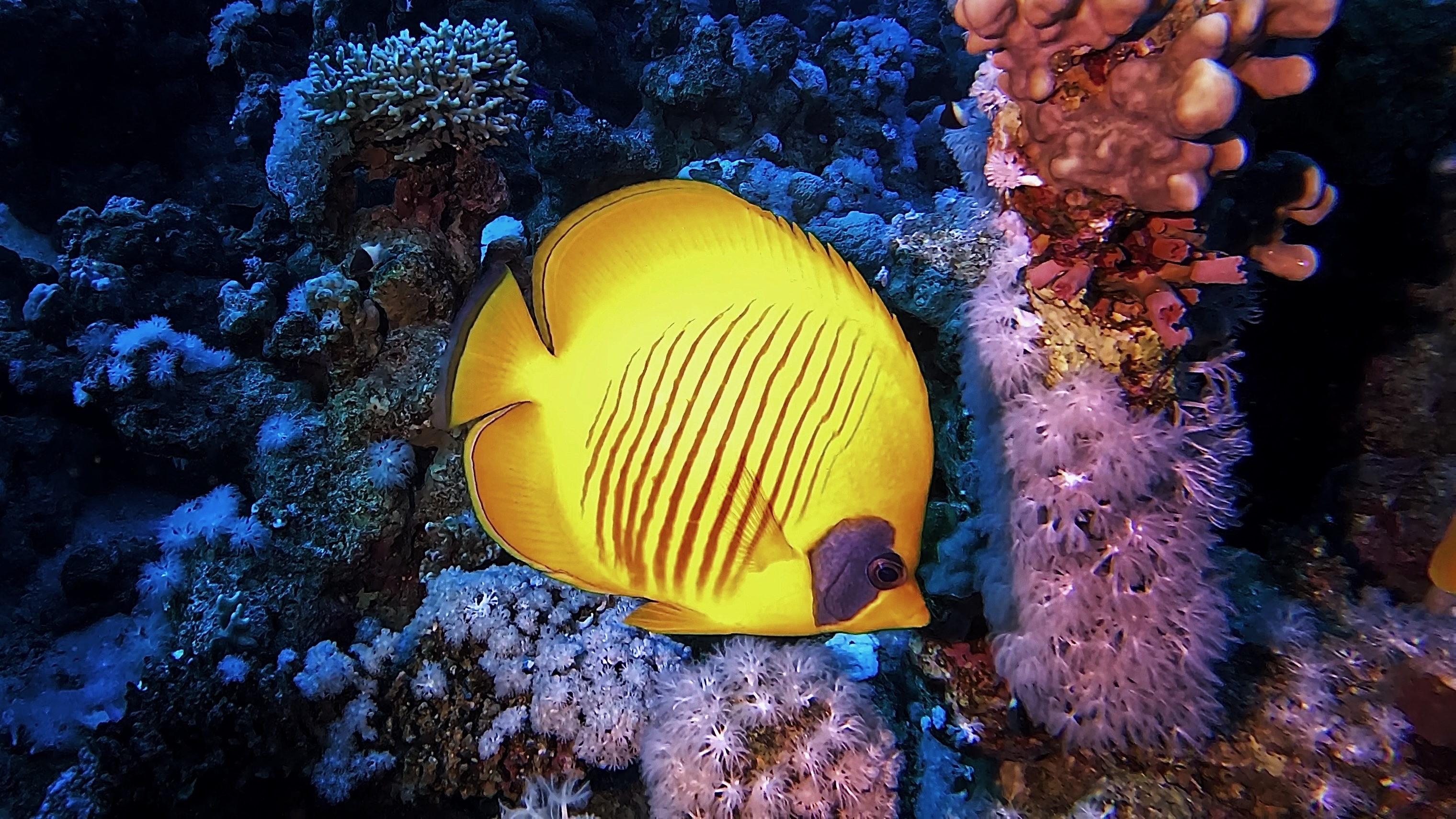
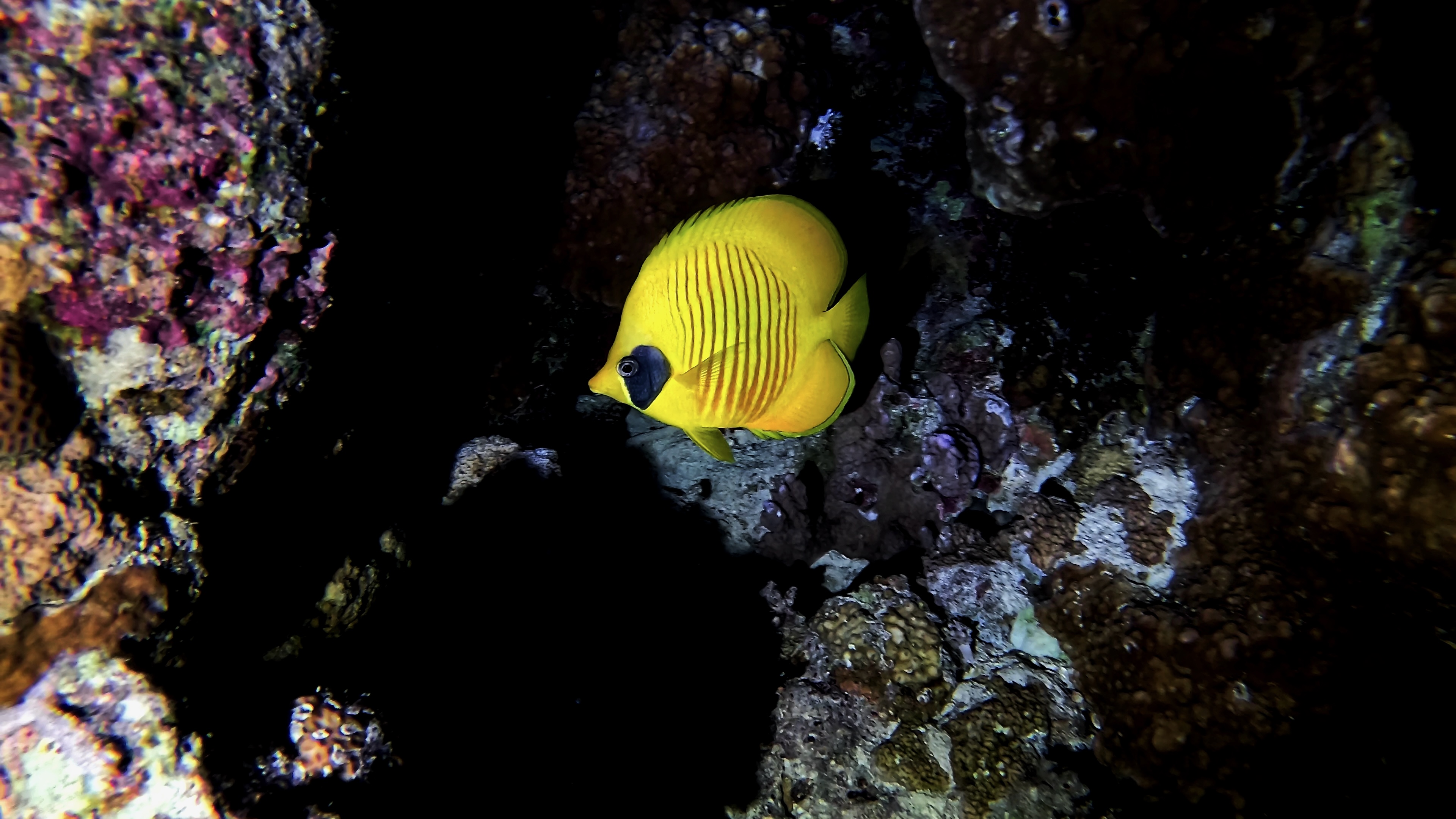
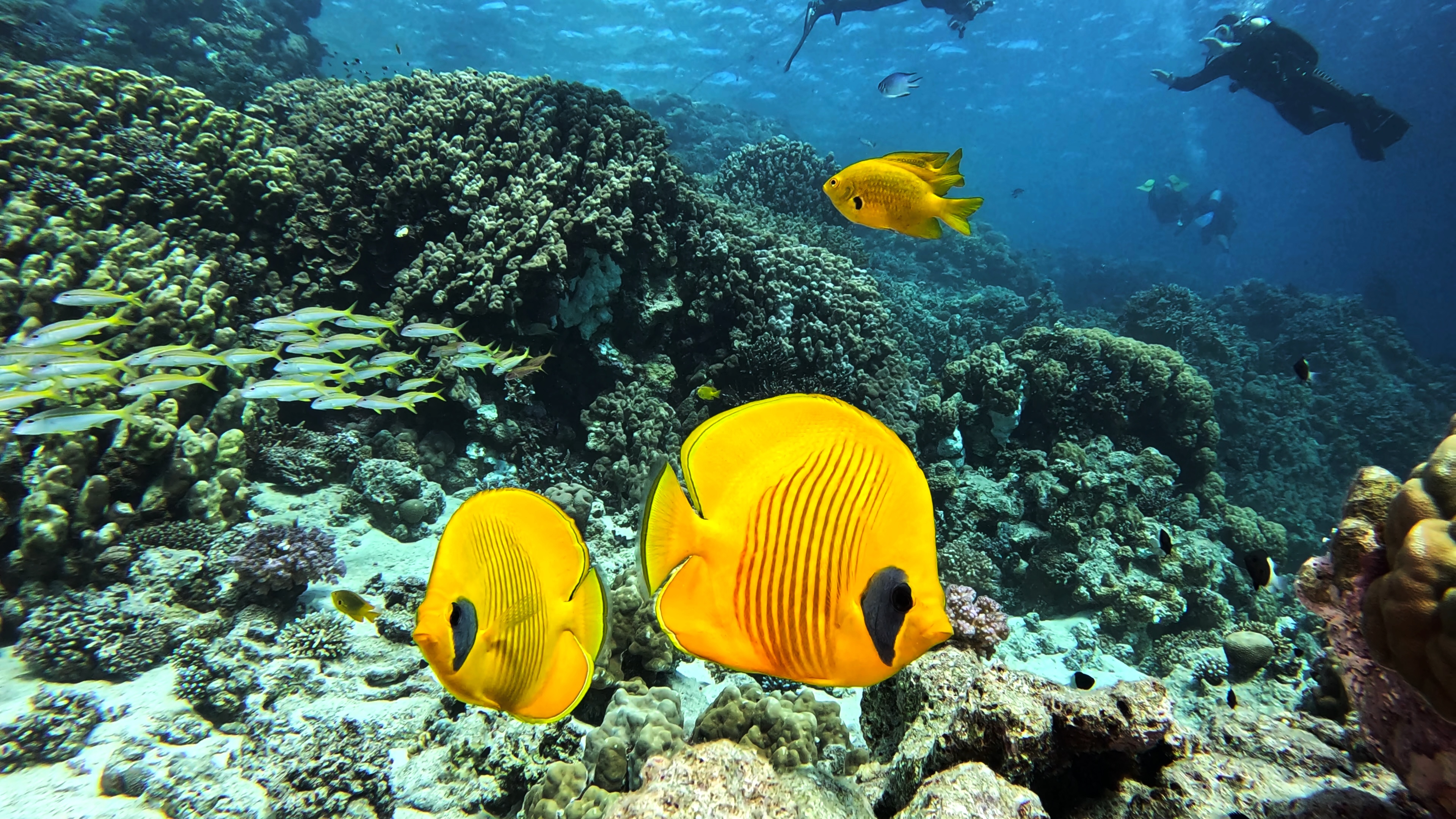
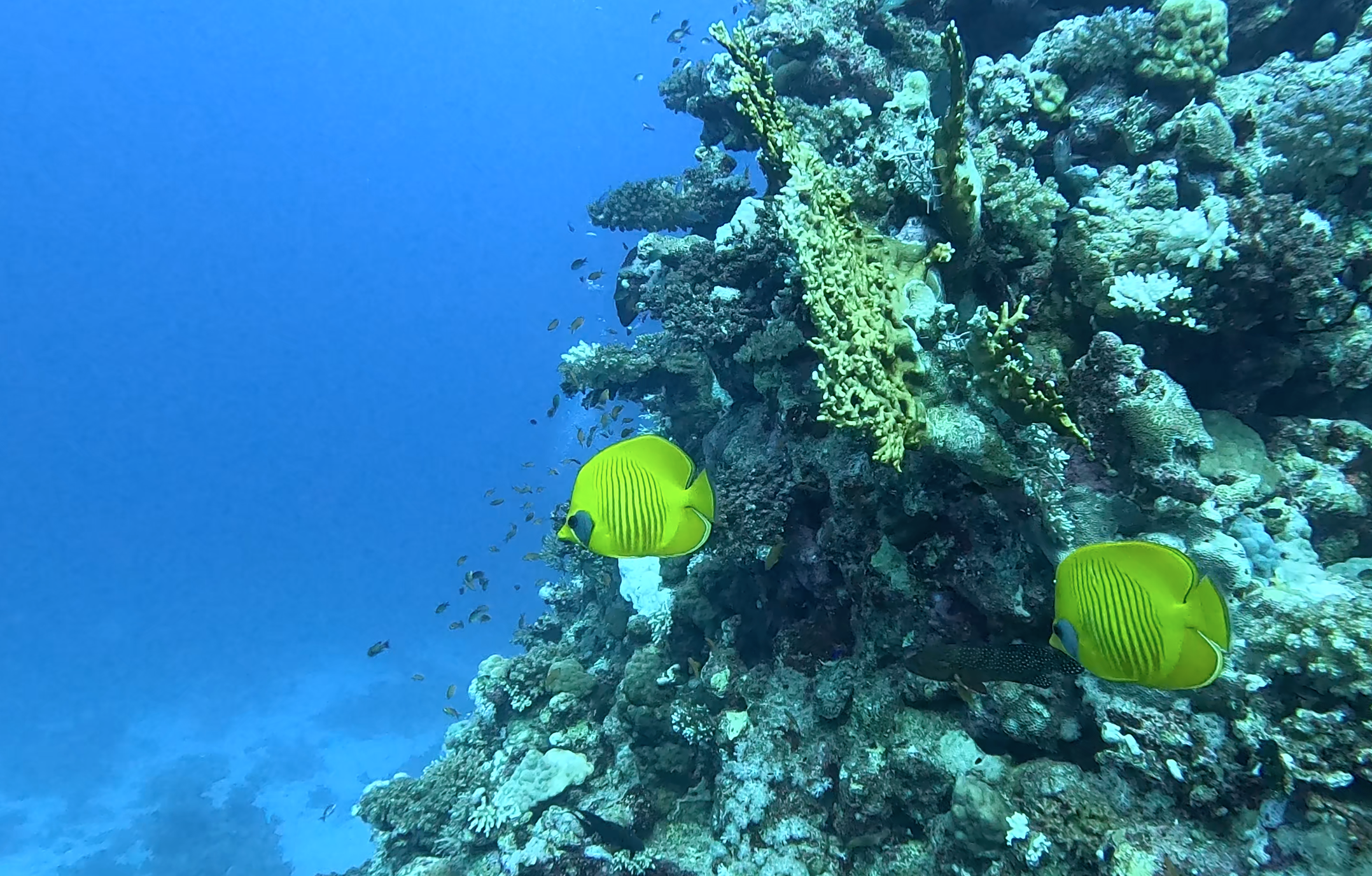
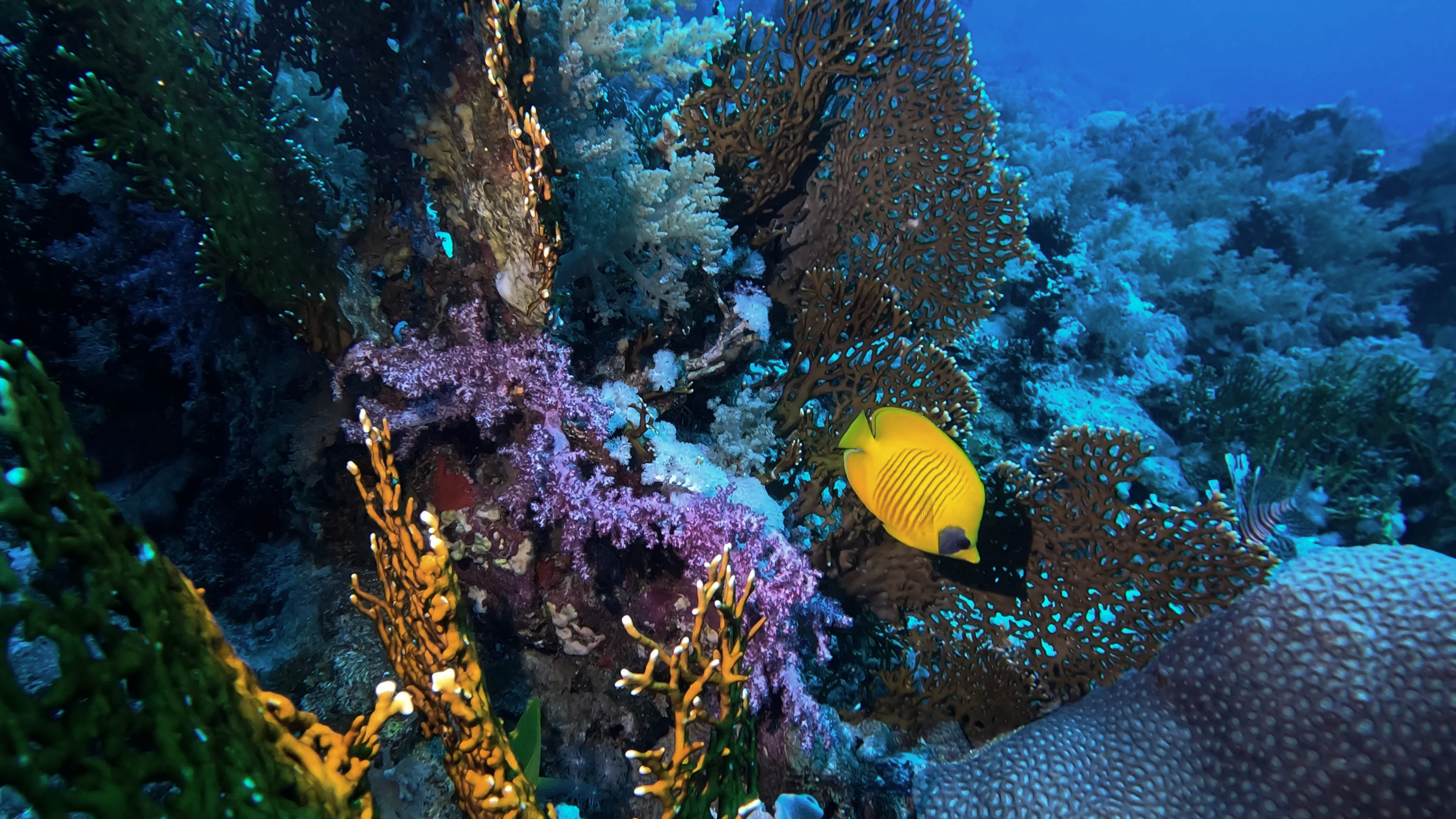
Bluecheek Butterflyfish – Chaetodon semilarvatus – Modrolični metuljček
Modrolični metuljček, znana tudi kot Bluecheek Butterflyfish, je svetlo rumena tropska riba z značilnimi modrimi lisami ob licih in črnimi črtami na telesu. Živi v tropskih koralnih grebenih Rdečega morja in vzhodnega Afriškega grebena. Prehranjuje se predvsem z mehkužci, planktonom in koralnimi polipi. Vrsta ni ogrožena, vendar je občutljiva na uničenje koralnih grebenov in onesnaženje morja.
The Bluecheek Butterflyfish is a bright yellow tropical fish with distinctive blue markings on its cheeks and black lines across its body. It inhabits tropical coral reefs of the Red Sea and the eastern African reef system. Its diet consists mainly of mollusks, plankton, and coral polyps. The species is not endangered, but it is sensitive to coral reef destruction and ocean pollution.
Foto: Aleš Sulič, Egypt, Hurgada
SAILFIN TANG
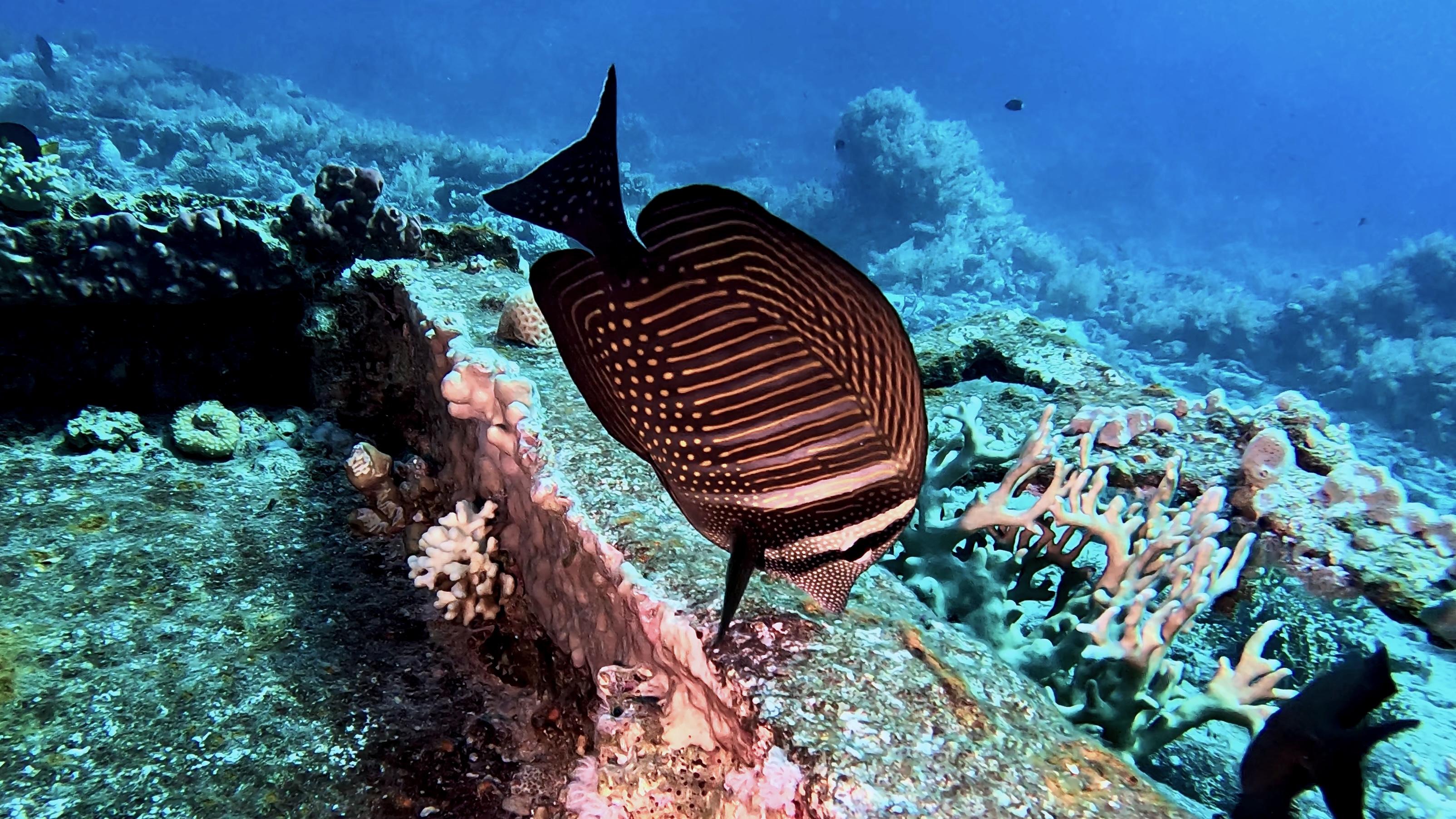
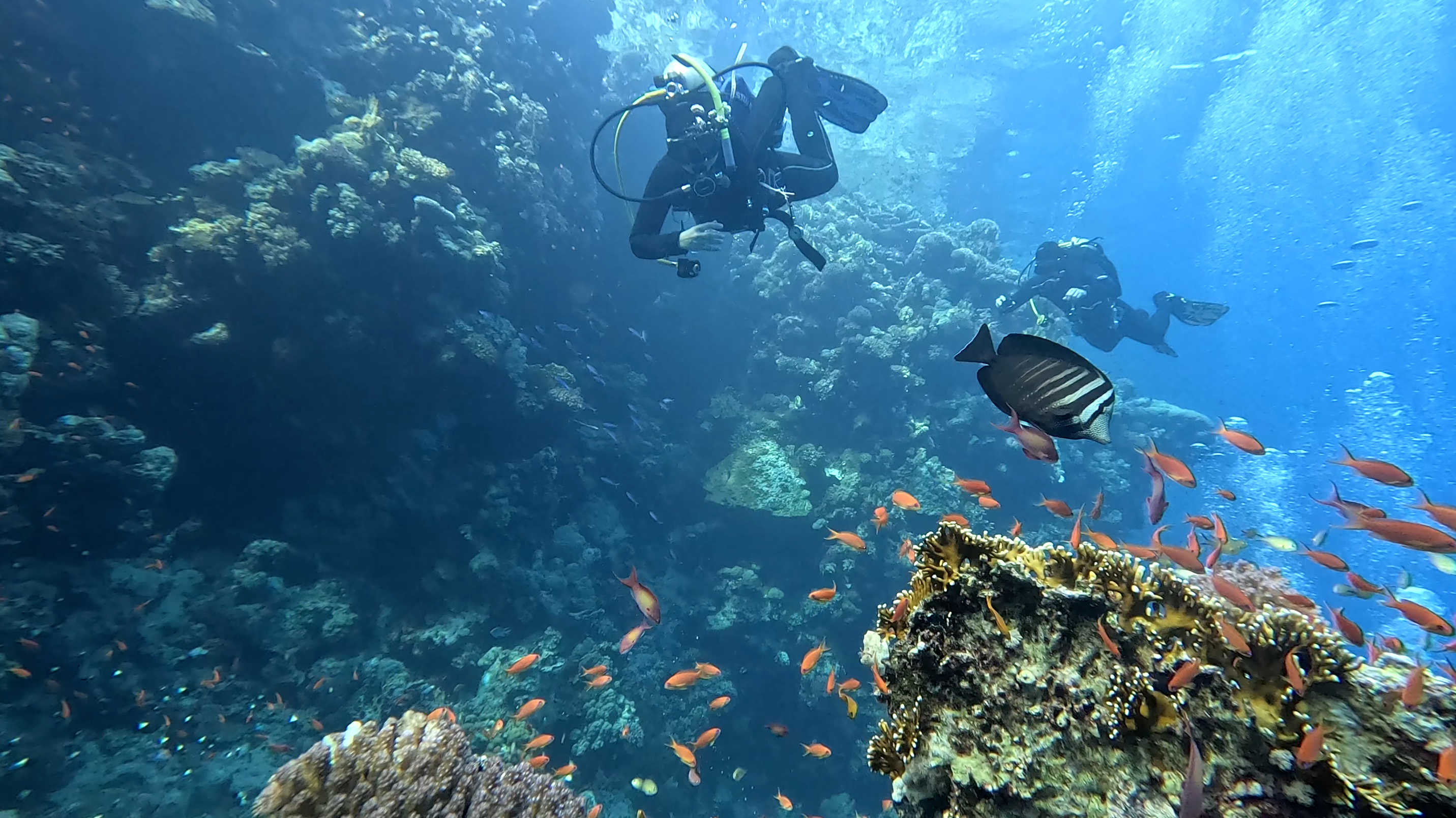
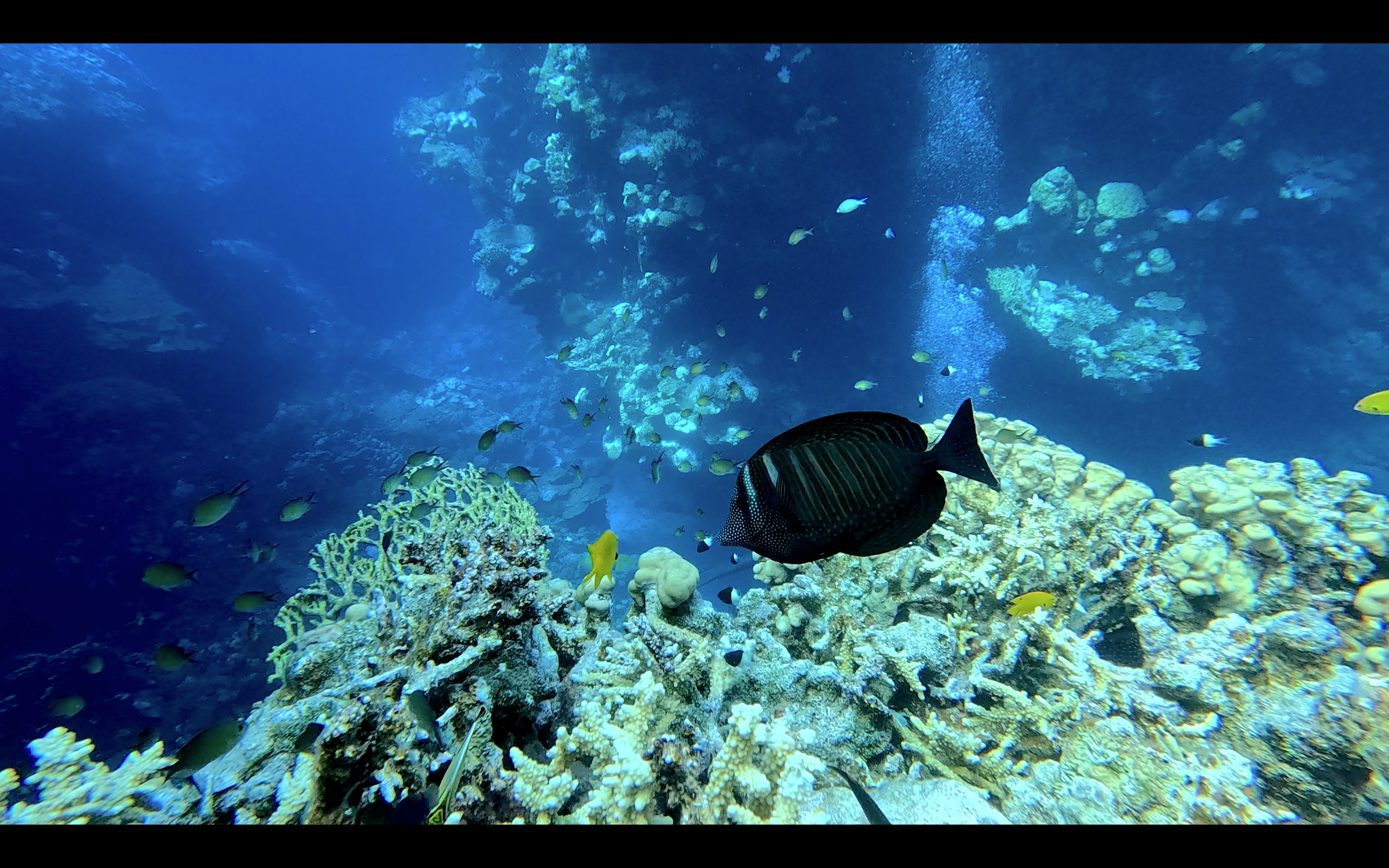
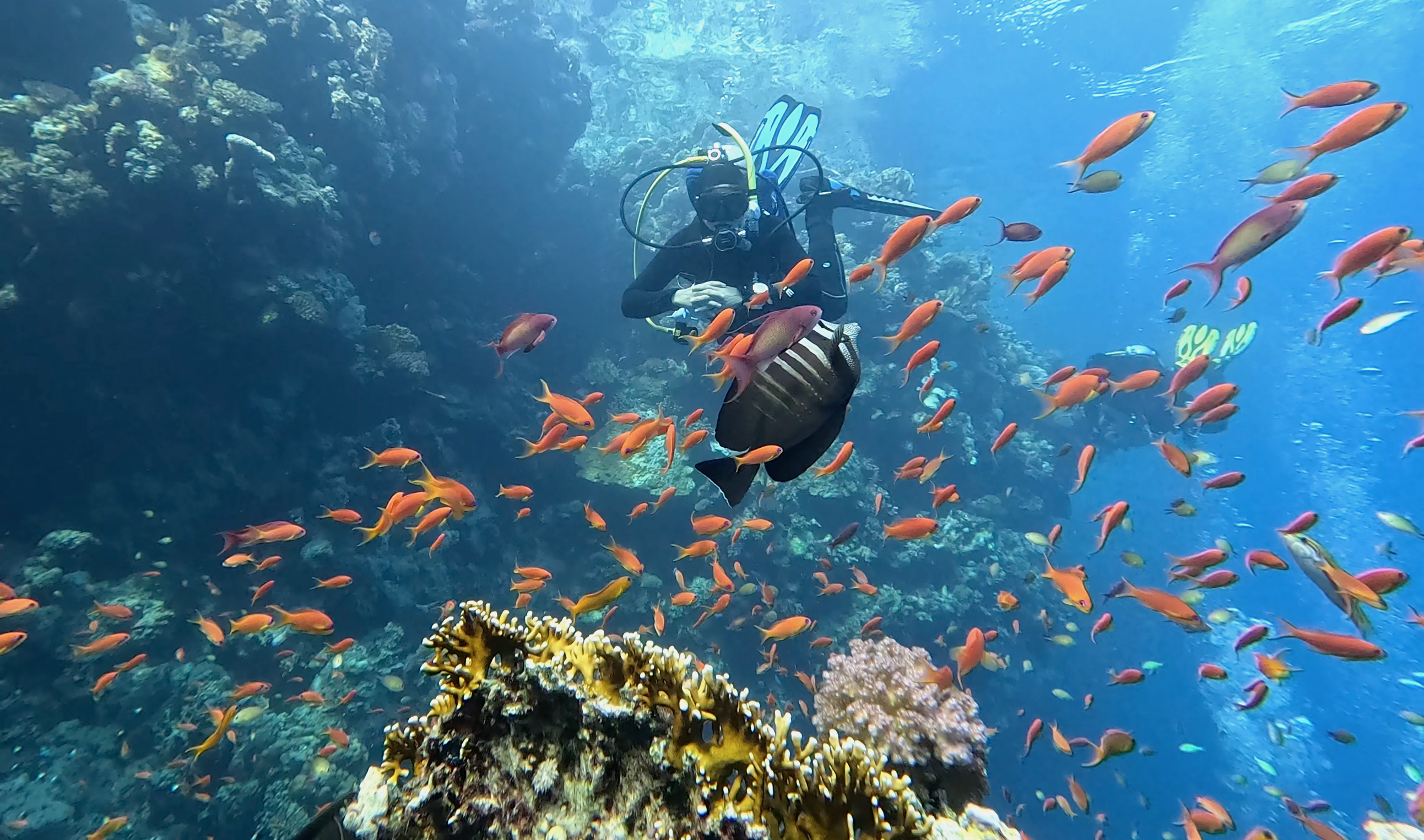
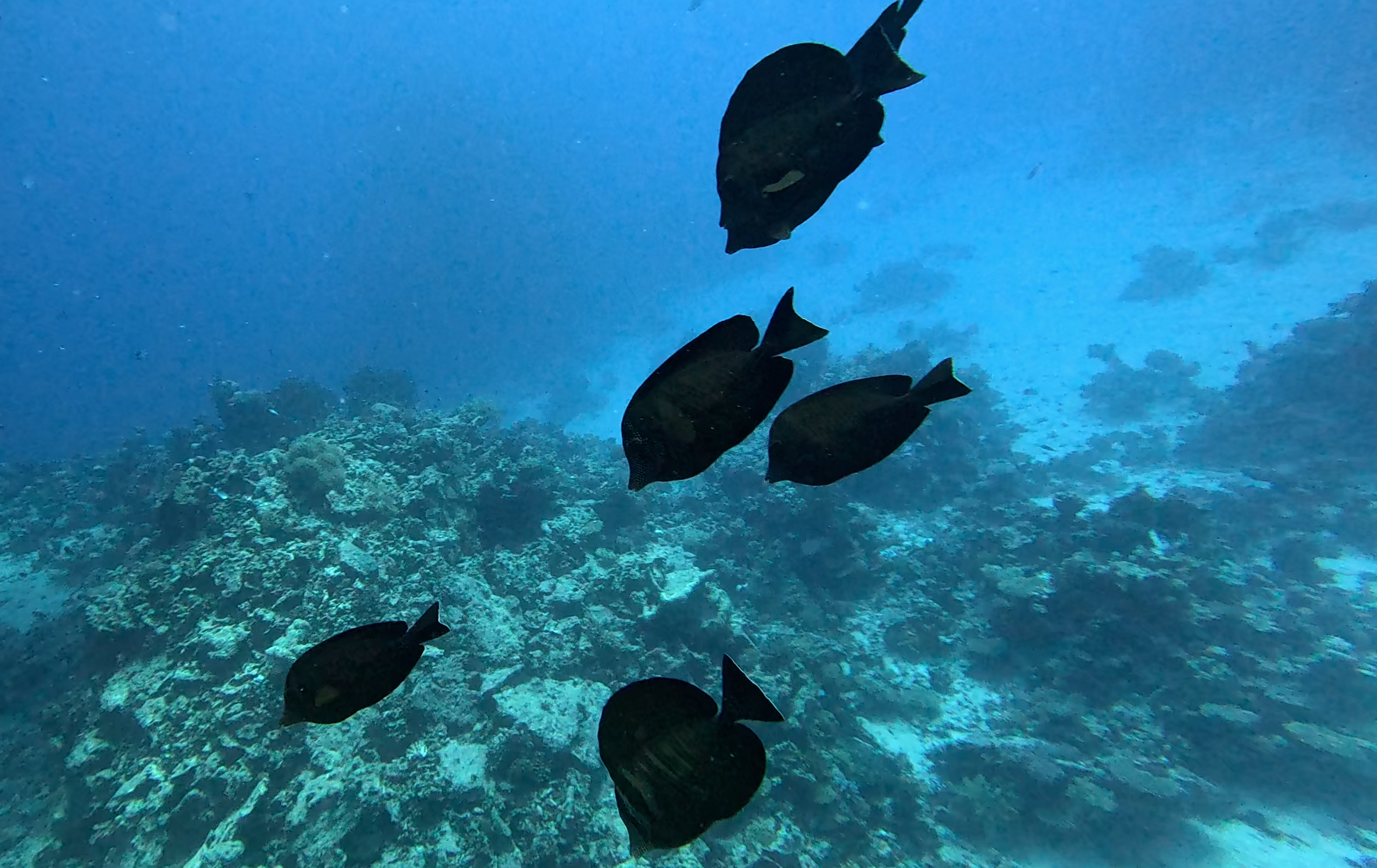
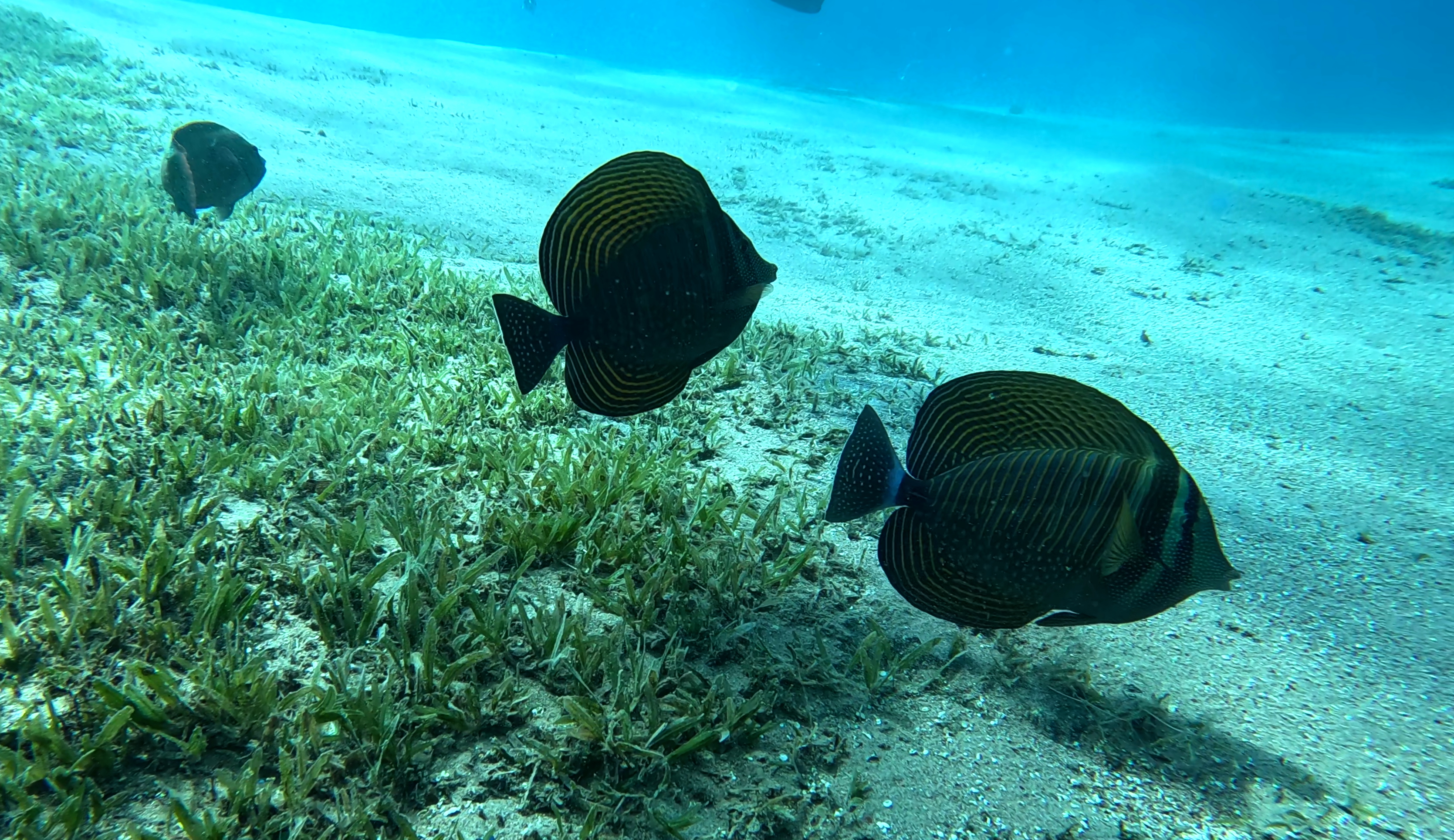
Sailfin Tang – Zebrasoma veliferum – Pahljačasti kirurg
Pahljačasti kirurg, znan tudi kot Sailfin Tang, je srednje velika tropska riba z visokimi, razprtimi hrbtnimi in trebušnimi plavuti, značilno za vrsto tang. Živi v tropskih koralnih grebenih Indo-Pacifiškega območja, pogosto v bližini skalnatih struktur in koral. Prehranjuje se predvsem z algami, kar pomaga ohranjati zdravje koralnih grebenov.
The Sailfin Tang is a medium-sized tropical fish known for its tall, sail-like dorsal and anal fins. Its body usually has bold vertical stripes and a laterally compressed shape. It inhabits tropical coral reefs of the Indo-Pacific region, often near reef slopes and rocky areas. It feeds mainly on algae, helping maintain healthy reef ecosystems.
Foto: Aleš Sulič, Egypt Dahab
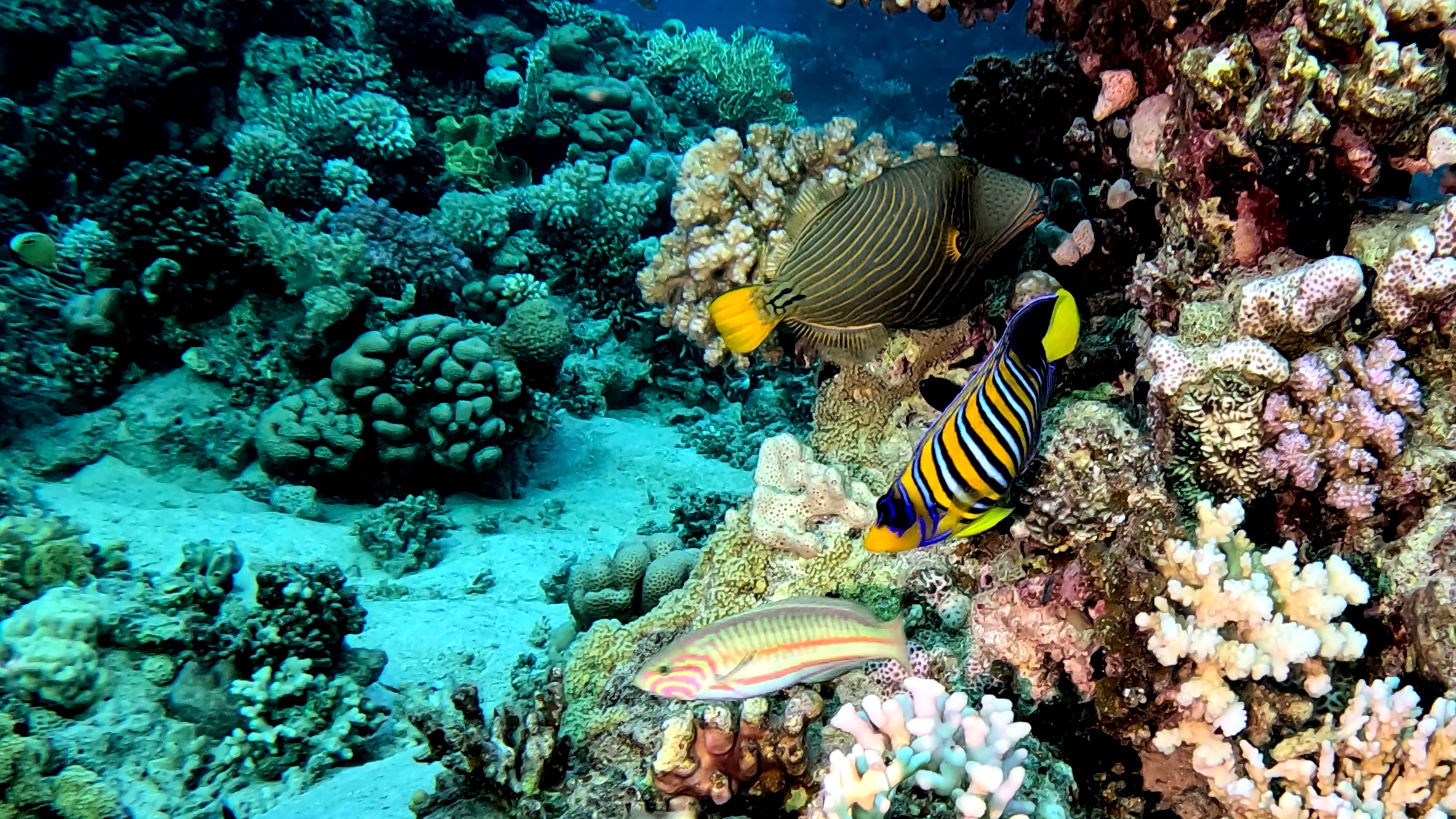
ORANGESTRIPED TRIGGER & REGAL ANGELFISH
ORBICULAR BATFISH
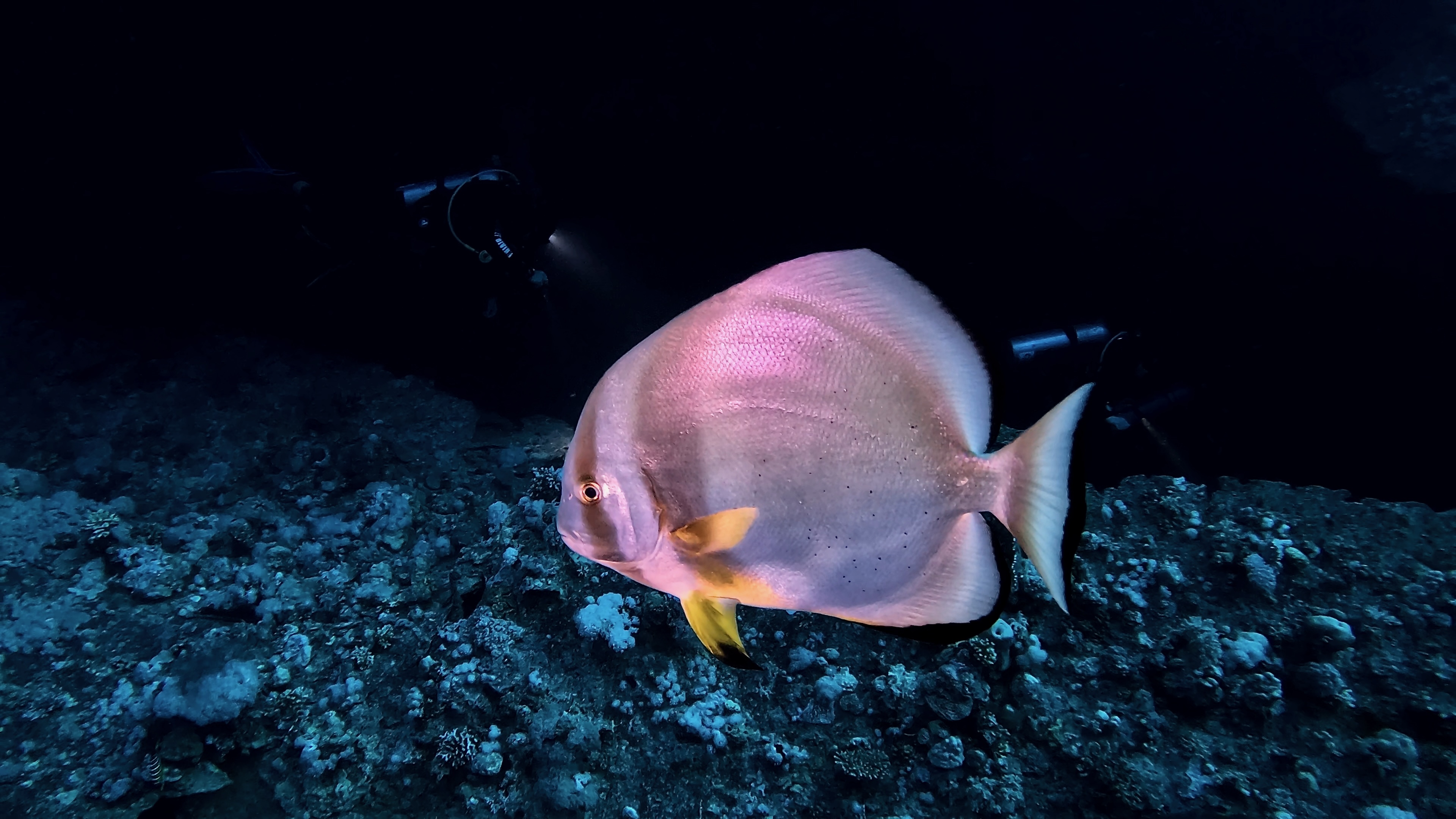
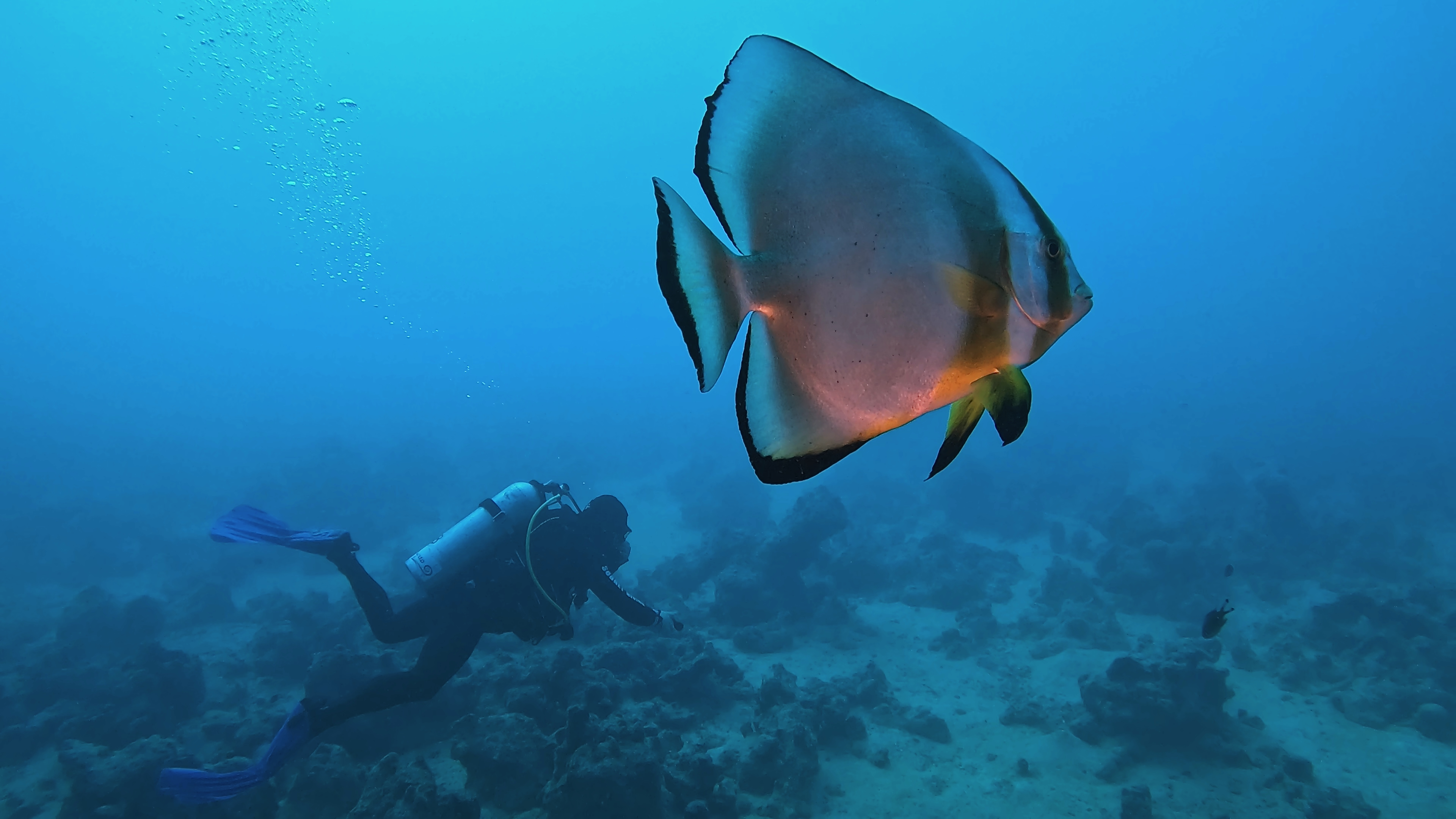
Orbicular Batfish – Platax orbicularis – Okrogla netopirska riba
Okrogla netopirska riba (Platax orbicularis), znana tudi kot Orbicular Batfish, je tropska riba z okroglim, bočno sploščenim telesom ter dolgimi hrbtnimi in trebušnimi plavutmi. Mladiči so videti popolnoma drugače kot odrasle ribe – pogosto so temnejši in podobni plavajočim listom. Živi v tropskih vodah Indo-Pacifika, predvsem na koralnih grebenih, v lagunah in ob obalah. Prehranjuje se z algami, planktonom in majhnimi nevretenčarji. Vrsta ni ogrožena, vendar je občutljiva na uničenje habitatov in propadanje koralnih grebenov.
The Orbicular Batfish (Platax orbicularis) is a tropical reef fish with a round, laterally compressed body and long dorsal and anal fins. Juveniles look very different from adults, often darker and shaped like floating leaves. It inhabits tropical Indo-Pacific coral reefs, lagoons, and coastal waters, sometimes forming small groups. Its diet consists of algae, plankton, and small invertebrates. The species is not endangered, but it is sensitive to habitat loss and reef degradation.
Foto: Aleš Sulič, South Sinai, SS Thistlegorm
RED SEA ANEMONE FISH
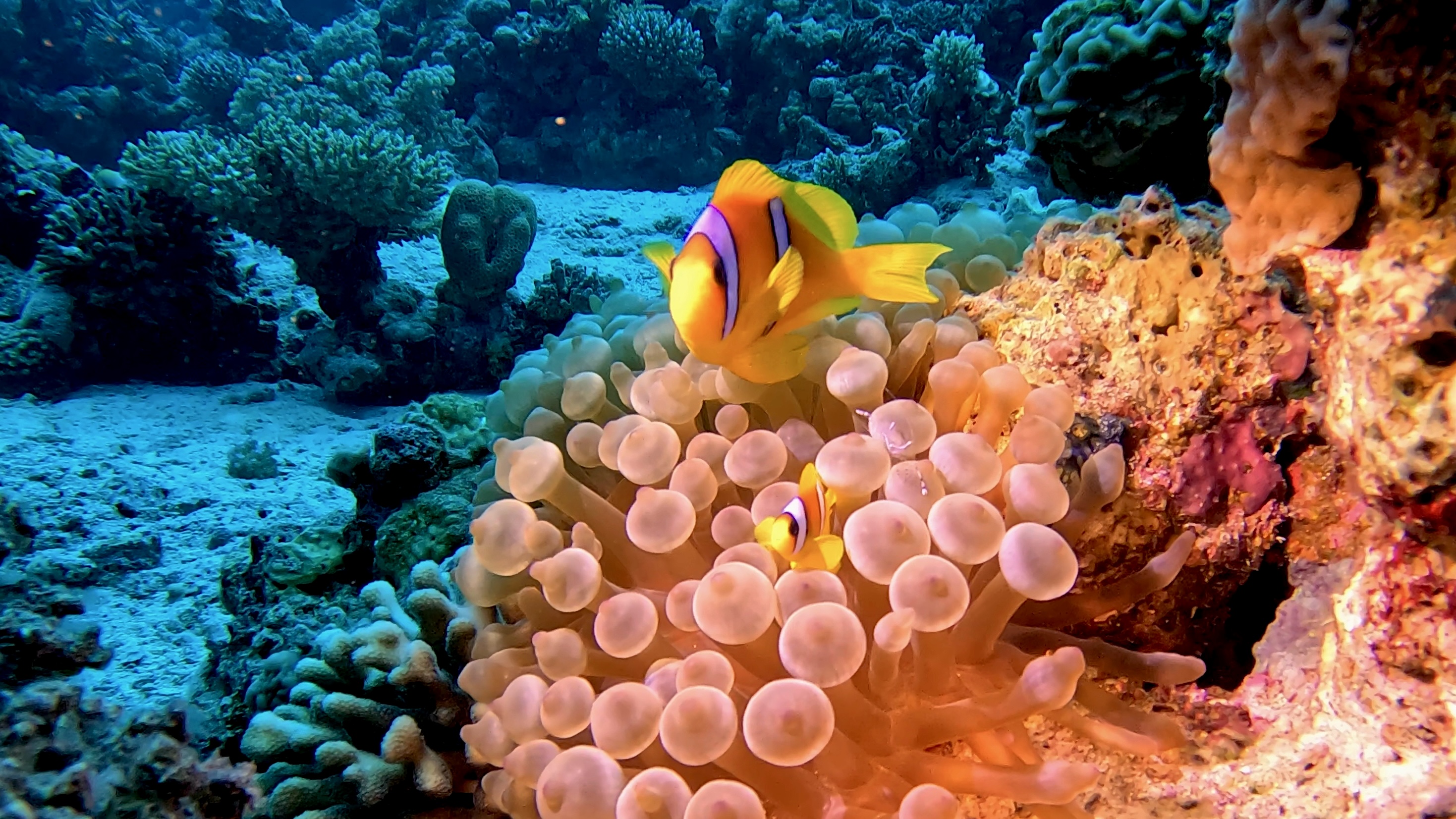
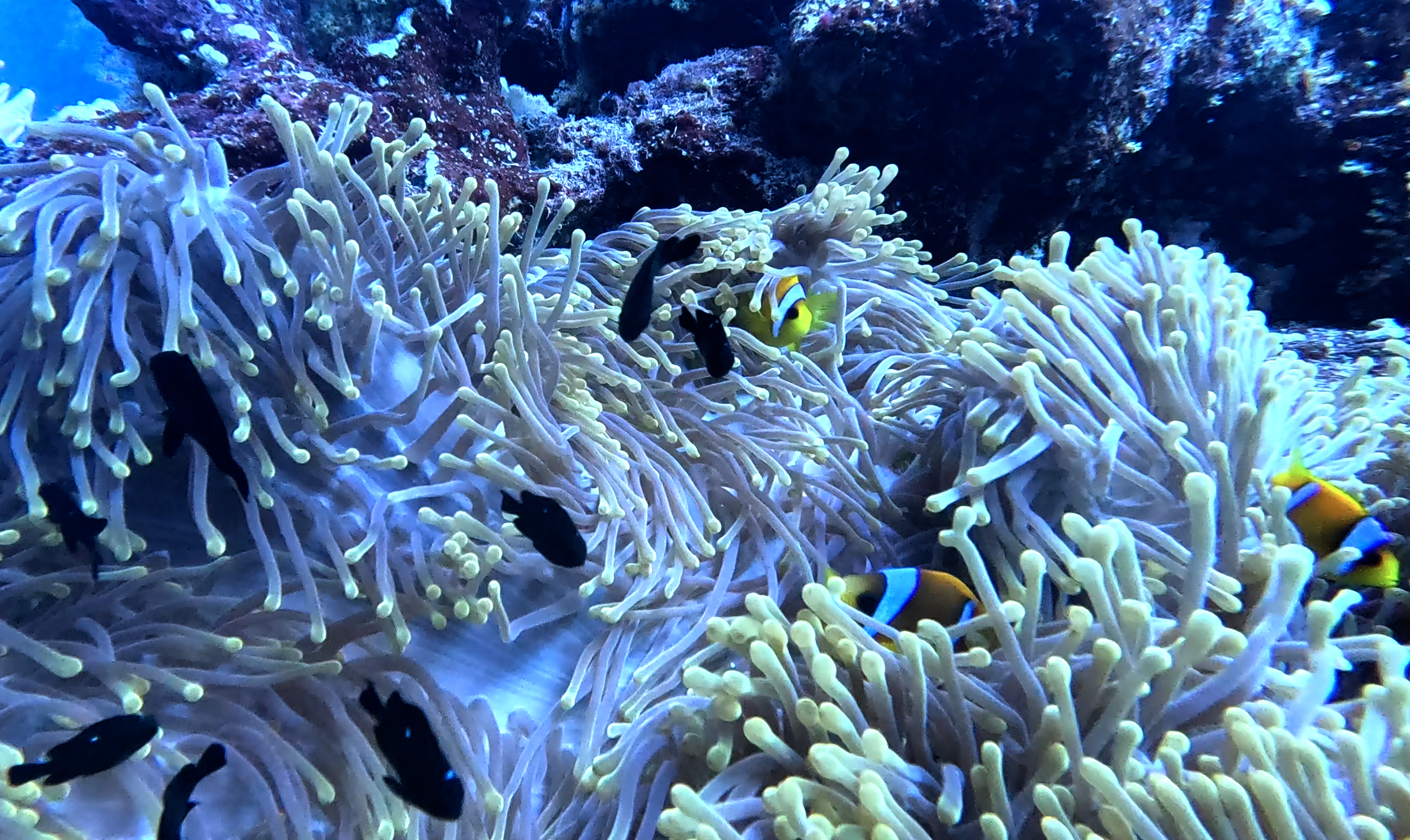
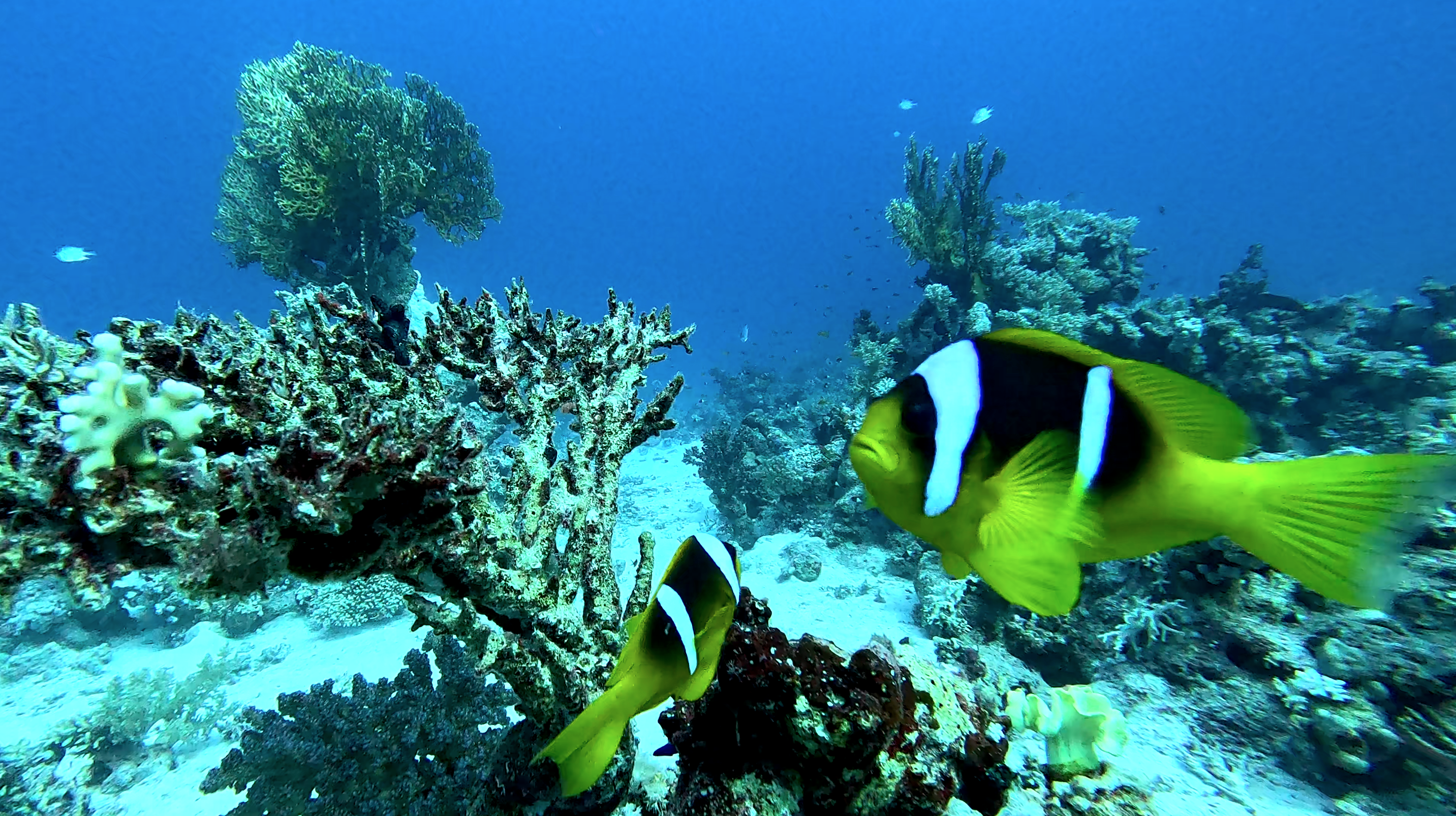
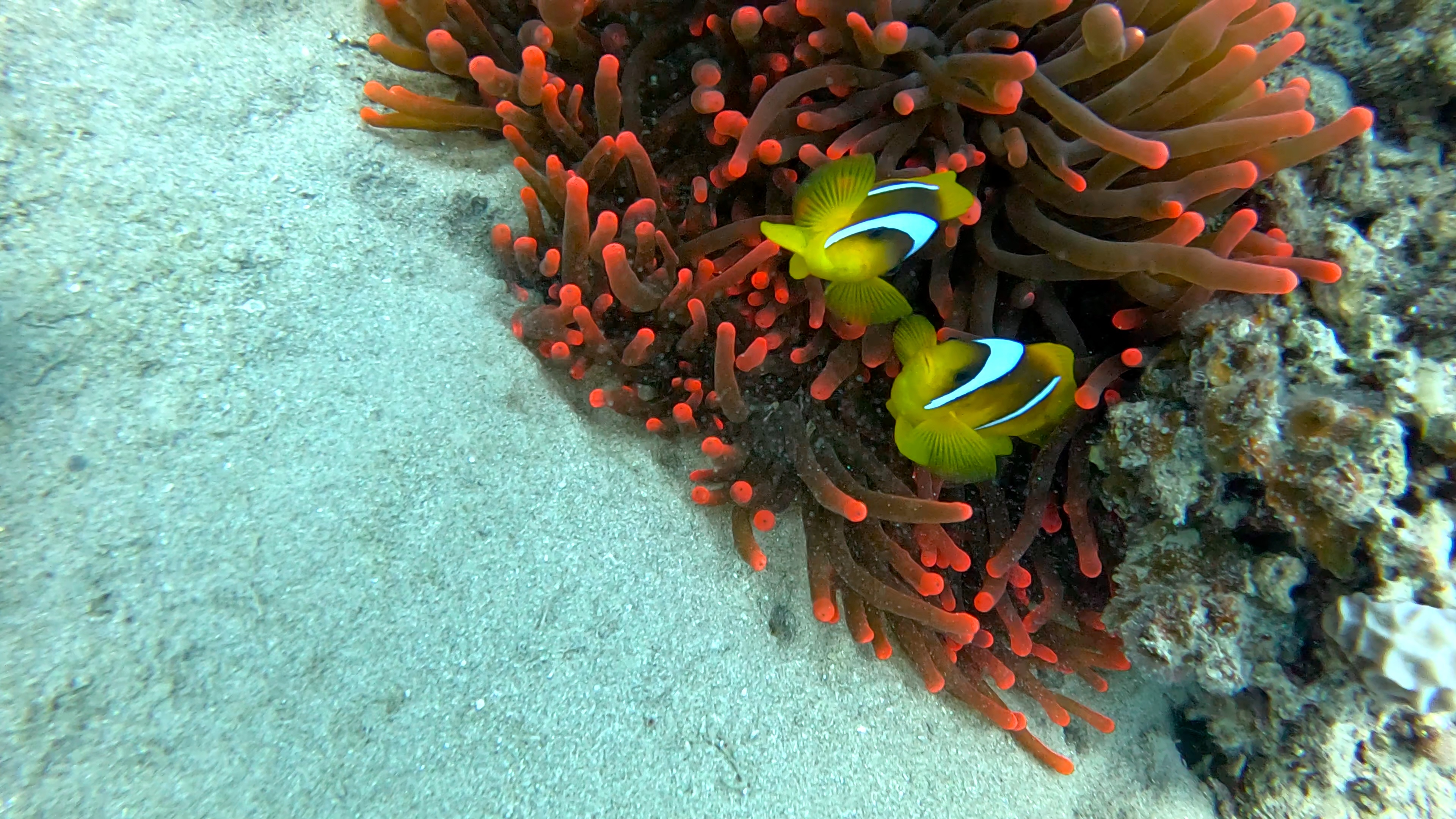
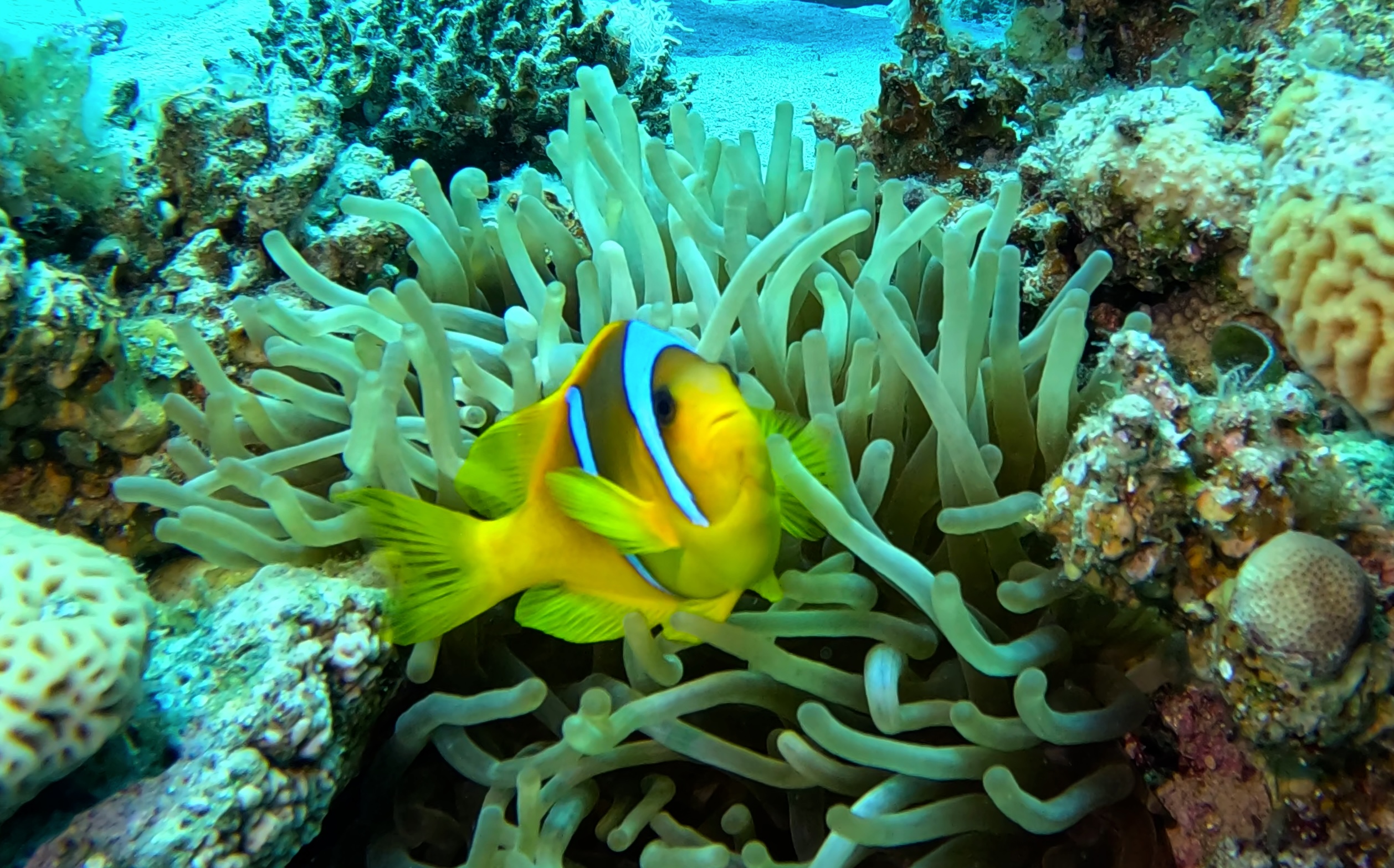
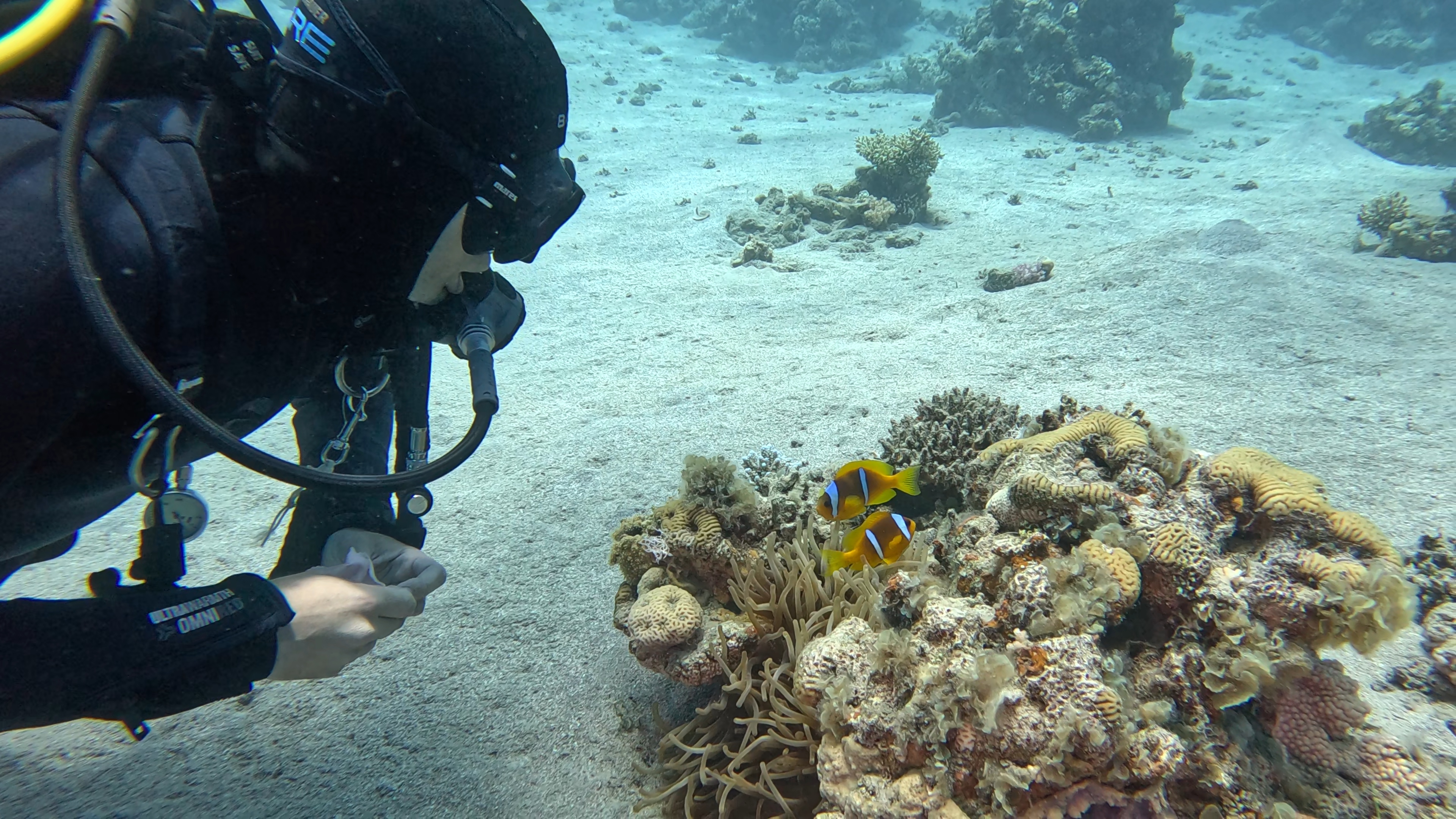
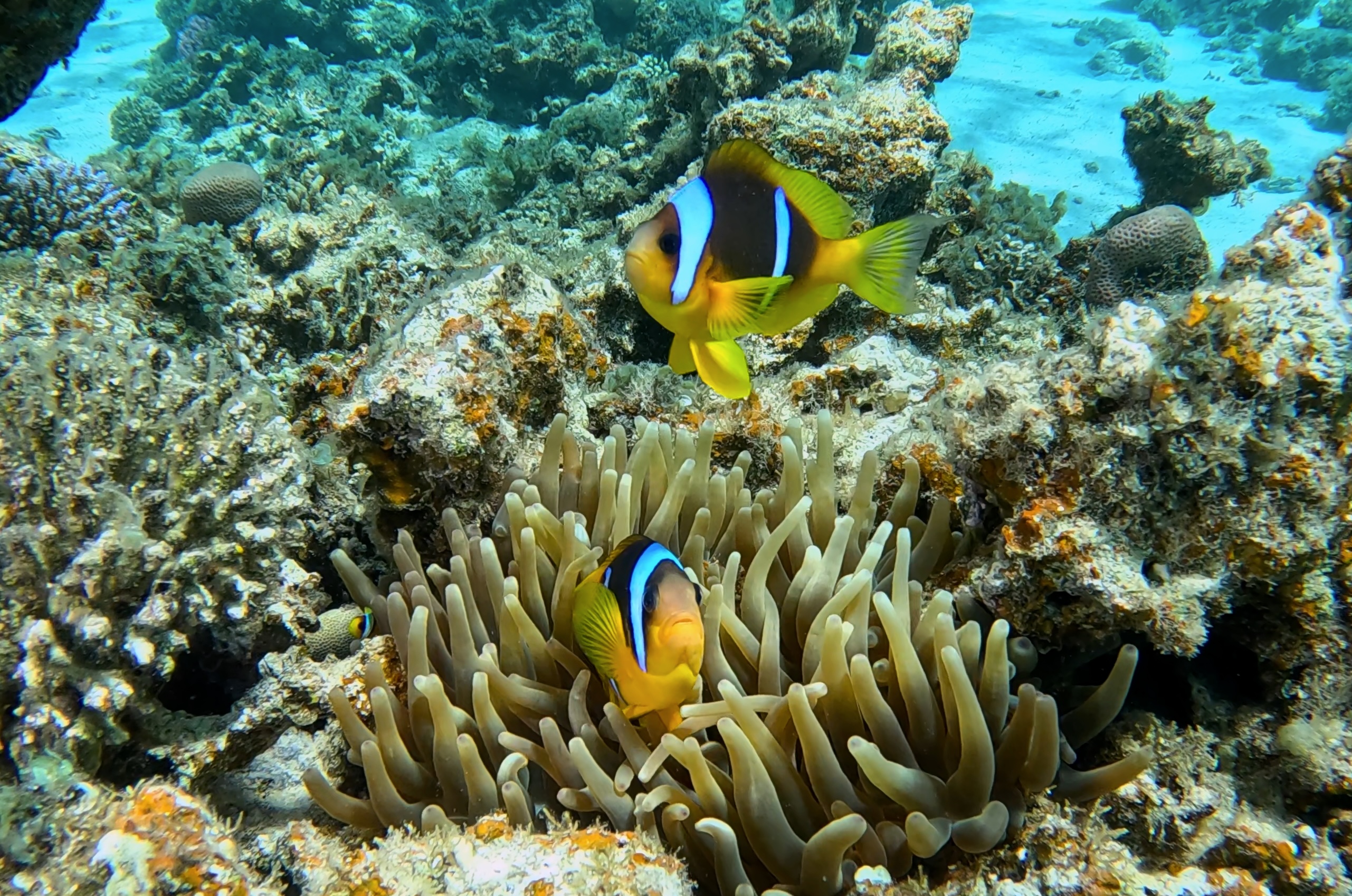
Red Sea Anemonefish – Amphiprion bicinctus – Rdečemorska klovnovska riba
Rdečemorska klovnovska riba, znana tudi kot Red Sea Anemone Fish, je svetlo oranžna do rdečkasta riba z dvema belima pasovoma obrobljenima s črno barvo. Živi v Rdečem morju in zahodnem delu Indijskega oceana, kjer prebiva med lovkami morskih vetrnic (anemon), s katerimi živi v sožitju. Prehranjuje se z planktonom, algami in drobnimi nevretenčarji.
The Red Sea Anemonefish is a bright orange to reddish fish with two white vertical bands outlined in black. It lives in the Red Sea and the western Indian Ocean, where it forms a symbiotic relationship with sea anemones, living safely among their tentacles. Its diet consists of plankton, algae, and small invertebrates. The species is not endangered, but it is sensitive to coral reef destruction and ocean pollution.
Foto:Aleš Sulič, Egypt Hurghada, Dahab, Sataya
THREADFIN BUTTERFLYFISH
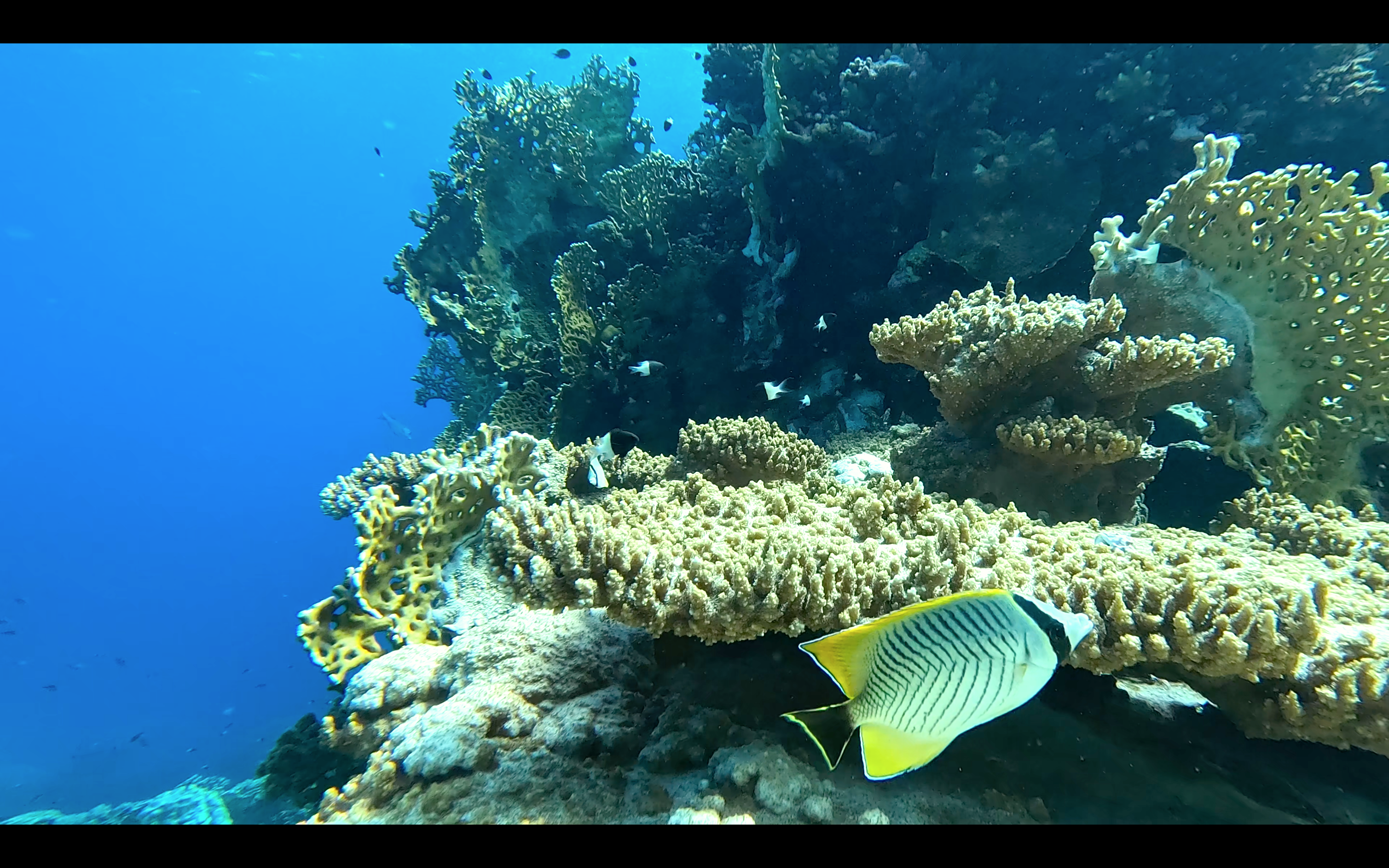
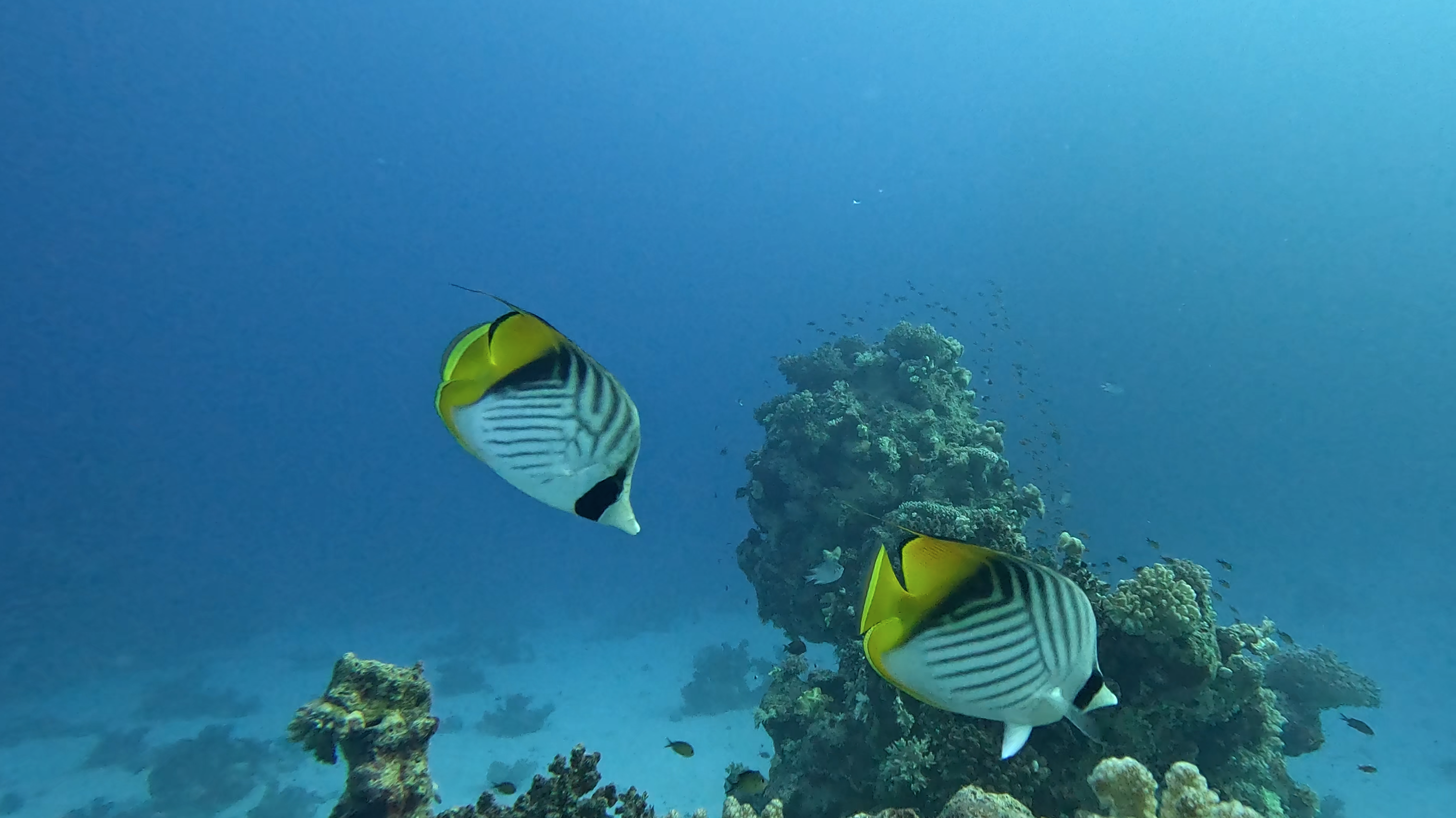
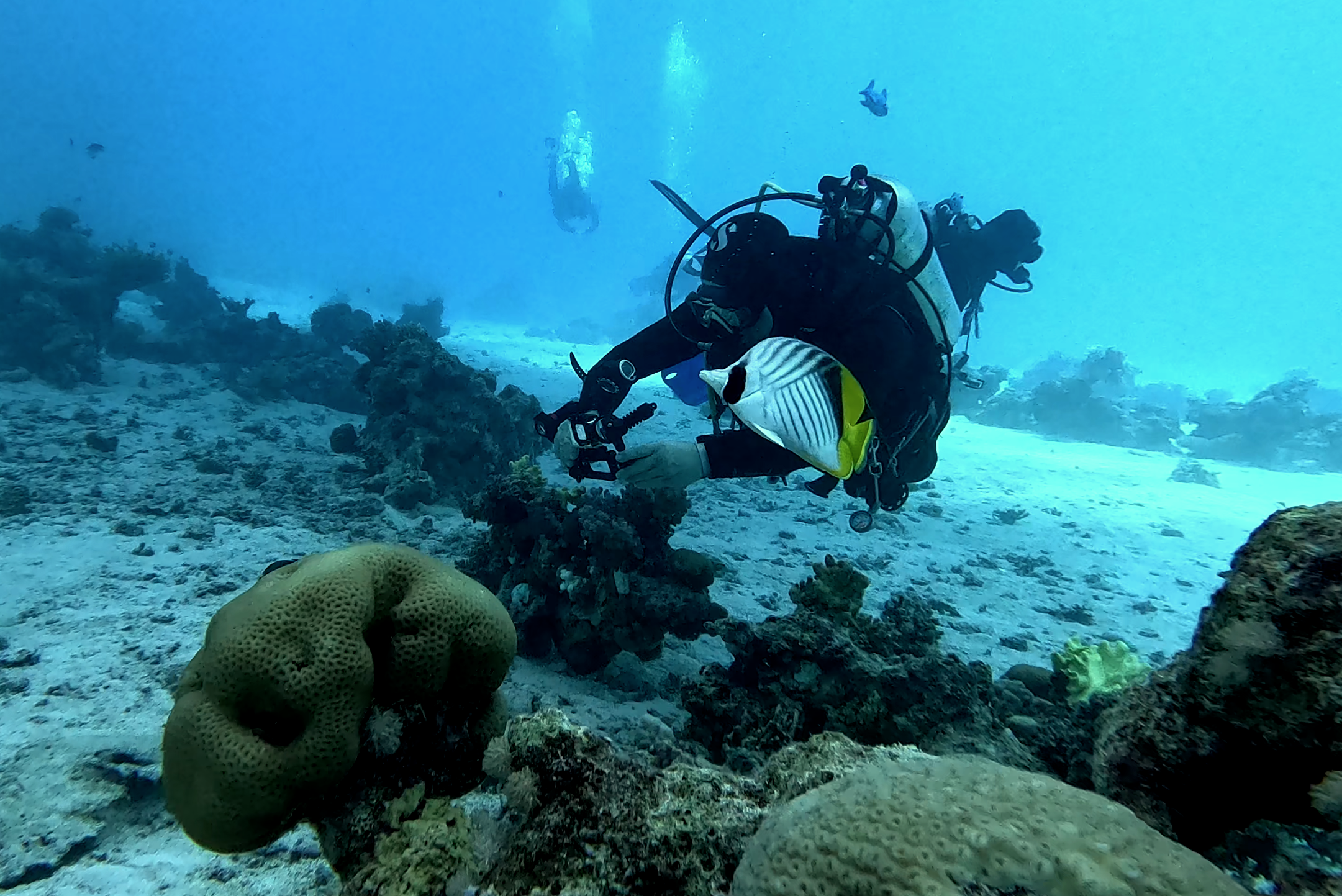
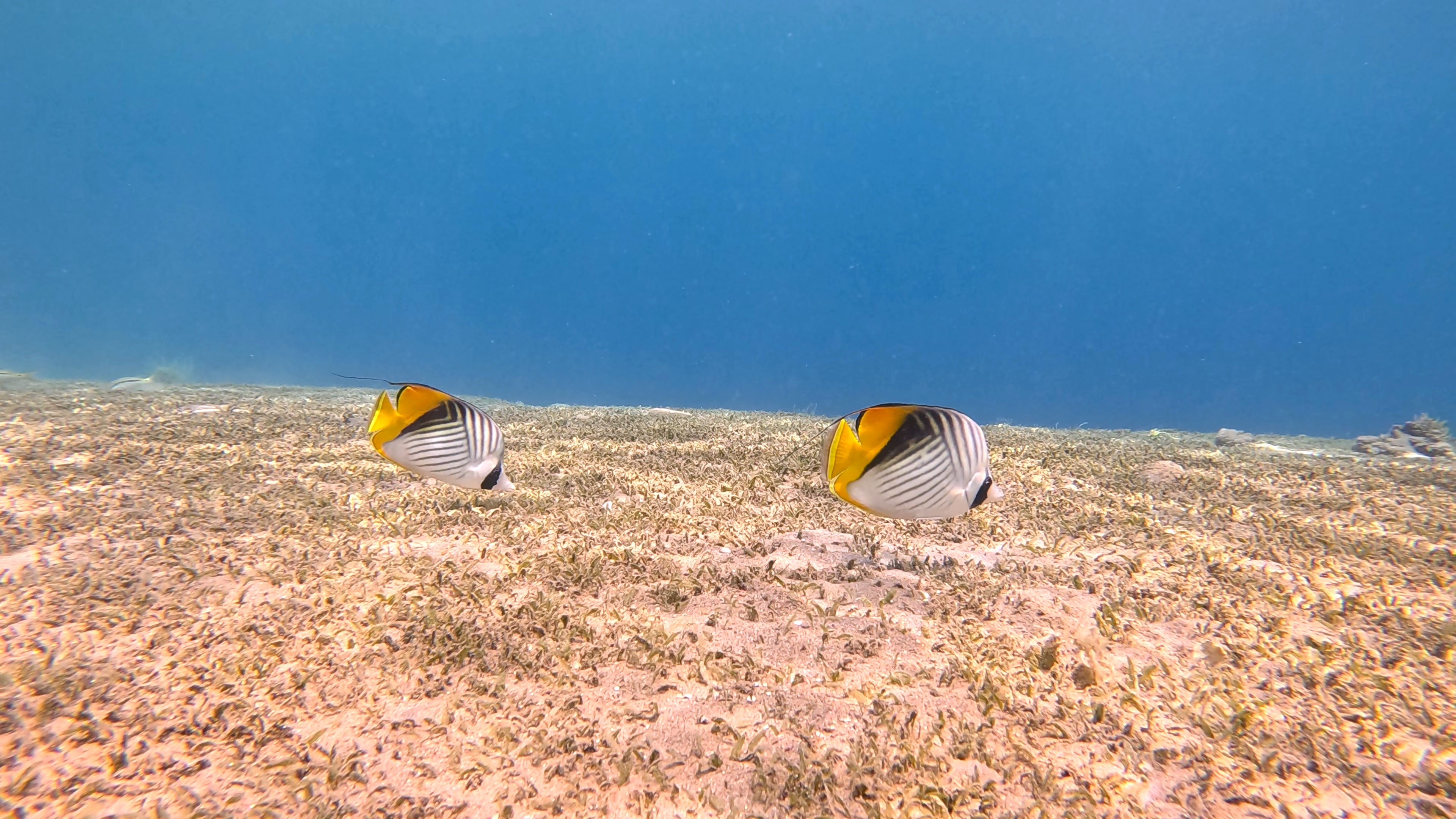
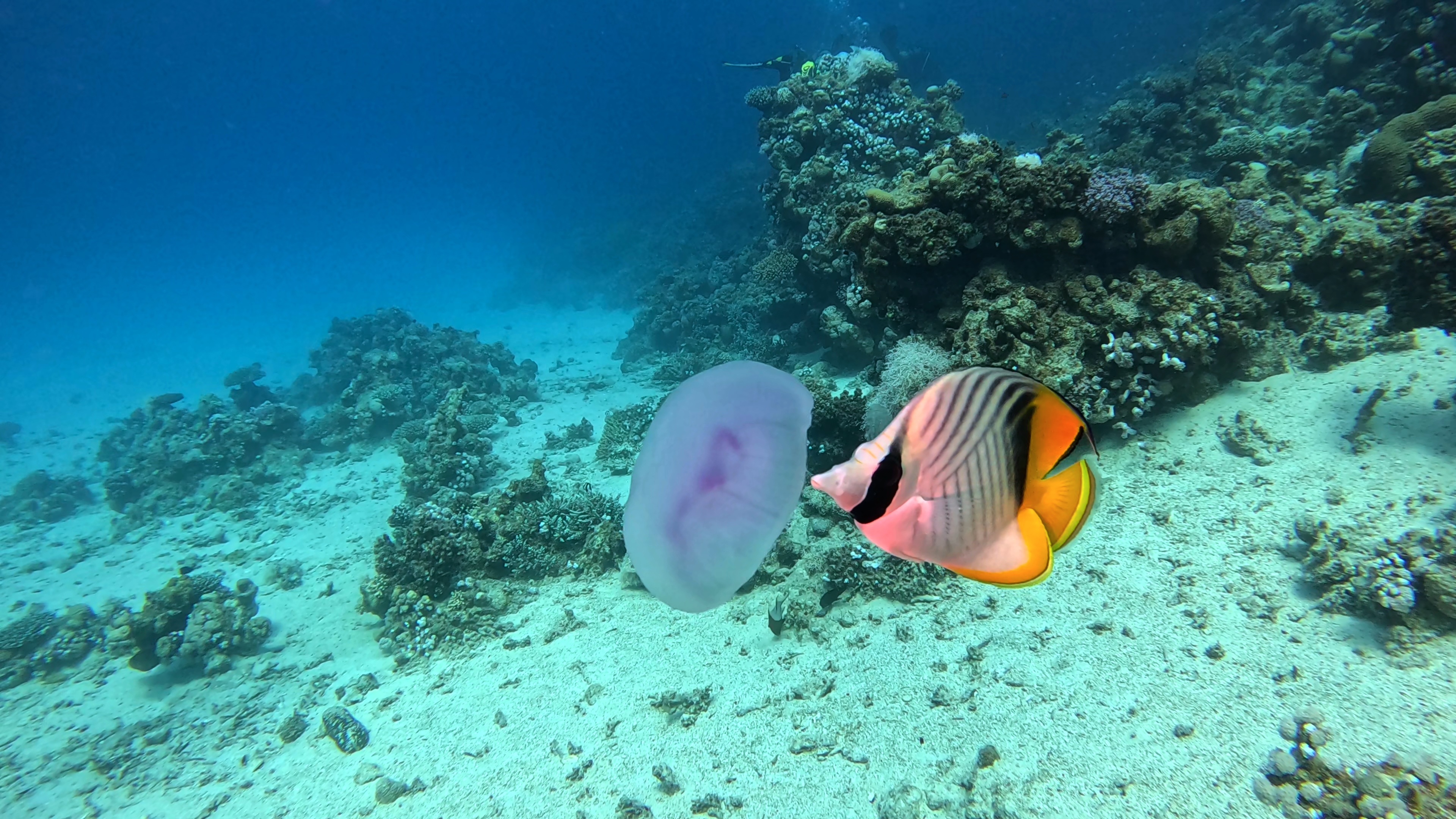
Threadfin Butterflyfish – Chaetodon auriga – Nitasto plavuti metuljček
Nitasto plavuti metuljček, znan tudi kot Threadfin Butterflyfish, je barvita tropska riba z belim telesom, poševnimi temnimi črtami, rumenim repom in značilno podaljšano nitasto hrbtno plavutjo. Živi v tropskih koralnih grebenih Indo-Pacifika, pogosto posamezno ali v parih ob grebenskih pobočjih in v lagunah. Prehranjuje se z koralnimi polipi, drobnimi nevretenčarji in algami.
The Threadfin Butterflyfish is a colorful tropical reef fish recognized by its white body with diagonal dark lines, a yellow tail, and a distinctive long filament extending from its dorsal fin. It inhabits tropical coral reefs of the Indo-Pacific region, often seen alone or in pairs near reef slopes and lagoons. Its diet consists of coral polyps, small invertebrates, and algae.
Foto: Aleš Sulič, Egypt Hurghada
ERITREAN BUTTERFLYFISH
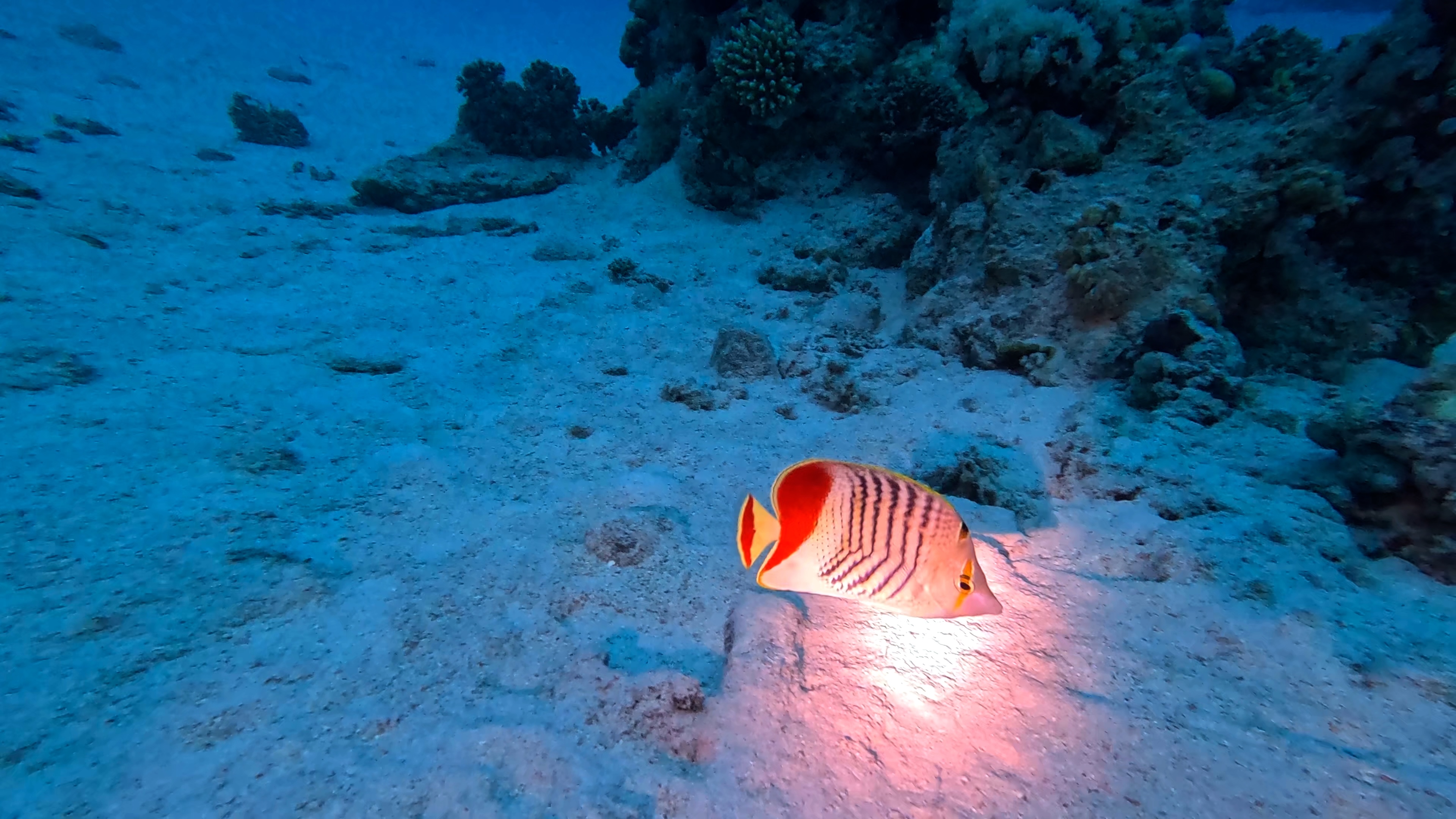
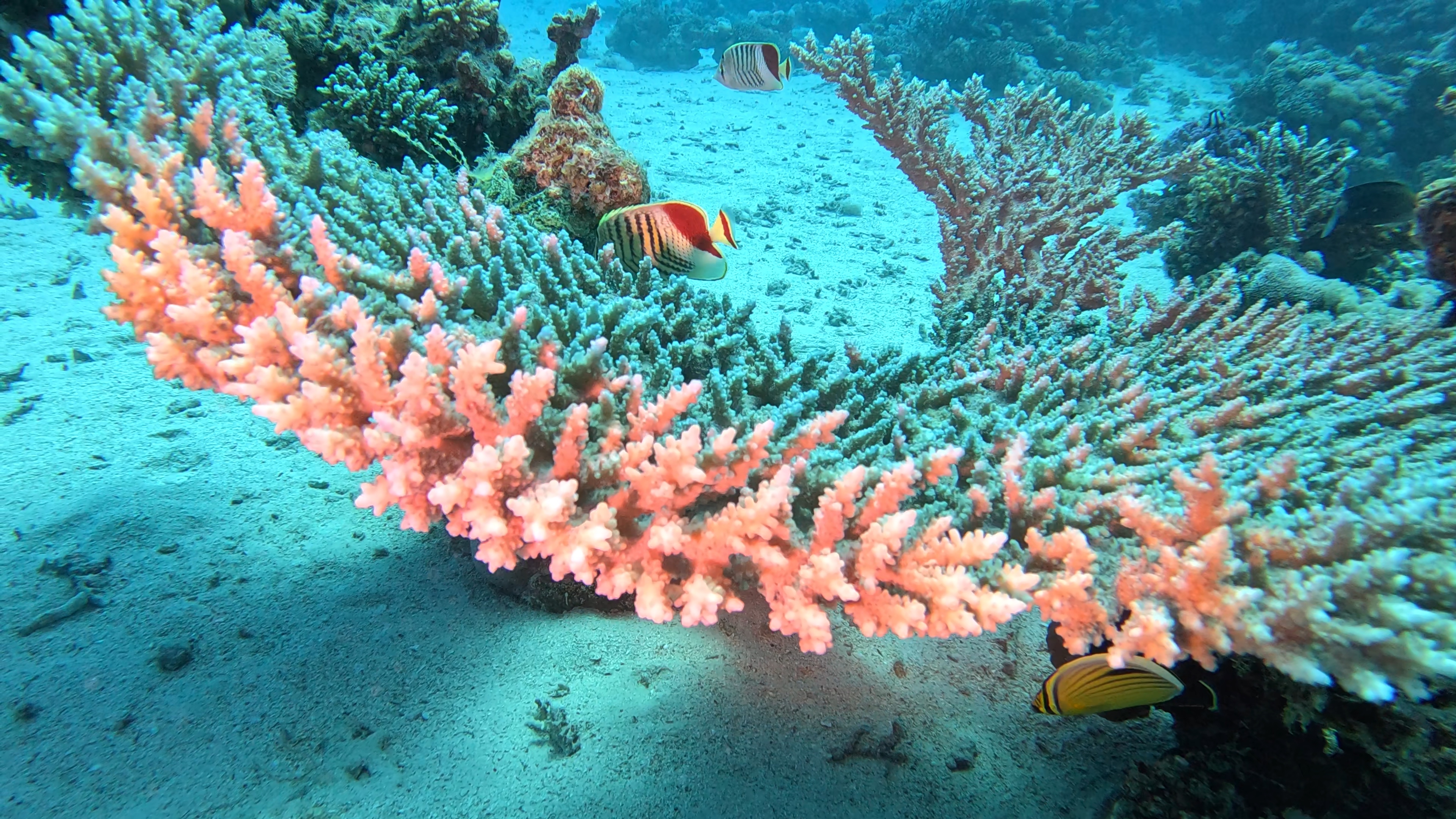
Eritrean Butterflyfish – Chaetodon paucifasciatus – Eritrejski metuljček
Eritrejski metuljček, znan tudi kot Eritrean Butterflyfish, je svetlo obarvana tropska riba z rumeno-oranžnim telesom, prečnimi temnimi črtami in izrazito črno liso na hrbtni plavuti. Živi predvsem v Rdečem morju in Adenskem zalivu, kjer naseljuje koralne grebene in skalnata območja. Prehranjuje se z koralnimi polipi in majhnimi nevretenčarji.
The Eritrean Butterflyfish is a brightly colored tropical fish with a yellow-orange body, dark vertical stripes, and a distinct black spot on its dorsal fin. It is found mainly in the Red Sea and the Gulf of Aden, where it inhabits coral reefs and rocky coastal areas. Its diet consists primarily of coral polyps and small invertebrates.
Foto: Aleš Sulič, Egypt Sharm el Sheik
WHITETAIL DASCYLLUS
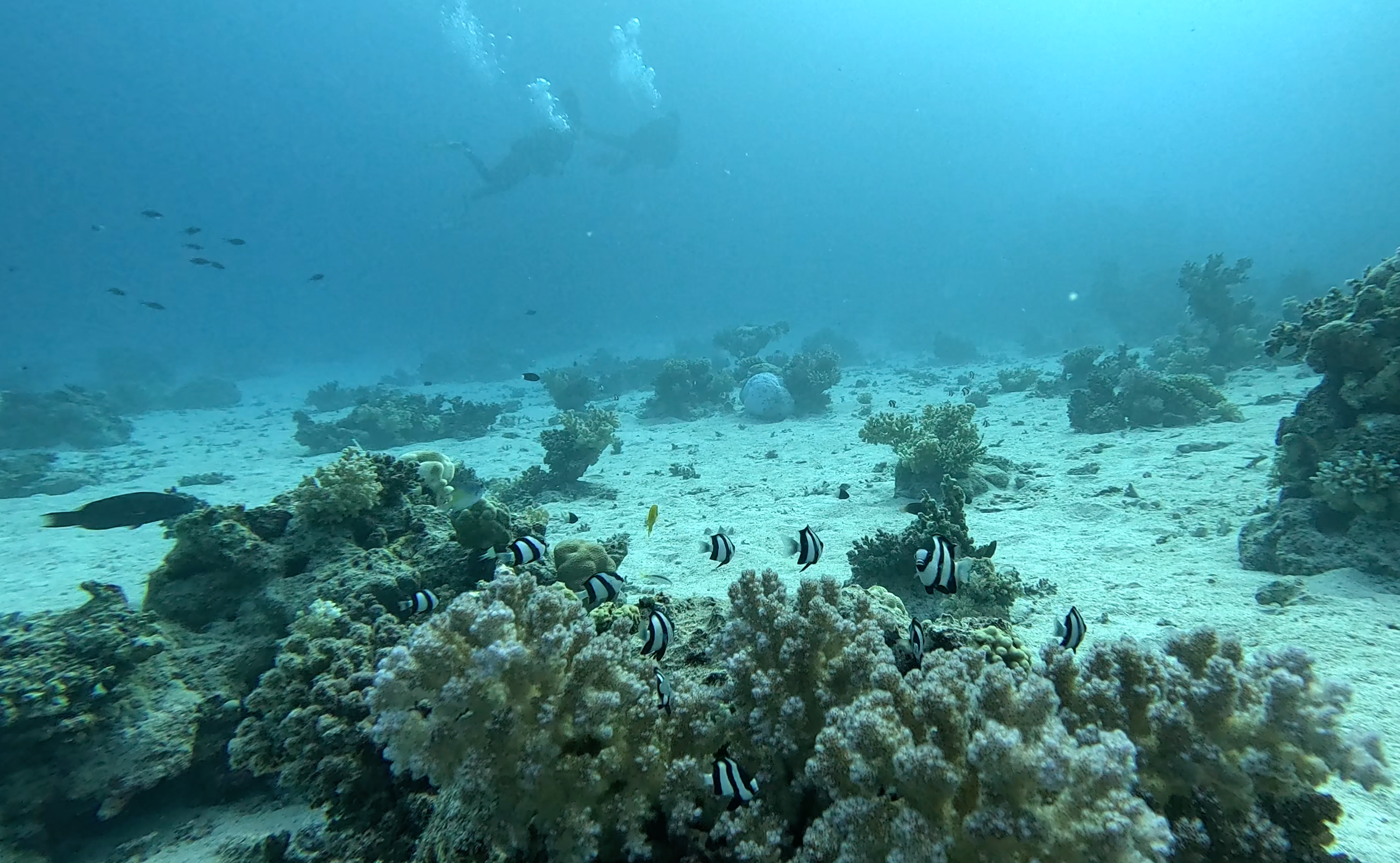
Whitetail Dascyllus – Dascyllus aruanus – Belorepa koralovka
Belorepa koralovka, znan tudi kot Whitetail Dascyllus, je majhna tropska riba s temnim telesom in izrazito belo zadnjo plavutjo. Živi v tropskih koralnih grebenih Indo-Pacifiškega območja, pogosto v bližini koralnih glav ali skalnatih struktur. Živijo v jatah. Boječe a vendar zelo teritorialne narave. Prehranjuje se z planktonom in drobnimi nevretenčarji.
The Whitetail Dascyllus is a small tropical fish with a dark body and a striking white tail fin. It inhabits tropical coral reefs of the Indo-Pacific region, often near coral heads or rocky structures, usually forming schools. Its diet consists of plankton and small invertebrates.
Foto: Aleš Sulič, Marsa Alam
YELLOW SADDLE GOATFISH
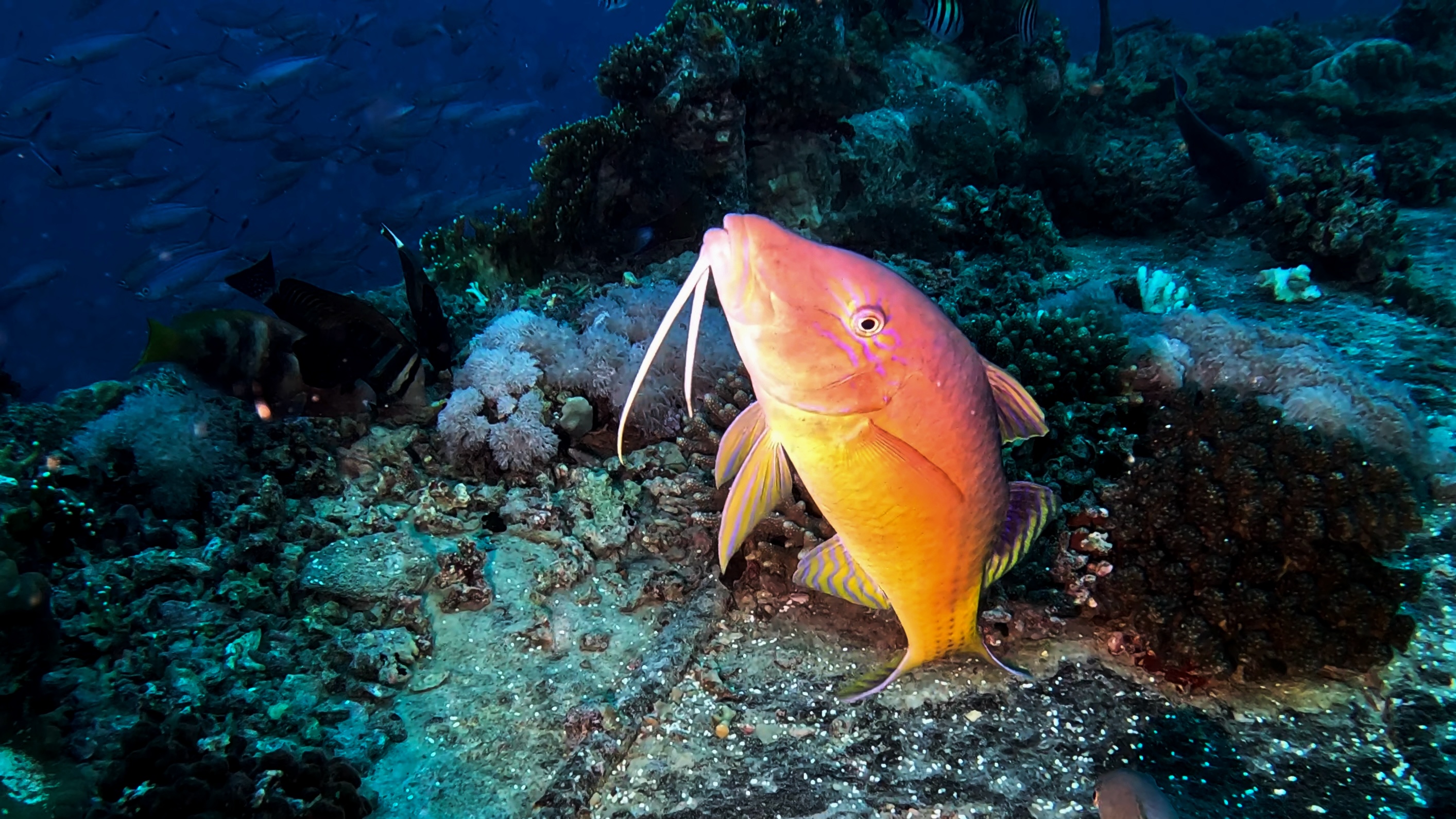
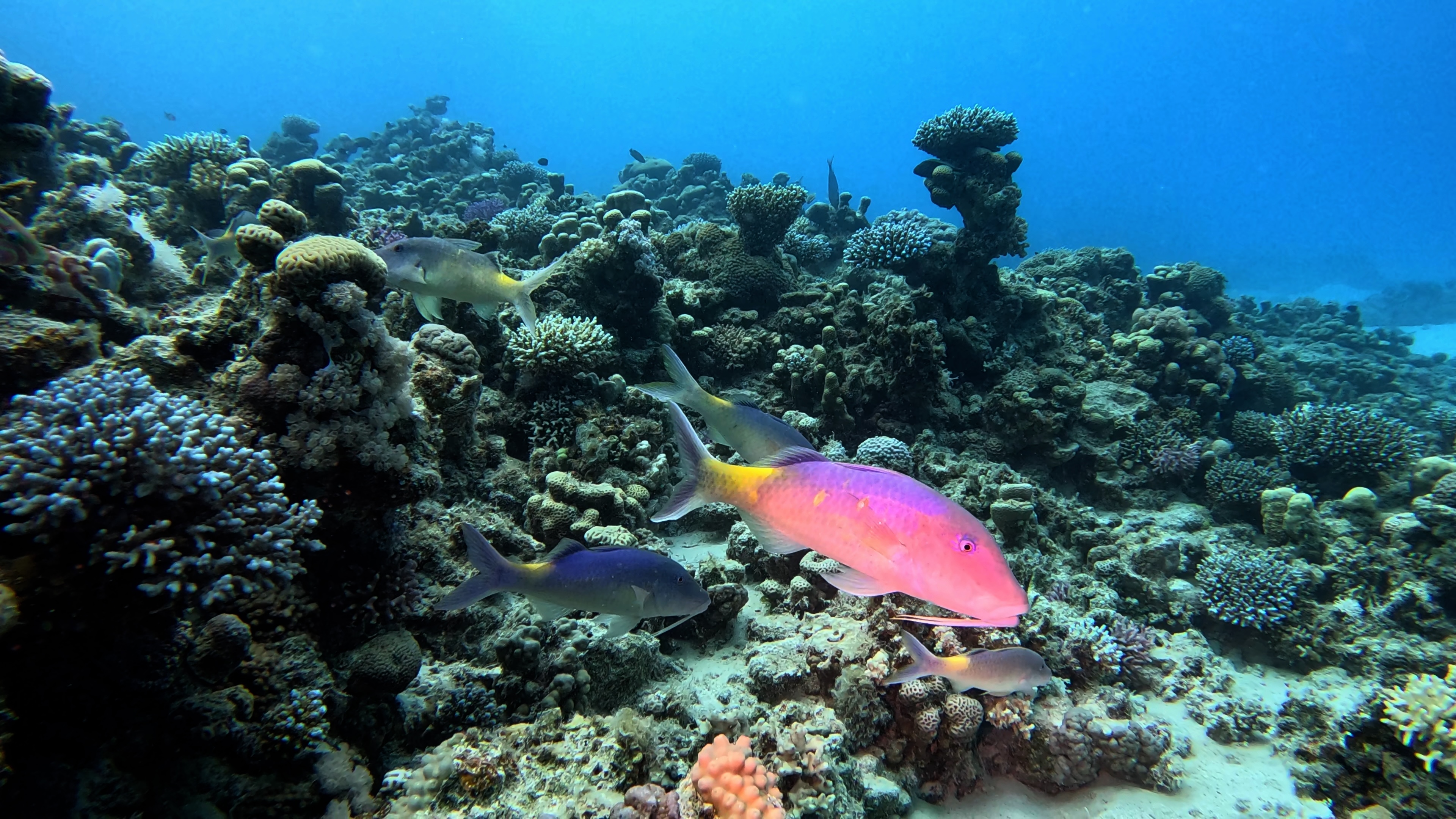
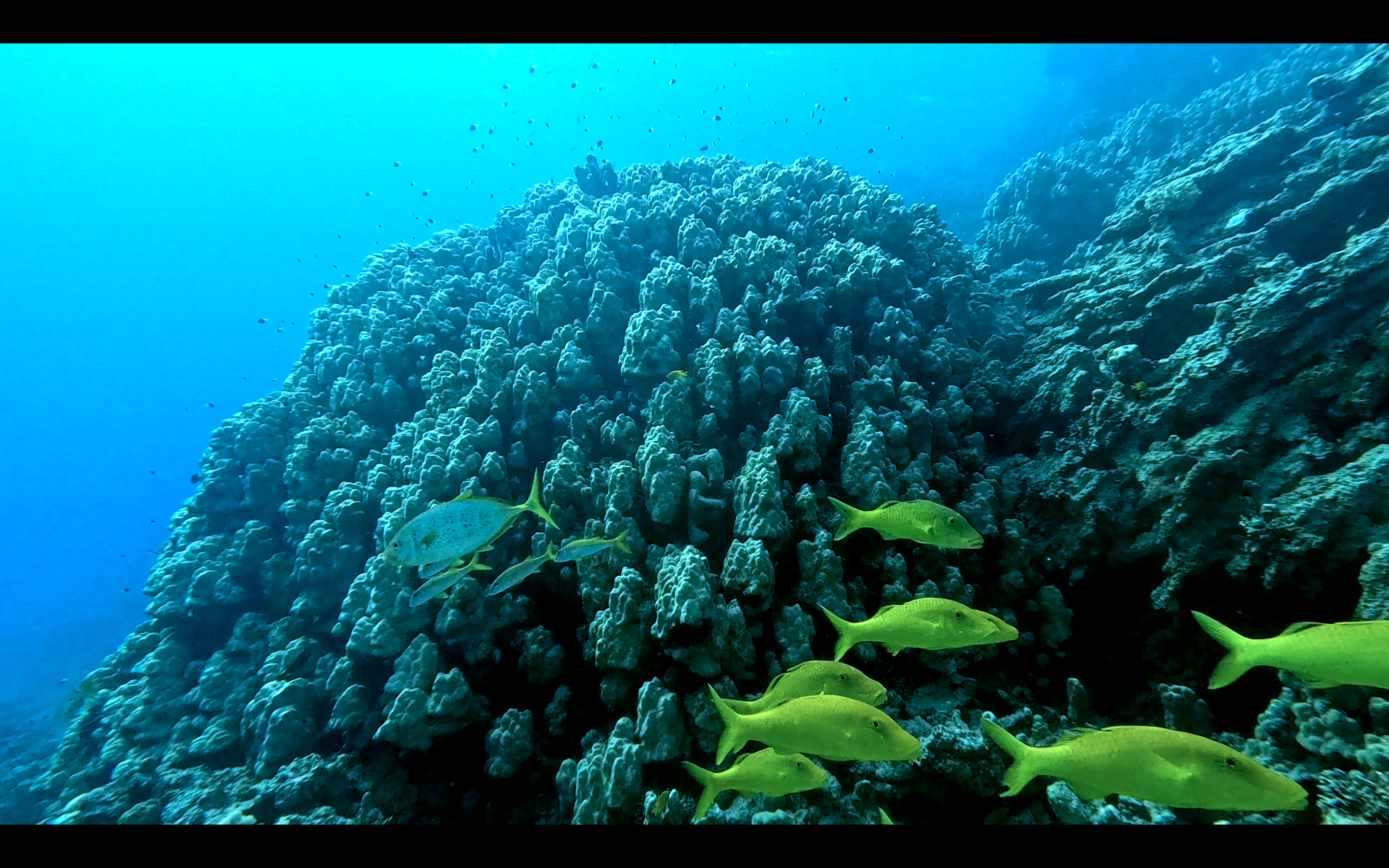
Yellow Saddle Goatfish – Parupeneus cyclostomus – Rumeni bradač
Rumeni bradač, znan tudi kot Yellow Saddle Goatfish, je tropska riba srednje velikosti z dolgim telesom, rumenim sedlastim vzorcem na hrbtu in značilnimi brčicami na čeljusti, ki jih uporablja za iskanje hrane v pesku. Živi v tropskih koralnih grebenih Indo-Pacifiškega območja, pogosto nad peščenimi ali muljastimi dnom. Prehranjuje se predvsem z nevretenčarji, majhnimi rakci in črvi.
The Yellow Saddle Goatfish is a medium-sized tropical fish with a long body, a yellow saddle-like mark on its back, and characteristic barbels on its chin used to search for food in the sand. It inhabits tropical coral reefs of the Indo-Pacific region, often over sandy or muddy substrates. Its diet consists mainly of invertebrates, small crustaceans, and worms.
Foto: Aleš Sulič, Egypt Dahab
ZEEBRA ANGELFISH – LYRTAIL ANGELFISH
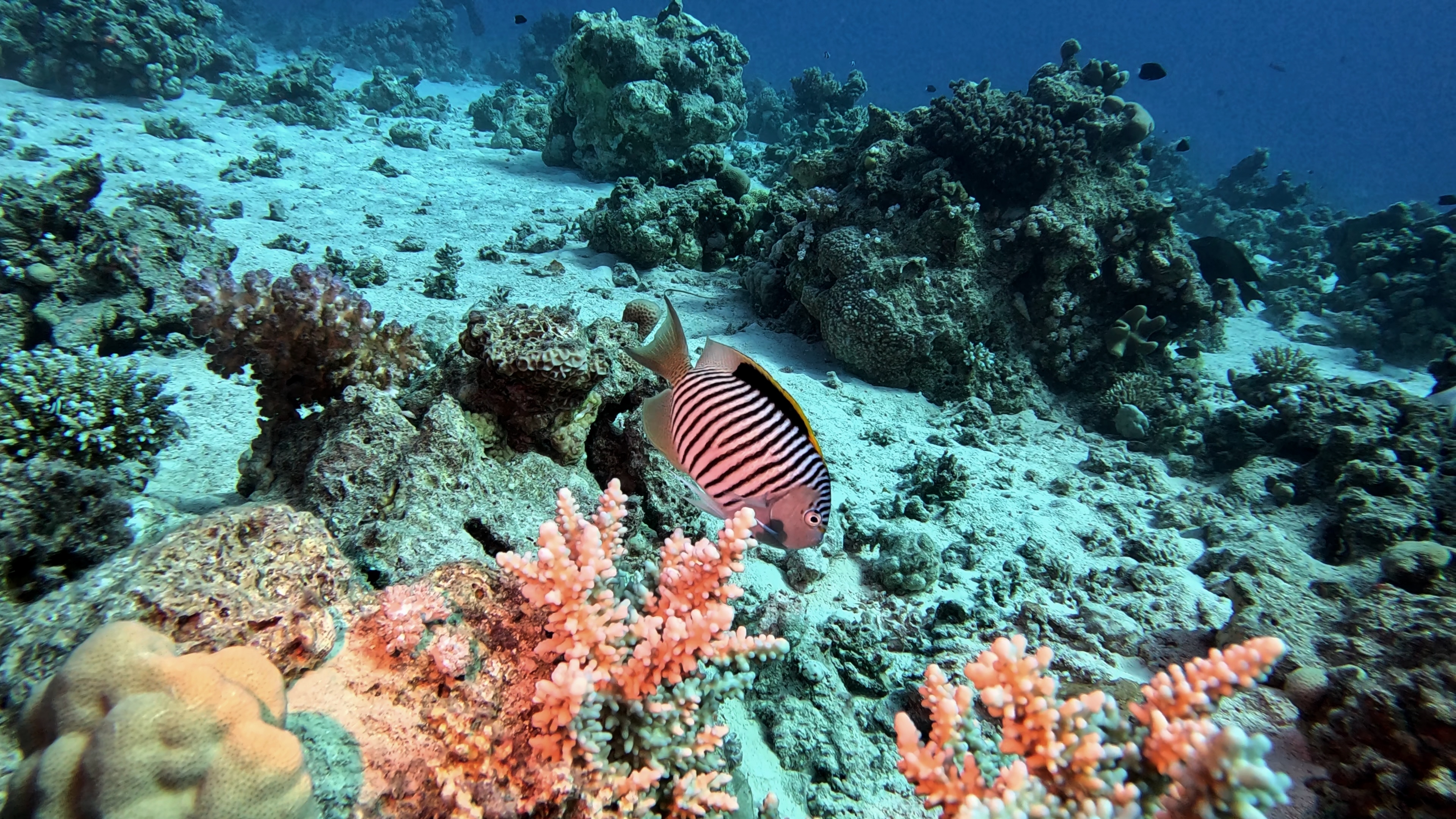
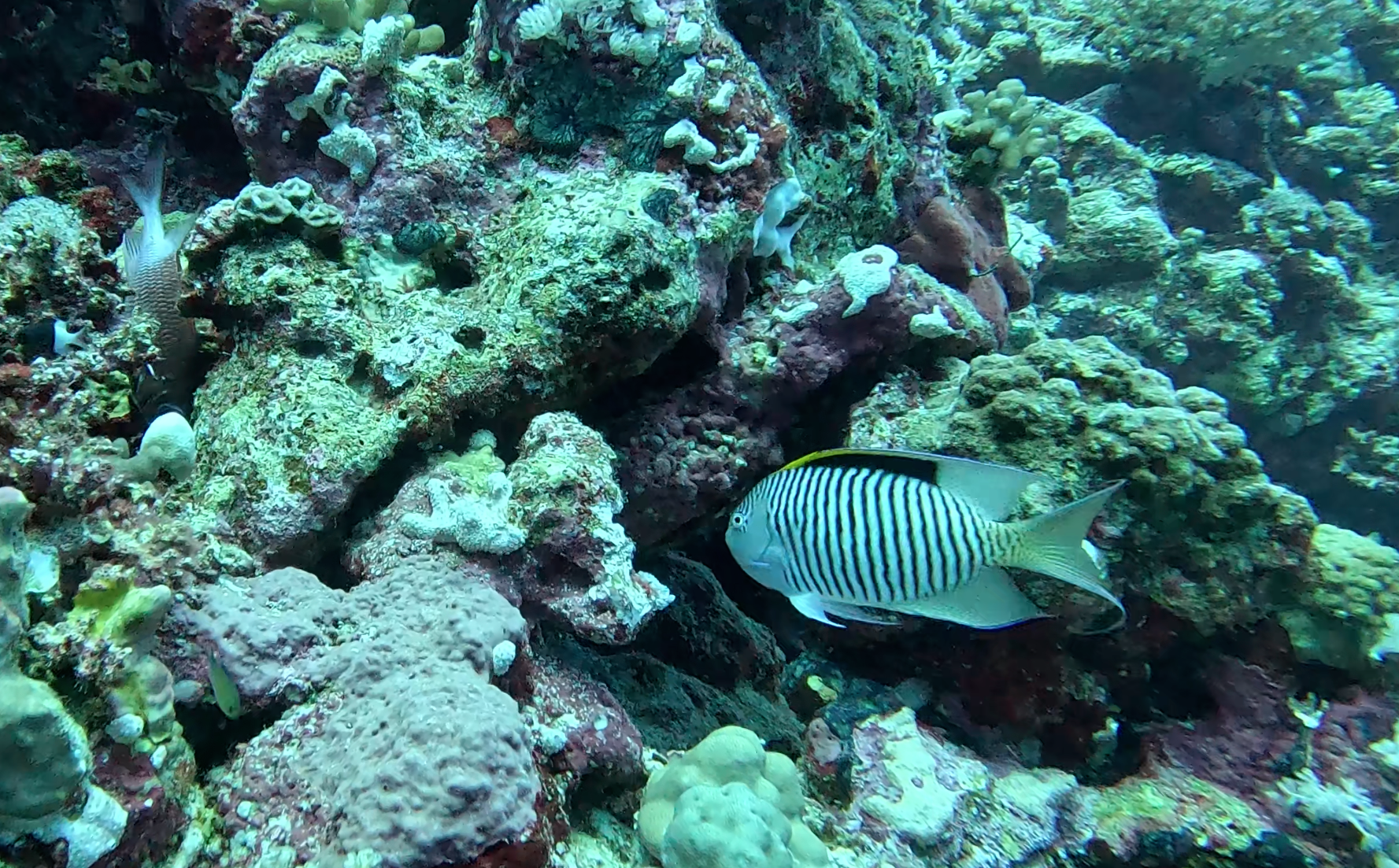
Zebra Angelfish – Genicanthus caudovittatus – Zebrasta angelska riba
Zebrasta angelska riba, znana tudi kot Zebra Angelfish, je tropska riba z izrazitimi črnimi in belimi črtami po telesu ter dolgo, vitko zadnjo plavutjo (lyrtail). Živi v tropskih koralnih grebenih Indo-Pacifiškega območja, običajno v globljih predelih. Prehranjuje se z zooplanktonom in drobnimi nevretenčarji.
The Zebra Angelfish, also known as the Lyrtail Angelfish, is a tropical fish with distinctive black and white stripes across its body and a long, tapering tail fin. It inhabits tropical coral reefs of the Indo-Pacific region, usually in deeper reef areas. Its diet consists of zooplankton and small invertebrates.
Foto: Aleš Sulič, Egypt Ras Muhammad
STRIPED FUSILIER
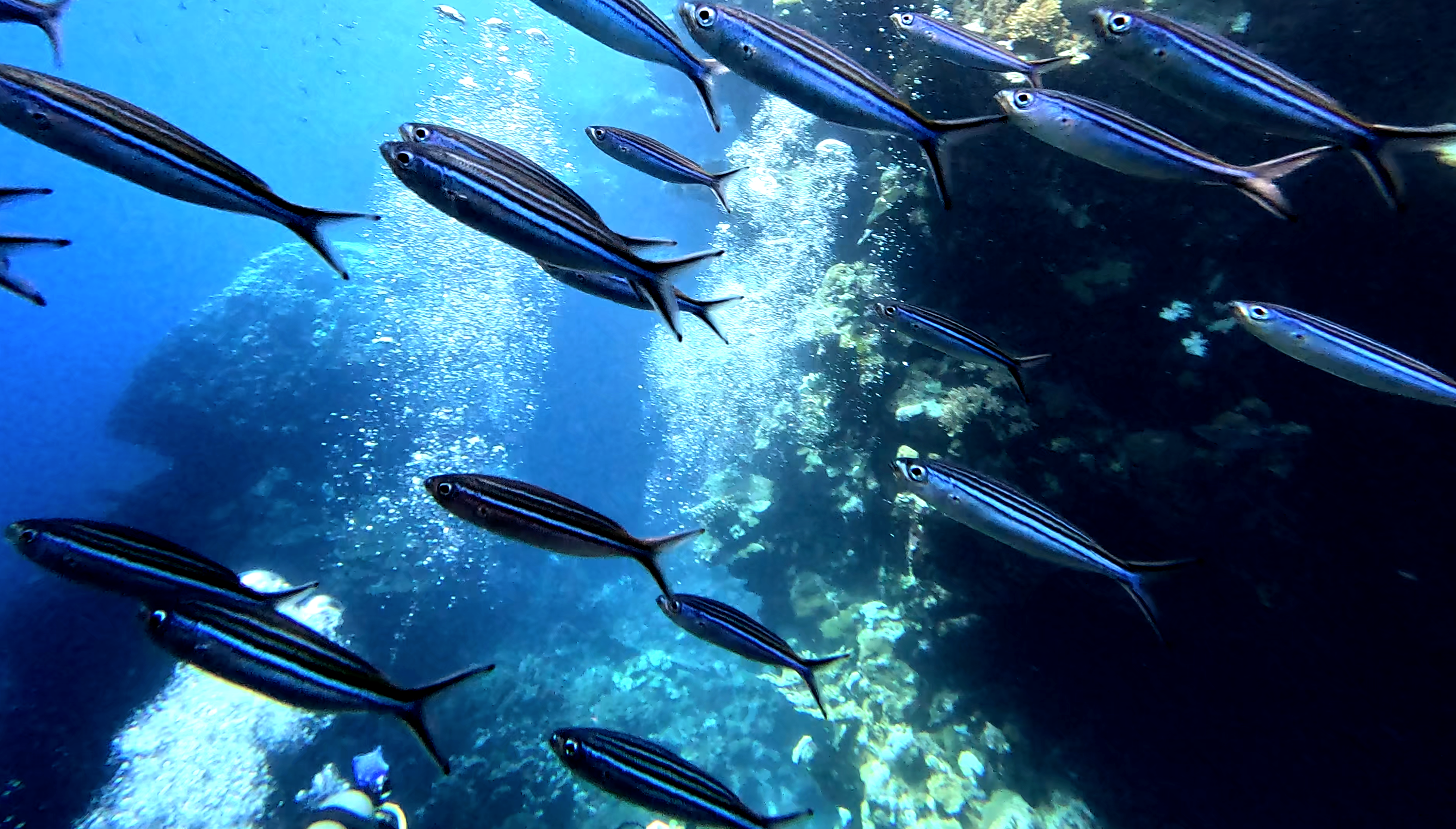
Striped Fusilier – Caesio striata – Črtasti strelec
Črtasti strelec, znan tudi kot Striped Fusilier, je srednje velika tropska riba z vitkim telesom in značilnimi modro-sivimi vzdolžnimi črtami. Živi na tropskih koralnih grebenih Indo-Pacifiškega območja, pogosto v velikih jatah nad grebeni in ob obalah otokov. Prehranjuje se predvsem z zooplanktonom in drobnimi nevretenčarji.
The Striped Fusilier is a medium-sized tropical fish with a slender body and distinctive blue-gray longitudinal stripes. It inhabits tropical coral reefs of the Indo-Pacific region, often forming large schools above reefs and around island coasts. Its diet consists mainly of zooplankton and small invertebrates.
Foto: Aleš Sulič, Egypt Zabargad Island
RED SEA BANNERFISH
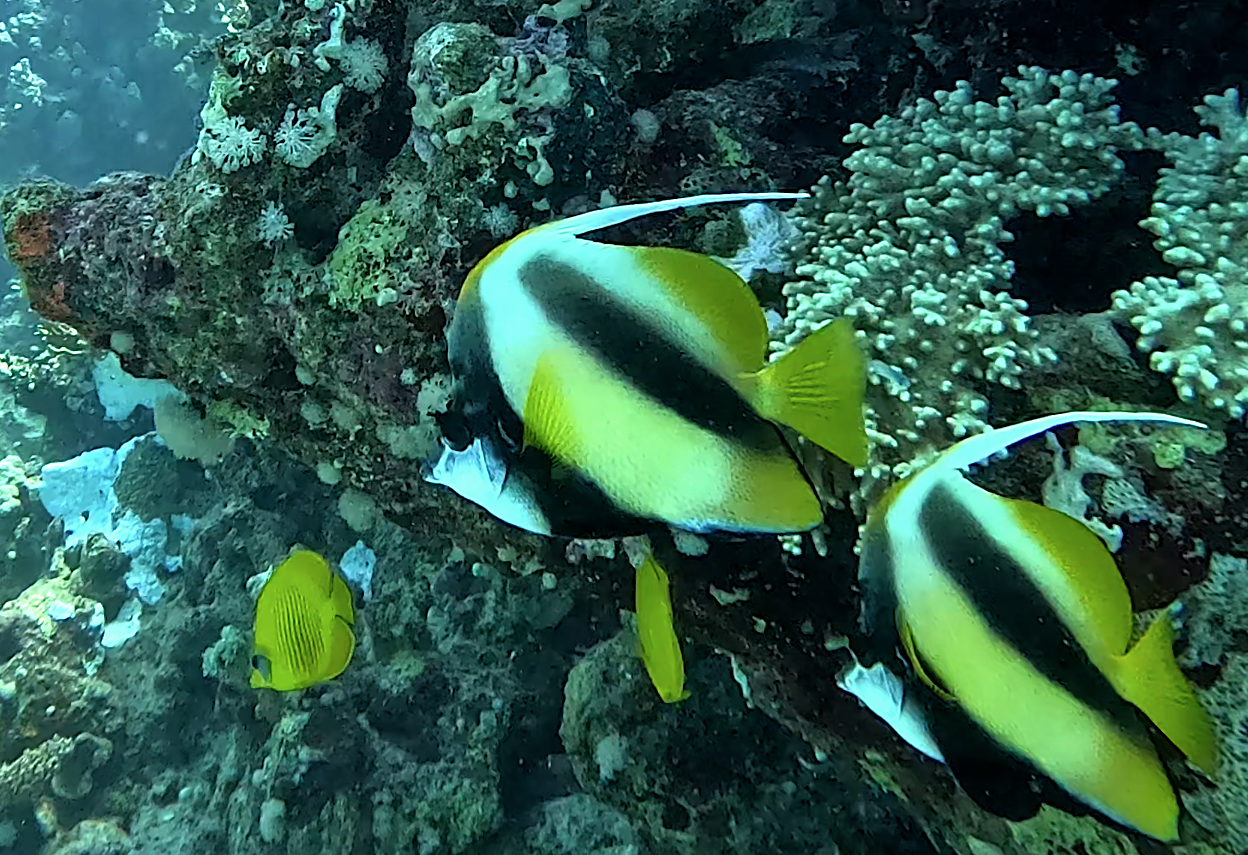
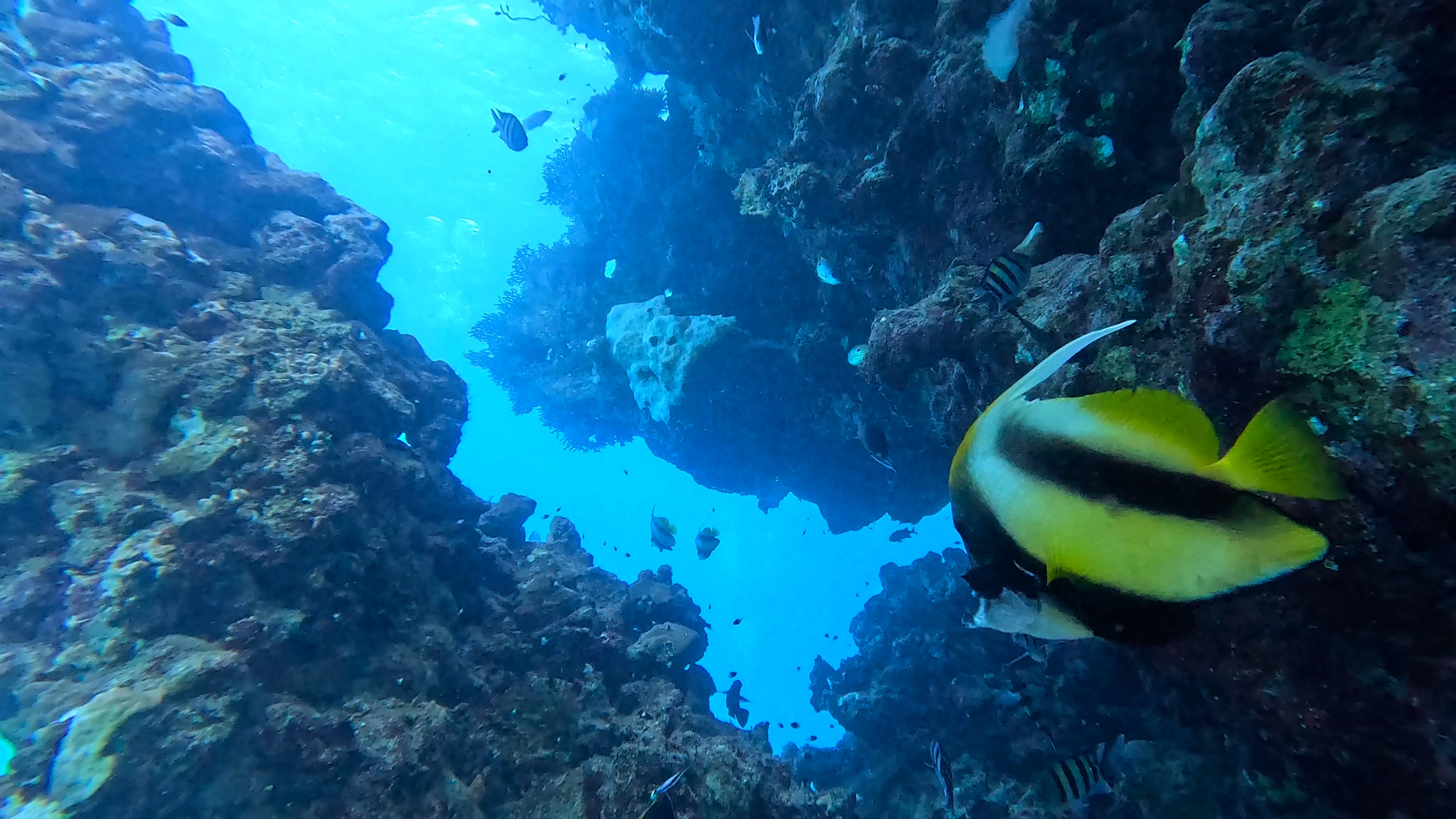
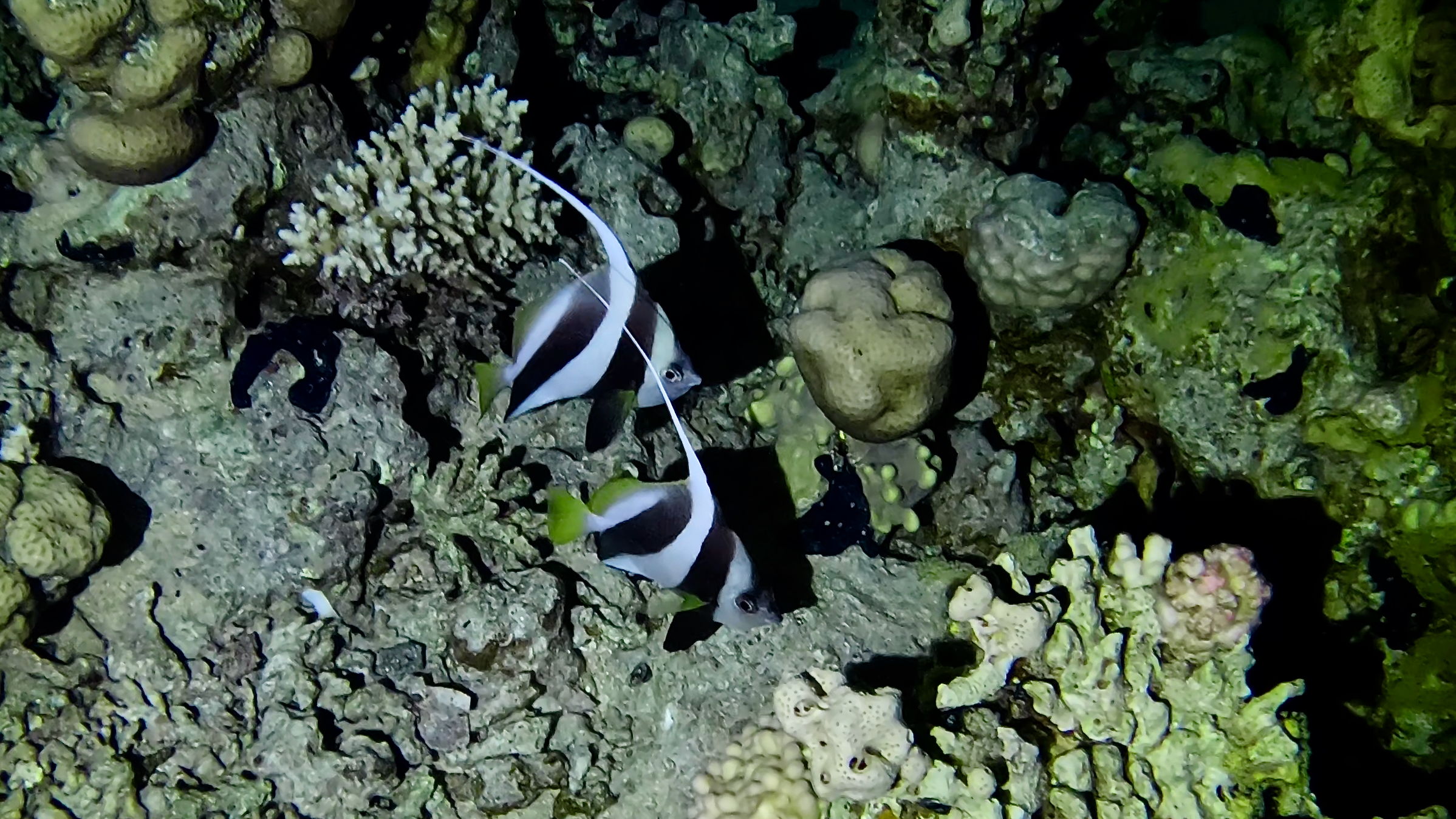
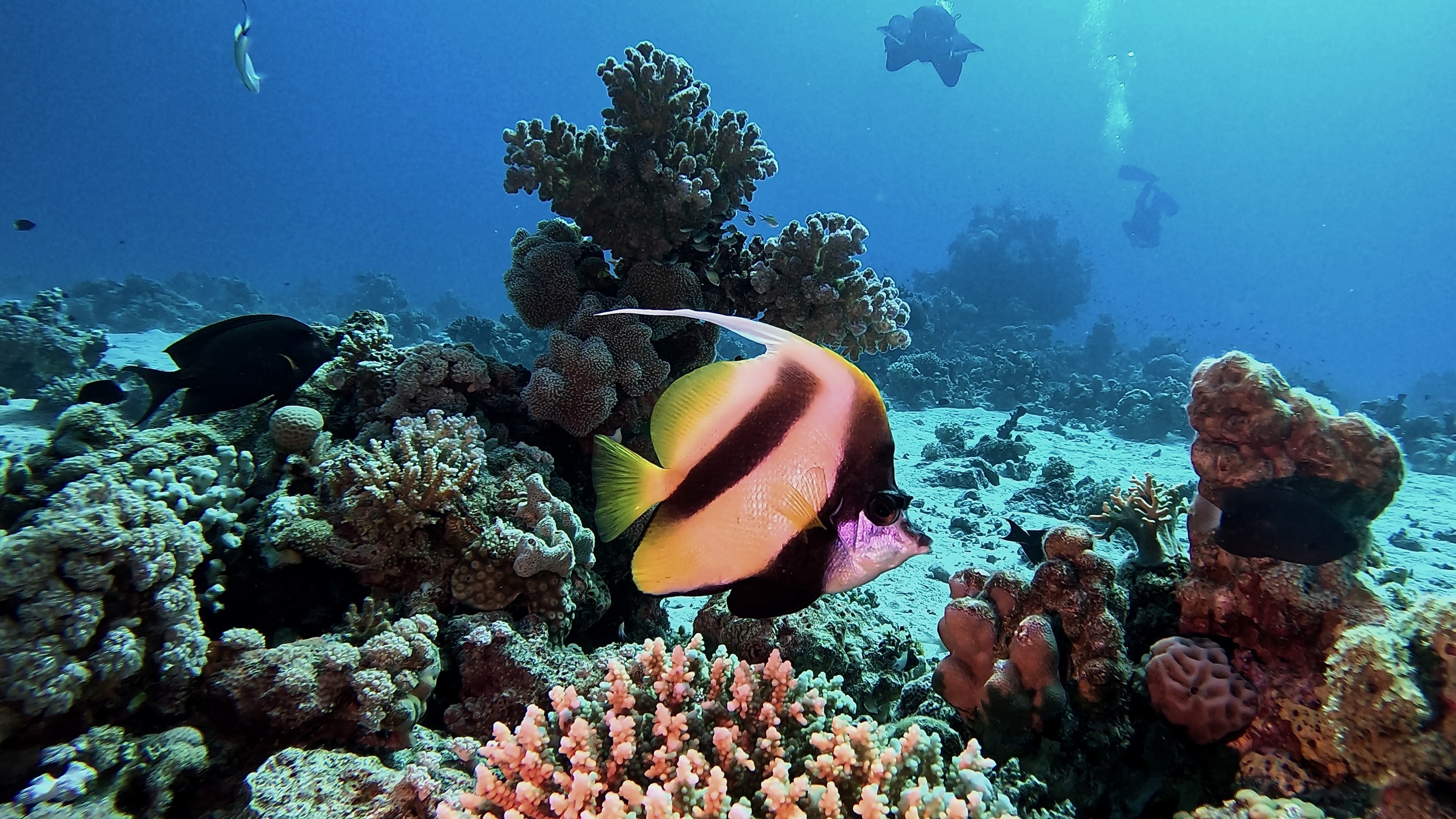
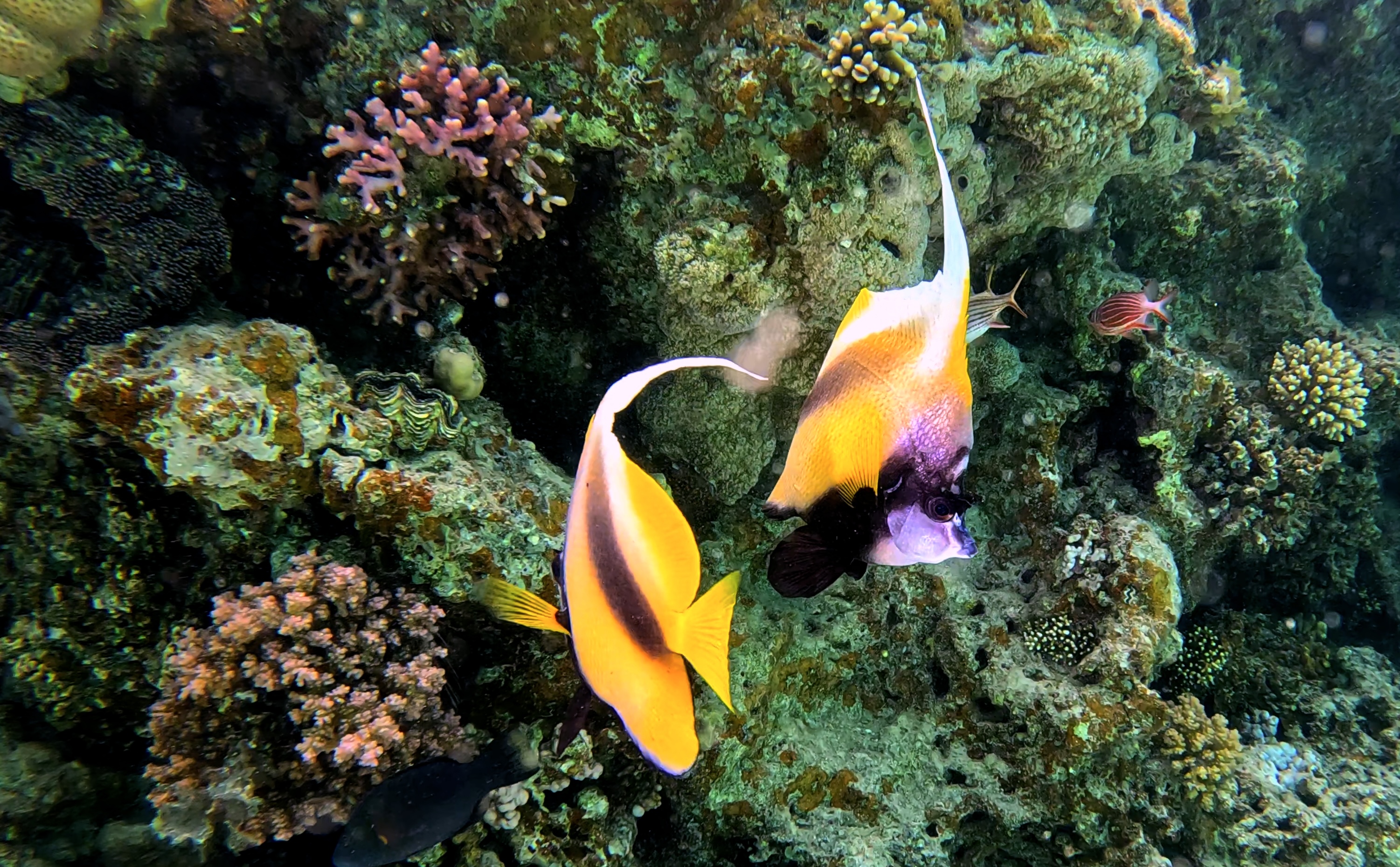
Red Sea Bannerfish – Heniochus intermedius – Prapor
Prapor, znan tudi kot Red Sea Bannerfish, je tropska riba z izrazito dolgim hrbtnim plavutjem, belim telesom z črnimi črtami in rumeno obarvanim repom. Živi predvsem v Rdečem morju, kjer naseljuje koralne grebene in lagune. Prehranjuje se z majhnimi nevretenčarji in planktonom.
The Red Sea Bannerfish is a tropical fish with a long, flowing dorsal fin, a white body with black stripes, and a yellow tail. It is found mainly in the Red Sea, where it inhabits coral reefs and lagoons. Its diet consists of small invertebrates and plankton.
Foto: Aleš Sulič, Egypt Dahab Canyons
SCORPION FISH
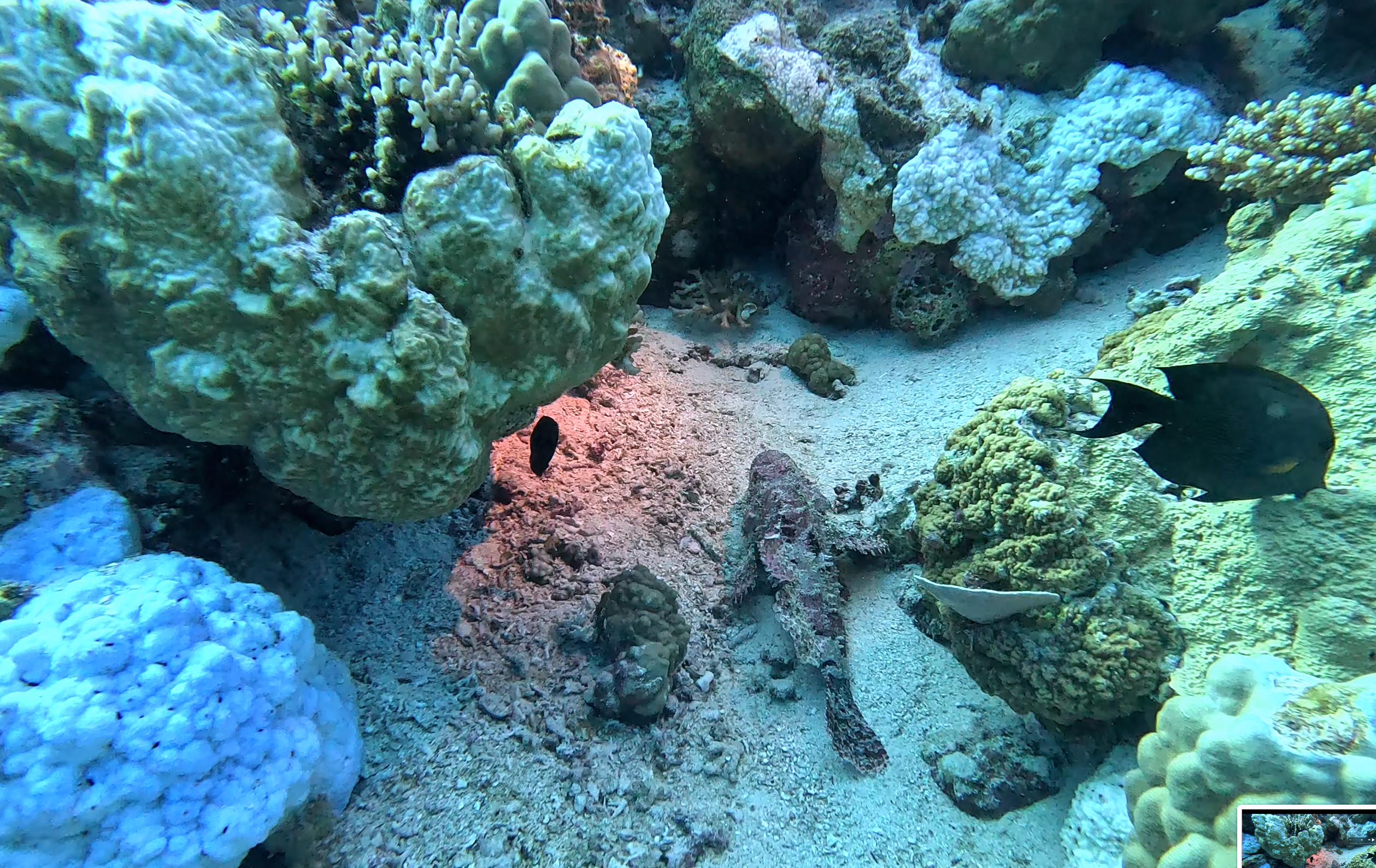
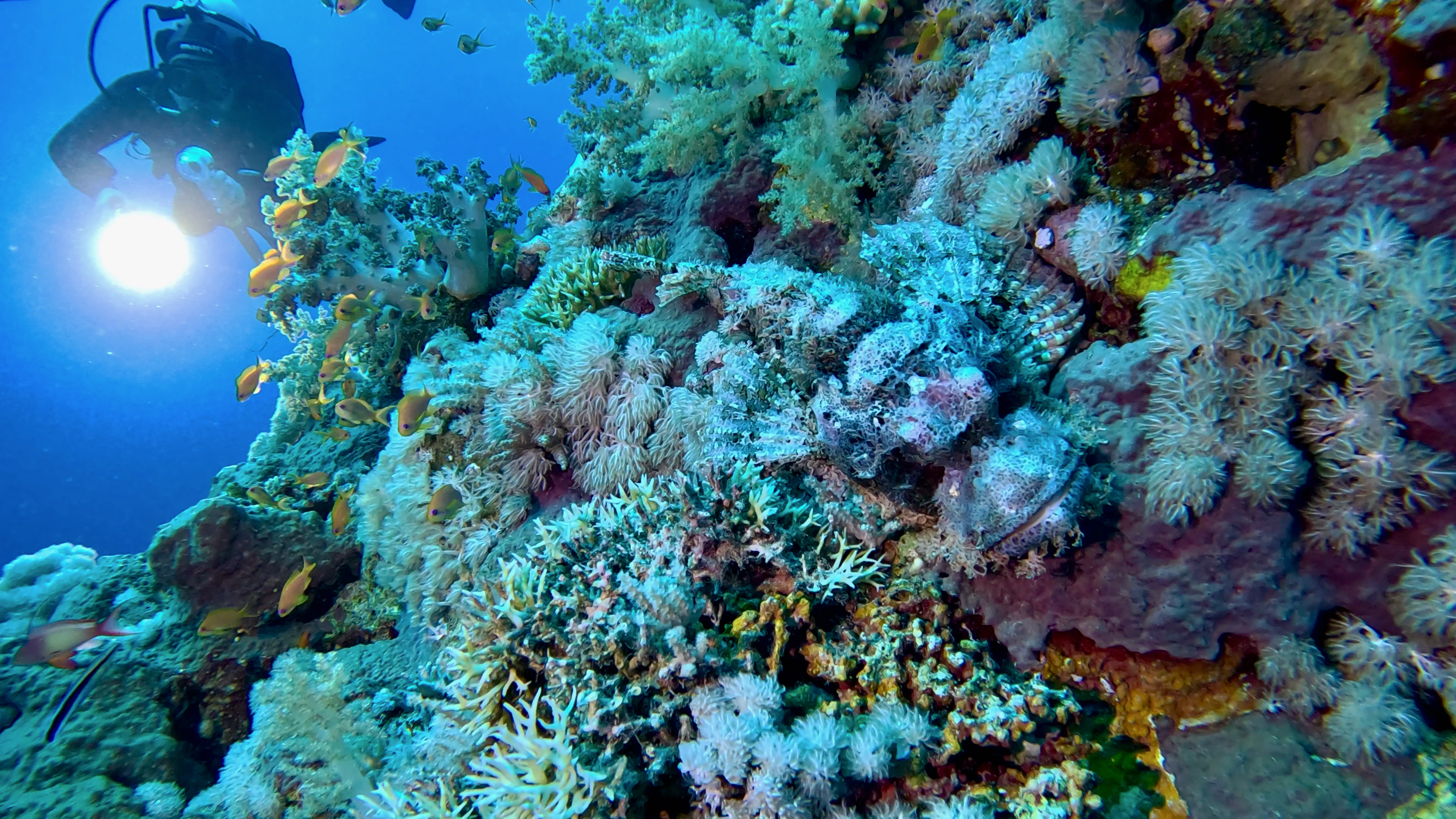
Scorpionfish – Scorpaena spp. – Škorpijonska riba
Škorpijonska riba, znana tudi kot Scorpionfish, je tropska riba z bodičastim telesom in sposobnostjo kamuflaže med kamni ali koralami. Njene bodice vsebujejo strup, ki jo ščiti pred plenilci. Živi v tropskih in subtropskih morjih po vsem svetu, pogosto na skalnatih in koralnih podlagah. Prehranjuje se z ribami in drobnimi nevretenčarji, ki jih lovi s prikritim napadom.
The Scorpionfish is a tropical fish with a spiny body and exceptional camouflage, allowing it to blend into rocks and coral. Its spines contain venom, which protects it from predators. It is found in tropical and subtropical seas worldwide, often on rocky or coral substrates. Its diet consists of fish and small invertebrates, which it ambushes using stealth.
SPECKLED SANDPERCH FISH – TAIL SPOT SANDPERCH
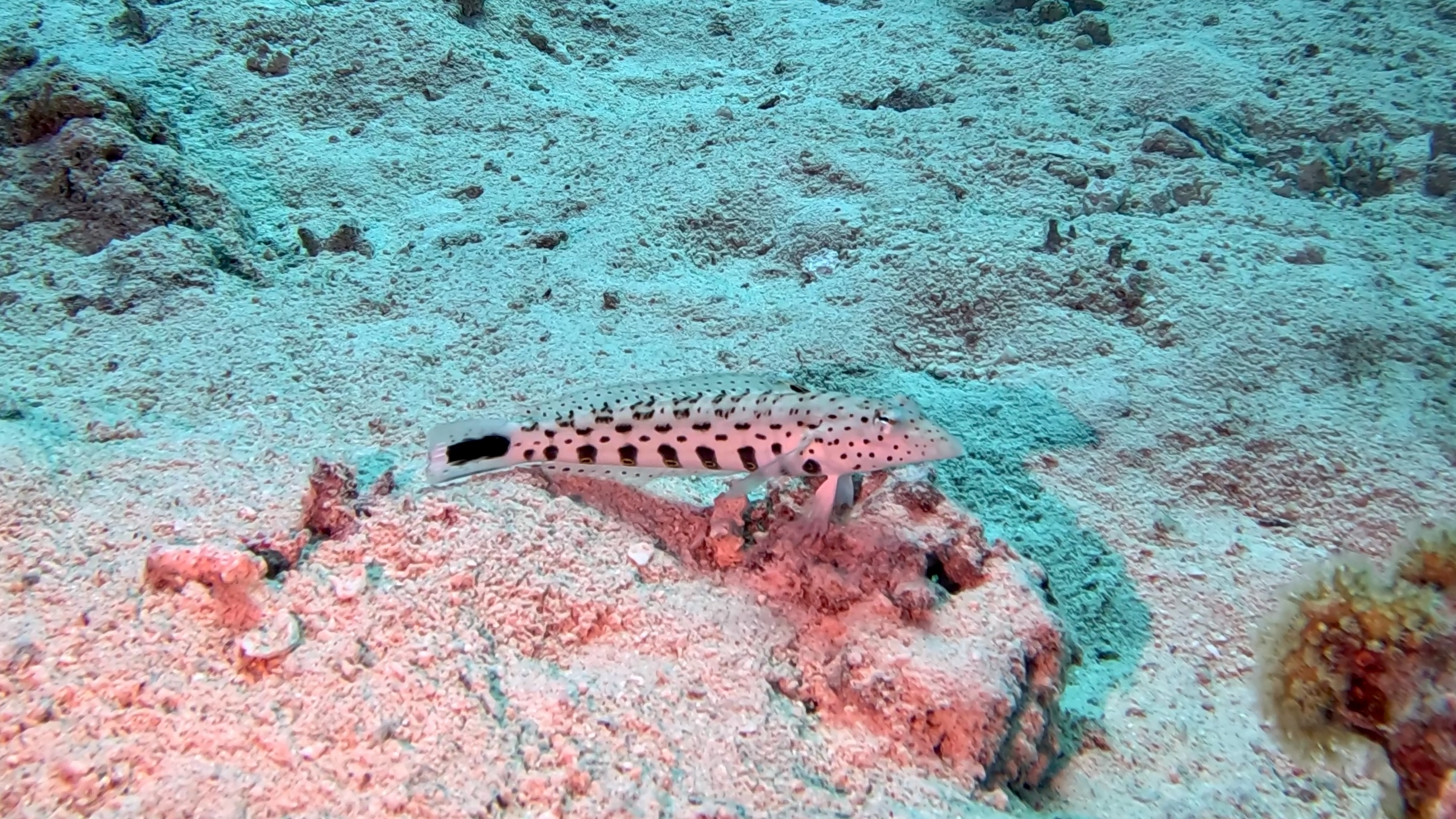
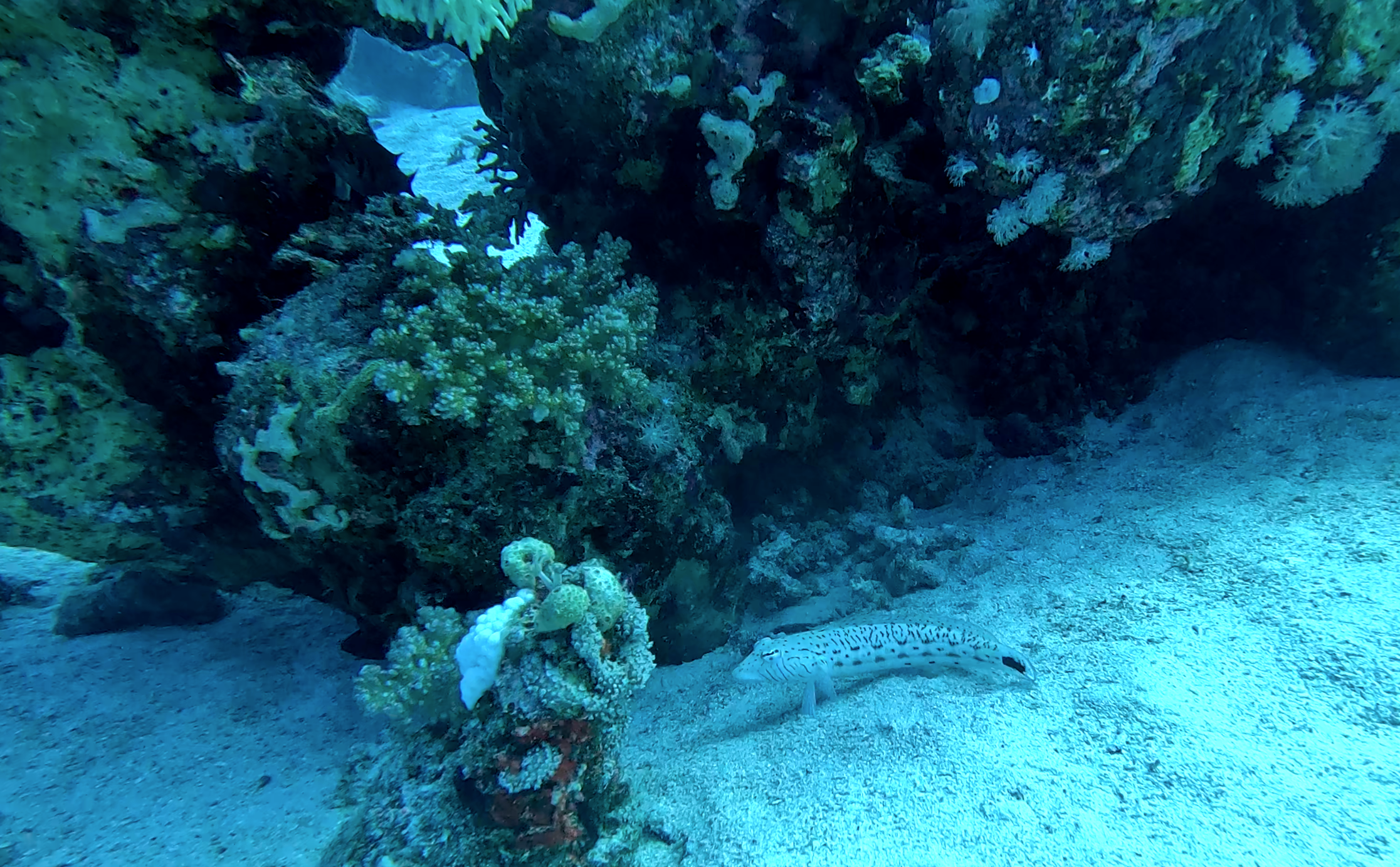
Speckled Sandperch – Parapercis hexophtalma – Pikčasta peščena riba
Pikčasta peščena riba, znana tudi kot Speckled Sandperch ali Tail Spot Sandperch, je tropska riba z podolgovatim telesom, značilnimi temnimi pikami na hrbtu in izrazito liso na repni plavuti. Živi v tropskih koralnih grebenih Indo-Pacifiškega območja, predvsem nad peščenim ali muljastimim dnom, kjer se pogosto skriva in počiva na pesku. Prehranjuje se z majhnimi nevretenčarji in planktonom.
The Speckled Sandperch , also known as the Tail Spot Sandperch, is a tropical fish with an elongated body, distinctive dark spots along its back, and a prominent spot on its tail fin. It inhabits tropical coral reefs of the Indo-Pacific region, mainly over sandy or muddy substrates, where it often rests or hides on the seabed. Its diet consists of small invertebrates and plankton.
Foto: Aleš Sulič, Egypt Dolphin house
SPOTTED EAGLE RAY
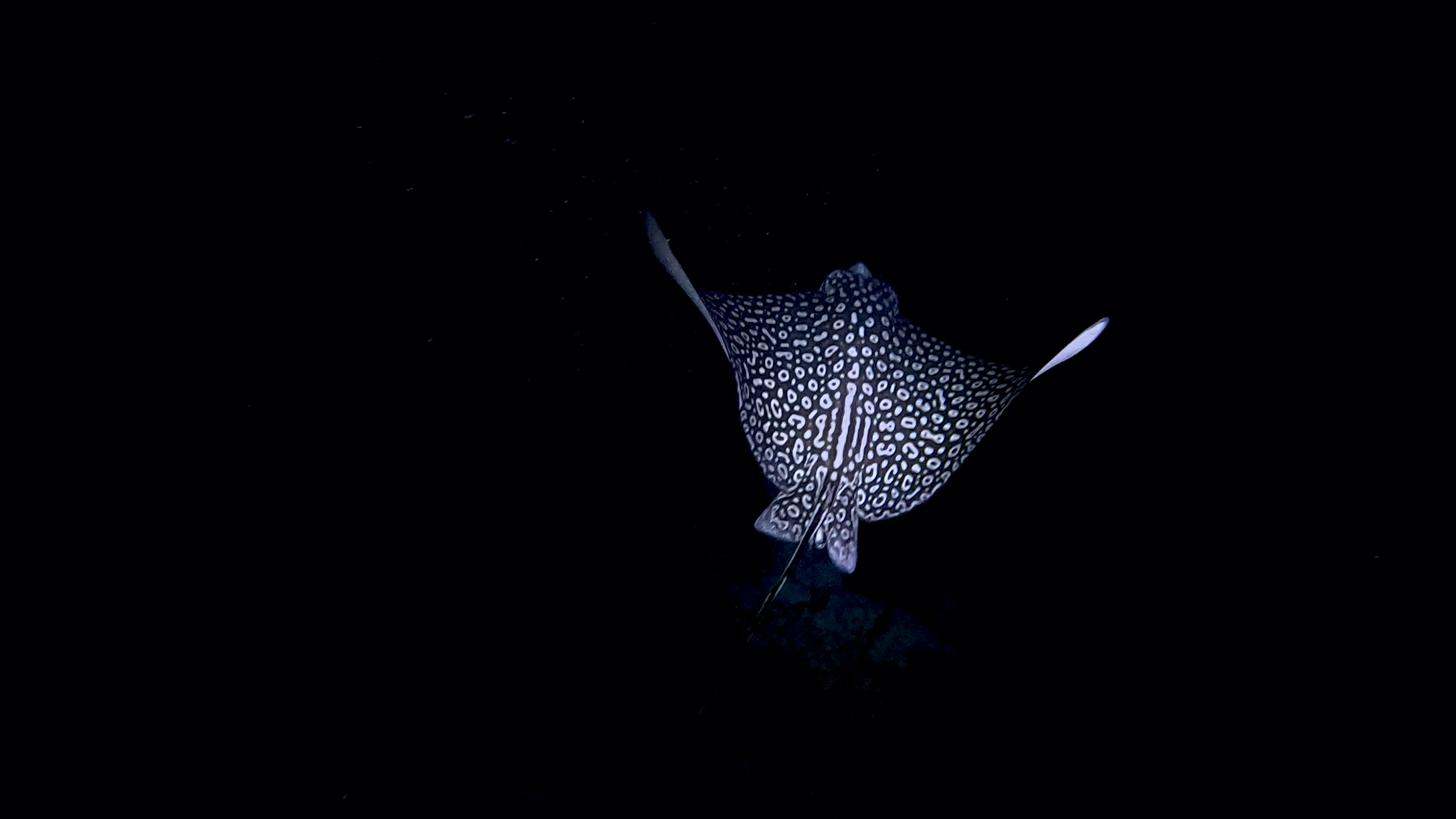
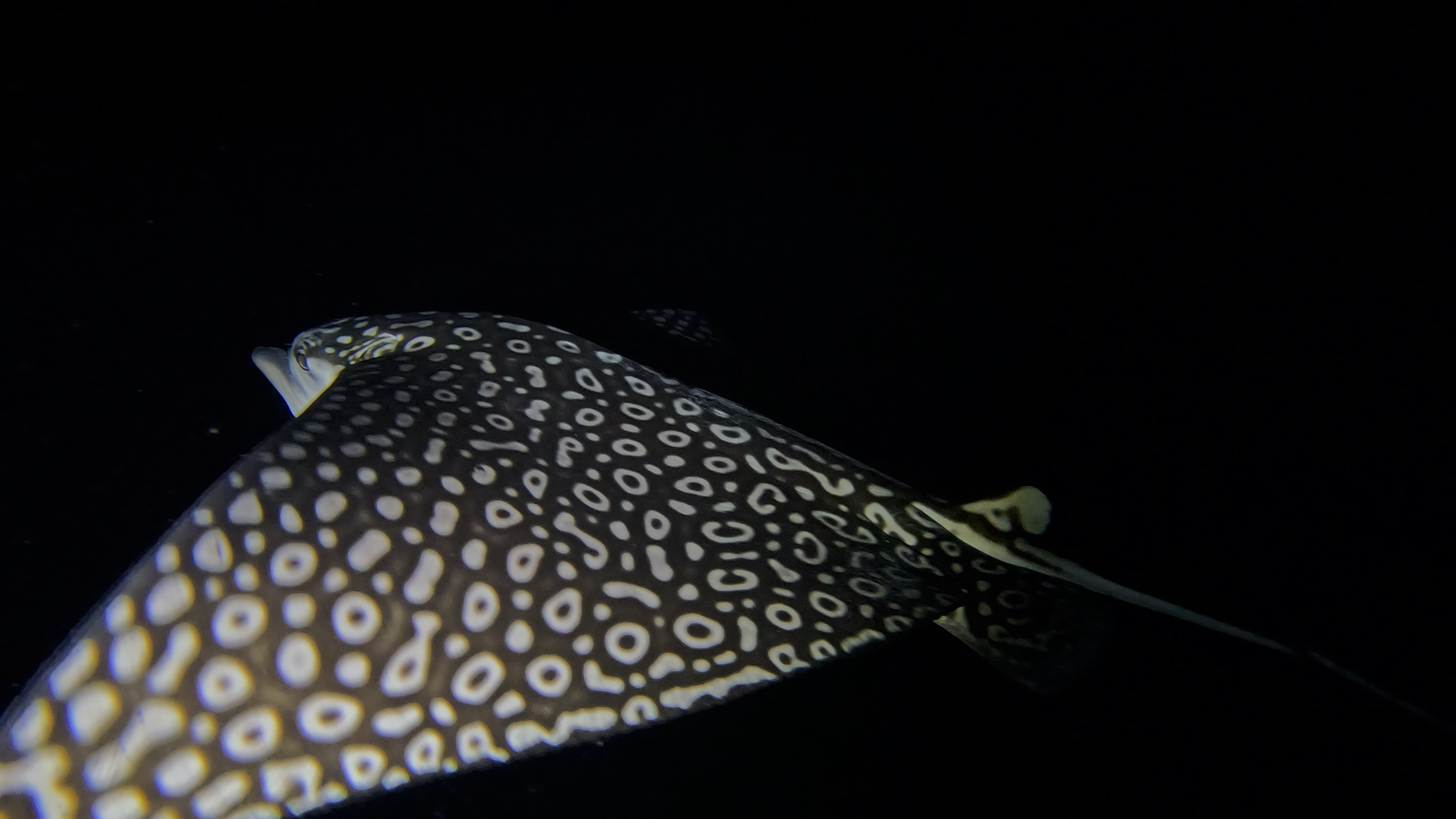
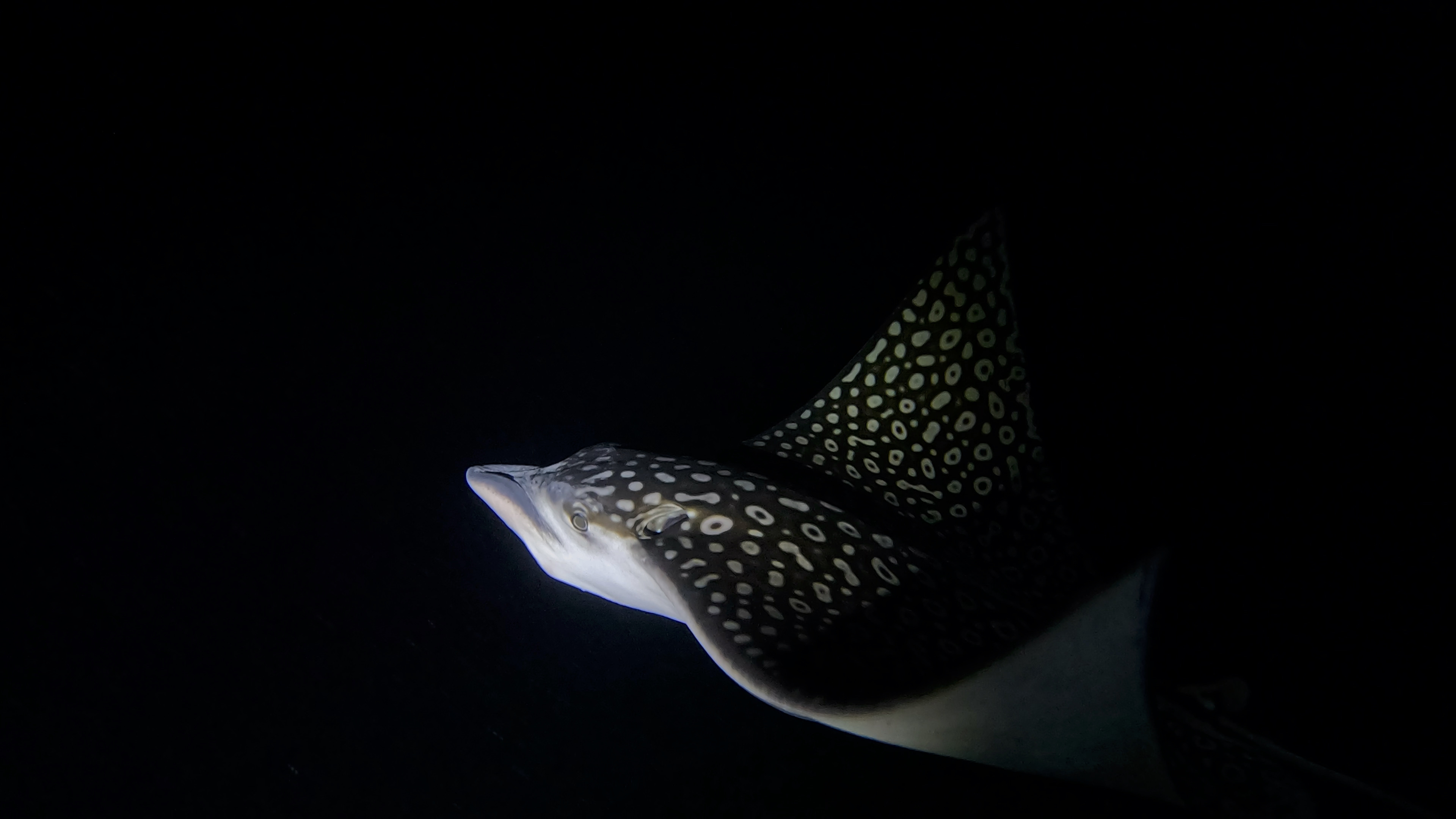
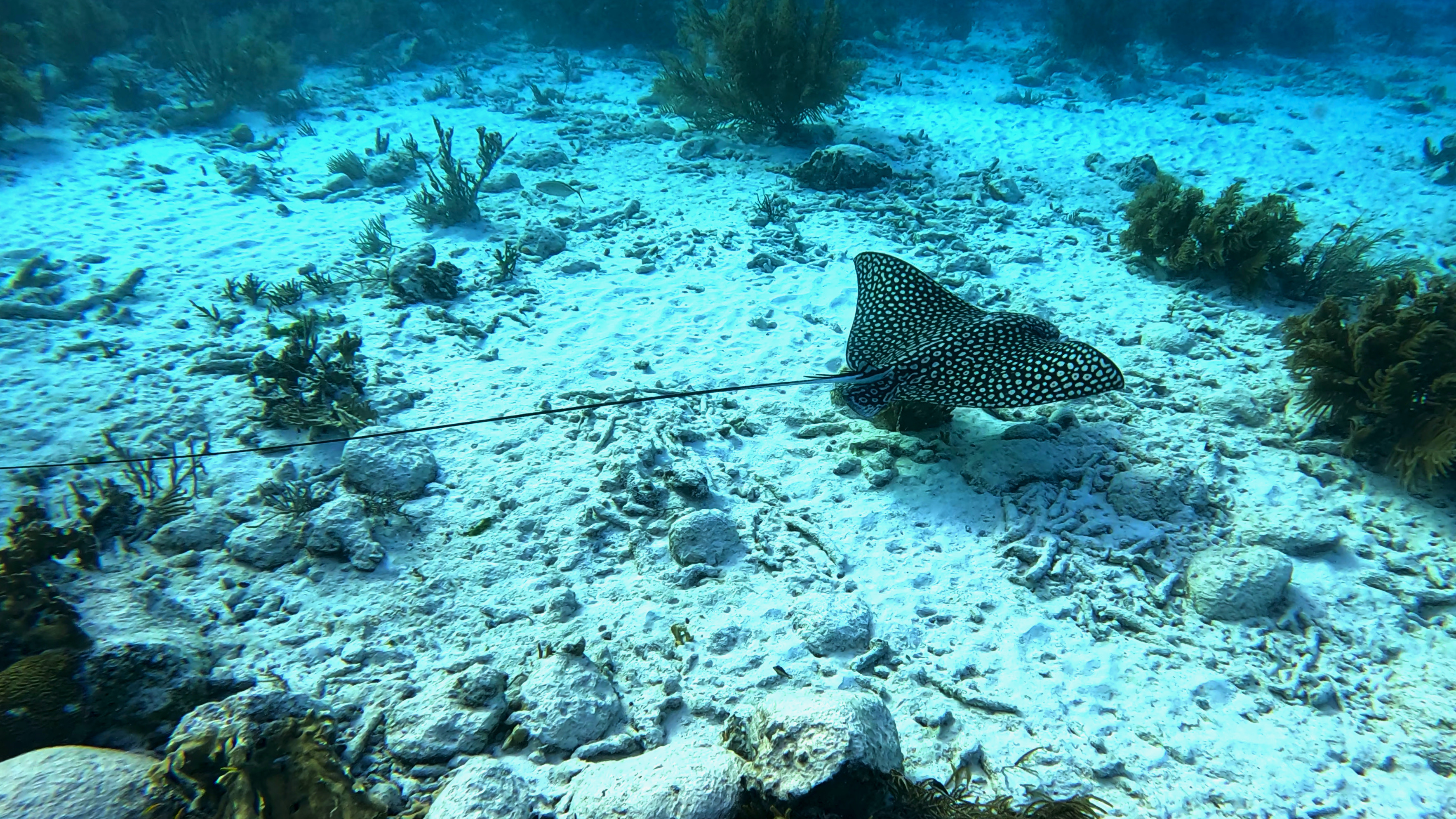
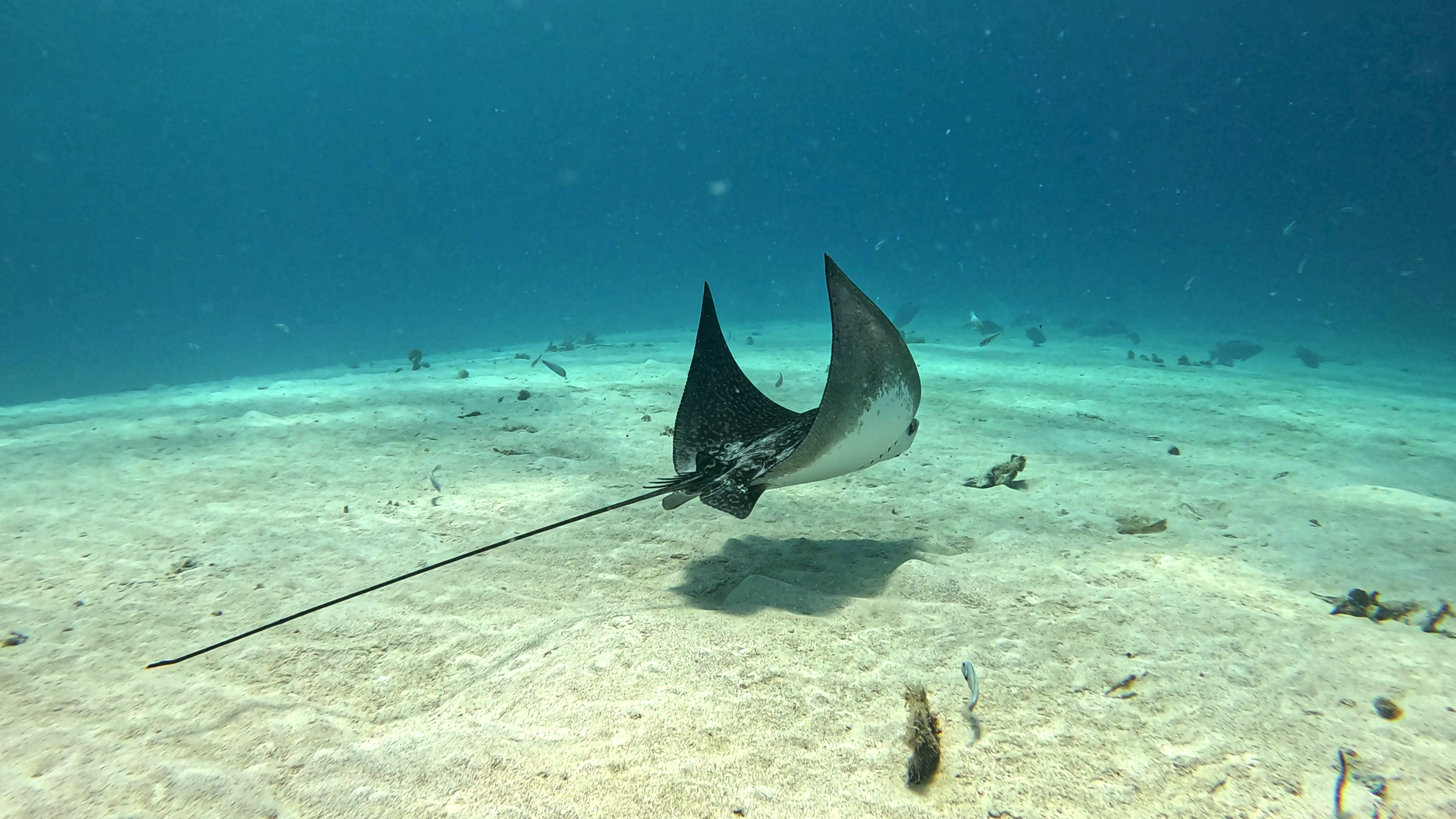
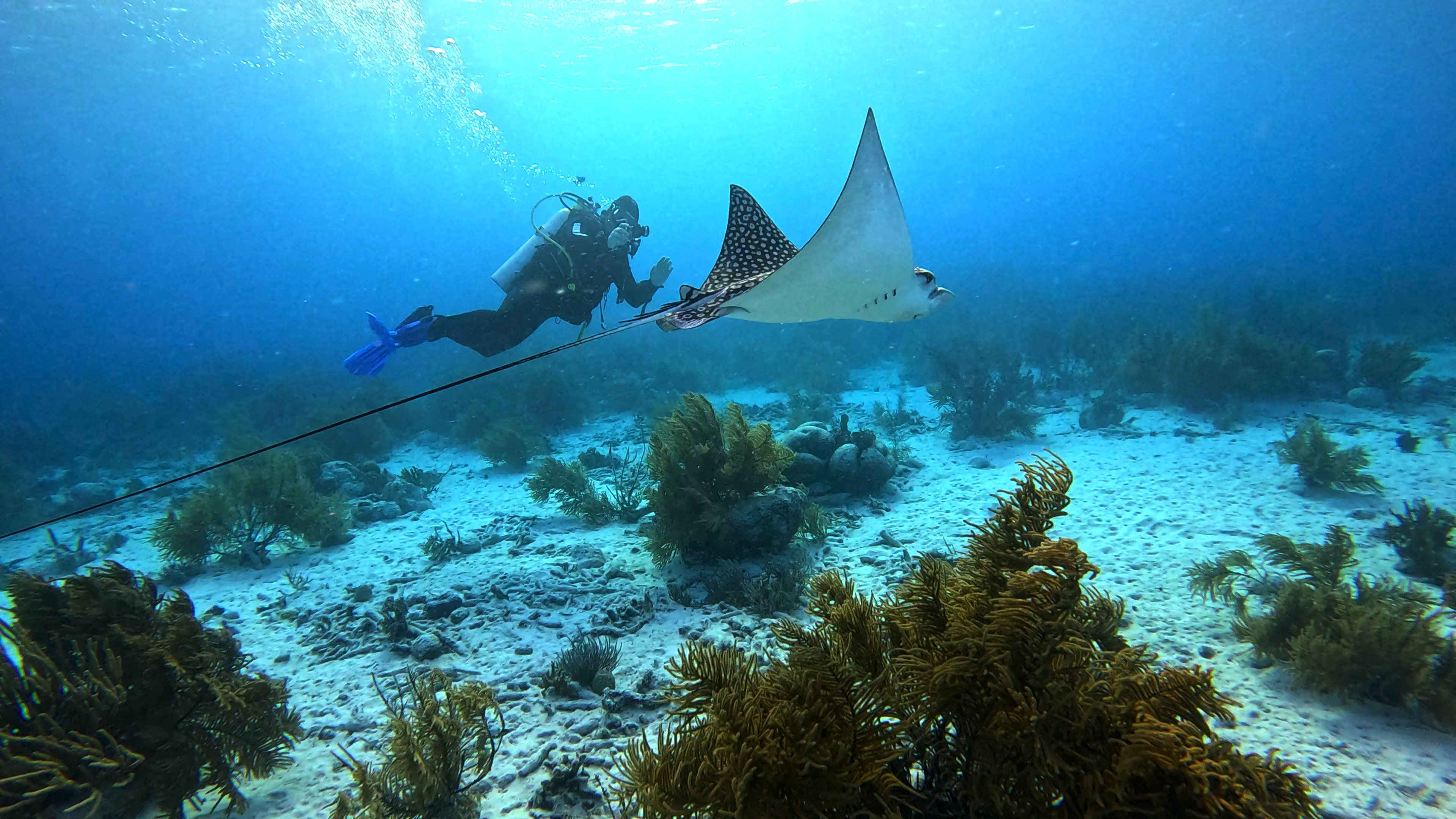
Spotted Eagle Ray – Aetobatus narinari – Pikasta orlova raža
Pikasta orlova raža, znana tudi kot Spotted Eagle Ray, je velika tropska raža z značilnim ploskim telesom, dolgim repom in belimi pikami po temnem hrbtnem delu. Živi v tropskih in subtropskih morjih po vsem svetu, predvsem v bližini koralnih grebenov, lagun in obalnih vodah. Prehranjuje se z mekušci, rakci in drugimi drobnimi nevretenčarji, ki jih izkopava iz peska. Vrsta je razen vrste Aetobatus narinari v nekaterih regijah ranljiva, zaradi prekomernega ribolova in uničenja habitatov.
The Spotted Eagle Ray is a large tropical ray with a flattened body, long tail, and distinctive white spots on its dark dorsal surface. It is found in tropical and subtropical seas worldwide, mainly near coral reefs, lagoons, and coastal waters. Its diet consists of mollusks, crustaceans, and other small invertebrates, which it uncovers from the sand. The species is vulnerable in some regions due to overfishing and habitat destruction.
Foto: Aleš Sulič, Bonaire Salt Pier
SPANISH SLIPPER LOBSTER
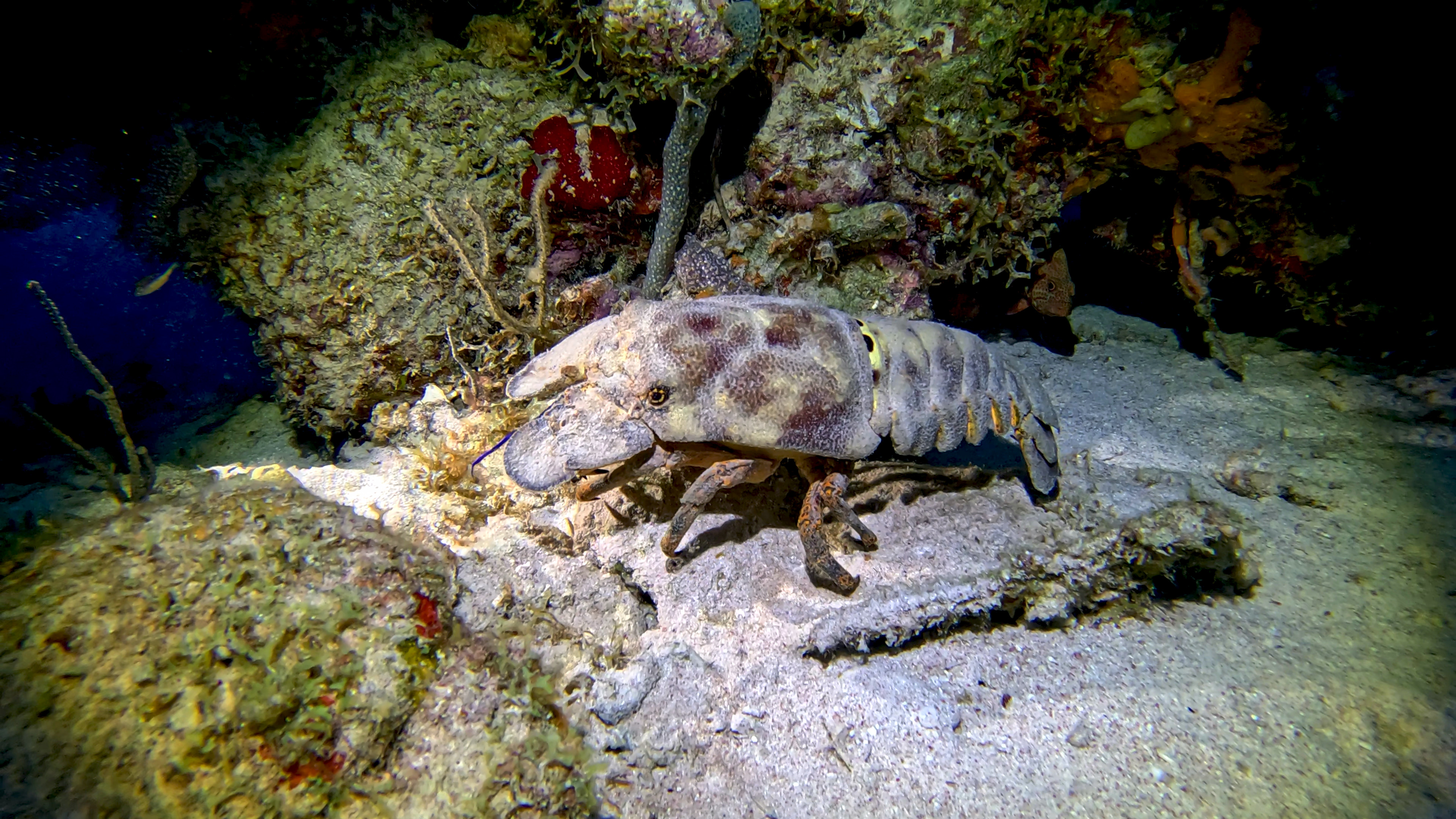
Spanish Slipper Lobster – Scyllarides latus – Mediteranski medvedek – Španski Rarog
Mediteranski medvedek – Španski Rarog, znan tudi kot Spanish Slipper Lobster, je tropski rakec s ploskim, širokim telesom in kratkimi tipalkami, kar ji daje značilen “copatast” videz. Živi v tropskih in subtropskih morjih Atlantskega oceana in Sredozemskega morja, predvsem na skalnatih in peščenih podlagah, pogosto v jamah in skritih kotičkih. Prehranjuje se z mali ribami, mehkužci in rakci. Vrsta je lokalno ranljiva zaradi ribolova in uničenja habitatov.
The Spanish Slipper Lobster is a tropical lobster with a flat, wide body and short antennae, giving it a distinctive “slipper-like” appearance. It inhabits tropical and subtropical seas of the Atlantic Ocean and the Mediterranean Sea, mainly on rocky or sandy substrates, often hiding in crevices and under ledges. Its diet consists of small fish, mollusks, and crustaceans. The species is locally vulnerable due to fishing pressure and habitat degradation.
Foto: Aleš Sulič, Bonaire Bachelor’s Beach
SMOOTH TRUNKFISH
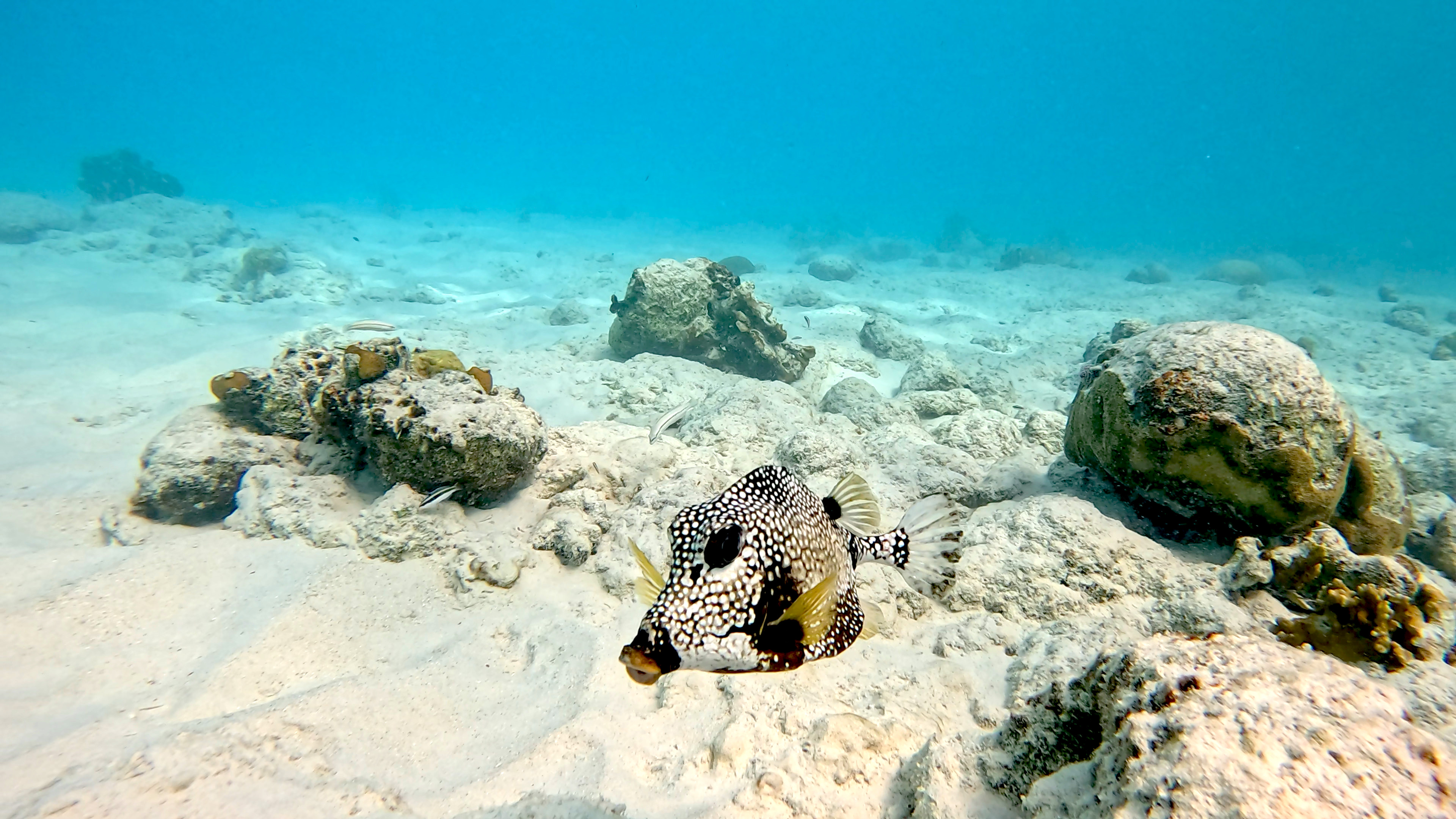
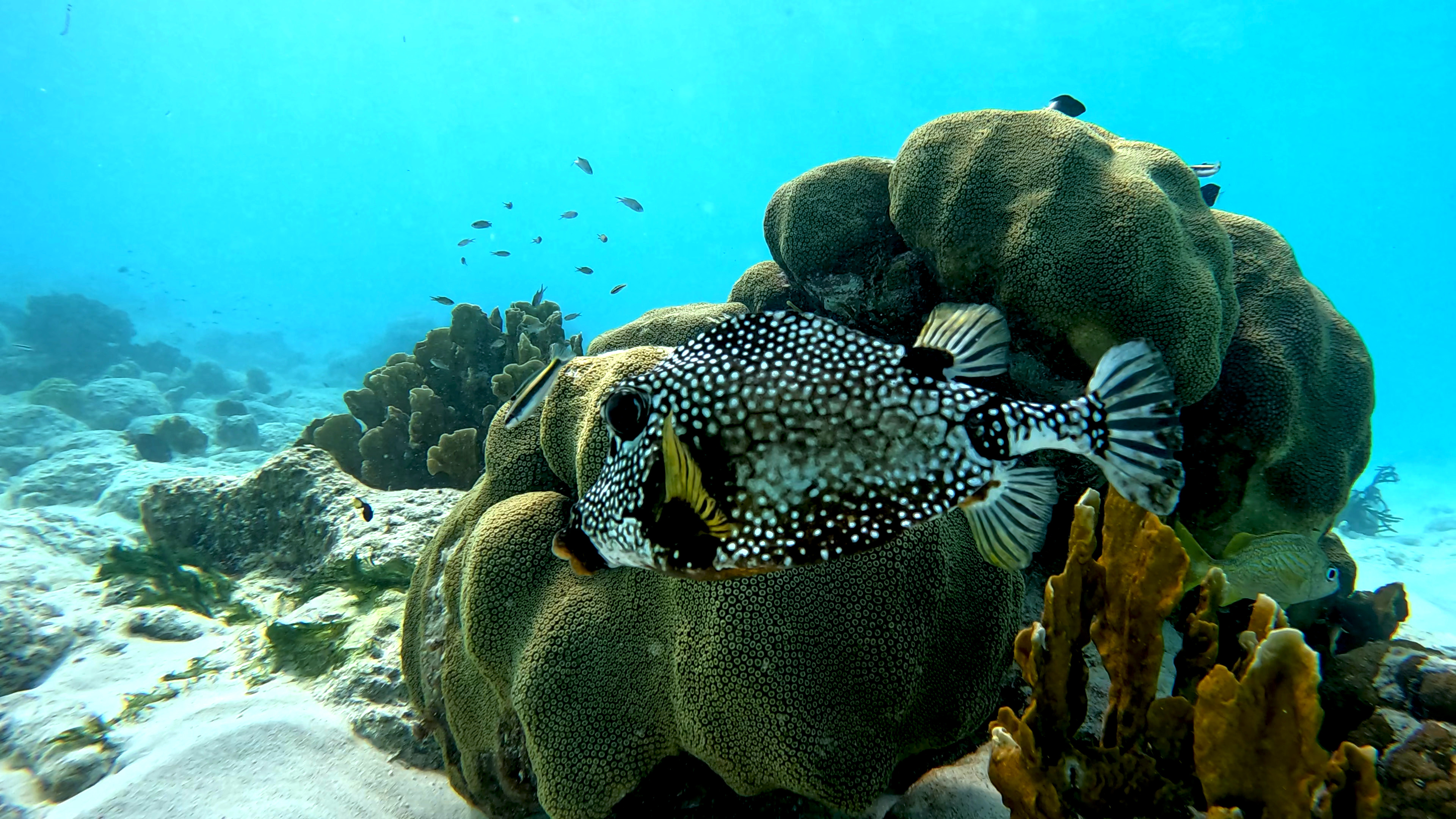
Smooth Trunkfish – Lactophrys triqueter – Skrinjarica ali kockasta riba
Skrinjarica ali kockasta riba, znana tudi kot Smooth Trunkfish, je tropska riba z značilnim trikotnim, oklepnim telesom in močno čeljustjo. Živi v tropskih koralnih grebenih Atlantskega oceana in Karibskega morja, pogosto blizu koralnih struktur in peščenih tal. Prehranjuje se z majhnimi nevretenčarji, rakci in mehkužci, ki jih izkopava iz peska.
The Smooth Trunkfish is a tropical fish with a distinctive triangular, armored body and a smooth surface without spines. It inhabits tropical coral reefs of the Atlantic Ocean and the Caribbean Sea, often near coral structures and sandy substrates. Its diet consists of small invertebrates, crustaceans, and mollusks, which it uncovers from the sand.
Foto: Aleš Sulič, Bonaire Angel City
SPOTTED DRUM FISH
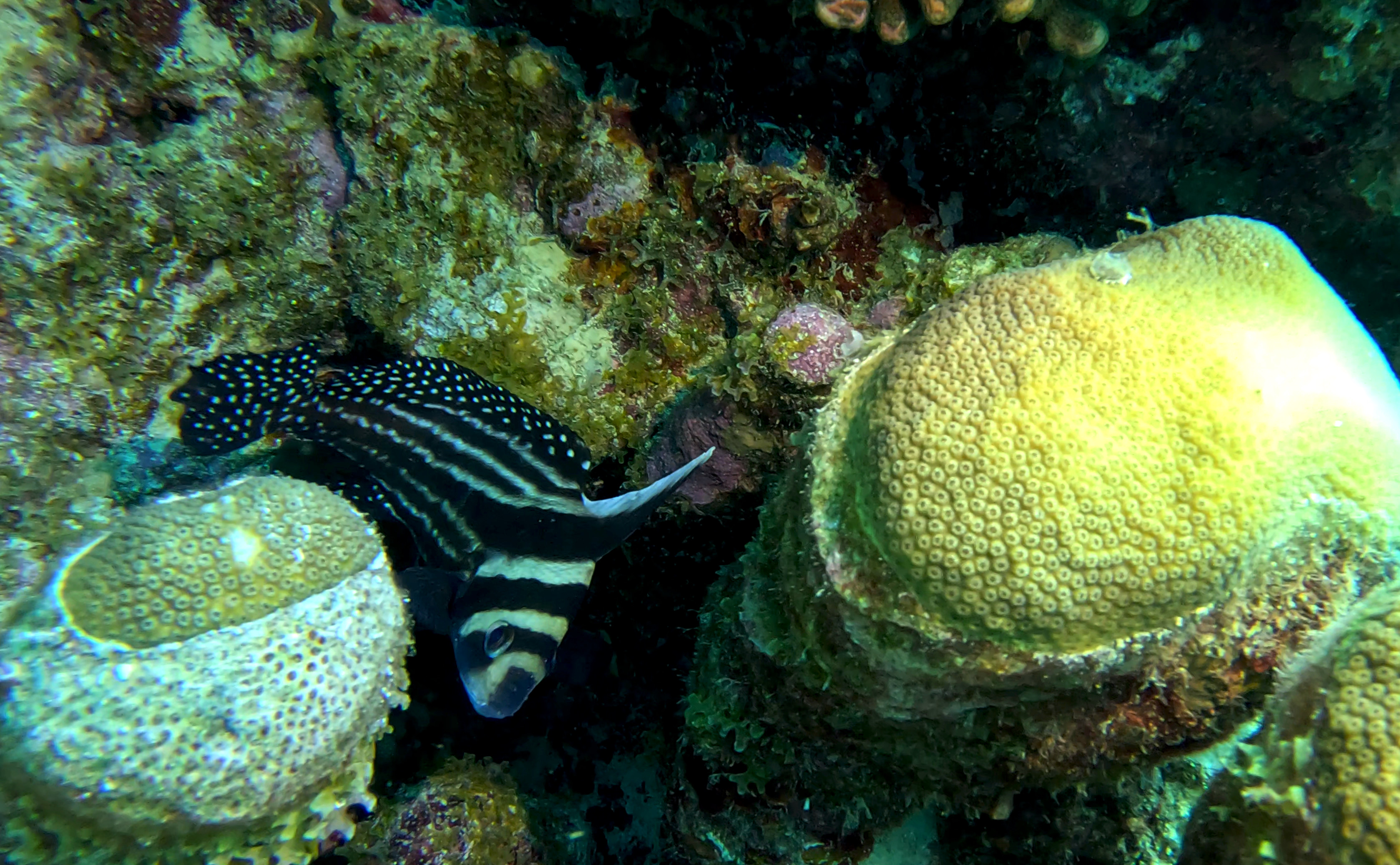
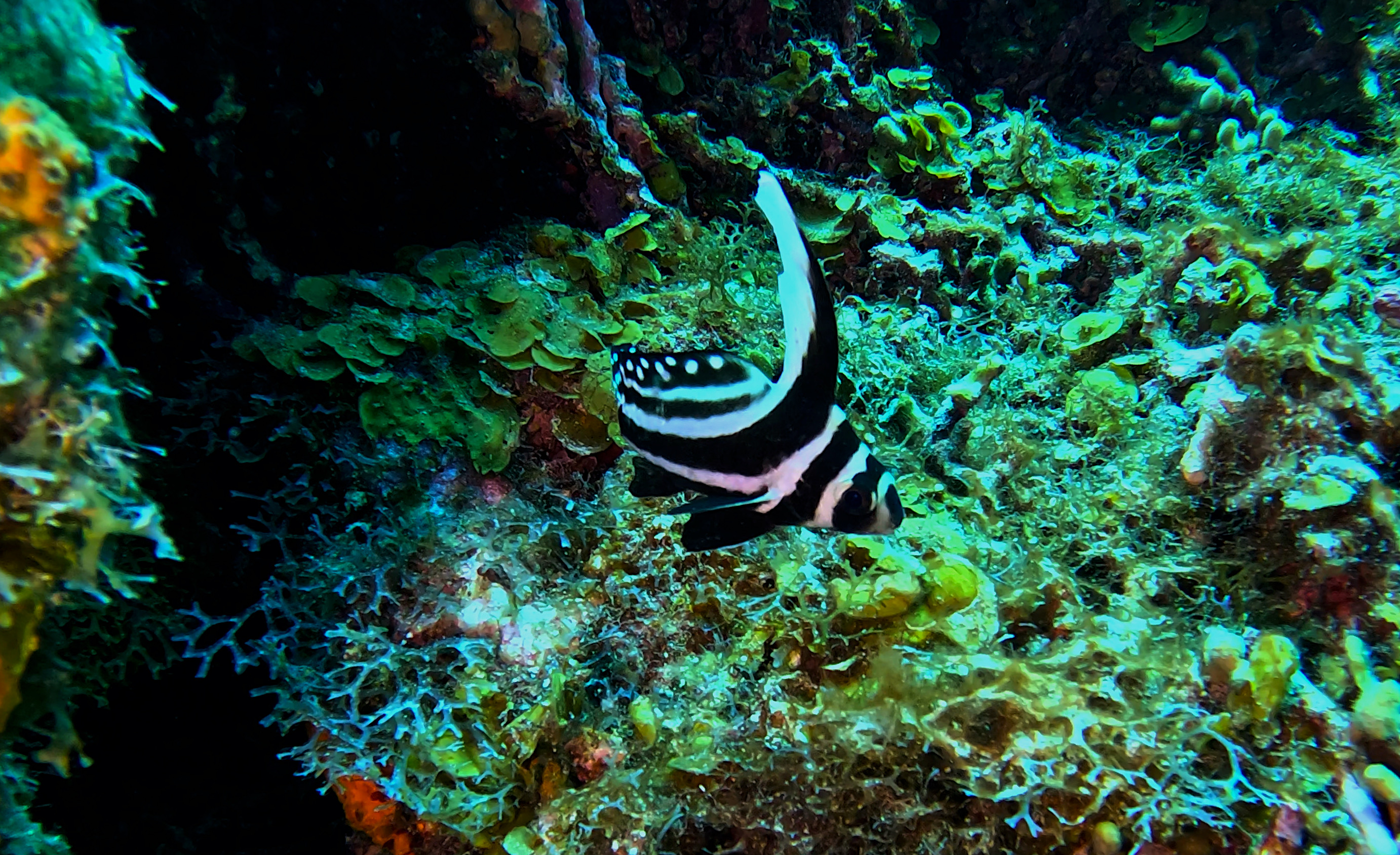
Spotted Drum Fish – Equetus punctatus – Pikasta bobnarica
Pikasta bobnarica, znana tudi kot Spotted Drum Fish, je tropska riba s črno-belim telesom in značilnimi pikami, pogosto s podaljšanimi hrbtnimi nitastimi plavutmi. Živi v tropskih koralnih grebenih Atlantskega oceana in Karibskega morja, običajno v bližini koralnih grebenov ali skalnatih struktur, kjer se skriva čez dan in aktivno plava ponoči. Prehranjuje se z majhnimi nevretenčarji in planktonom.
The Spotted Drum Fish is a tropical fish with a black-and-white body and distinctive spots, often featuring elongated thread-like dorsal fins. It inhabits tropical coral reefs of the Atlantic Ocean and Caribbean Sea, usually near coral heads or rocky structures, hiding during the day and actively swimming at night. Its diet consists of small invertebrates and plankton.
SMALLMOUTH GRUNT
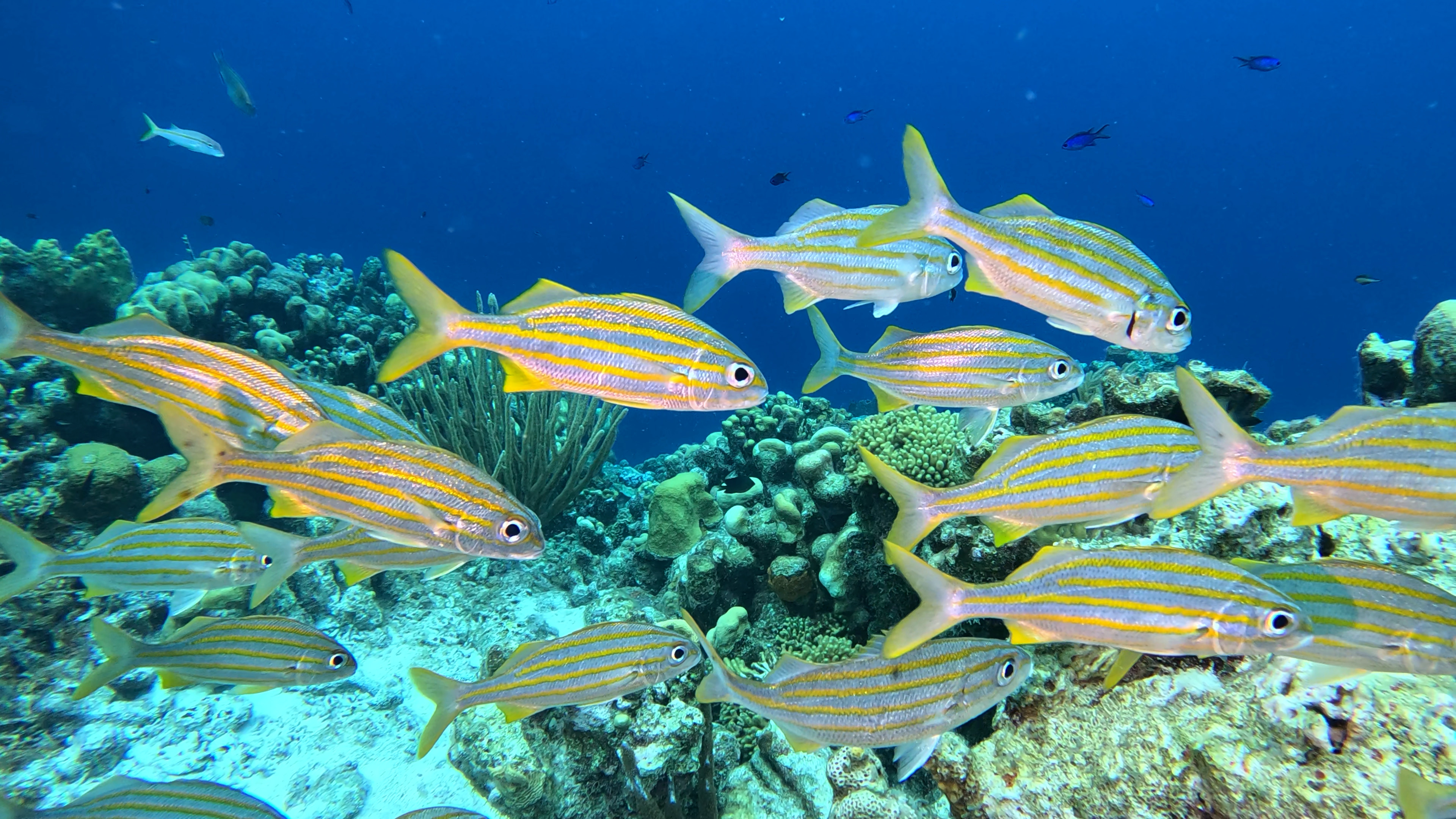
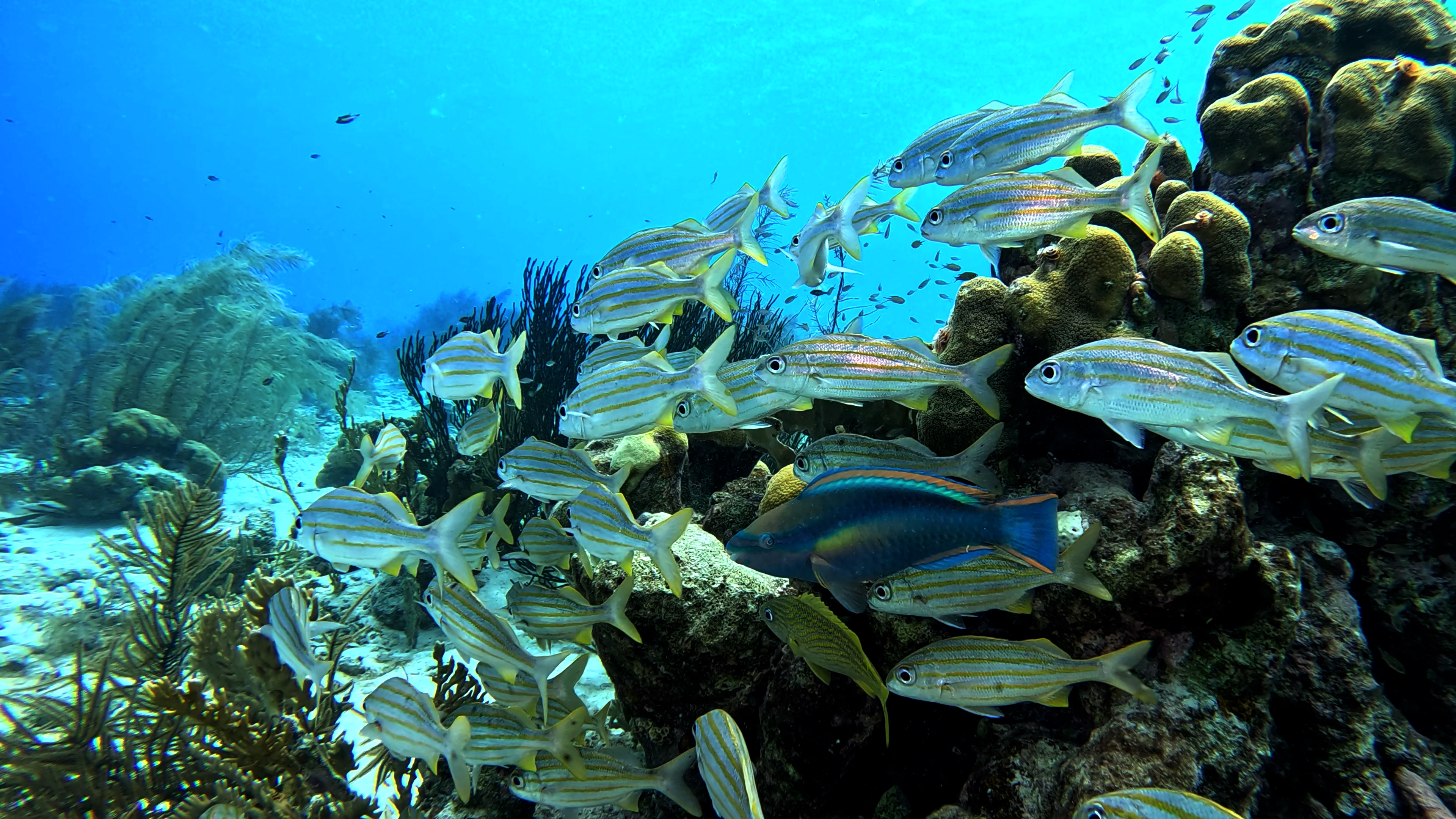
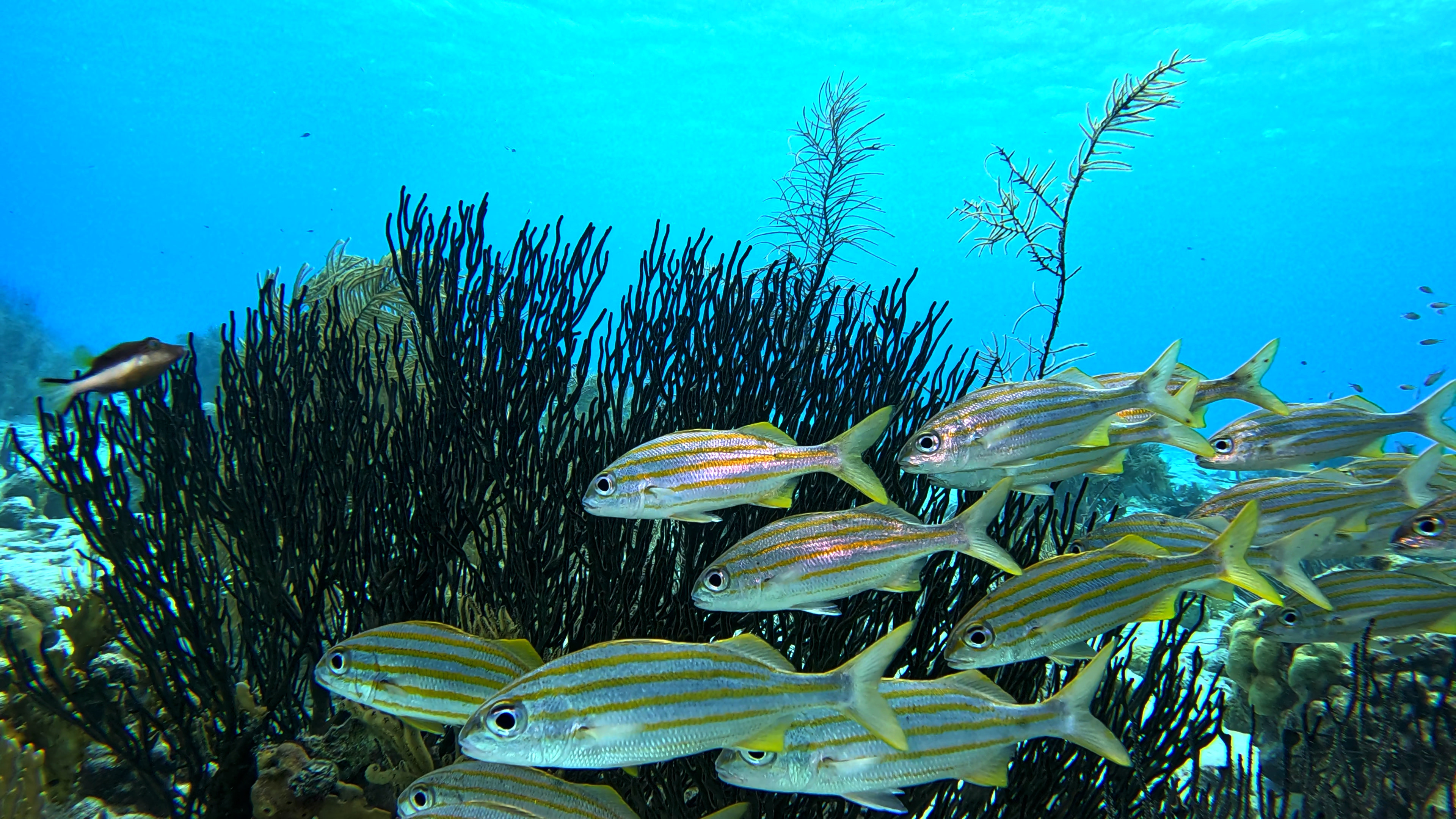
Smallmouth Grunt – Haemulon chrysargyreum – Maloustni grunt
Maloustni grunt, znana tudi kot Smallmouth Grunt, je tropska riba s srebrnim telesom in izrazitimi rumenimi črtami vzdolž bokov. Živi v tropskih koralnih grebenih Atlantskega oceana in Karibskega morja, pogosto v jatah nad grebeni in ob skalnatih strukturah. Prehranjuje se z zooplanktonom in drobnimi nevretenčarji.
The Smallmouth Grunt is a tropical fish with a silver body and distinctive yellow stripes along its sides. It inhabits tropical coral reefs of the Atlantic Ocean and Caribbean Sea, often forming schools above reefs and near rocky structures. Its diet consists of zooplankton and small invertebrates.
Foto: Aleš Sulič, Bonaire Margate Bay
SPOTTED TRUNKFISH
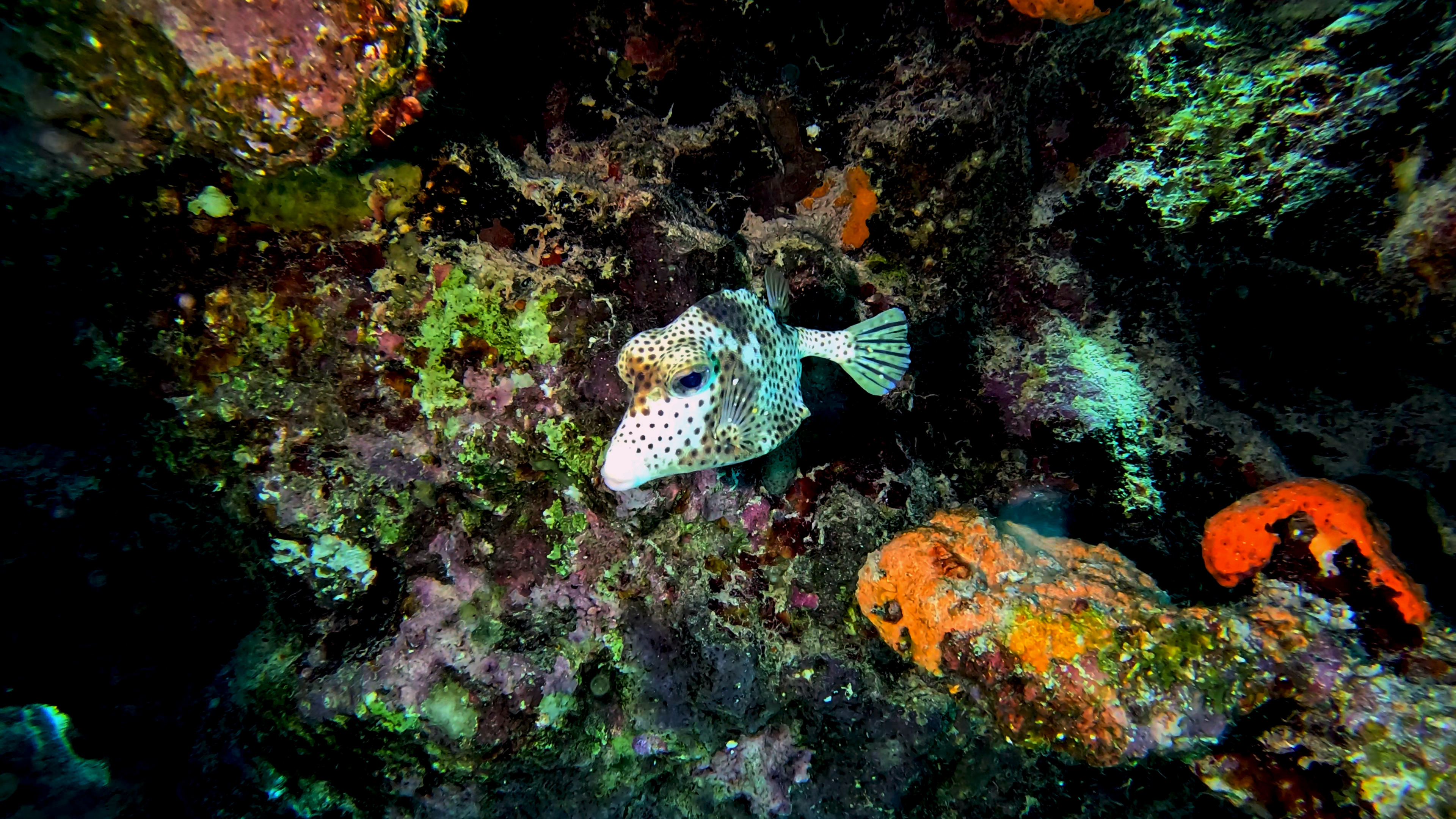
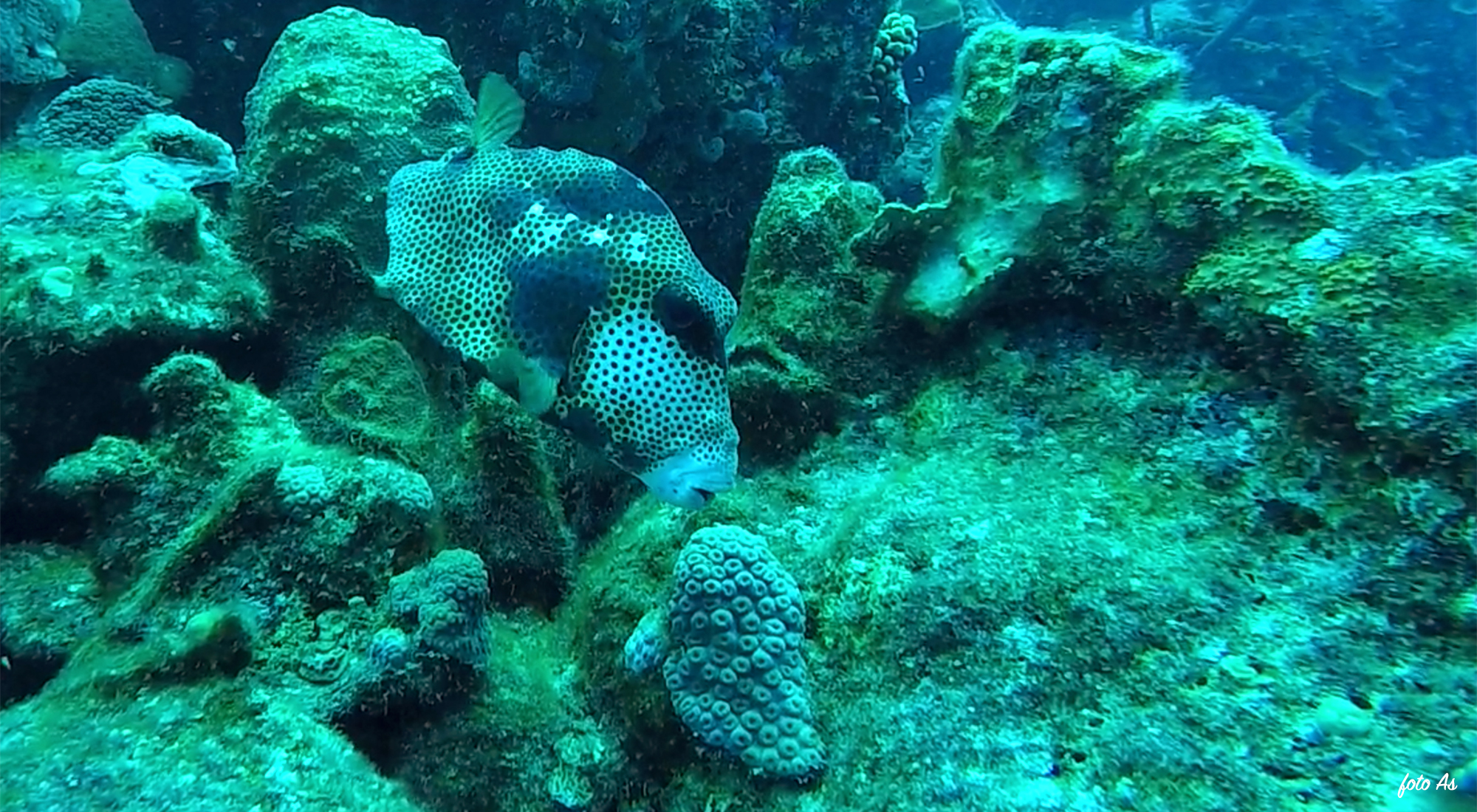
Spotted Trunkfish – Lactophrys bicaudalis – Pikčasta skrinjarica
Pikčasta skrinjarica, znana tudi kot Spotted Trunkfish, je tropska riba z značilnim trikotnim, oklepnim telesom, pokritim s črnimi pikami na svetlem ozadju. Živi v tropskih koralnih grebenih Atlantskega oceana in Karibskega morja, pogosto blizu koral in skalnatih struktur, kjer se skriva pred plenilci. Prehranjuje se z majhnimi nevretenčarji, rakci in mehkužci, ki jih izkopava iz peska.
The Spotted Trunkfish is a tropical fish with a distinctive triangular, armored body covered in black spots on a light background. It inhabits tropical coral reefs of the Atlantic Ocean and Caribbean Sea, often near coral and rocky structures where it hides from predators. Its diet consists of small invertebrates, crustaceans, and mollusks, which it uncovers from the sand.
Foto: Aleš Sulič, Bonaire Tolo
SPOTFIN BUTTERFLYFISH
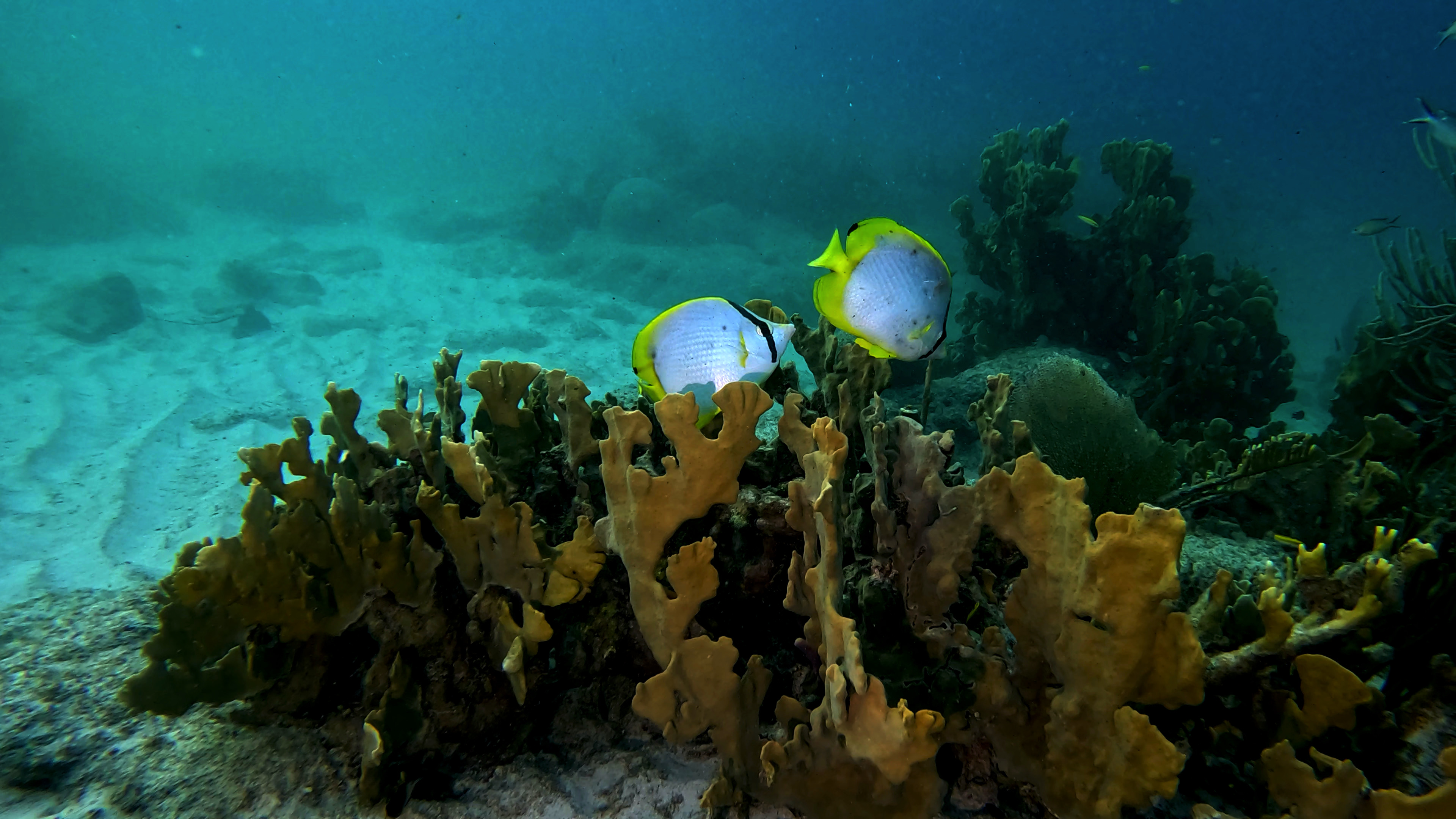
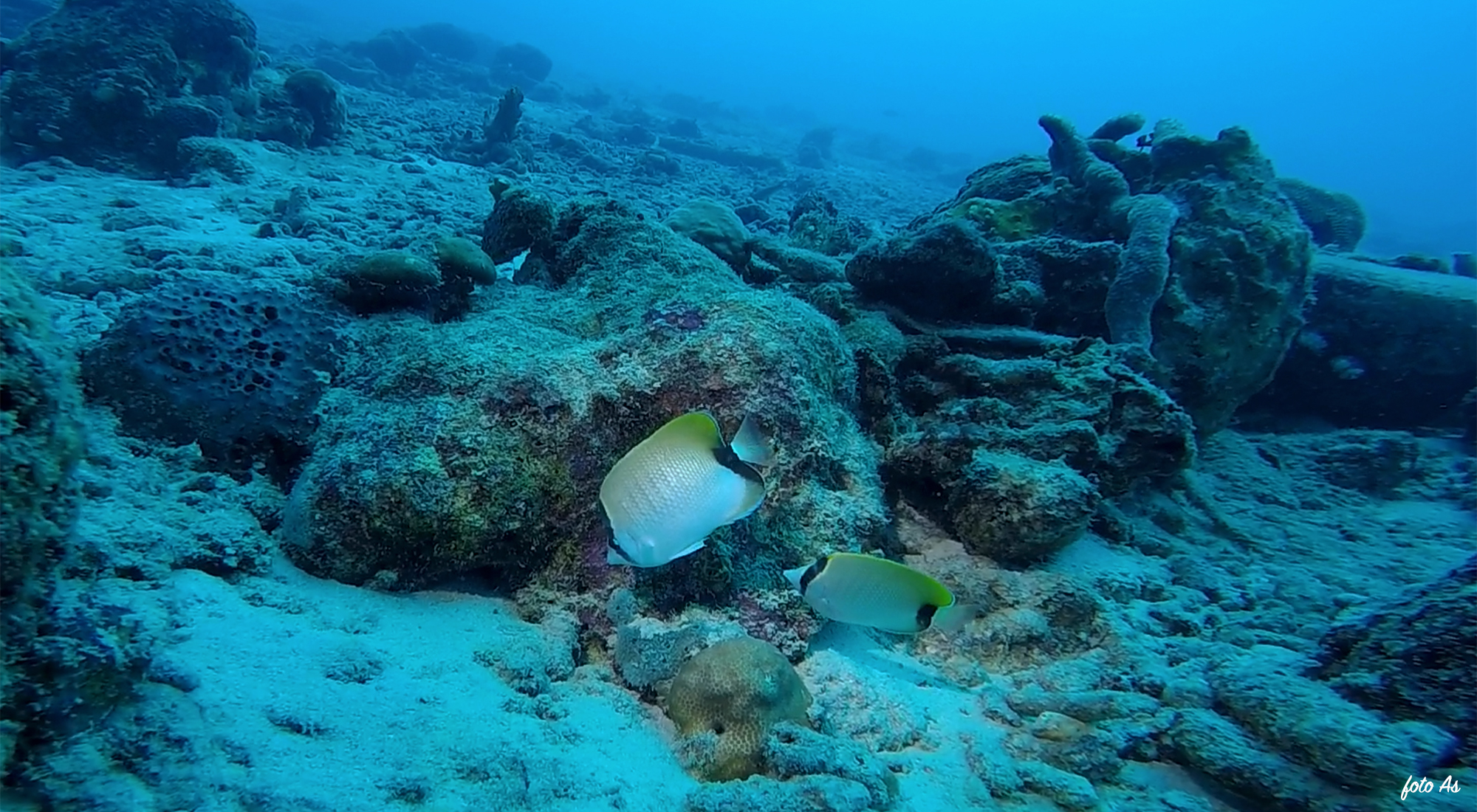
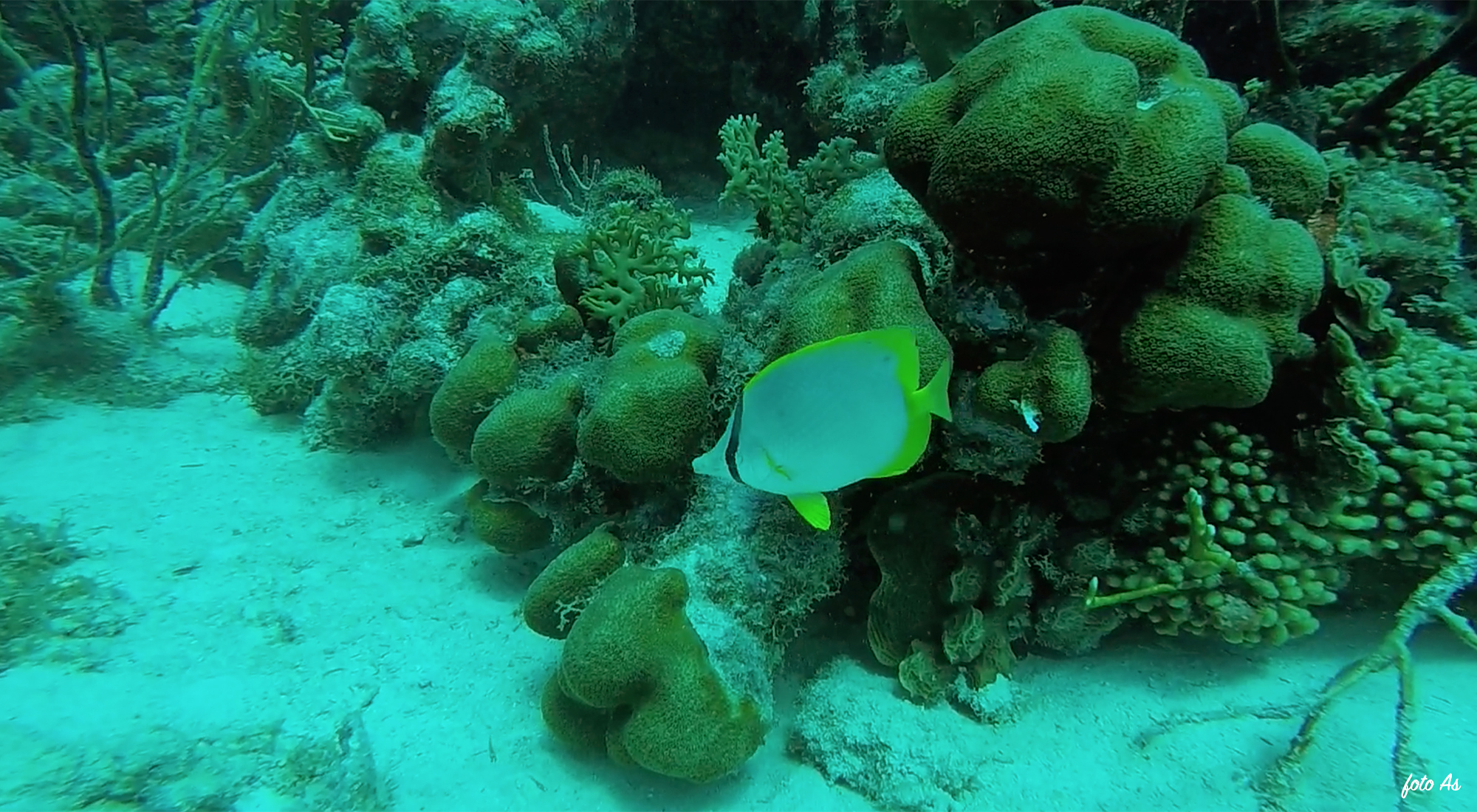
Spotfin Butterflyfish – Chaetodon ocellatus – Pikčasti metulj
Pikčasti metulj, znana tudi kot Spotfin Butterflyfish, je tropska riba s svetlim telesom, črnim očesnim pasom in značilno temno liso na hrbtni plavuti. Živi v tropskih koralnih grebenih Atlantskega oceana, predvsem v Karibskem morju, kjer pogosto plava v bližini koralnih struktur in skal. Prehranjuje se z majhnimi nevretenčarji in koralnimi polipi.
The Spotfin Butterflyfish is a tropical fish with a light-colored body, a black eye stripe, and a distinctive dark spot on its dorsal fin. It inhabits tropical coral reefs of the Atlantic Ocean, mainly in the Caribbean, often swimming near coral structures and rocky areas. Its diet consists of small invertebrates and coral polyps.
Foto: Aleš Sulič, Bonaire 1000 steps
SOUTHEREN STINGRAY
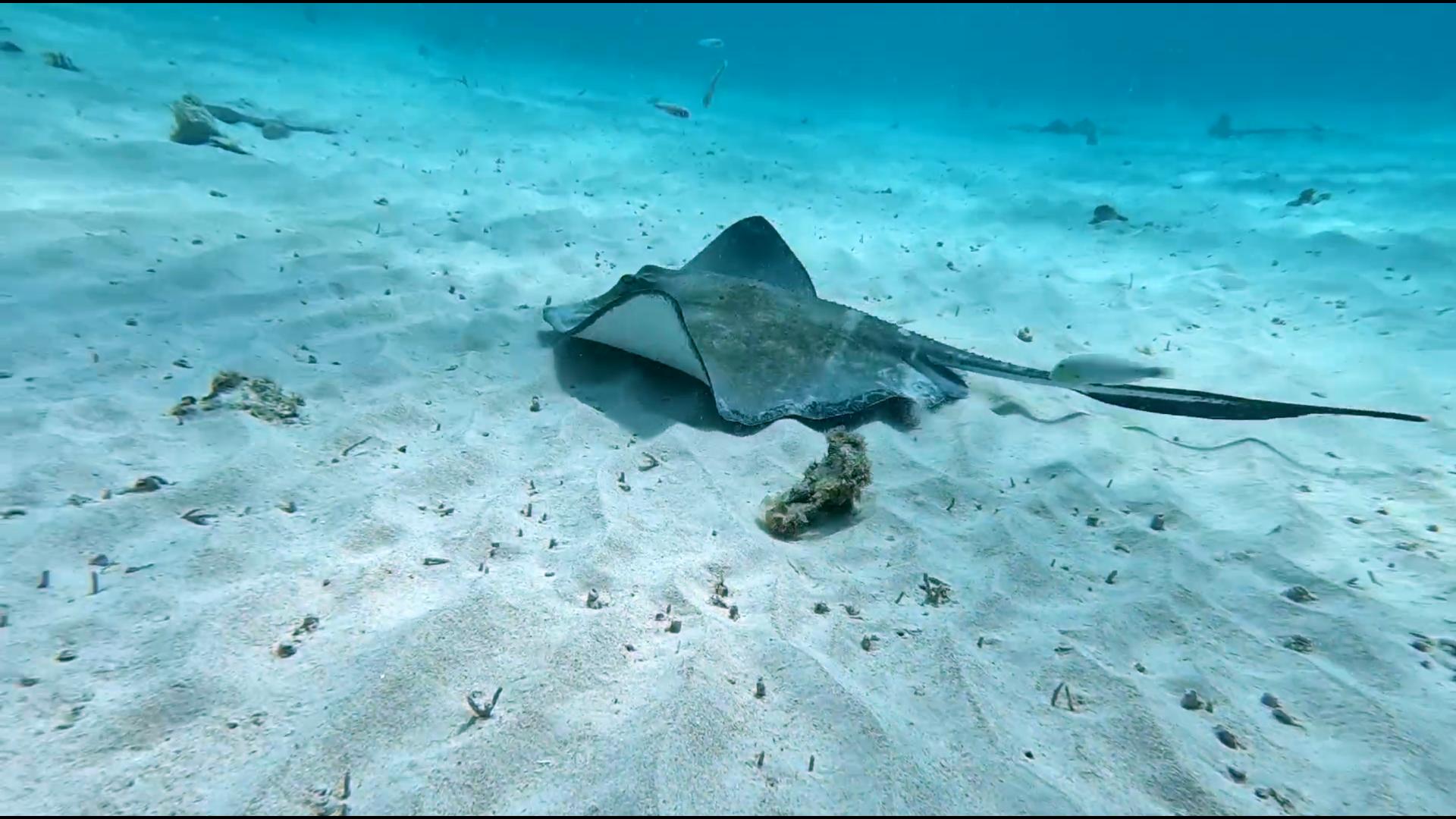
Southern Stingray – Dasyatis americana – Južna trnasta raža
Južna trnasta raža, znana tudi kot Southern Stingray, je velika ploska raža s širokim telesom in dolgim, tankim repom, pogosto s strupeno bodico na repu. Živi v tropskih in subtropskih morjih Atlantskega oceana in Karibskega morja, predvsem na peščenih ali muljastih podlagah v plitvih lagunah in ob obalah. Prehranjuje se z rakci, mehkužci in drugimi drobnimi nevretenčarji, ki jih izkopava iz peska.
The Southern Stingray is a large, flat-bodied ray with a wide pectoral disc and a long, thin tail, often featuring a venomous spine. It inhabits tropical and subtropical waters of the Atlantic Ocean and Caribbean Sea, mainly over sandy or muddy substrates in shallow lagoons and coastal areas. Its diet consists of crustaceans, mollusks, and other small invertebrates, which it uncovers from the sand.
Foto: Aleš Sulič, Bonaire Tolo
HALFMOON ANGELFISH
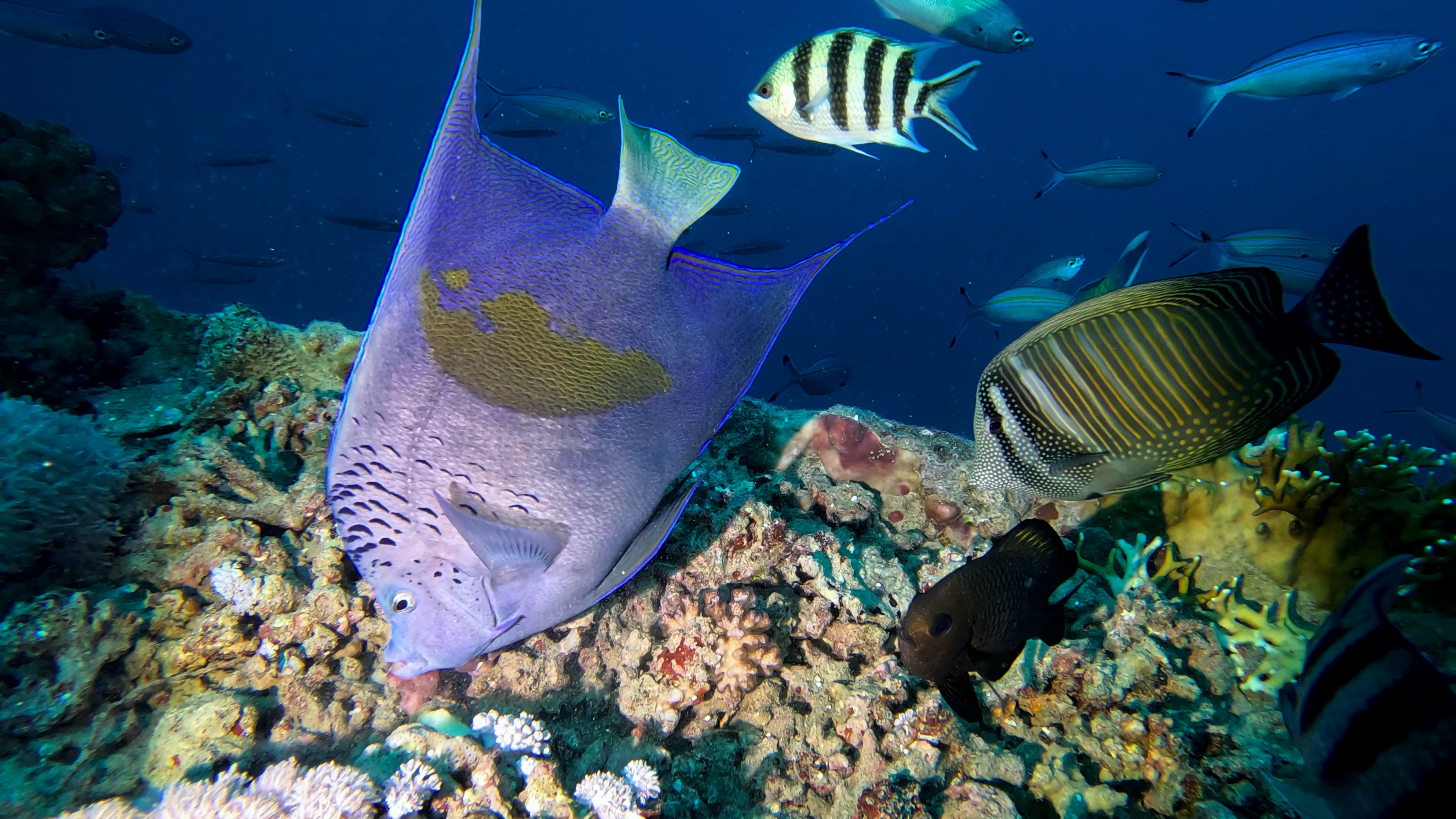
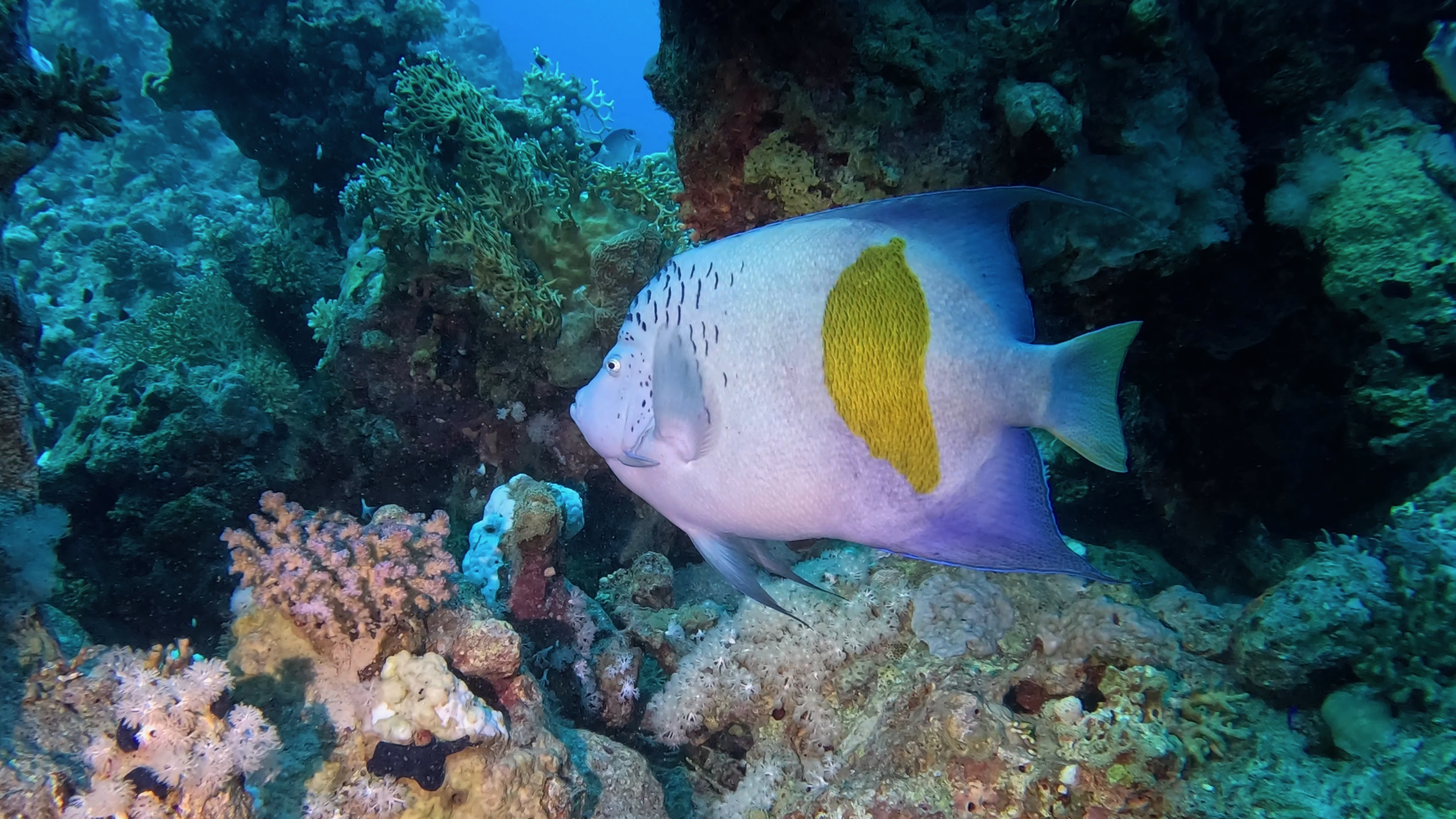
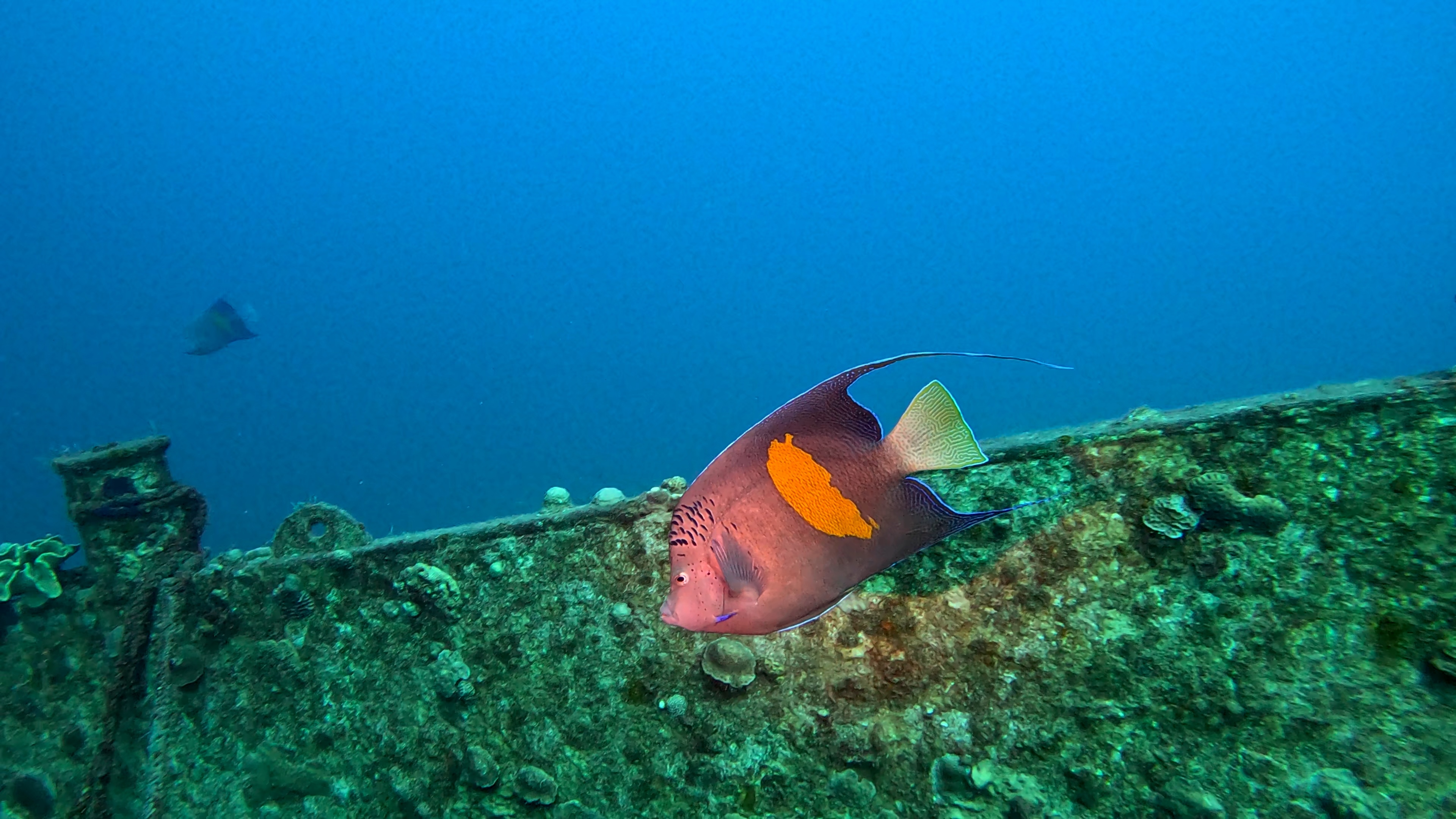
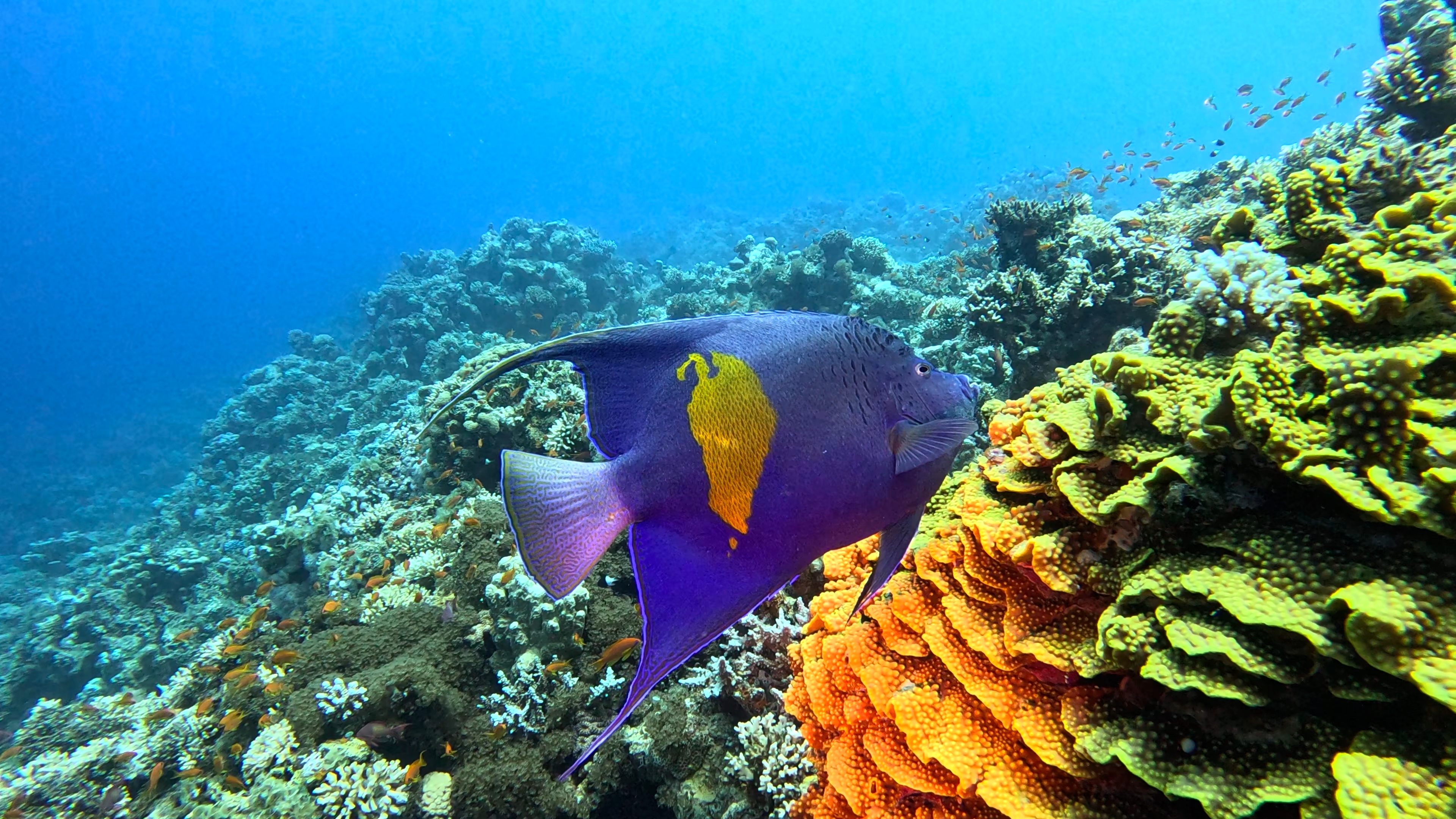
Halfmoon Angelfish – Pomacanthus semicirculatus – Polmesečna angelska riba
Polmesečna angelska riba, znana tudi kot Halfmoon Angelfish, je barvita tropska riba z značilnim polmesečastim vzorcem na telesu in izrazitimi modro-oranžnimi črtami. Živi v tropskih koralnih grebenih Indo-Pacifiškega območja, predvsem v lagunah in grebenskih pobočjih. Prehranjuje se z algami, mehkužci in drobnimi nevretenčarji.
The Halfmoon Angelfish is a colorful tropical fish with a distinctive half-moon pattern on its body and striking blue-orange stripes. It inhabits tropical coral reefs of the Indo-Pacific region, mainly in lagoons and along reef slopes. Its diet consists of algae, mollusks, and small invertebrates.
Foto: Aleš Sulič, Egypt Ras Muhammad
SERGEANT MAJOR FISH
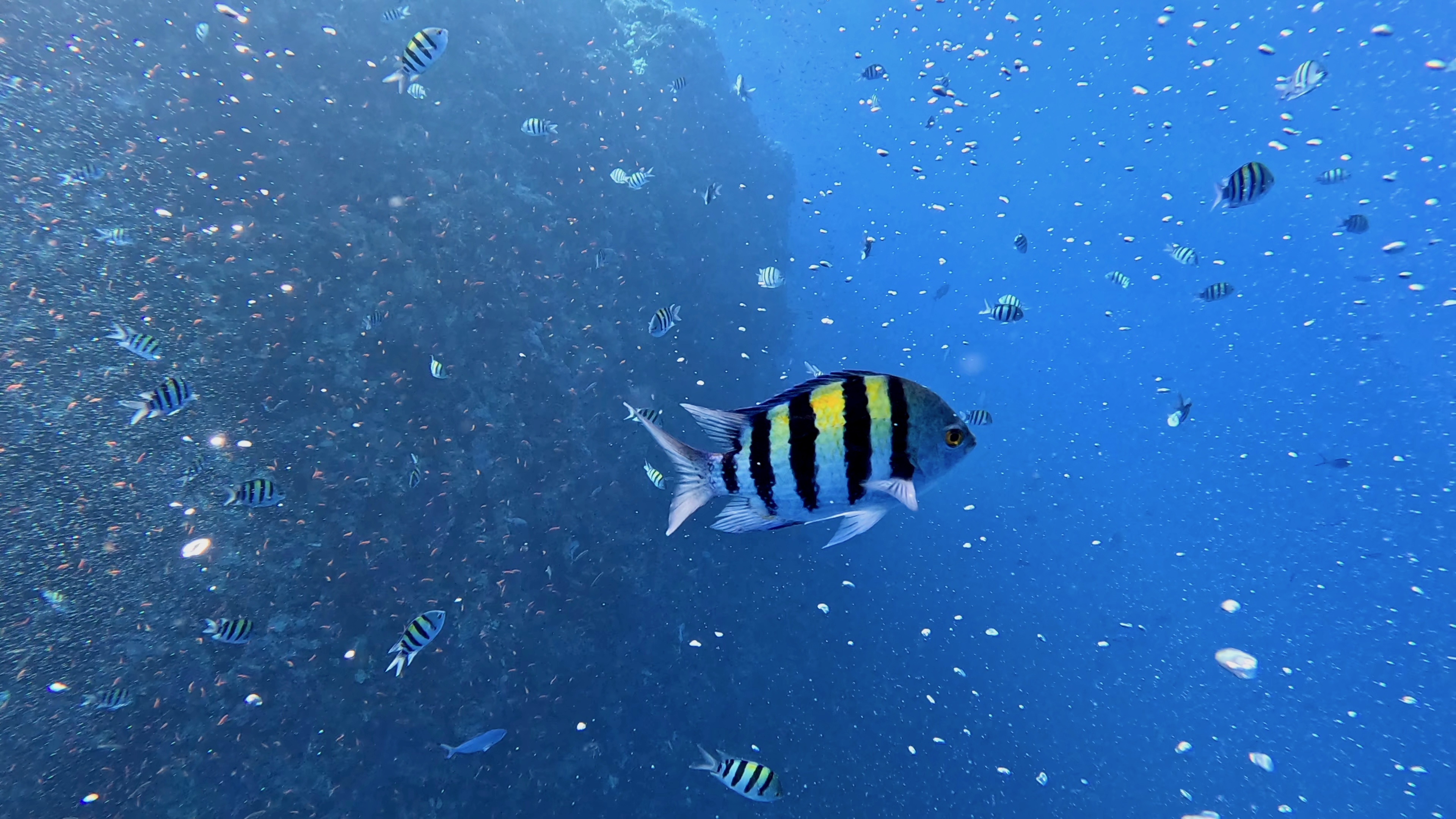
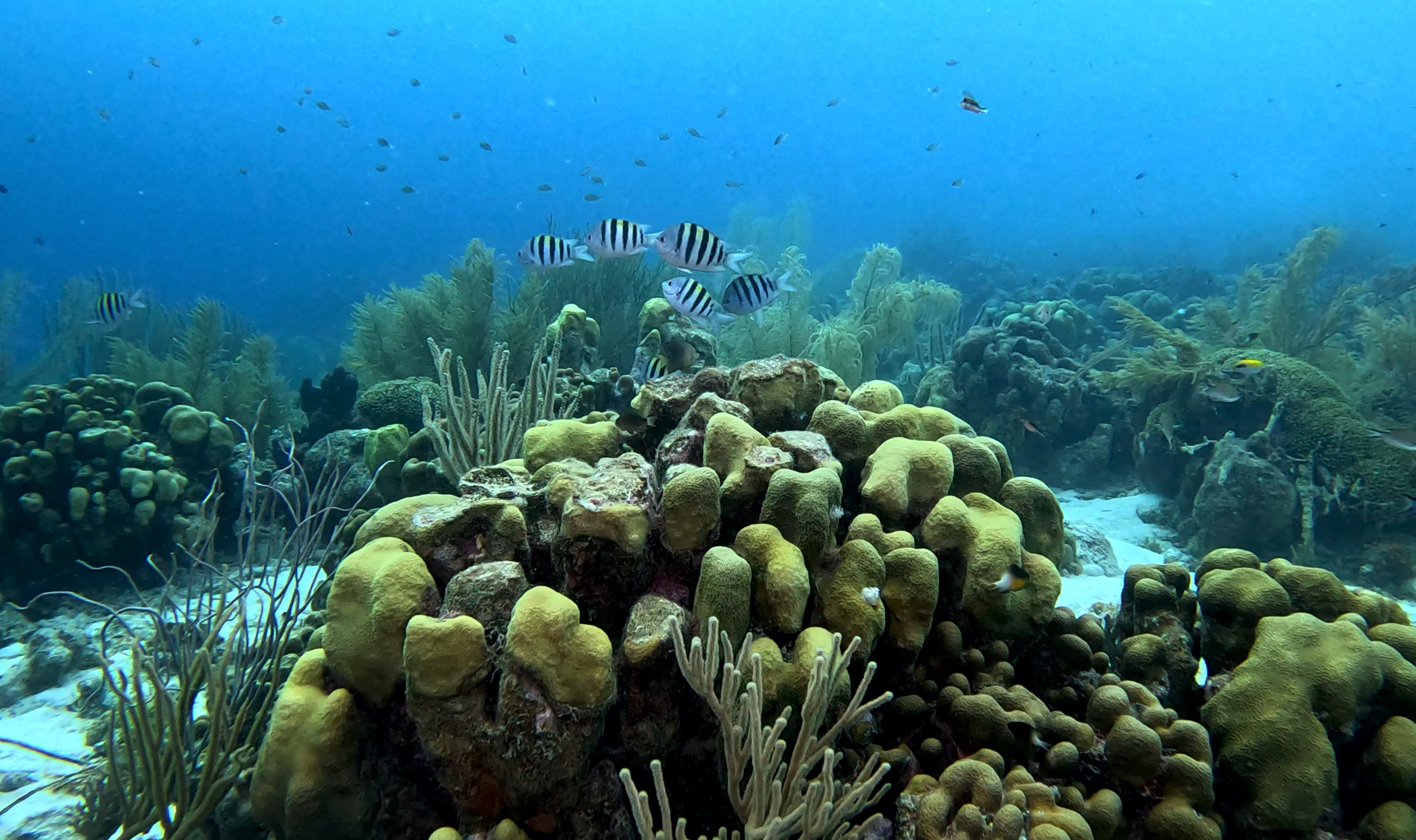
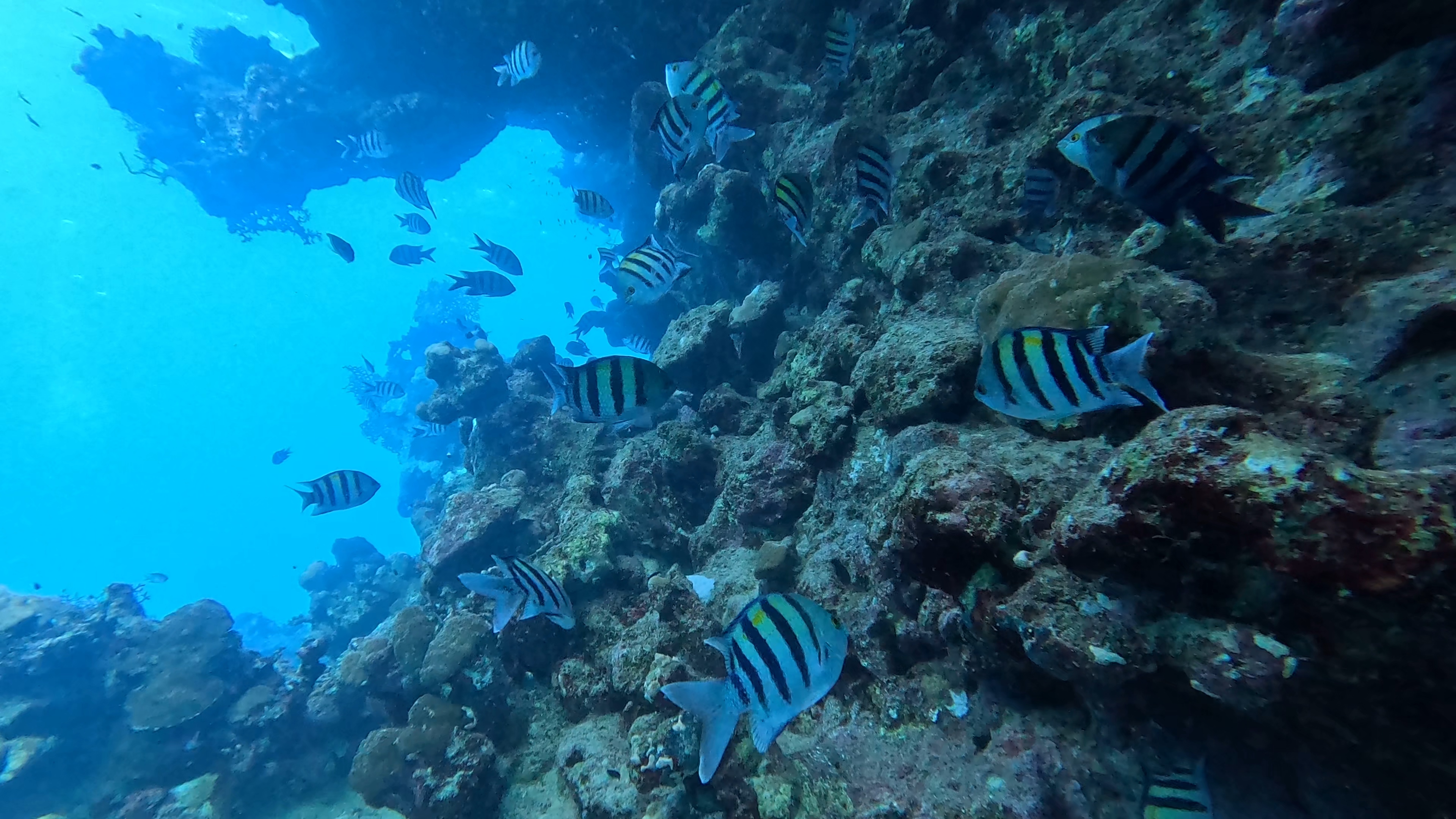
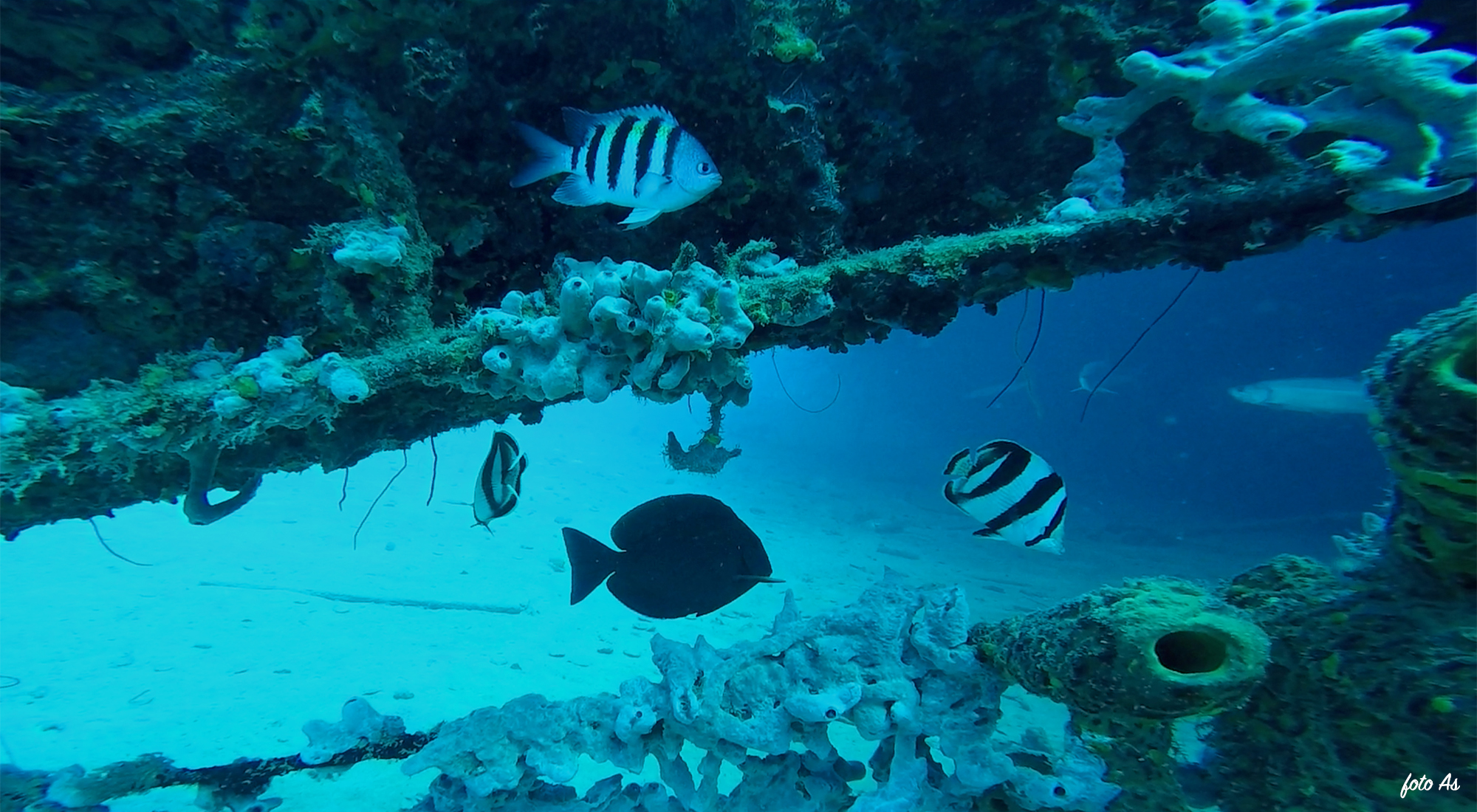
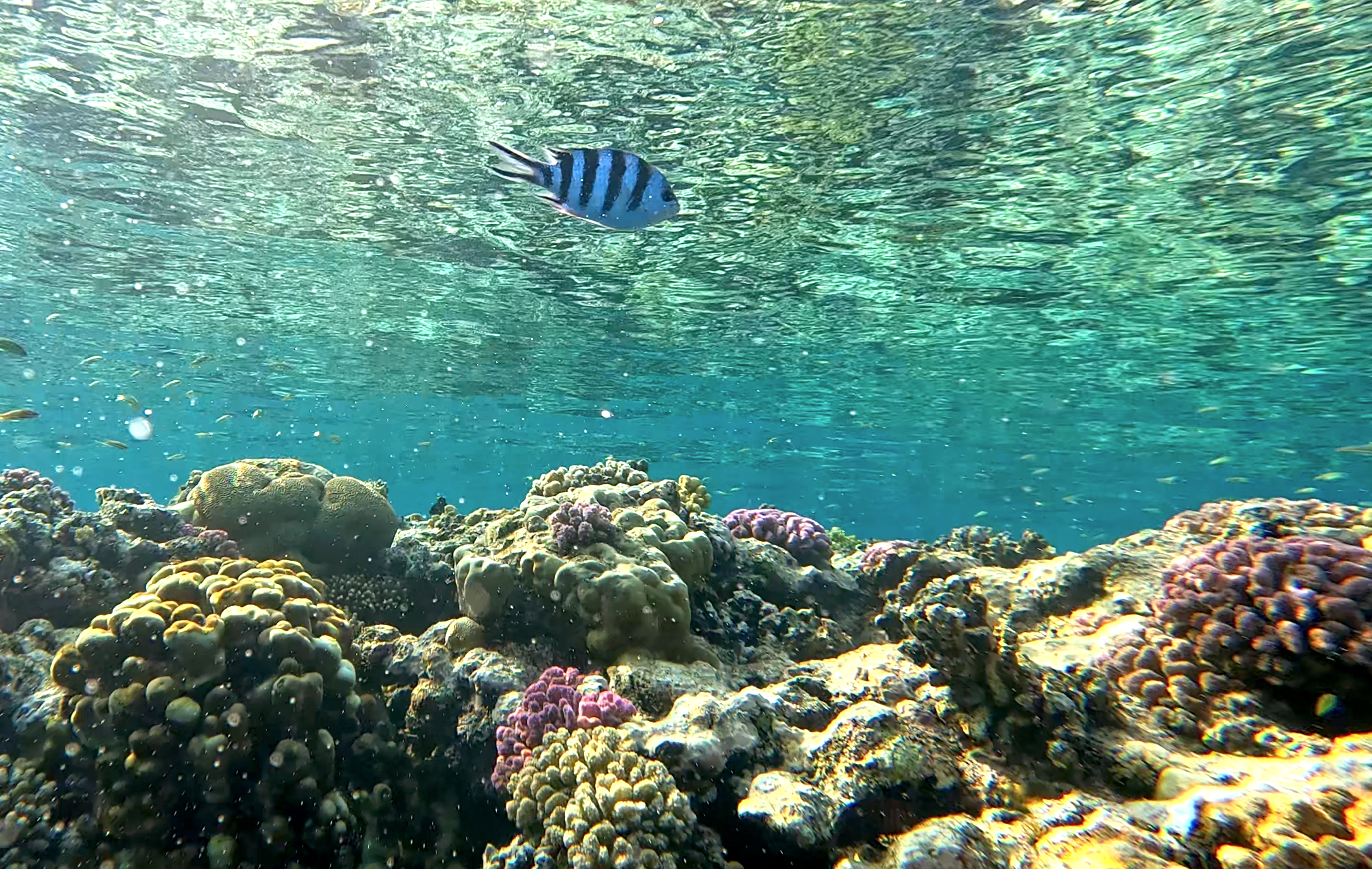
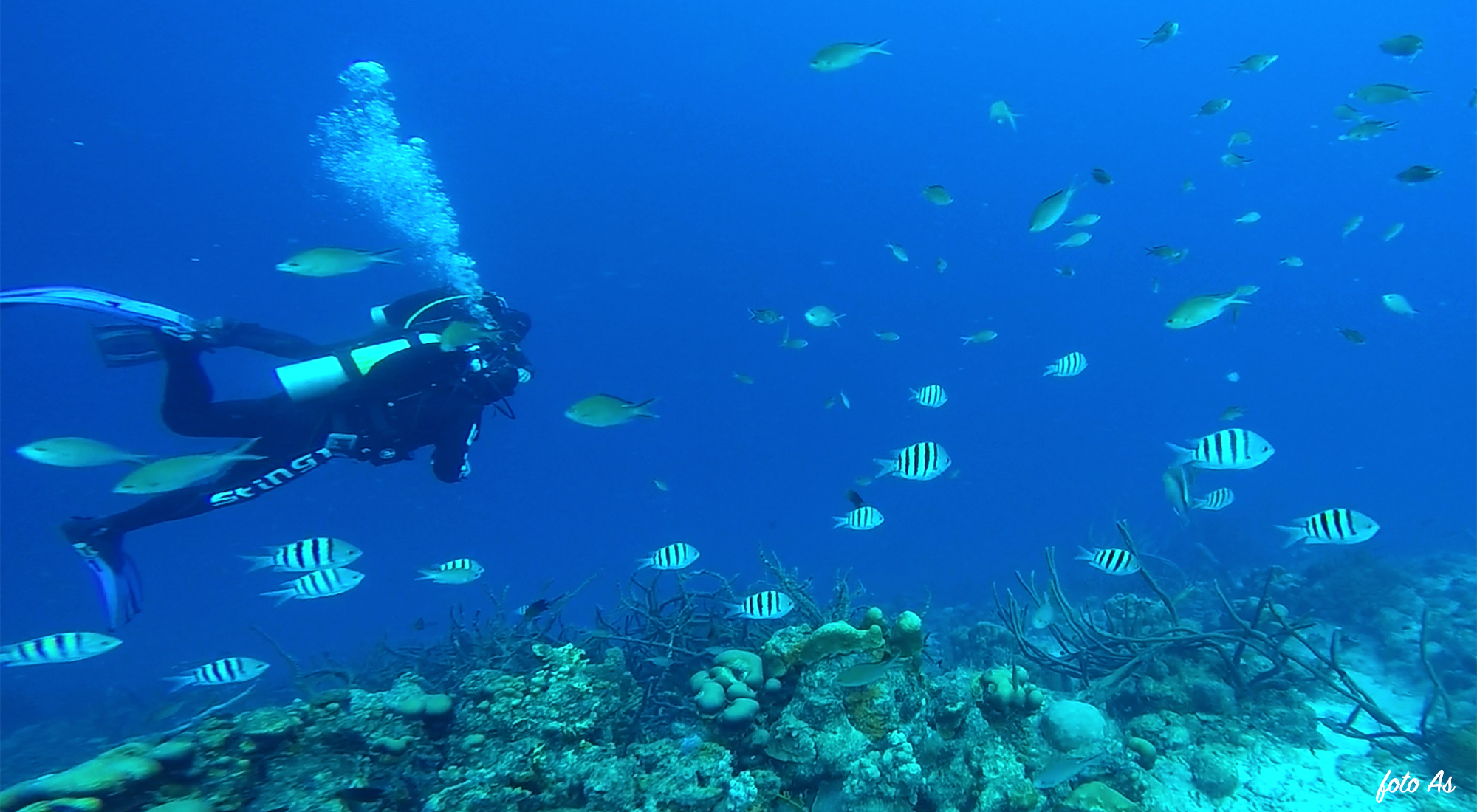
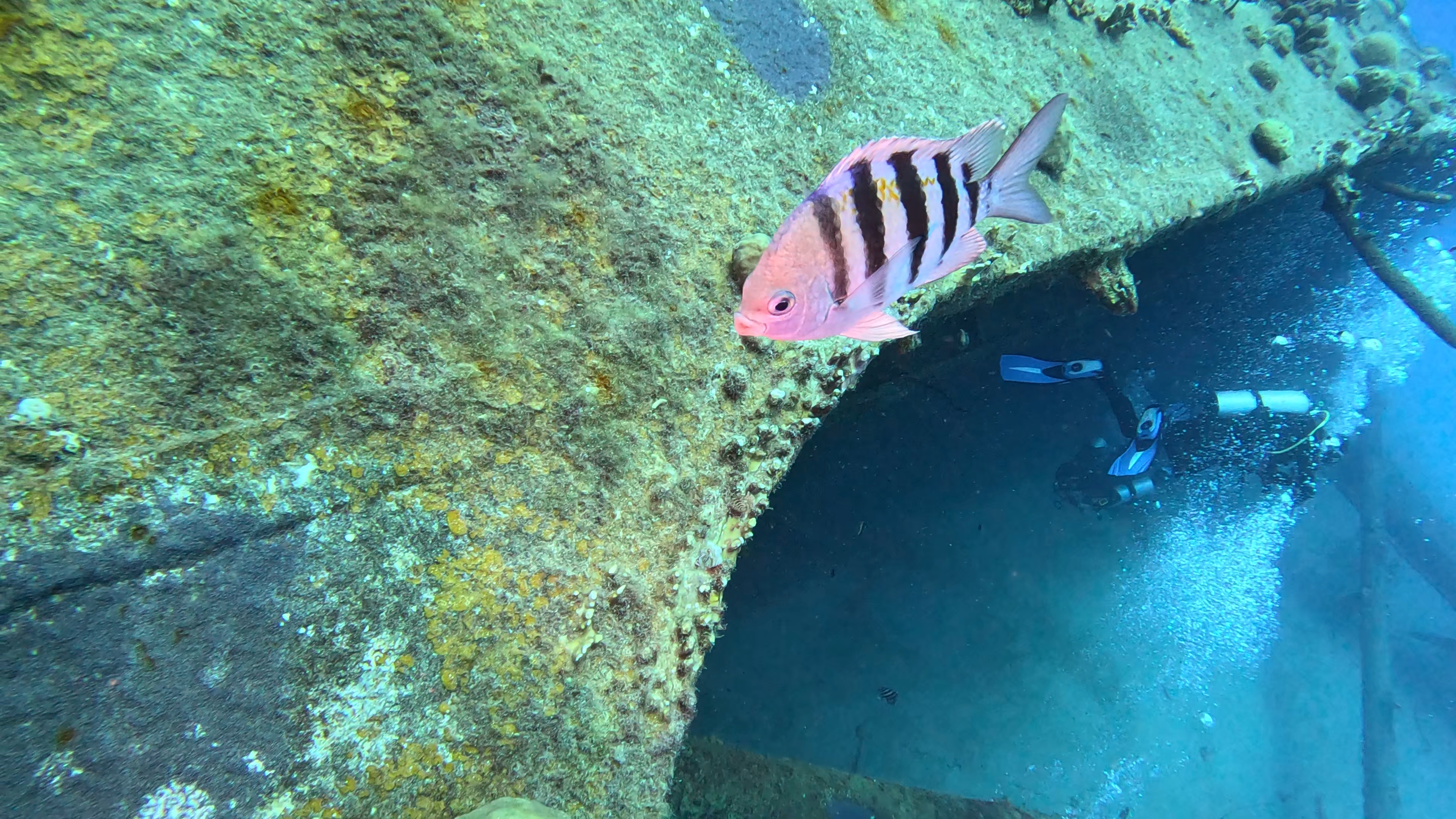
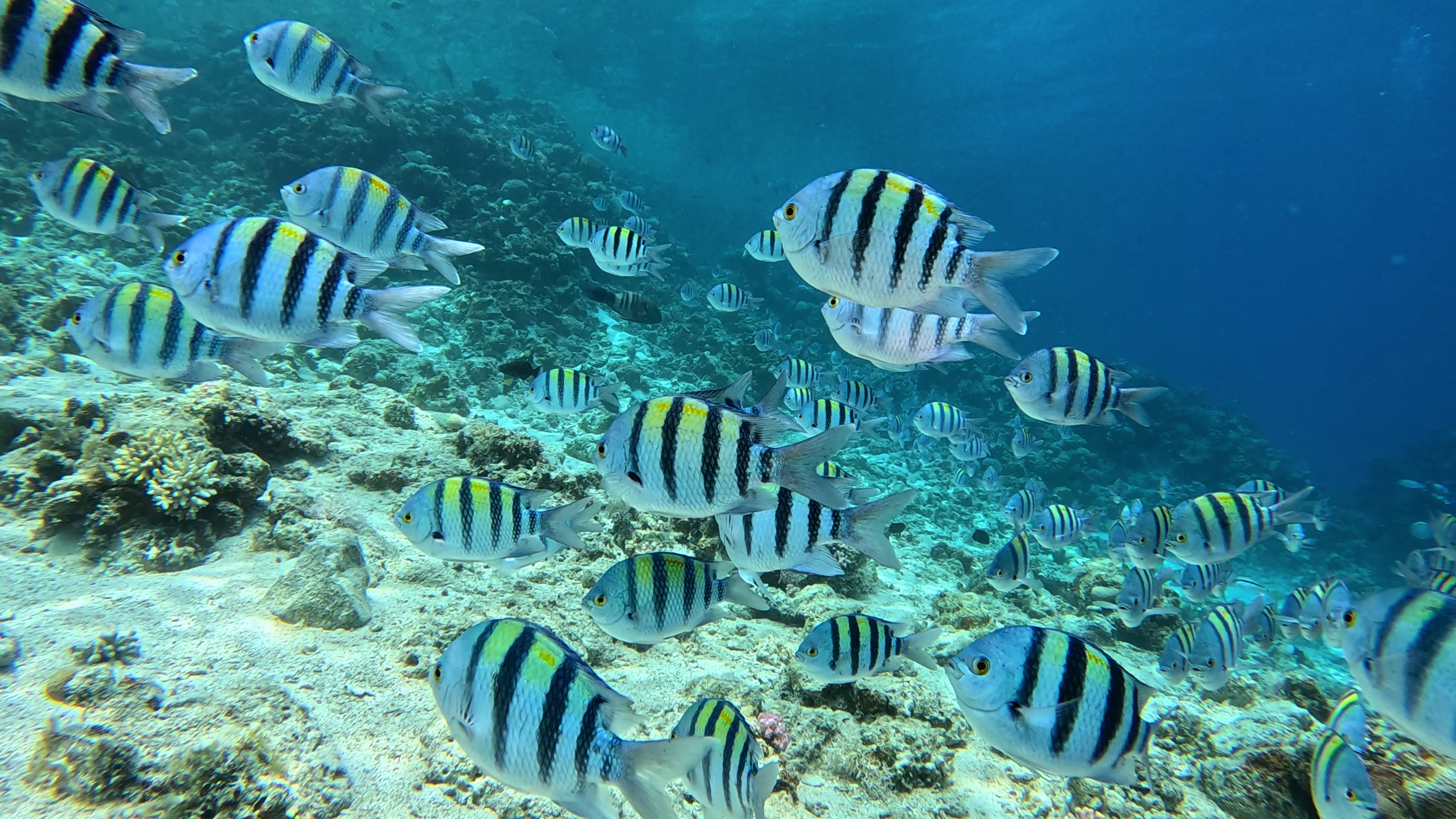
Sergeant Major Fish – Abudefduf saxatilis – Navadna sergantmajorica
Navadna sergantmajorica, znana tudi kot Sergeant Major Fish, je majhna tropska riba s svetlim telesom, navpičnimi črnimi črtami in rumenim odtenkom na zgornjem delu telesa. Živi v tropskih koralnih grebenih Atlantskega oceana in Karibskega morja, pogosto v jatah okoli koral in skalnatih struktur. Prehranjuje se z zooplanktonom, algami in drobnimi nevretenčarji.
The Sergeant Major Fish is a small tropical fish with a light-colored body, vertical black stripes, and a yellowish tint on the upper part of its body. It inhabits tropical coral reefs of the Atlantic Ocean and Caribbean Sea, often forming schools around coral heads and rocky structures. Its diet consists of zooplankton, algae, and small invertebrates.
Foto: Aleš Sulič, Bonaire Hilma Hooker, Egypt south Sataya
ROCK BEAUTY
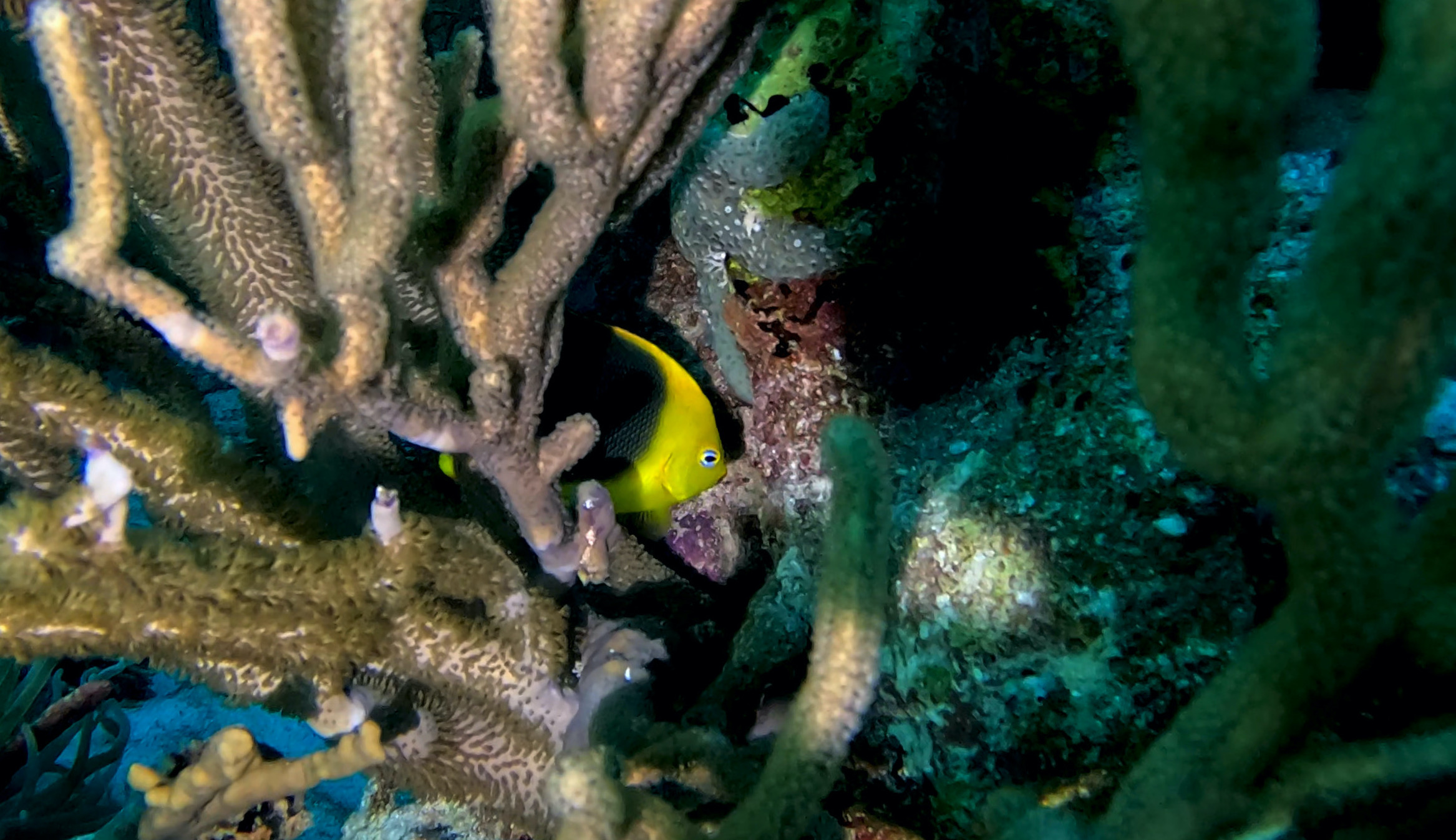
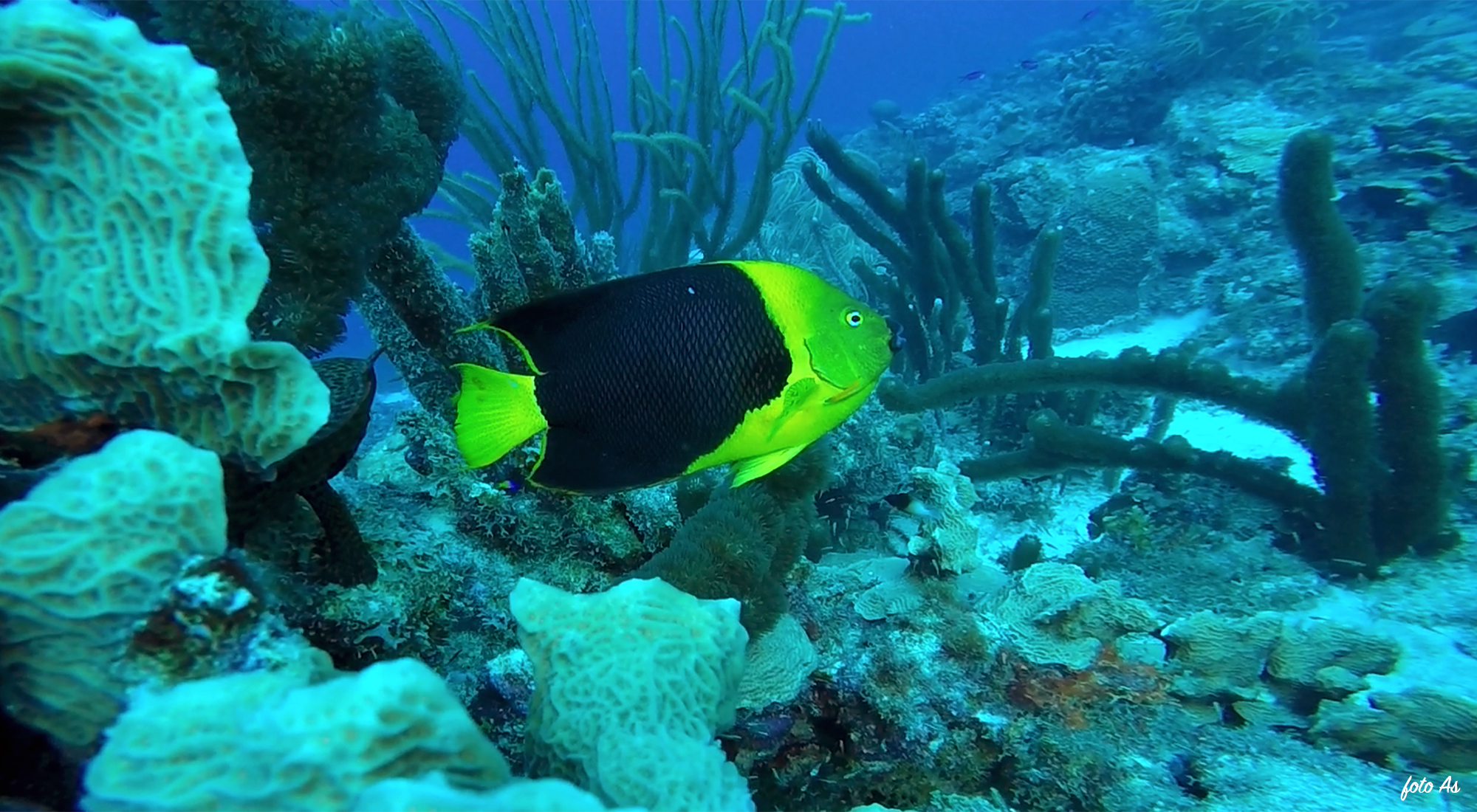
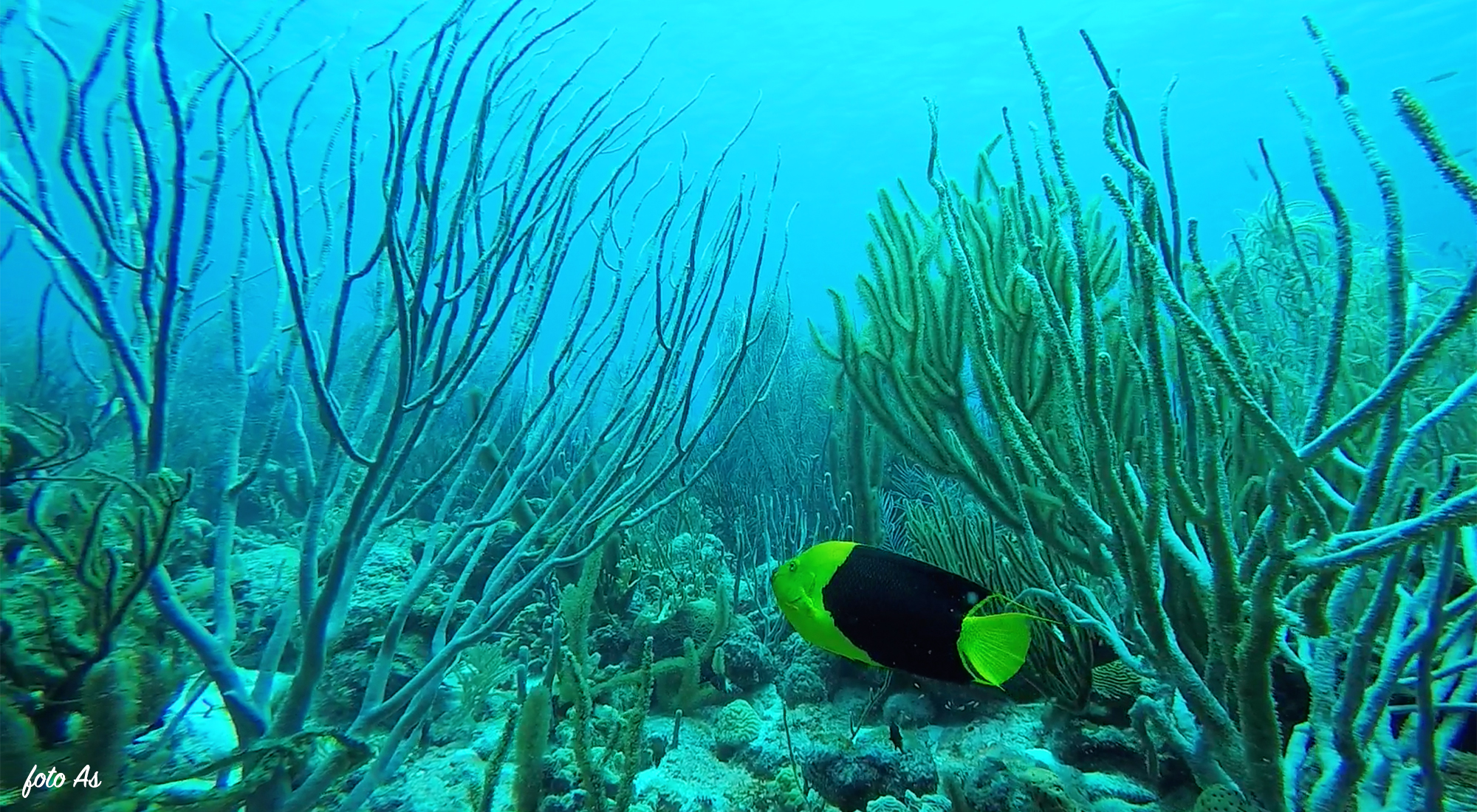
The Rock Beauty – Holacanthus tricolor -Skalni angelček
Skalni angelček je barvita morska riba iz družine morskih angelčkov. Prepoznamo ga po svetlo rumeni glavi in repu ter črnem telesu. Zaradi močnega barvnega kontrasta je zelo opazen na koralnih grebenih. Zraste približno do 20–25 cm. Živi v Karibskem morju, Mehiškem zalivu in zahodnem delu Atlantskega oceana. Najpogosteje ga najdemo na koralnih grebenih in skalnatih območjih v plitvejših vodah. Hrani se predvsem z morskimi spužvami, poleg tega pa tudi z algami in majhnimi morskimi nevretenčarji. Zaradi posebne prehrane je zahtevna vrsta za gojenje v domačem akvariju. Skalni angelček je med potapljači zelo priljubljen zaradi svojih živih barv in elegantnega plavanja.
The Rock Beauty is a colorful sea fish that lives in warm ocean waters. It has a bright yellow head and tail, and a black body. This strong color contrast makes it easy to recognize on coral reefs. It grows up to about 20–25 cm long. Rock Beauties live in the Caribbean Sea, the Gulf of Mexico, and the western Atlantic Ocean. They usually stay near coral reefs and rocky areas in shallow water. This fish mainly eats sea sponges. It also eats small sea animals and algae. Because it needs a special diet, it is difficult to keep in home aquariums. The Rock Beauty is popular with divers because of its bright colors and elegant swimming.
Foto: Aleš Sulič, Bonaire Angel City
SAND TILEFISH
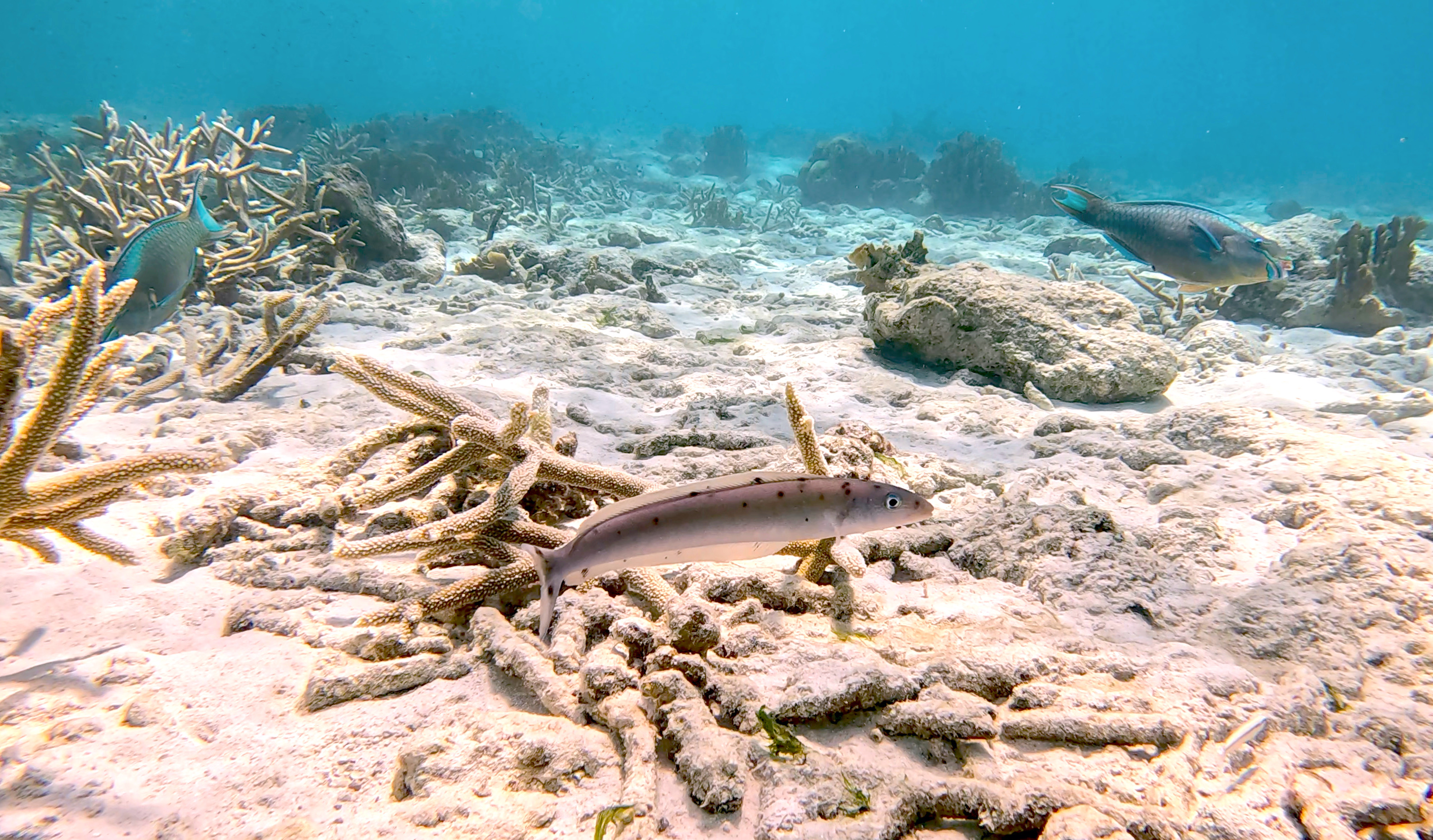
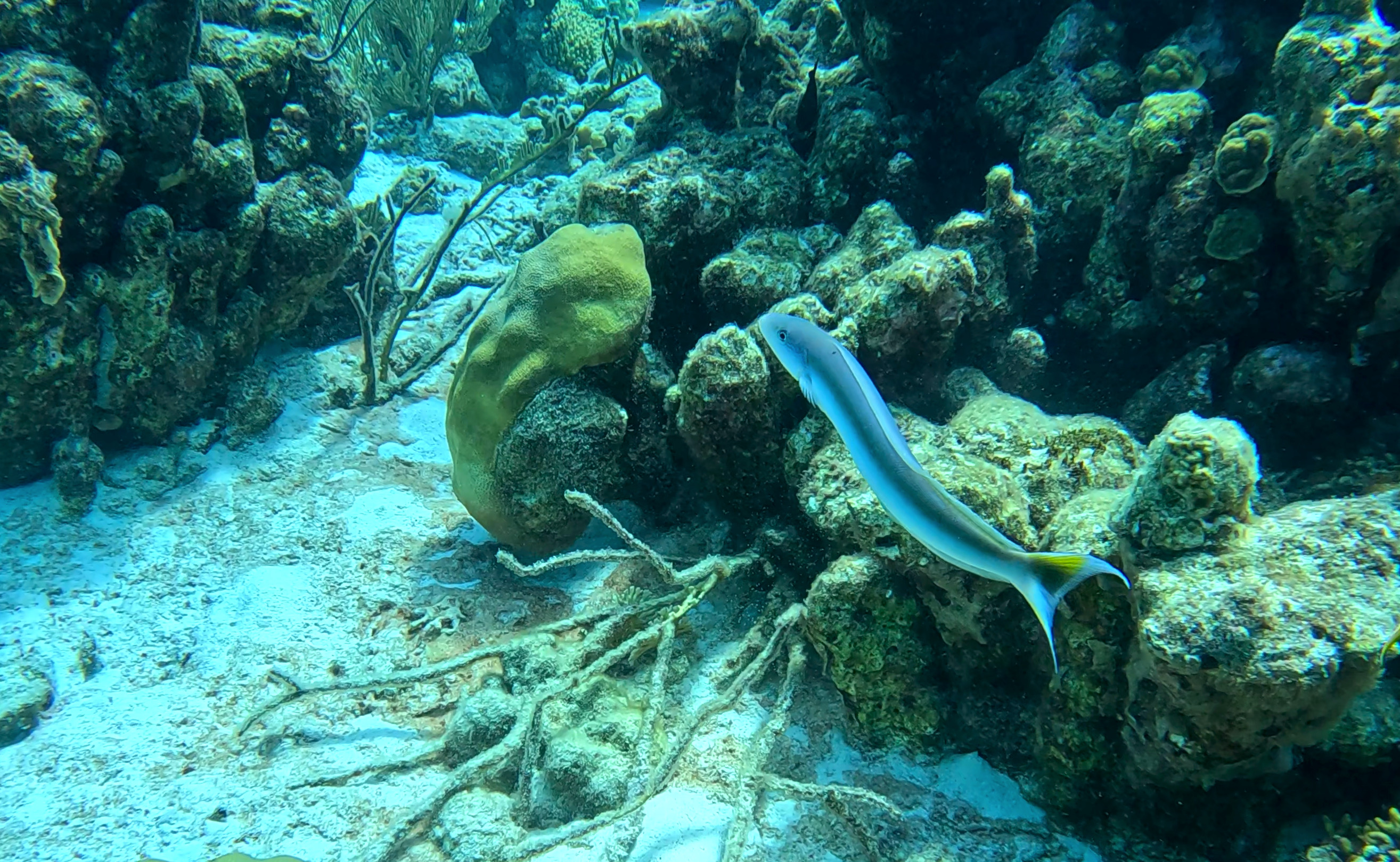
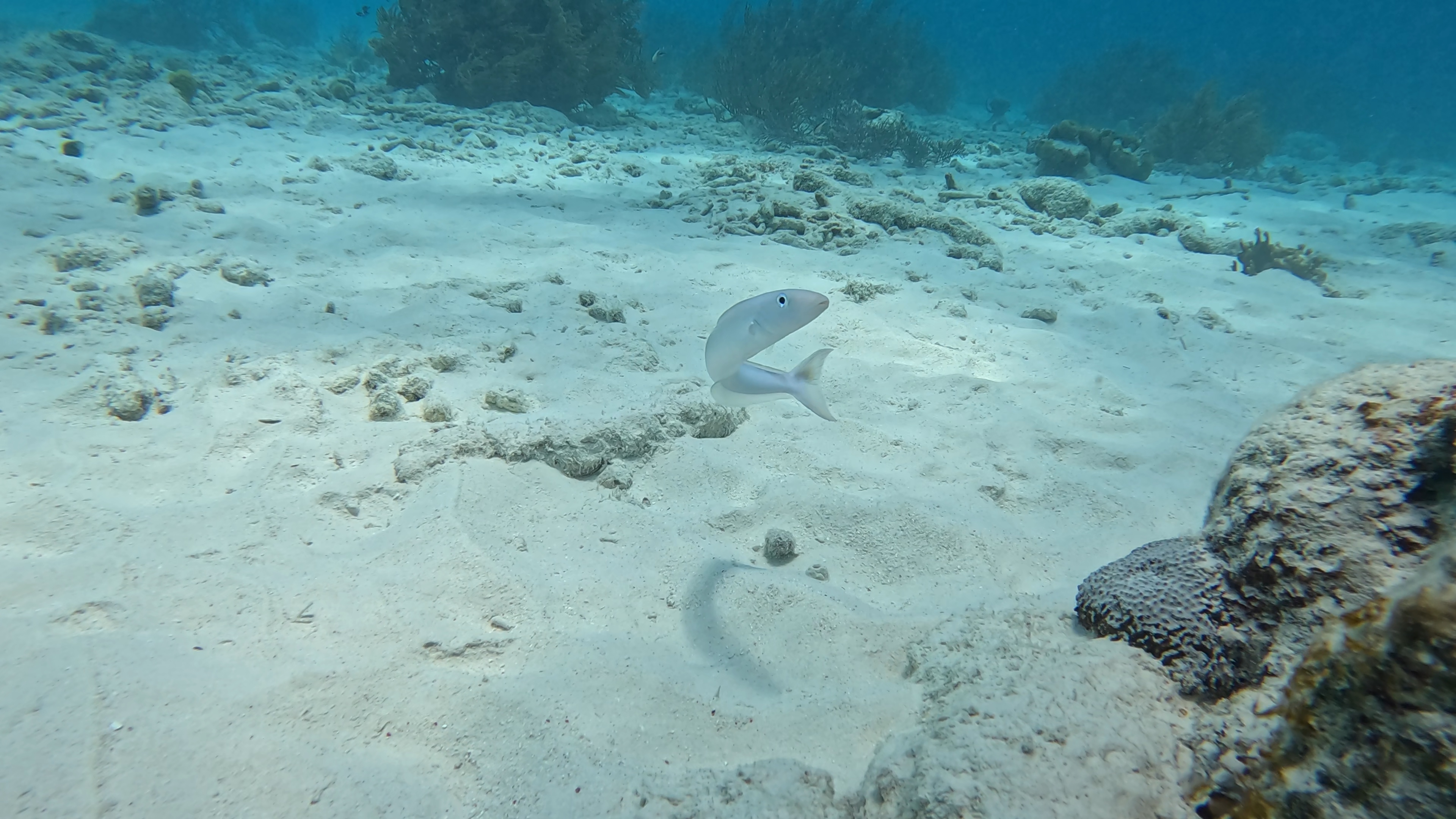
Sand Tilefish – Malacanthus plumieri – Ploščata peščena riba
Ploščata peščena riba je morska riba, ki živi v zahodnem delu Atlantskega oceana. Najdemo jo v Karibskem morju, Mehiškem zalivu ter ob obalah jugovzhodnih Združenih držav Amerike in severne Južne Amerike. Ima dolgo, vitko telo in nežne barve, kot so svetlo modra, zelenkasta in peščeni odtenki, ki ji pomagajo, da se zlije z morskim dnom. Zraste približno do 30–35 centimetrov. Peščeni tilefish živi na peščenem dnu v bližini koralnih grebenov. S pomočjo ust koplje rove v pesku, kjer se skriva pred plenilci. Pogosto lebdi tik nad vhodom v svoj rov in se ob nevarnosti hitro umakne vanj. Hrani se z majhnimi ribami, raki, črvi in drugimi majhnimi morskimi nevretenčarji. Včasih okoli vhoda v rov postavi školjke ali majhne kamenčke, kar pomaga utrditi zavetje.
The Sand Tilefish (Malacanthus plumieri) is a marine fish that lives in the western Atlantic Ocean. It is found in the Caribbean Sea, the Gulf of Mexico, and along the coasts of the southeastern United States and northern South America.This fish has a long, slender body and soft colors such as pale blue, green, and sandy shades that help it blend in with the ocean floor. It can grow up to about 30–35 centimeters in length.Sand Tilefish live in sandy areas near coral reefs. They dig burrows in the sand using their mouths and spend much of their time hovering above the entrance. If they sense danger, they quickly retreat into their burrow.They feed on small fish, crustaceans, worms, and other small sea animals. Sand Tilefish are known for sometimes placing shells or small pieces of debris around the entrance of their burrows.
Foto: Aleš Sulič, Bonaire 1000 steps
BERMUDA CHUB
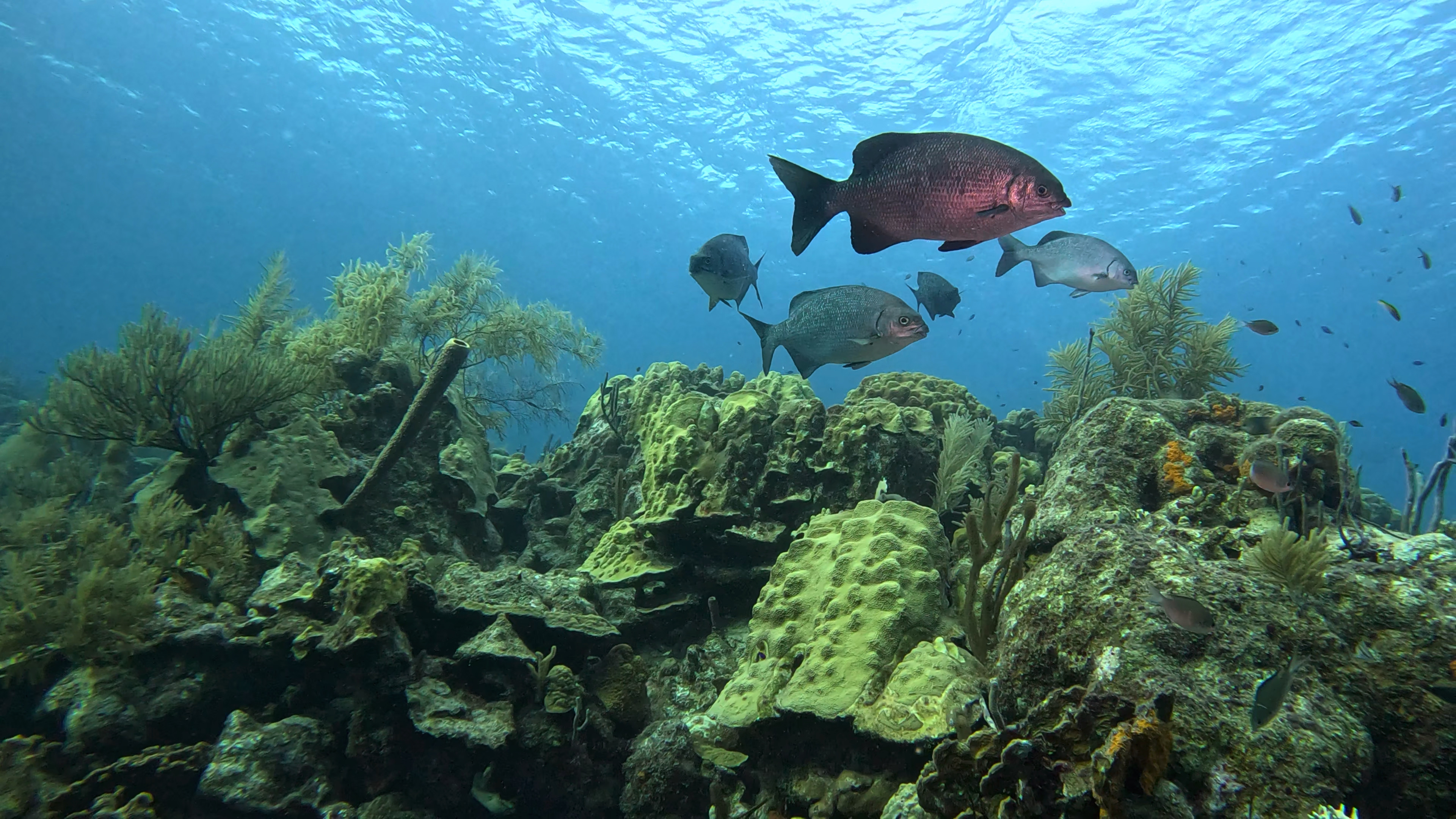
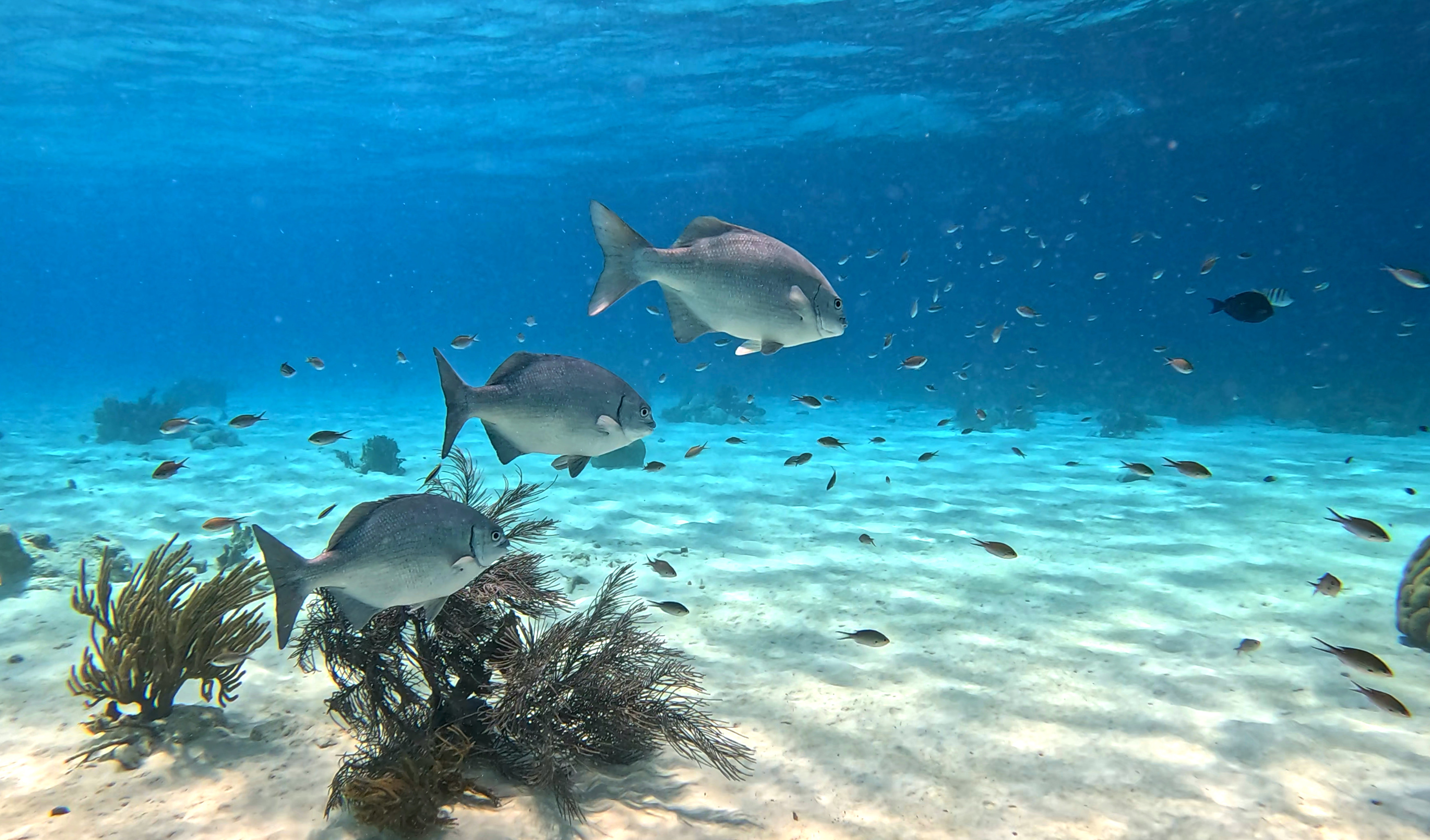
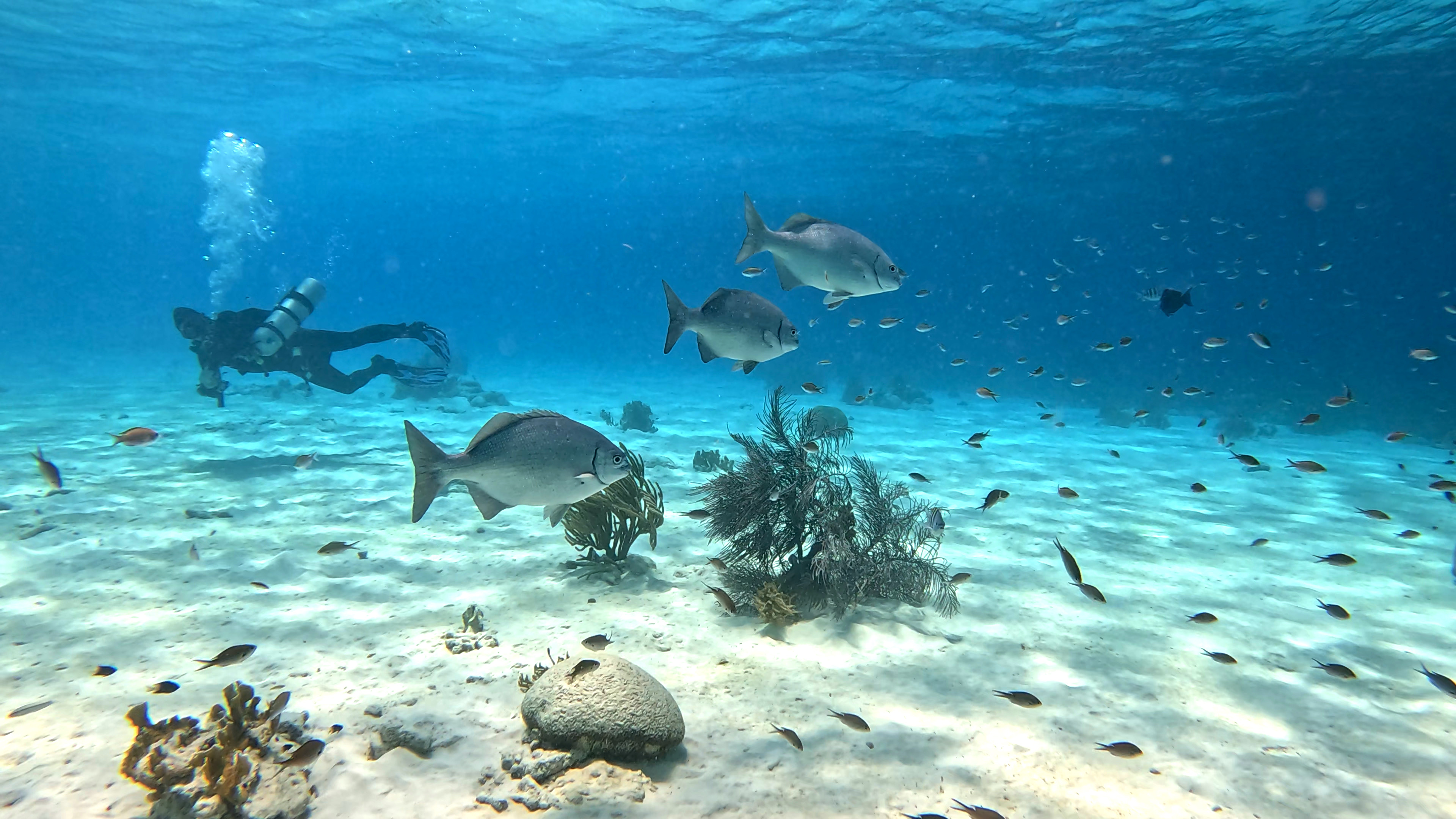
Bermuda chub – Kyphosus sectatrix – Bermudski klen
Bermudski klen je morska riba, ki živi v toplih vodah Atlantskega oceana, vključno z Bermudi, Karibskim morjem in Mehiškim zalivom. Spada v družino morskih klenov in jo pogosto vidimo plavati v jatah ob koralnih grebenih in skalnatih obalah. Riba ima globoko, ovalno telo s srebrno do sivkasto barvo in zamegljenimi vodoravnimi črtami ob straneh. Zraste do približno 60–76 centimetrov. Majhna usta so prilagojena za prehranjevanje z rastlinsko hrano. Bermudski klen se hrani predvsem z algami, morsko travo in majhnimi morskimi nevretenčarji. S tem pomaga ohranjati koralne grebene čiste pred prekomernim rastjem alg. Pogosto tvorijo velike jate, predvsem kot mladice. So aktivni plavalci in jih lahko vidimo tudi bližje površju ali ob pomolih in skalnatih obalah.
The Bermuda chub (Kyphosus sectatrix) is a marine fish found in warm Atlantic waters, including Bermuda, the Caribbean, and the Gulf of Mexico. It belongs to the sea chub family and is commonly seen swimming in schools near reefs and rocky shores. This fish has a deep, oval-shaped body with silver to gray coloring and faint horizontal stripes along its sides. It can grow up to 60–76 centimeters (24–30 inches) long. Its small mouth is adapted for grazing on plant material. The Bermuda chub mainly eats algae, seaweed, and small marine invertebrates. By feeding on algae, it helps keep reef surfaces clear. Bermuda chubs often form large schools, especially as juveniles. They are active swimmers and are sometimes seen near the surface or around piers and rocky coastlines.
Foto: Aleš Sulič, Bonaire White slave
SCHOOLMASTER SNAPPER
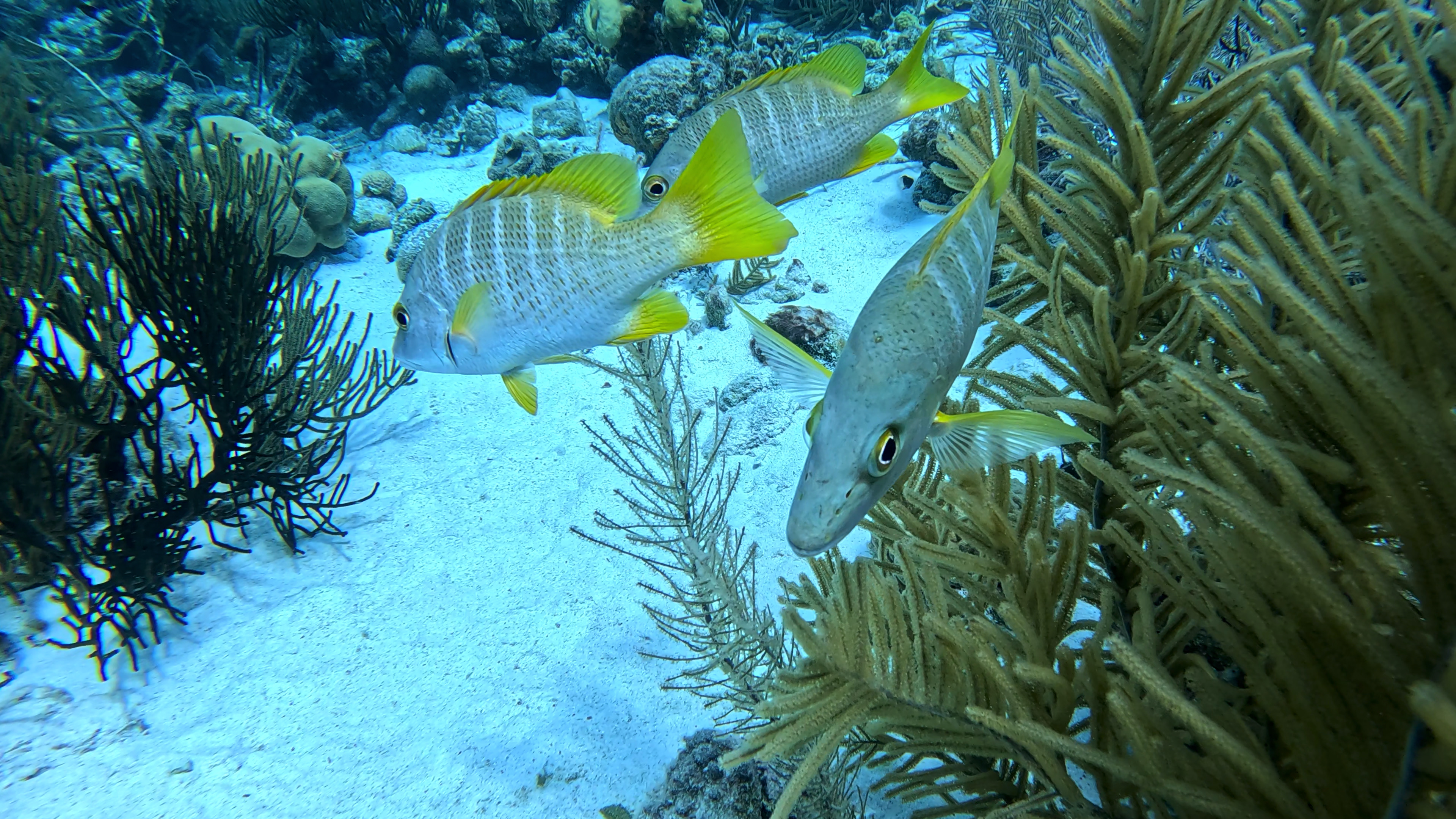
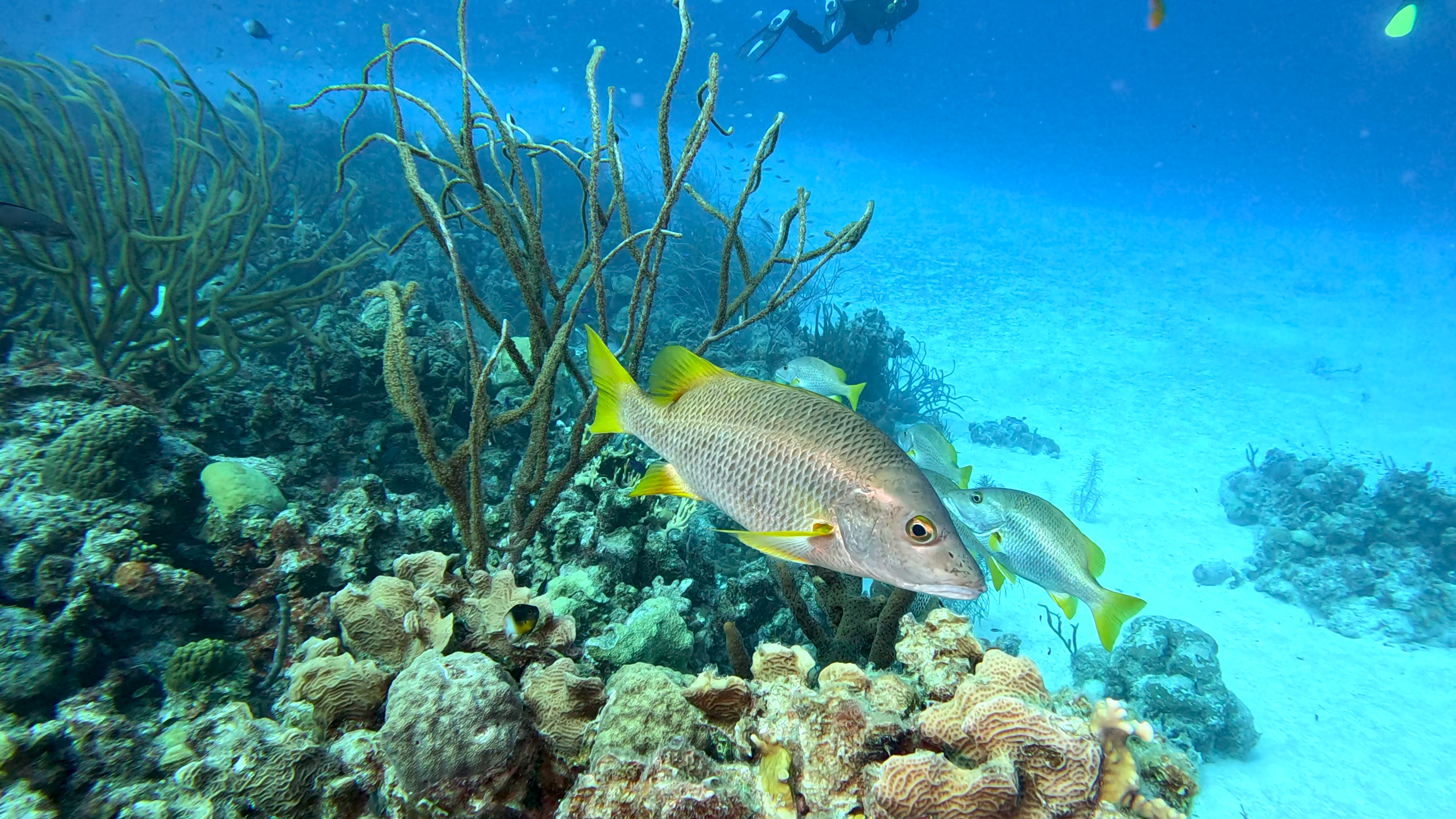
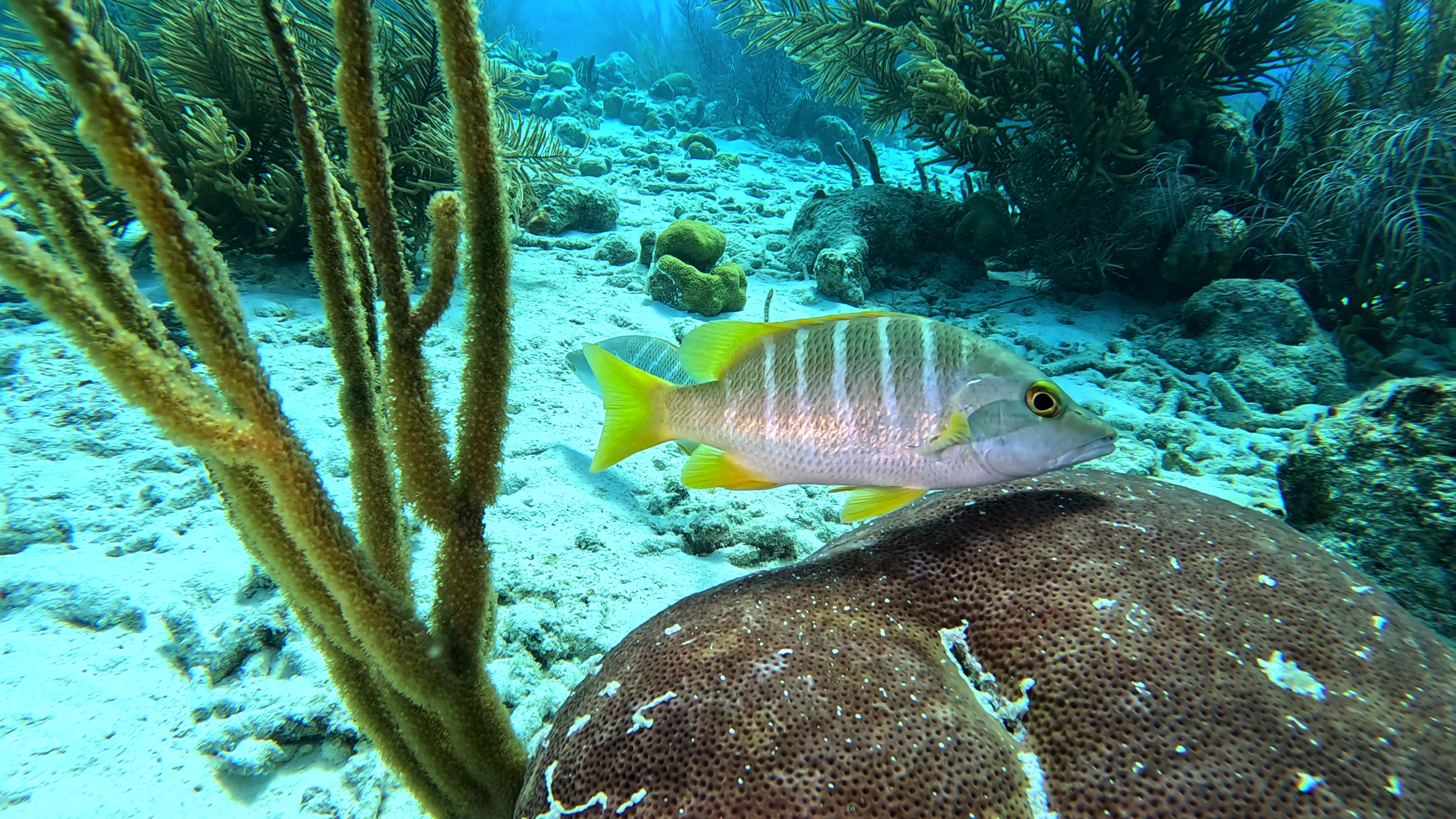
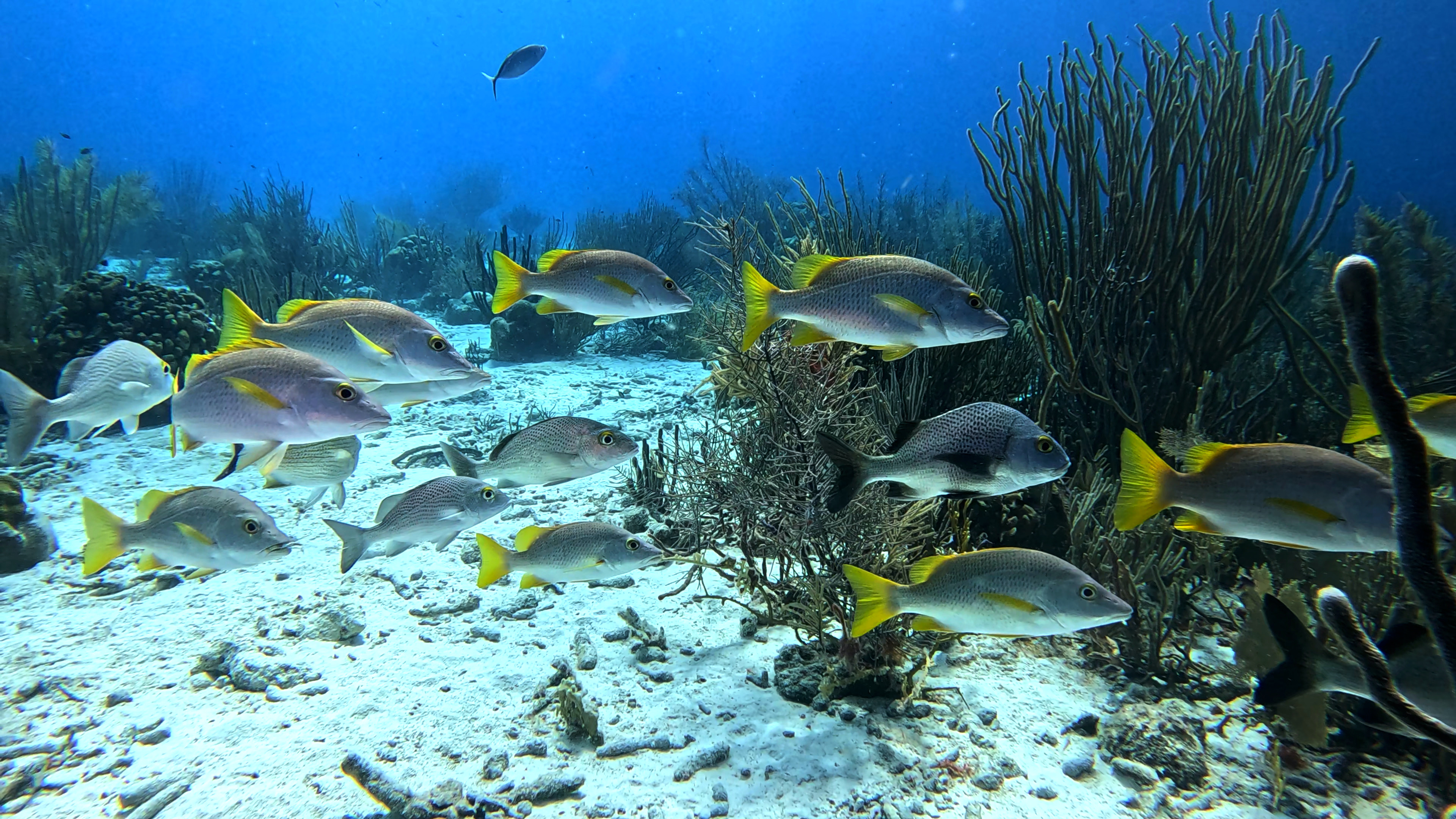
Schoolmaster Snapper – Lutjanus apodus – Šolski hlastač
Šolski hlastač je barvita morska riba, ki živi v zahodnem Atlantskem oceanu, vključno s Karibskim morjem, Mehiškim zalivom in Bermudami. Spada v družino hlastačev in jo pogosto vidimo ob koralnih grebenih, skalnatih obalah in včasih v mangrovah, običajno v jatah. Riba ima rožnato do rdečkasto telo z živordečimi plavuti in včasih zamegljene črte ob straneh. Zraste do približno 35–50 centimetrov. Šolski hlastač se hrani z majhnimi ribami, raki, kozicami in drugimi majhnimi morskimi nevretenčarji. Mladice pogosto ostajajo v mangrovah ali plitvih grebenih, kjer se skrivajo pred plenilci, medtem ko odrasli tvorijo jate in aktivno lovijo, s čimer pomembno vplivajo na ekosistem koralnih grebenov. Je priljubljena riba za rekreativni ribolov in se včasih goji tudi v velikih morskih akvarijih.
The Schoolmaster Snapper (Lutjanus apodus) is a colorful marine fish found in the western Atlantic Ocean, including the Caribbean, Gulf of Mexico, and Bermuda. It belongs to the snapper family and is often seen near coral reefs, rocky areas, and sometimes mangroves, usually in schools. This fish has a pinkish to reddish body with bright yellow fins and sometimes faint stripes along its sides. It grows to about 35–50 centimeters (14–20 inches) in length. The Schoolmaster Snapper feeds on small fish, crustaceans, shrimp, and other small invertebrates. Juveniles often stay in mangroves or shallow reefs for protection, while adults form schools and actively hunt, playing an important role in reef ecosystems. It is a popular species for recreational fishing and can occasionally be kept in large marine aquariums.
Foto: Aleš Sulič, Bonaire Margate bay
QEEN ANGELFISH
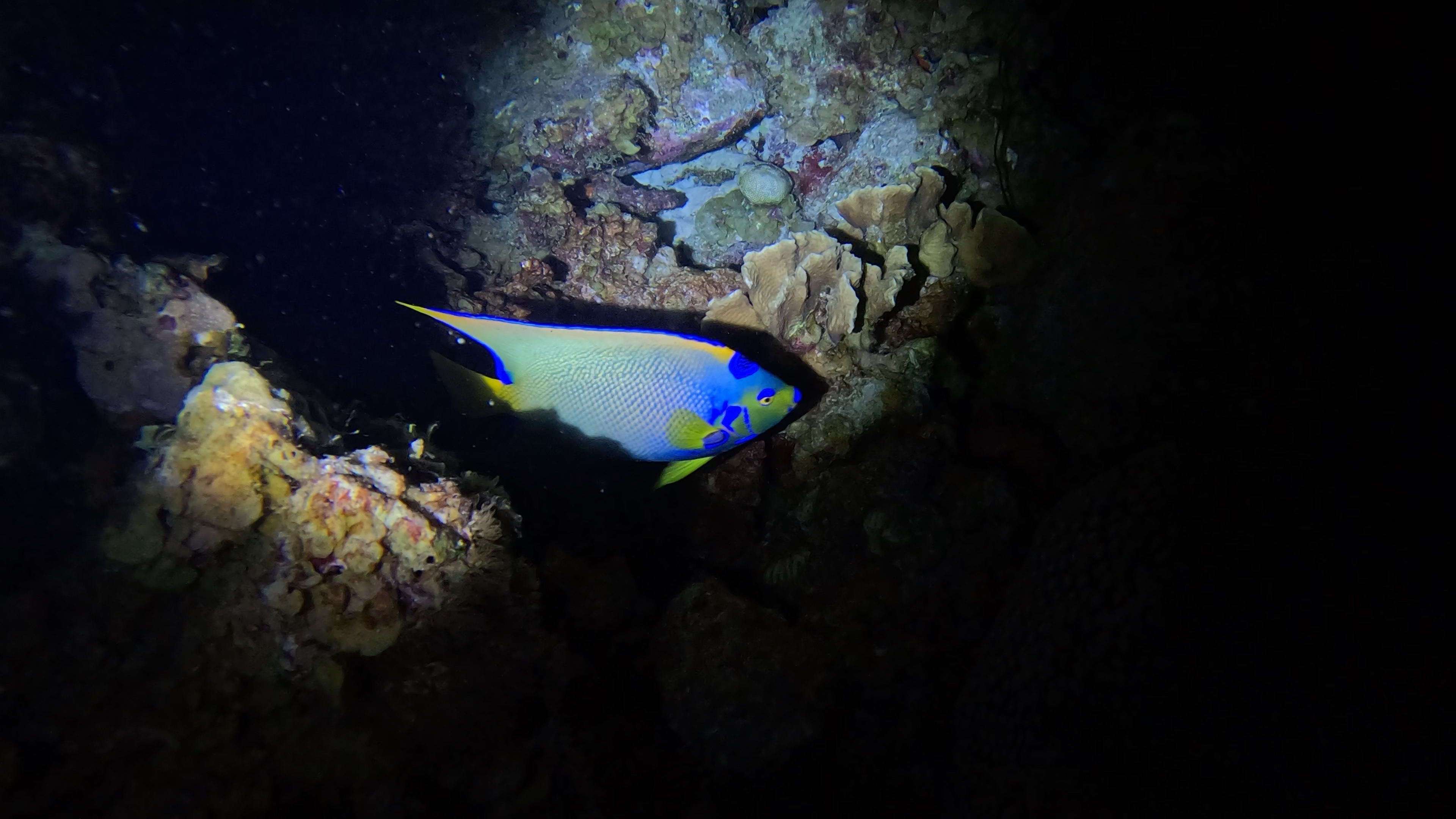
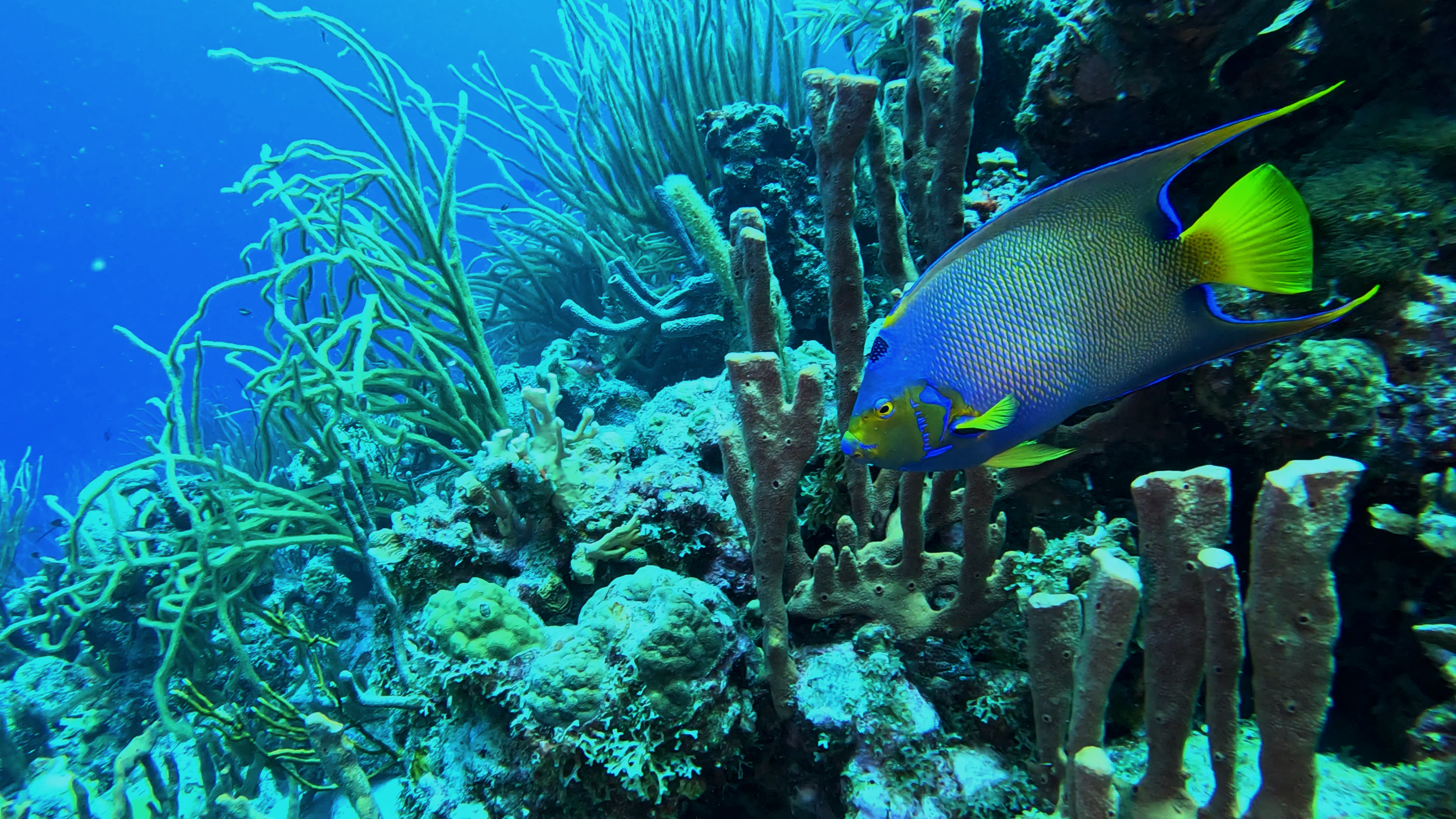
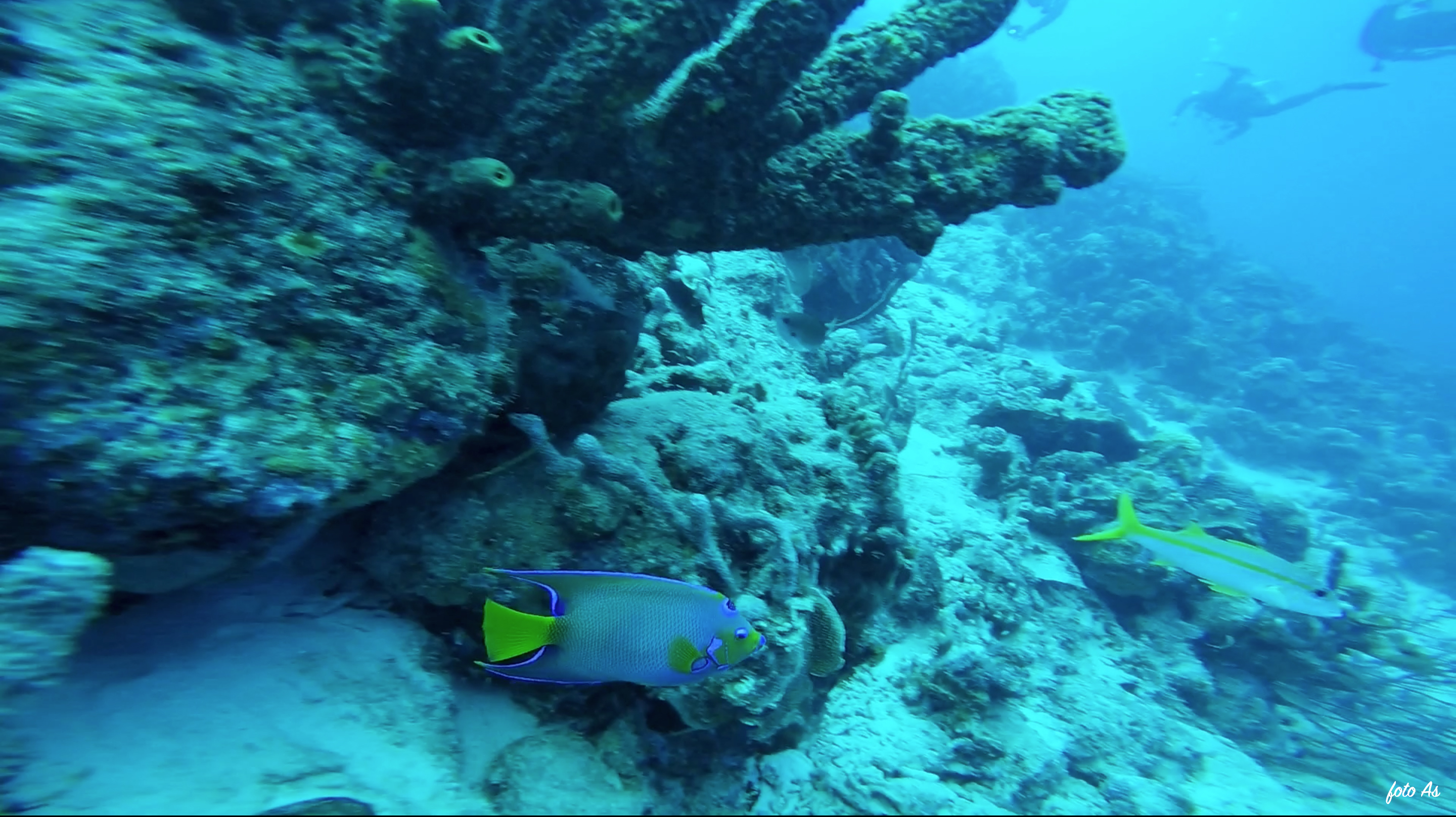
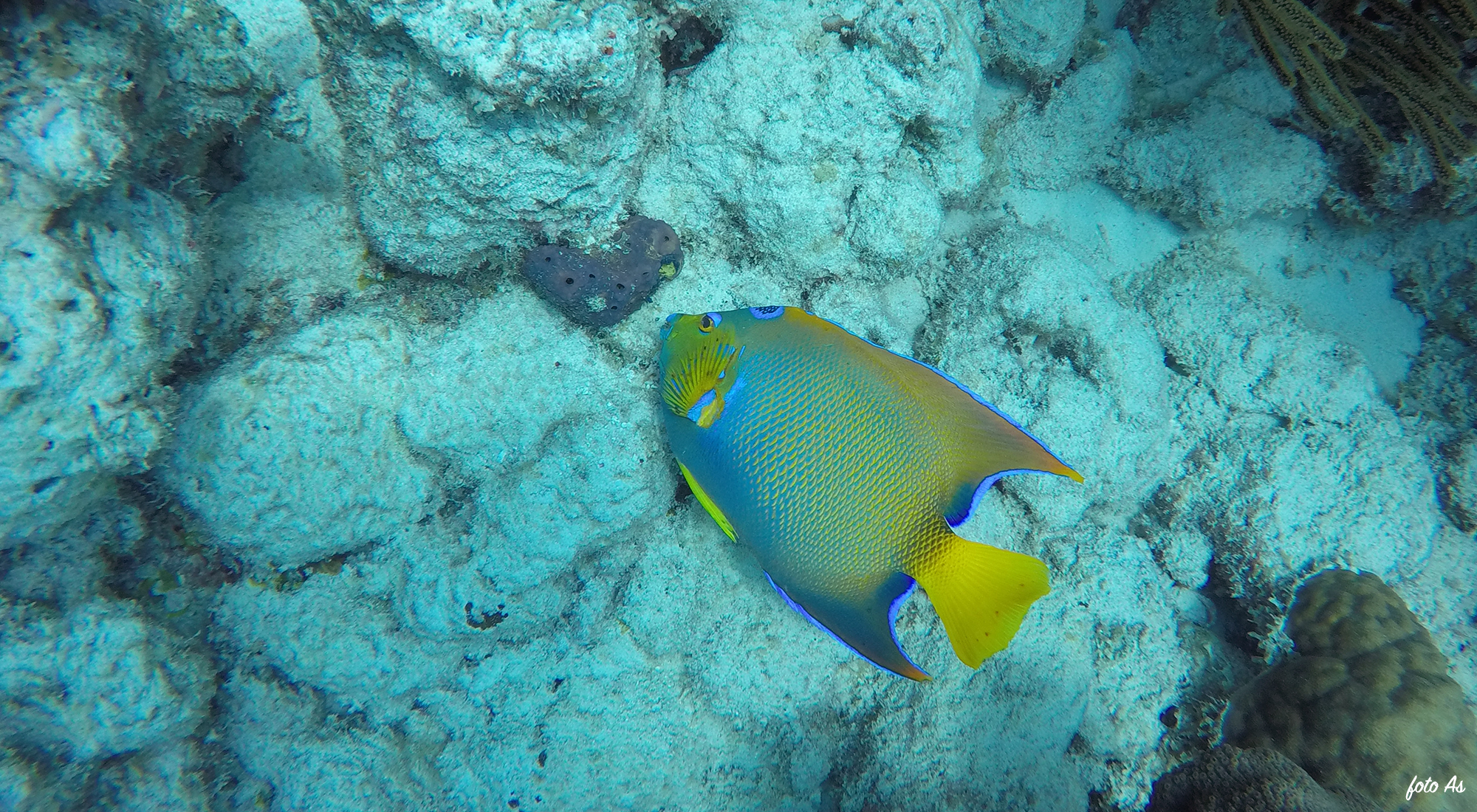
The Queen Angelfish – Holacanthus ciliaris – Kraljevski angelček
Kraljevski angelček je svetlo obarvan morski angelček, ki živi v zahodnem Atlantskem oceanu, vključno s Karibskim morjem in Mehiškim zalivom. Znana je po živih modrih in rumenih barvah ter po značilni “kroni” na čelu, po kateri je dobila ime. Riba lahko zraste do 45–50 centimetrov in živi 15–20 let. Najpogosteje prebiva na koralnih grebenih in skalnatih območjih, običajno plava sama ali v parih. Mladice včasih delujejo kot čistilci, saj odstranjujejo parazite z drugih rib. Kraljevski angelček se prehranjuje predvsem s spužvami, poleg tega pa tudi z tunikati, algami in majhnimi nevretenčarji. Odrasli so teritorijalni in lahko agresivni do drugih angelčkov. Med potapljači in podvodnimi fotografi je zelo cenjen zaradi svojih osupljivih barv.
The Queen Angelfish is a brightly colored marine angelfish found in the western Atlantic Ocean, including the Caribbean Sea and the Gulf of Mexico. It is famous for its vivid blue and yellow colors and the distinctive “crown” marking on its forehead. This fish can grow up to 45–50 centimeters (18–20 inches) long and can live for 15–20 years. It inhabits coral reefs and rocky areas, usually swimming alone or in pairs. Juveniles sometimes act as cleaner fish, removing parasites from other fish. The Queen Angelfish primarily feeds on sponges, but it also eats tunicates, algae, and small invertebrates. Adults are territorial and can be aggressive toward other angelfish. It is highly admired by divers and underwater photographers for its striking appearance.
Foto: Aleš Sulič, Bonaire Karpata
OCEAN SURGEONFISH
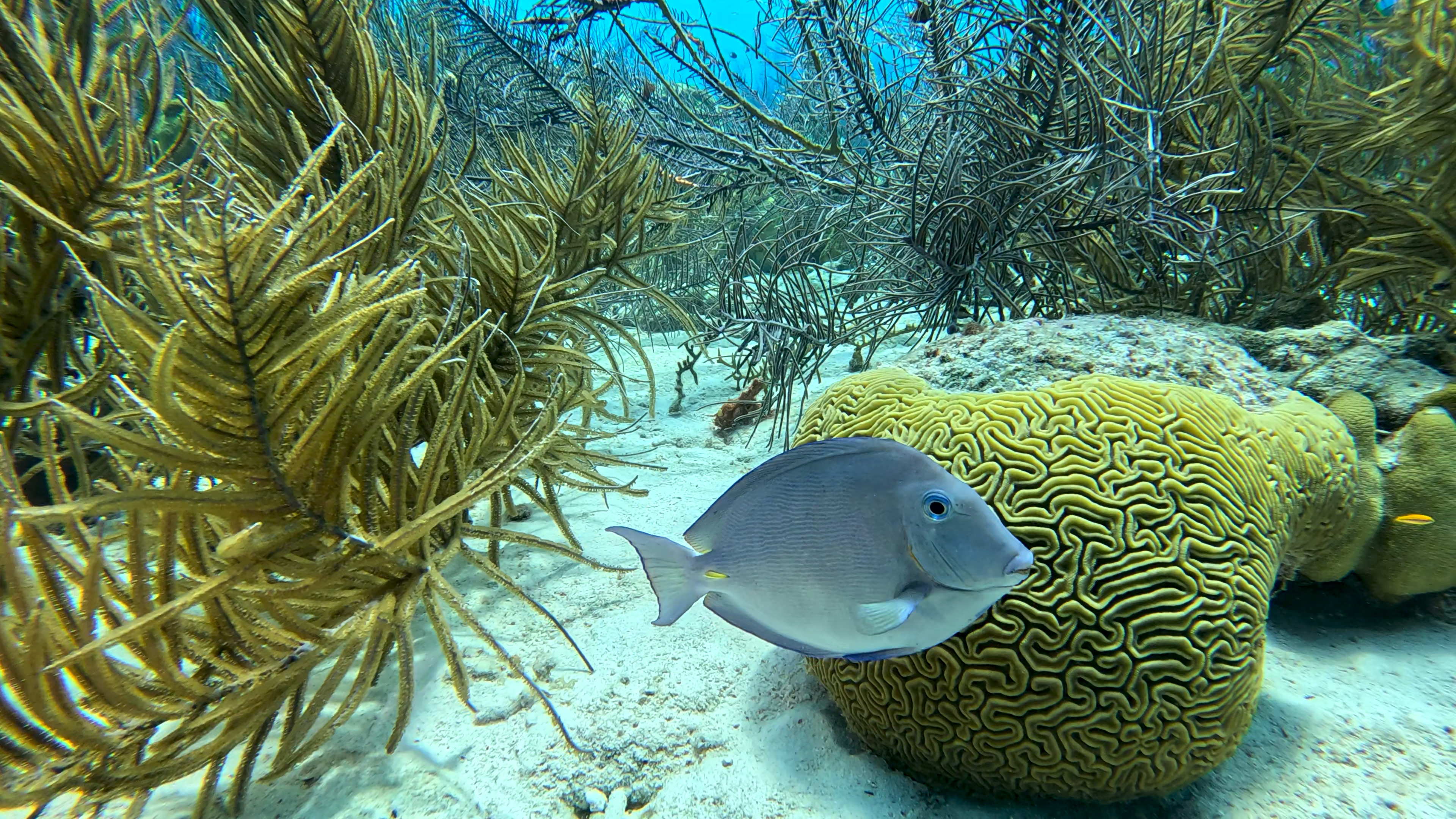
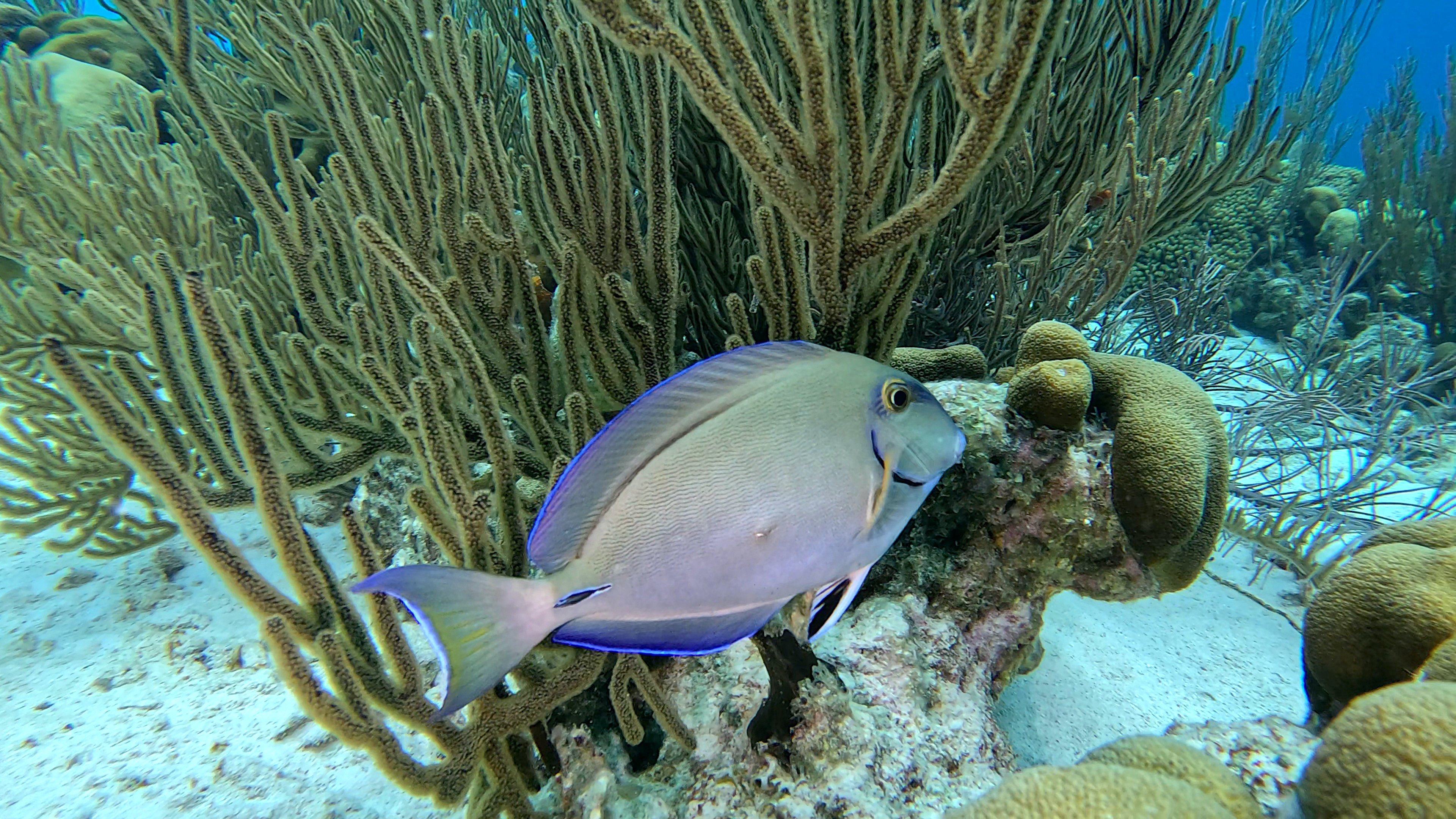
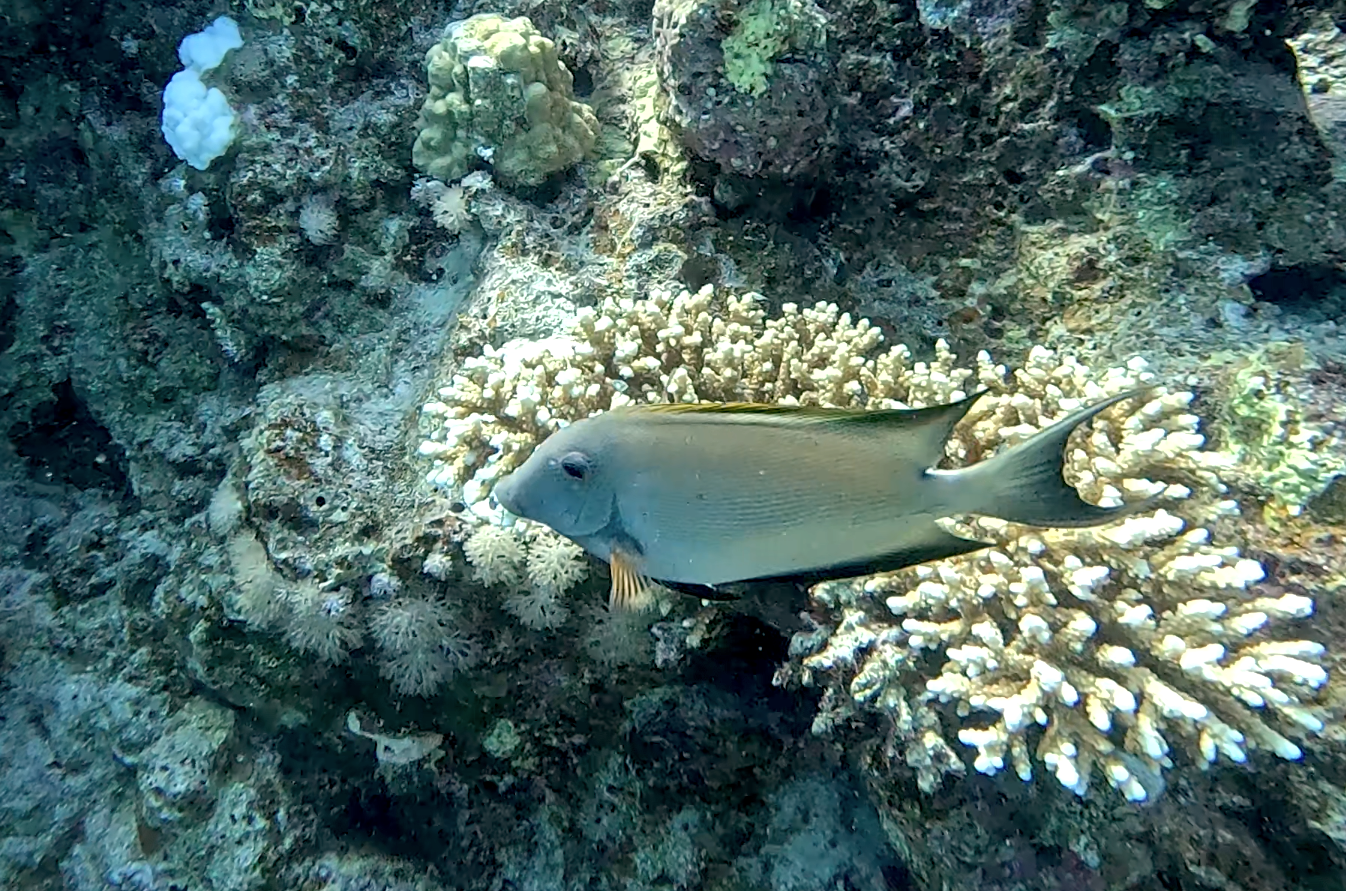
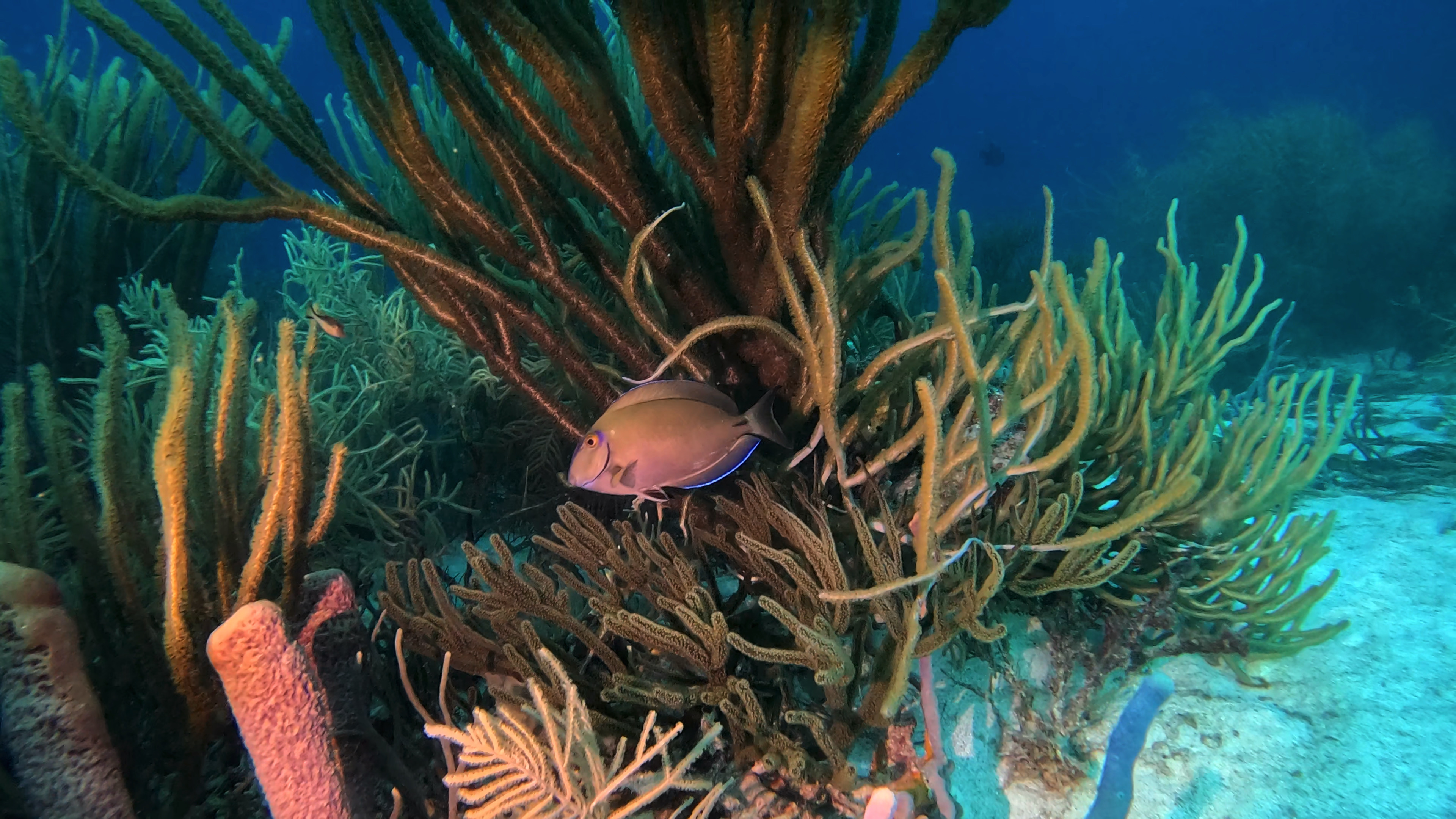
Ocean Surgeonfish – Acanthurus bahianus – Oceanski kirurg
Oceanski kirurg je riba, ki živi ob koralnih grebenih v zahodnem Atlantskem oceanu, vključno s Karibskim morjem, Mehiškim zalivom in obalah Brazilije. Spada v družino kirurgov in jo je enostavno prepoznati po ovalnem, bočno stisnjenem telesu ter ostri bodici blizu repa. Riba zraste do 35 centimetrov. Njeno telo je temno modro ali modrikasto-sivo, bodica blizu repa pa je rumena ali oranžna in jo uporablja za obrambo. Ocean kirurg je rastlinojed, hrani se predvsem z algami. S tem pomaga ohranjati zdrave koralne grebene. So aktivni plavalci in jih pogosto vidimo v manjših jatah. Mladice imajo lahko svetlejšo modro barvo.
The Ocean Surgeonfish is a reef-dwelling marine fish found in the western Atlantic Ocean, including the Caribbean, Gulf of Mexico, and Brazil. It belongs to the surgeonfish family and is easily recognized by its oval, laterally compressed body and sharp spine near the tail. This fish grows up to 30–35 centimeters (12–14 inches) long. Its body is dark blue or bluish-gray, and it has a yellow or orange spine near the tail used for defense. Ocean Surgeonfish are herbivores, feeding mainly on algae. By grazing on algae, they help maintain healthy coral reefs. They are active swimmers and are often seen in small groups. Juveniles may have a lighter blue coloration.
Foto: Aleš Sulič, Bonaire Oil Slick
PEACOCK FLATFISH
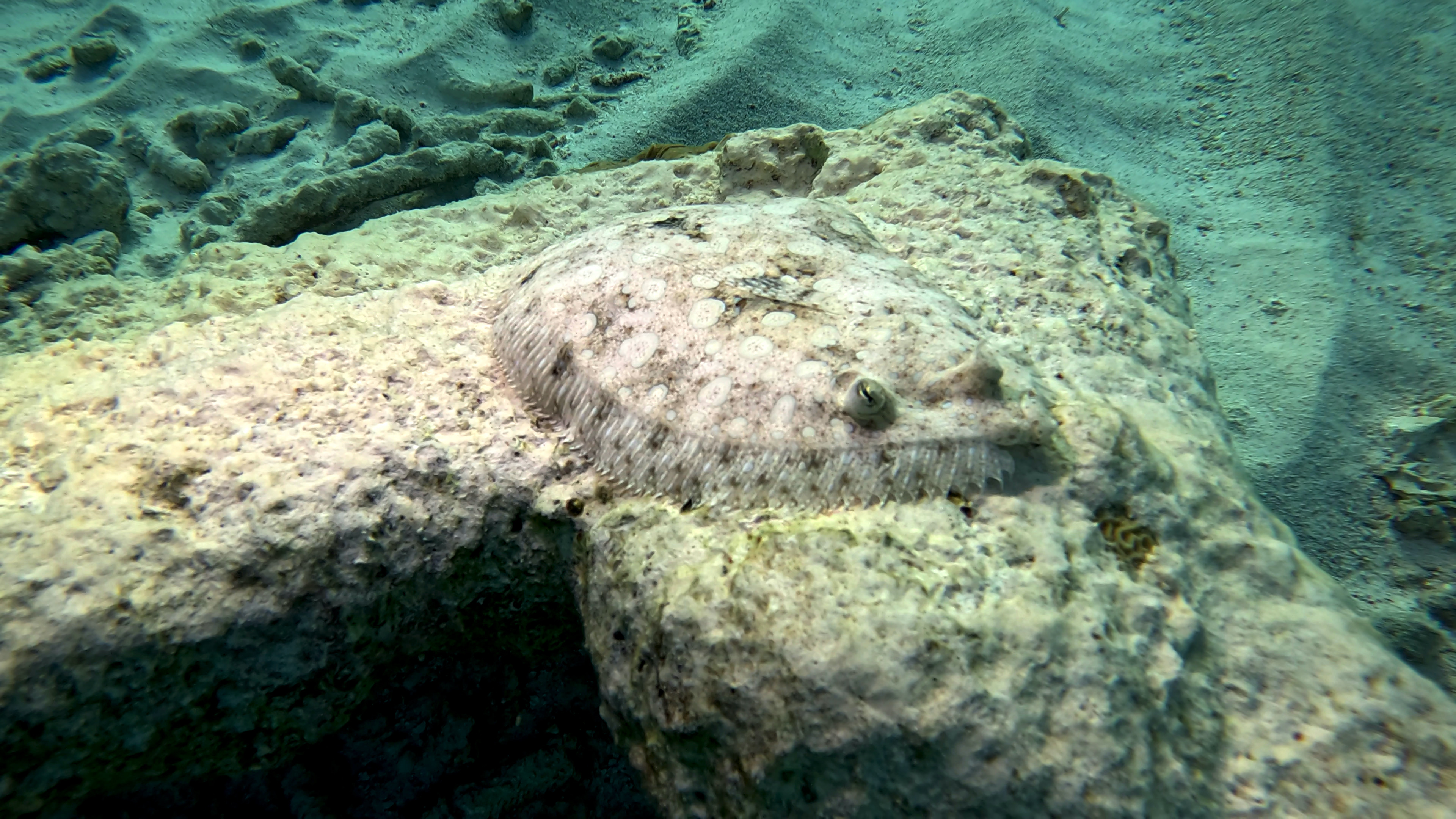
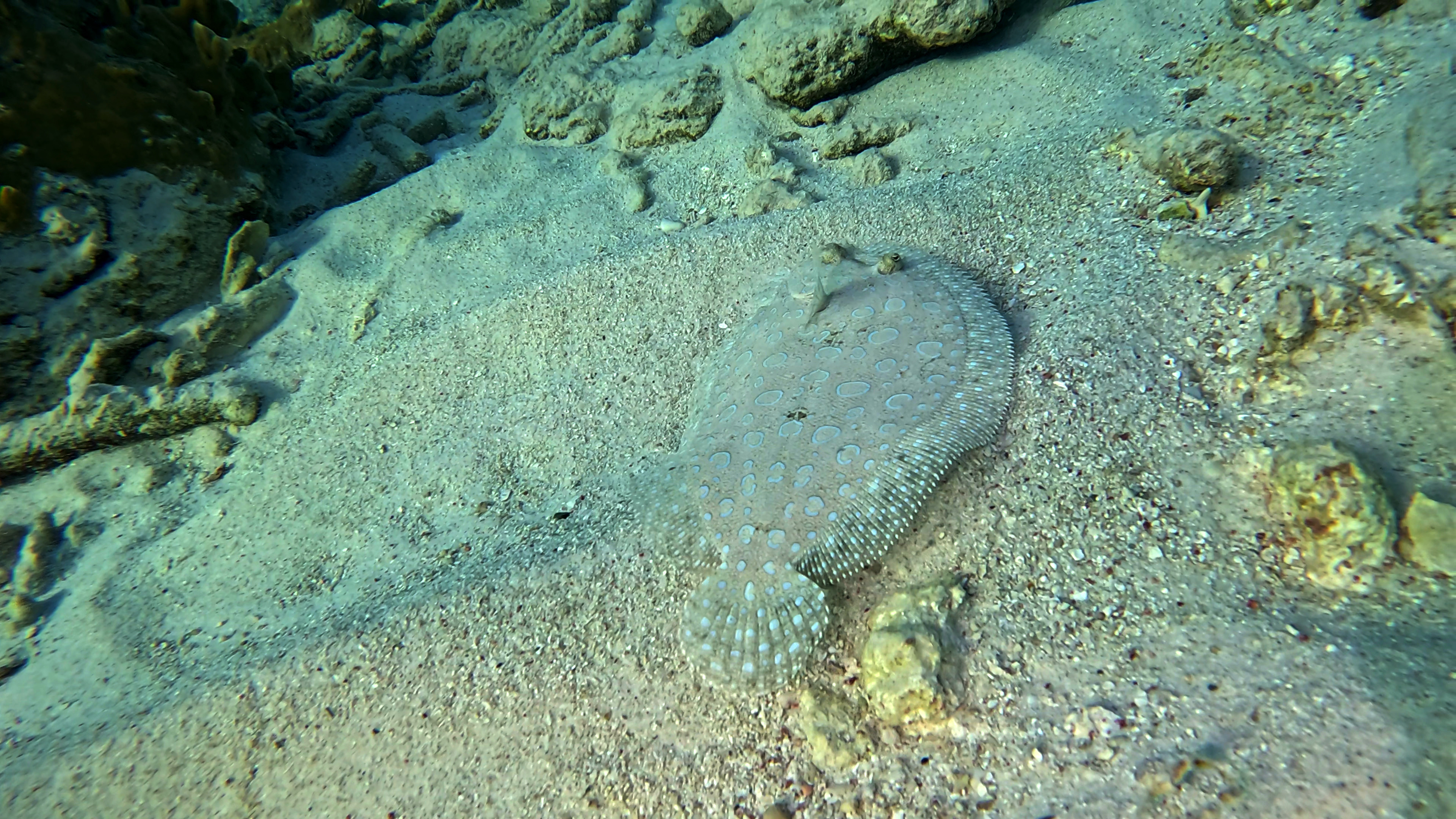
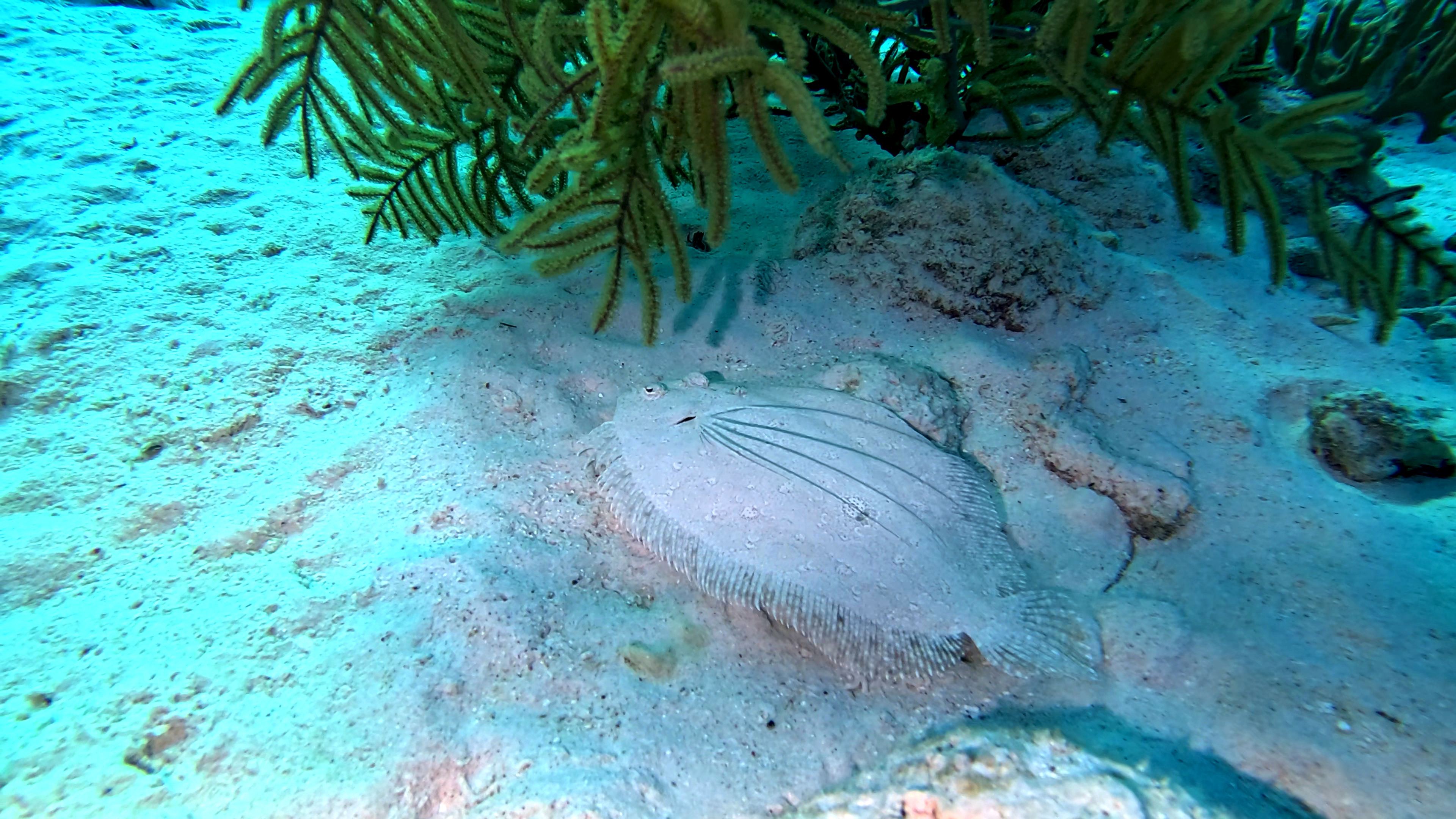
Peacock Flatfish – Bothus mancus – Pavova ploščata riba
Pavova ploščata riba, znana tudi kot list, je ploska riba, ki živi v tropskih vodah zahodnega Atlantika, vključno s Karibskim morjem in Mehiškim zalivom. Znana je po svoji sposobnosti spreminjanja barv in vzorcev, da se popolnoma zlije s peskom, skalami ali koralnim dnom. Riba ima sploščeno, ovalno telo, obe očesi pa sta na eni strani glave. Njene barve se lahko spreminjajo med rjavo, modro, zeleno ali peščeno, kar ji omogoča odlično kamuflažo. Zraste do približno 35–40 centimetrov. Pavov ploski kos je mesojed in se prehranjuje z majhnimi ribami, raki, črvi in drugimi majhnimi nevretenčarji. Pogosto leži plosko na morskem dnu. Včasih delno zakopan v pesku, kjer čaka na svoj plen.
The Peacock Flatfish (Bothus mancus), also called the Peacock Flounder, is a flatfish found in tropical waters of the western Atlantic, including the Caribbean and the Gulf of Mexico. It is famous for its ability to change colors and patterns to blend in with sandy, rocky, or coral-covered seafloors. This fish has a flattened, oval-shaped body with both eyes on one side. Its coloration can vary from mottled brown, blue, green, or sandy tones, allowing it to camouflage perfectly with its surroundings. It can grow up to 35–40 centimeters (14–16 inches) long. Peacock Flatfish are carnivorous, feeding on small fish, crustaceans, worms, and other small invertebrates. They usually lie flat on the seafloor, sometimes partially buried in sand, and act as ambush predators, striking quickly when prey comes close.
Foto: Aleš Sulič, Bonaire Salt Pier
PALOMETA
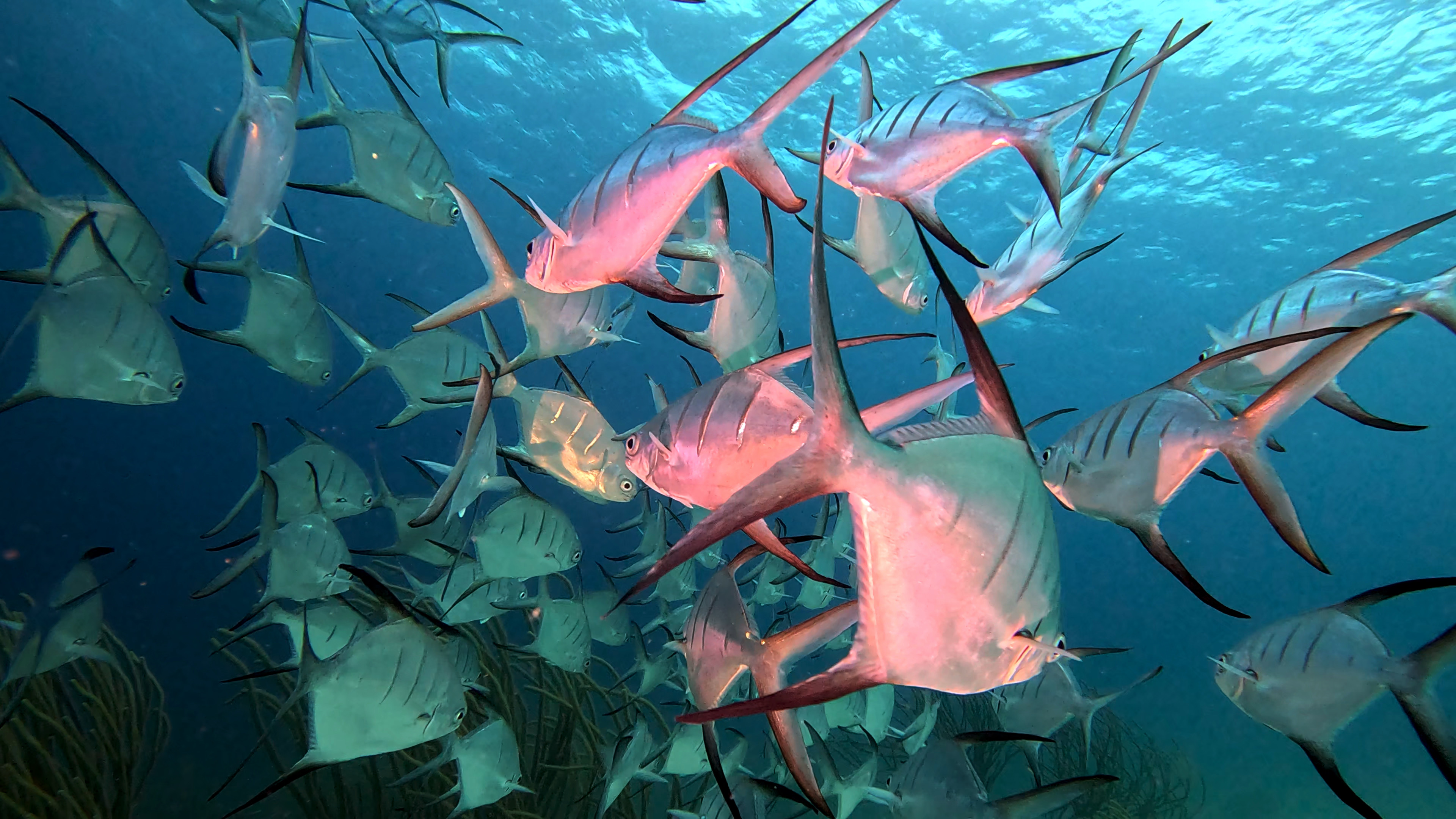
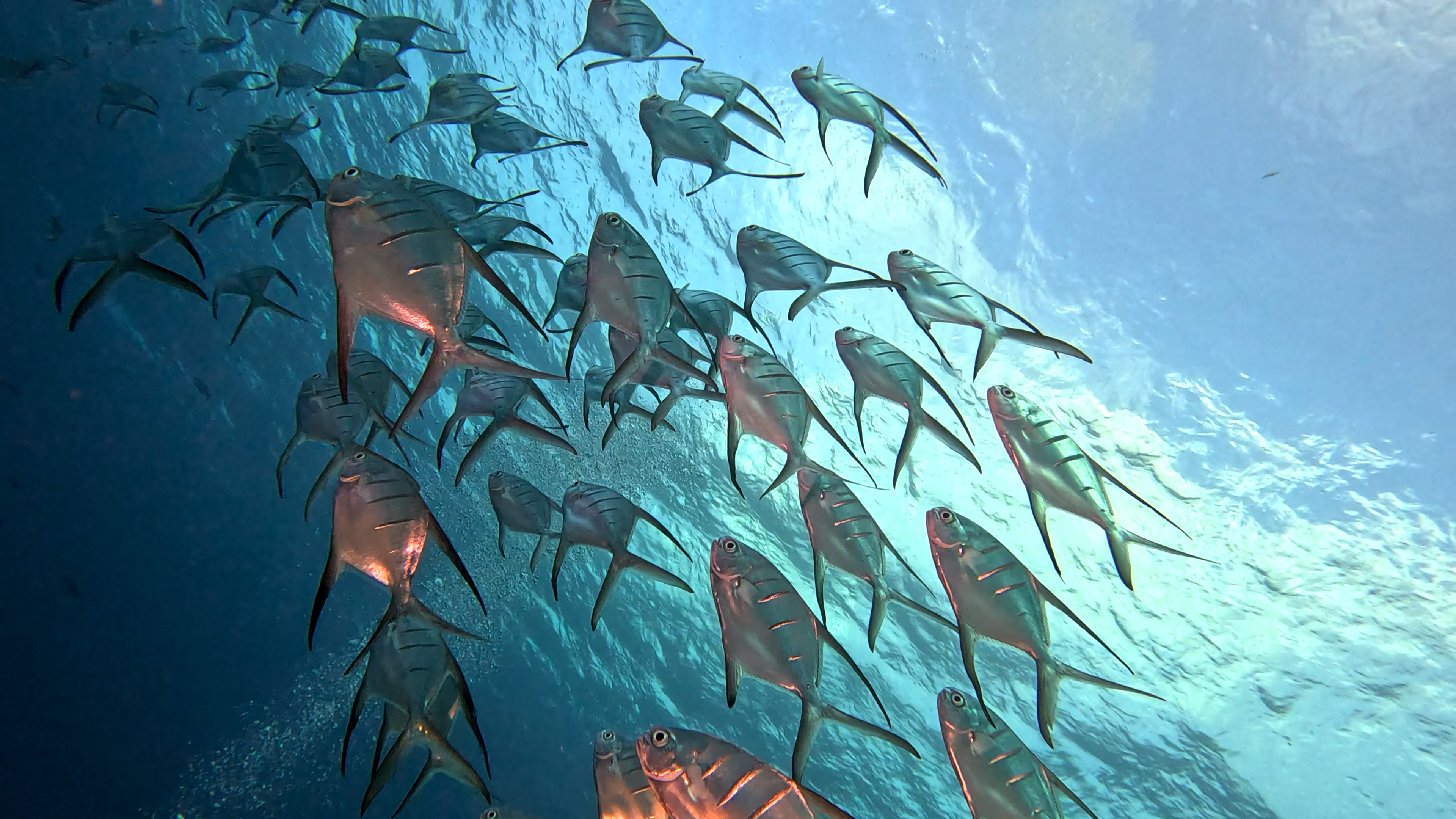
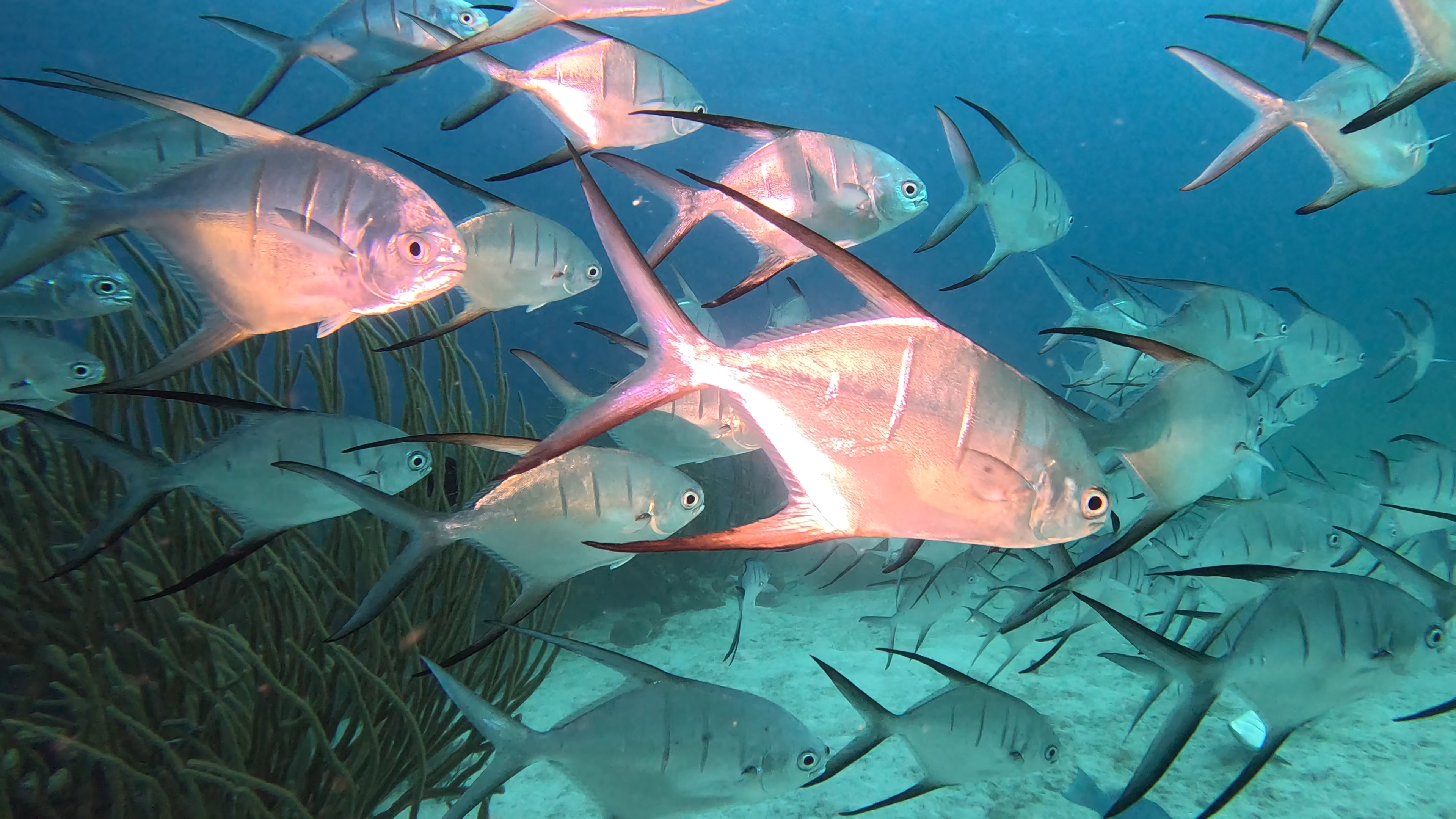
Palometa – Trachinotus goodei- Palometa – Trnobok
Palometa je hitro plavajoča morska riba, ki živi v zahodnem Atlantskem oceanu, vključno s Karibskim morjem in Mehiškim zalivom. Spada v družino trnobokov in je znana po srebrnem, bočno sploščenem telesu ter vilastem repu. Riba lahko zraste do približno 60 centimetrov. Mladice imajo včasih šibke navpične črte. Ima majhna usta z ostrimi zobmi, s katerimi lovi plen. Palometa je mesojed in se prehranjuje z majhnimi ribami, raki, kozicami in drugimi majhnimi nevretenčarji. So aktivni plavalci, pogosto tvorijo jate in jih najdemo v plitvih obalnih vodah, na peščenih dnih, ob koralnih grebenih in v estuarijih. Ta vrsta je priljubljena pri rekreativnem ribolovu zaradi svoje hitrosti in močnega boja velja za cenjeno športno ribolovno ribo v Karibskem območju.
The Palometa (Trachinotus goodei) is a fast-swimming marine fish found in the western Atlantic Ocean, including the Caribbean Sea and Gulf of Mexico. It belongs to the jack family and is known for its silvery, laterally compressed body and forked tail. This fish can grow up to 60 centimeters (24 inches) long. Juveniles sometimes have faint vertical stripes. It has a small mouth with sharp teeth, which it uses to catch prey. Palometa are carnivorous, feeding on small fish, crustaceans, shrimp, and other small invertebrates. They are active swimmers, often forming schools, and are commonly found in shallow coastal waters, sandy bottoms, reefs, and estuaries. This species is popular with recreational fishermen due to its speed and strong fight, making it a prized sport fish in the Caribbean region.
Foto: Aleš Sulič. Bonaire Windsock
FRENCH GRUNT FISH
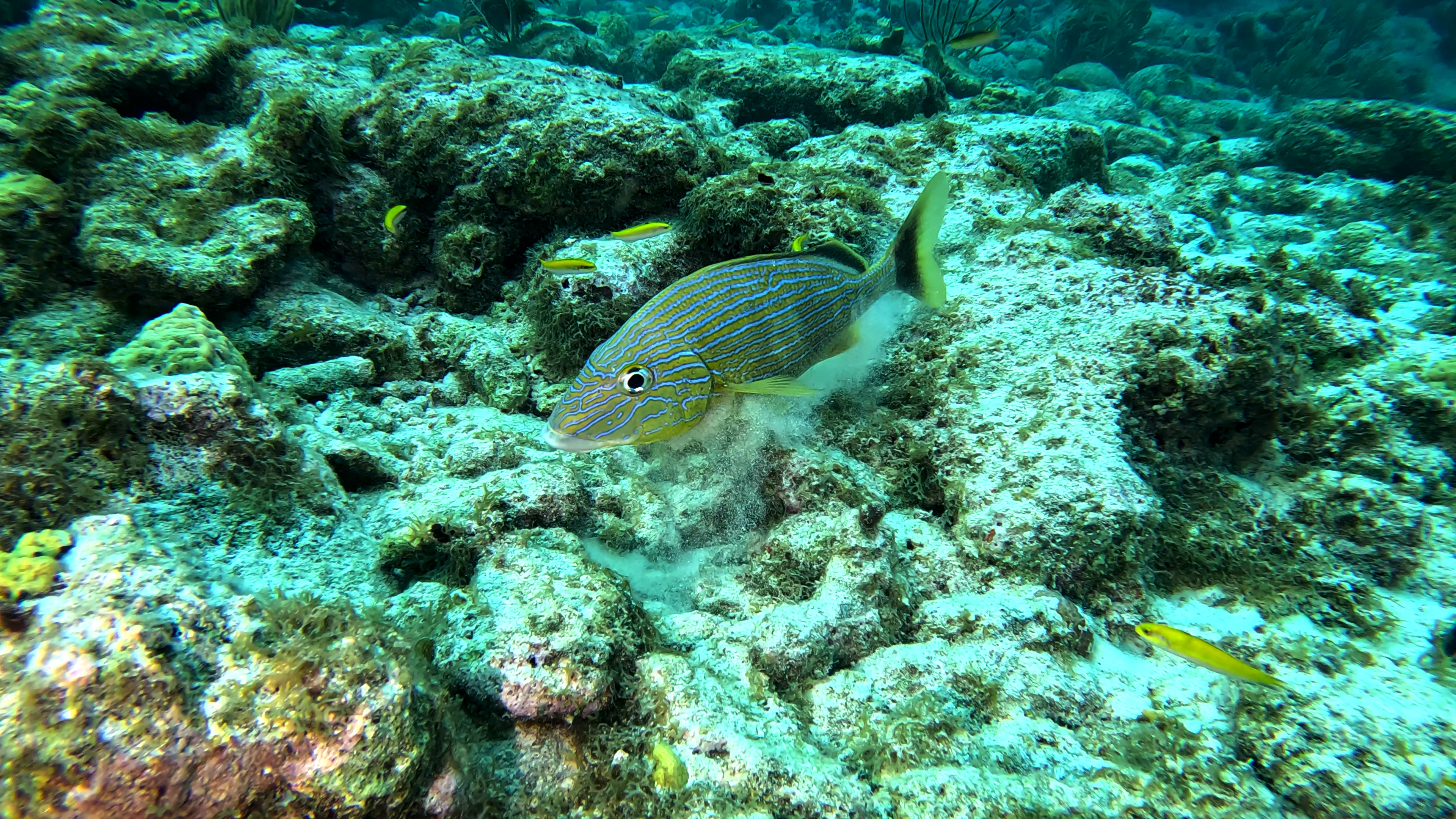
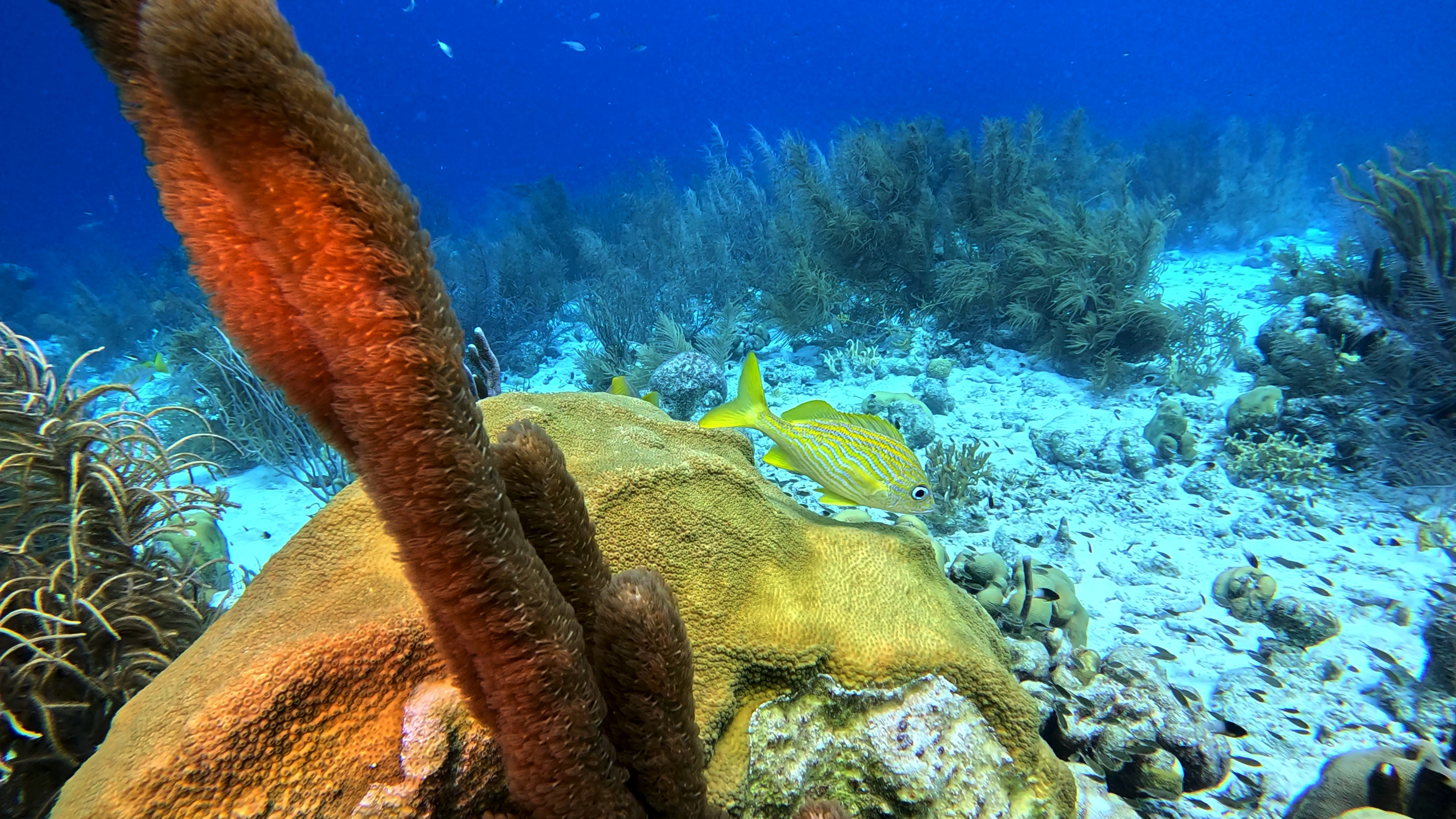
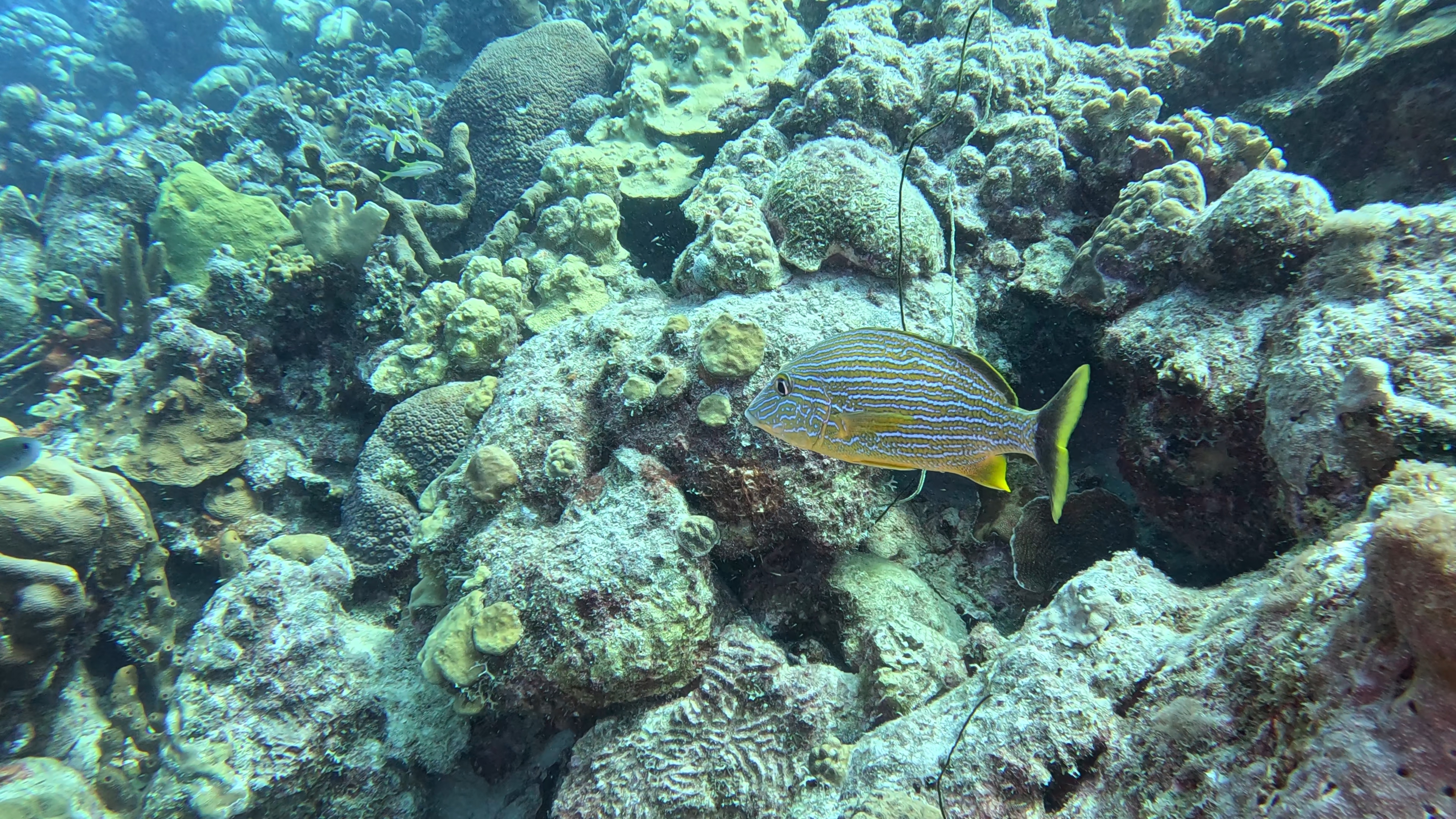
French Grunt – Haemulon flavolineatum – Francoski godrnjavček
Francoski godrnjavček je majhna barvita riba, ki živi v zahodnem Atlantskem oceanu, vključno s Karibskim morjem in Mehiškim zalivom. Spada v družino godrnjavčkov in je poimenovana po zvoku “grgranja”, ki ga izdaja z drgnjenjem žrelnih zob. Riba zraste do približno 25 centimetrov. Njeno telo je srebrno z živimi rumenimi vodoravnimi črtami in plavutmi. Mladice imajo pogosto še bolj intenzivno rumeno barvo. Francoski grunti so mesojedi in se prehranjujejo z majhnimi raki, črvi in drugimi majhnimi nevretenčarji. So nočni plenilci. Pogosto tvorijo velike jate da se zaščitijo pred drugimi plenilci. Te ribe igrajo pomembno vlogo v ekosistemih koralnih grebenov, saj pomagajo nadzorovati število majhnih nevretenčarjev.
The French Grunt is a small, colorful reef fish found in the western Atlantic Ocean, including the Caribbean and Gulf of Mexico. It belongs to the grunt family and gets its name from the grunting sound it produces by grinding its pharyngeal teeth. This fish grows up to about 25 centimeters (10 inches) long. Its body is silver with bright yellow horizontal stripes, and it has yellow fins. Juveniles often have even more intense yellow coloring. French Grunts are carnivorous, feeding on small crustaceans, worms, and other tiny invertebrates. They are nocturnal feeders, hunting mostly at night, and often form large schools for protection. These fish play an important role in reef ecosystems by helping control populations of small invertebrates.
Foto: Aleš Sulič, Bonaire Tolo
SNAPPER
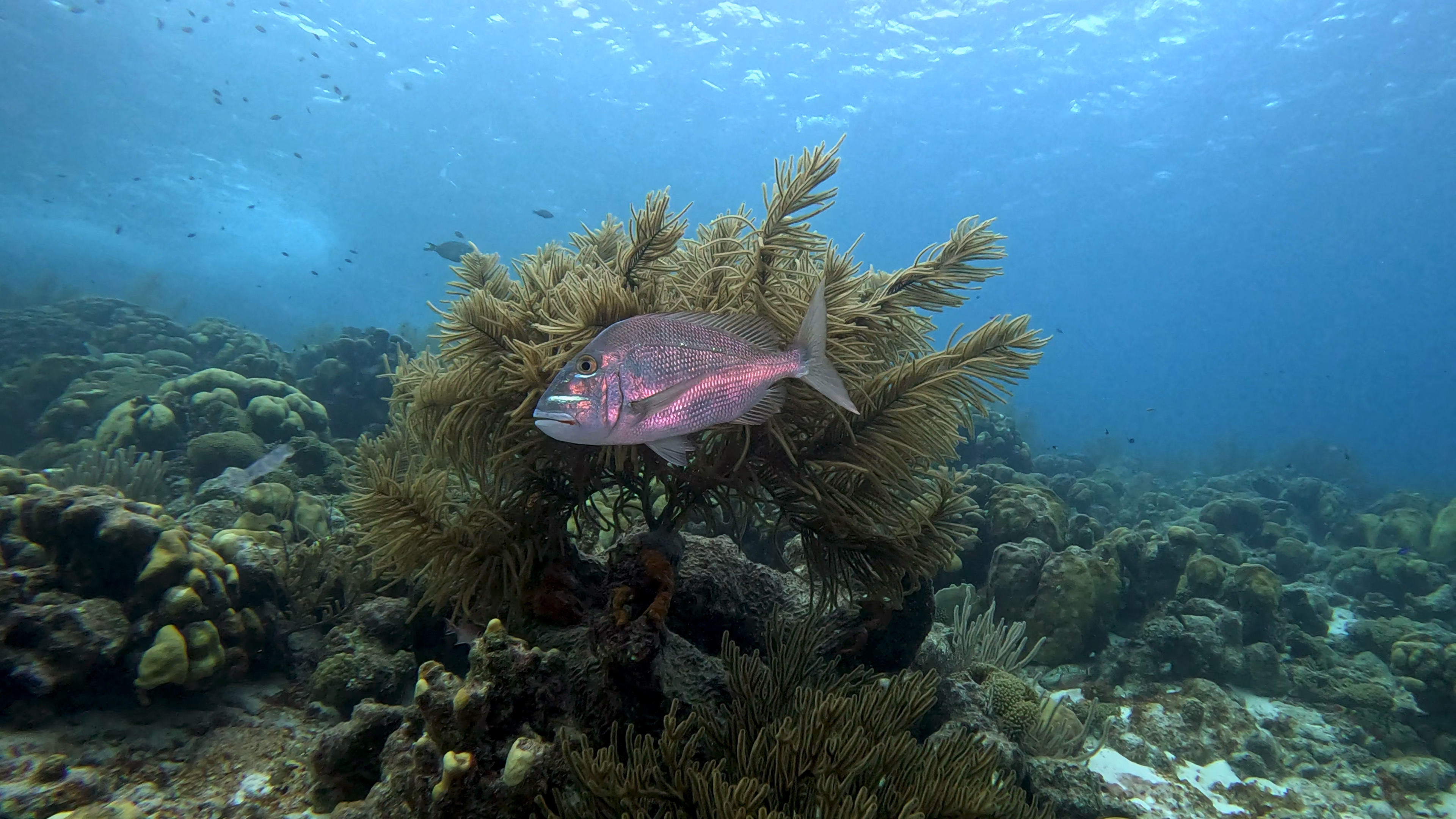
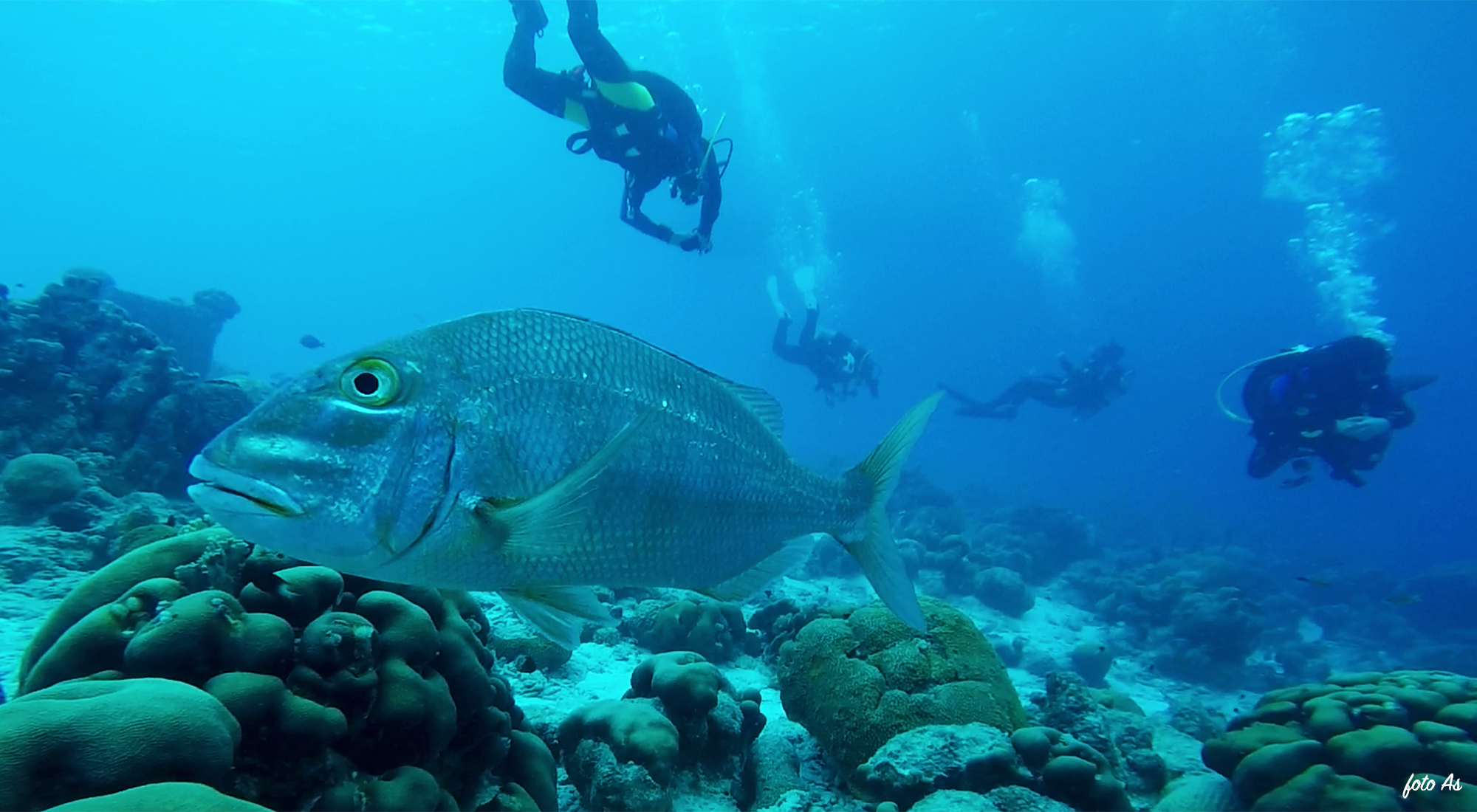
Snapper – Lutjanidae – Hlastač
Hlastači živijo v toplih oceanih, zlasti v Atlantskem in Tihem oceanu. Imajo podolgovata, cilindrična telesa z ostrimi zobmi, prilagojenimi za lov. Njihove barve se lahko zelo razlikujejo, vendar so pogosto v odtenkih rdeče, roza, rumene in srebrne barve. Velikost hlastačev se giblje od 20 cm do več kot 1 metra, odvisno od vrste. Imajo velike oči, ki jim omogočajo učinkovito lovljenje tako podnevi kot ponoči. Hlastači so mesojedi in se prehranjujejo z majhnimi ribami, rakci, lignji, hobotnicami ter drugimi morskimi nevretenčarji. Nekatere vrste so tudi mrhovinarji.
Snapper refers to a group of fish commonly found in warm oceans, especially in the Atlantic and Pacific regions. These fish are recognized for their sharp, pointed teeth and are prized for their game-fish qualities, making them popular targets for recreational fishing. Snappers typically have elongated, cylindrical bodies with sharp teeth. Their coloration varies, but they often have shades of red, pink, yellow, and silver, with large eyes adapted for hunting in both daylight and at night. They range in size from about 20 cm (8 inches) to over 1 meter (3 feet) in some species. Snappers are carnivorous, feeding on small fish, crustaceans, squid, octopus, and other marine invertebrates. Some species also scavenge along the ocean floor.
Foto: Aleš Sulič, Bonaire Karpata
GREEN MORAY
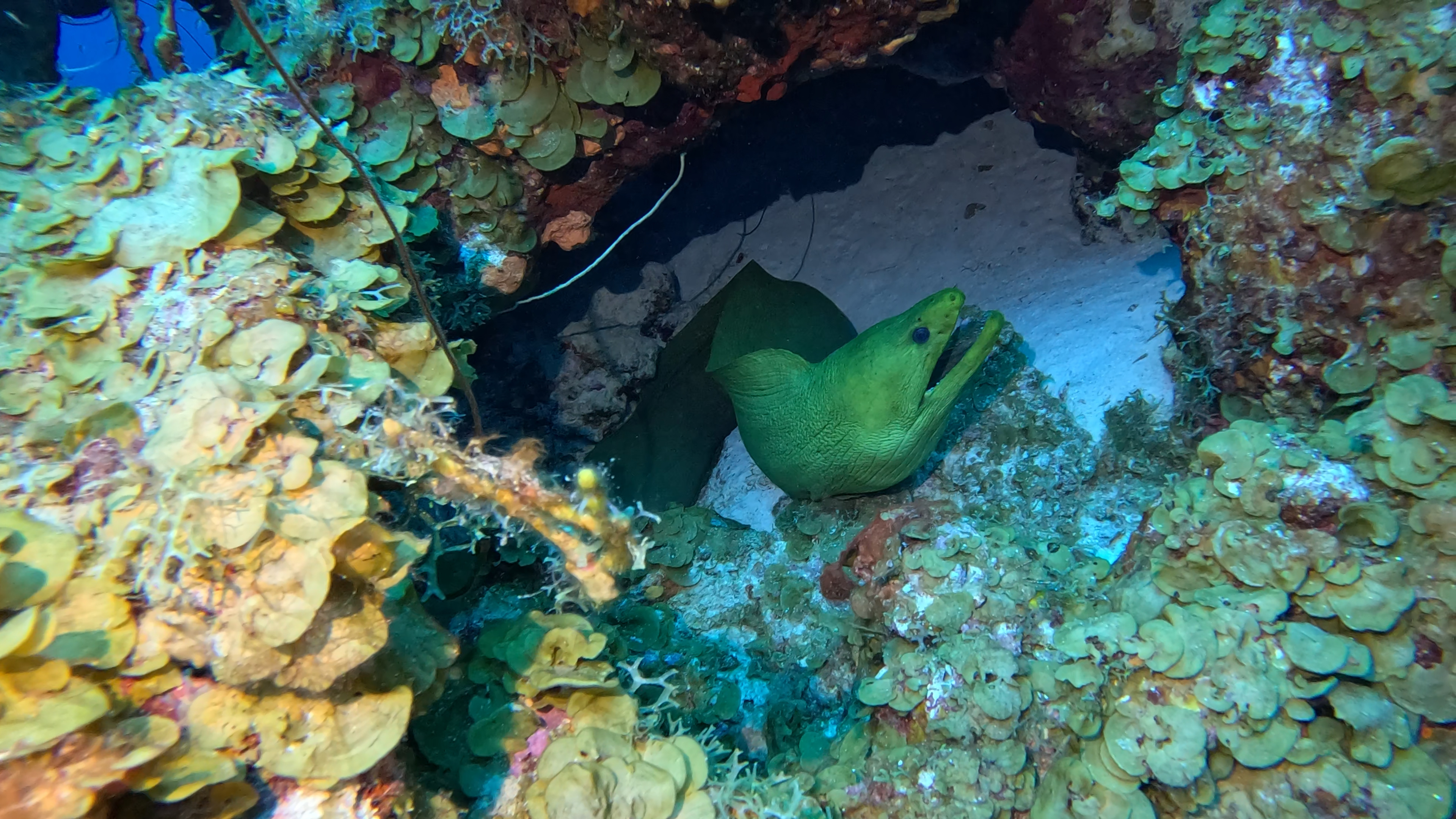
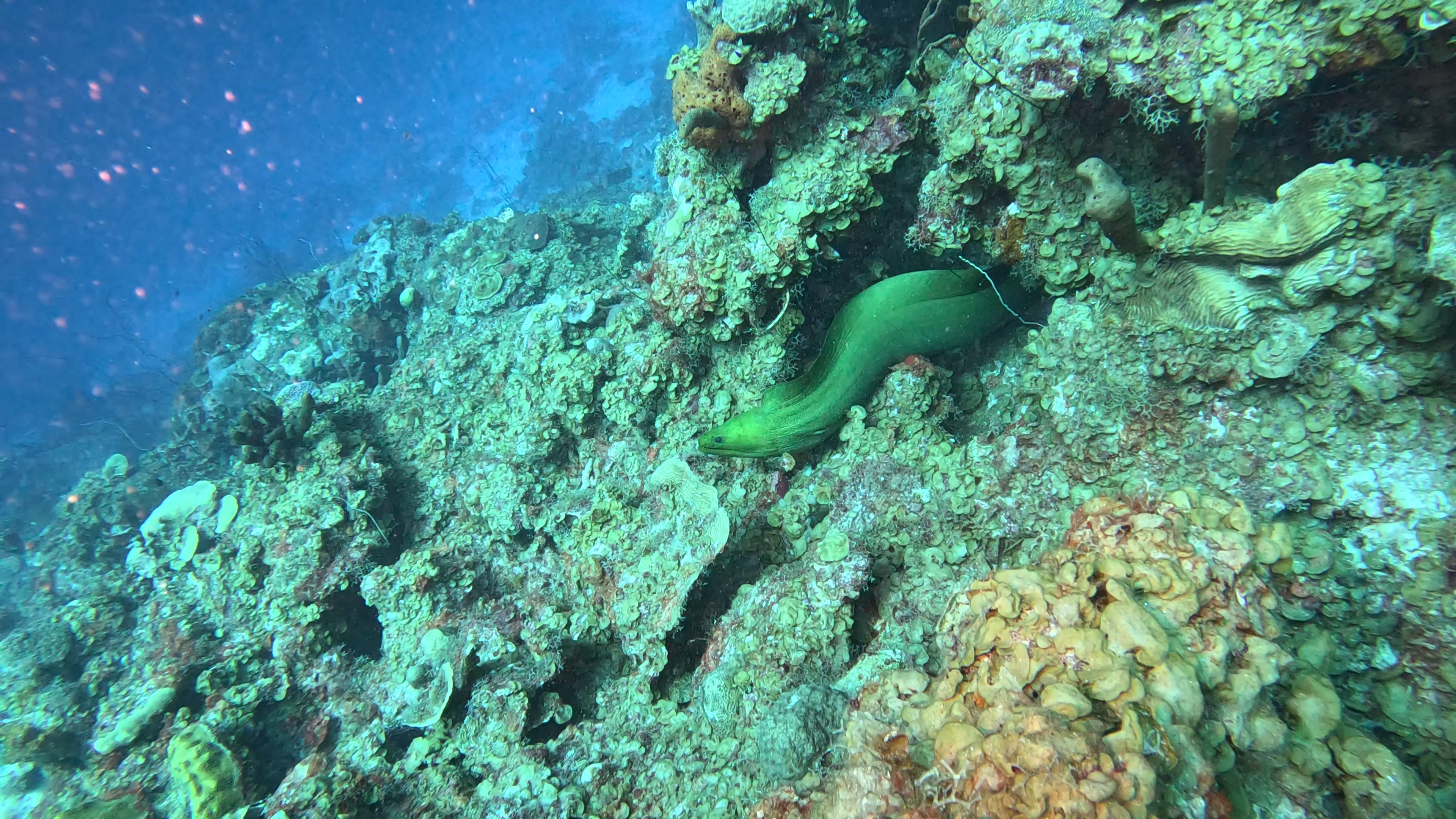
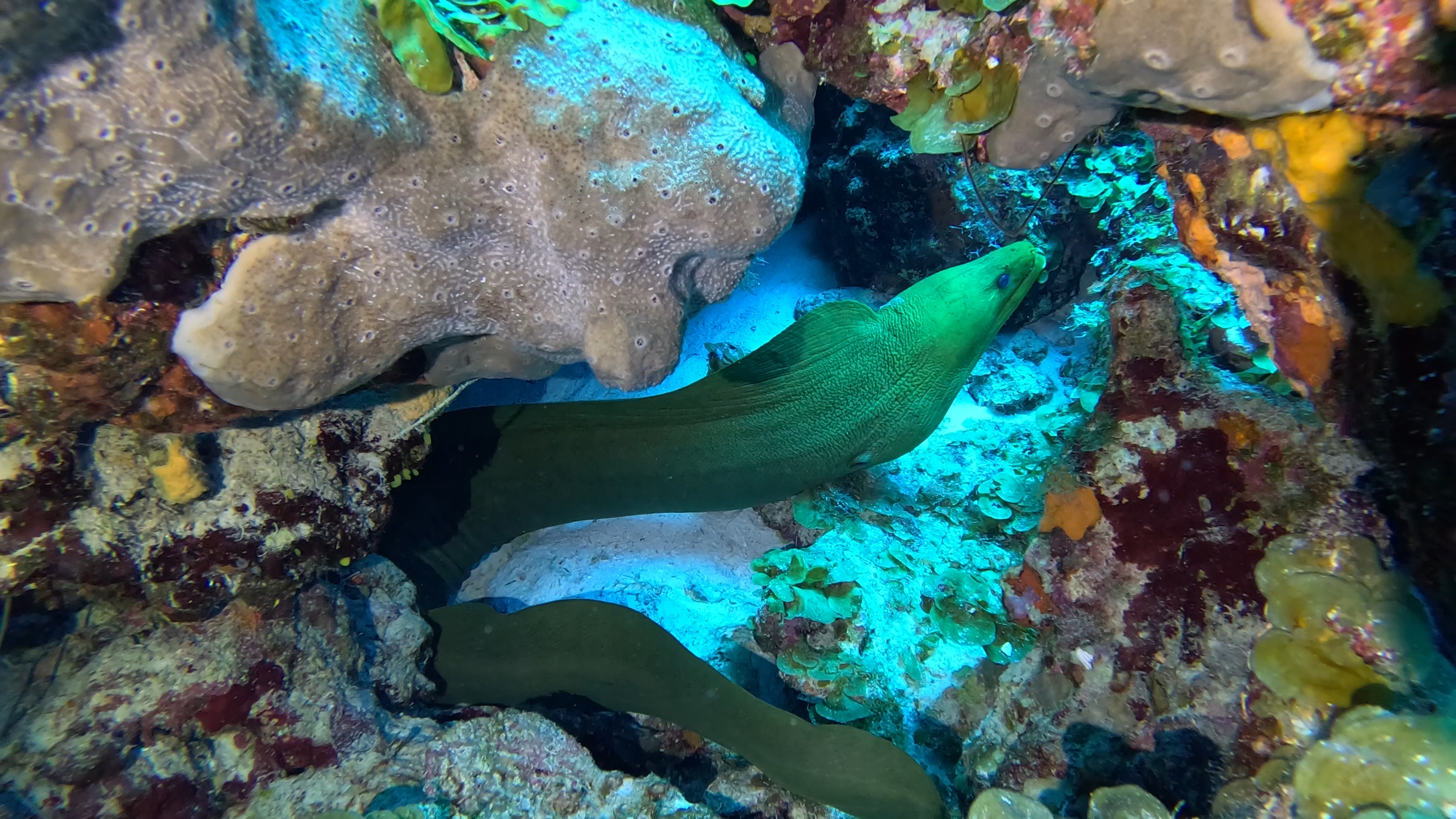
Green Moray Eel – Gymnothorax funebris – Zelena morena
Zelena morena je ena najbolj znanih vrst moren, prepoznavena po svojem dolgem, kačjem telesu in živahni zeleni barvi. Pogosto jih najdemo v tropskih vodah zahodnega Atlantskega oceana, še posebej ob koralnih grebenih. Zeleni morena lahko zraste do 2,5 metra. Njegovo telo je običajno zelenkasto rumeno, s temnejšim odtenkom na hrbtu, zaradi česar je dobila ime. Ima gladko, sluzasto kožo brez lusk, široko glavo in majhne temne oči. Usta so velika, z ostrimi zobmi. Zelena morena je mesojeda in se prehranjuje z majhnimi ribami, rakci in mehkužci. So spretni plenilci, ki uporabljajo svoja ostra usta za lov in požiranje plena v celoti. So nočni živali, ki čez dan počivajo v razpokah ali skalnatih jamah. Običajno so samotarski in niso agresivni do ljudi, razen če so izzvani.
The Green Moray Eel (Gymnothorax funebris) is a well-known species of moray eel, recognized for its long, snake-like body and its vibrant greenish-yellow coloration. It is commonly found in the tropical waters of the western Atlantic Ocean, especially around coral reefs. Green Moray Eels can grow up to 2.5 meters (8 feet) long. They typically have a greenish-yellow body with a darker hue on their back, which gives them their name. Their smooth, slimy skin lacks scales, and they have a large, broad head with small, dark eyes. Their mouths are large and equipped with sharp teeth. Green Moray Eels are carnivorous and primarily feed on small fish, crustaceans, and mollusks. They are skilled predators, using their sharp teeth to capture and swallow prey whole. They are mostly nocturnal, hunting at night and resting during the day in crevices or rocky caves, where they spend most of their time. They are solitary creatures and are typically not aggressive unless provoked.
Foto: Aleš Sulič, Egypt North
GROUPERS
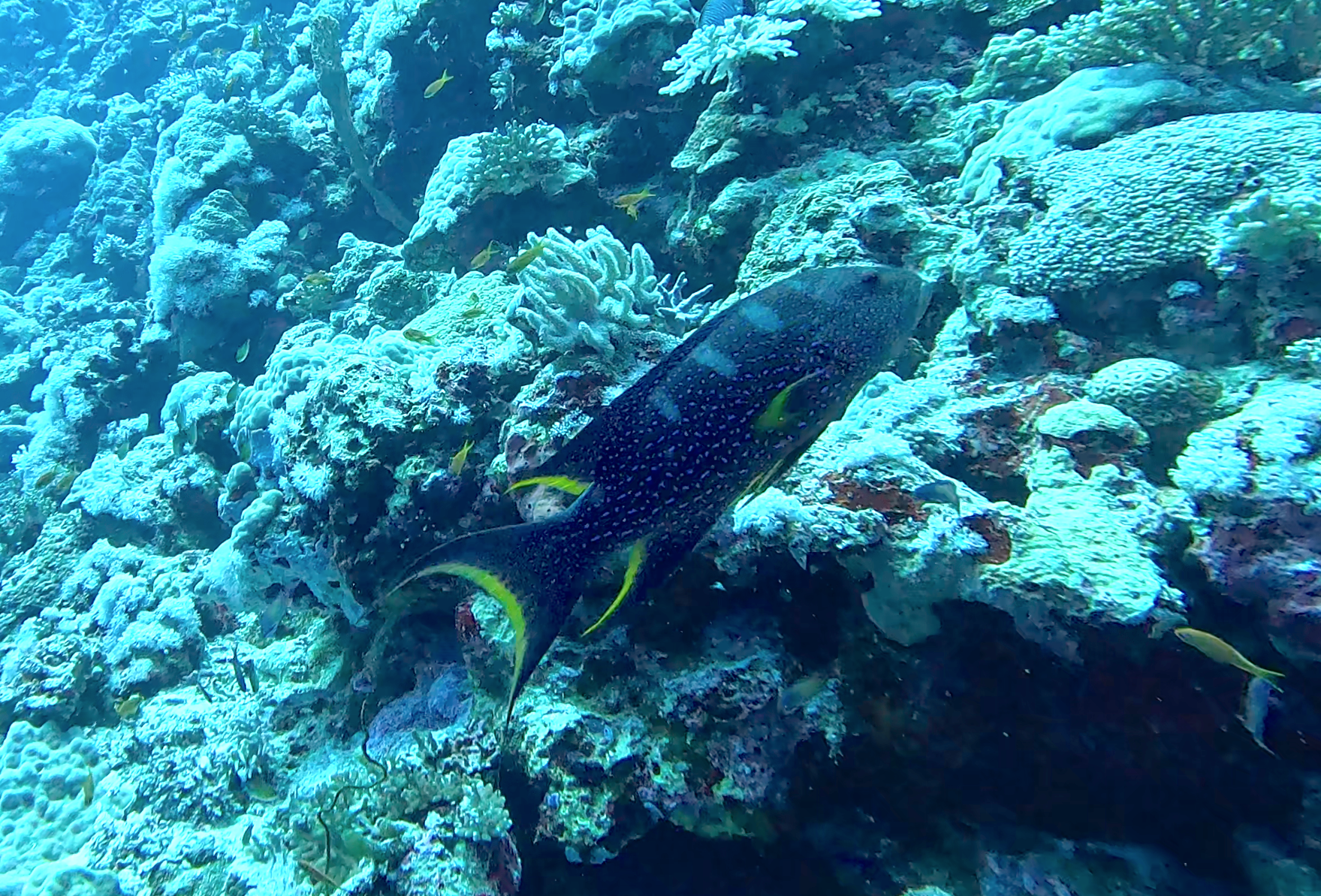
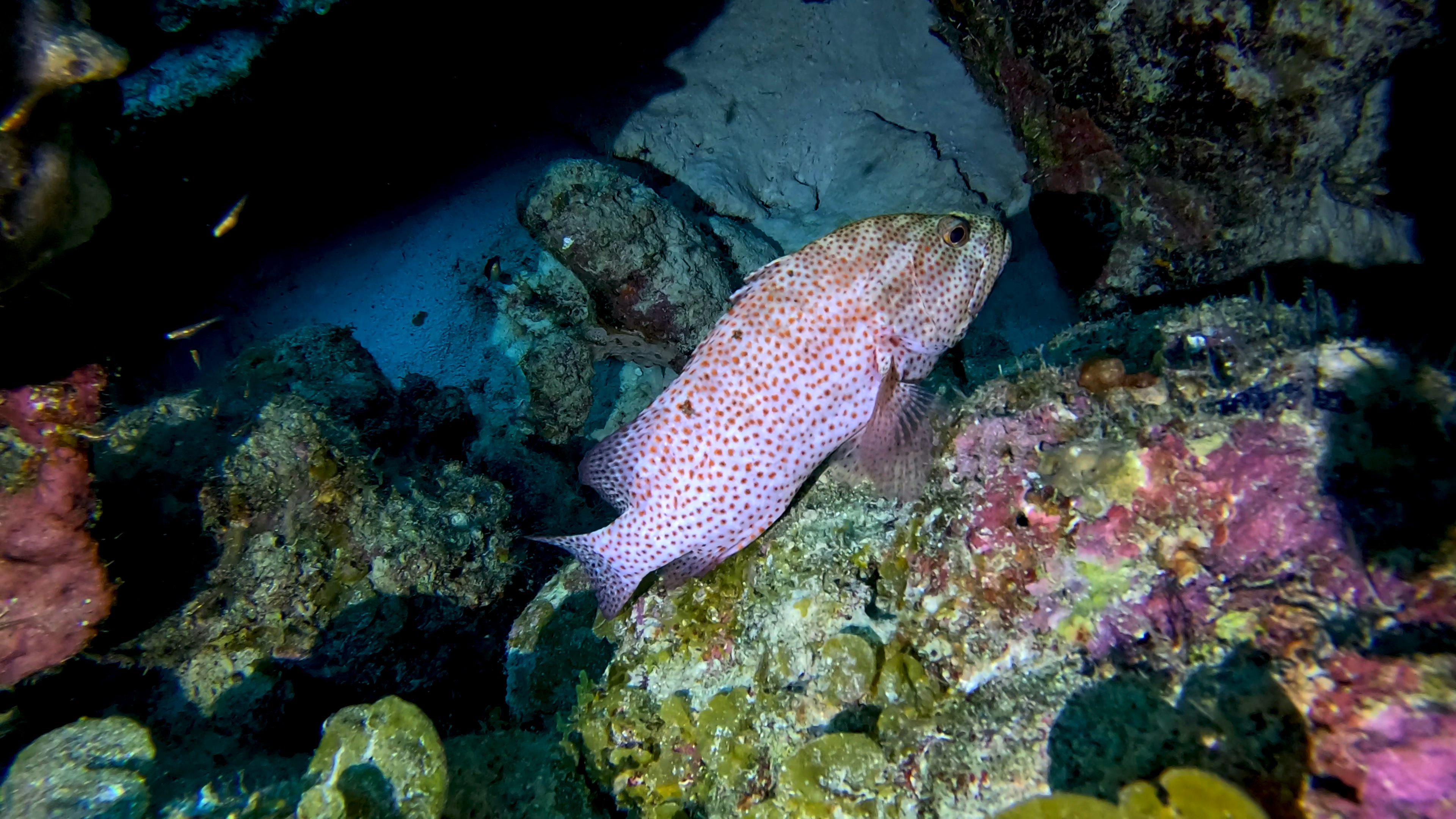
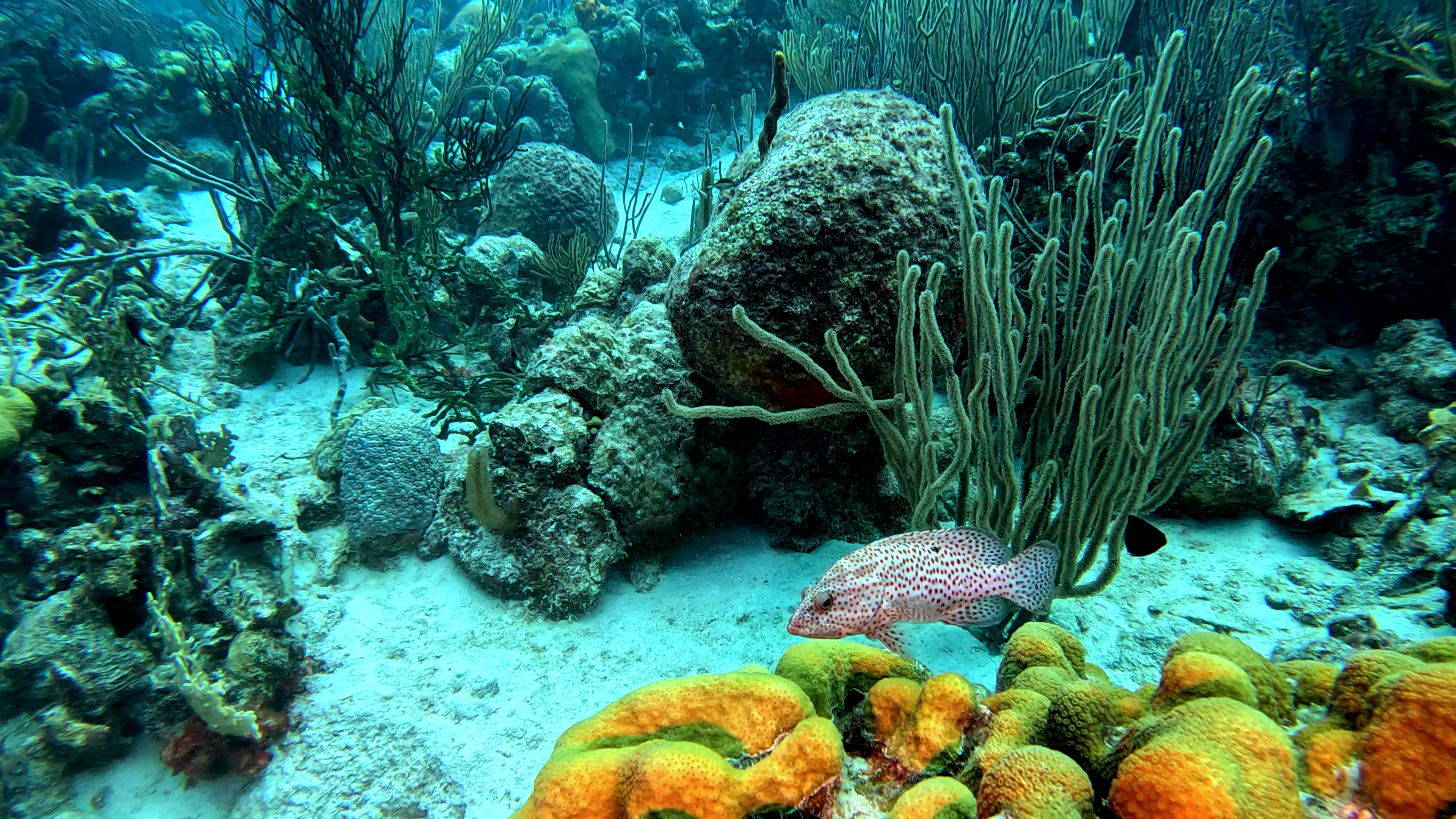
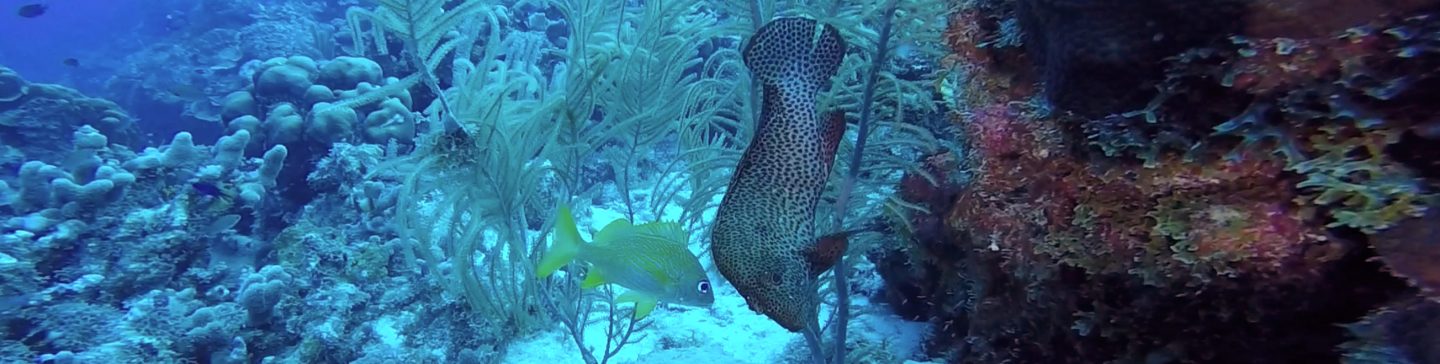
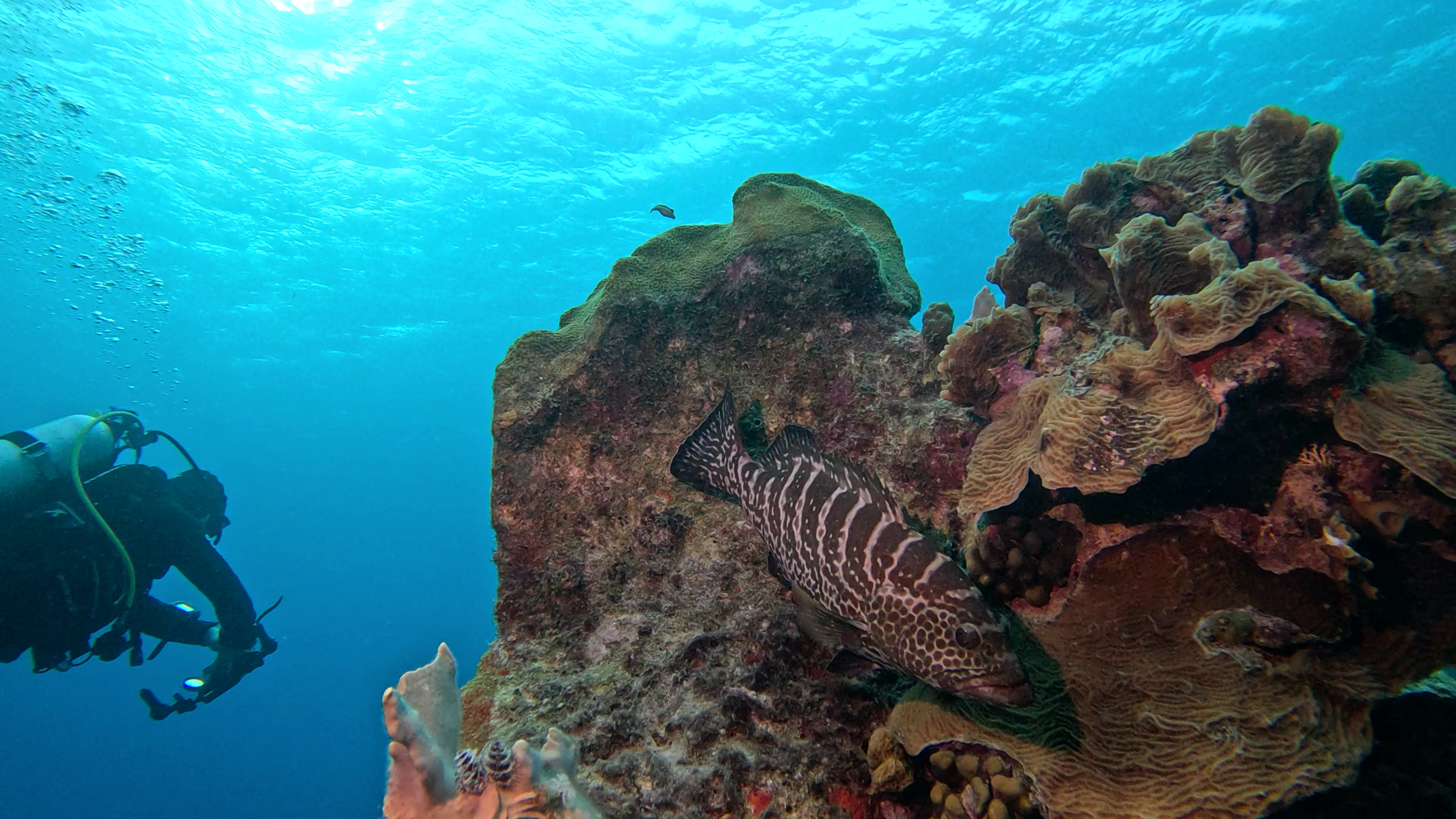
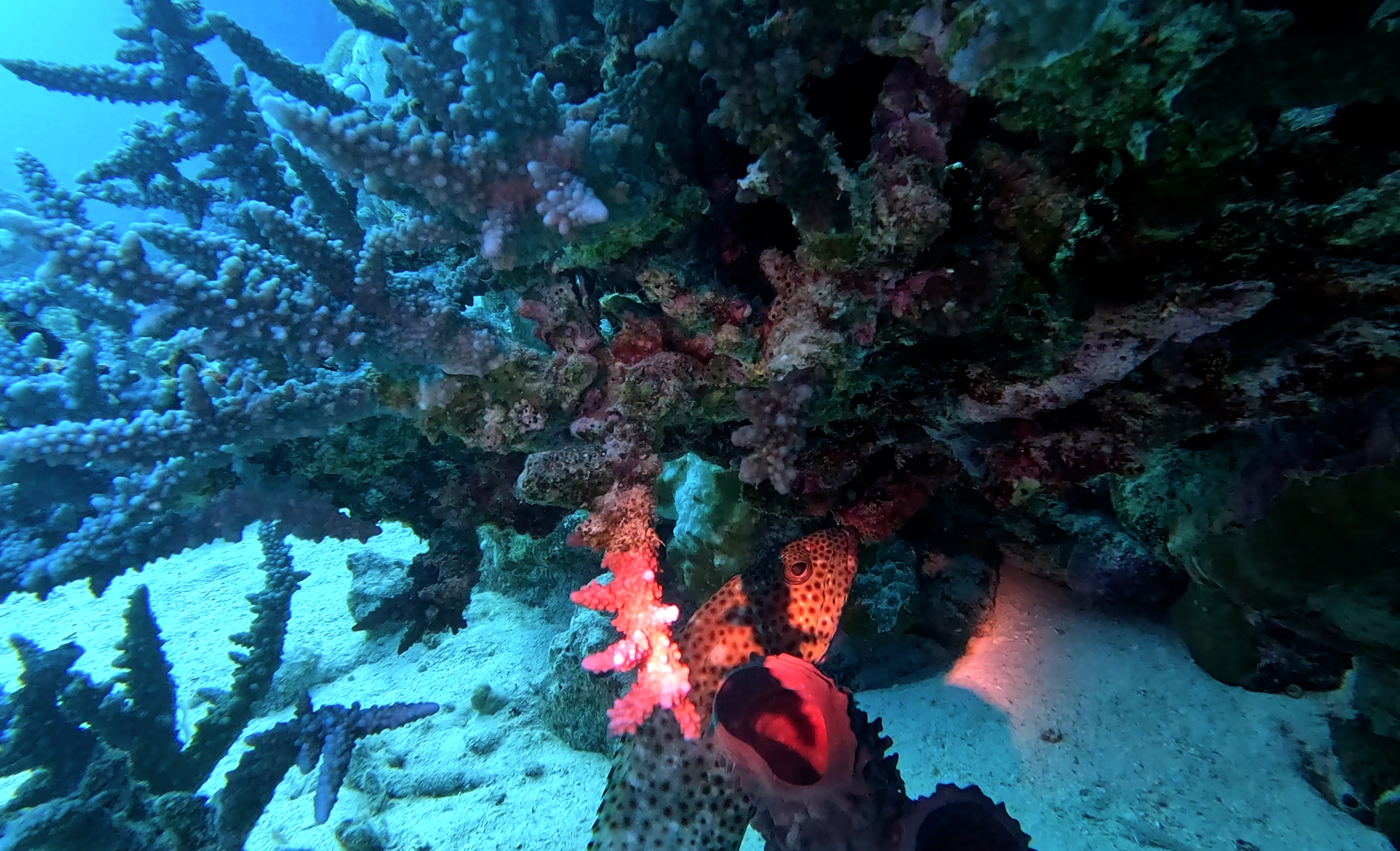
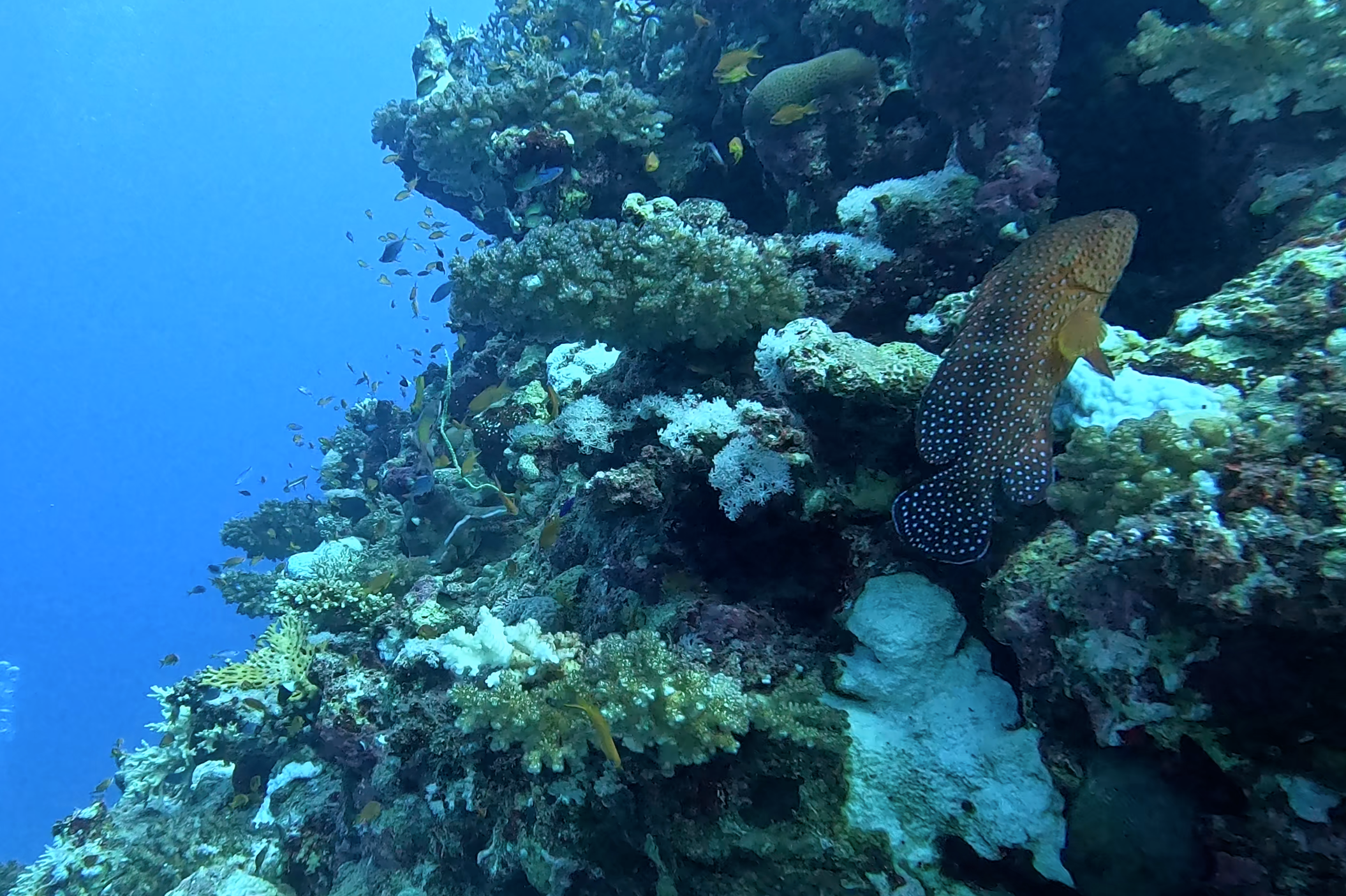
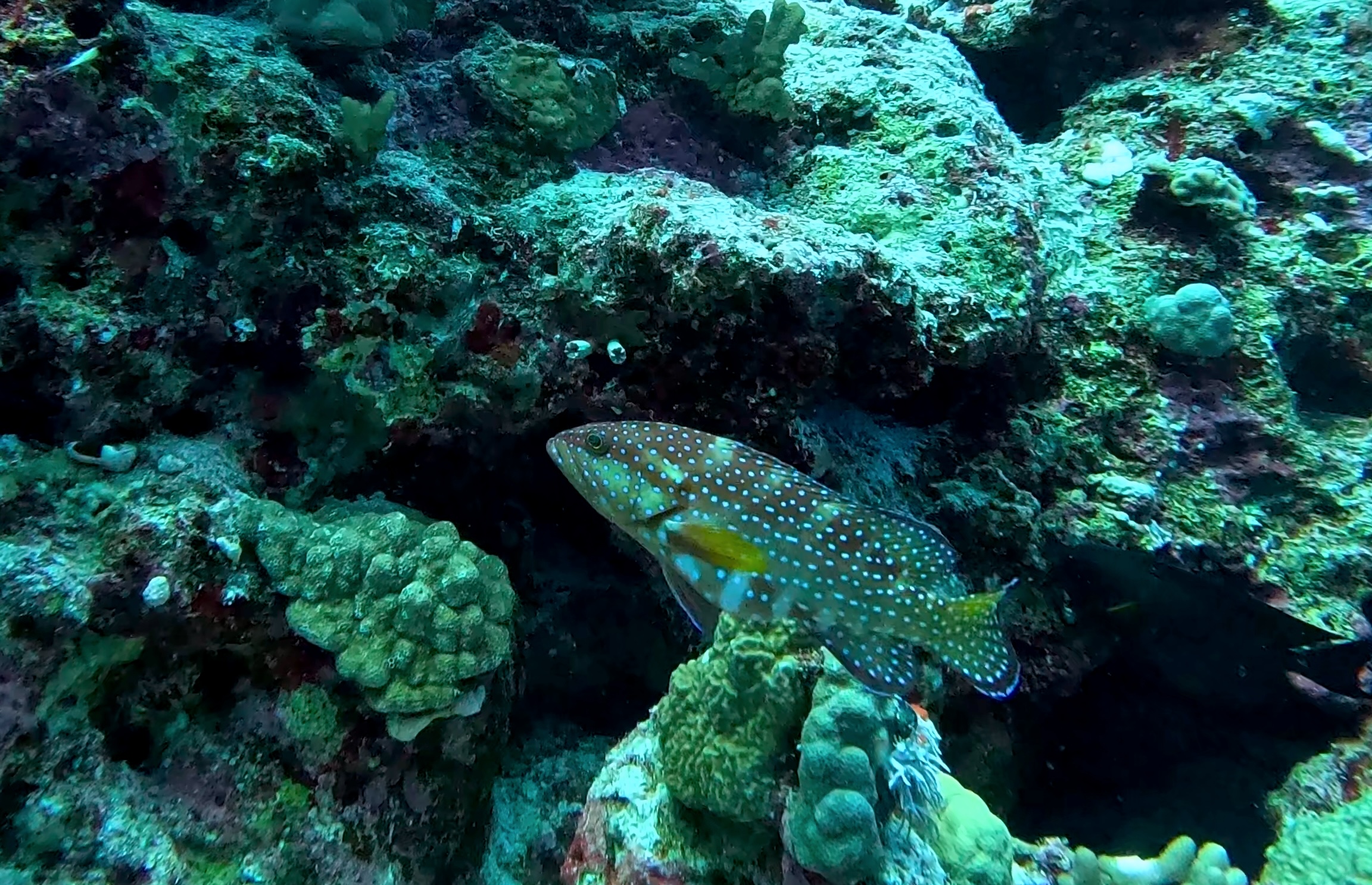
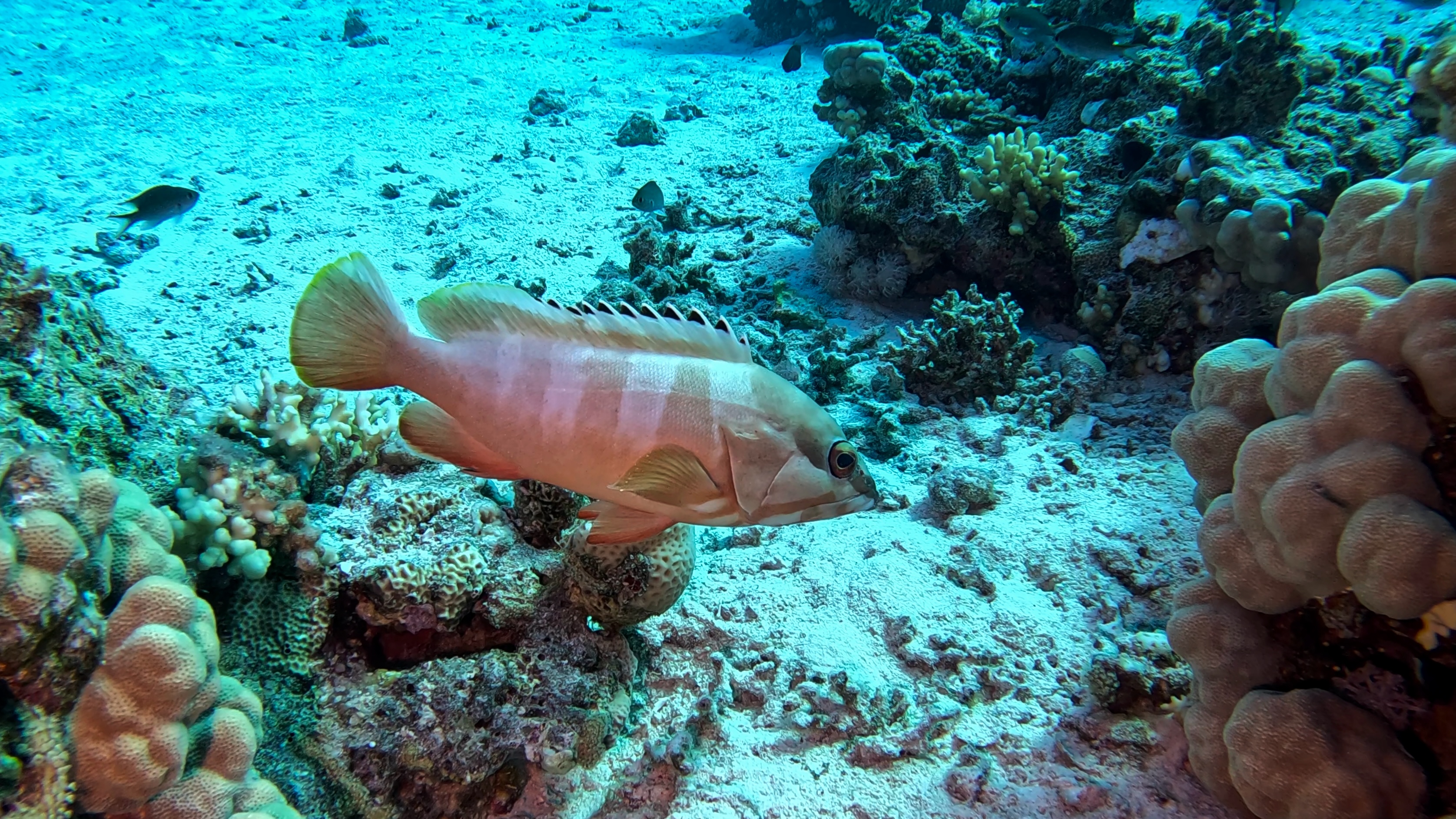
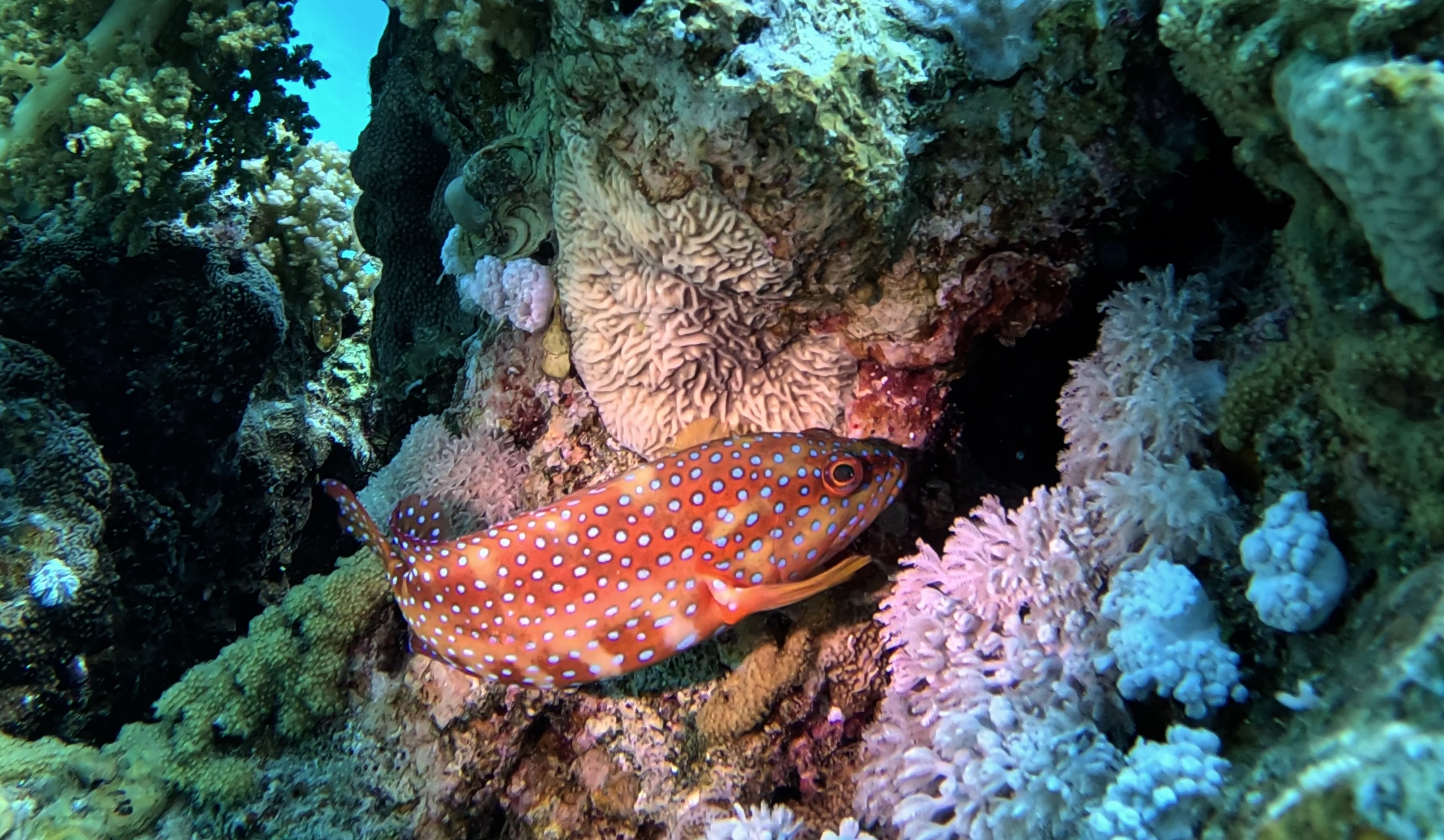
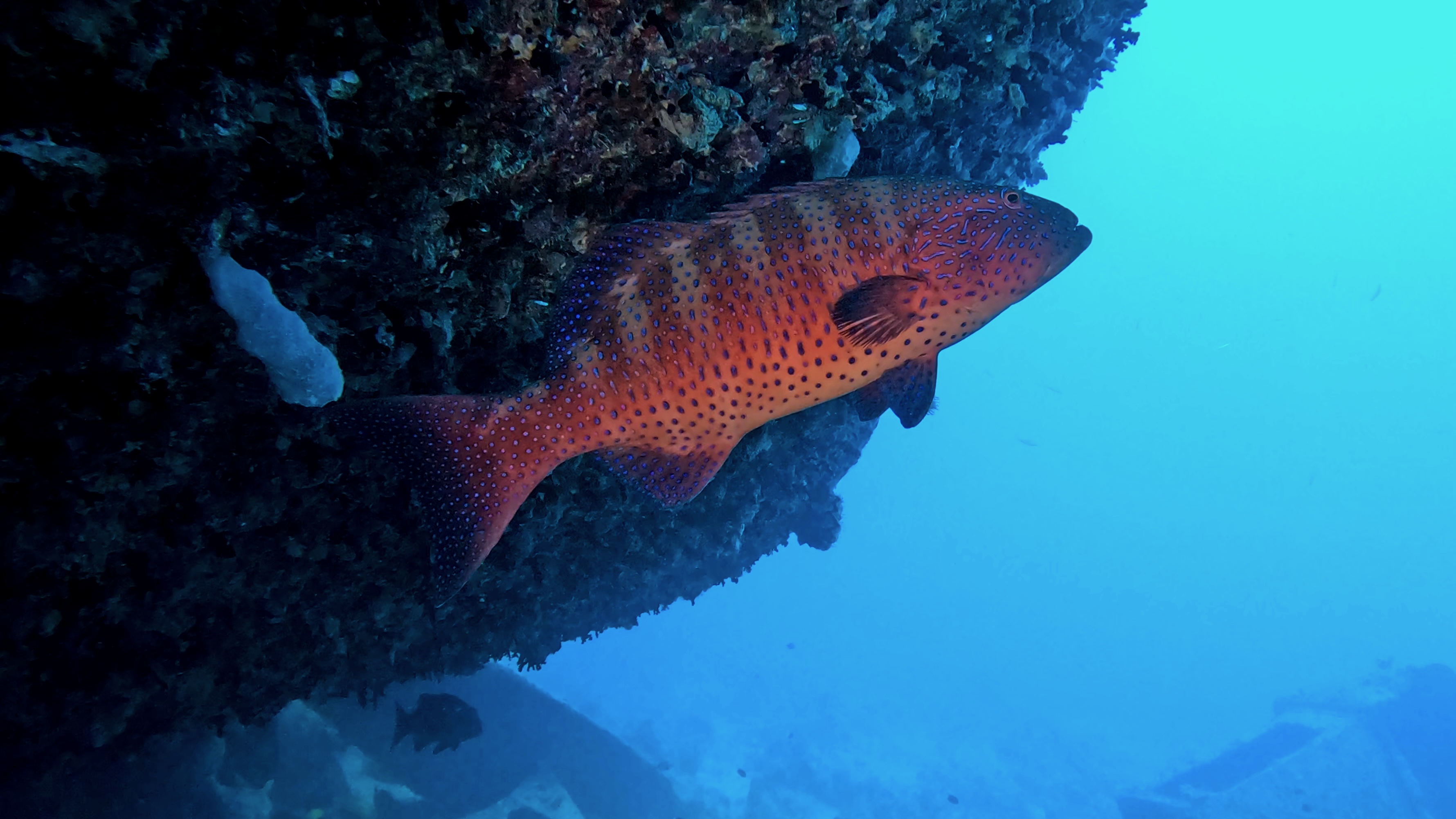
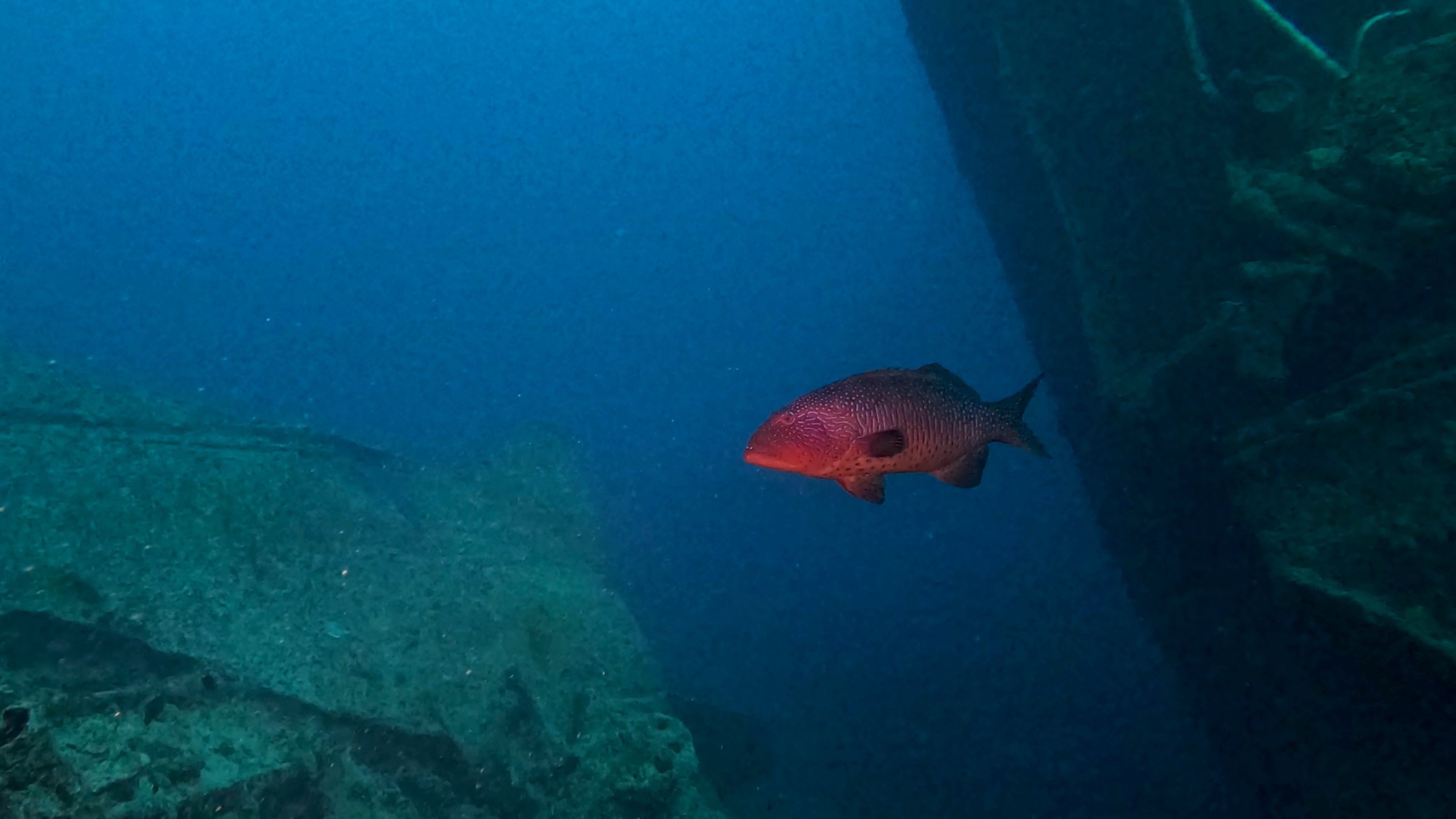
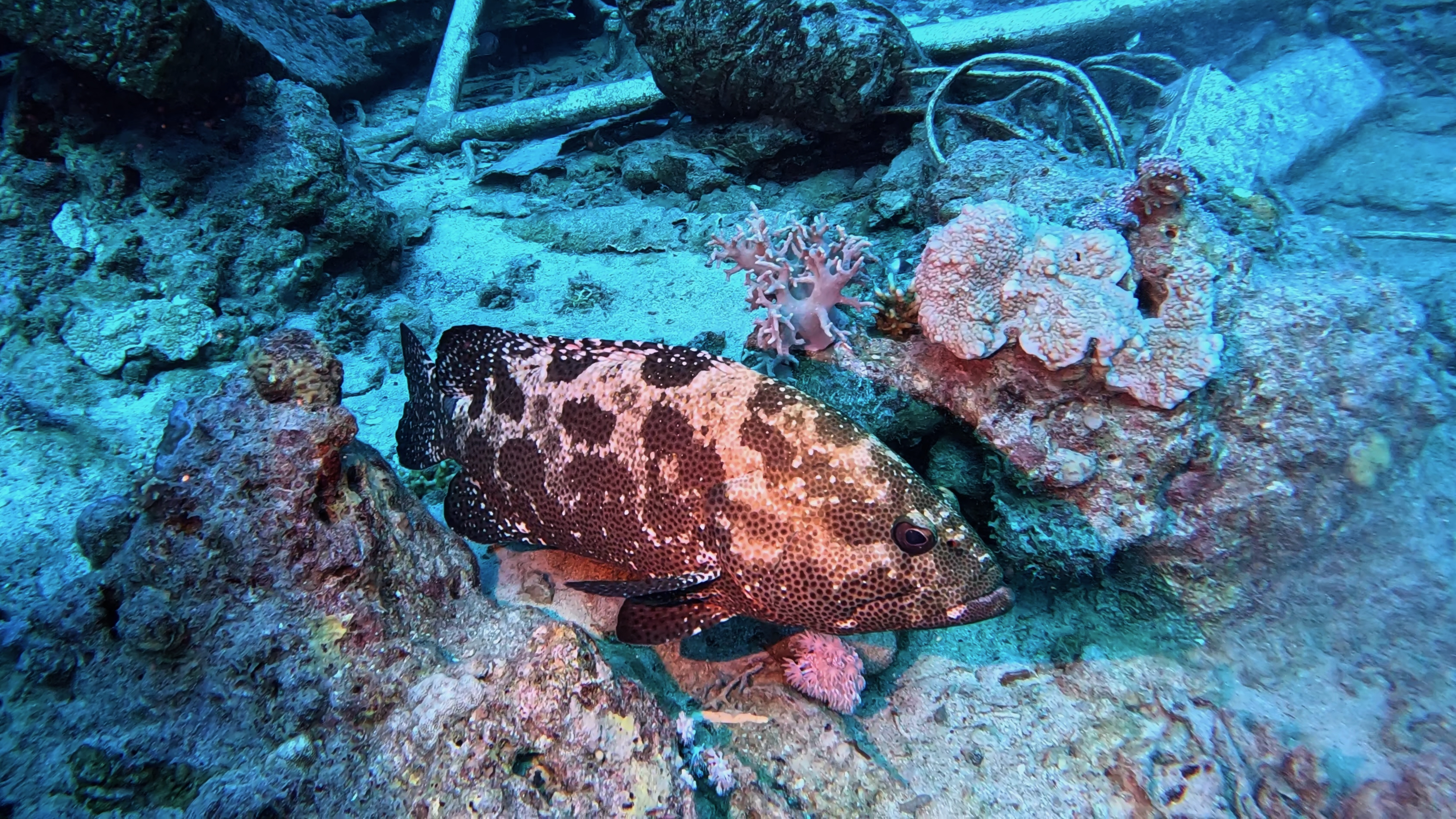
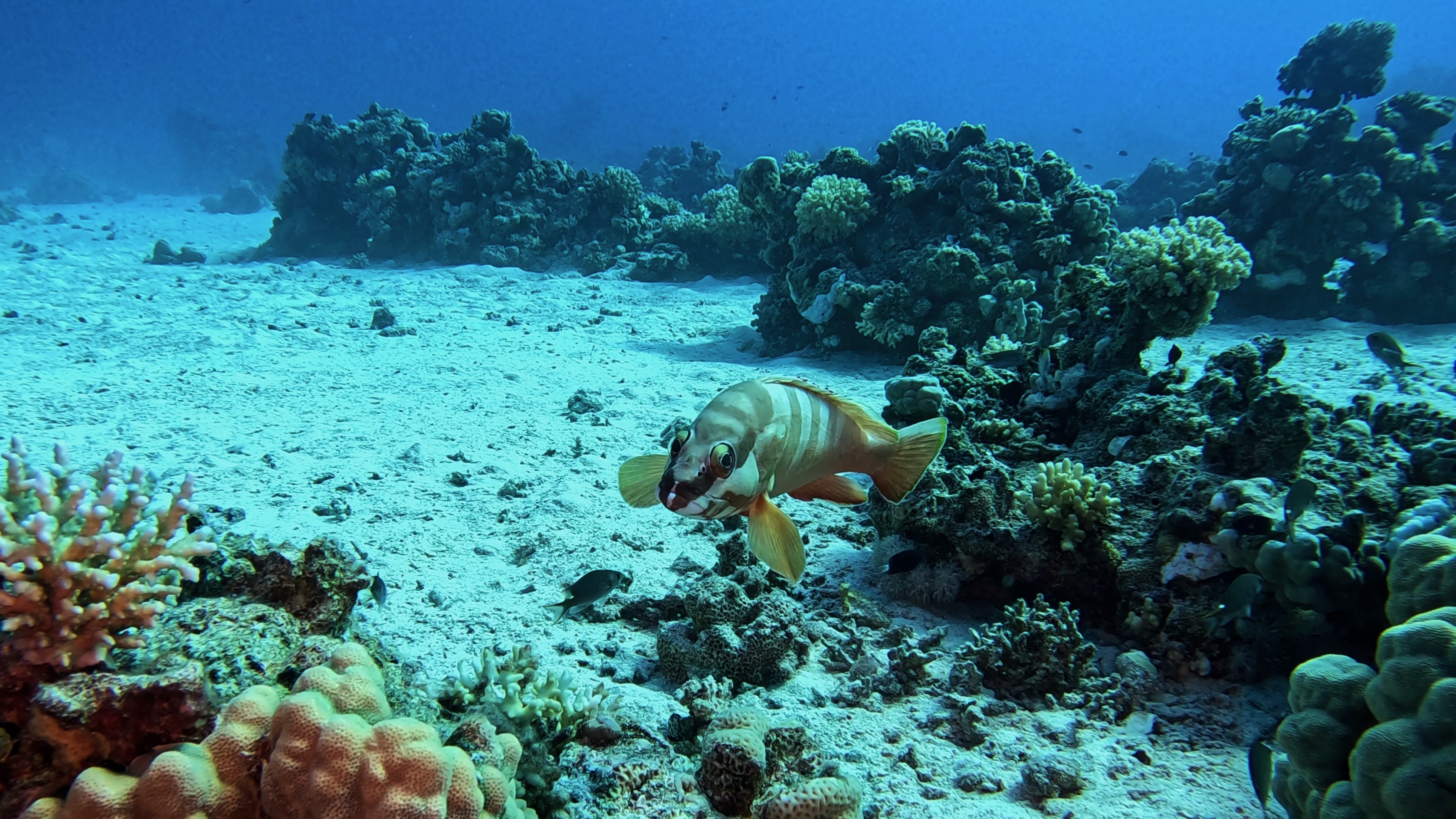
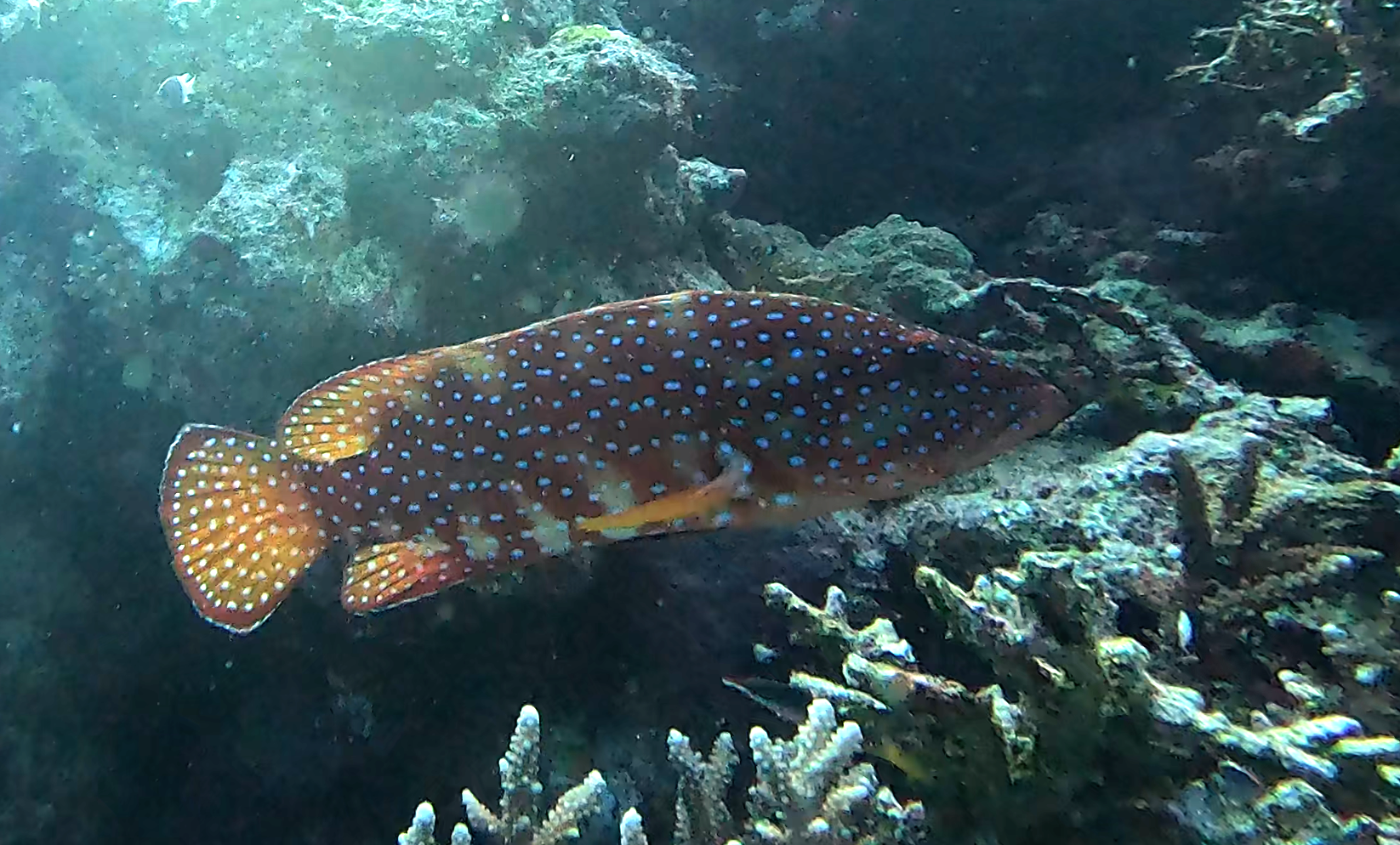
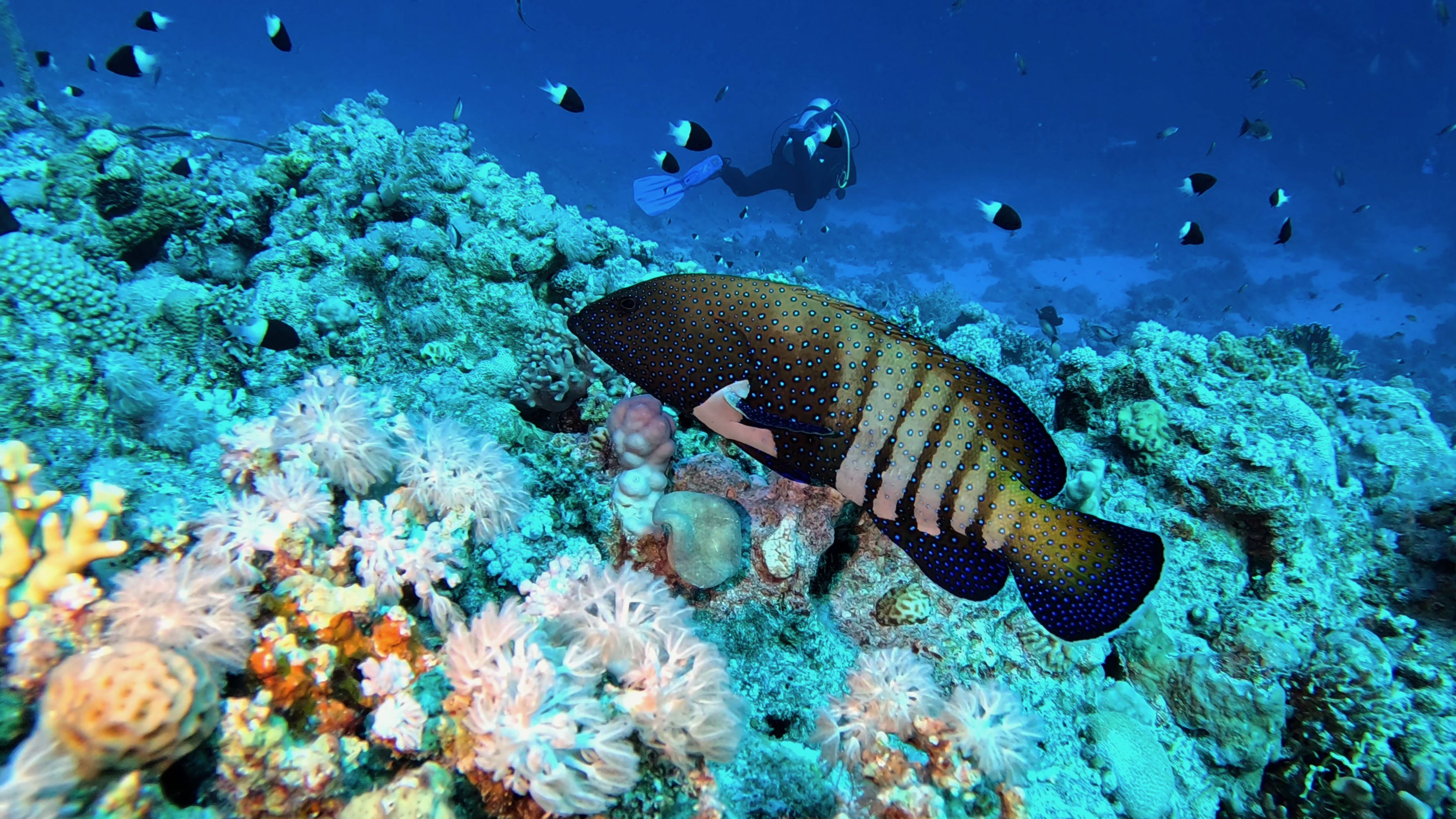
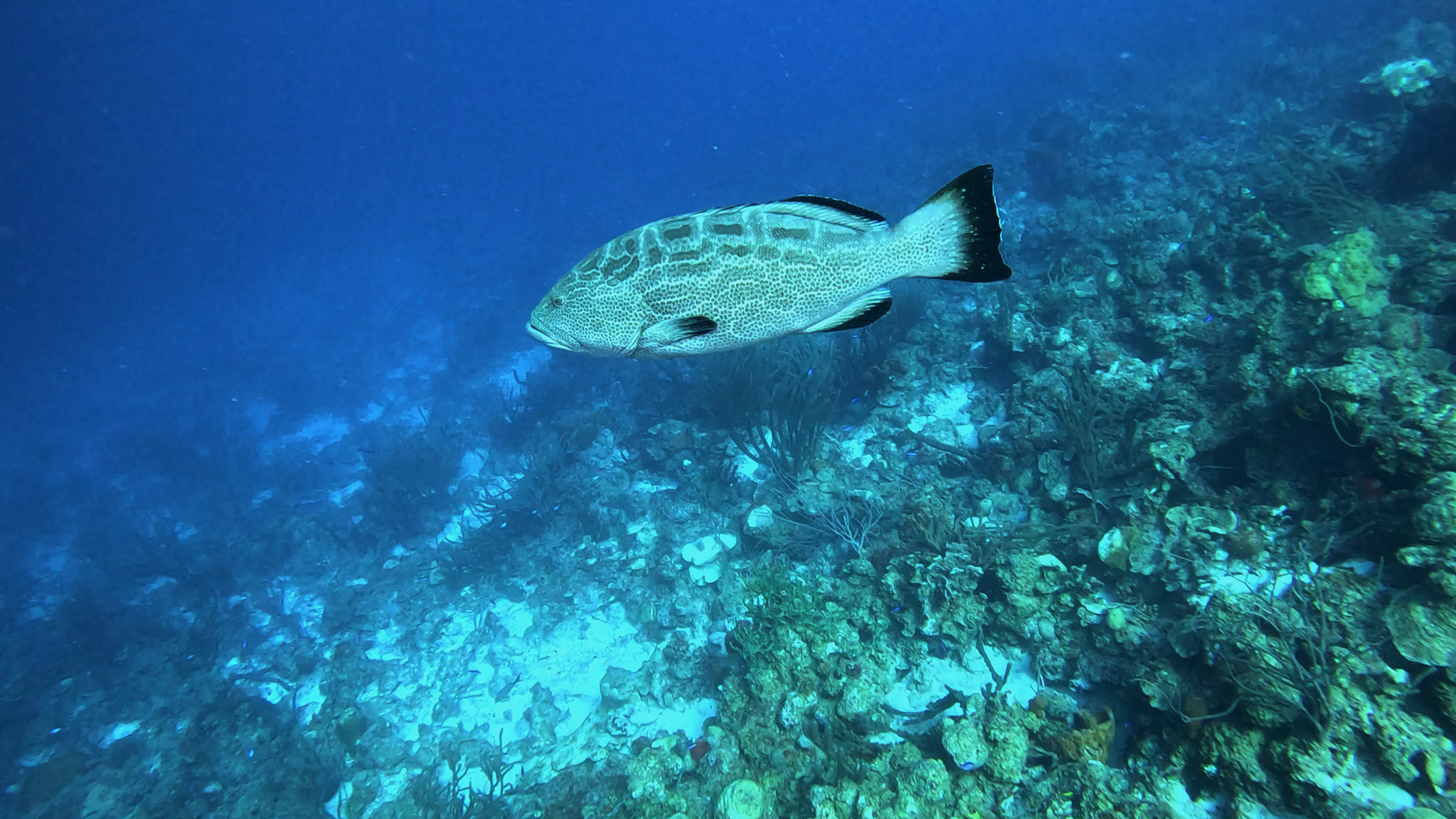
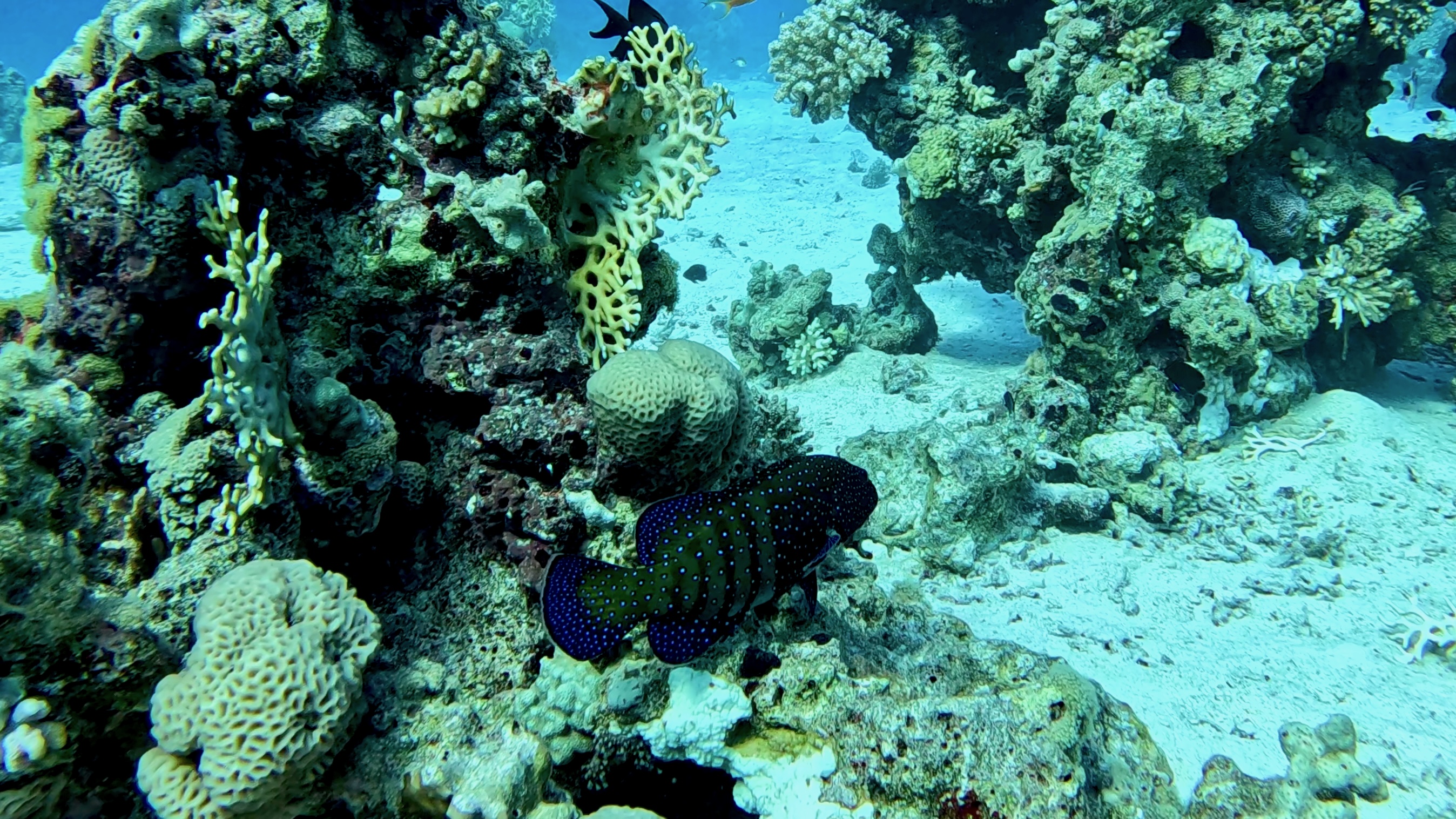
Groupers – Serranidae – Kirnije
Kirnije so velika skupina plenilskih rib, ki živijo v tropskih in subtropskih vodah po vsem svetu, še posebej v toplih vodah. Kirnije imajo močna mišičasta telesa, ki so pogosto podolgovata ali ovalna. Prepoznavni so po svojih velikih ustih, s katerimi lahko pogoltnijo večji plen. Njihova barva se spreminja glede na vrsto, pogoste barve pa vključujejo rjave, zelene, rumene ali sive odtenke z lisami. Kirnije so mesojede ribe, ki se prehranjujejo z ribami, rakci ter mehkužci (lignji in hobotnicami). So plenilske ribe, ki skrite v razpokah ali koralnatih strukturah čakajo plen. Večina Kirnij je samotarskih in teritorijalnih, zlasti odrasli primerki. So predvsem nočni lovci, čeprav nekatere vrste lovijo tudi podnevi. Mnoge vrste kirnij se razmnožuje v skupinah, nekateri pa lahko spremenijo tudi spol. samice kasneje postanejo samci. Nekatere vrste lahko zrastejo do 2 metra v dolžino in tehtajo do 450 kg.
Groupers are a group of large, predatory fish known for their robust bodies and powerful jaws. They are found in tropical and subtropical waters around the world, particularly in warm oceanic regions. Groupers have stocky, muscular bodies that are often elongated or oval. They are recognized for their large mouths, which can engulf large prey. Their coloration varies by species, with common hues being brown, green, yellow, or gray, often with mottled patterns. Groupers have large pectoral fins and wide tails that help them swim strongly. Groupers can grow to impressive sizes, with some species reaching lengths over 2 meters (6.5 feet) and weighing as much as 450 kg (1,000 pounds). Groupers are carnivores, feeding on fish, crustaceans, and cephalopods (like squid and octopus). They are ambush predators and often hide in crevices or coral to surprise their prey. Many species engage in mass spawning events and some groupers can change sex during their lifetime, starting as females and later becoming males.
Foto: Aleš Sulič, Bonaire, Egypt
HONEYCOMB COWFISH
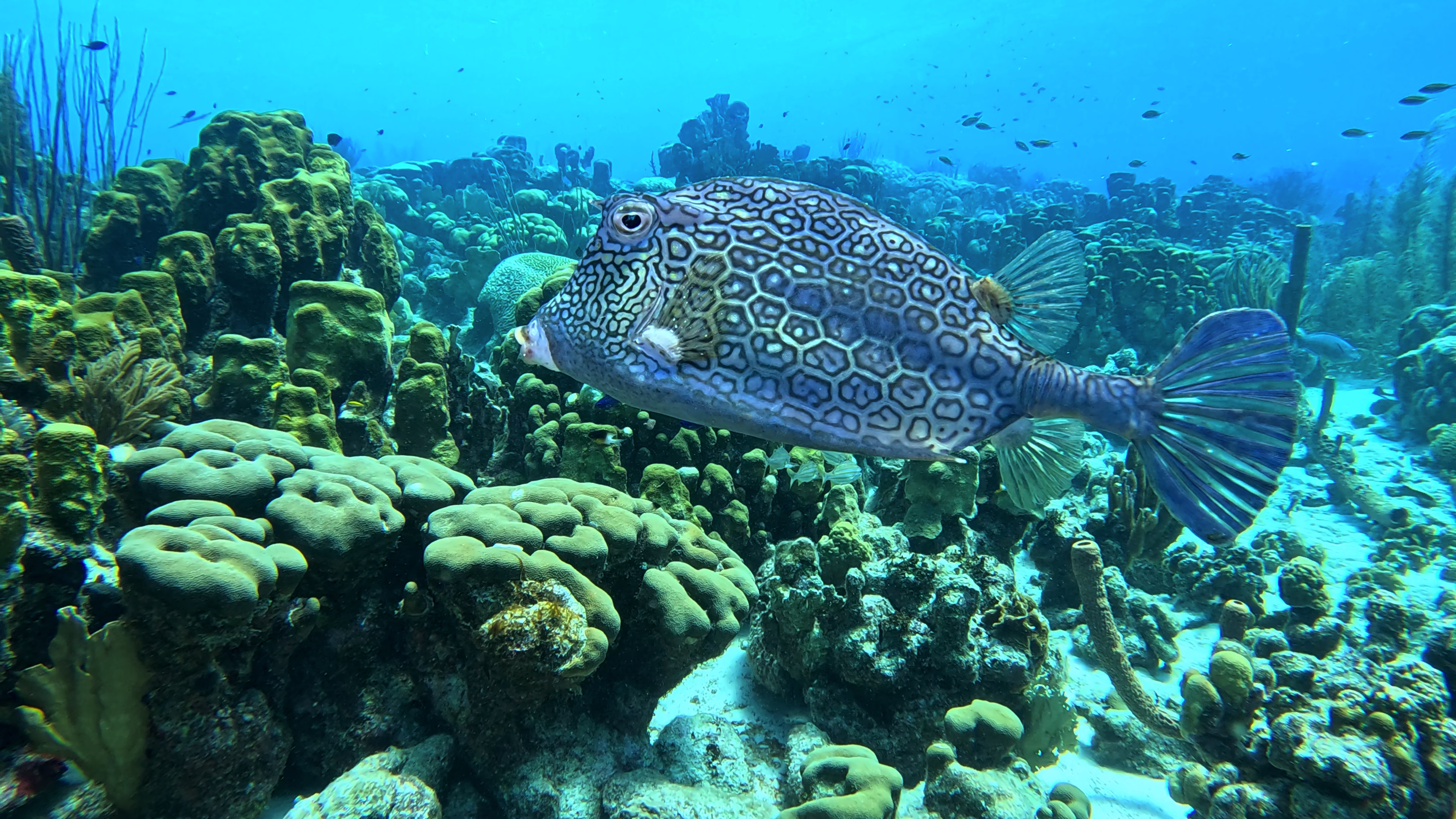
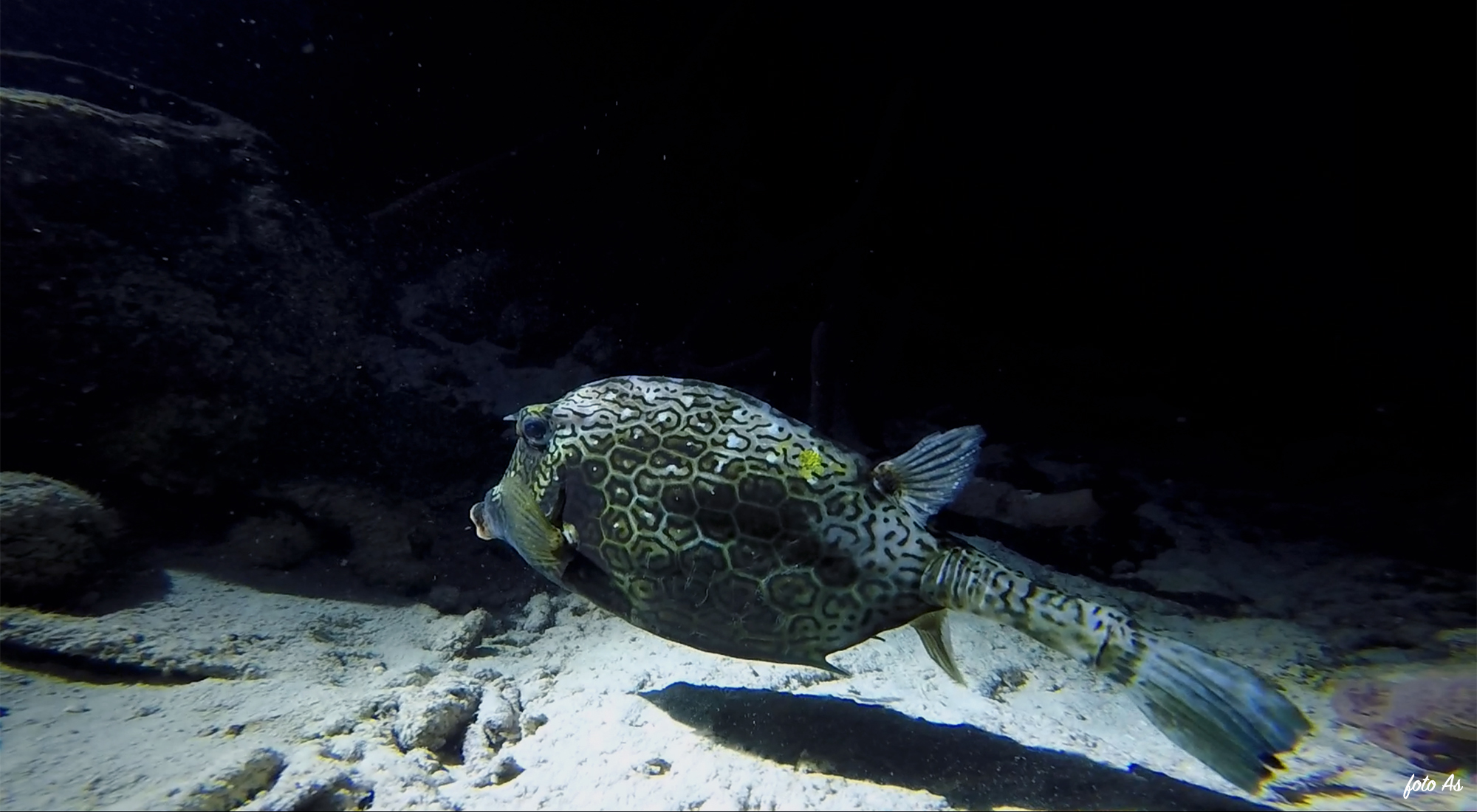
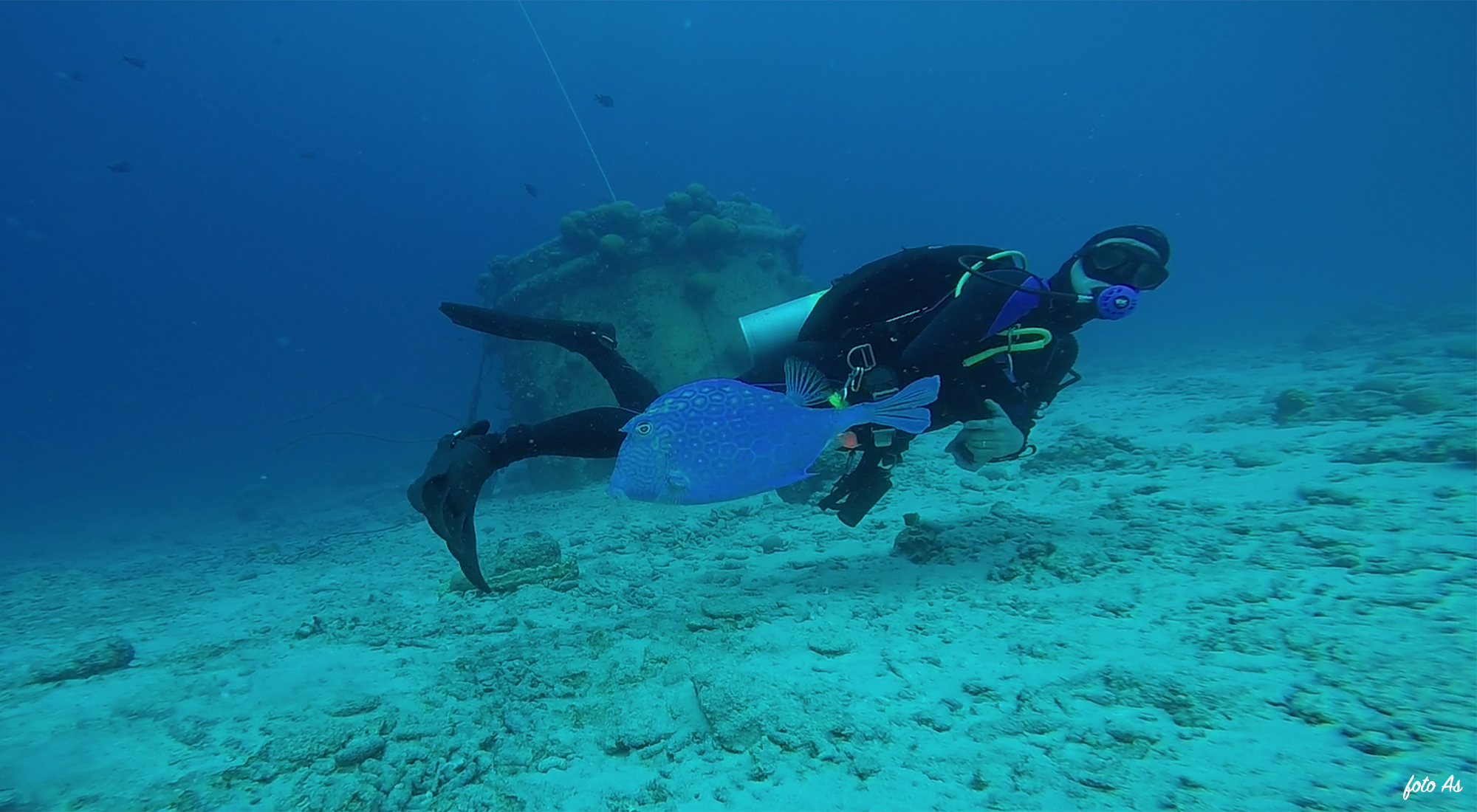
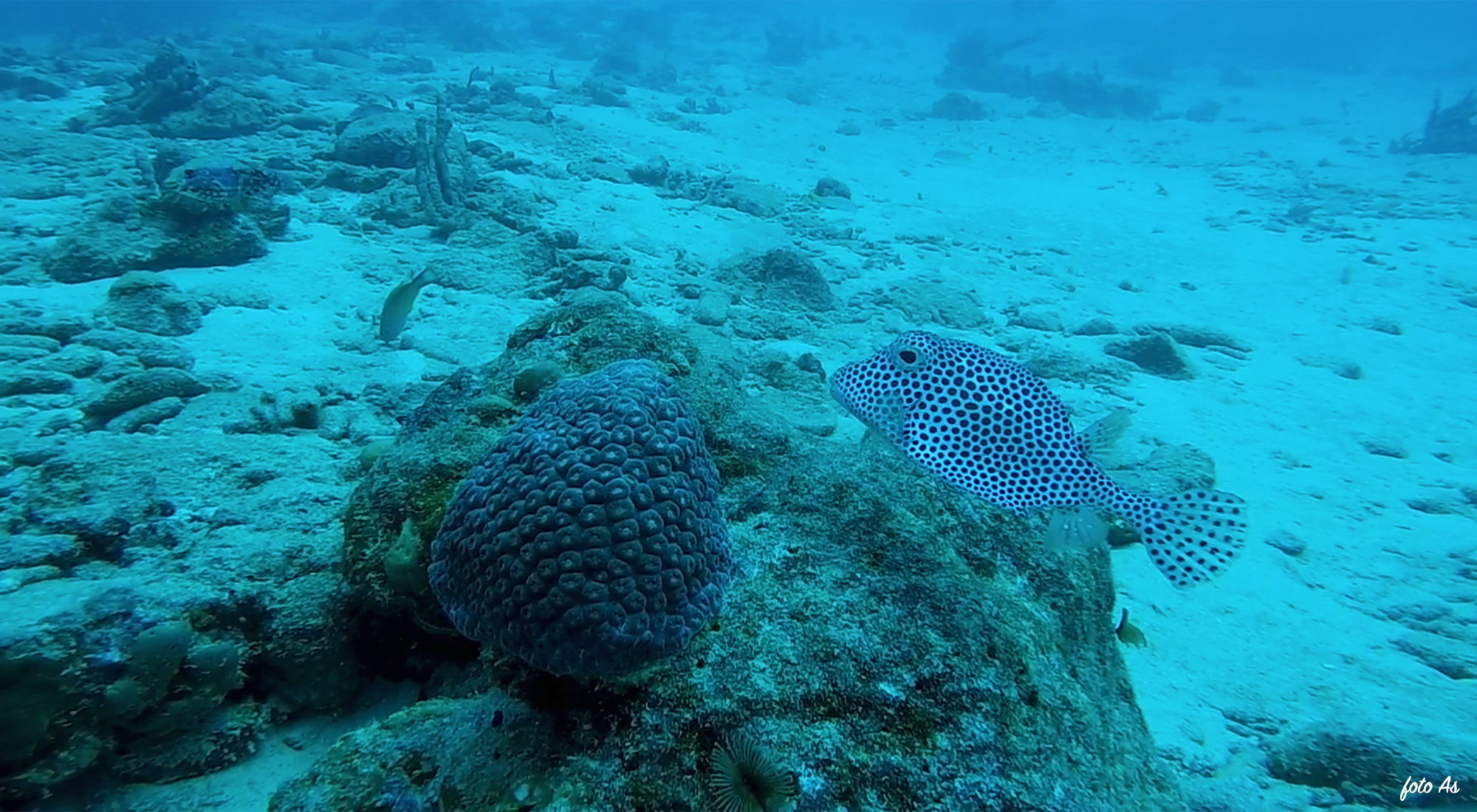
Honeycomb Cowfish – Acanthostracion polygonius – Medena škatlasta riba
Medena škatlasta riba je edinstvena riba, ki jo najdemo v tropskih vodah, predvsem okoli koralnih grebenov. Značilna je po svojem škatlastem, sploščenem telesu in edinstveni koži, prekriti z vzorcem čebeljega satovja. Ima izbočen, rogovit izrastek na čelu, kar še poudari njen edinstven izgled. Ponavadi zraste do dolžine 25–30 cm. Je mesojeda riba, ki se prehranjuje z majhnimi nevretenčarji, rakci in mehkužci. Počasna plavalka, ki pa ob ogroženosti lahko izloči strupeno snov, ki odvrne morebitne plenilce.
The Honeycomb Cowfish is a unique fish found in tropical waters, particularly around coral reefs. It is characterized by its boxy, flattened body and distinctive skin covered with a honeycomb pattern. The fish has a protruding, horn-like structure on its forehead, which adds to its unique appearance. It typically grows to a length of 25–30 cm. The Honeycomb Cowfish is carnivorous, feeding on small invertebrates, crustaceans, and mollusks. It is a slow swimmer, moving slowly with the help of its pectoral fins. However, when threatened, it can release a toxic substance as a defense mechanism to deter potential predators. This ability helps it survive in the competitive and dangerous environment of coral reefs. Its unique appearance and behavior make it an interesting sight for divers, as it is often observed due to its distinctiveness in marine ecosystems.
Foto: Aleš Sulič, Bonaire Buddy reef
SAND DIVER LIZARD FISH
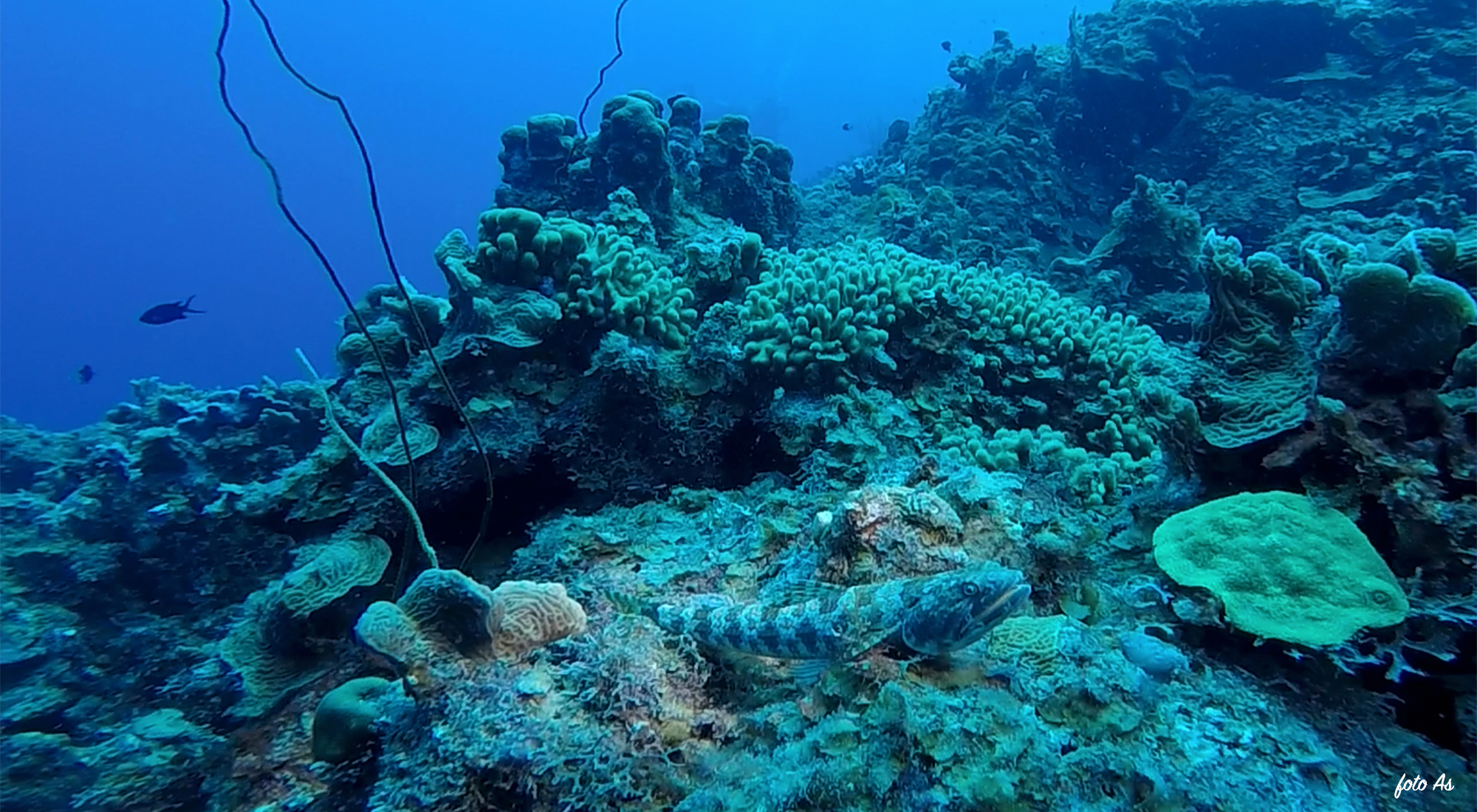
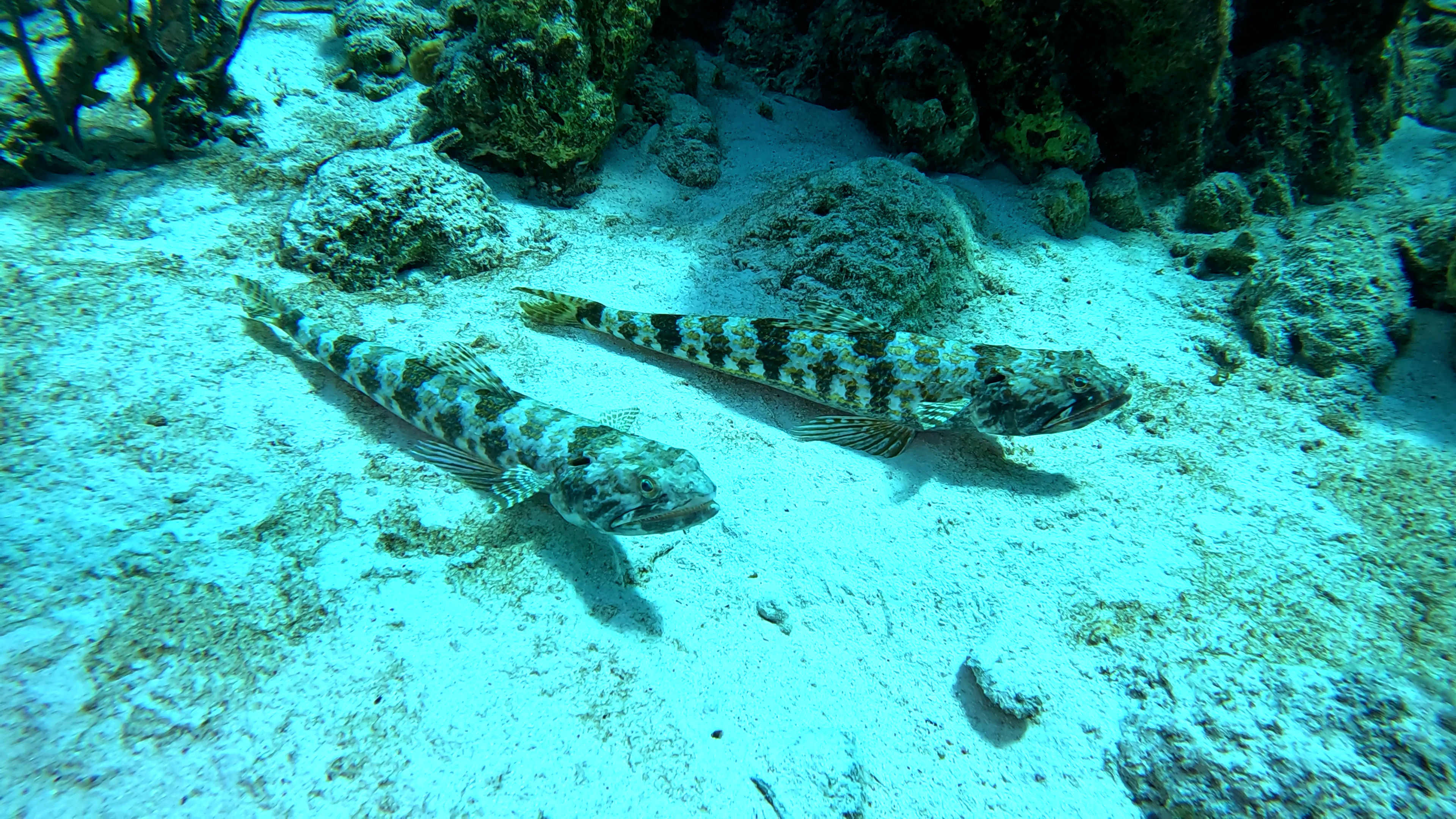
Sand Diver – Lizardfish – Synodontidae – Peščeni ponožec
Peščeni ponožec je plenilska riba z dolgim, cilindričnim telesom in peskasto ali lisečasto barvo, ki ji omogoča, da se zlije z morskim dnom. Pogosto je zakopana v pesku ali delno skrita na peskovitih ali muljastih tleh, kjer čaka na plen. Običajno zraste med 15 in 30 cm. Ima koničasto glavo, široka usta z ostrimi zobmi ter majhno hrbtno in prsno plavut. Repna plavut mu omogoča hiter sunek za ulov plena. Je mesojed in se prehranjuje z majhnimi ribami ter nevretenčarji. Uporablja taktiko presenečenja s katero hitro napade plen, ko se ta približa.
The Sand Diver, also known as the Lizardfish, is a predatory fish with a long, cylindrical body and sandy or mottled coloration that allows it to blend with the ocean floor. These fish are often buried in sand or partially hidden on sandy or muddy bottoms, waiting to ambush prey. Sand Divers typically grow to 15–30 cm (6–12 inches), though some species can be larger. They have a pointed head, a wide mouth filled with sharp teeth, and small dorsal and pectoral fins. Their tail fin enables rapid bursts of speed to catch prey. These fish are carnivorous, feeding on small fish and invertebrates. They use ambush tactics, lying partially buried or hidden in the sand and striking quickly when prey approaches. Sand Divers are solitary and spend most of their time alone.
Foto: Aleš Sulič, Bonaire Karpata
LONGSPINE SQUIRRELFISH
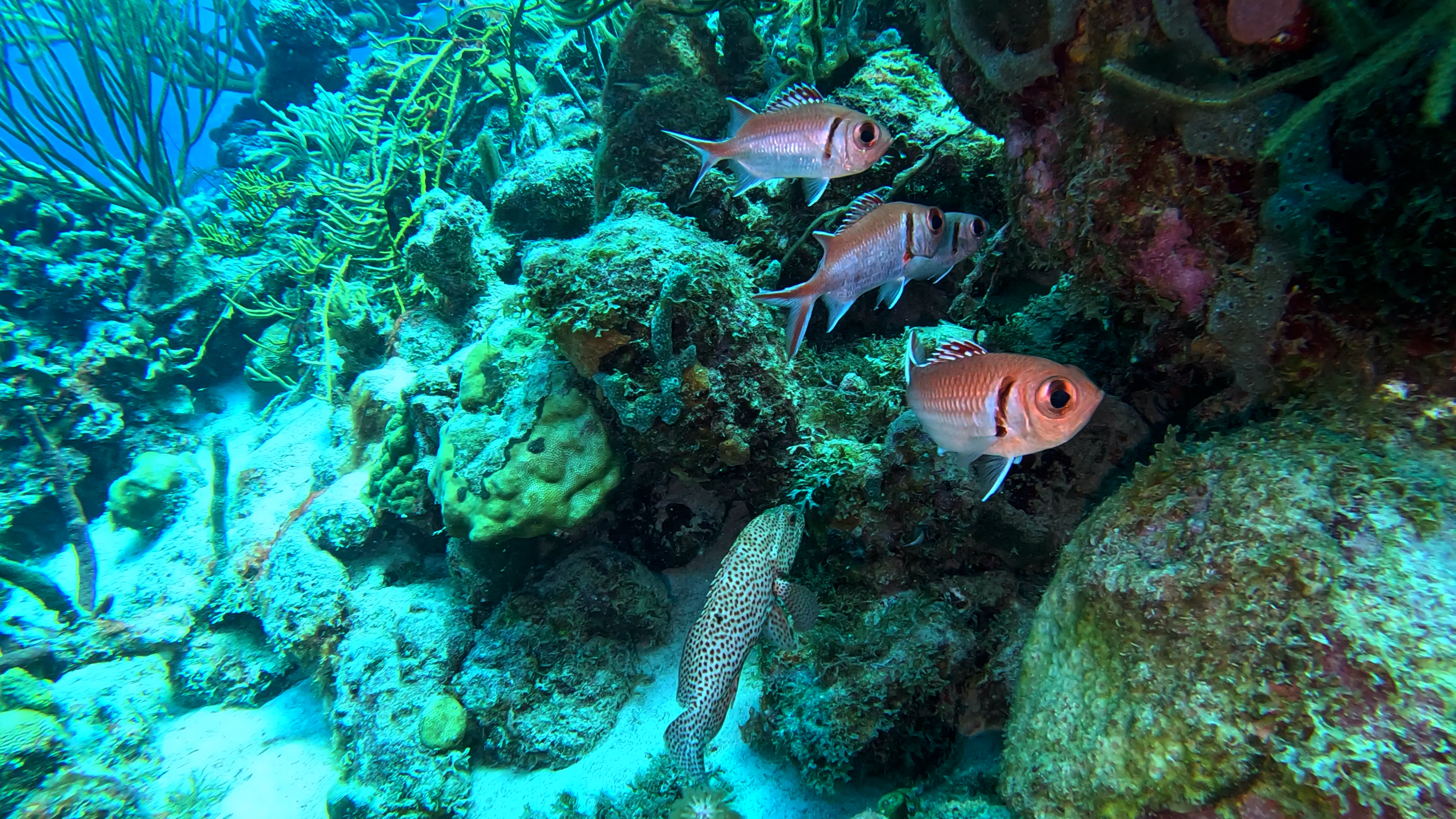
Longspine Squirrelfish – Holocentridae – Rdeči veverjičji ostriž
Rdeči veverjičji ostriž. Pogosto jo najdemo med koralnimi grebeni, kjer čez dan skriva v razpokah in pod previsi skalnetega terena. Običajno zraste od 20 do 30 cm. Njegovo telo je rdeče ali rdečkasto-oranžno, oči so velike in prilagojene nočnemu vidu. Ima dolge hrbtne bodice, vilast rep in prsni plavuti, ki omogočajo natančne premike. Majhna usta so opremljena z ostrimi zobmi za lov na majhen plen. Je mesojed in se prehranjuje z majhnimi rakci, planktonom in drobnimi ribami. Večinoma je aktiven ponoči, pri čemer uporablja velike oči za lov v šibki svetlobi. Čez dan se običajno skriva sam, lahko pa se pojavi v manjših skupinah. Dolge hrbtne bodice mu služijo kot obramba pred plenilci.
Longspine Squirrelfish typically grow to 20–30 cm (8–12 inches) in length. They have bright red or reddish-orange bodies, large eyes adapted for night vision, long dorsal spines, a forked tail, and pectoral fins that allow precise movements. Their small mouths have pointed teeth for capturing small prey. These fish are carnivorous, feeding on small crustaceans, plankton, and tiny fish. They are mainly active at night, using their large eyes to hunt in low-light conditions. Longspine Squirrelfish often hide alone during the day but may form small groups at times. Their long dorsal spines serve as a defense against predators.
Foto: Aleš Sulič, Egypt Dahab
BIGEYE REEF FISH
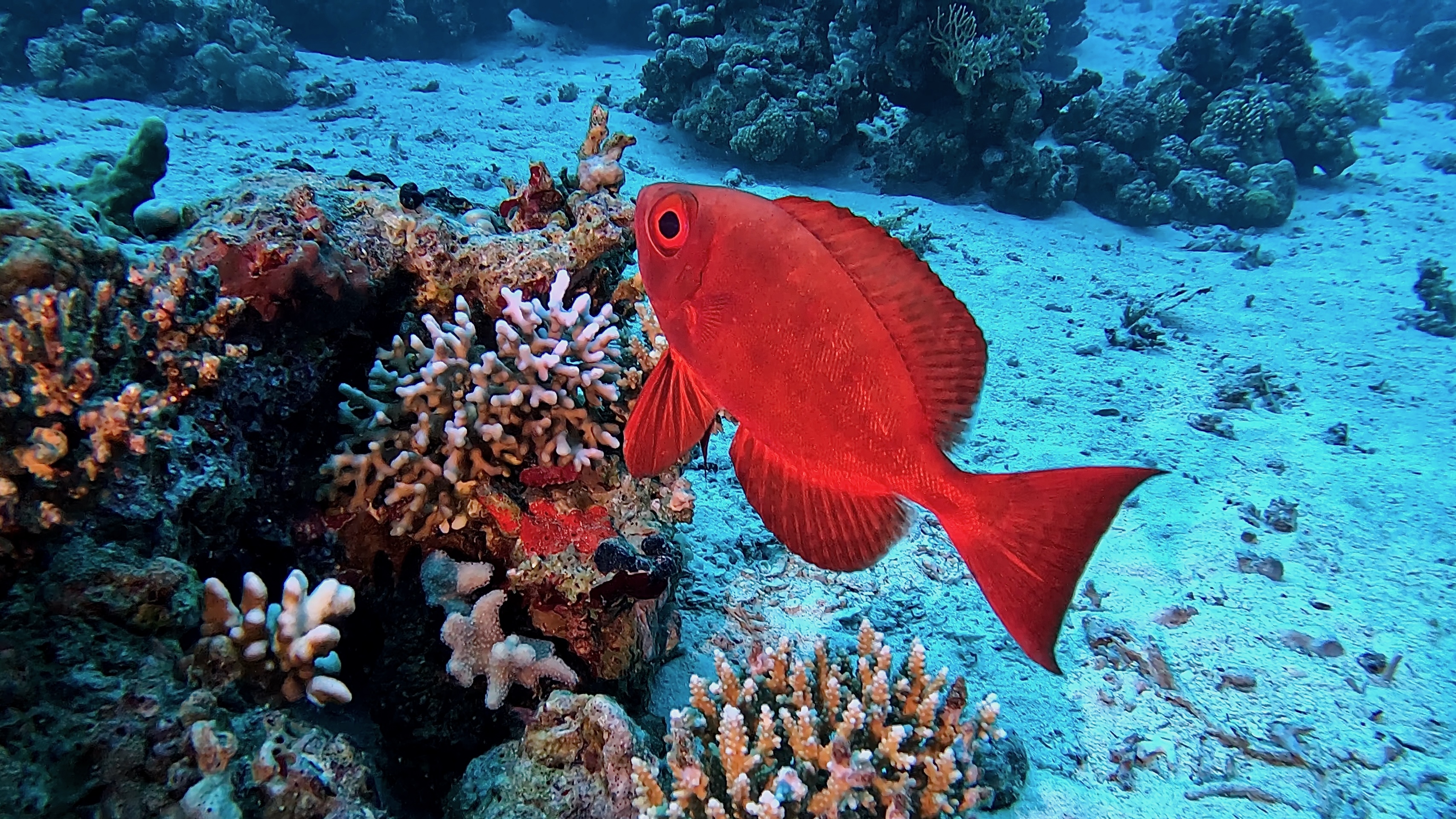
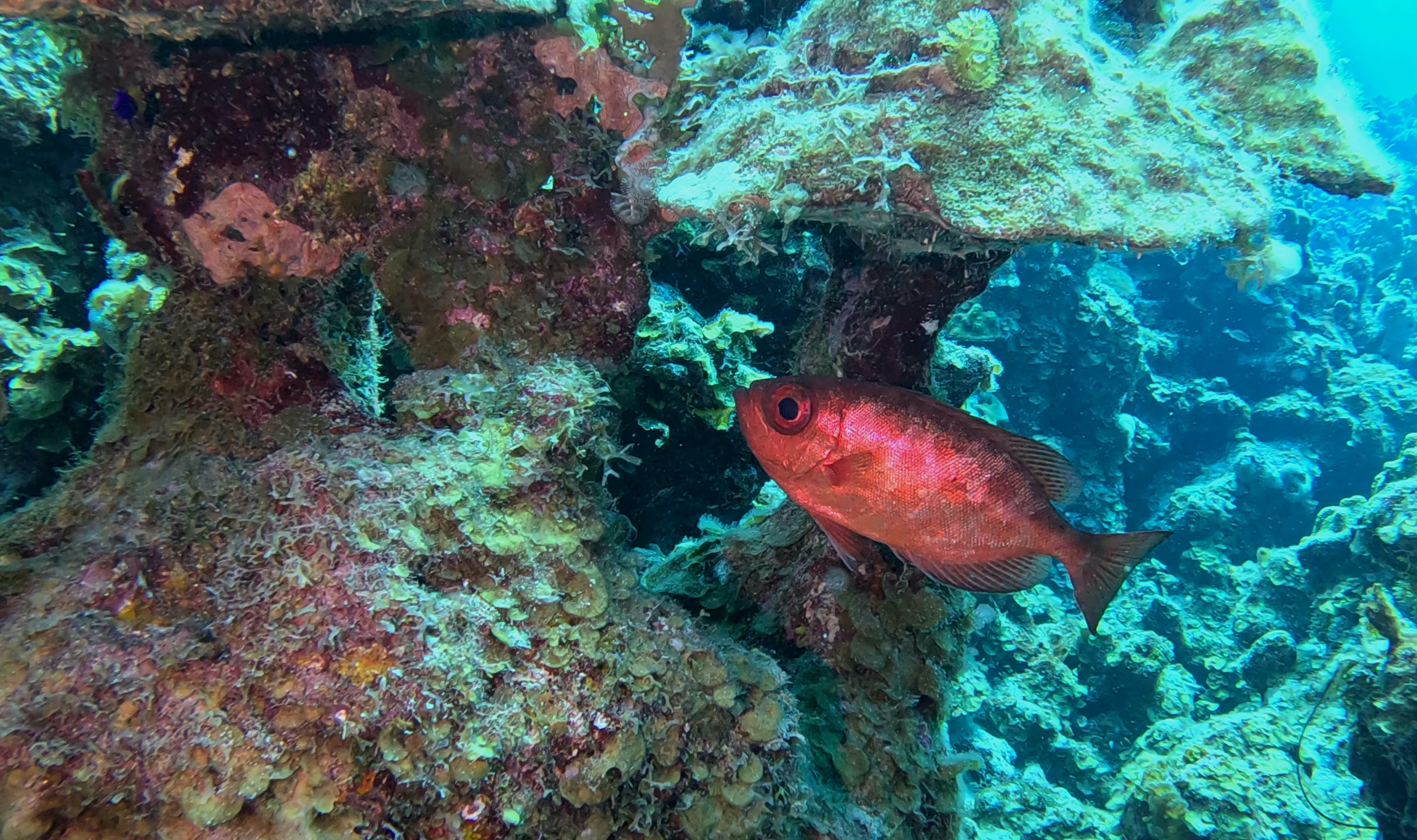
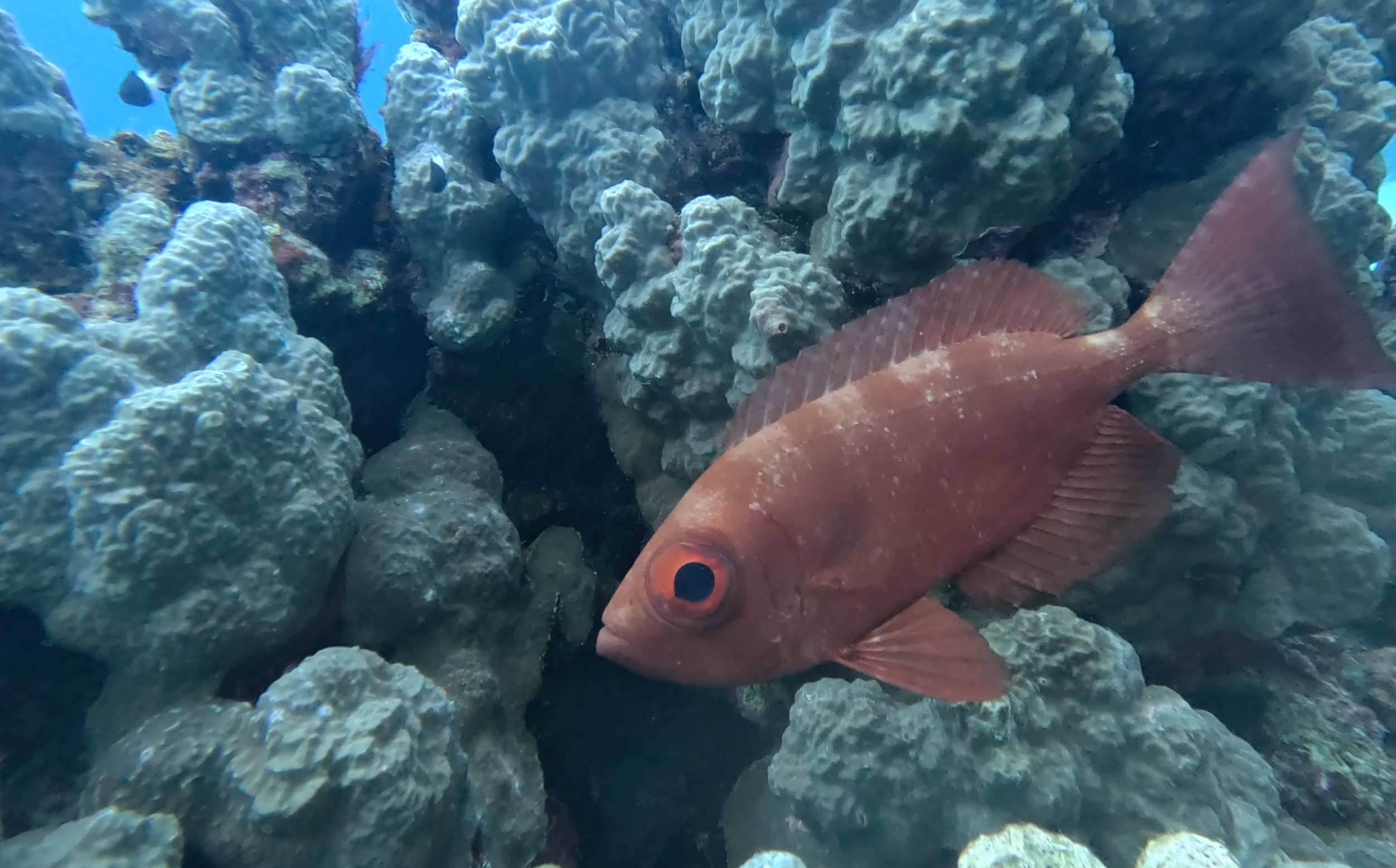
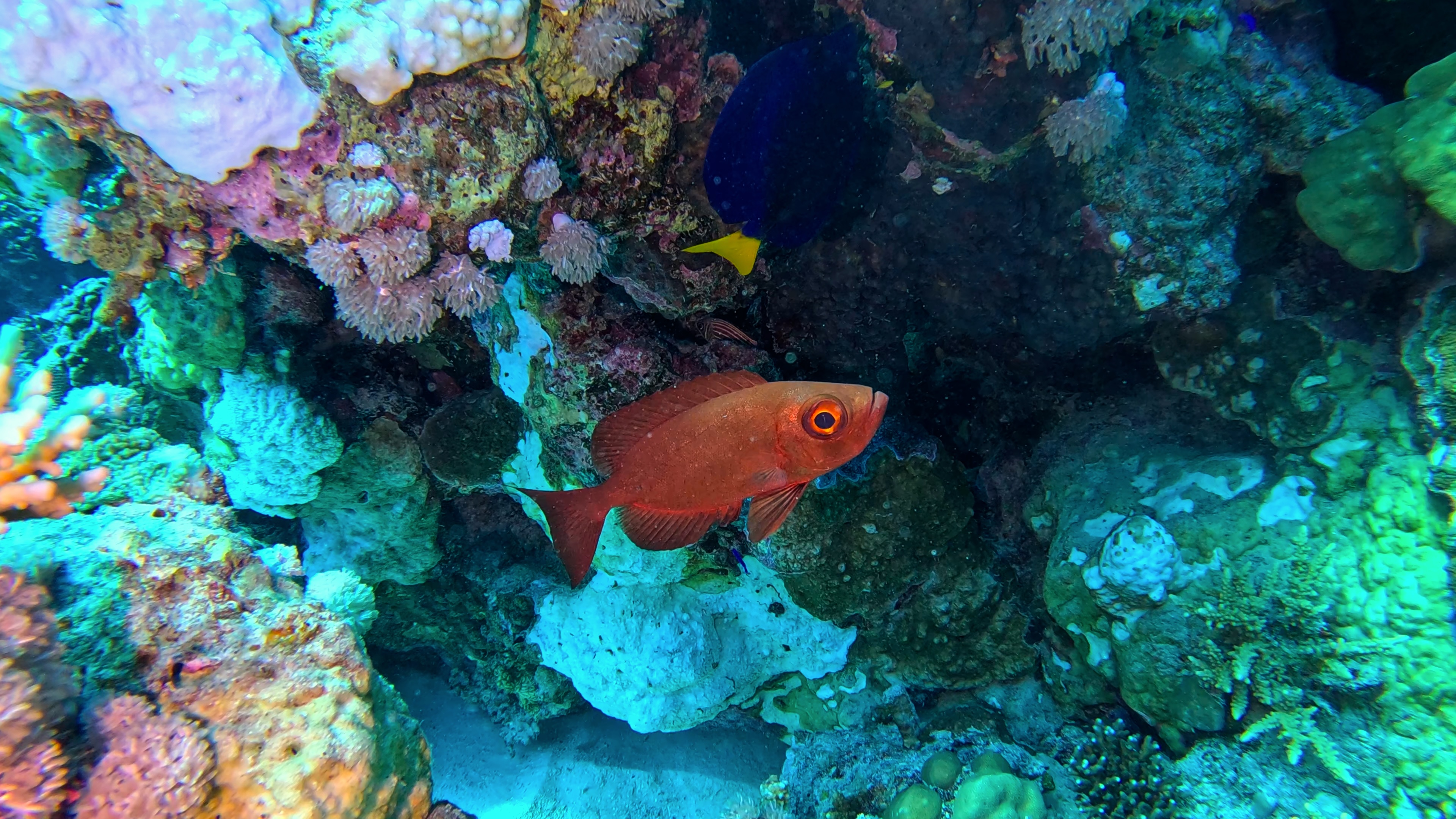
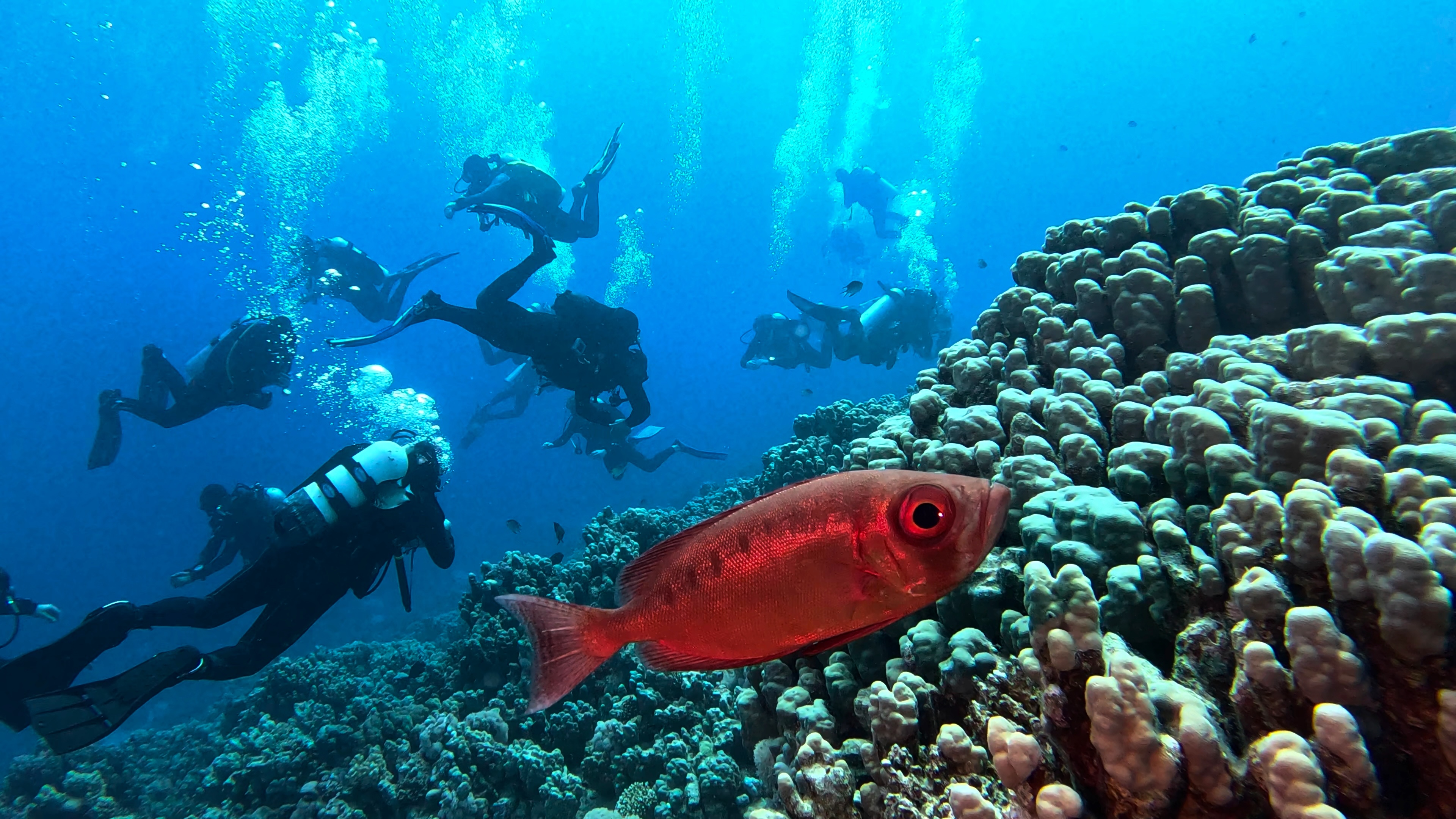
Bigeye Reef Fish – Priacanthidae – Velikooka grebenska riba
je majhna do srednje velika nočna riba koralnih grebenov z velikimi, izrazitimi očmi, ki ji pomagajo videti v šibki svetlobi. Pogosto jo najdemo v tropskih in subtropskih grebenih. običajno zraste od 15 do 25 cm. Ima stisnjeno, ovalno telo z rdečo ali rdečkasto-oranžno barvo. Ima majhne hrbtne in prsne plavuti, ki ji omogočajo hitre sunke. Usta so majhna in rahlo obrnjena navzgor, primerna za lov na majhen plen. Je mesojeda in se prehranjuje predvsem z majhnimi ribami, planktonom in rakci.
Bigeye Reef Fish typically grow to 15–25 cm (6–10 inches). They have a compressed, oval-shaped body with bright red or reddish-orange coloration. Their very large eyes are adapted for night vision. They have small dorsal and pectoral fins and a tail fin that allows quick bursts of speed. The mouth is small and slightly upturned, suitable for catching small prey. These fish are carnivorous, feeding mainly on small fish, plankton, and crustaceans. They are mostly nocturnal hunters, hiding in crevices or under ledges during the day to avoid predators. Bigeye Reef Fish are often solitary but can sometimes be seen in small groups while feeding. They rely on camouflage and quick movements to escape threats.
Foto: Aleš Sulič, Egypt
BANDED BUTTERFLYFISH
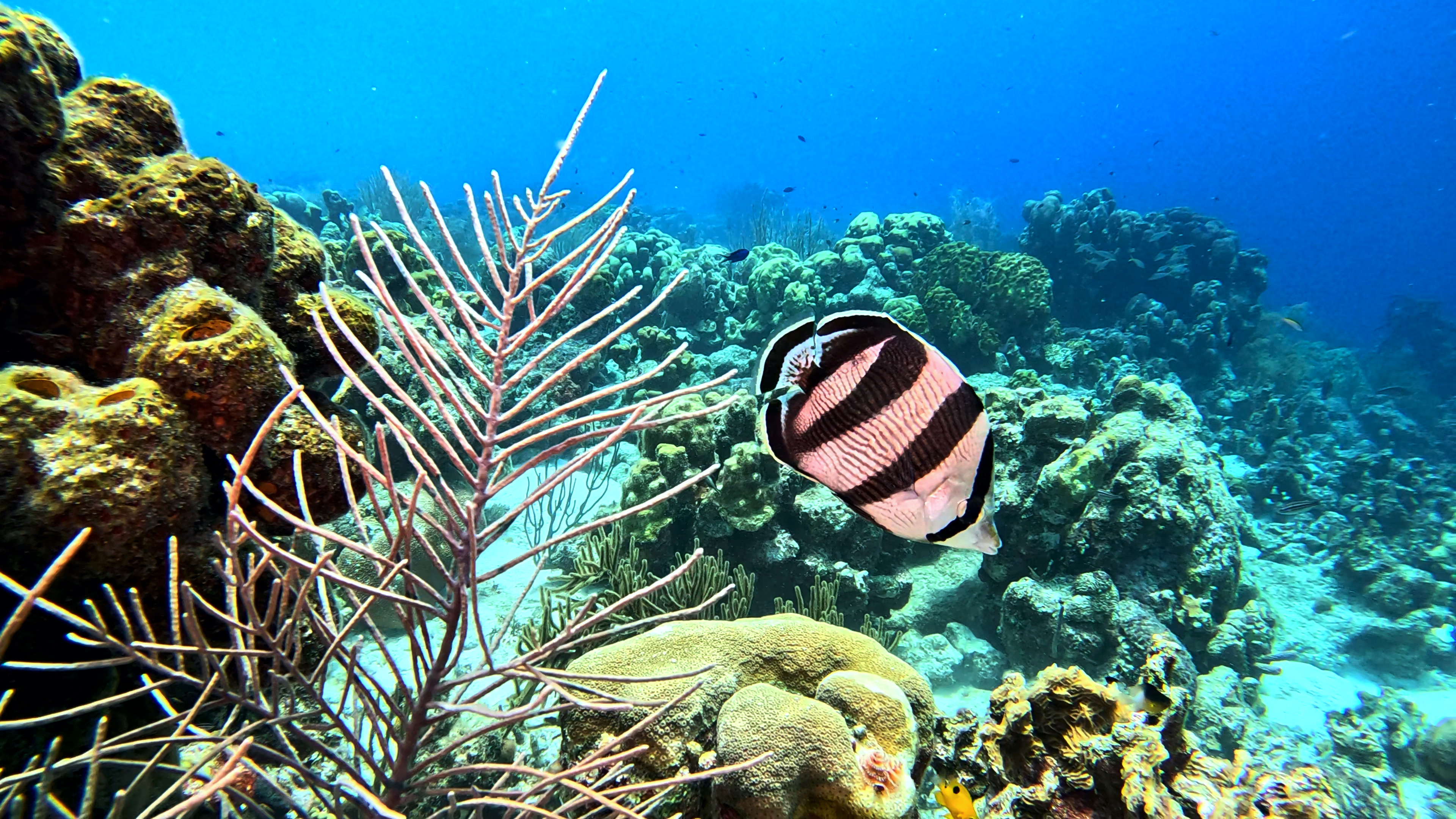
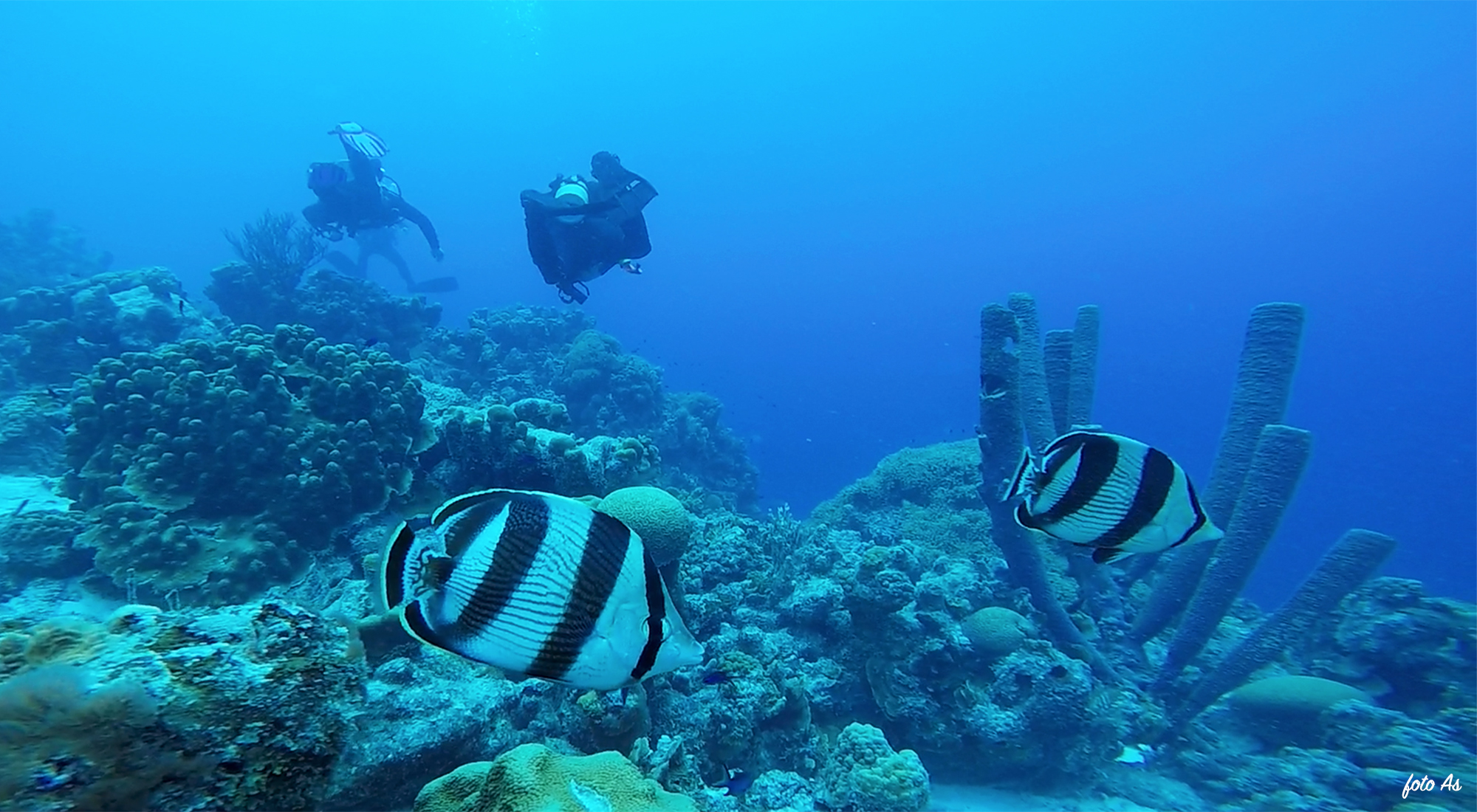
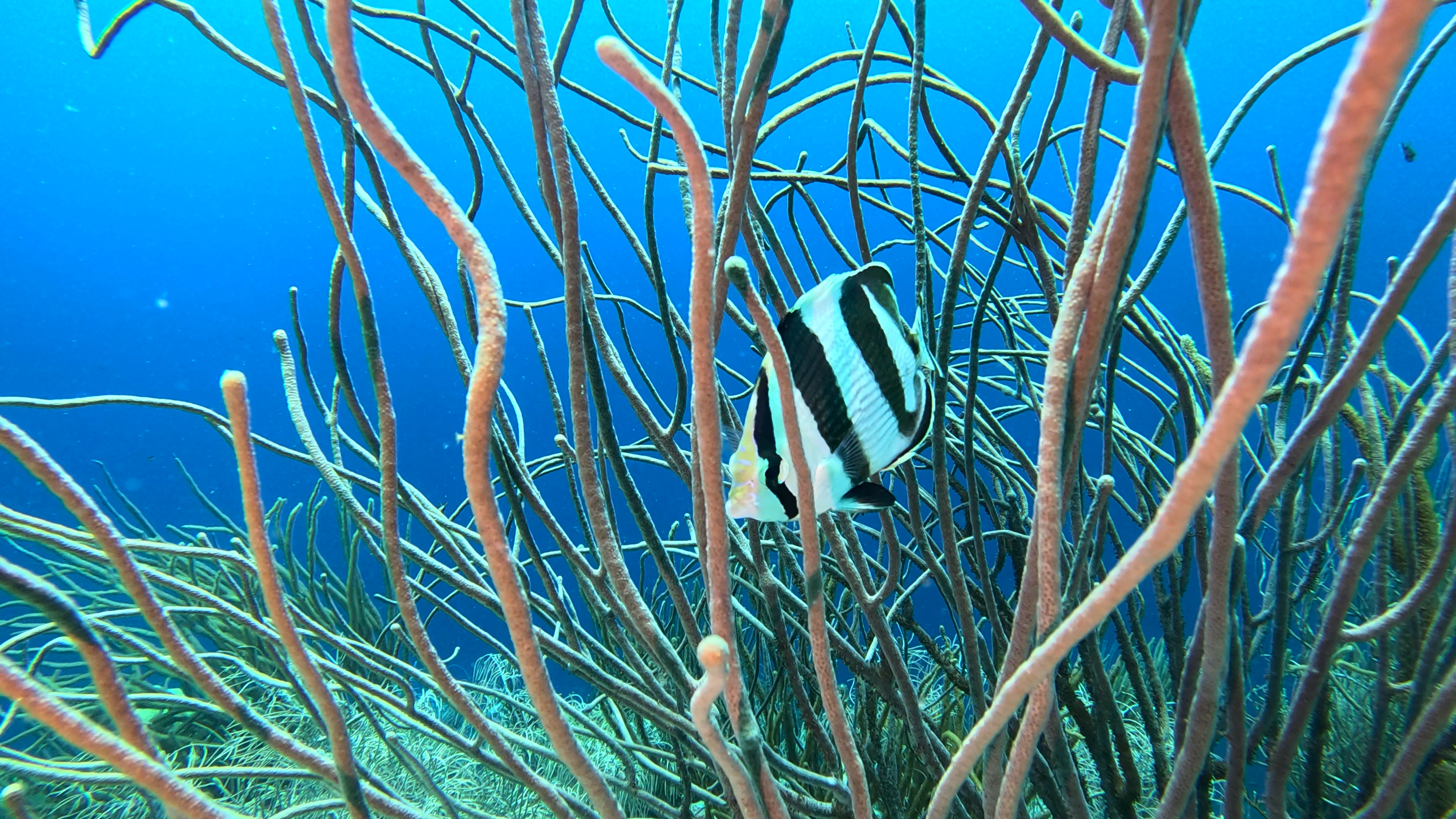
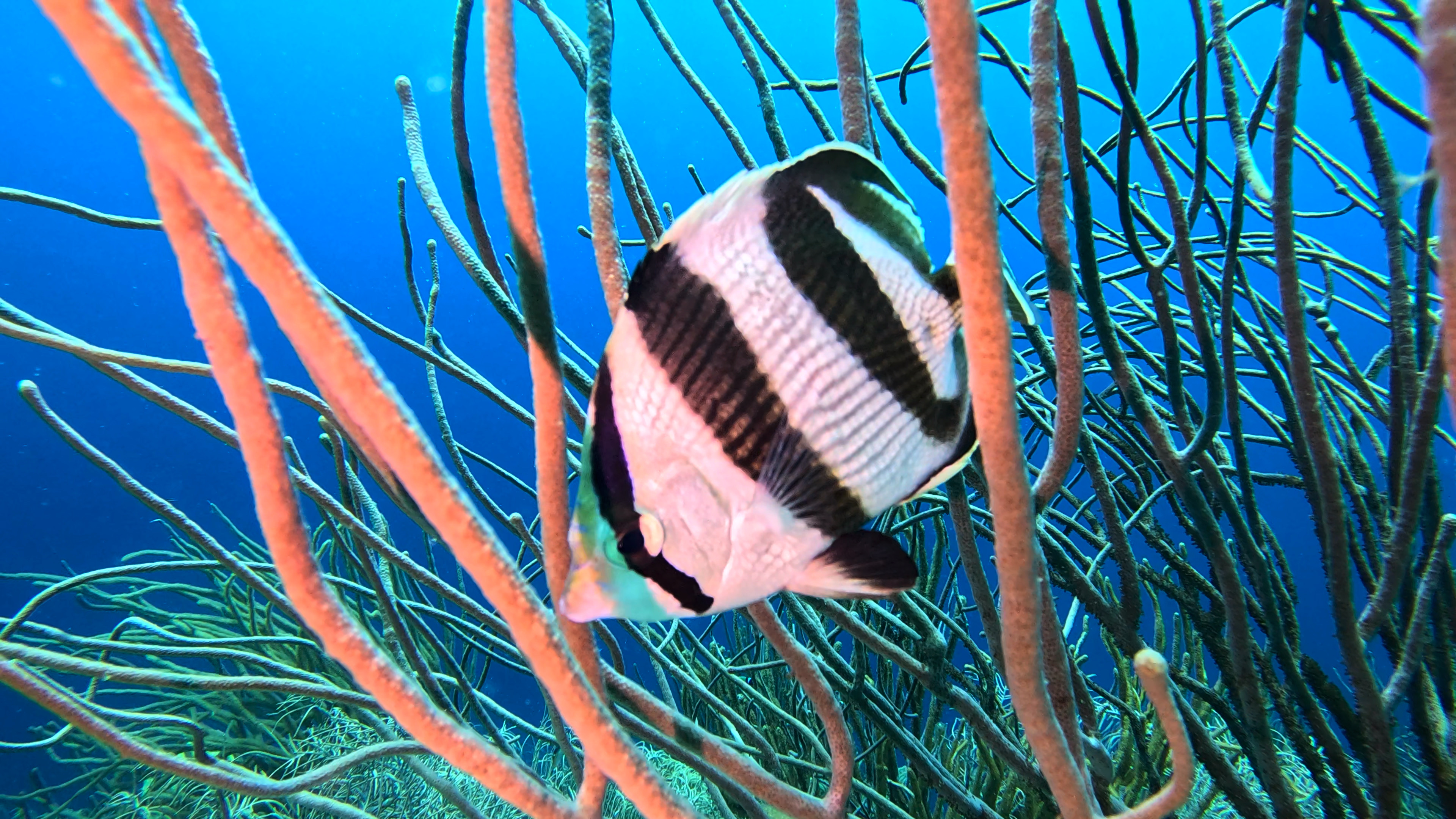
Banded Butterflyfish – Chaetodon striatus – Progasti metuljček
Progasti metuljček je majhna, barvita riba koralnih grebenov, ki jo najdemo v toplih tropskih vodah zahodnega Atlantskega oceana. Prepoznavna je po izrazitih črnih navpičnih progah in elegantnem plavanju. Običajno zraste od 12 do 16 cm. Ima tanko, ploščato telo, ki ji omogoča enostavno gibanje med koralami. Telo je večinoma belo ali srebrnkasto, z dvema izrazitima črnima navpičnima pasovoma, ki potekata čez oko in sredino telesa. Rep je pogosto rumenkast, kar še poudari njen značilen videz. Progasti metuljček se prehranjuje predvsem z majhnimi nevretenčarji, koralnimi polipi, črvi in rakci. S svojimi majhnimi, koničastimi usti pobira hrano s površine koral in skal. Včasih se prehranjuje tudi s paraziti večjih rib. Najpogosteje ga vidimo v parih, zlasti v času razmnoževanja, lahko pa tudi posamično ali v manjših skupinah. Aktiven je podnevi in večino časa preživi med koralami, kjer išče hrano.
The Banded Butterflyfish is a small, colorful reef fish commonly found in warm tropical waters of the western Atlantic Ocean, especially around coral reefs. It is well known for its striking vertical black bands and graceful swimming style. Banded Butterflyfish usually grow to about 12–16 cm (5–6 inches) in length. Their bodies are thin and disk-shaped, which allows them to move easily through coral formations. They are mostly white or pale silver with two bold black vertical bands—one running through the eye and another across the body. The tail is often yellowish, adding to their distinctive appearance. This species feeds mainly on small invertebrates, coral polyps, worms, and crustaceans. It uses its small, pointed mouth to pick food from coral and rocky surfaces. Unlike some other butterflyfish species, it may also feed on parasites from larger fish. Banded Butterflyfish are usually seen in pairs, especially during the breeding season, though they can also be found alone or in small groups. They are active during the day and spend much of their time swimming around coral reefs in search of food.
Foto: Aleš Sulič, Bonaire Tolo
GREY SNAPPER
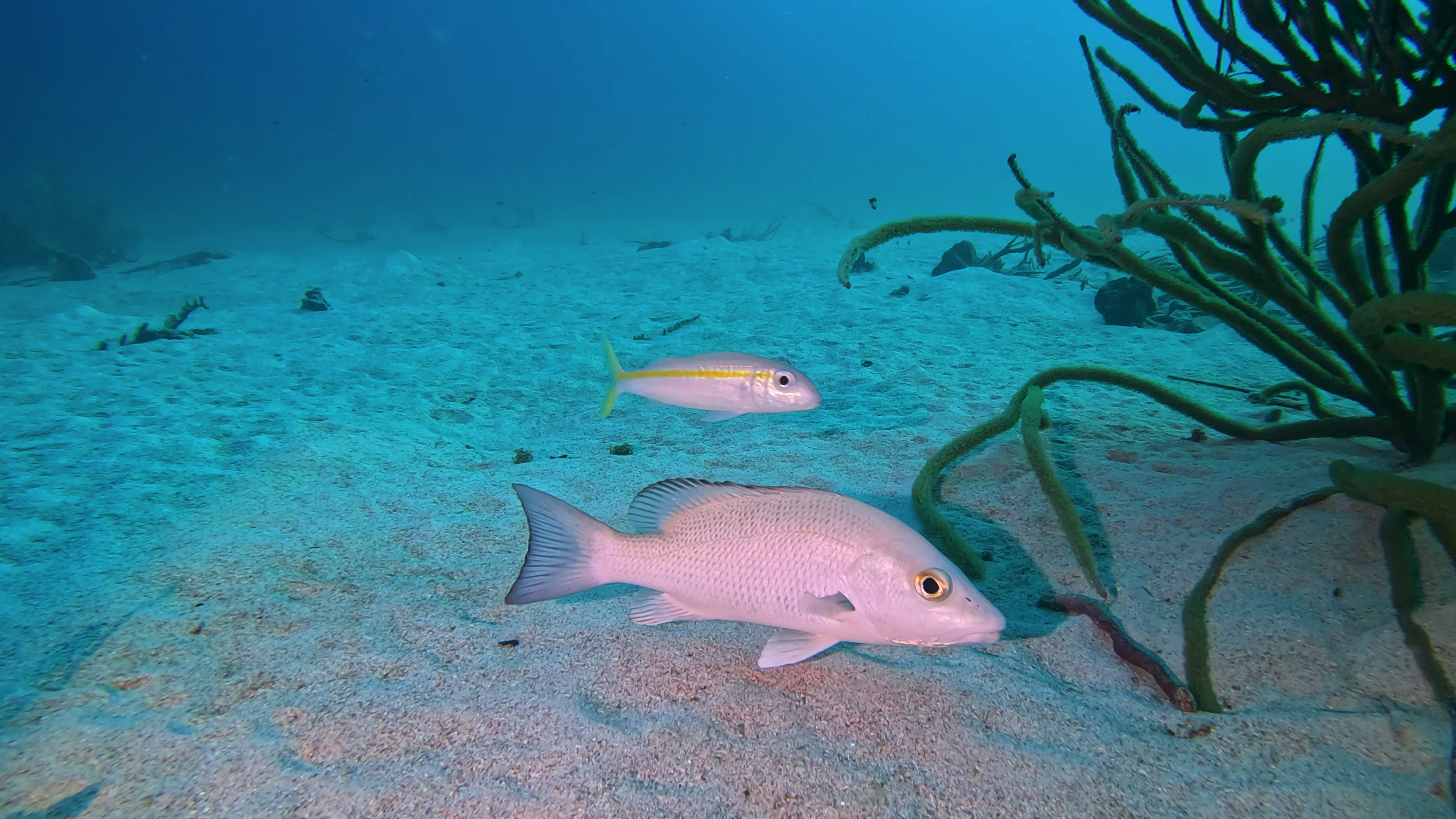
Grey Snapper – Lutjanus griseus – Sivi hlastač
Sivi hlastač, znan tudi kot mangrovni hlastač, je pogosta obalna riba zahodnega Atlantskega oceana. Zelo priljubljen med rekreativnimi in gospodarskimi ribiči zaradi svoje borbenosti ter okusnega mesa. Običajno zraste med 30 in 50 cm, večji primerki pa lahko dosežejo tudi do 90 cm dolžine. Ima podolgovato in zmerno visoko telo, ki je sive do rjavkasto-rdeče barve, včasih z rahlim rdečkastim odtenkom. Mladi osebki imajo lahko temnejše navpične proge. Tako kot drugi hlastači ima velika usta z ostrimi zobmi. Sivi hlastač naseljuje različne habitate, kot so mangrove, morski travniki, koralni grebeni, skalnata dna in celo somornice. Mladiči pogosto živijo med mangrovami, kjer so bolje zaščiteni, odrasle ribe pa se preselijo na globlje grebene ali odprto morje. Je mesojed plenilec, ki se prehranjuje z ribami, kozicami in raki.
The Grey Snapper (Lutjanus griseus), also known as the mangrove snapper, is a common and important coastal fish found in the western Atlantic Ocean. It is popular among both commercial and recreational fishermen because of its strong fight and good-tasting meat. Grey Snappers typically grow between 30 and 50 cm (12–20 inches), but large individuals can reach up to 90 cm (35 inches). They have a streamlined, moderately deep body that is usually gray to reddish-brown in color, sometimes with a faint reddish tint. Younger fish may show darker vertical bars. They have a large mouth with sharp teeth, typical of snapper species. This species lives in a variety of habitats, including mangroves, seagrass beds, coral reefs, rocky bottoms, and even brackish estuaries. Juveniles often stay in mangrove areas for protection, while adults move to deeper reefs and offshore structures. Grey Snappers are carnivorous predators. They feed on fish, shrimp, crabs, and other crustaceans. They are most active at night, using their good vision and quick movements to catch prey.
Foto: Aleš Sulič, Bonaire Angel City
GOLDEN SPOTEN EEL
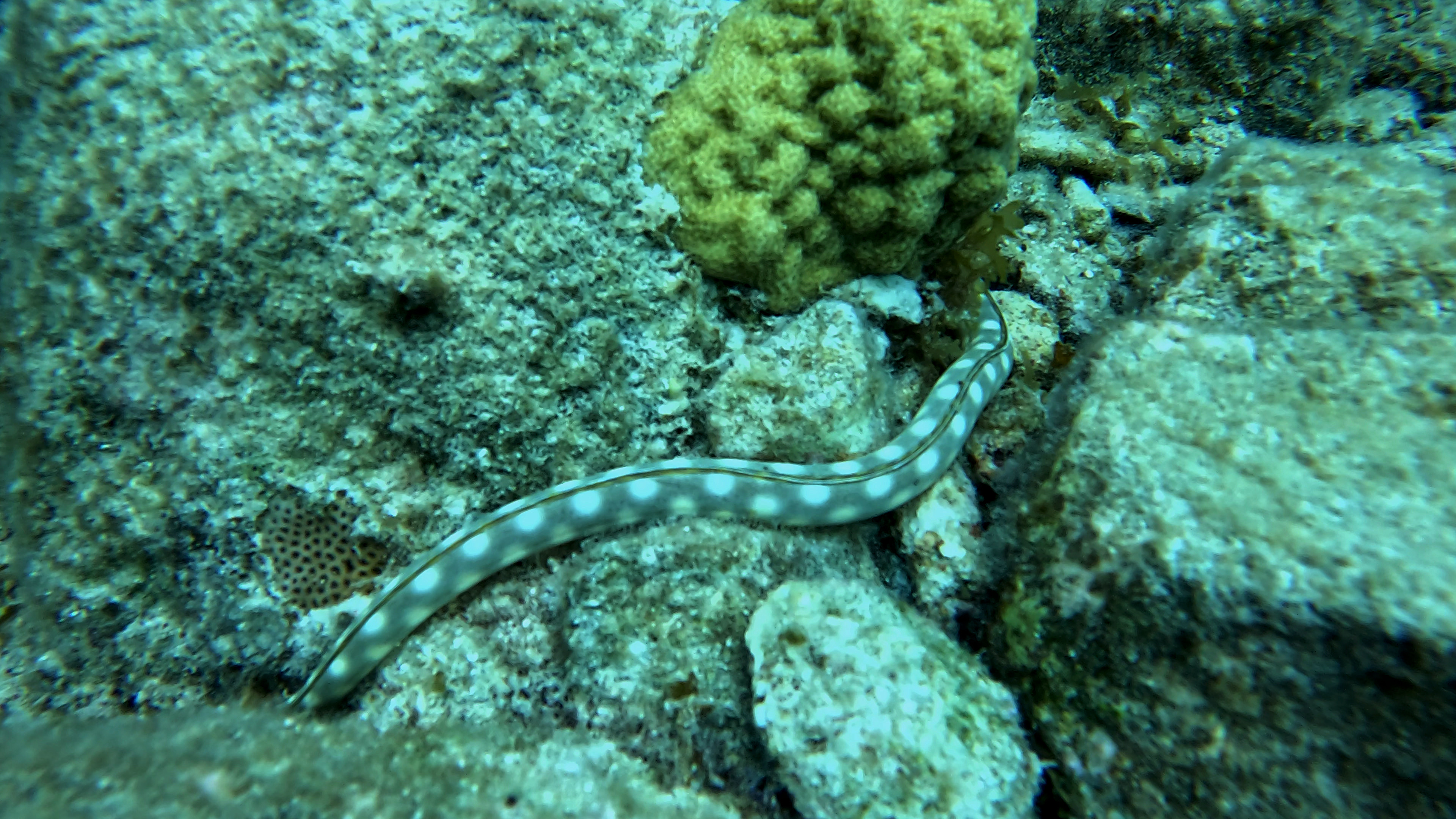
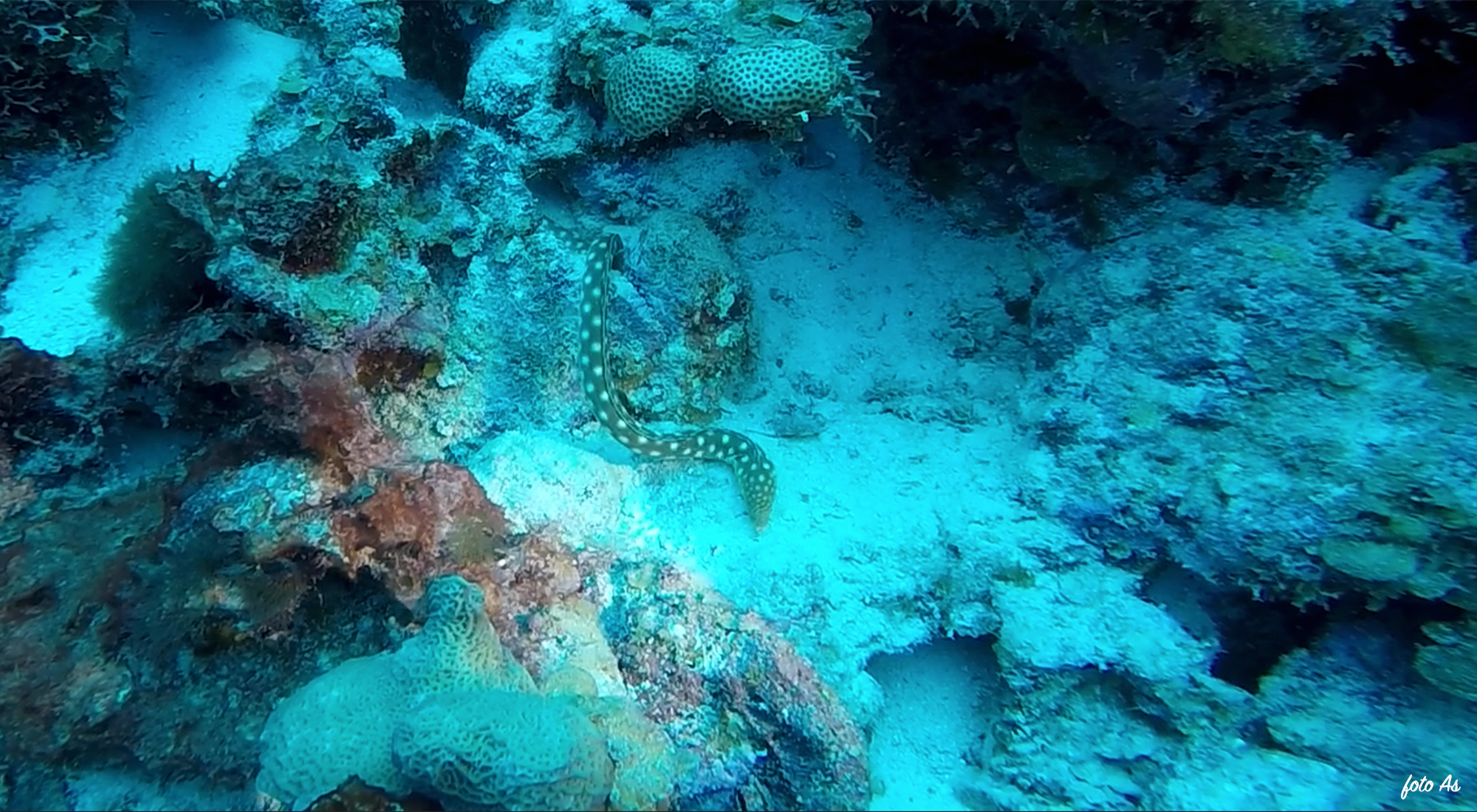
Golden Spotted Eel, Goldentail Moray – Gymnothorax miliaris – Zlatopegasta murena, zlatorepa murena
Zlatopegasta murena, znana tudi kot zlatorepa murena (Gymnothorax miliaris), je manjša vrsta murene, ki živi v zahodnem Atlantskem oceanu, predvsem okoli koralnih grebenov in skalnatih območij. Običajno zraste od 40 do 70 cm v dolžino. Ima dolgo, vitko telo temno rjave do črne barve, prekrito s številnimi majhnimi rumenimi ali zlatimi pikami. Rep je pogosto bolj izrazito zlato obarvan, po čemer je dobila svoje ime. Zlatopegasta murena prebiva v koralnih grebenih, skalnih razpokah in včasih tudi na območjih z morsko travo. Čez dan se skriva v luknjah in razpokah, pogosto tako, da iz skrivališča gleda le njena glava. Ponoči postane aktivna in se odpravi na lov. Je mesojeda plenilka, ki se prehranjuje z manjšimi ribami, rakci in drugimi morskimi nevretenčarji. Tako kot druge murene ima ostre zobe in močan ugriz, s katerim zadrži plen. Čeprav deluje zastrašujoče, običajno ni nevarna za ljudi, razen če se počuti ogroženo.
The Golden Spotted Eel, commonly known as the Goldentail Moray (Gymnothorax miliaris), is a small species of moray eel found in the western Atlantic Ocean, especially around coral reefs and rocky areas. This eel usually grows up to about 40–70 cm (16–28 inches) in length. It has a slender, elongated body that is dark brown to black in color, covered with many small yellow or golden spots. The tail often has a more noticeable golden coloration, which gives the species its common name. The Golden Spotted Eel lives in coral reefs, rocky crevices, and sometimes seagrass beds. During the day, it hides in holes and cracks for protection, with only its head visible. At night, it becomes active and hunts for food. It is a carnivorous predator that feeds mainly on small fish, crustaceans, and marine invertebrates. Like other moray eels, it has sharp teeth and a strong bite used to catch and hold prey. Although it may look intimidating, the Golden Spotted Eel is generally not aggressive toward humans unless threatened. It is not commonly eaten but is sometimes kept in large marine aquariums. The species is not considered endangered, though it depends on healthy reef habitats.
Foto: Aleš Sulič, Bonaire, Egypt
TIGER SNAKE ILL
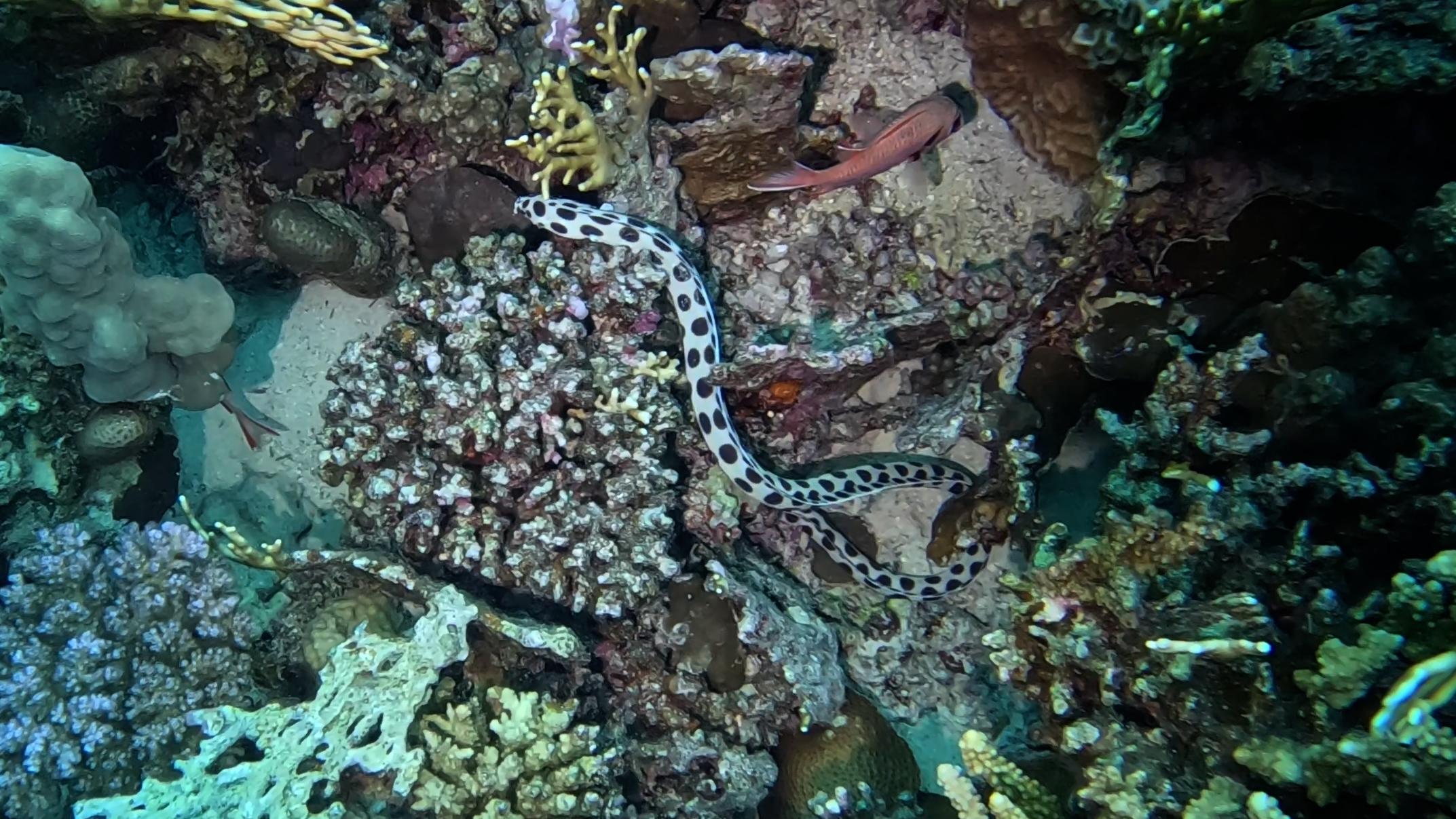
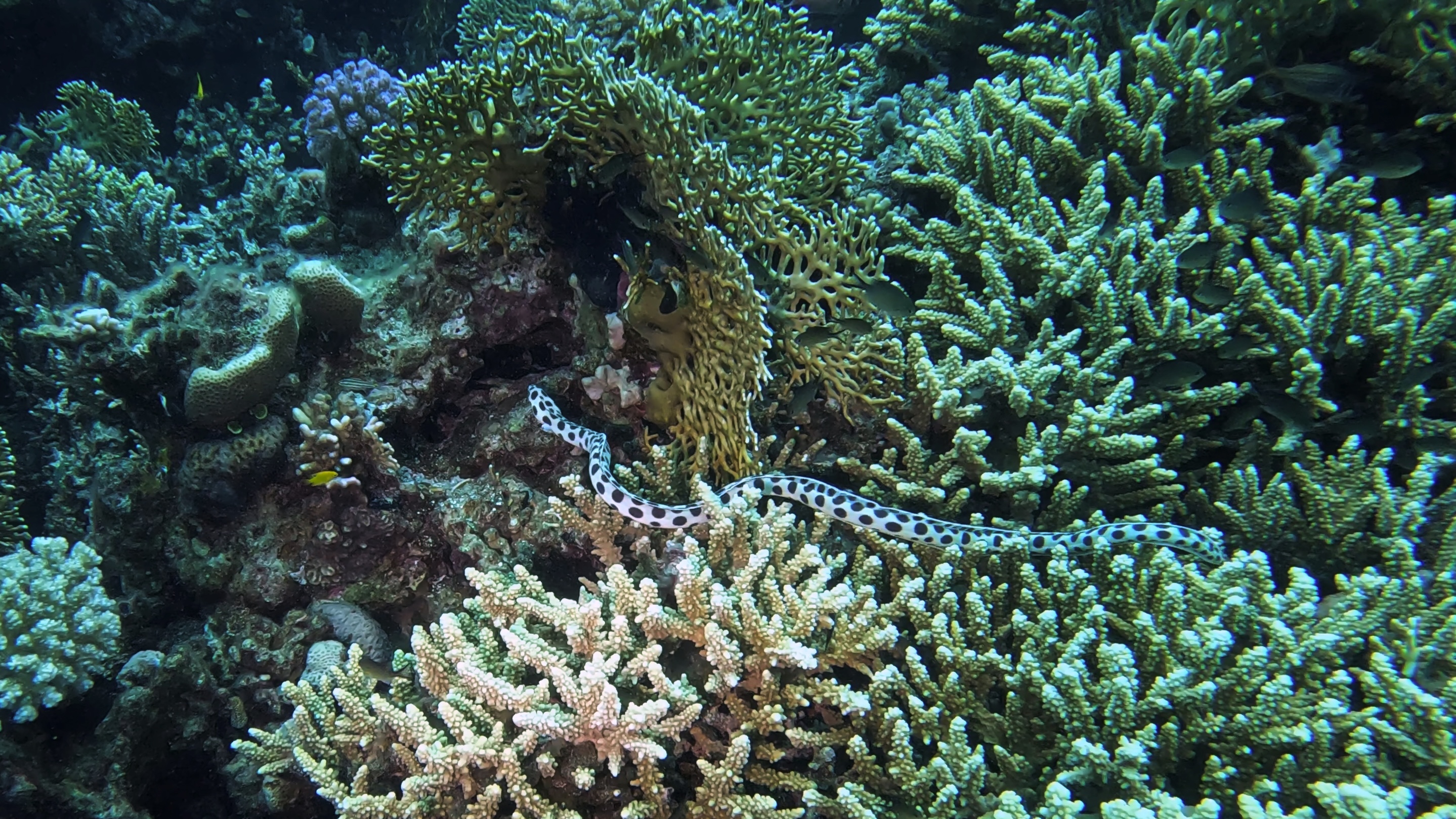
Tiger Snake Eel – Myrichthys tigrinus – Tigrasta kačja jegulja
Tigrasta kačja jegulja je zanimiva vrsta jegulji podobne ribe, ki živi v tropskih vodah Atlantskega oceana, predvsem okoli koralnih grebenov in peščenega morskega dna. Običajno zraste od 60 do 90 cm v dolžino. Ima dolgo, vitko telo z izrazitimi temno rjavimi ali črnimi progami in lisami na svetlejši podlagi, kar ji daje videz tigrovega vzorca. Ta značilna obarvanost ji omogoča dobro kamuflažo v peščenem in skalnatem okolju. Tigrasta kačja jegulja živi v plitvih obalnih vodah, na koralnih grebenih in peščenih dnih. Pogosto se zakoplje v pesek, tako da je vidna le glava, kar ji nudi zaščito in pomaga pri lovu. Večinoma je aktivna ponoči. Je mesojeda in se prehranjuje z manjšimi ribami, rakci in drugimi morskimi nevretenčarji. S pomočjo ostrih zob in hitrih gibov učinkovito ujame plen. Čeprav deluje zastrašujoče, običajno ni nevarna za ljudi, razen če je ogrožena ali jo kdo poskuša prijeti.
The Tiger Snake Eel (Myrichthys tigrinus) is a striking species of snake eel found in tropical Atlantic waters, especially around coral reefs and sandy seabeds. This eel usually grows to about 60–90 cm (24–35 inches) in length. It has a long, slender body with bold dark brown or black bands and spots over a lighter background, giving it a tiger-like pattern. This distinctive coloration helps it blend into sandy and rocky environments. Tiger Snake Eels live in shallow coastal waters, coral reefs, and sandy bottoms. They often bury themselves in the sand with only their head exposed for protection and camouflage. They are mainly active at night. They are carnivorous and feed on small fish, crustaceans, and marine invertebrates. Using their sharp teeth and quick movements, they capture prey efficiently. Although they may look intimidating, Tiger Snake Eels are generally not aggressive toward humans unless handled or threatened.
Foto: Aleš Sulič, Eypt Ras Muhammad
BLUE TREVALLY FISH
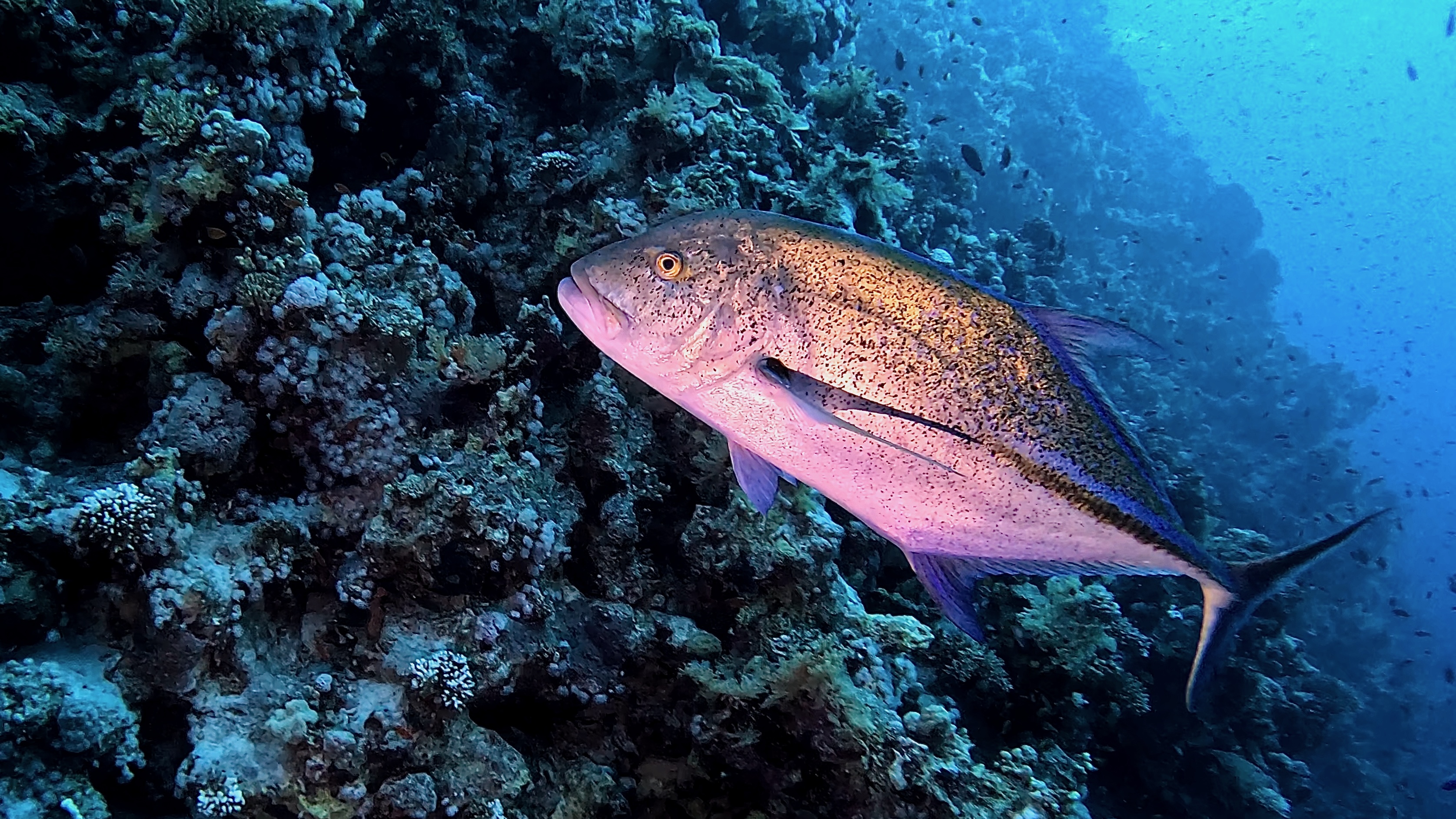
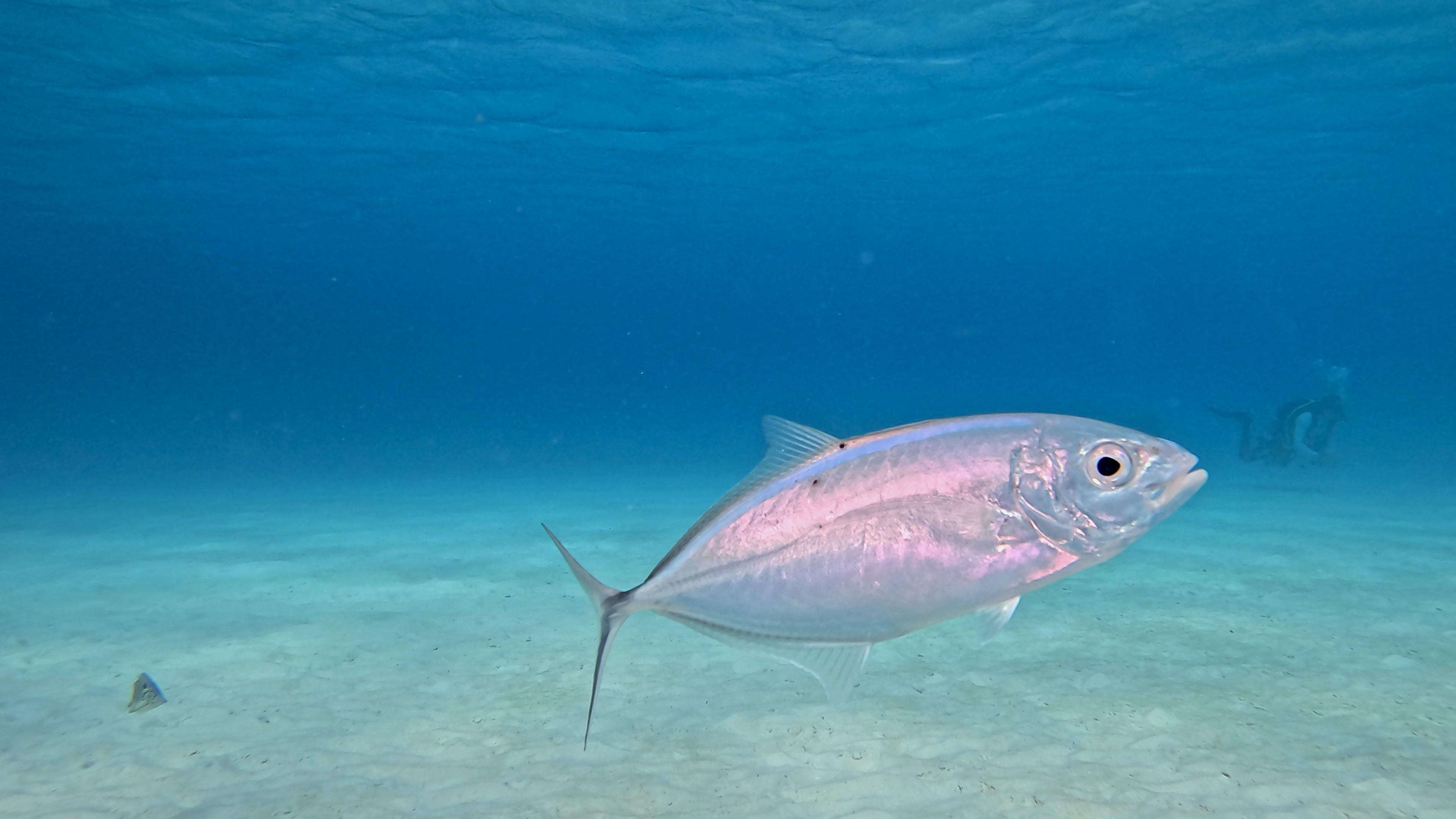
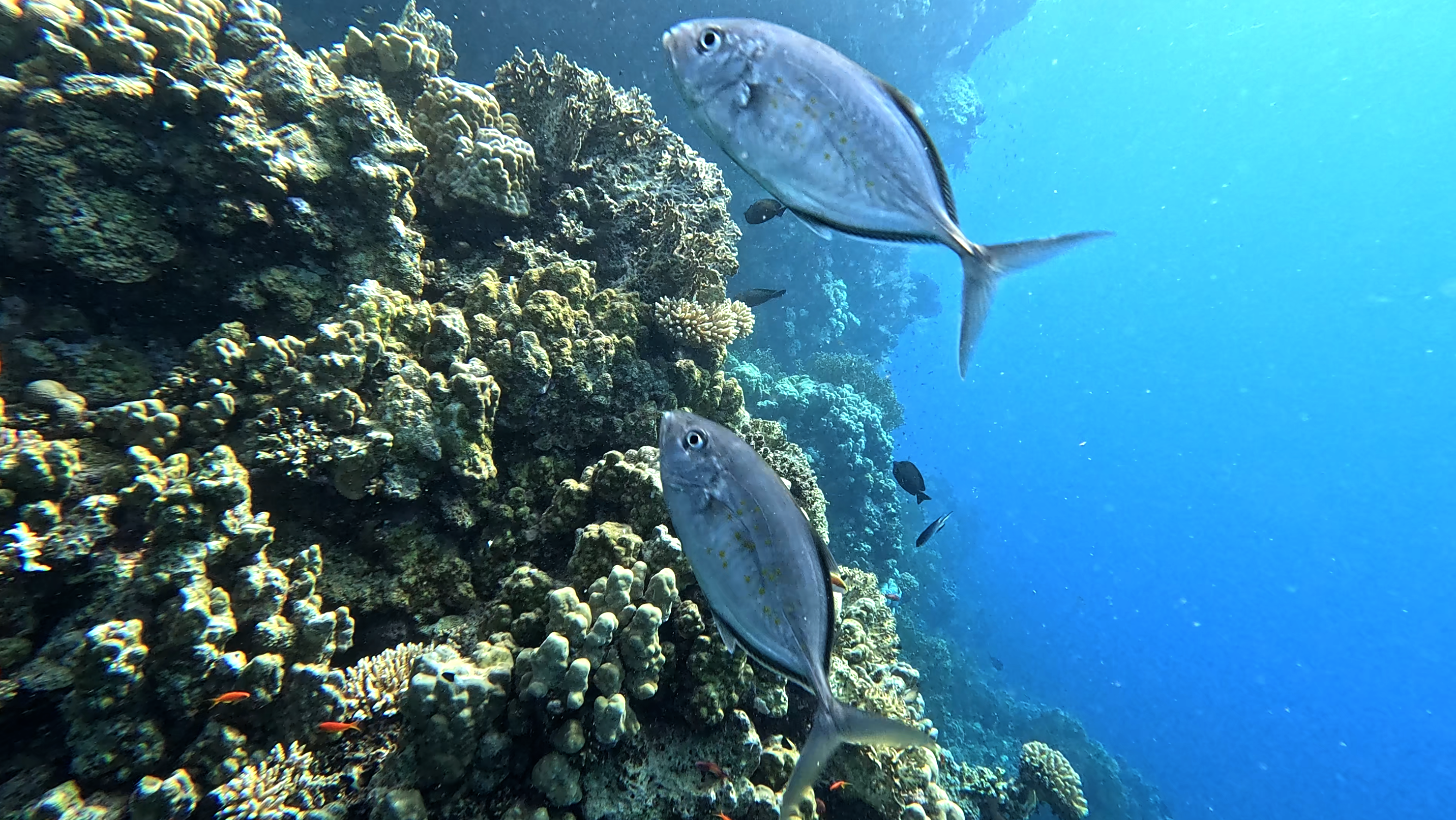
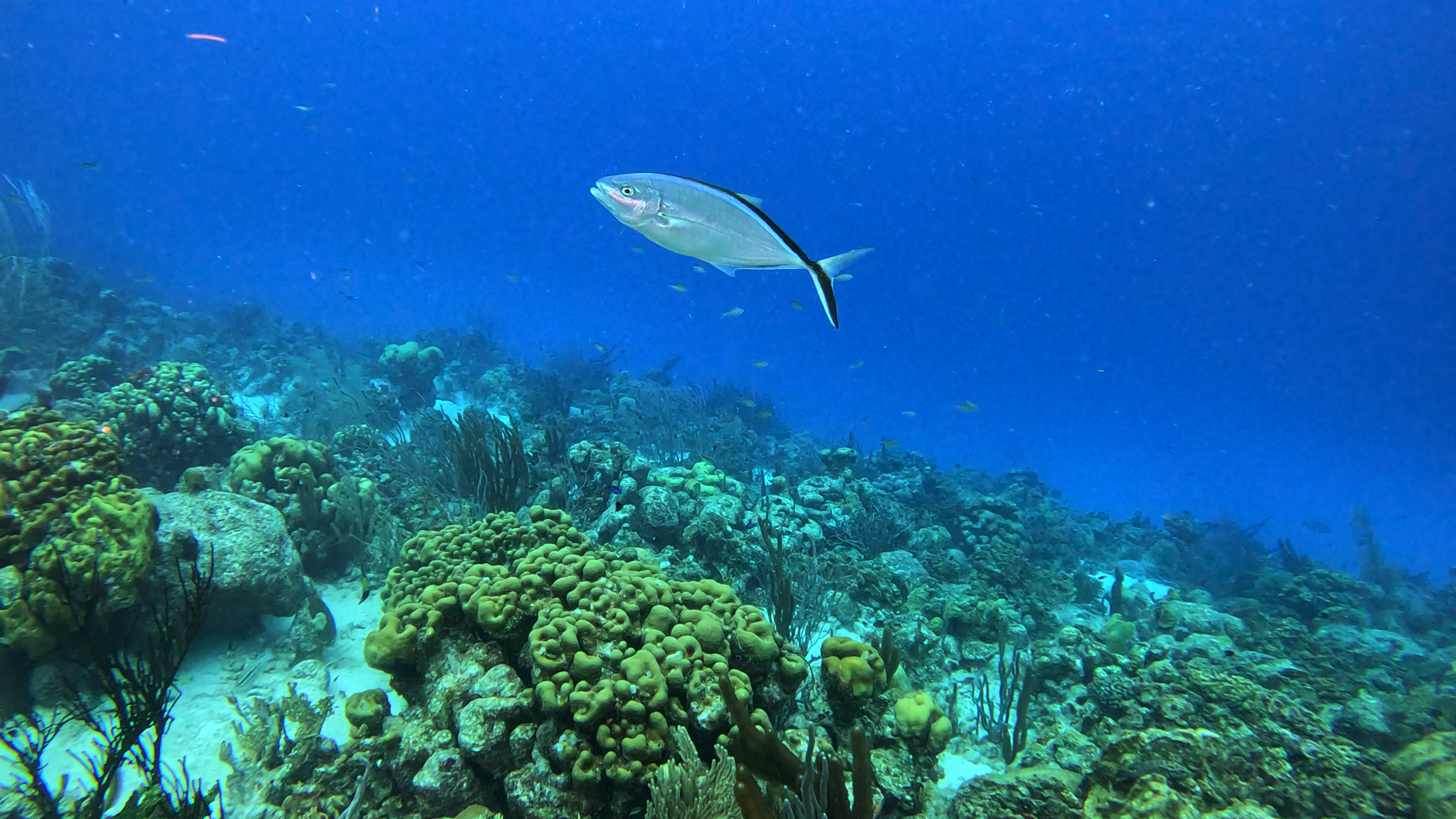
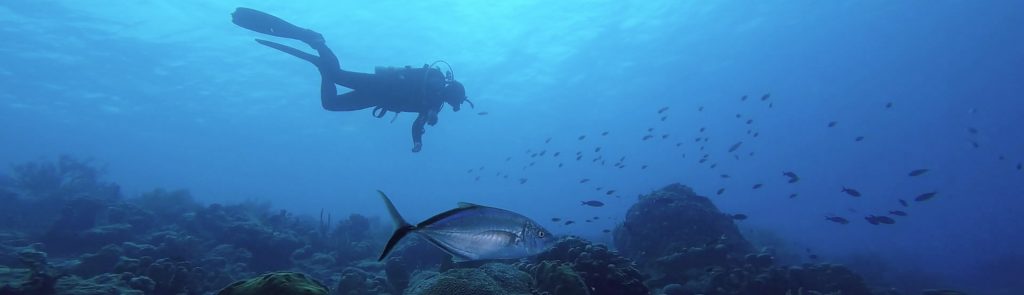
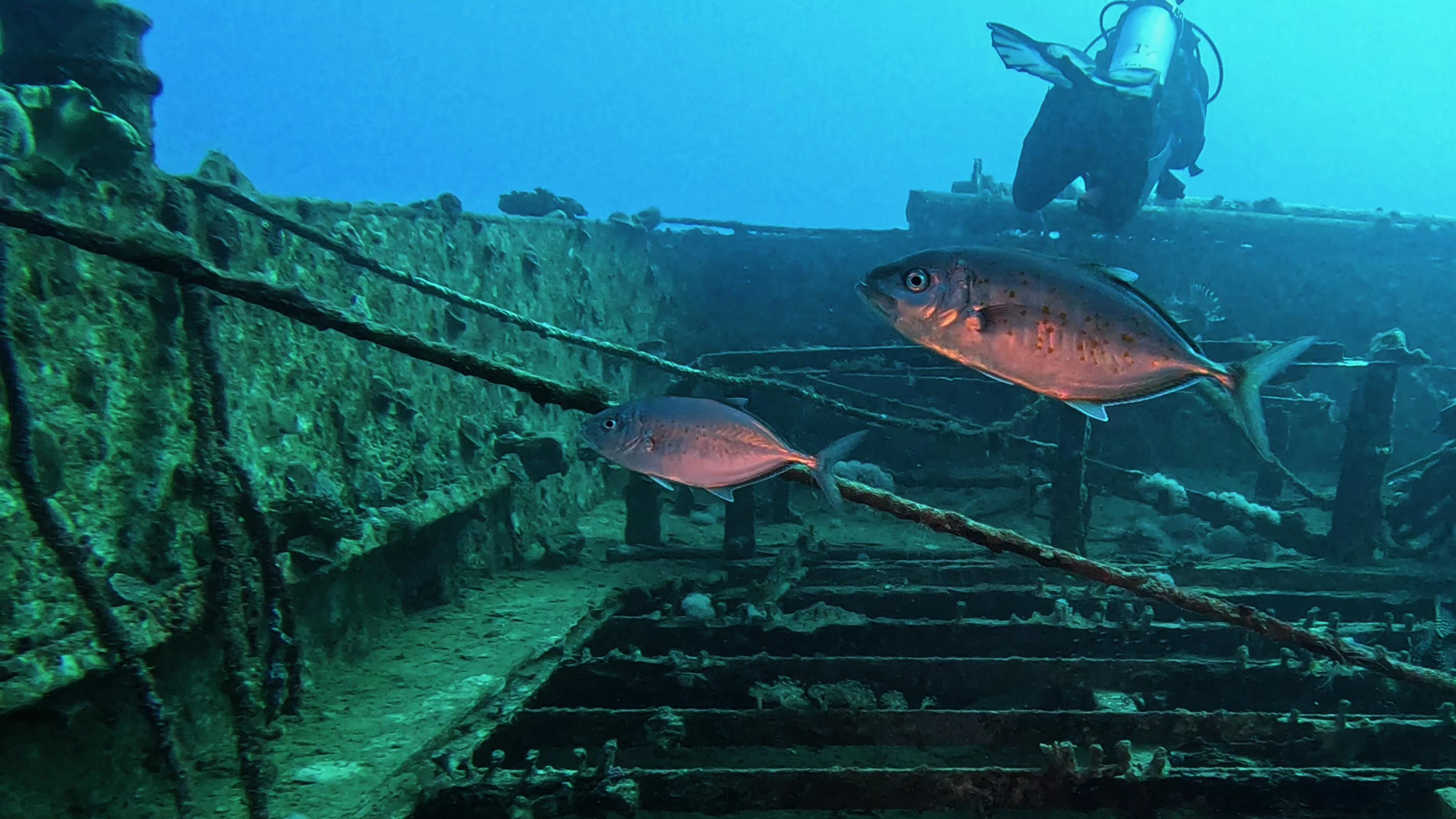
Blue Trevally – Caranx melampygus – Modri avon, Modri škarun
Modri avon (Caranx melampygus) je hitro plavajoča, plenilska riba, ki jo najdemo v toplih vodah indo-pacifiškega območja, vključno z obalami Afrike, Indijskega oceana in Tihega oceana. Modri avon običajno zraste med 30 in 60 cm, vendar lahko doseže tudi do 1 metra. Ima vitko, ovalno telo, ki je prilagojeno za hitrost, ter srebrno barvo z modrimi ali zelenkastimi odtenki. Plavuti, zlasti repna, so izrazito modre barve. Ima velike, okrogle oči, prilagojene za lov v svetlih in temnejših pogojih. Repna plavut je globoko razcepljena, kar ji omogoča hitro in učinkovito plavanje. Modri avon ali Modri škaram je mesojed plenilec, ki se prehranjuje z manjšimi ribami, rakci in glavonožci. Riba je družabna in se pogosto zadržuje v jatah, še posebej med lovom ali pri selitvi. Pri lovu je zelo agresivna in pogosto lovi jate manjših rib. Njena hitrost ji omogoča loviti s hitrimi sunki. Čeprav trenutno ni ogrožen, je pomembno spremljati populacijo, še posebej v območjih, kjer lahko prekomerni ribolov ali uničenje habitatov vplivata na njihovo število.
The Blue Trevally (Caranx melampygus) is a fast-swimming, predatory fish found in the warm waters of the Indo-Pacific region, including the coasts of Africa, the Indian Ocean, and the Pacific Ocean. The Blue Trevally typically grows between 30–60 cm (12–24 inches), but can reach up to 1 meter (3 feet) in some cases. It has a sleek, oval-shaped body built for speed, with silver coloring and blue or greenish-blue hues. The fins, particularly the tail fin, are distinctly blue. The fish also has large, round eyes adapted for hunting in both daylight and dimmer light conditions. Its tail fin is deeply forked, helping it swim efficiently and quickly. As a carnivorous predator, Blue Trevallies feed on smaller fish, crustaceans, and cephalopods (squid and octopus). They are social and often hunt in schools, taking advantage of schools of smaller fish to catch prey. Known for their aggression when hunting, they can chase down their prey with remarkable speed. While not currently endangered, Blue Trevally populations should be monitored, especially in areas where overfishing or habitat destruction could affect their numbers.
Foto: Aleš Sulič, Egypt Hurghada
YELLOWSPOTTED TREVALLY
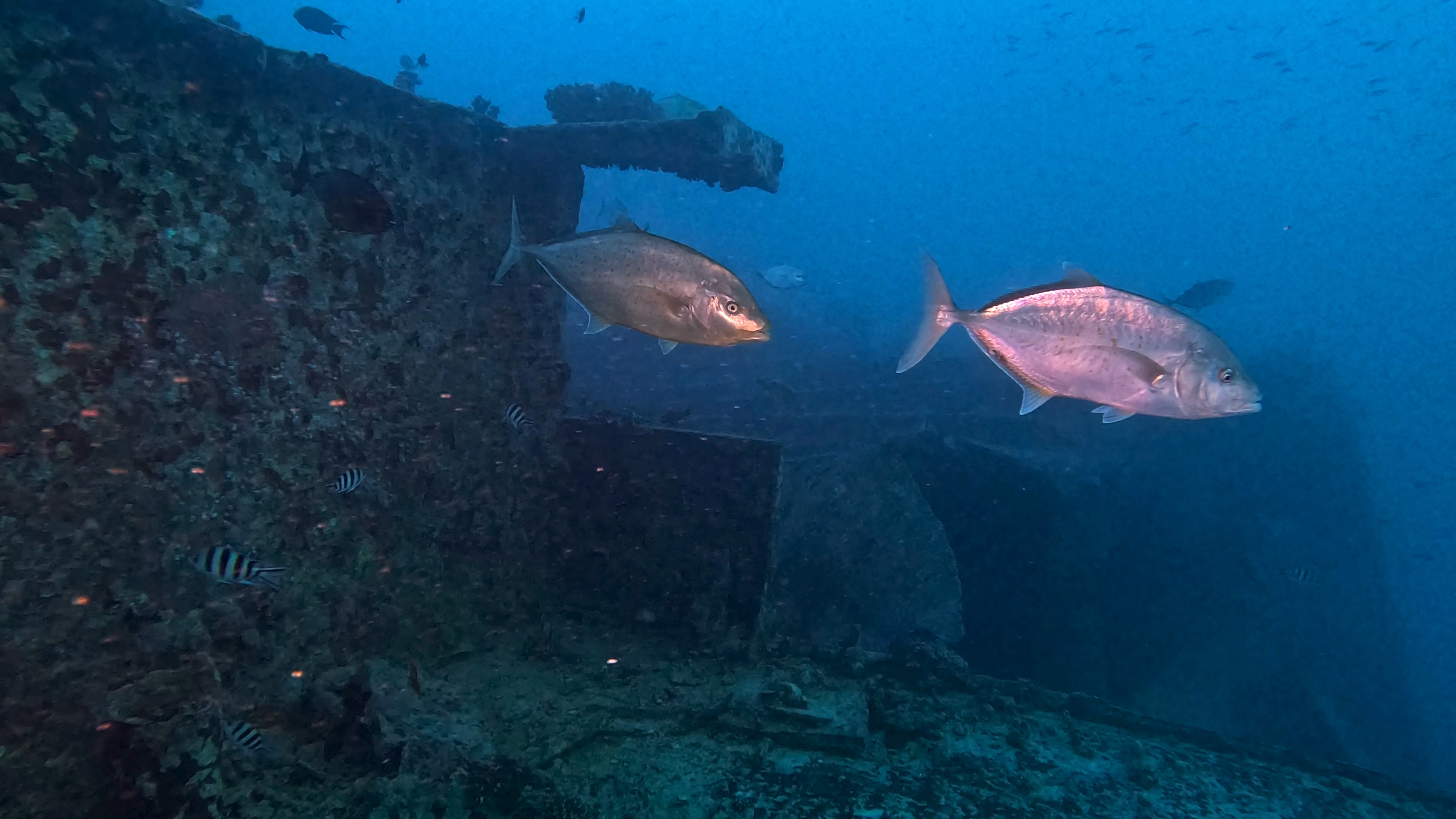
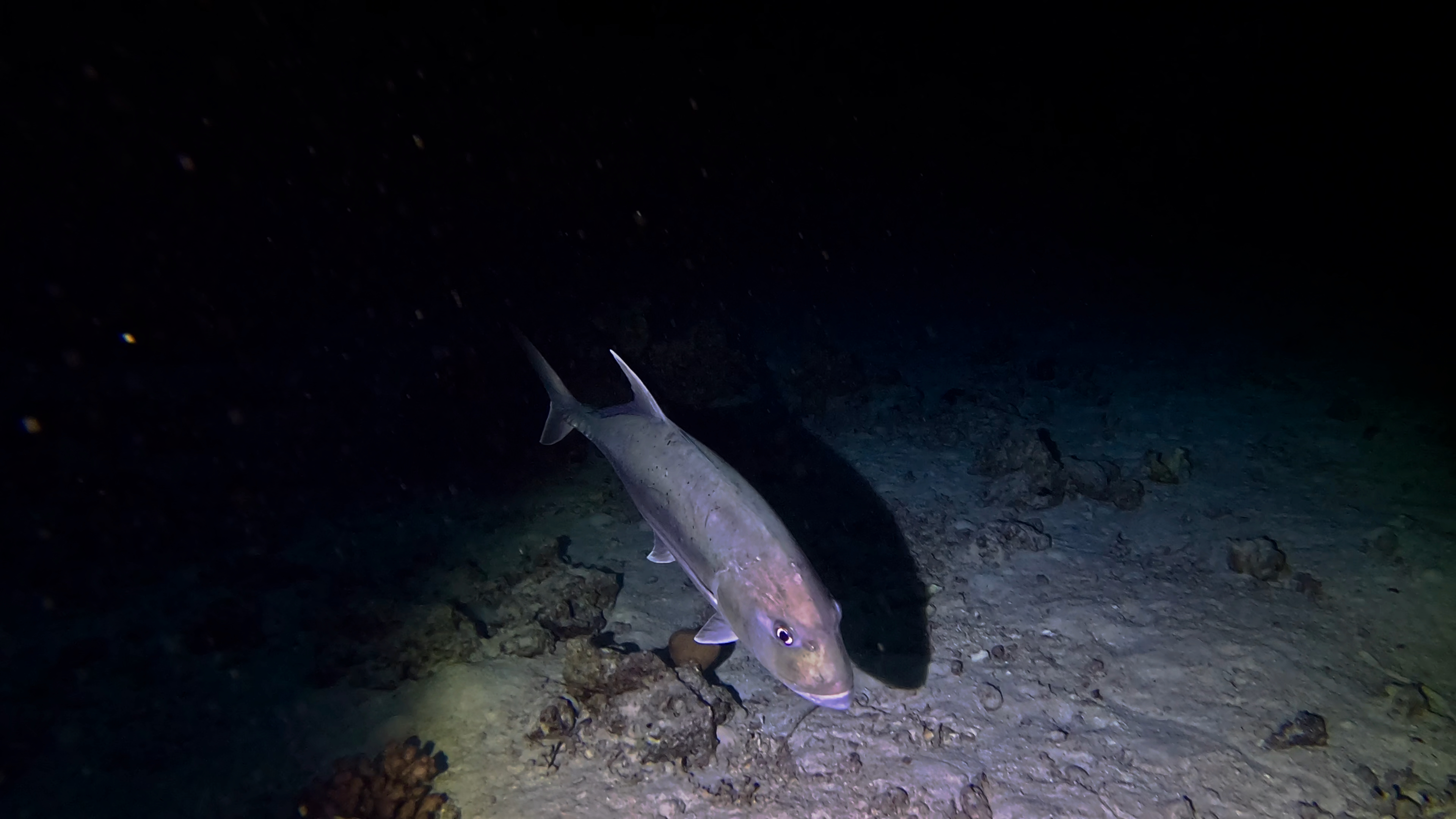
Foto: Aleš Sulič, Egypt SS Thistlegorm
KEELTAIL NEEDLEFISH
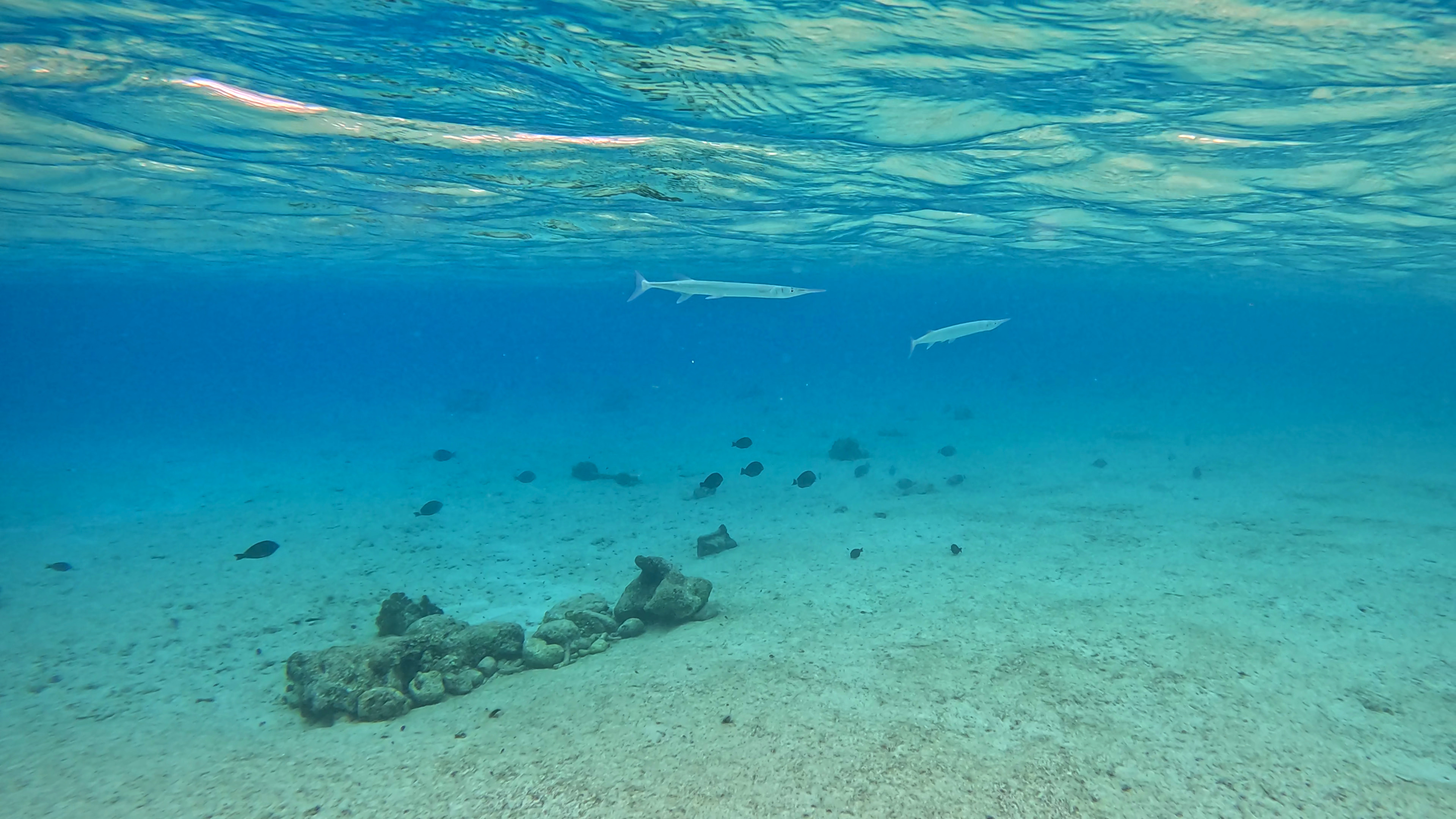
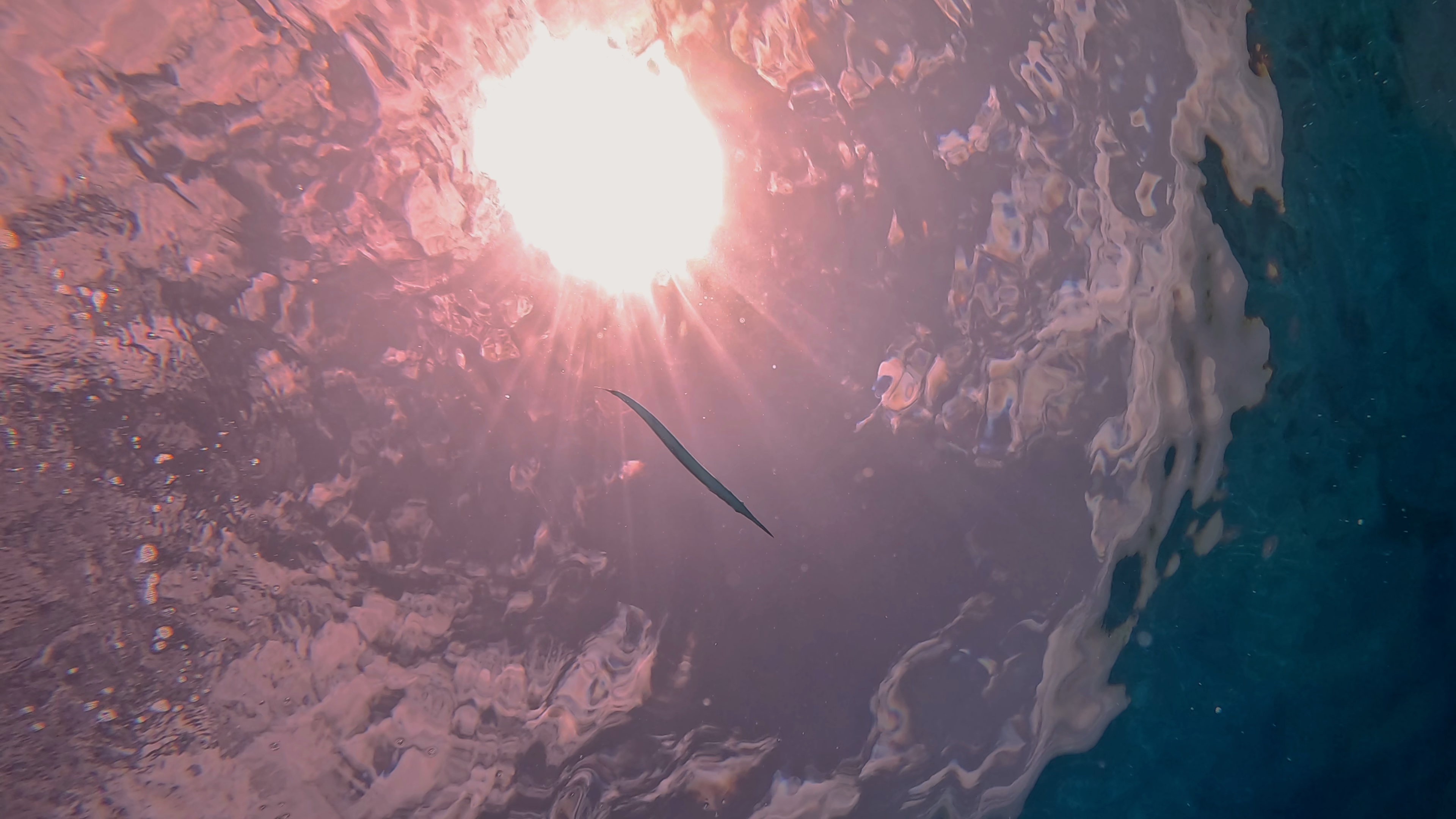
Keeltail Needlefish – Platybelone argalus – Iglica z grbastim repom
Iglica z grbastim repom je vrsta iglice, ki živi v toplih obalnih vodah indo-pacifiškega območja. Značilna je po dolgem, vitkem telesu in ostrem, iglastem kljunu, zaradi česar je zelo prilagojena za hitro plavanje in lov na manjši plen. Navadno merijo do 60 cm, večji primerki pa lahko dosežejo tudi več kot 1 meter. Barva telesa je srebrna, z temnejšimi lisami vzdolž hrbta, plavuti pa so običajno prozorne ali rahlo obarvane. Rep je rahlo razcepljen z izrazito izbočeno grbo, zaradi katere je dobila svoje ime. Imajo velike oči, ki jim pomagajo pri navigaciji v svetlih in temnejših pogojih. Kot mesojede ribe se prehranjujejo z manjšimi ribami, rakci in nevretenčarji. Znane so po svoji hitrosti in spretnosti, saj lahko hitro dosežejo velike hitrosti, da ujamejo hrano ali pobegnejo pred plenilci. Pogosto so samotarske, vendar jih občasno lahko vidimo v manjših skupinah.
The Keeltail Needlefish (Platybelone argalus) is a species of needlefish found in the warm coastal waters of the Indo-Pacific region. Known for its long, slender body and sharp, needle-like snout, this fish is well-adapted for swift swimming and hunting smaller prey. Keeltail Needlefish typically grow to around 40–60 cm (16–24 inches), though larger specimens can exceed 1 meter (3 feet). They have a long, slim, cylindrical body with a sharp, pointed snout. Their coloration is generally silvery with darker markings along the back, and their fins are often translucent or faintly colored. The tail is slightly forked with a noticeable keel, which gives the species its name. The eyes are large, aiding in navigation in both daylight and low-light conditions. As carnivorous predators, Keeltail Needlefish feed on small fish, crustaceans, and invertebrates. They swim rapidly just beneath the surface, using their sharp snouts to snatch up smaller prey. Known for their speed and agility, they can make quick bursts of speed to capture food or escape predators. They are typically solitary but are occasionally seen in small groups.
Foto: Aleš Sulič, Egypt Rocky Island
YELLOW BOXFISH
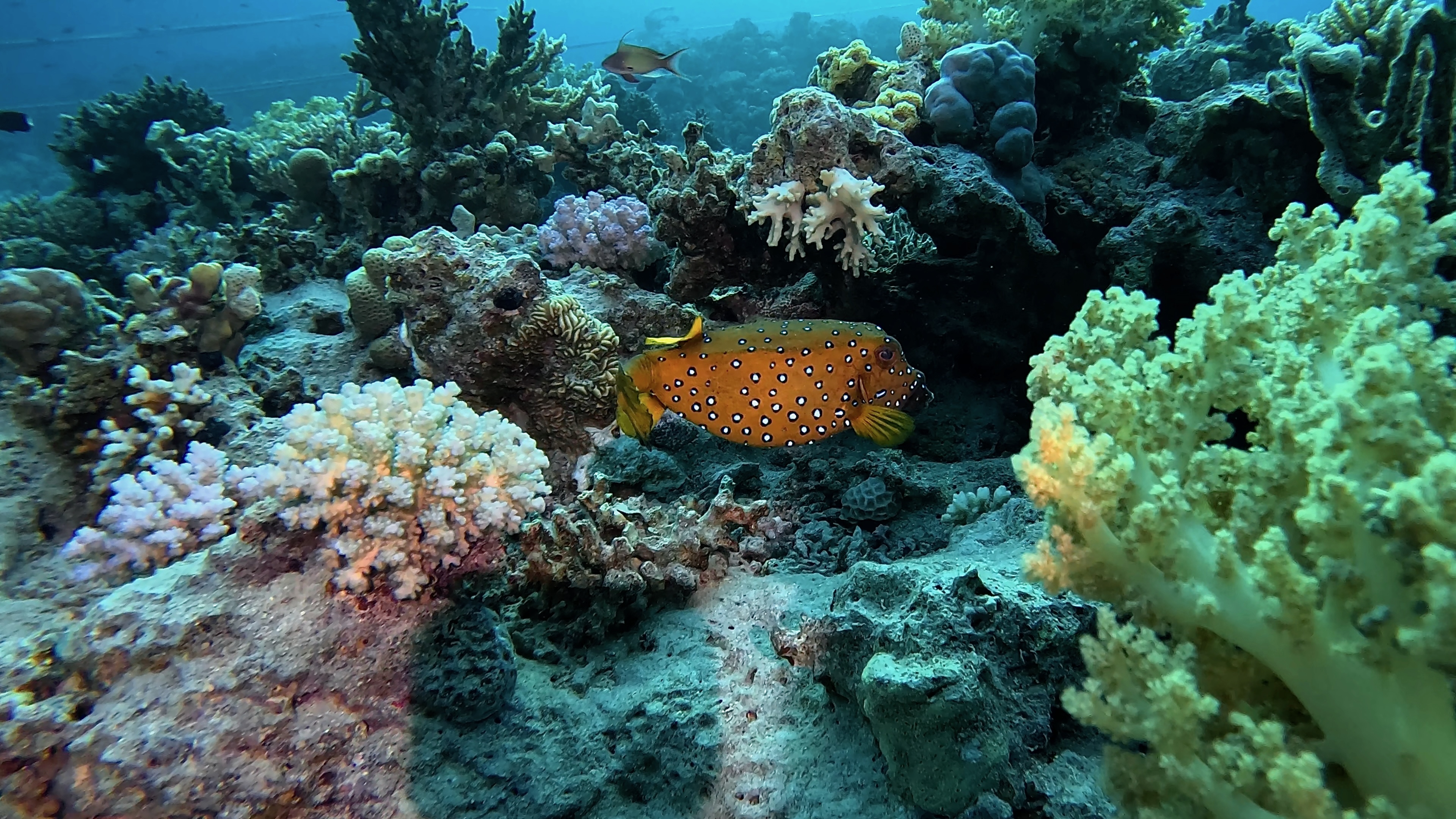
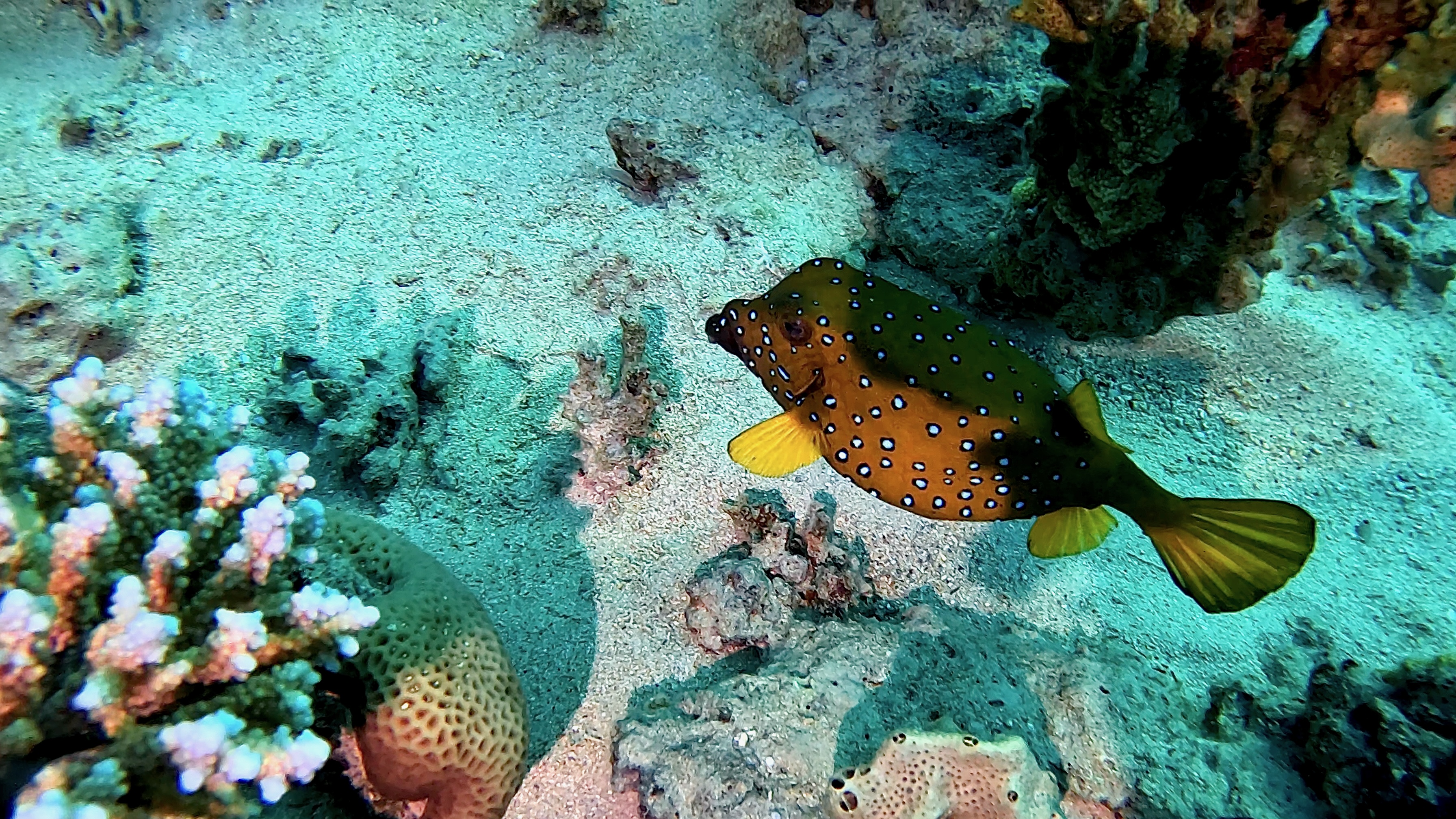
Yellow Boxfish – Ostracion cubicus – Zlata škatlasta riba
Zlata škatlasta riba, je majhna, vendar zelo opazna vrsta ribe, ki prebiva v toplih tropskih vodah Indo-Pacifiškega območja. Zlata škatlasta riba običajno zraste med 15 in 25 cm. Naseljuje koralne grebene, lagune in skalnata območja. Živi v Indo-Pacifiškem območju, vključno s jugovzhodno Azijo, Filipini in severno Avstralijo. Njeno telo je značilno, saj ima trdo, škatlasto strukturo, ki je zaščitena s kostno zunanjostjo, zaradi česar daje videz trdnosti. Riba je svetlo rumene barve s črnimi lisami ali temnimi oznakami, kar ji daje izjemen videz. Zlata škatlasta riba je vsejeda, hrani se z algami, manjšimi nevretenčarji in drobnimi organizmi. S svojim majhnim usti preiskuje pesek in razpoke, da poišče hrano. Običajno je samotarska, večino časa plava po grebenu ali se skriva med koralami. Njeno škatlasto telo nudi zaščito pred plenilci. Ko je ogrožena, lahko iz svoje kože izloči strupeno snov, s katero se zaščiti pred plenilci.
The Yellow Boxfish, scientifically known as Ostracion cubicus, is a small but striking species of fish found in the warm tropical waters of the Indo-Pacific region. It is famous for its box-like, rigid body and bright yellow coloration, often with small dark spots, making it easily recognizable among coral reef inhabitants. The Yellow Boxfish typically grows between 15–25 cm (6–10 inches), but can sometimes reach up to 35 cm (14 inches). It inhabits coral reefs, lagoons, and rocky crevices, and is found in the Indo-Pacific region, including Southeast Asia, the Philippines, and northern Australia. Its body is distinctive, with a rigid, box-shaped structure encased in a bony outer layer, giving it a tough appearance. The fish is bright yellow with black spots or dark markings, making it visually striking. It has small pectoral fins, and its tail fin is slightly forked. The small, slightly upturned mouth is used to feed on algae, small invertebrates, and detritus. The Yellow Boxfish is omnivorous and uses its small mouth to graze on algae and sift through sand to find food hidden in crevices. It is typically solitary, often swimming slowly around the reef or hiding among the corals. It is not a fast swimmer, but its boxy body provides protection from predators. If threatened, it can release a toxin from its skin to deter larger fish.
Foto: Aleš Sulič, Egypt Hurghada
FOUREYE BUTTERFLYFISH
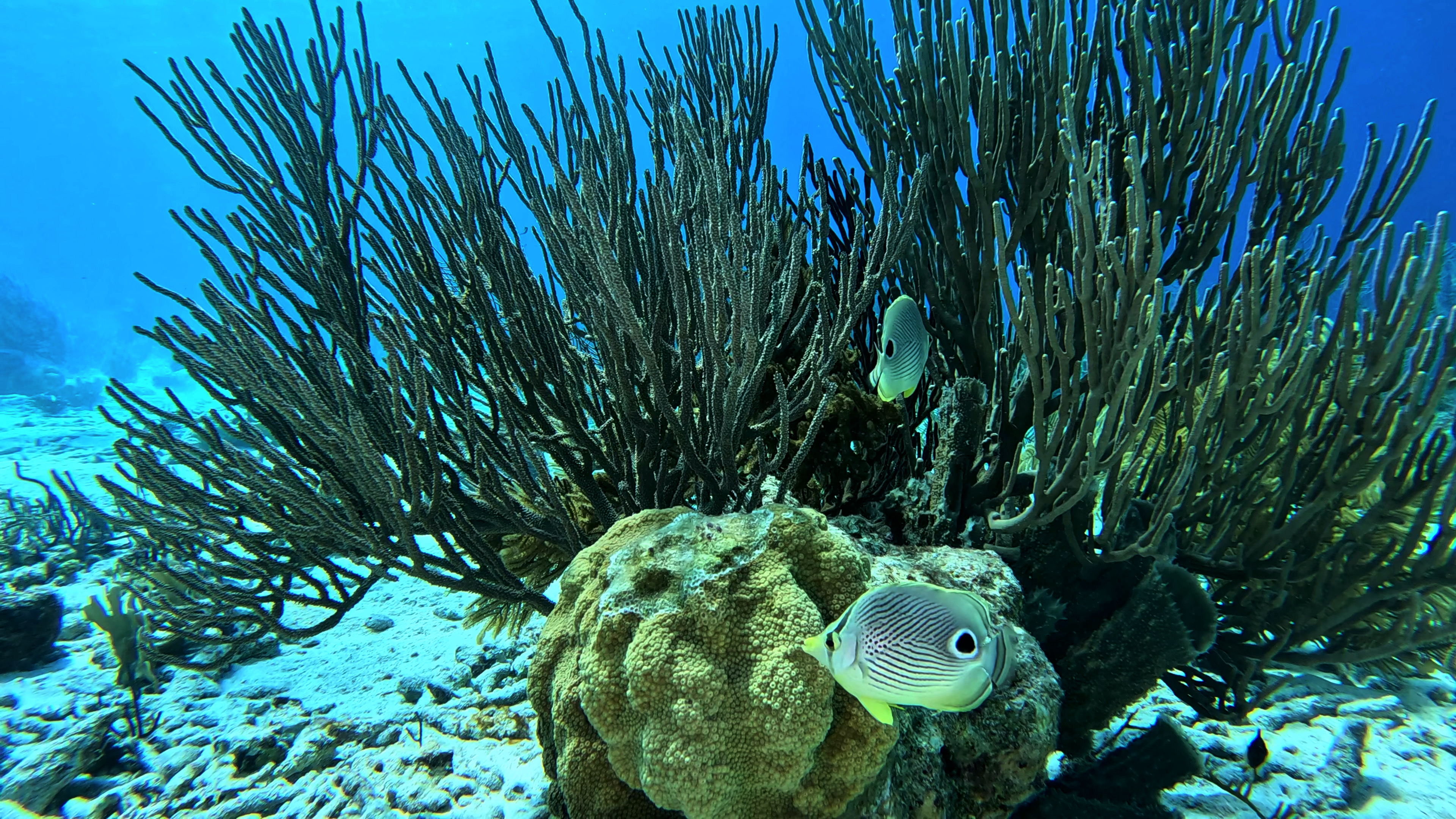
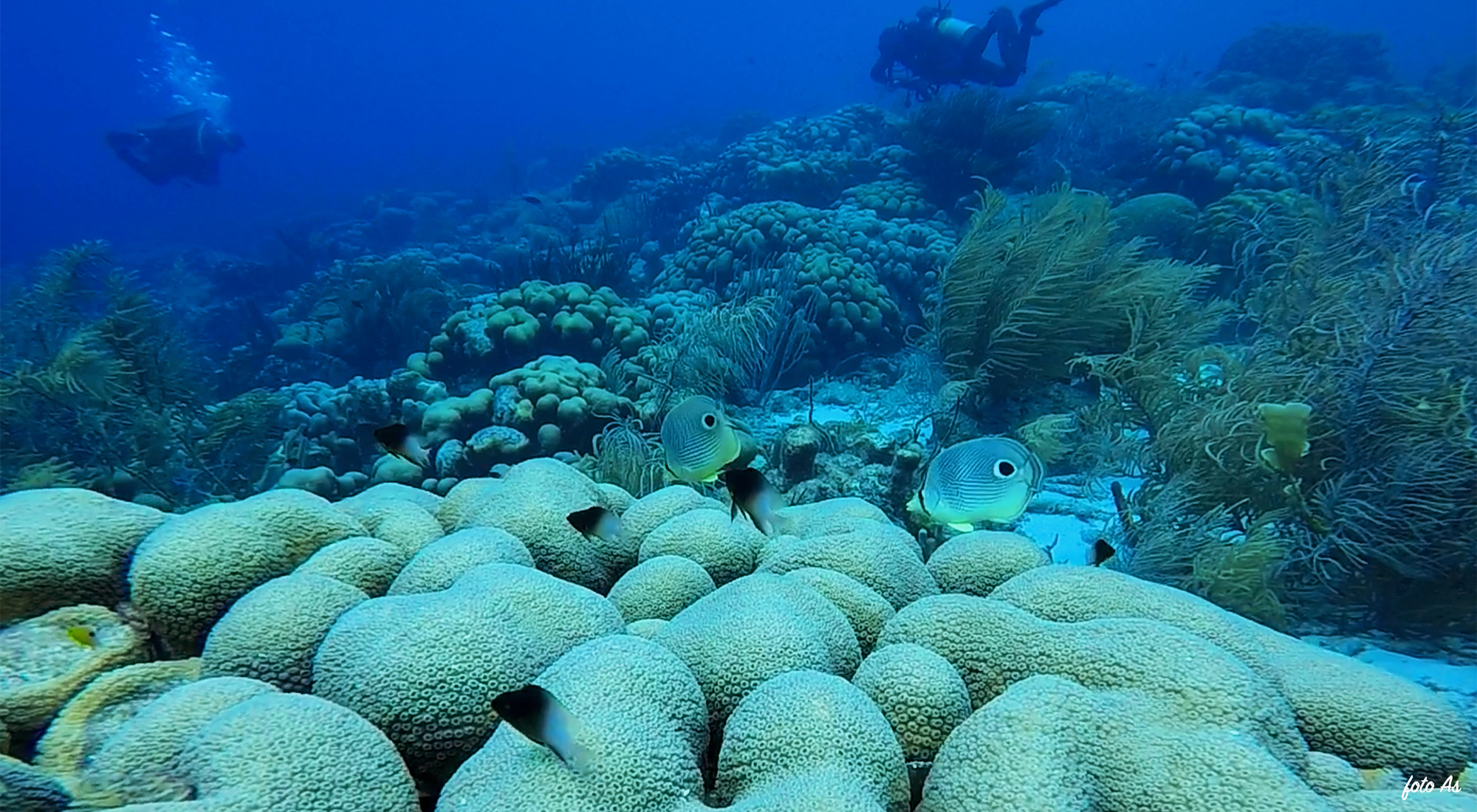
Foureye Butterflyfish – Chaetodon capistratus – Štiripikčasta metuljčica
Štiripikčasta metuljčica (Chaetodon capistratus) je majhna, barvita vrsta metuljčkaste ribe, ki naseljuje tople, plitve vode zahodnega Atlantskega oceana, predvsem okoli koralnih grebenov in skalnatih območij. Metuljček s štirimi očmi običajno zraste med 15 in 20 cm (6–8 palcev). Ima diskasto, stransko stisnjeno telo, ki je značilno za metuljčaste ribe. Njegovo telo je večinoma rumeno z črnimi oznakami, najbolj prepoznaven pa je črni “očesni madež” blizu repa, po katerem je dobil ime. Riba ima dolge, elegantne prsne plavuti, ki spominjajo na metuljeva krila. Njena majhna, rahlo obrnjena usta so idealna za hranjenje s koralnimi polipi in manjšimi nevretenčarji. Pogosto ga lahko vidimo v parih ali manjših skupinah, zlasti med razmnoževanjem ali hranjenjem. Priljubljena akvarijska riba.
The Foureye Butterflyfish is a small, vibrant species of butterflyfish found in the warm, shallow waters of the western Atlantic Ocean, particularly around coral reefs and rocky substrates. The Foureye Butterflyfish typically grows to around 15–20 cm (6–8 inches) in length. It has a disc-shaped, laterally compressed body, which is characteristic of butterflyfish. The body is mostly yellow with black markings, and the most distinctive feature is the black “eye spot” near the tail, giving it its name. The fish has long, graceful pectoral fins that resemble butterfly wings. Its small, upturned mouth is ideal for picking at coral polyps and small invertebrates. This species is often seen in pairs or small groups, especially during breeding or feeding.
Foto: Aleš Sulič, Bonaire Karpata
ANGELFISH
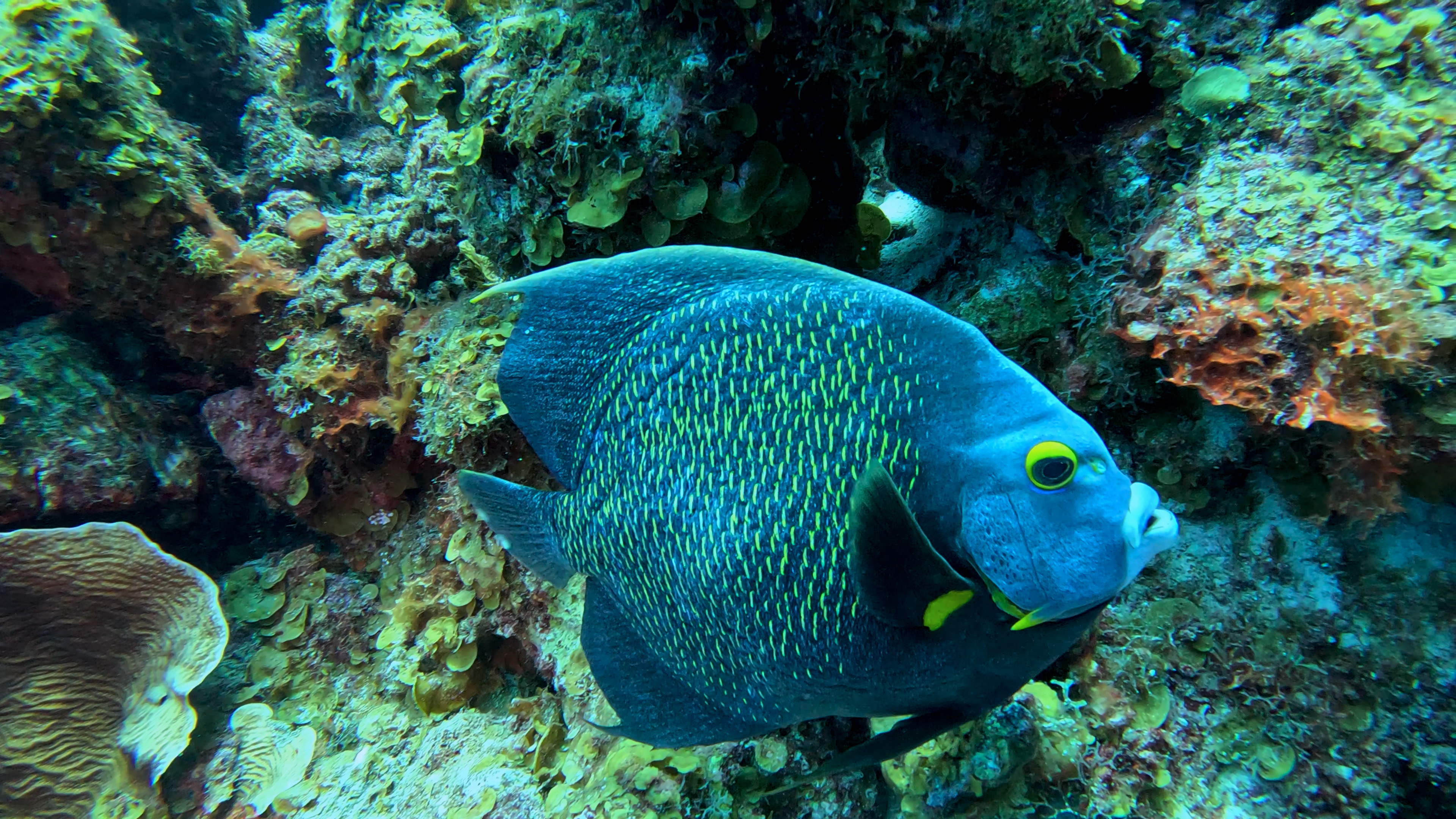
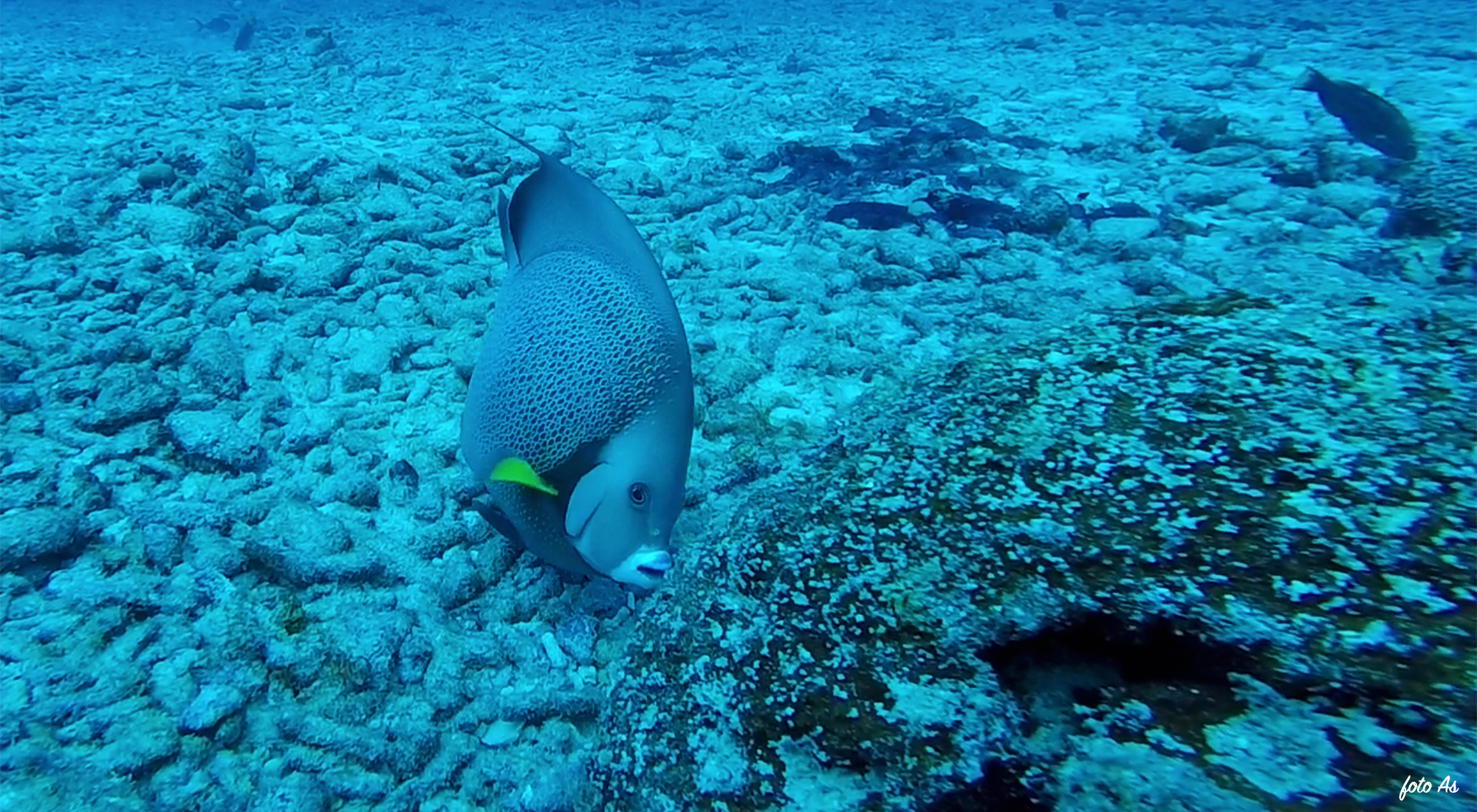
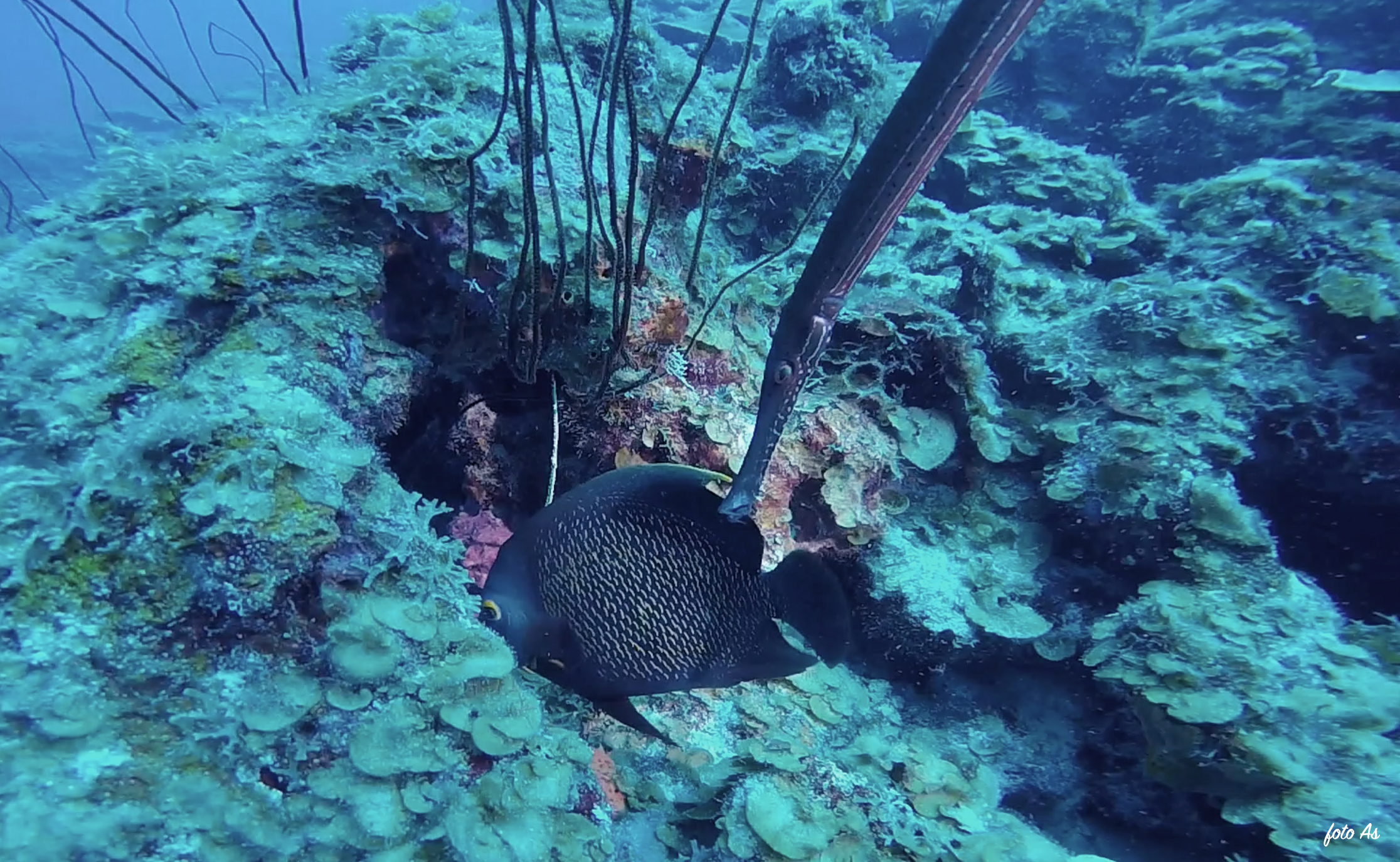
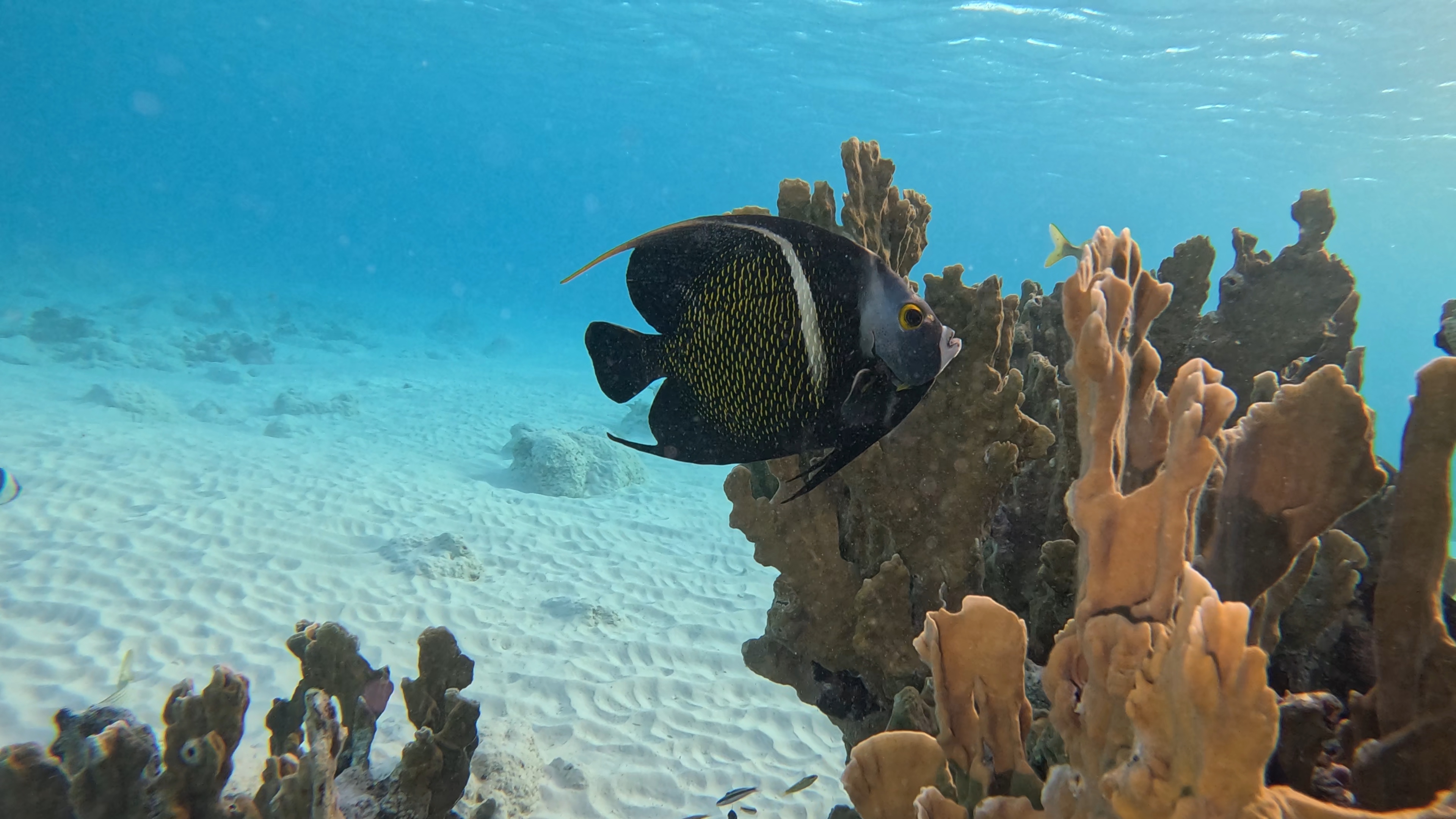
Angelfish – Pomacanthidae – Angelske ribe
Angelske ribe izhajajo iz družine Pomacanthidae, ki so znane po svoji živahni, barviti pojavi in gracioznem plavanju. Te ribe običajno najdemo v tropskih in subtropskih vodah, zlasti okoli koralnih grebenov. Imajo globoko, bočno stisnjeno telo z dolgimi plavutmi, kar jim daje graciozen, angelu podoben videz, po katerem so dobile svoje ime. Glede na vrsto lahko dosežejo velikost od 10 cm do 40 cm v dolžino. Angelčki so svetlo obarvane, v odtenkih rumene, modre, oranžne in črne, pogosto pa kažejo zapletene vzorce in oznake, ki jim pomagajo, da se zlijejo z okoljem grebena. So predvsem rastlinojedke, ki se prehranjujejo z algami, spužvami in drugimi majhnimi nevretenčarji. Nekatere vrste prav tako jedo plankton in koralne polipe. Priljubljena vrsta v večjih akvarijih.
Angelfish refers to several species of fish in the family Pomacanthidae, renowned for their vibrant, colorful appearance and graceful swimming. These fish are typically found in tropical and subtropical waters, especially around coral reefs. Angelfish have deep, laterally compressed bodies with long, flowing fins, giving them a graceful, angel-like appearance, which is how they got their name. Depending on the species, angelfish can range in size from 10 cm (4 inches) to 40 cm (16 inches) in length. Angelfish are brightly colored, with shades of yellow, blue, orange, and black, often displaying intricate patterns and markings that help them blend into their reef environment. Angelfish are primarily herbivores, feeding on algae, sponges, and other small invertebrates. Some species also consume plankton and coral polyps.
Foto: Aleš Sulič, Bonaire Something special
EMPEROR ANGELFISH
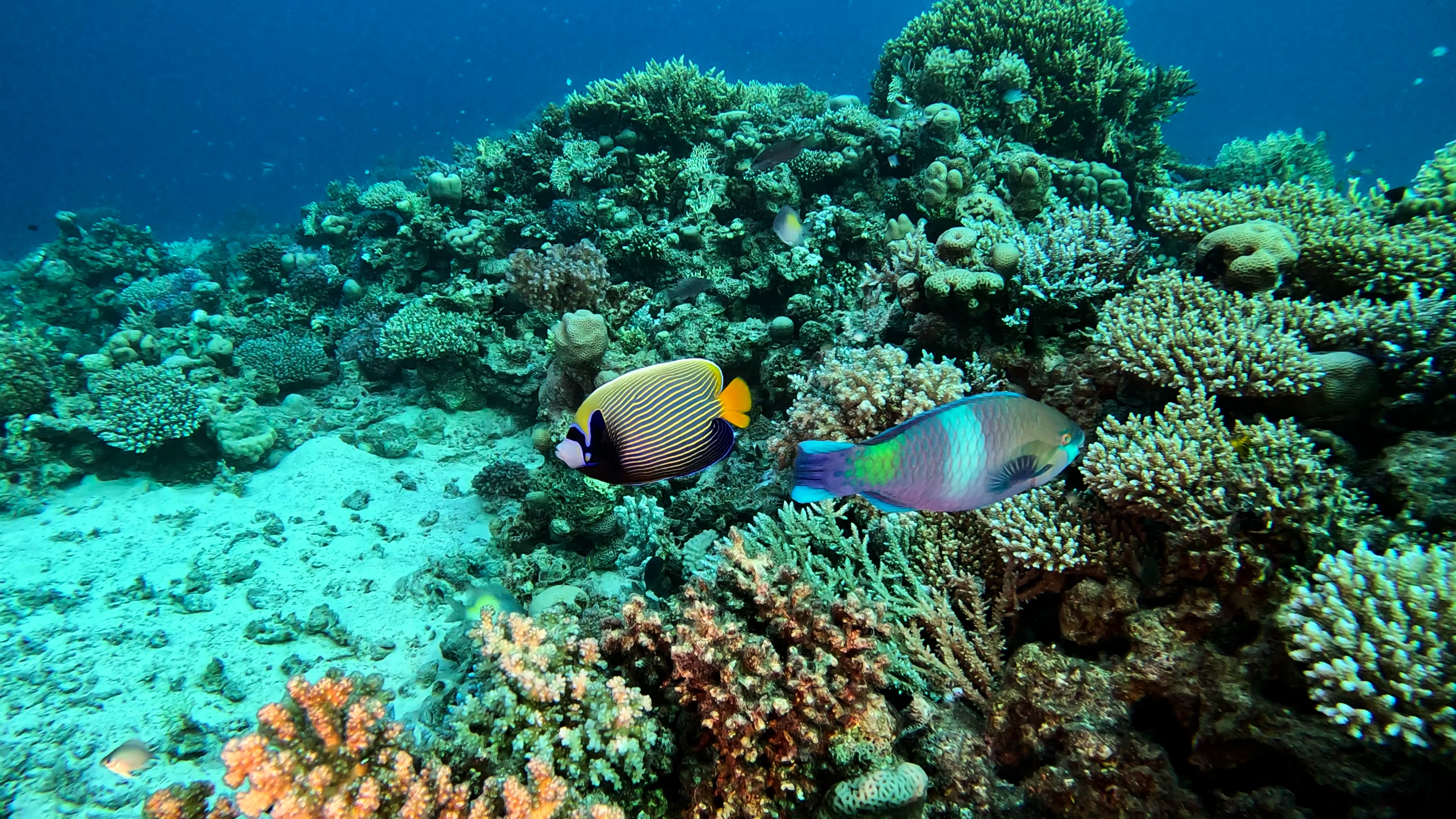
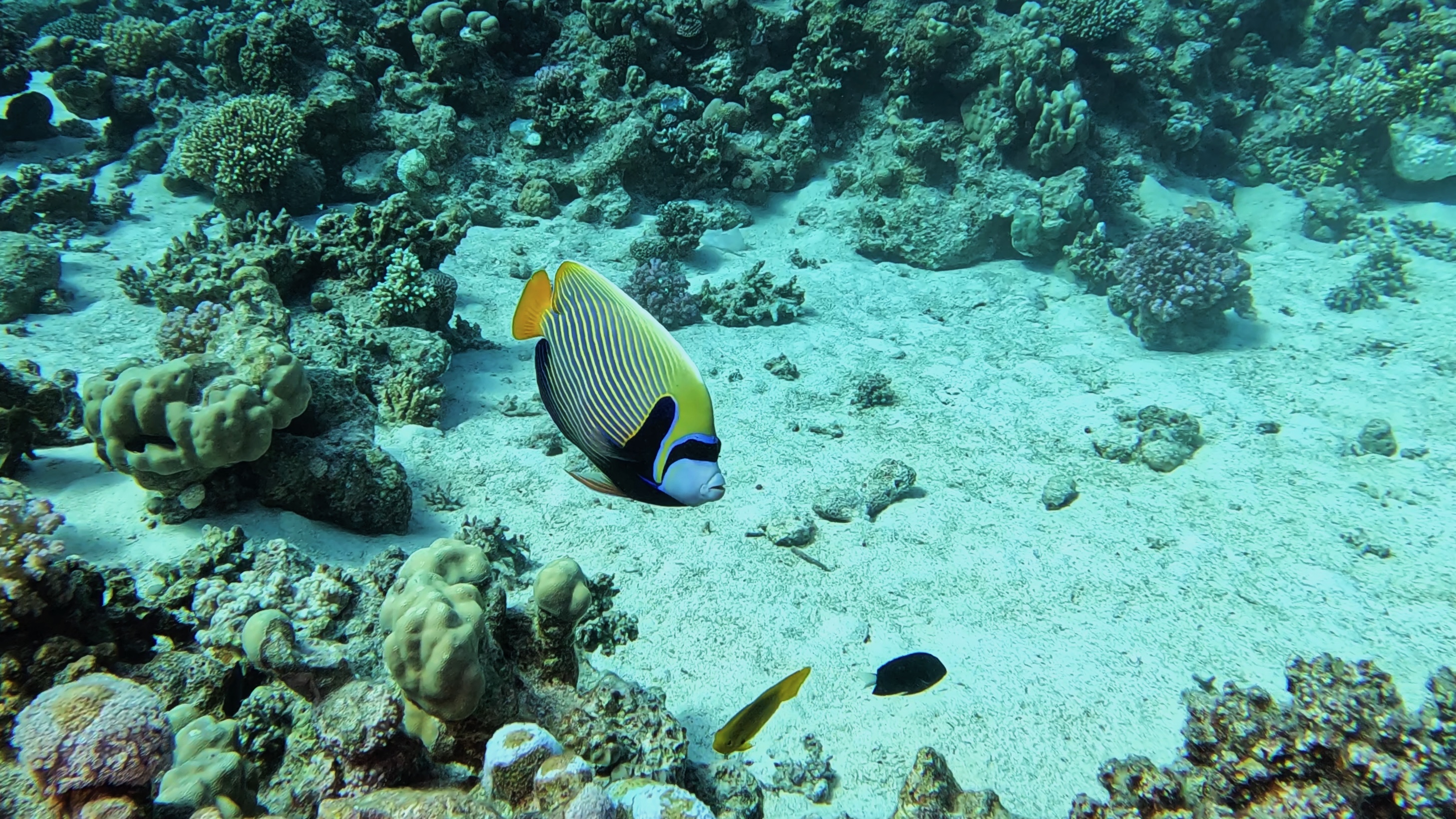
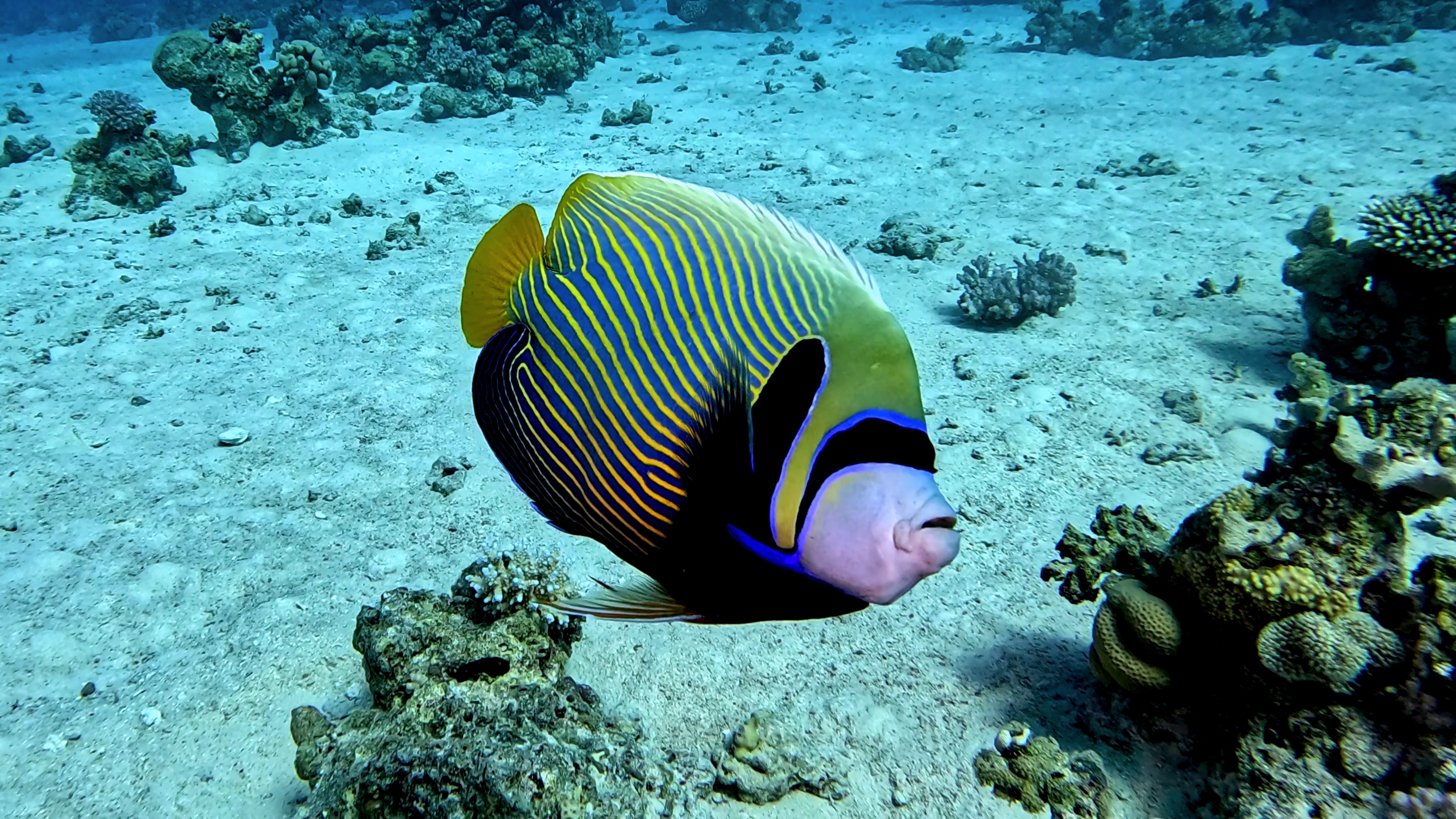
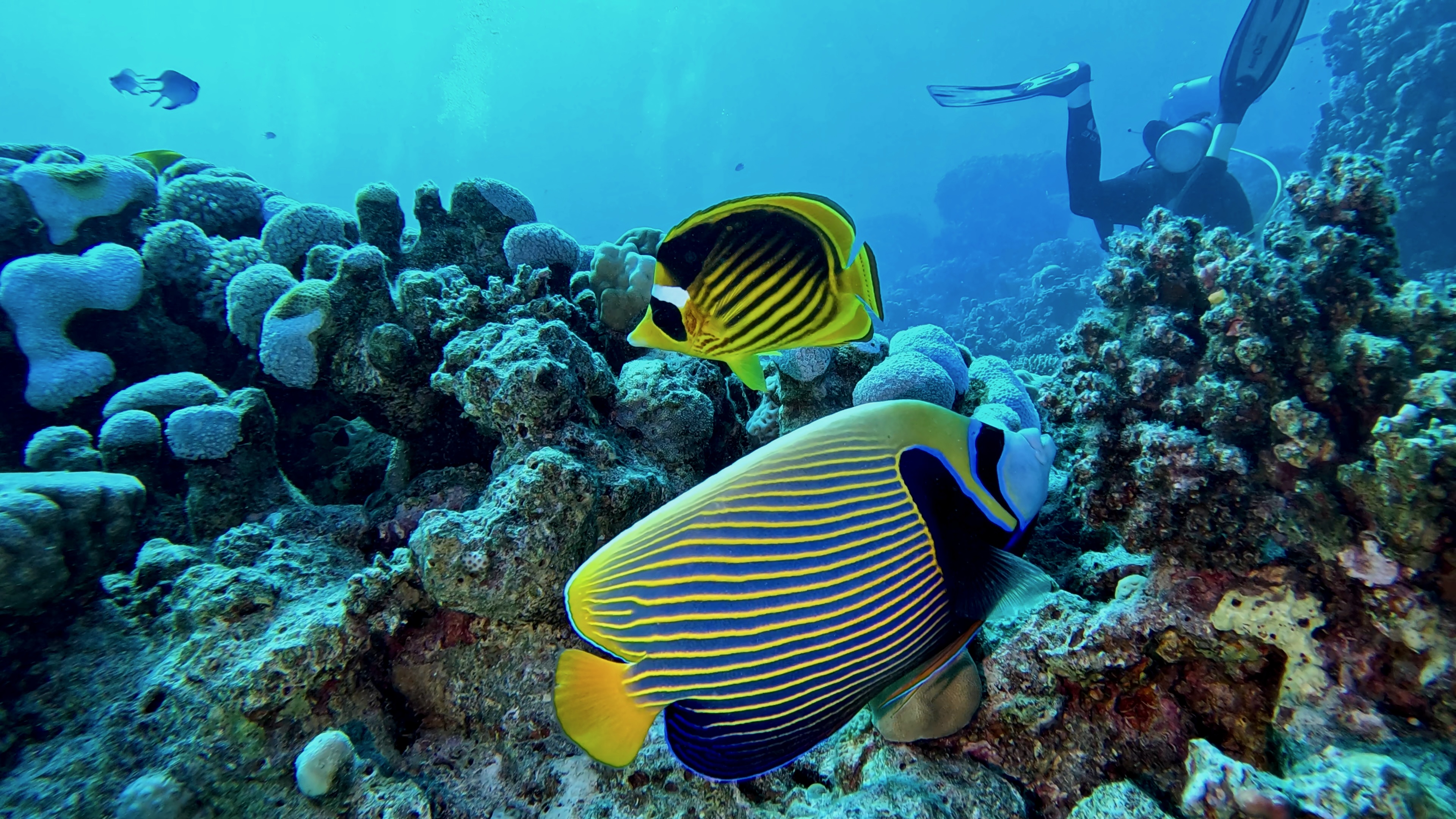
Emperor Angelfish – Pomacanthus imperator – Carska angelska ribica
Carska angelska ribica (Pomacanthus imperator) je tropska riba, znana po svoji osupljivi barvitosti. Mlade ribe so rumeno-modre, medtem ko odrasle dosežejo kombinacijo modrih, zelenih in rumenih odtenkov ter temno modro črto okoli oči. Odrasli dosežejo velikost do 40 cm. So vsejedci, pretežno se prehranjujejo z algami, spužvami in majhnimi nevretenčarji. Najdemo jih v tropskih vodah Indijskega in Tihega oceana, predvsem okoli koralnih grebenov. Carski angeli so pomembni za zdravje koralnih grebenov, saj se prehranjujejo z algami in drugimi majhnimi organizmi, ki bi sicer lahko preplavili in poškodovali strukturo grebena.
In the wild, the Emperor Angelfish (Pomacanthus imperator) is found in tropical and subtropical waters of the Indian and Pacific Oceans, particularly around coral reefs. Their natural habitat includes shallow reefs, slopes, and sand flats at depths ranging from 1 to 60 meters (3 to 200 feet), though they tend to stay closer to the surface in shallower waters. In the wild, these fish are typically seen swimming gracefully around the coral, using their long, flowing fins. As territorial creatures, they establish and defend their personal space, especially around food sources like algae, sponges, and small invertebrates. Their bright colors and distinctive patterns help them blend into the vibrant reef environment, protecting them from predators.Emperor Angelfish are also important players in their ecosystem, contributing to the health of coral reefs by feeding on algae and other small organisms that can otherwise overgrow and damage the reef structure.
Foto: Aleš Sulič, Egypt South Marsa Alam, Dahab
SPOTTED SPINY LOBSTER
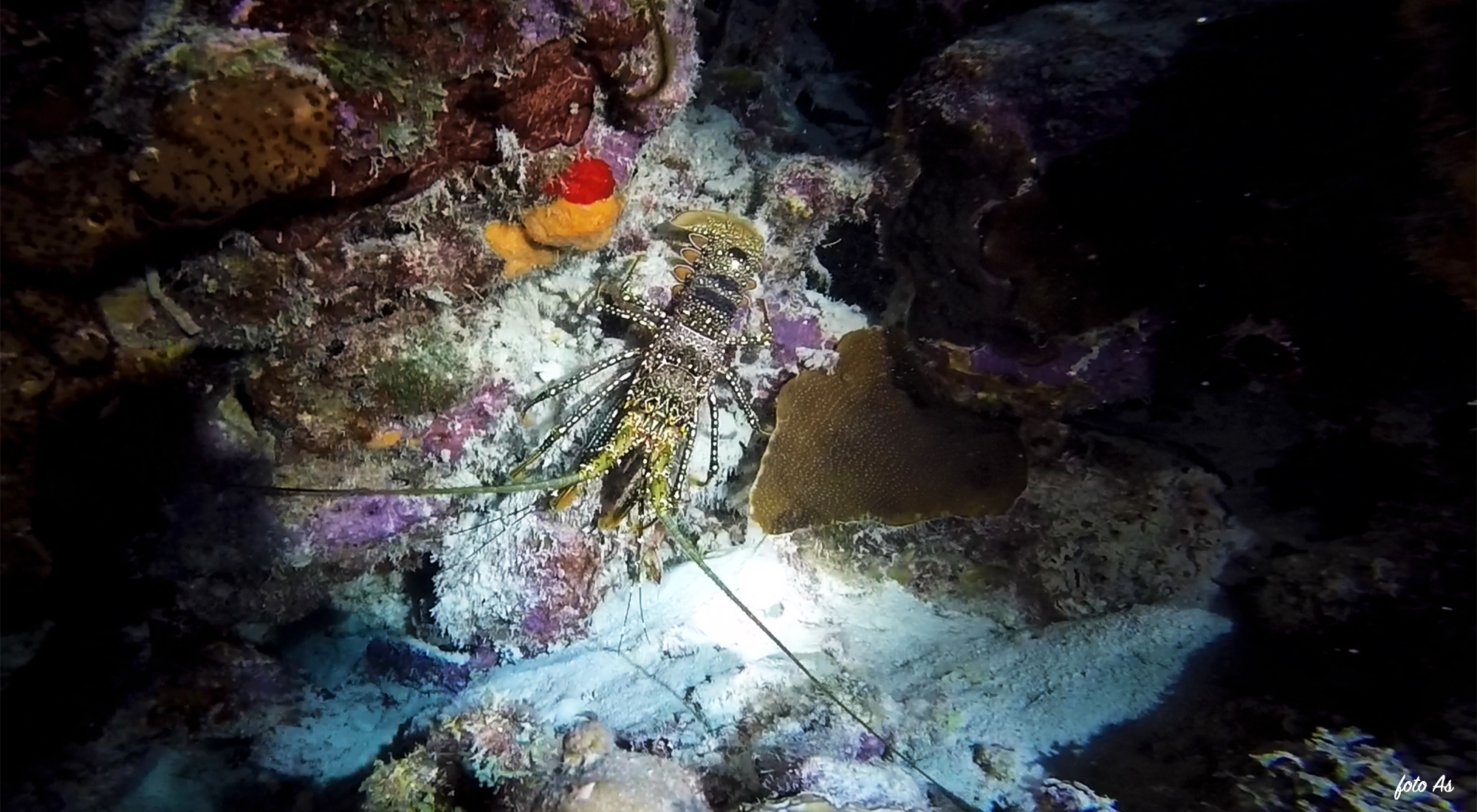
Spiny Lobster – Palinurus elephas – pegasti trnasti jastog ali pikasti jastog
Pegasti trnasti jastog je vrsta jastoga iz družine trnastih jastogov (Palinuridae). Ima značilne trne na telesu, predvsem na oklepu, kar je razlog za ime “trnasti”. Barva tega jastoga je običajno rdeče-oranžna, včasih pa ima bele ali rumene lise na oklepu. Najdemo ga v Sredozemskem morju ter ob obalah južnega in vzhodnega Atlantika. Običajno prebiva v skalnatih območjih, kjer se skriva v jamah ali razpokah na morskem dnu. Je nočna vrsta in se prehranjuje predvsem z algami, mesom morskih živali in drugimi organizmi. Pegasti trnasti jastog je zelo cenjen v gostinstvu, predvsem zaradi svojega mesa, ki je mehko in okusno, vendar pa je zaradi prekomernega lova v nekaterih predelih ogrožen.
The Spiny Lobster is a species of lobster from the family Palinuridae, known for its distinctive spines on the body, particularly on the carapace. It is usually reddish-orange, often with white or yellow spots on the exoskeleton. It is found primarily in the Mediterranean Sea and along the southern and eastern Atlantic coasts, inhabiting rocky areas, where it hides in caves or crevices on the seafloor. The spiny lobster is a nocturnal species and feeds mainly on algae, marine invertebrates, and other small creatures. The spiny lobster is highly prized in cuisine, especially for its tender and flavorful meat, though due to overfishing in some regions, its populations are considered threatened.
Foto: Aleš Sulič, Bonaire Buddy Reef
BLUE SPOTTED STINGRAY
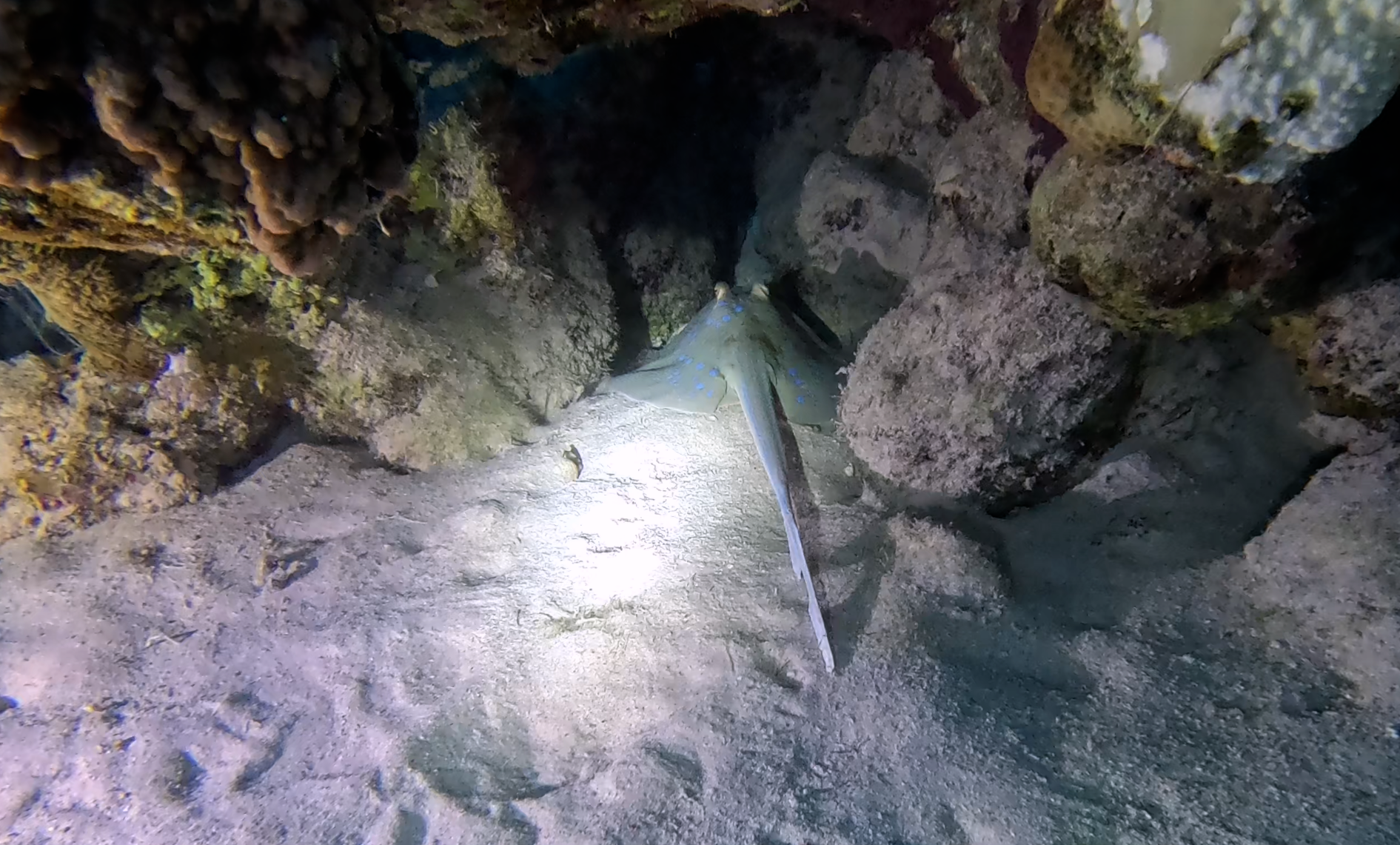
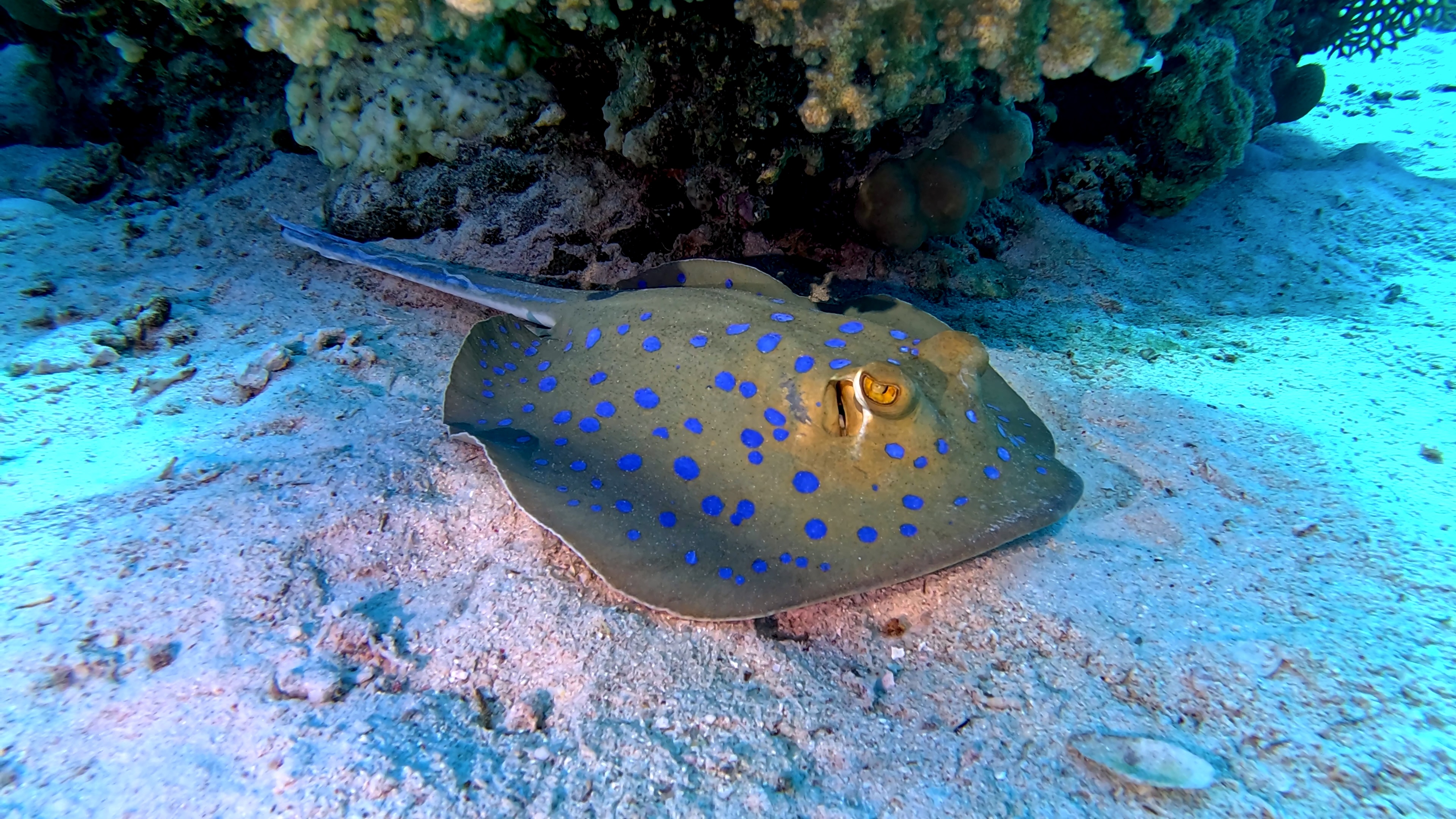
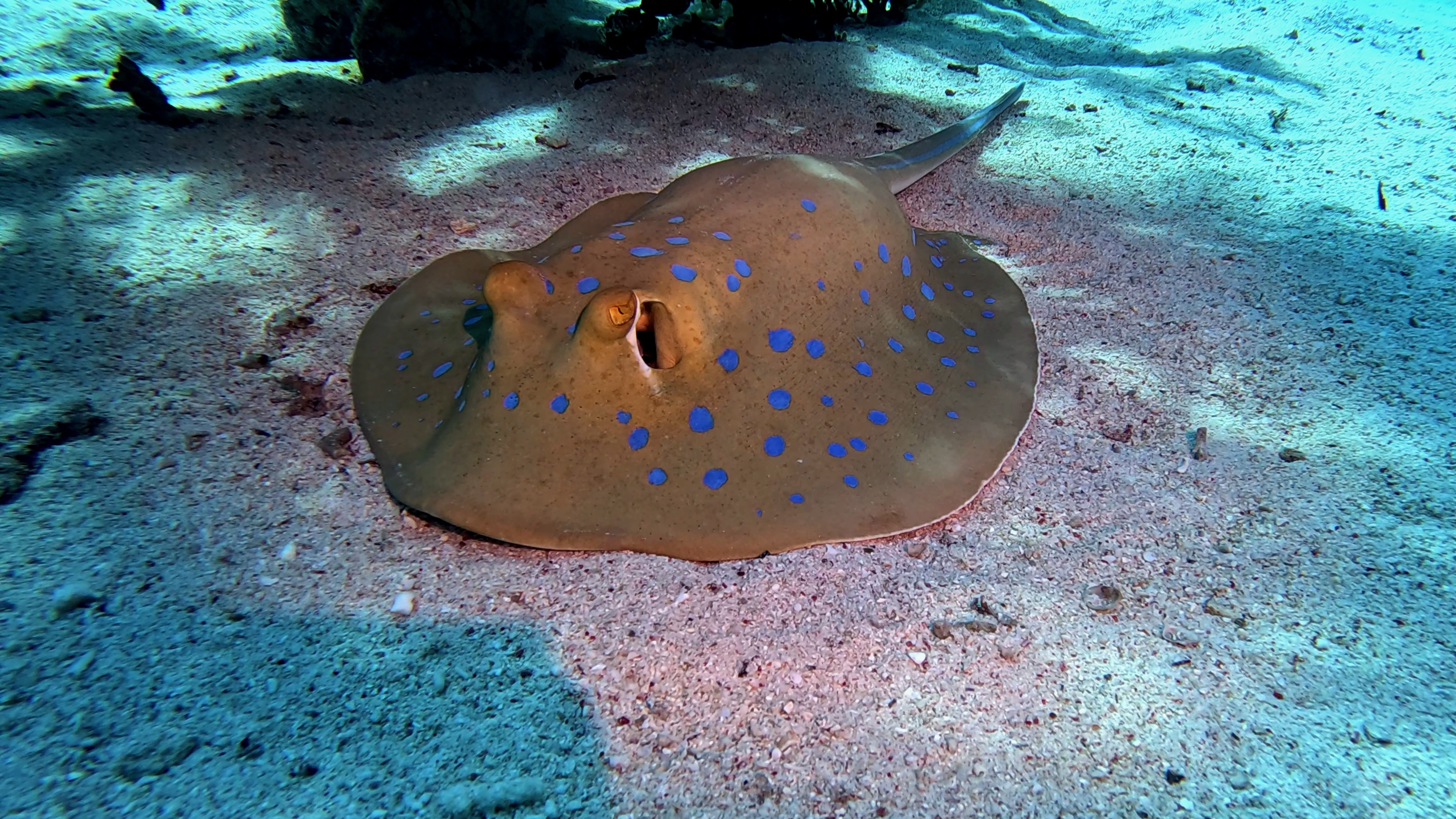
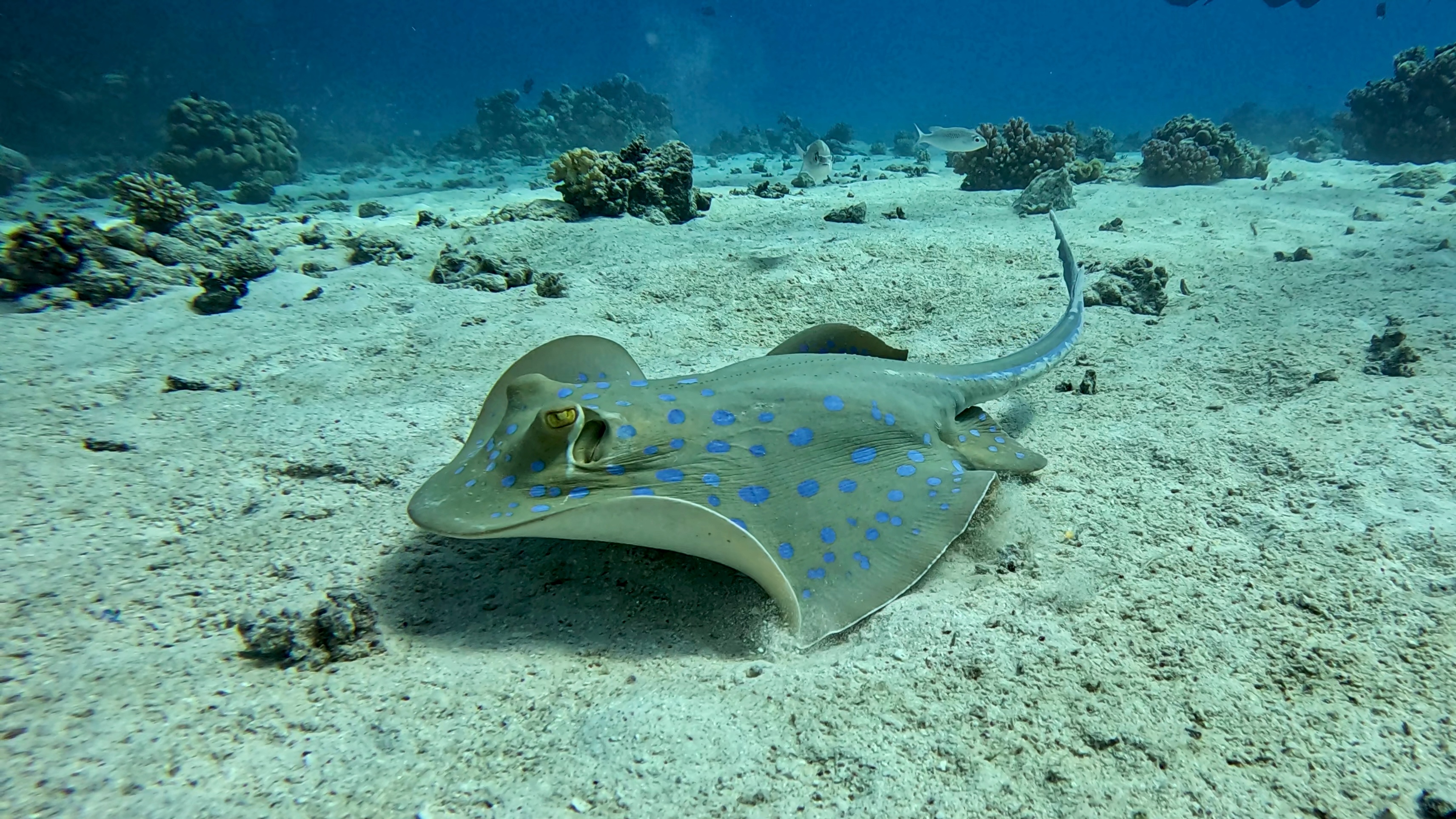
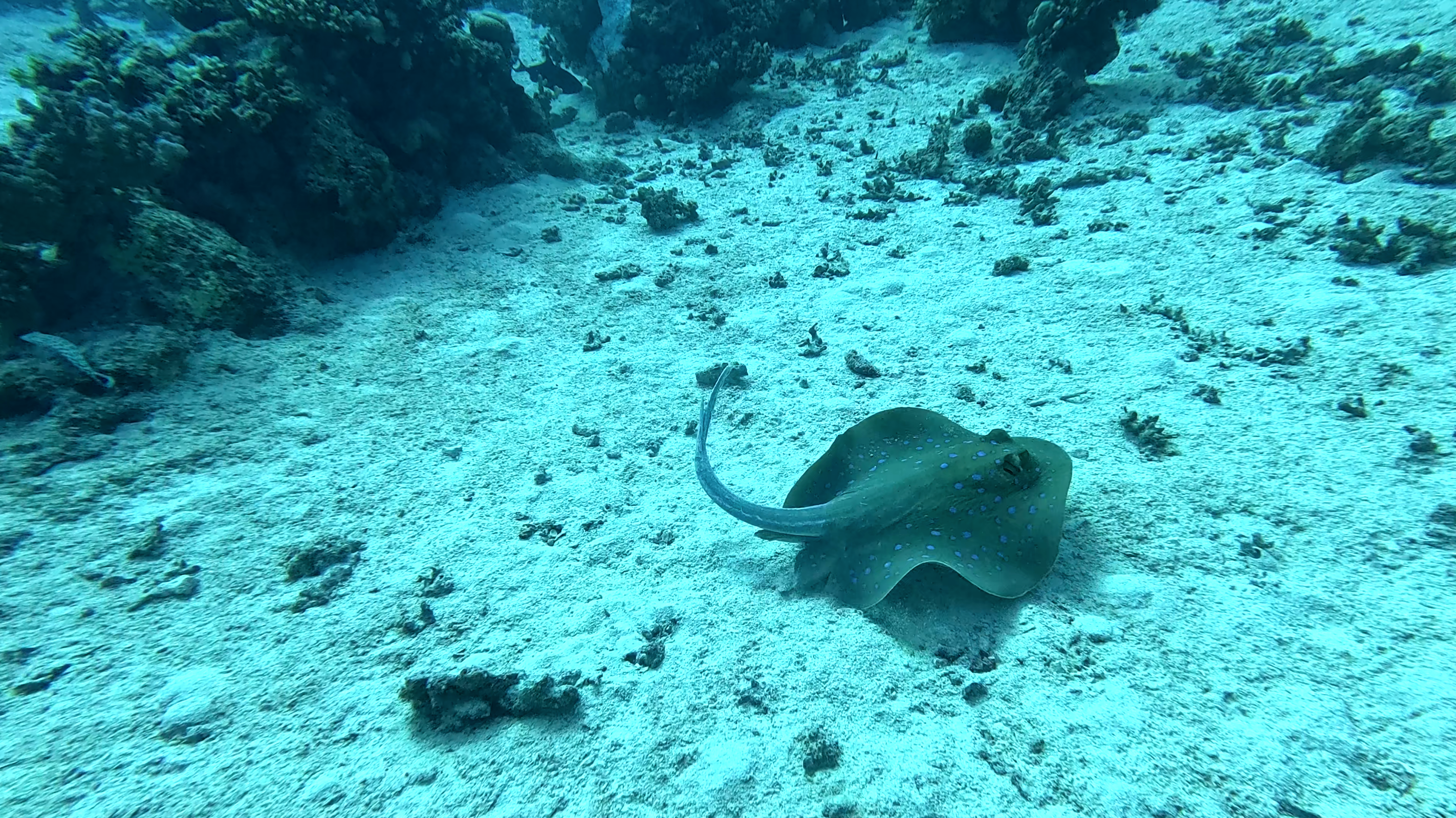
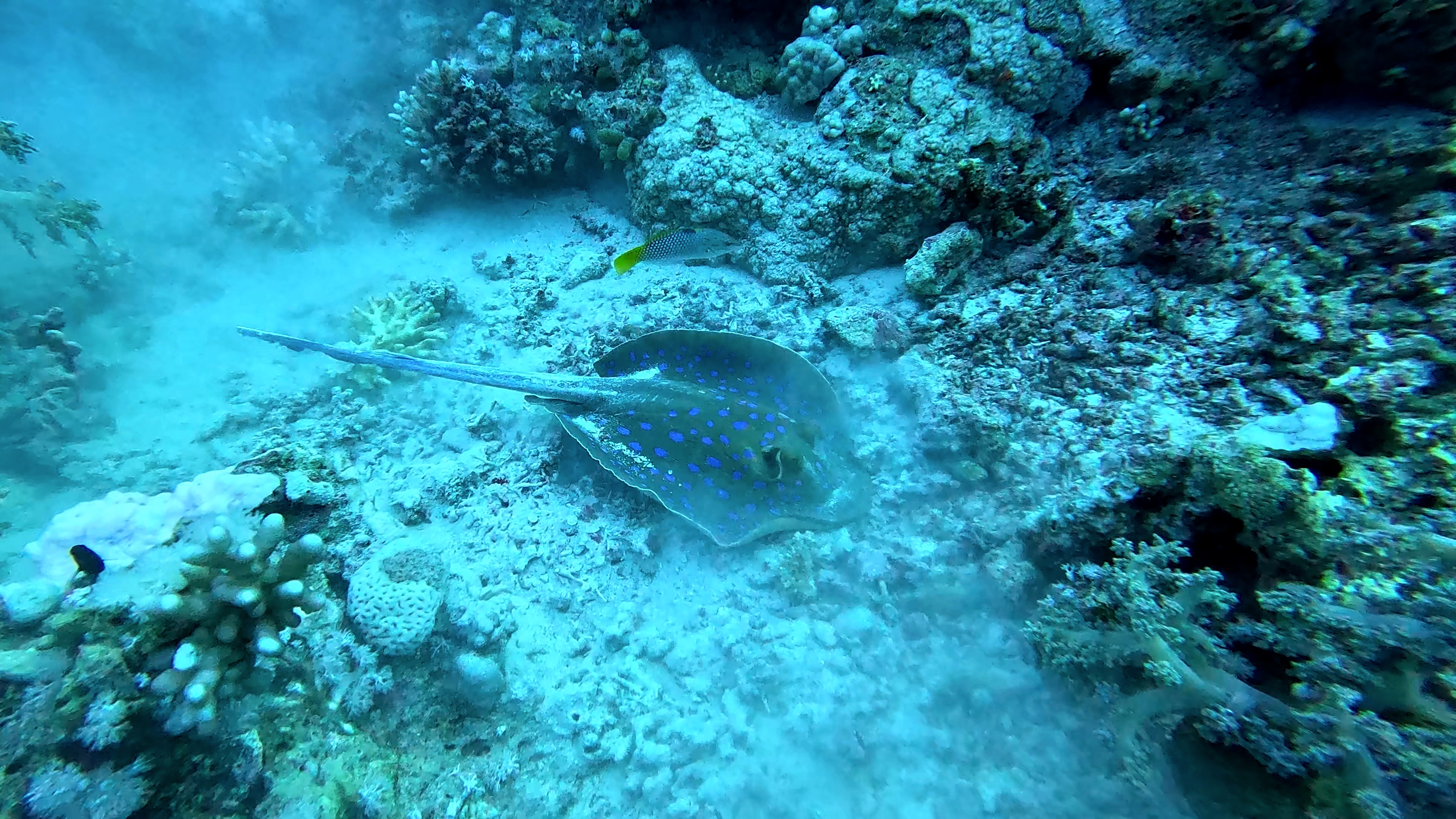
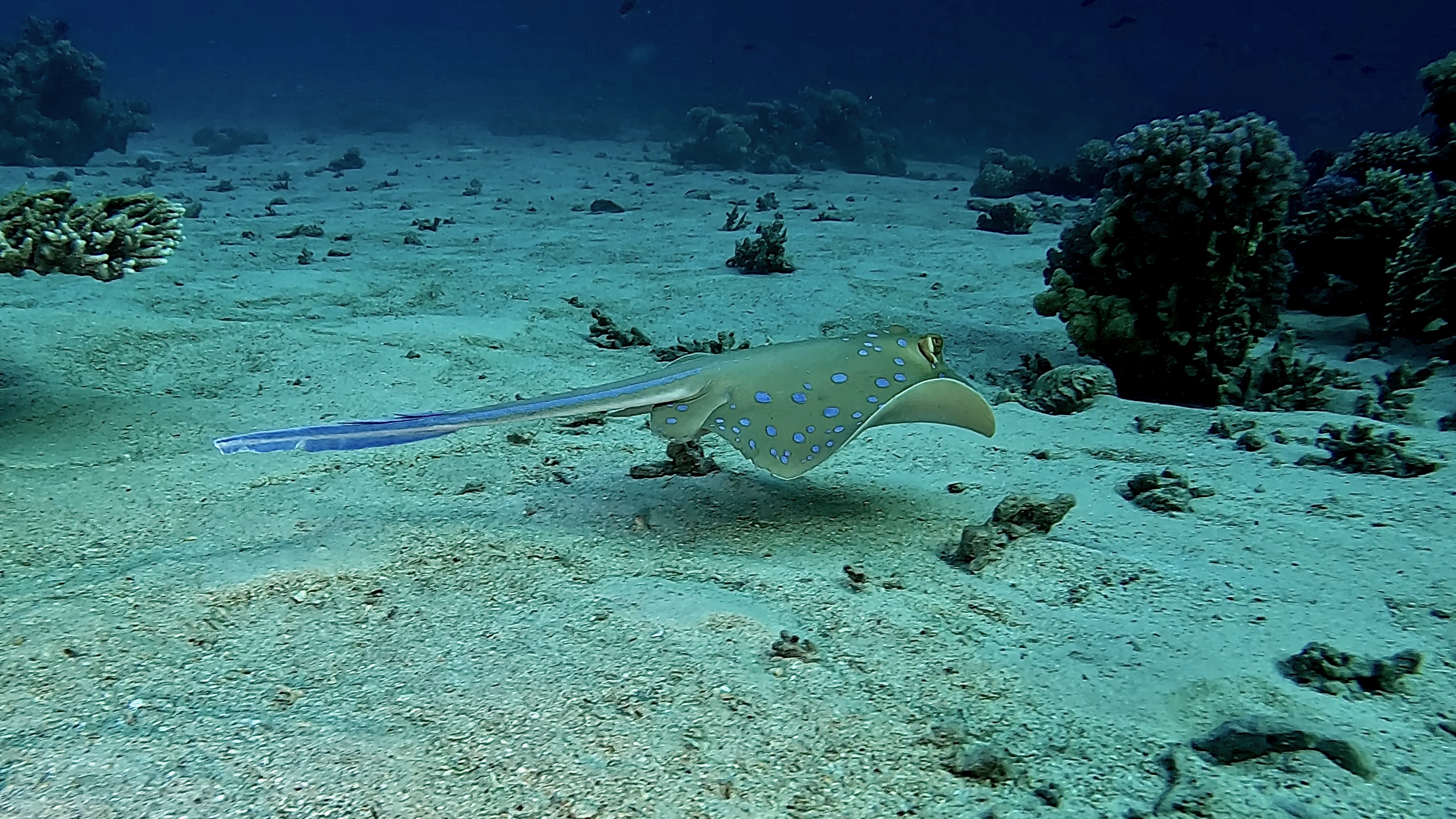
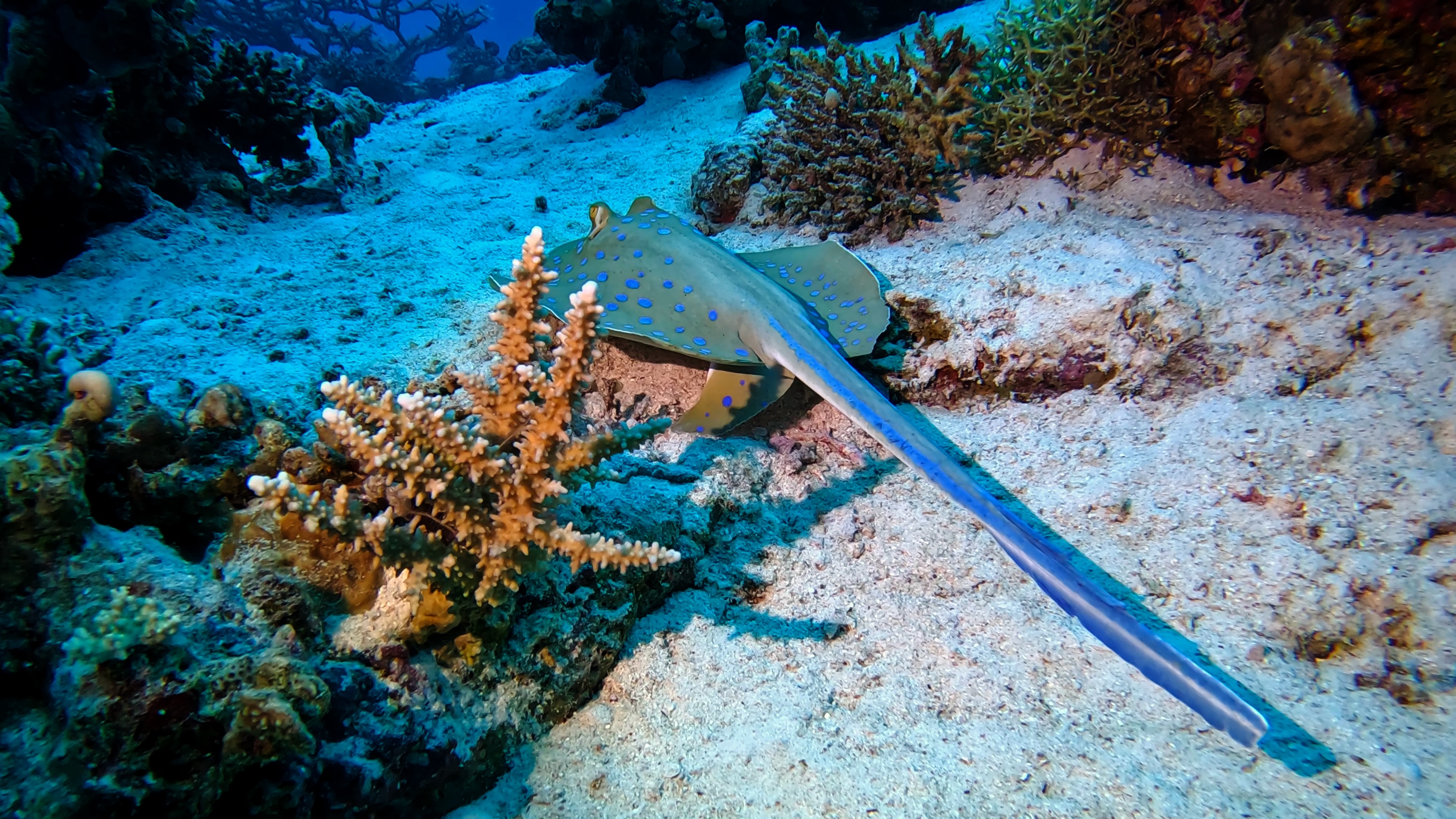
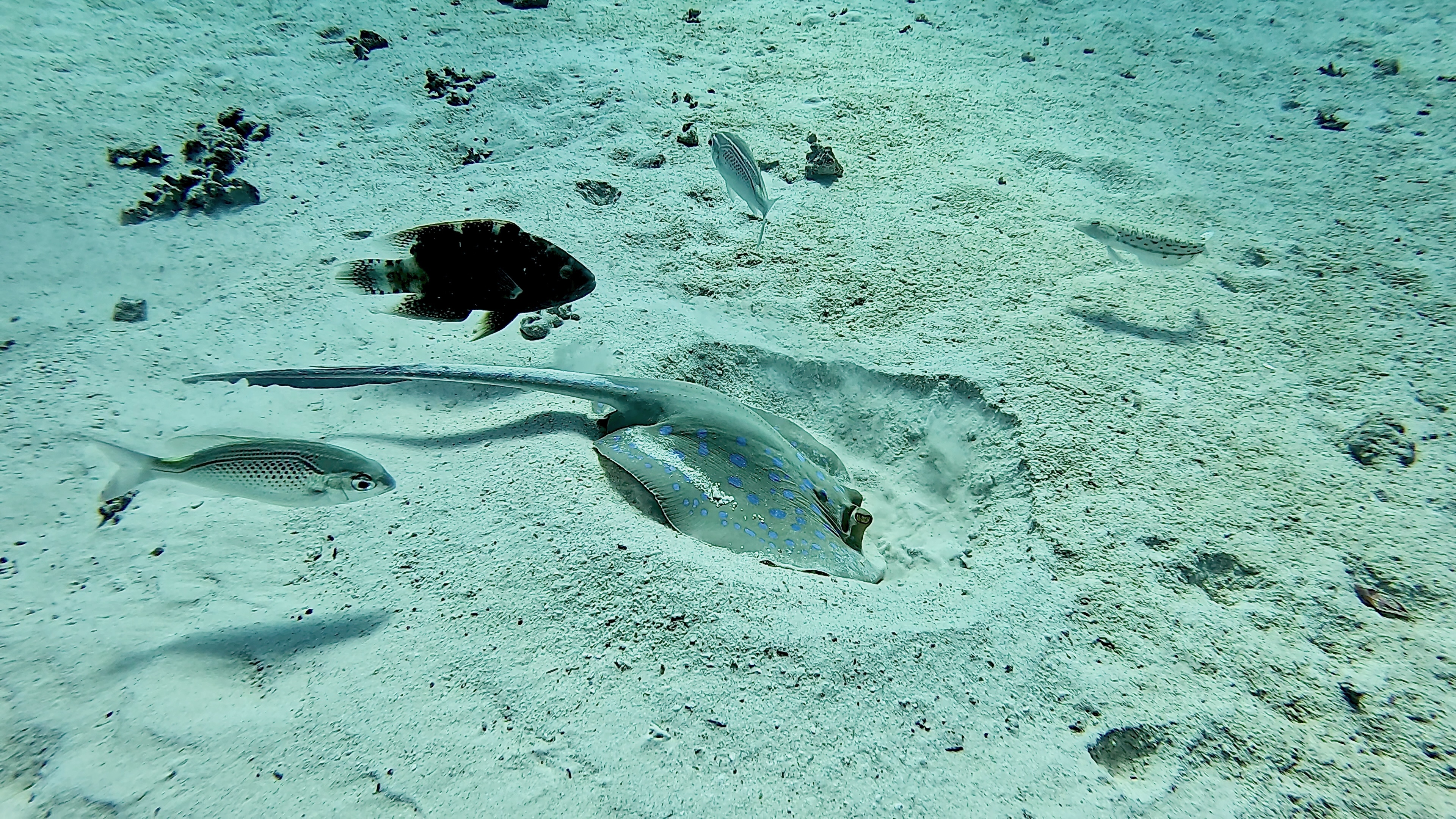
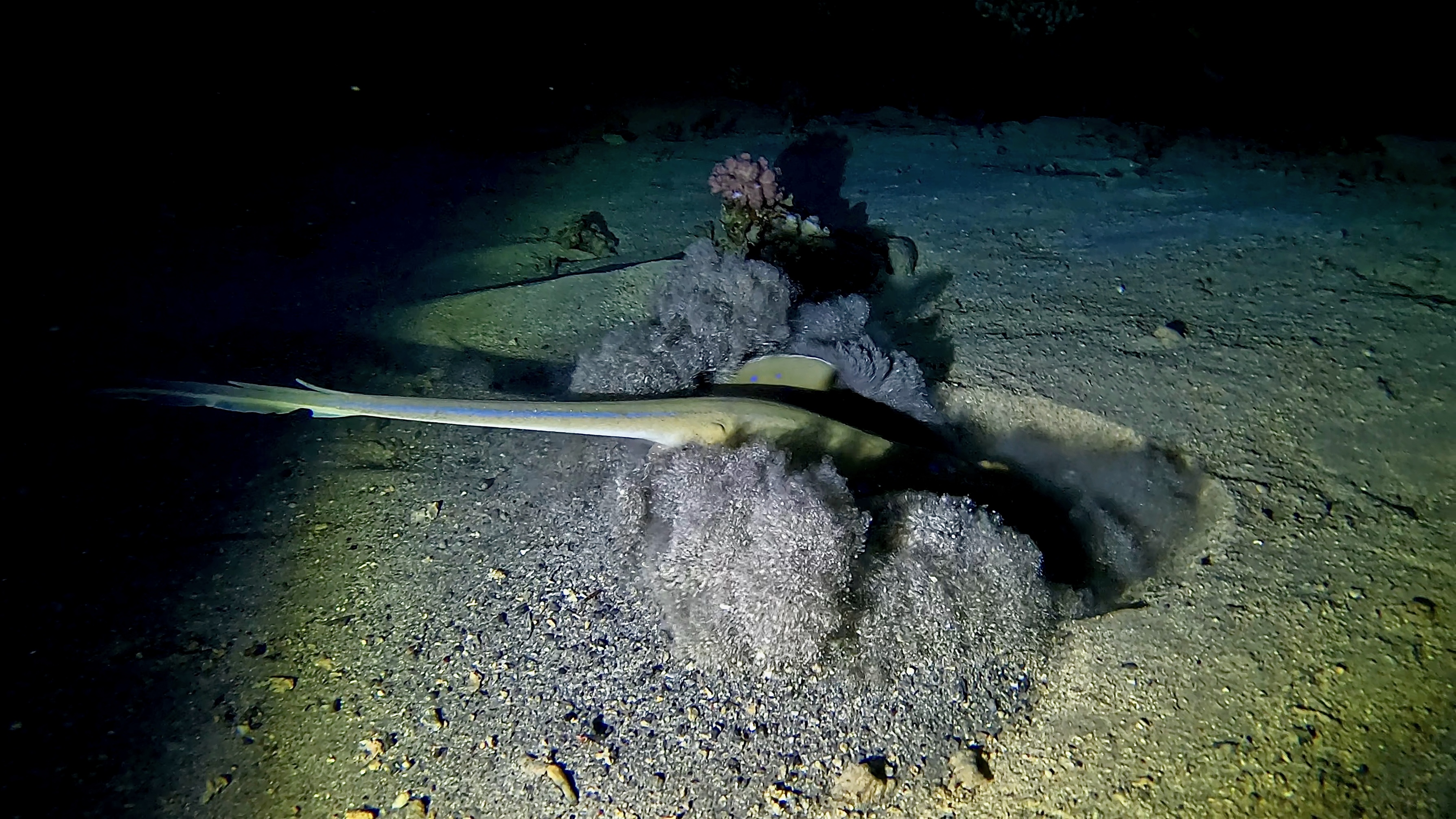
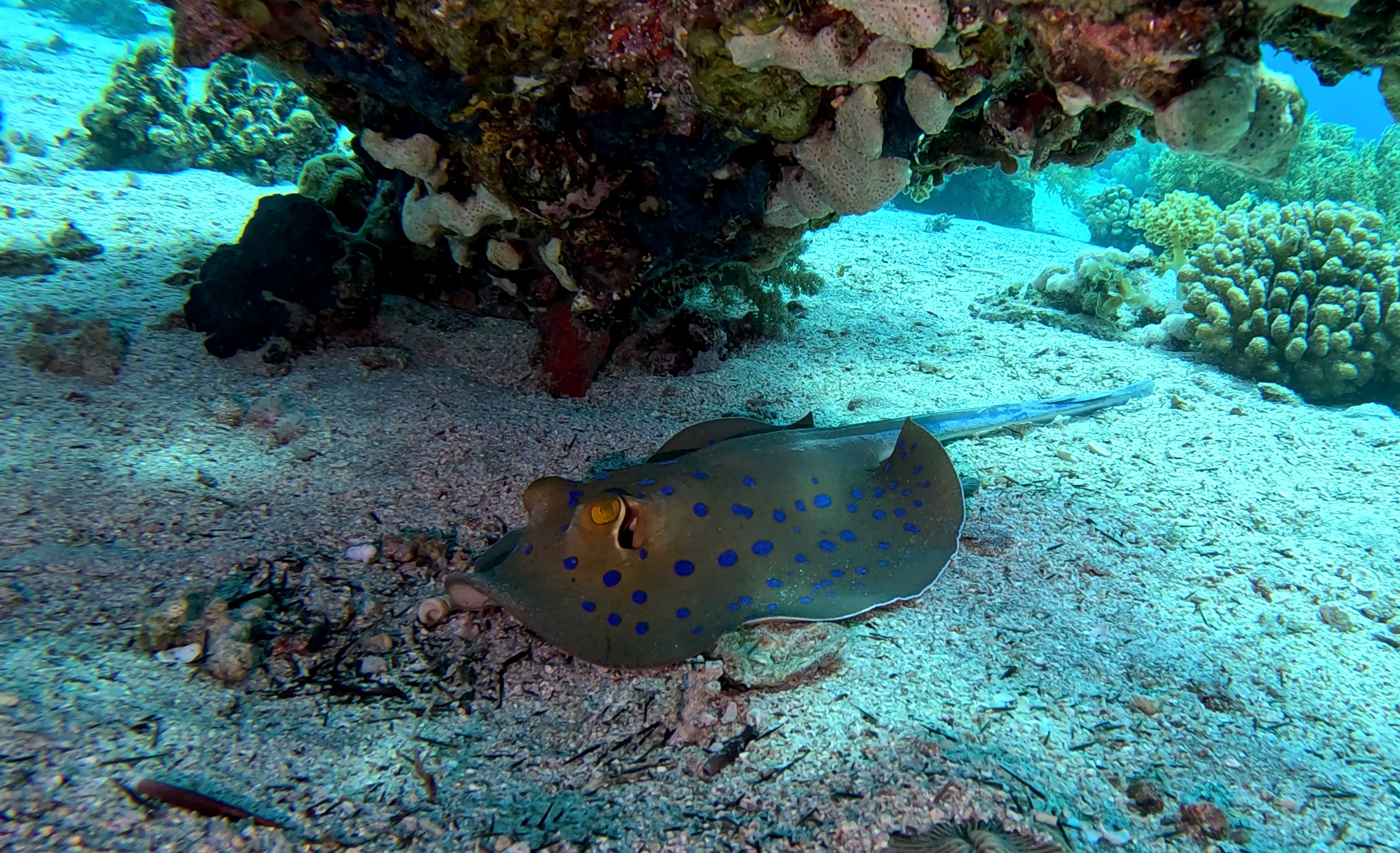
Blue Spotted Stingray – Taeniura lymma – Modro pikčasti morski bič
Modro pikčasti morski bič je osupljiva vrsta morskega biča, ki jo najdemo v tropskih in subtropskih vodah Indo-Pacifika. Njegovo telo je običajno temno rjavo ali sivo, okrašeno z živahnimi modrimi pikami, po katerih je prepoznavno. Vrsta prebiva v plitvih vodah okoli koralnih grebenov, peščenih območij in travnikov morskih rastlin, kjer se čez dan pogosto skrije v pesek. Modro pikčasti morski bič običajno doseže dolžino do 50 cm, redki primerki do 70 cm. Prehranjuje se z majhnimi nevretenčarji, kot so raki, školjke in rakci, katere lovi z uporabo elektroreceptivnih sposobnosti za zaznavanje plena, zakopanega v pesku. Čeprav je večinoma miren, ima na repu strupeno bodalo, ki ga lahko uporabi v samoobrambi, če se počuti ogroženega. Med potapljači in snorkerji je zaradi svoje lepote in gracioznega gibanja priljubljen, vendar je treba biti previden, da se nanj ne stopi in da ne pride do pika.
The Blue Spotted Stingray (Taeniura lymma) is a striking species found in tropical and subtropical waters of the Indo-Pacific. Its body is typically dark brown or gray, adorned with vibrant blue spots, making it easily recognizable. This species prefers shallow waters around coral reefs, sandy areas, and seagrass beds, often hiding in the sand during the day. Blue Spotted Stingrays usually grow up to 50 cm in length, though some may reach 70 cm. They feed on small invertebrates like crabs, mollusks, and shrimp, using electroreception to detect prey buried in the sand. Though generally peaceful, they have a venomous barb on their tail, which they use for defense if threatened. The Blue Spotted Stingray is popular among divers and snorkelers due to its beauty and graceful movements, though caution is advised to avoid being stung.
Foto: Aleš Sulič, Egypt North and South
CORNET FISH
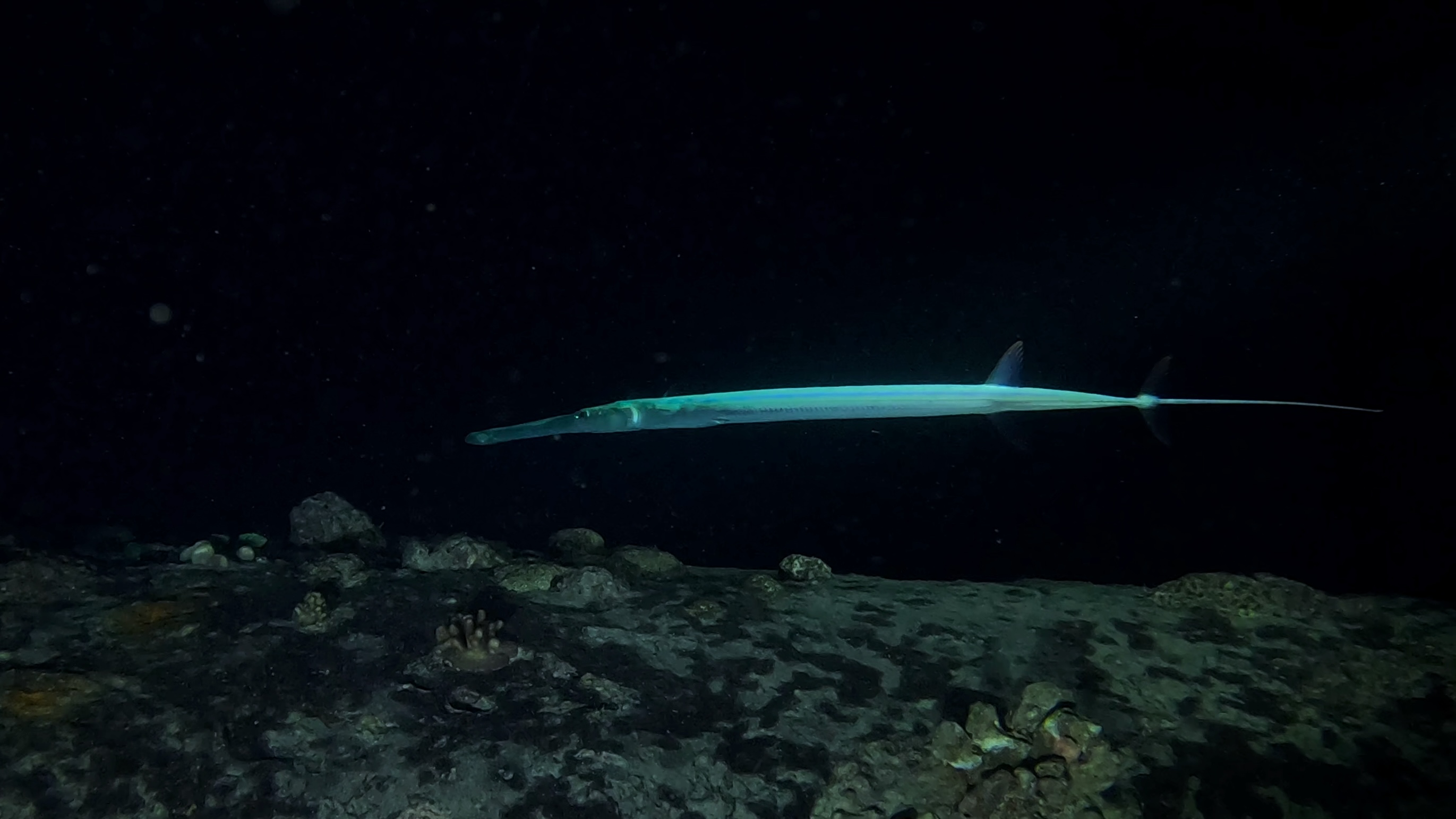
Cornet Fish – Fistularia commersonii – Rogata cevovka
Rogata cevovka je dolga, vitka riba, ki naseljuje tropske in subtropske vode Indo-Pacifika. Prepoznavna je po svojem značilnem nosu v obliki roga, ki ji daje ime “Rogata riba”. Vrsta lahko zraste do dolžine 2 metrov. Njeno telo je zelenkasto-rjavo sive barve, s temnejšimi oznakami, ki ji pomagajo, da se zlije z okoljem. Rogate ribe najdemo predvsem okoli koralnih grebenov, travnikov morskih rastlin in peščenega dna na globinah od 1 do 50 metrov. Prehranjujejo se z majhnimi ribami in nevretenčarji, pri čemer napadejo iz zasede. Običajno so samotne in neagresivne. Pogosto se zlijejo z okolico in ostanejo nepremične dolge ure s čimer so zanimive za potapljače. Za ljudi niso nevarne.
The Cornet Fish (Fistularia commersonii) is a long, slender fish found in tropical and subtropical waters of the Indo-Pacific. Known for its distinctive horn-like snout, it can grow up to 2 meters (6.5 feet) in length. The fish has a greenish-brown to gray body with darker markings, which help it blend into its environment. Cornet fish are commonly found around coral reefs, seagrass beds, and sandy bottoms, at depths ranging from 1 to 50 meters. They are carnivorous, feeding on small fish and invertebrates, and are ambush predators, using their long snout to quickly capture prey. Generally solitary and non-aggressive, cornet fish remain motionless for long periods, blending into their surroundings. They are a fascinating species for divers but pose no threat to humans.
Foto: Aleš Sulič, Egypt SS Thistlegorm
STONE FISH
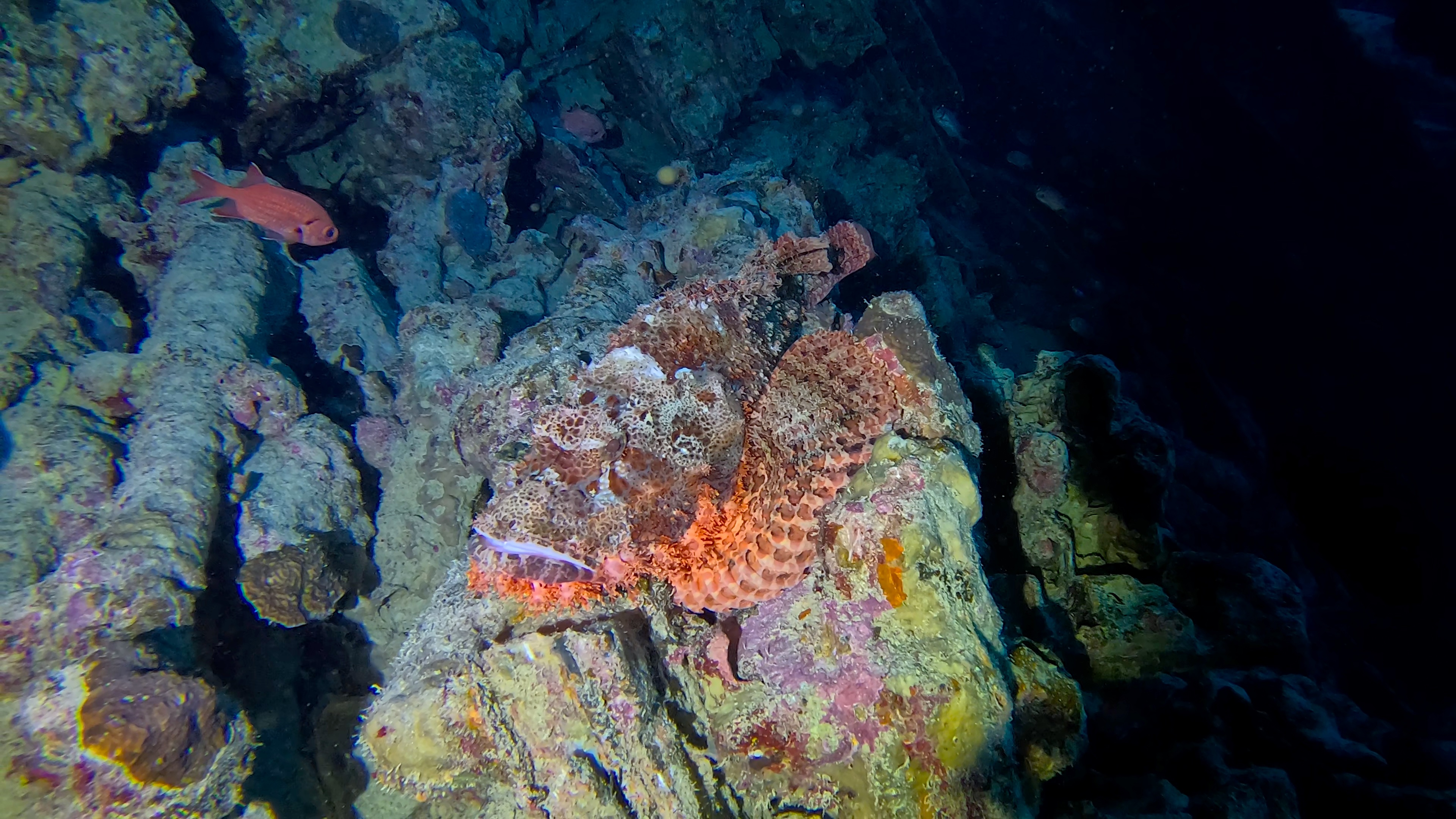
Stonefish – Synanceia – Kamnita riba
Kamnita riba je ena najbolj strupenih rib na svetu. Njeno grobo telo, ki spominja na kamen, ji omogoča, da se popolnoma zlije z okolico, zaradi česar jo je skoraj nemogoče opaziti. Kamena riba je običajno rjave, sive ali pisane barve, telo pa je prekrito z algami ali drugimi organizmi, kar še dodatno povečuje njeno kamuflažo. V dolžino laho zraste do 40 cm. Najdemo ga v plitvih obalnih vodah Indo-Pacifika, še posebej okoli koralnih grebenov, skalnatih struktur in peščenih tal, na globinah od 1 do 50 metrov. Kamnita riba je nevarna zaradi svojih strupenih trnov na hrbtni plavuti. Ko nanj stopimo ali ga ogrozimo, lahko skozi trne sprosti strup, ki povzroči hude bolečine, oteklino in včasih smrt. Je plenilec iz zasede, saj se zanaša na svojo kamuflažo in mirno čaka na mimoidoče majhne ribe ali nevretenčarje. Plen z velikimi usti poje v celoti. Kamnita riba ni agresivena, vendar je zaradi svojega strupa in sposobnosti kamuflaže nevarna tako potapljačem kot tudi plavalcem, saj ribe ne opazimo.
The Stonefish is one of the most venomous fish in the world. Its rough, stone-like body allows it to blend seamlessly with its surroundings, making it nearly impossible to spot. The stonefish is typically brown, gray, or mottled, and its body is often covered with algae or other organisms, enhancing its camouflage. It can grow up to 40 cm in length. Stonefish are found in shallow coastal waters of the Indo-Pacific, particularly around coral reefs, rocky structures, and sandy bottoms, at depths ranging from 1 to 50 meters. Stonefish are dangerous due to their venomous spines on their dorsal fin. When stepped on or threatened, they can release venom through these spines, causing severe pain, swelling, and sometimes death. They are ambush predators, relying on their camouflage to wait for small fish or invertebrates to pass by. The stonefish swallows its prey whole using its large mouth. Although it is not aggressive, the stonefish is dangerous because of its venom and camouflage ability, making it a threat to both divers and swimmers, as it is difficult to spot in its natural environment.
Foto: Aleš Sulič, Egypt SS Thistlegorm
REEF OCTOPUS
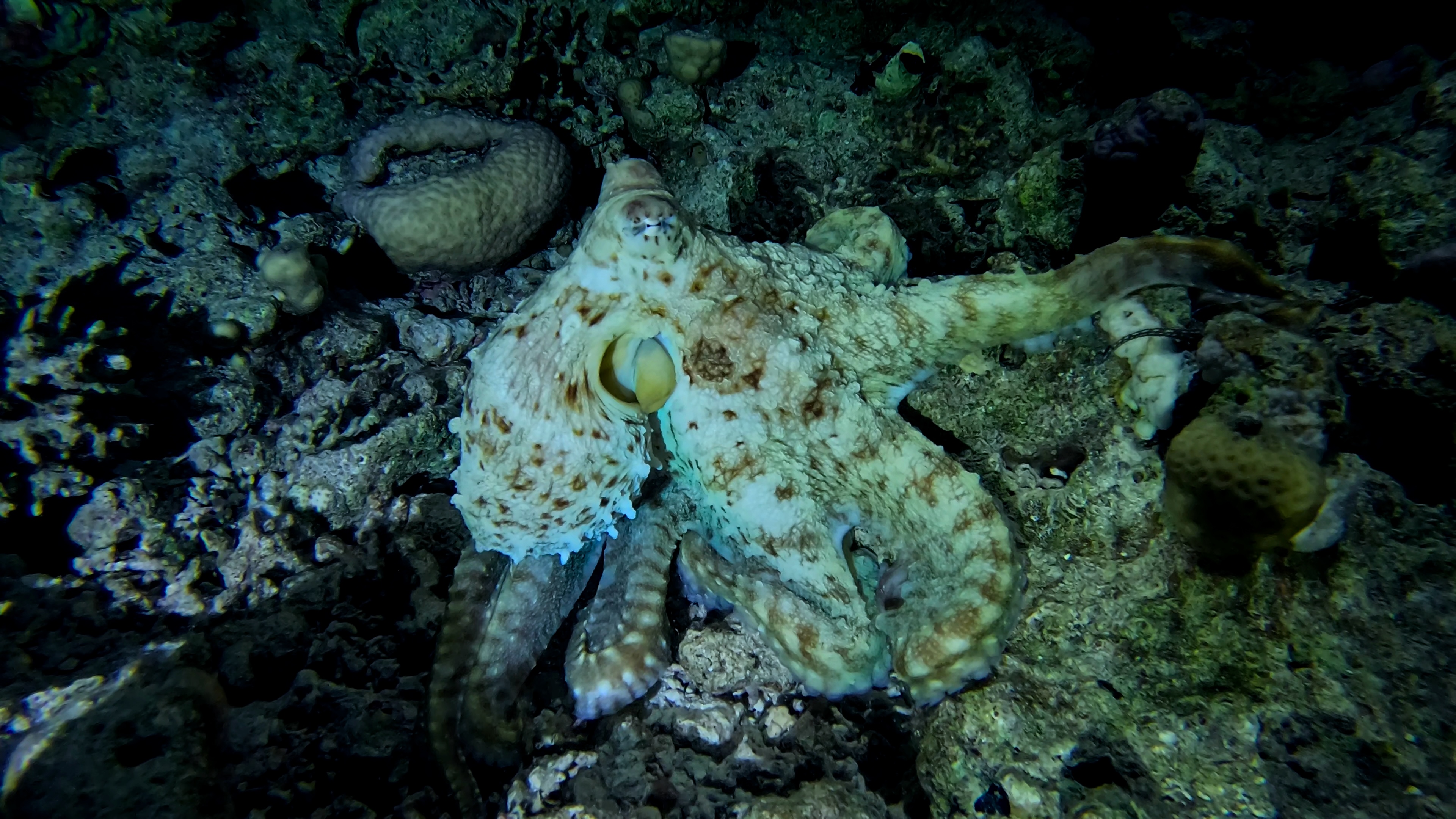
Reef Octopus – Octopus cyanea – Koralna, grebenska hobotnica
Grebenska hobotnica je vrsta hobotnice, ki naseljuje tropske vode Indo-Pacifika. Znana je po svoji inteligenci in prilagodljivosti, saj se lahko brez težav zlije z okolico, spreminja barvo in teksturo svoje kože. Koralna ali grebenska hobotnica ima mehak trup z osmimi lovkami, pokritimi s priseski. Barvo pa lahko spreminja iz rjavo-rdeče v sivo ali rumenkasto, odvisno od okolja. Telo običajno zraste do 30 cm, lovke do 1 metera. Ta hobotnica prebiva predvsem okoli koralnih grebenov, skalnatih razpok in peščenih območij na globinah od 1 do 40 metrov. Je mesojedka, ki se prehranjuje z raki, ribami in školjkami, znana pa je tudi po tem, da uporablja orodja, kot so kamni ali školjke, za zaščito ali lovljenje plena. Koralne hobotnice so samotarske in nočne živali, odlikujejo pa jih izjemne reševalne sposobnosti in spomin. Čeprav običajno niso agresivne do ljudi, lahko ugriznejo in vbrizgajo strup, če se počutijo ogrožene. Njihovo izjemno vedenje jih dela priljubljene med potapljači in ljubitelji morskega sveta.
The Reef Octopus is a species found in tropical waters of the Indo-Pacific. Known for its intelligence and adaptability, it can seamlessly blend with its surroundings using color and texture changes. The Reef Octopus has a soft, bulbous body with eight arms covered in suckers, and its color can shift from reddish-brown to gray or yellowish, depending on the environment. It typically grows up to 30 cm (12 inches) in body length, with arms reaching up to 1 meter (3.3 feet). This octopus inhabits coral reefs, rocky crevices, and sand patches at depths of 1 to 40 meters. It is a carnivore, preying on crustaceans, fish, and mollusks, and is known to use tools like rocks or shells for shelter or capturing prey. Reef Octopuses are solitary and nocturnal, exhibiting exceptional problem-solving skills and memory. While generally not aggressive toward humans, they can bite and inject venom if threatened. Their remarkable behavior makes them a favorite among divers and marine enthusiasts.
Foto: Aleš Sulič, Egypt Sharm el Sheik
BLUE COLOUR JELLYFISH
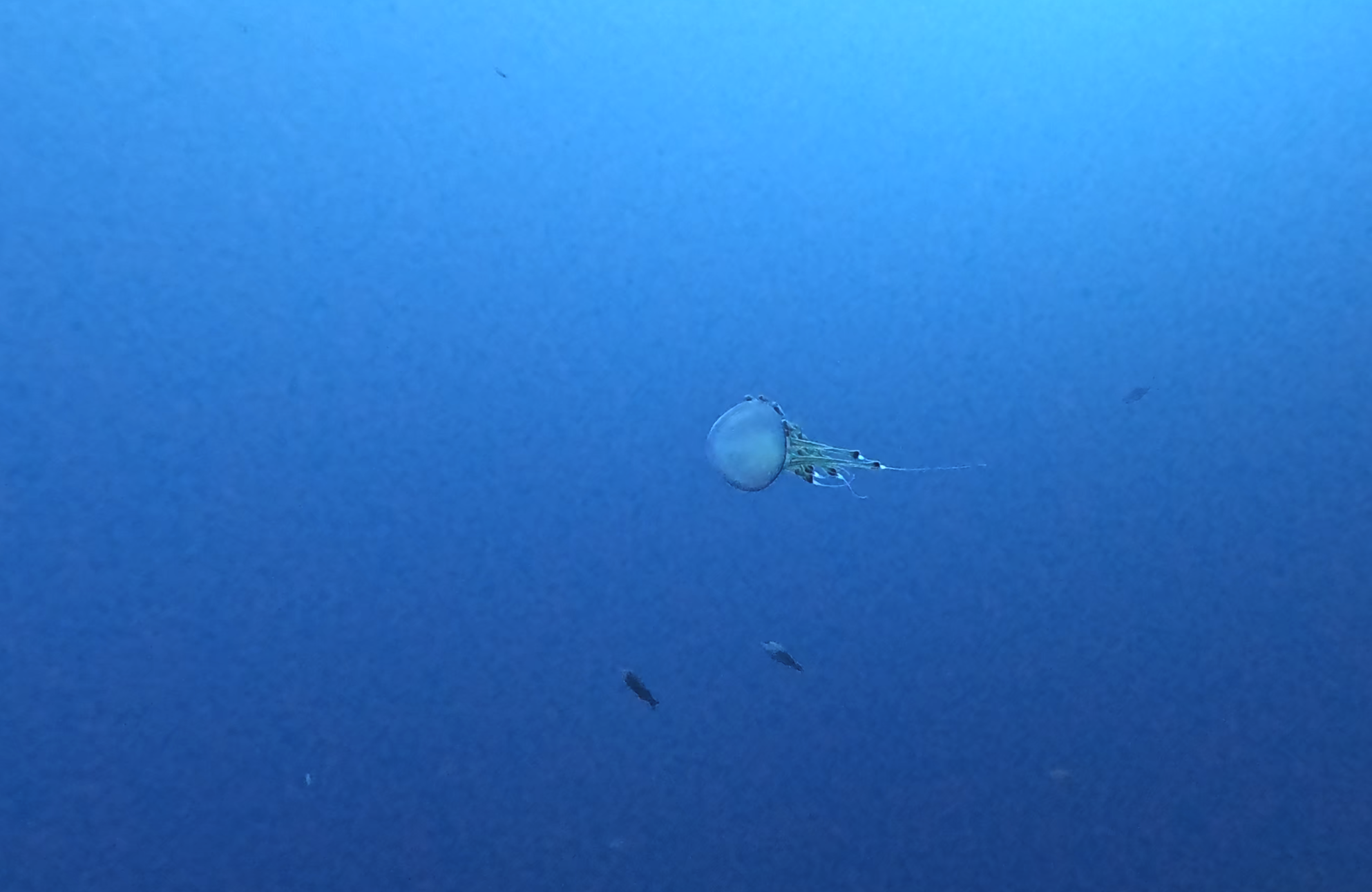
LONGSNOUT BUTTERFLYFISH
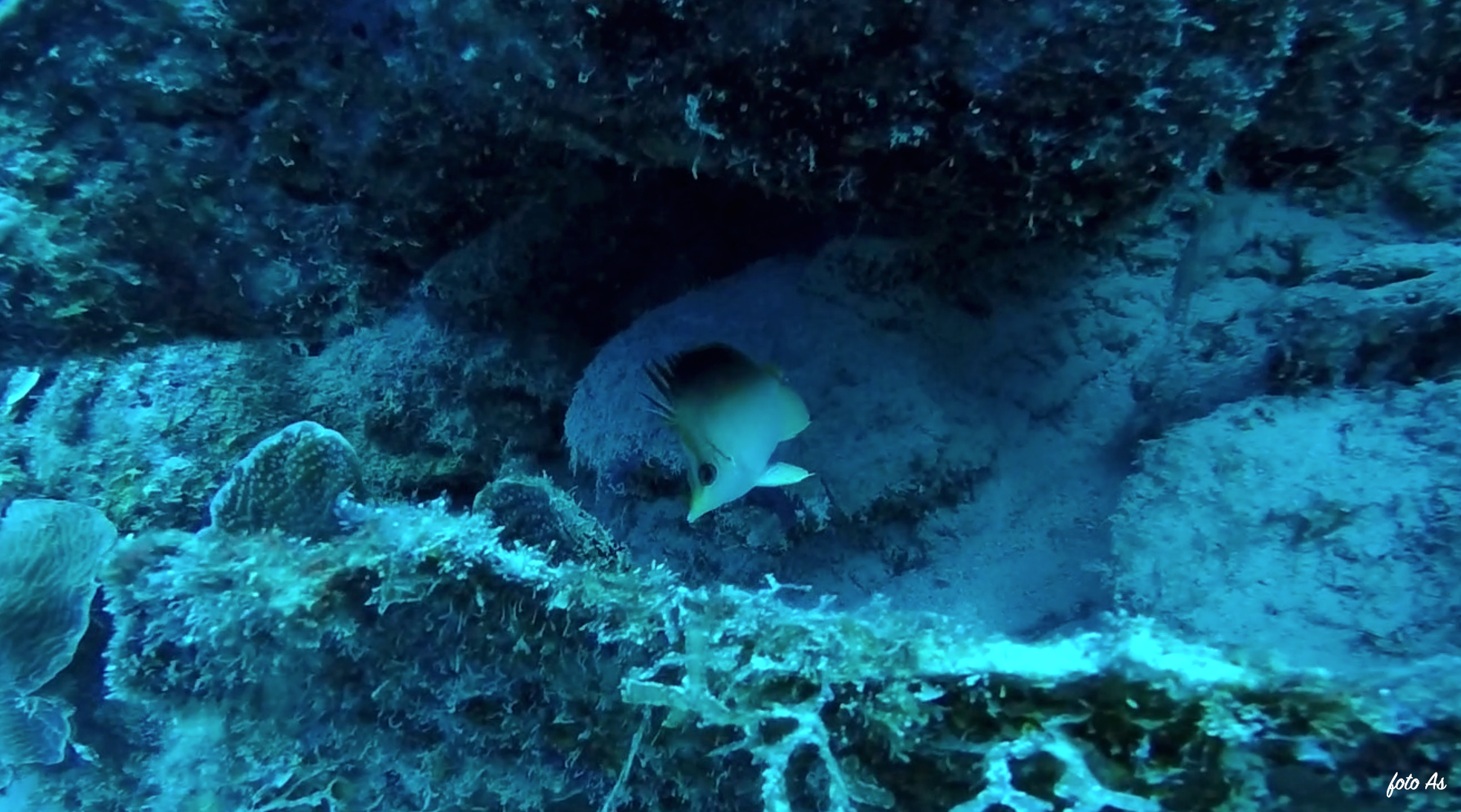
Longsnout Butterflyfish – Forcipiger longirostris – Dolgnosna metuljasta riba
Dolgnosna metuljasta riba je živahna vrsta, ki jo najdemo v tropskih vodah Indo-Pacifika, zlasti okoli koralnih grebenov. Prepoznavna je po svojem dolgem, tankem nosu in svetlo rumenem telesu, ki ima belo diagonalno črto, ki se razteza od vrha telesa do repa. Običajno zraste do 20-25 cm. Prebiva v plitvih koralnih grebenih na globinah od 1 do 30 metrov, kjer plava okoli grebenskih razpok. Njihova prehrana se večinoma sestoji iz koralnih polipov, majhnih nevretenčarjev in zooplanktona, pri čemer uporabljajo svoj dolg nos, da dosežejo težje dostopna mesta v koralah. Te ribe so običajno mirne in teritorialne, pogosto jih najdemo v parih ali manjših skupinah. Dolgnosna metuljasta riba je priljubljena v morskih akvarijih zaradi svojega osupljivega videza in mirnega značaja.
The Longsnout Butterflyfish is a vibrant species found in the tropical waters of the Indo-Pacific, particularly around coral reefs. It is easily recognized by its long, slender snout and its bright yellow body with a white diagonal band running from top to tail. This species typically grows to about 20-25 cm (8-10 inches) in length. Longsnout Butterflyfish prefer shallow coral reefs at depths ranging from 1 to 30 meters (3 to 100 feet), where they swim around reef crevices or sandy bottoms in search of food. Their diet mainly consists of coral polyps, small invertebrates, and zooplankton, using their elongated snouts to reach into tight spots in the coral. These fish are generally peaceful and territorial, often found in pairs or small groups. While not aggressive, they will defend their feeding areas. The Longsnout Butterflyfish is popular in marine aquariums due to its striking appearance and calm demeanor, though it needs a well-established tank with live rock and coral to thrive.
Foto: Aleš Sulič, Bonaire Webers joy
BLACK DURGON FISH
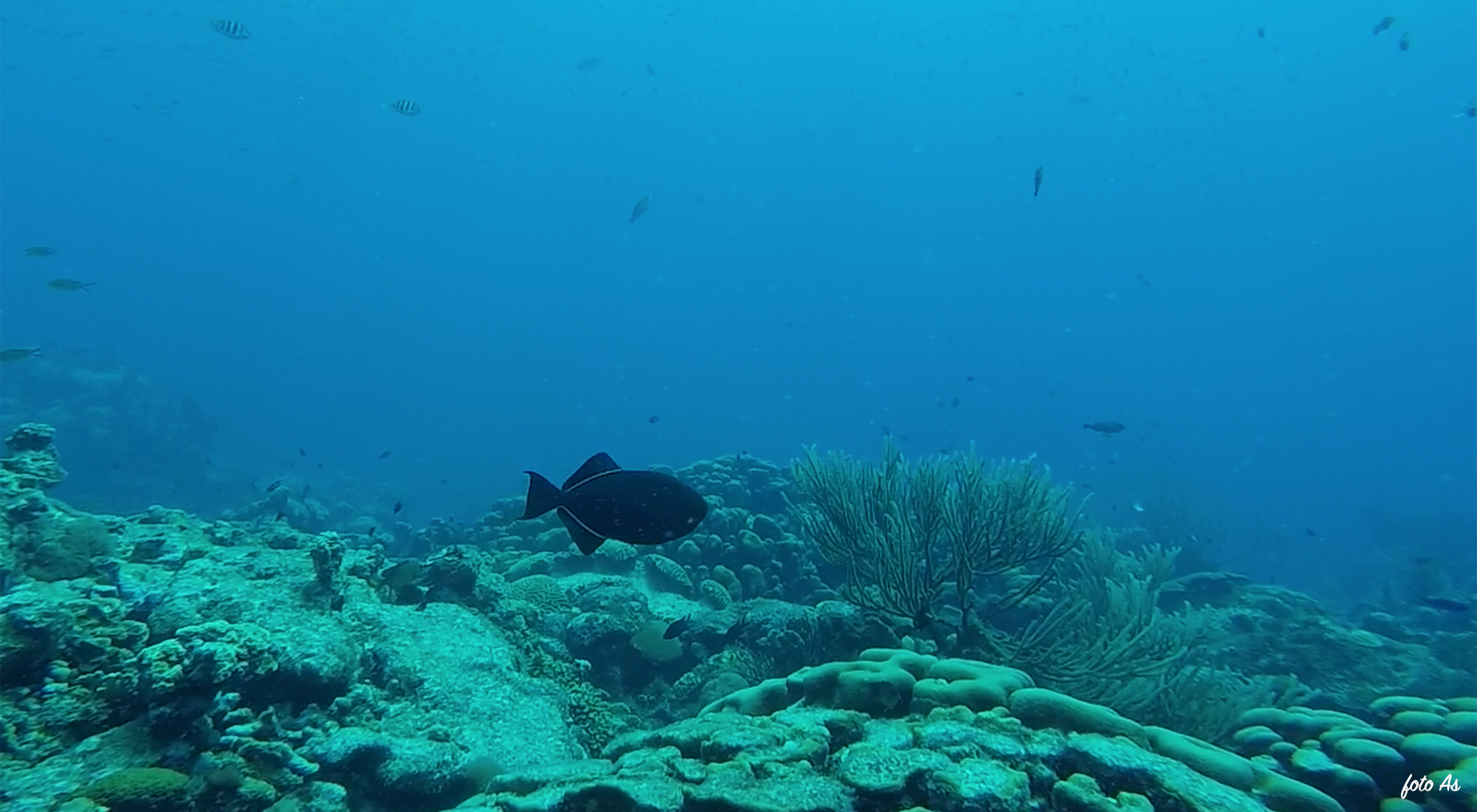
Black Durgon Fish – Melichthys niger – Črni sprožilka
Črni sprožilka je izjemna vrsta sprožilk (riba iz družine Triggerfish), ki naseljuje tropske vode Indo-Pacifika. Ima globoko, ovalno telo in je večinoma črne barve, s svetlejšimi rumenimi ali belimi oznakami na plavutih in repu. Znan je po svojih velikih, močnih čeljustih, ki mu omogočajo, da zlahka drobi trde lupine plena, kot so polži in nevretenčarji. Običajno zraste do 30 cm. Riba prebiva predvsem v plitvih vodah okoli koralnih grebenov, travnikov morskih rastlin in skalnatih območij, običajno na globinah od 1 do 50 metrov. Črni durgoni so običajno samotne in teritorialne ribe, znane po agresivnem vedenju pri obrambi svojega ozemlja ali virov hrane. So hitre plavalke in se odlično premikajo skozi ozke prostore v koralnih grebenih.
The Black Durgon Fish is a striking species of triggerfish found in the tropical waters of the Indo-Pacific region. It has a deep, oval-shaped body and is primarily black with lighter yellow or white markings on its fins and tail. Known for its large, powerful jaws, it is adept at crushing hard-shelled prey like mollusks and crustaceans. The Black Durgon typically grows to around 30 cm (12 inches) in length, but can occasionally reach 40 cm (16 inches). This fish is commonly found in shallow waters around coral reefs, seagrass beds, and rocky substrates, usually at depths of 1 to 50 meters (3 to 164 feet). As a carnivore, it primarily feeds on mollusks, crustaceans, and small fish, using its powerful jaws to break open hard shells. Black Durgons are generally solitary and territorial, often displaying aggressive behavior when defending their space or food sources. They are quick swimmers and can navigate through tight spaces in the coral.
Foto: Aleš Sulič, Bonaire 1000 Steps
BLACKTAIL BUTTERFLYFISH – EXQUISITE
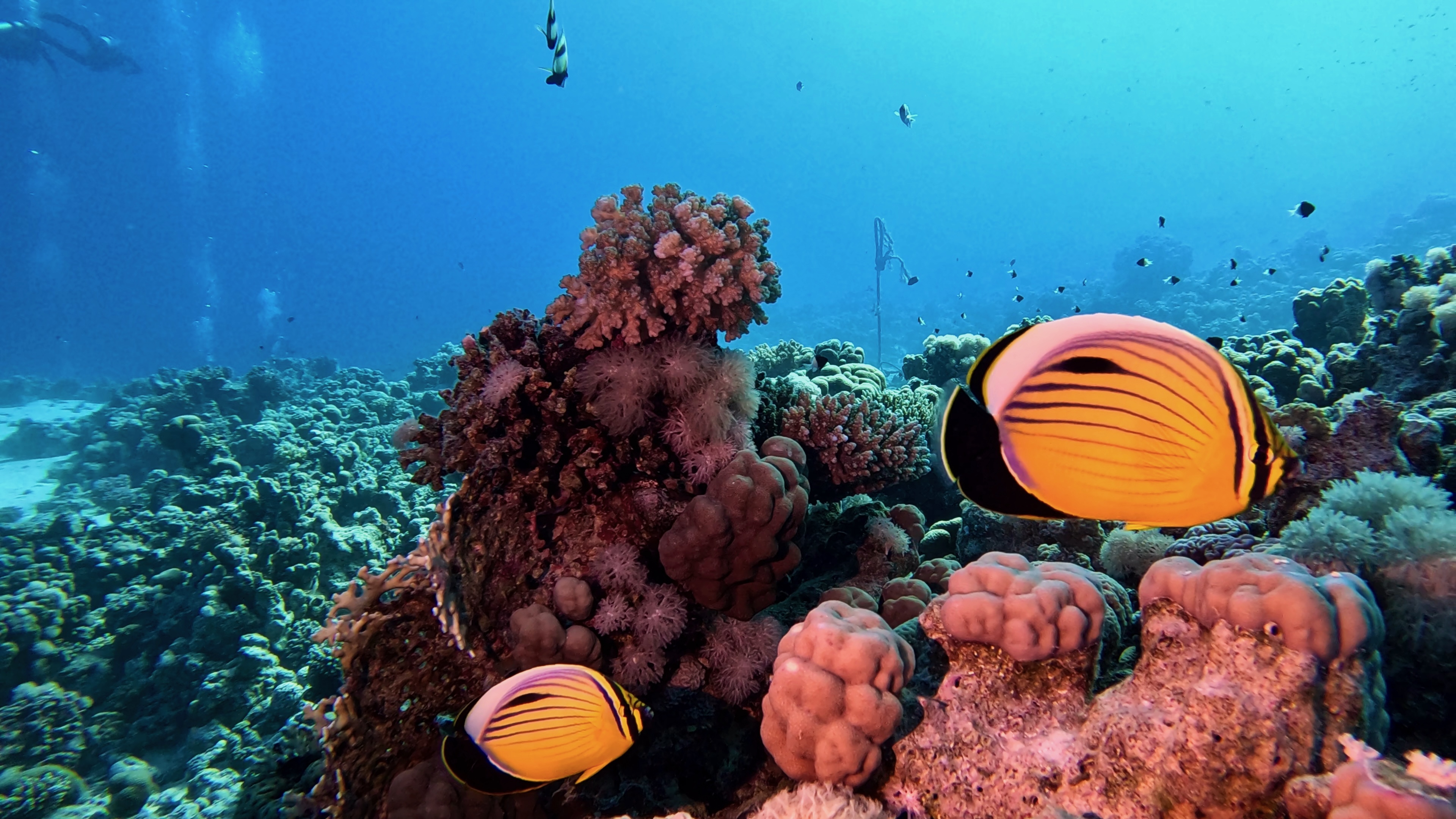
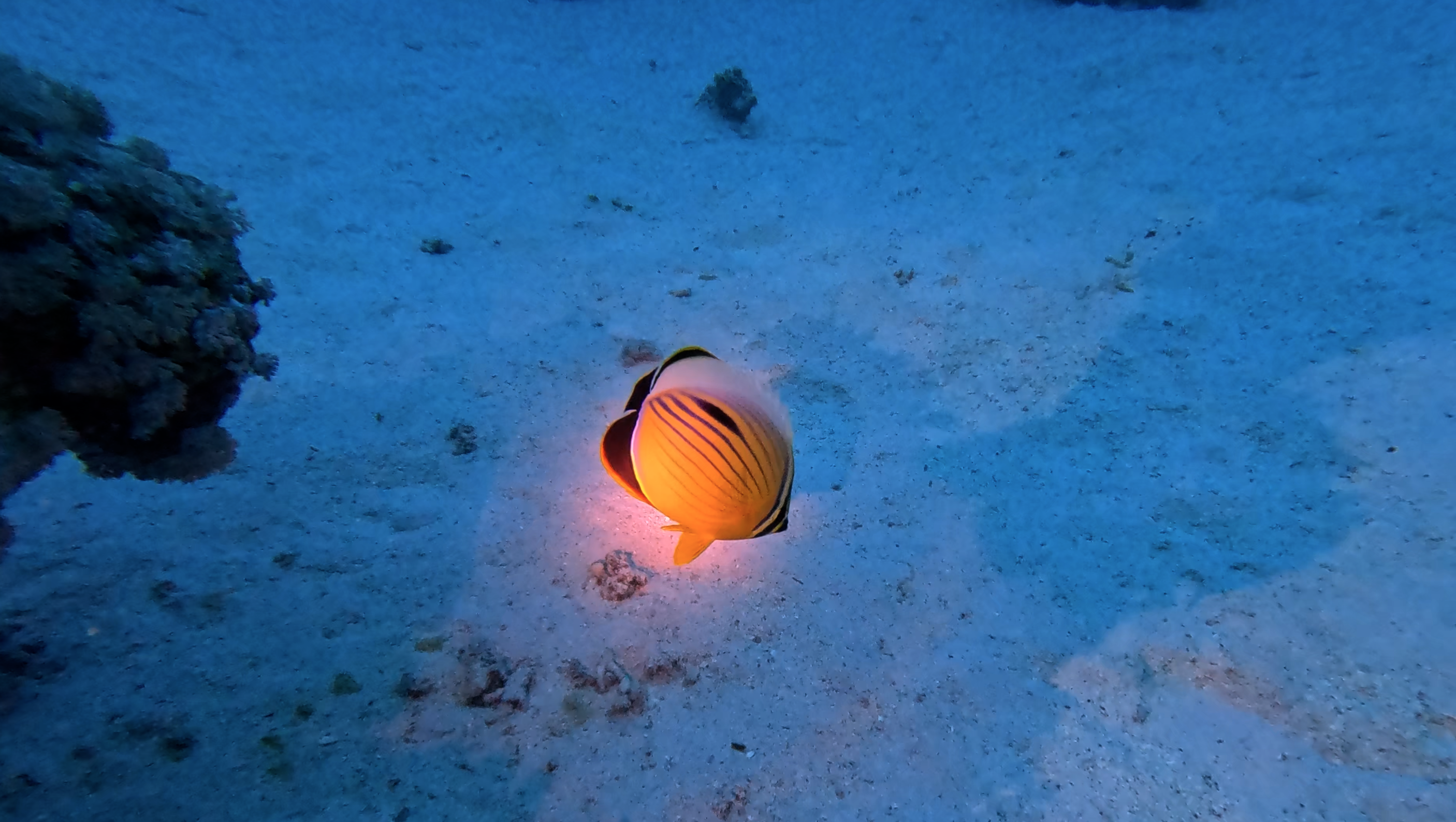
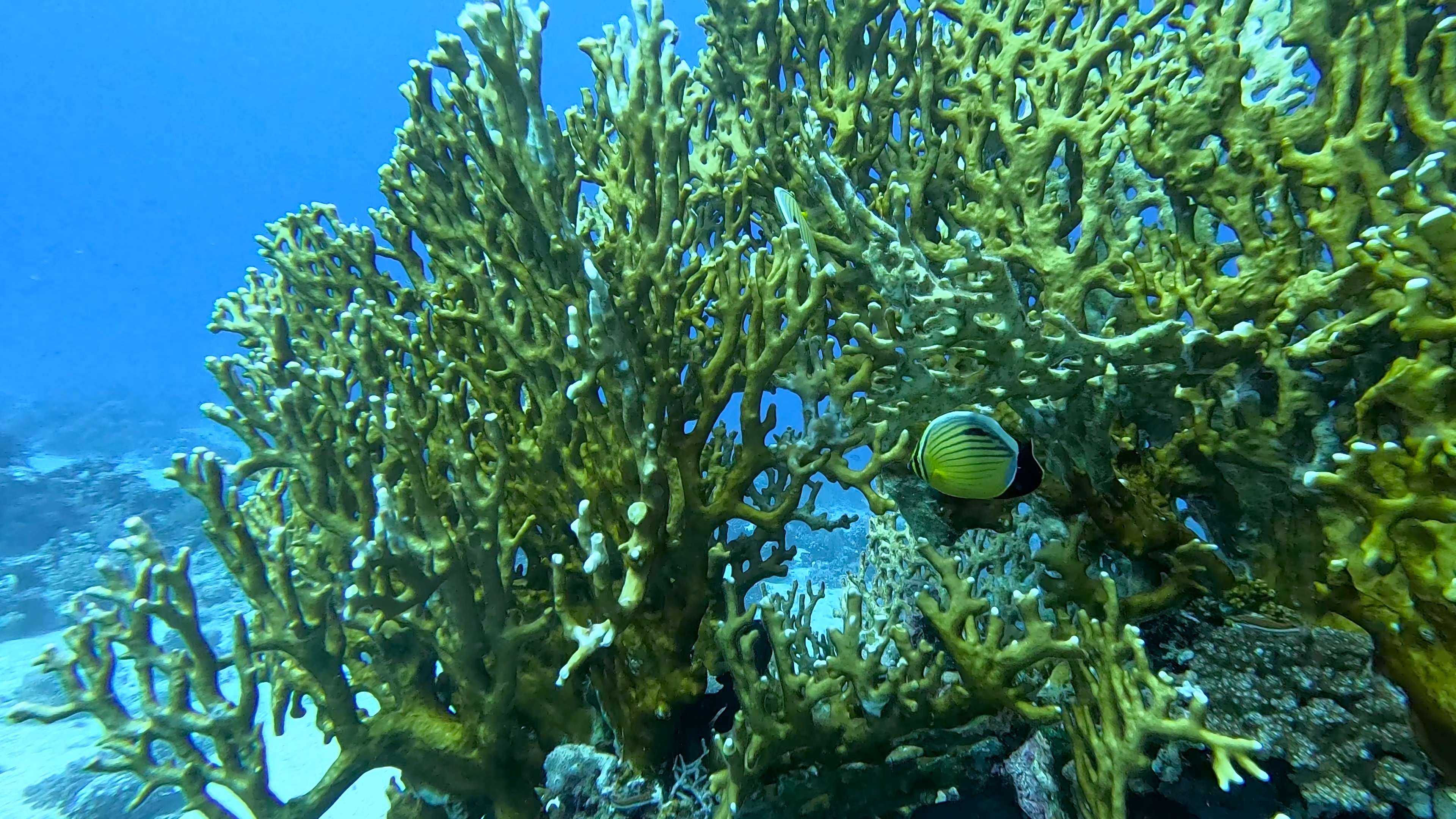
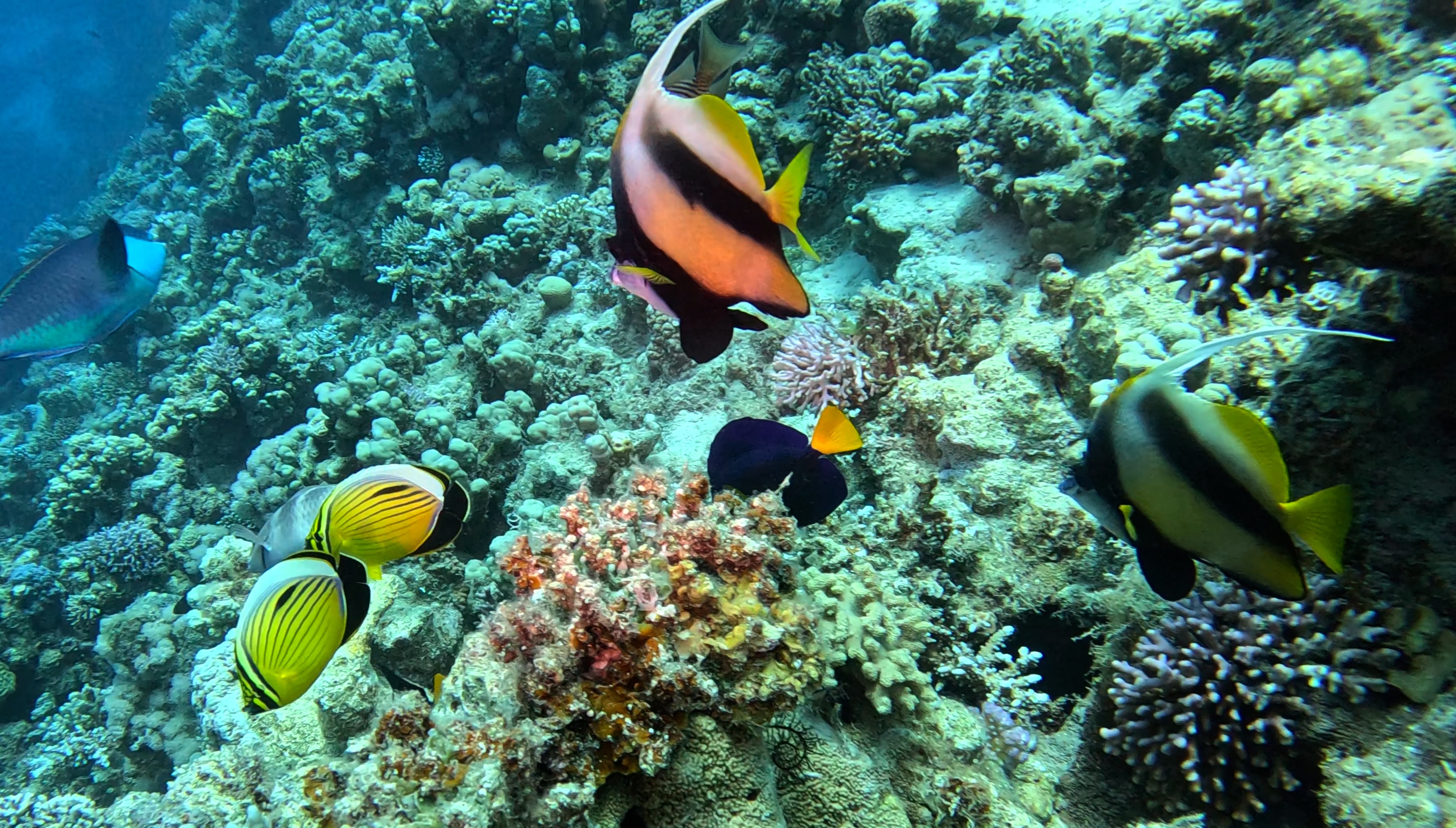
BLACK BACKED BUTTERFLY FISH
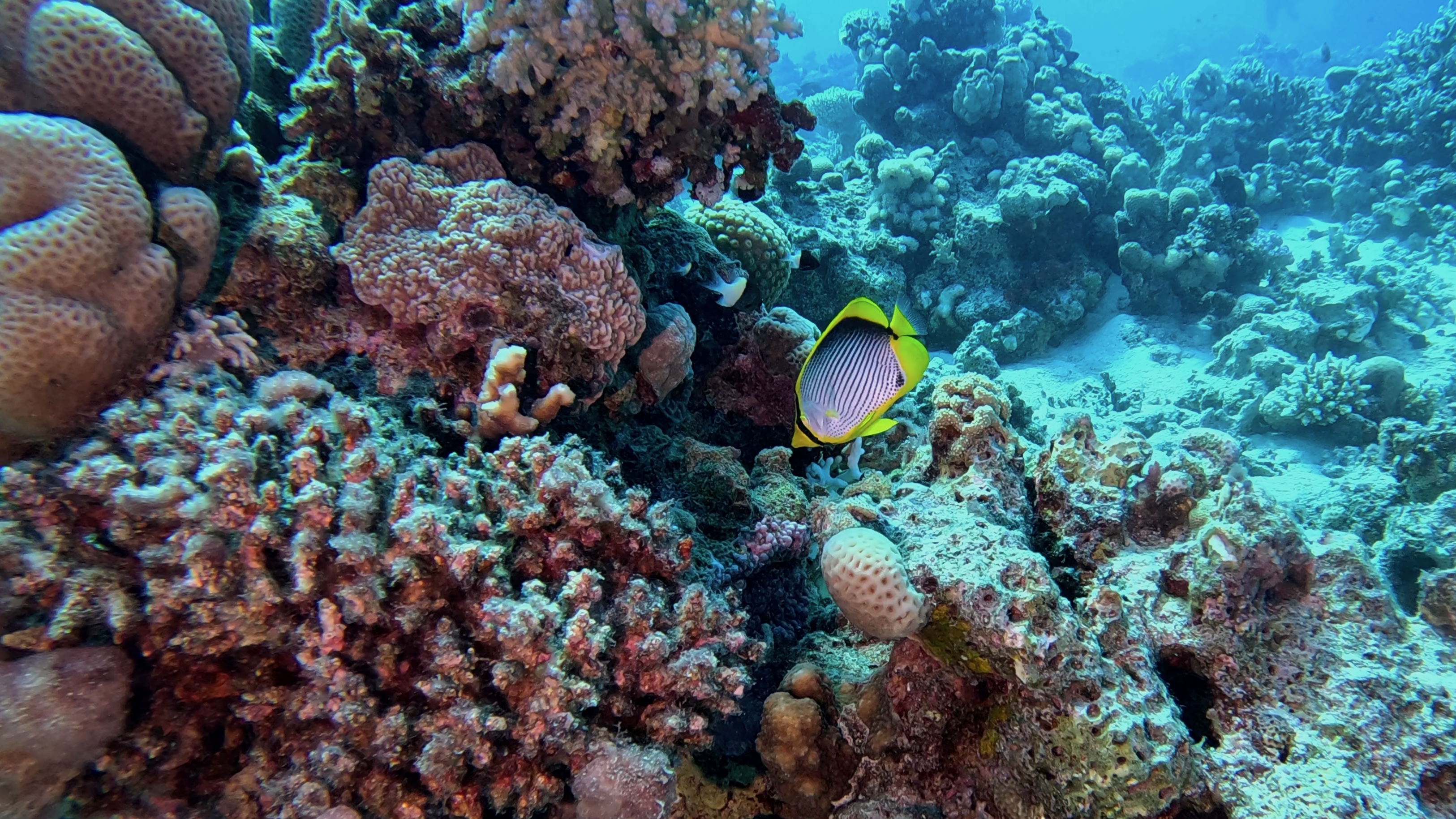
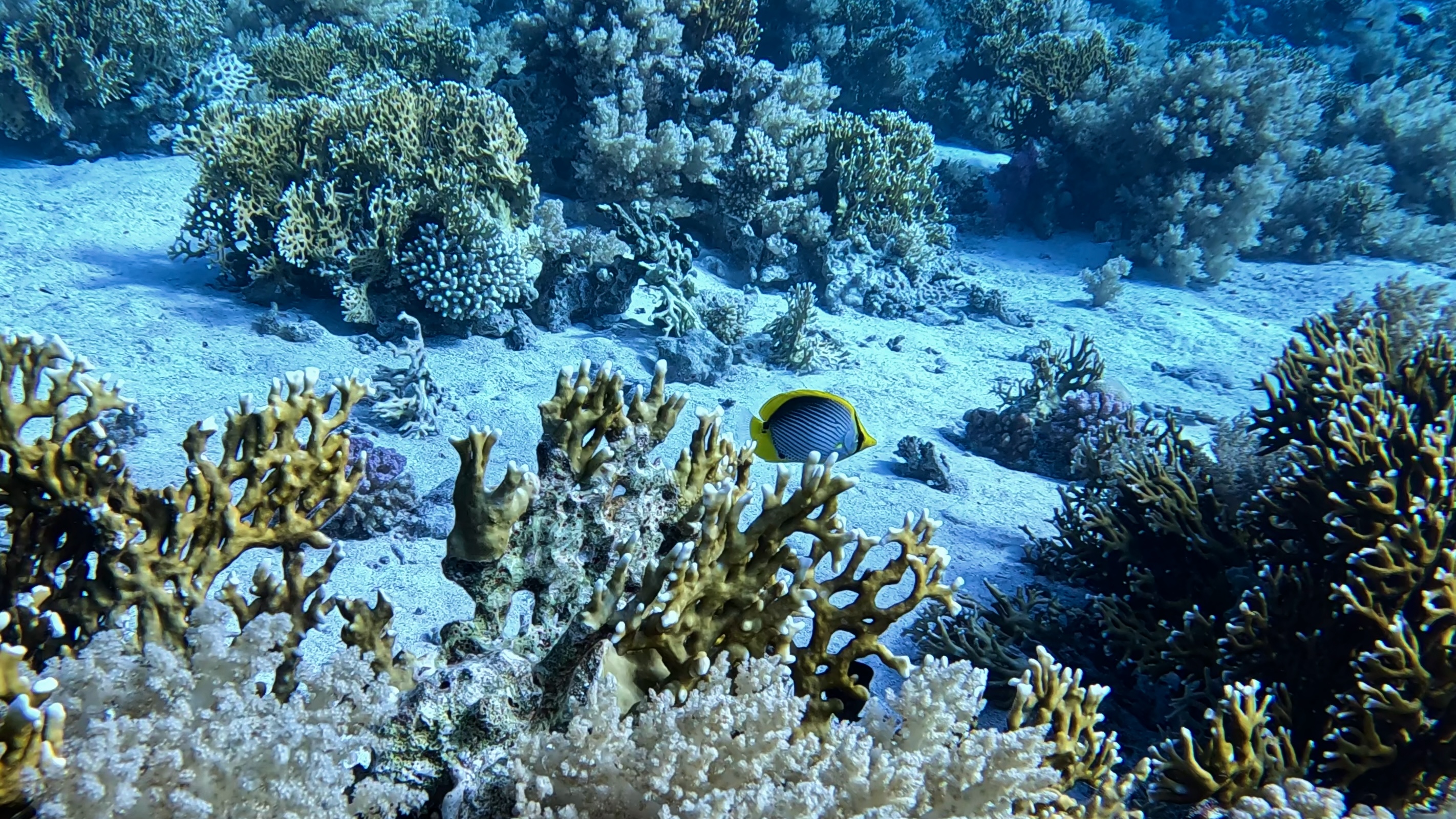
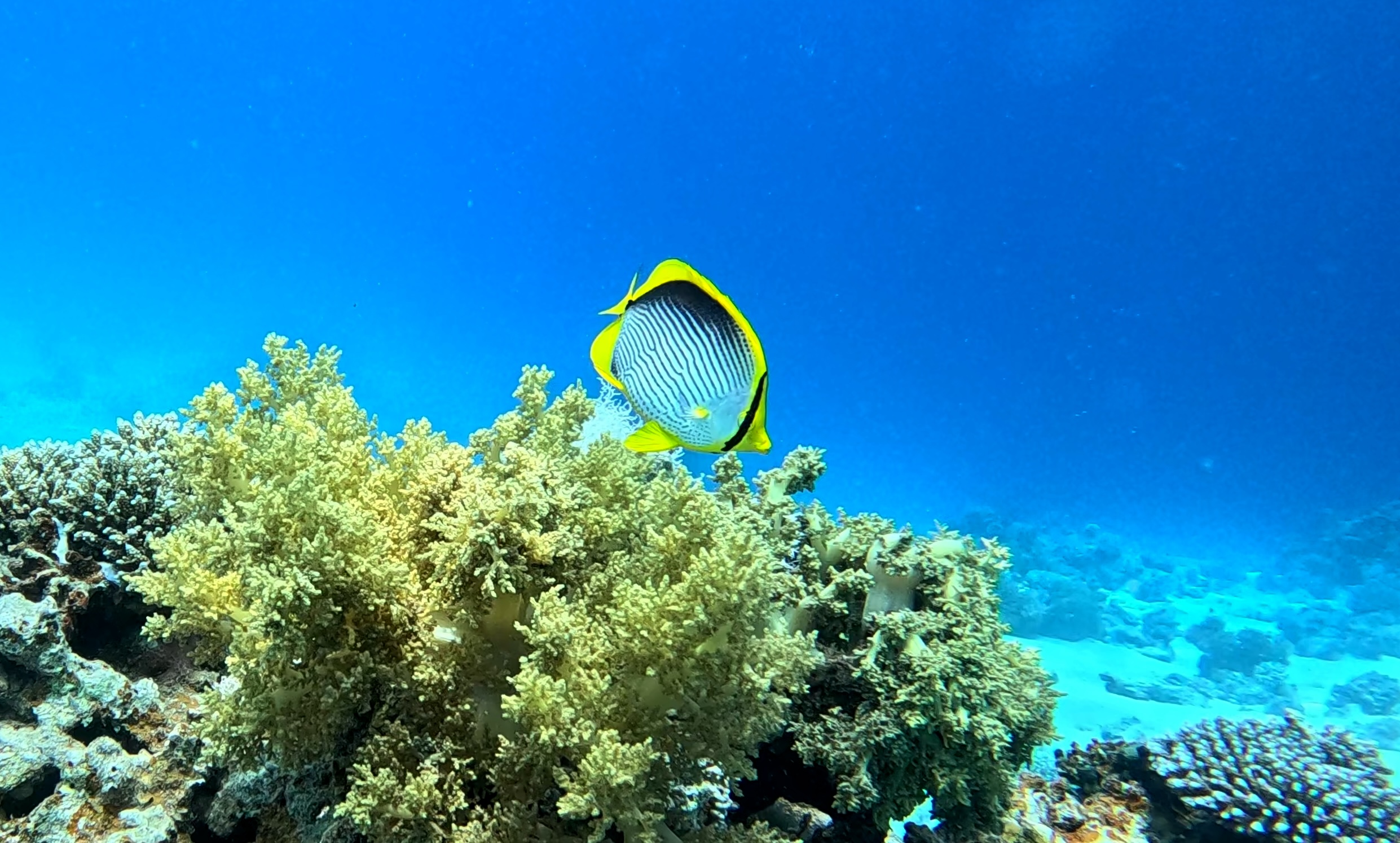
FRECKLED HAWKFISH
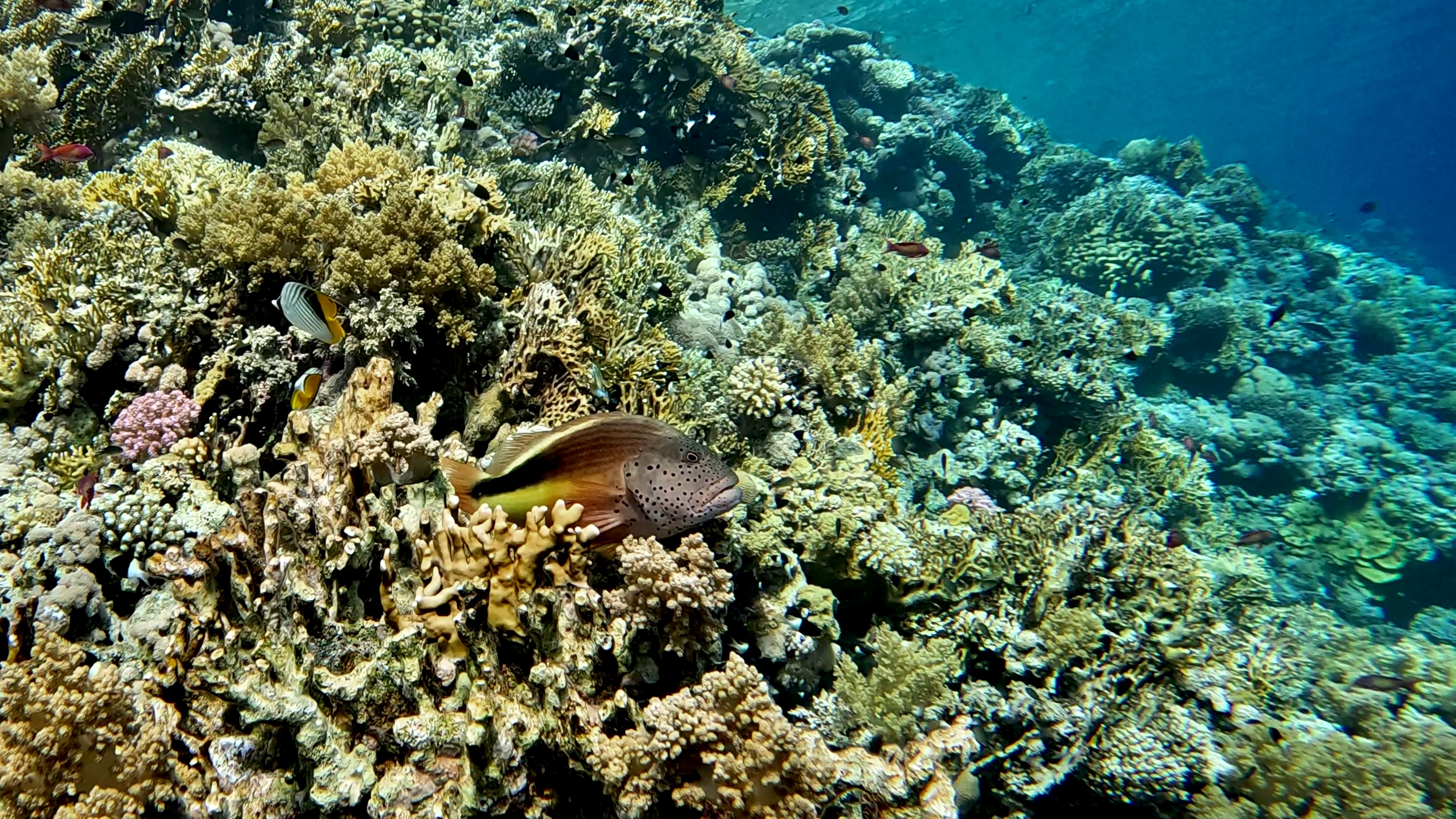
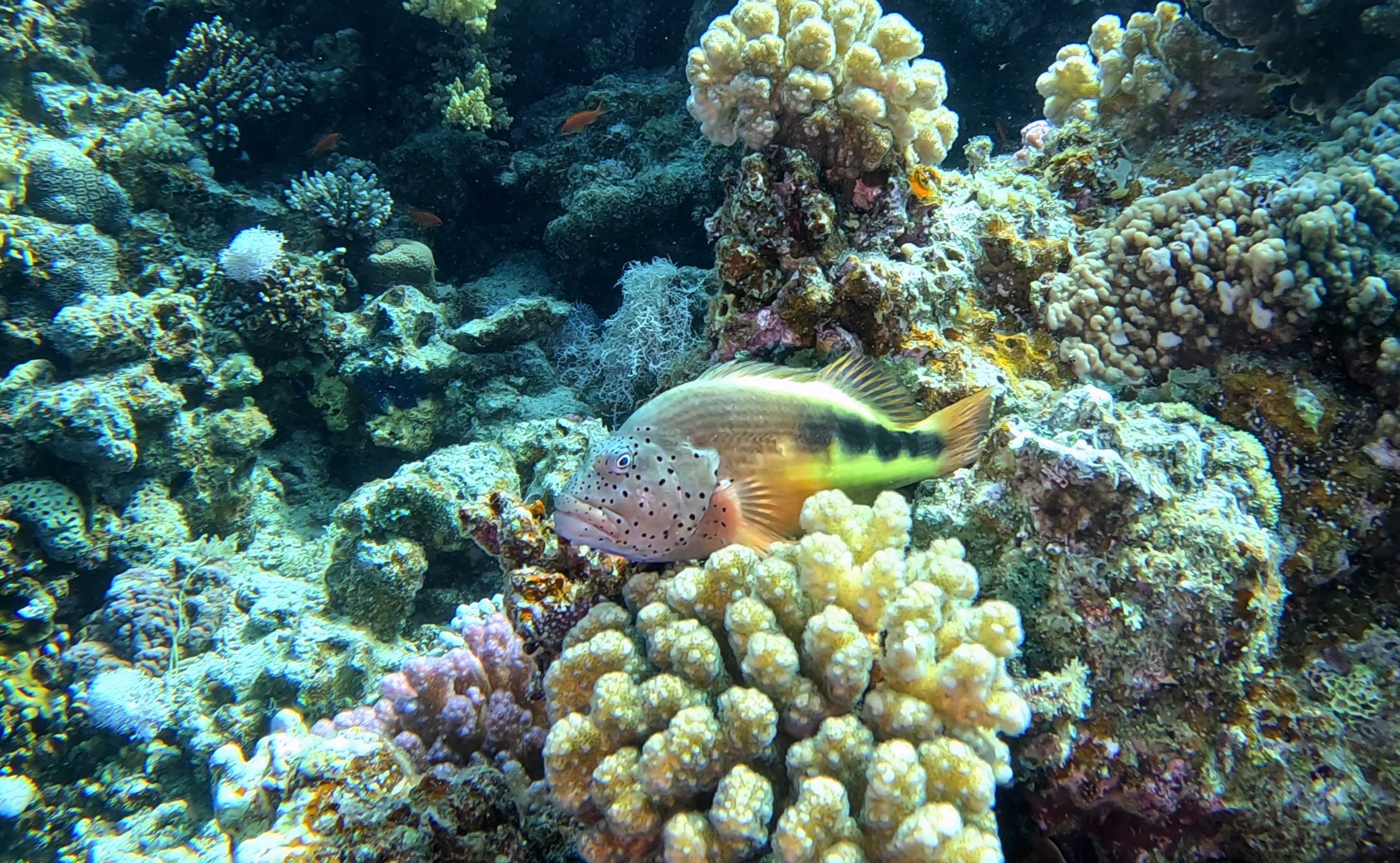
GHANAM SPINECHEEK FISH foto Aleš Sulič
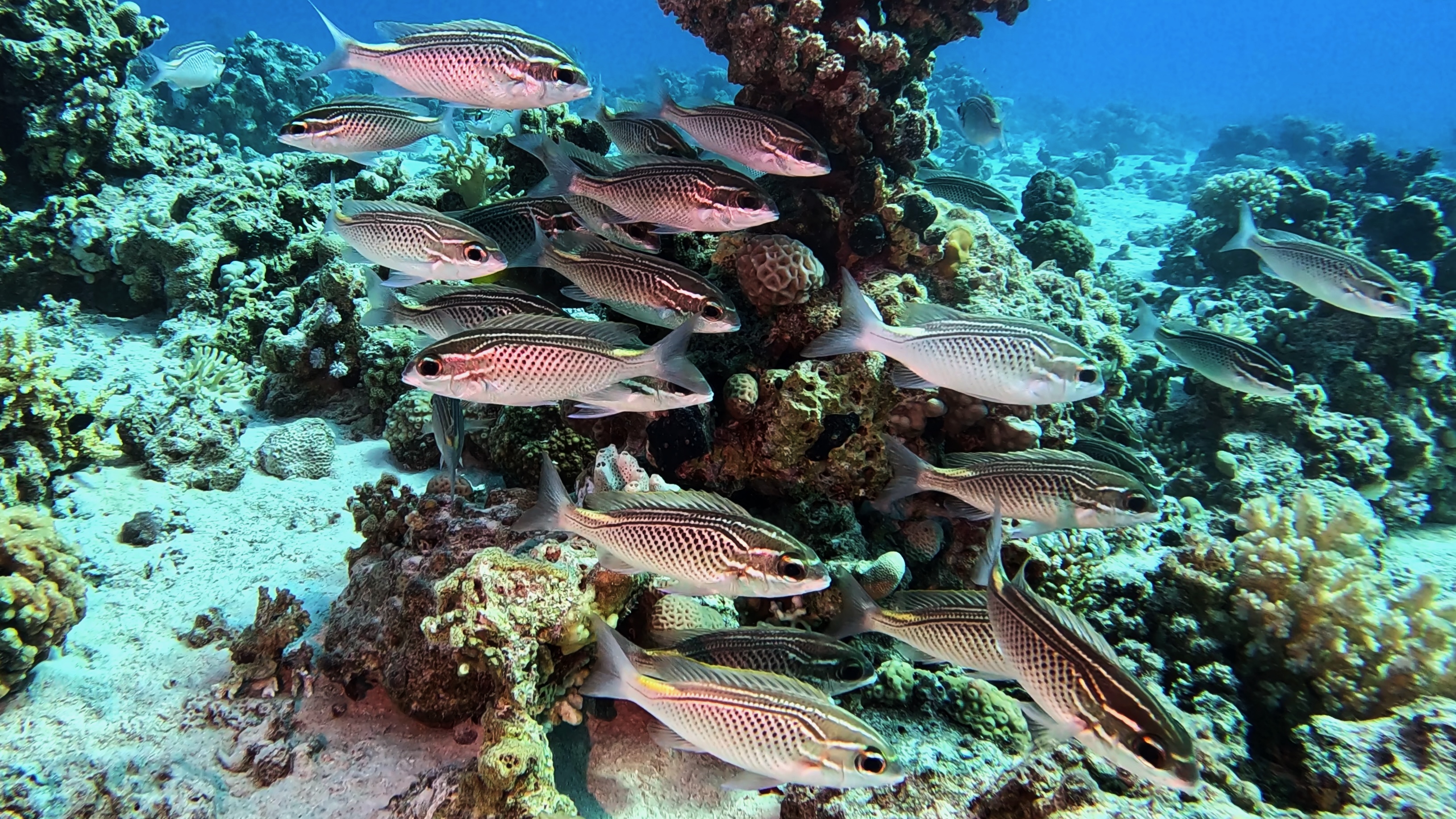
LIONFISH
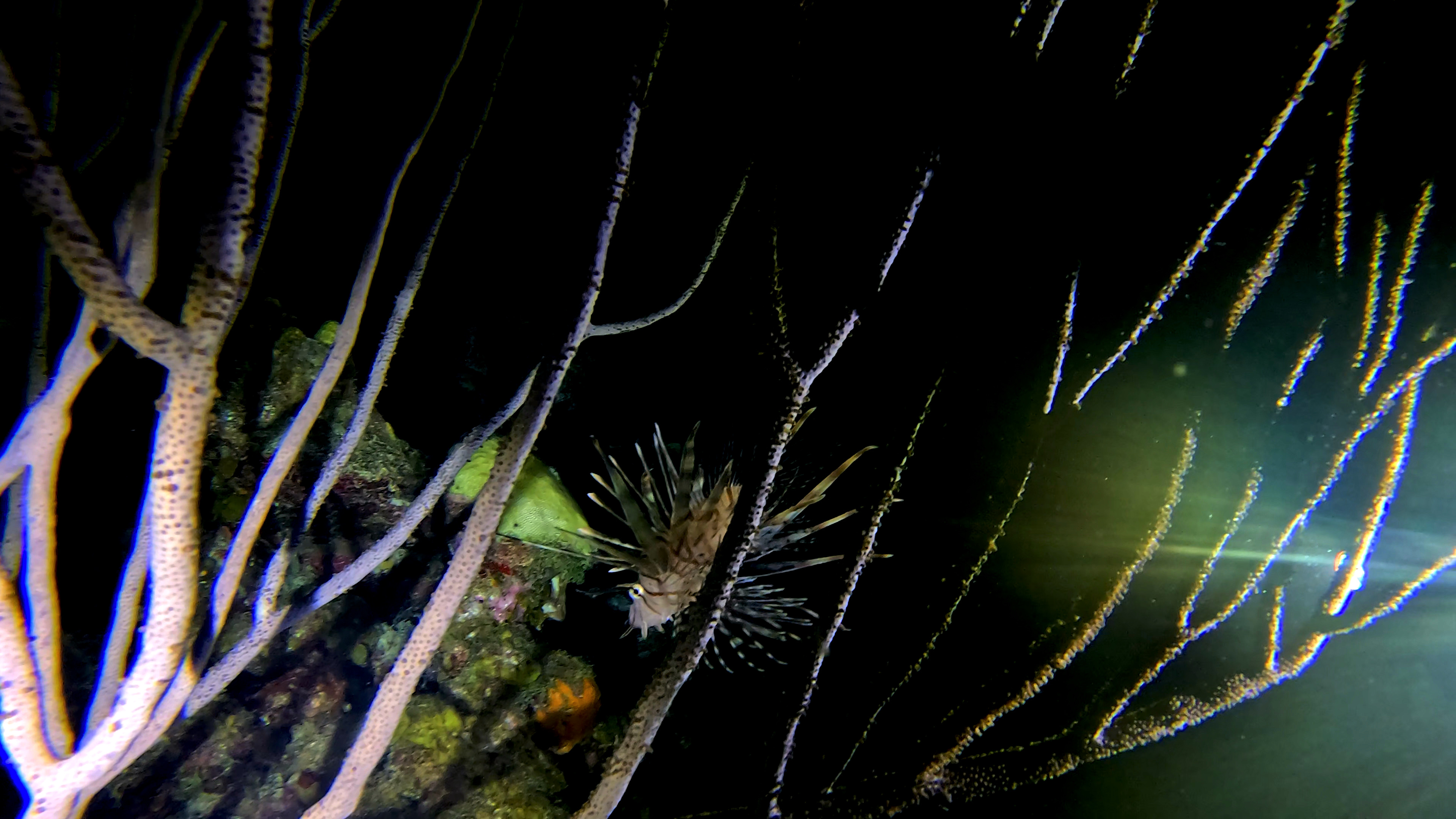
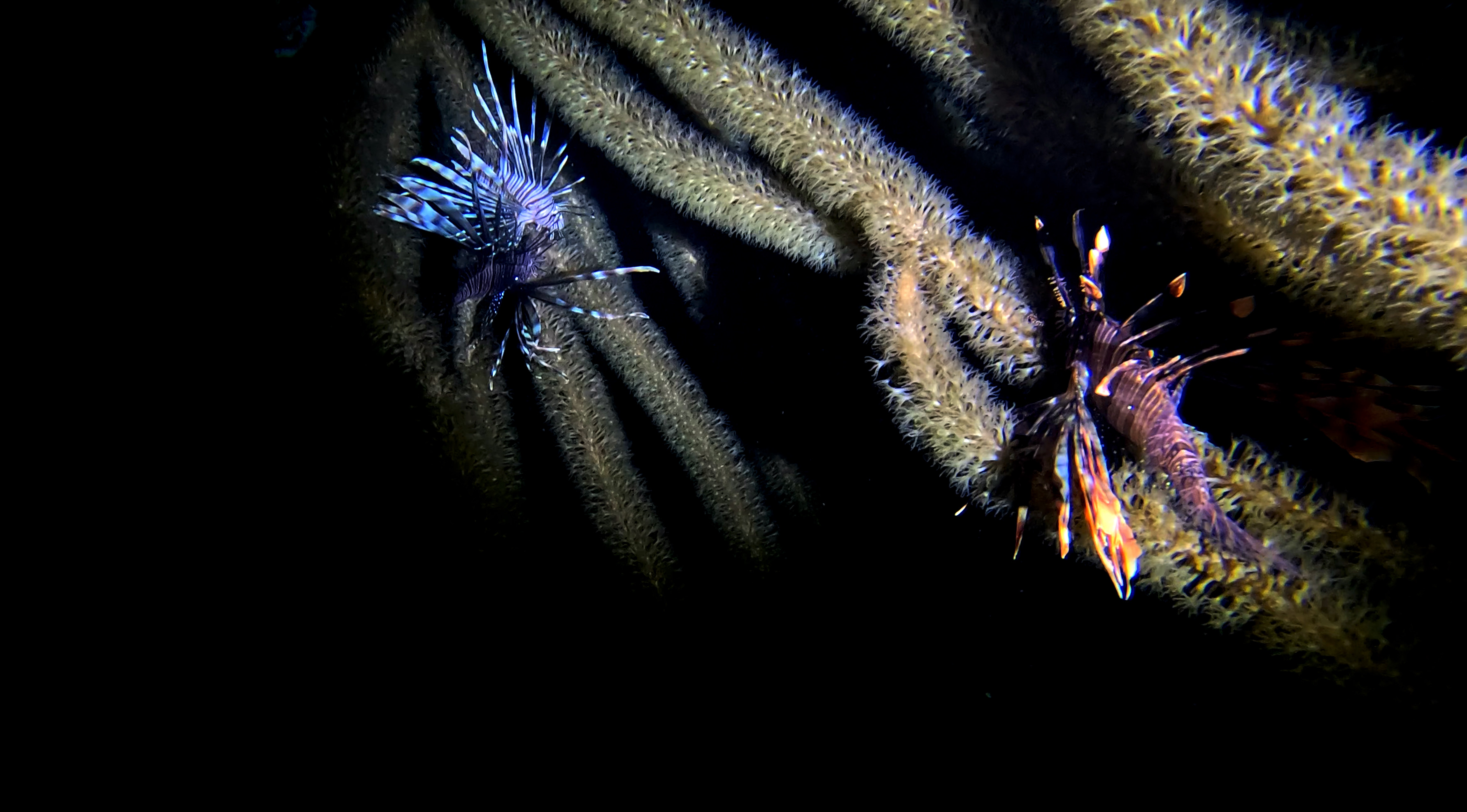
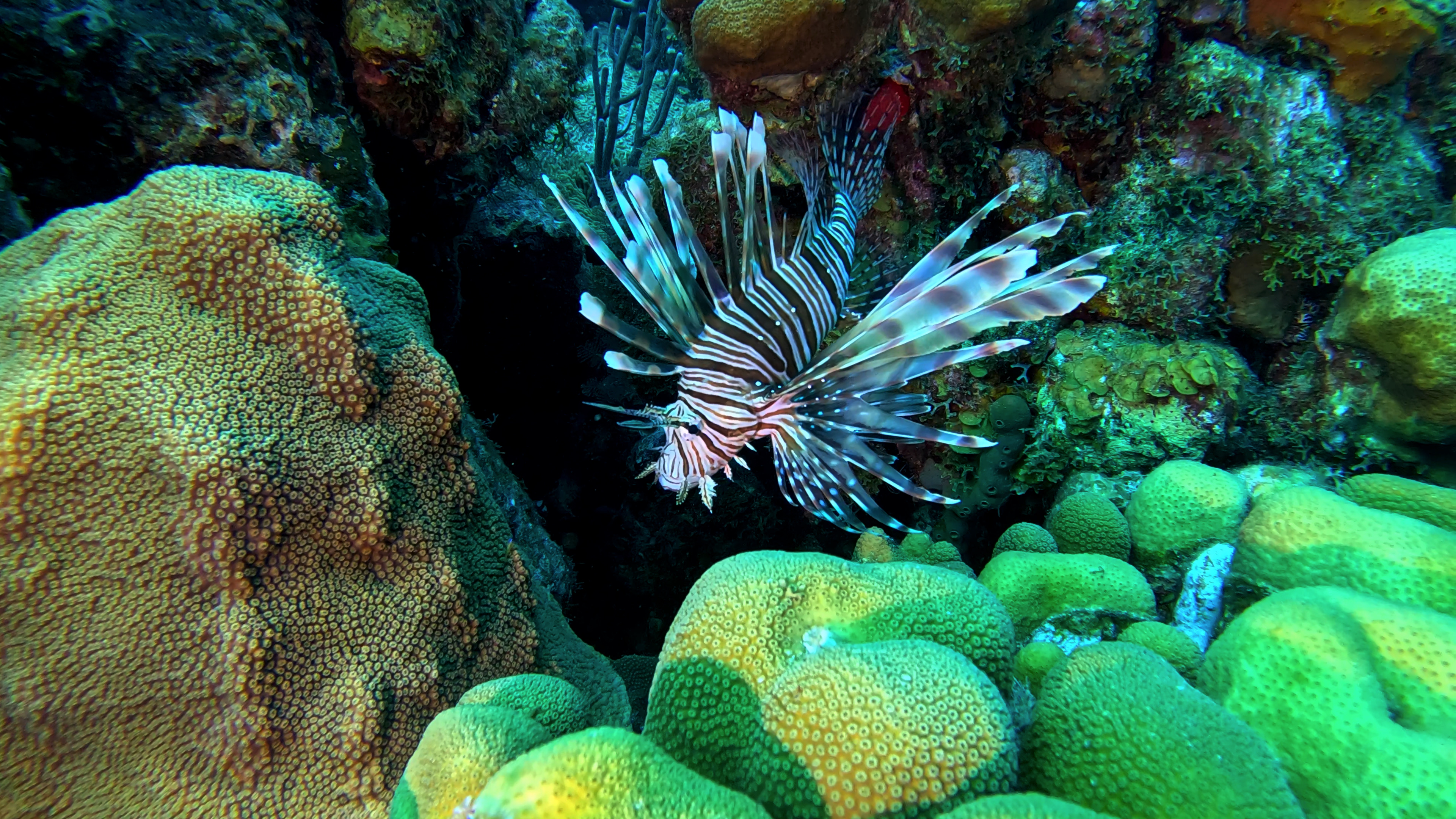
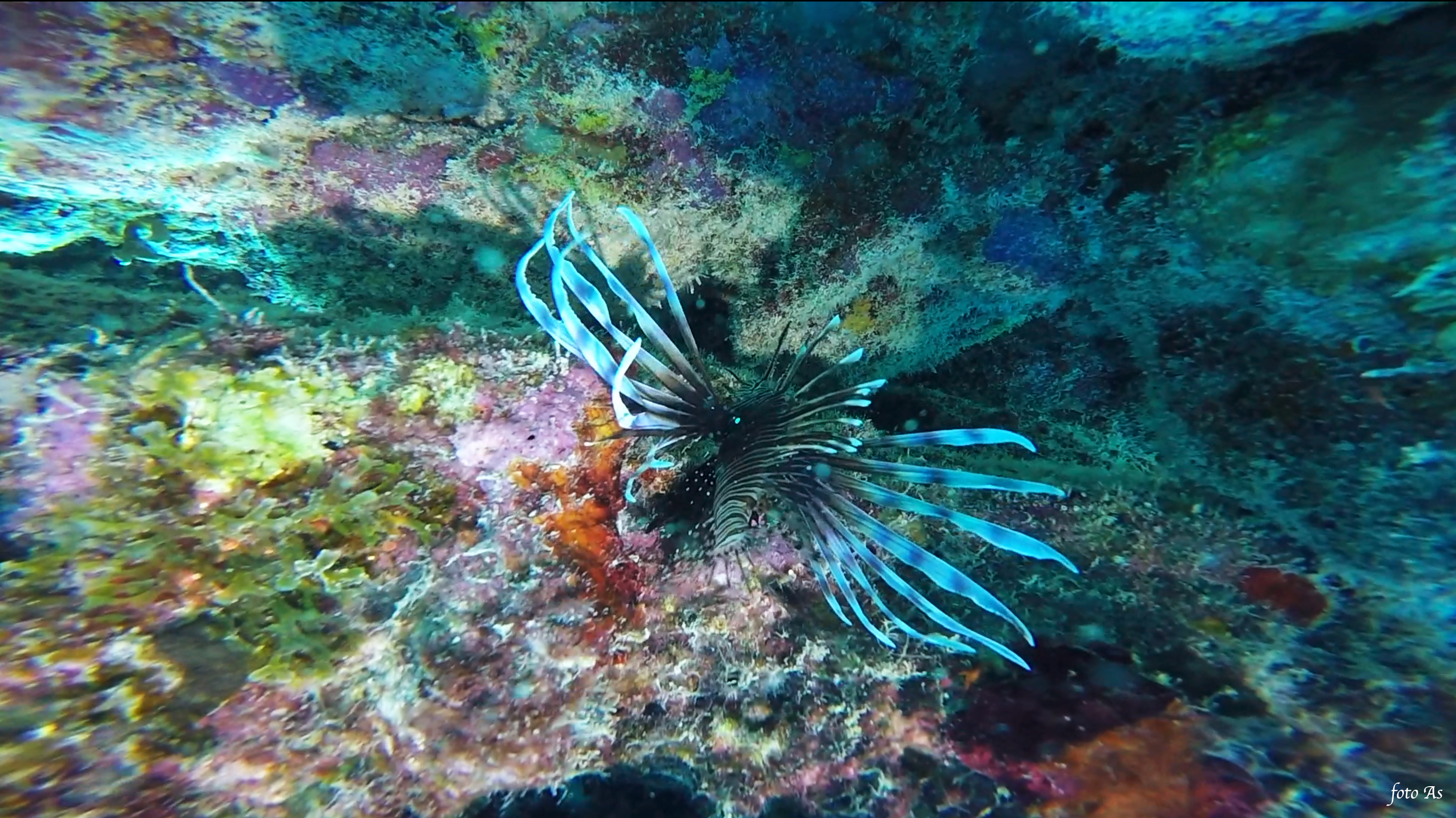
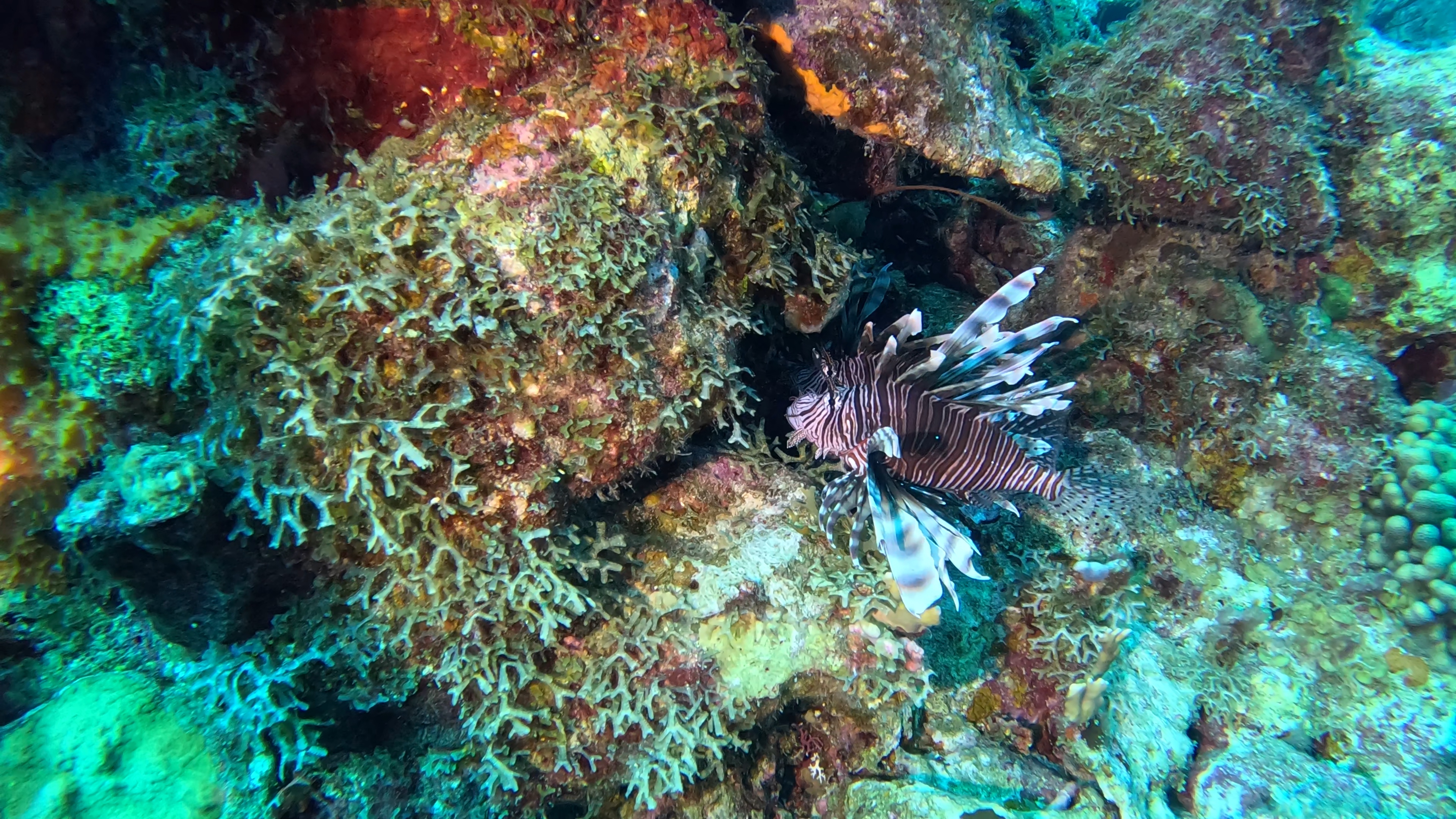
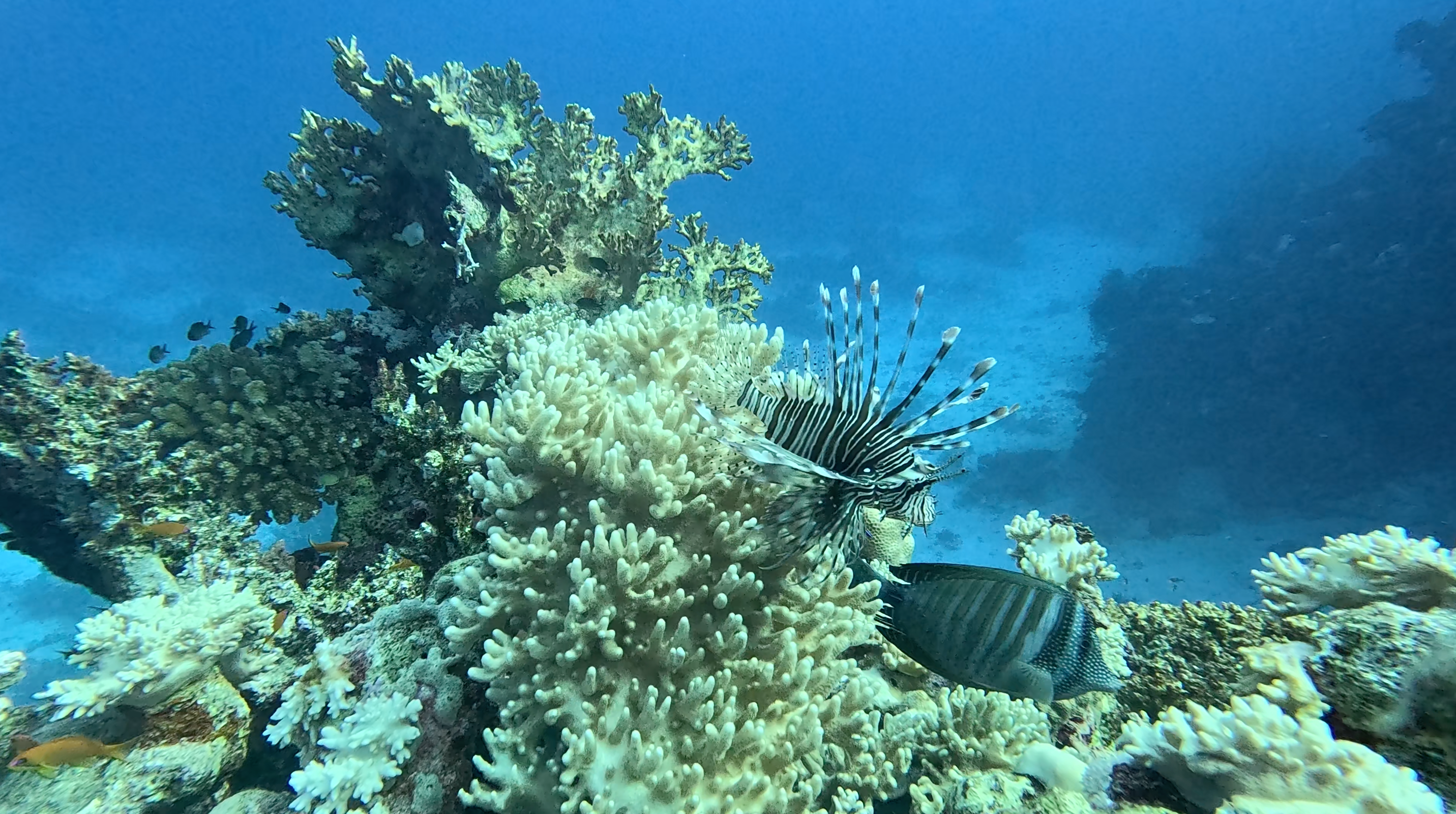
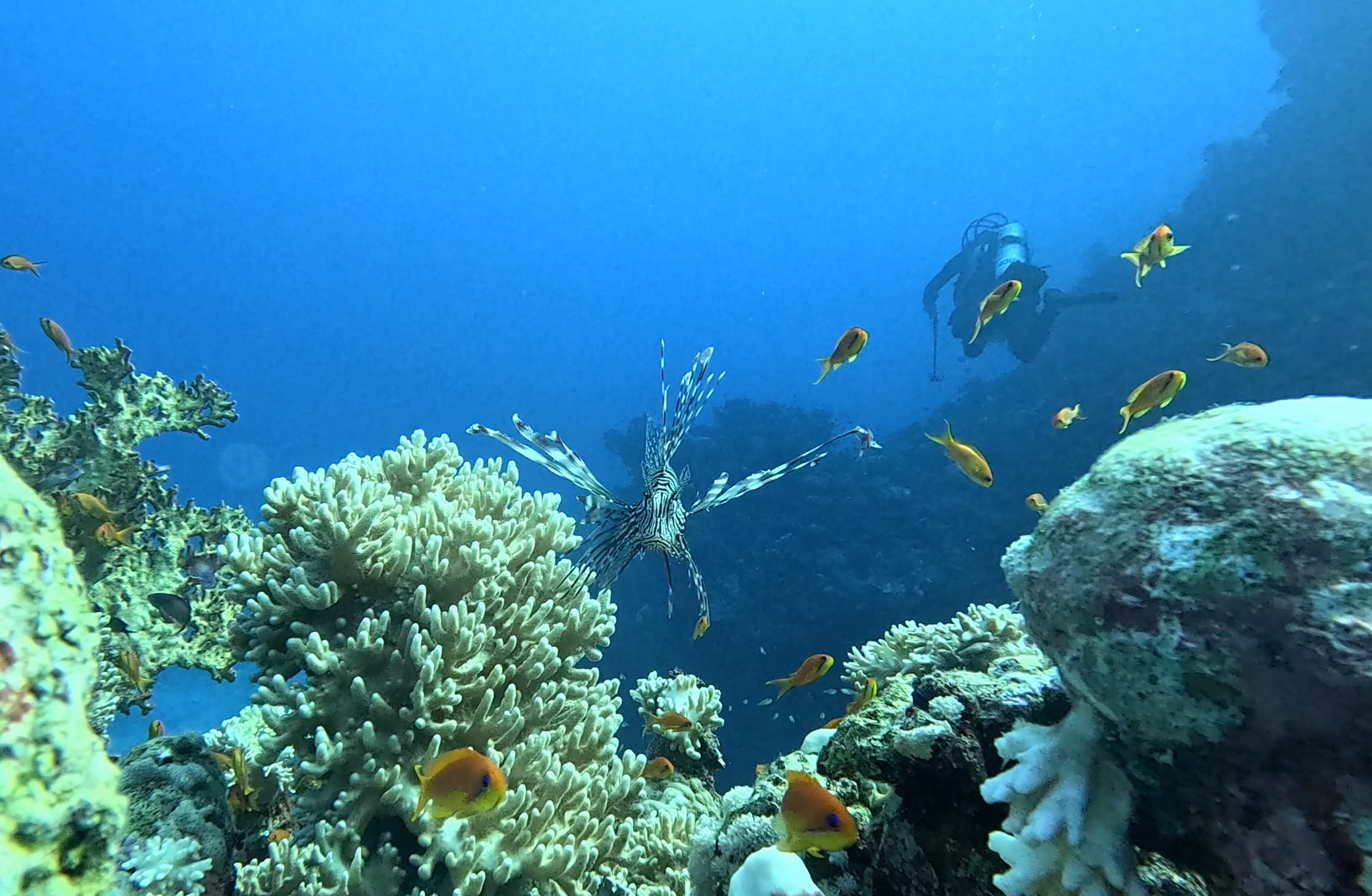
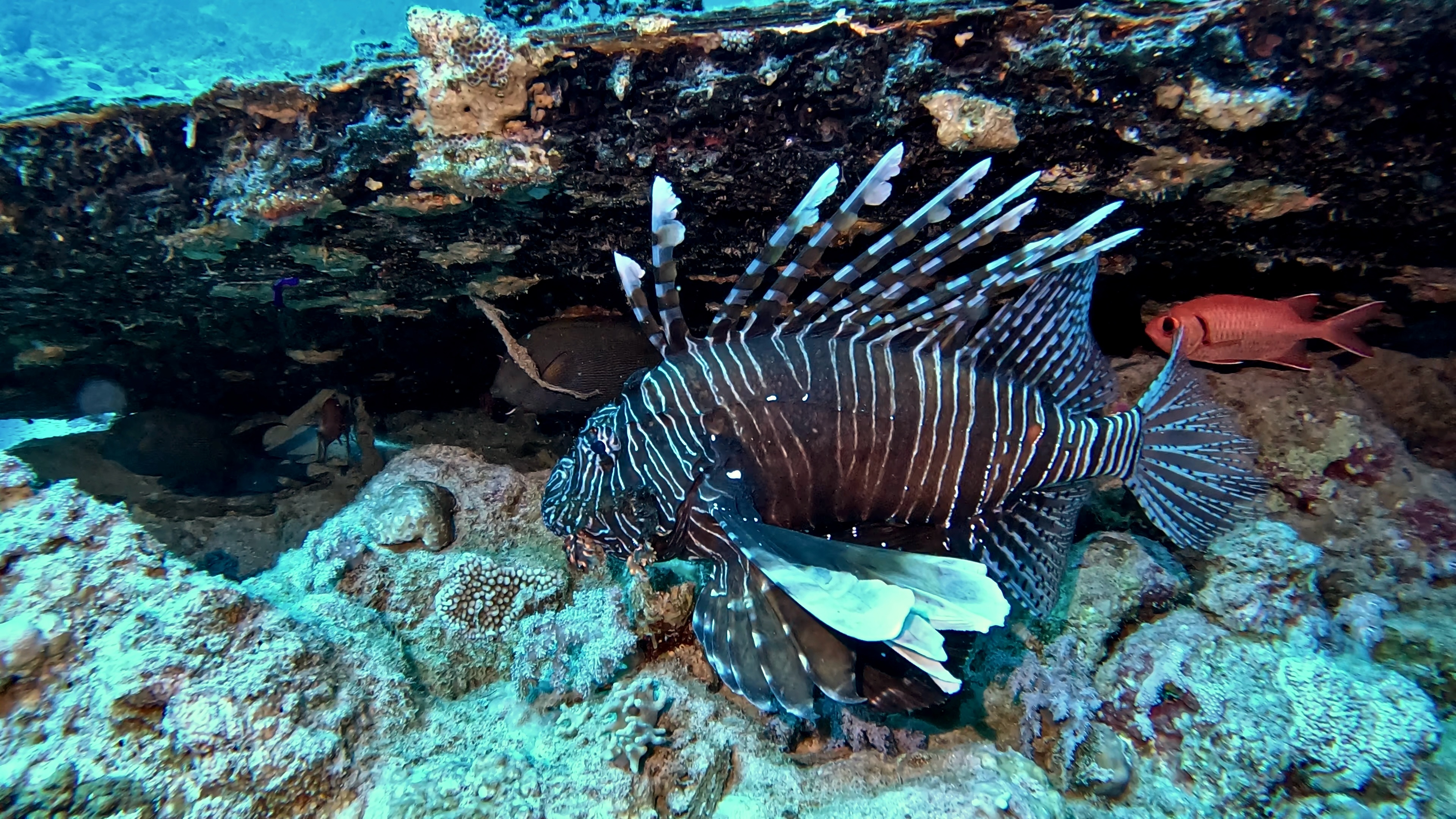
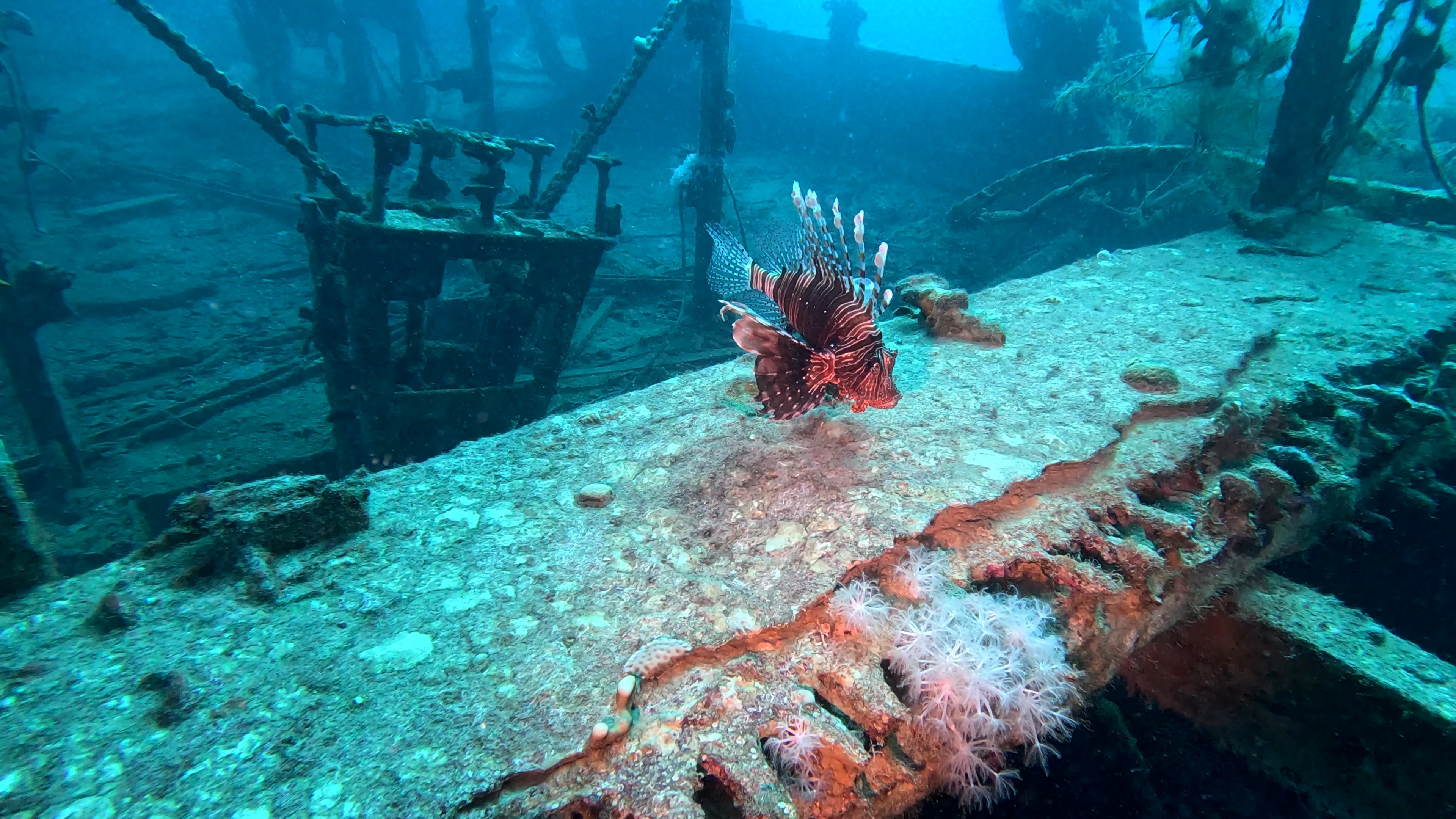
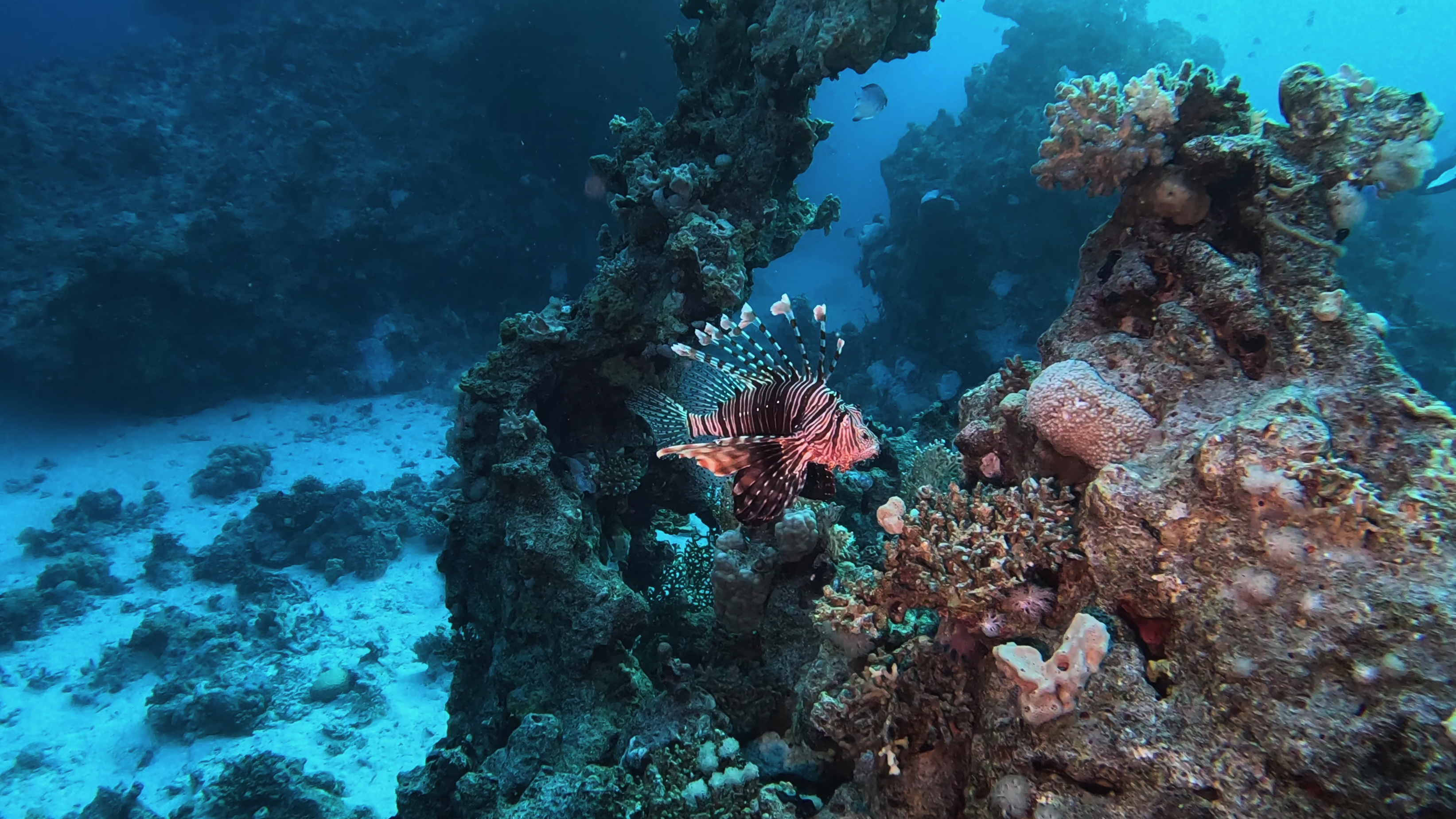
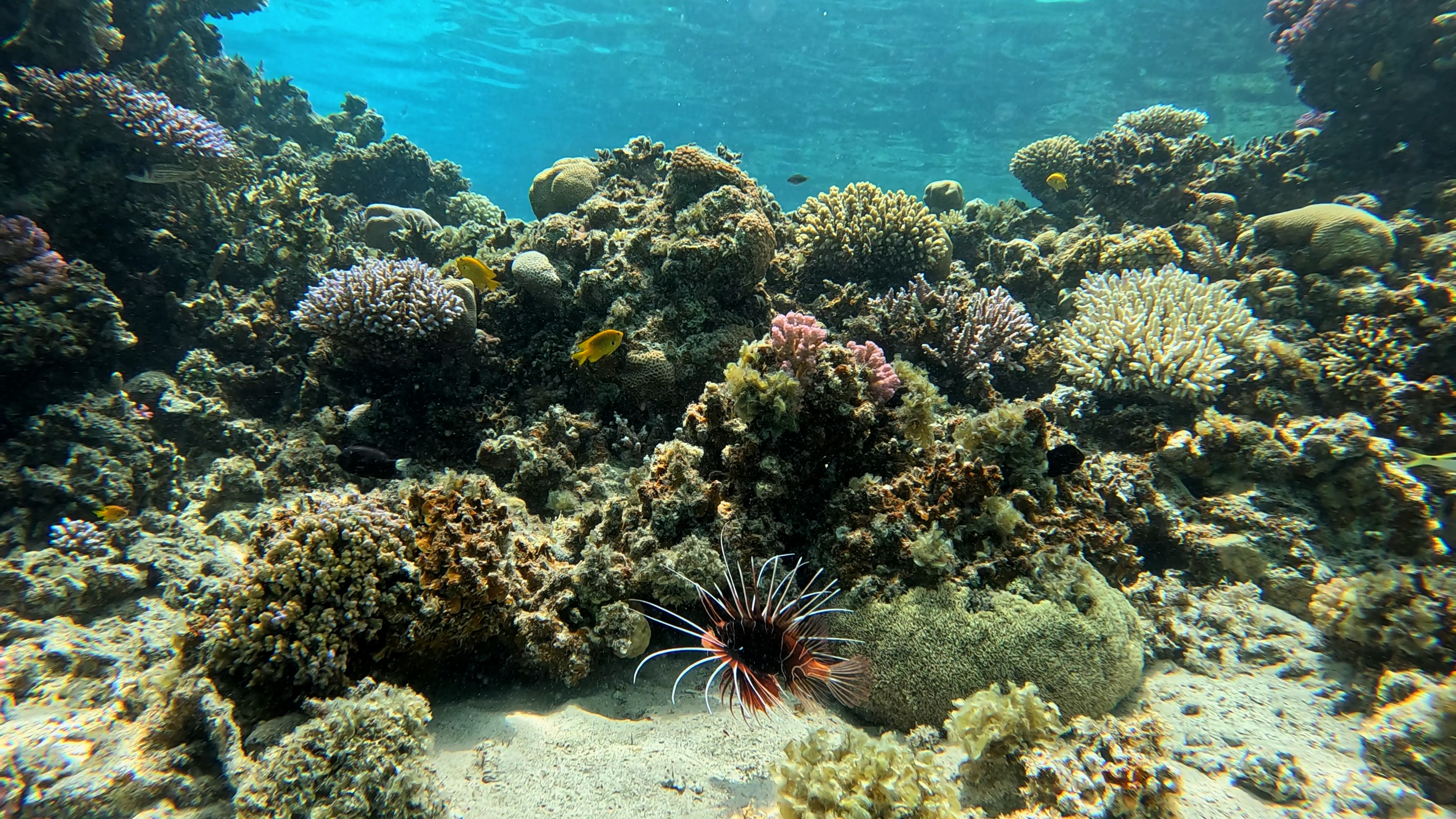
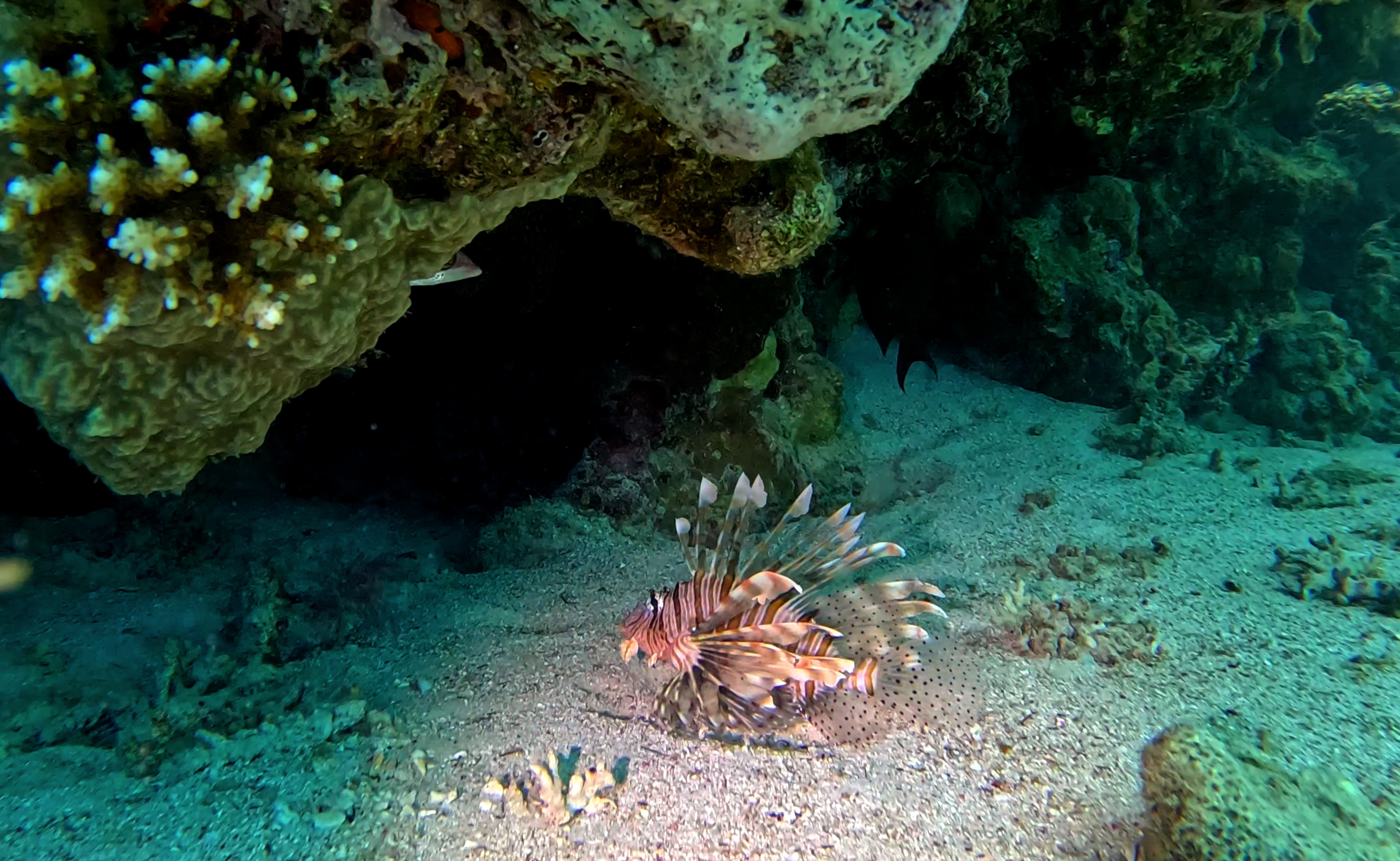
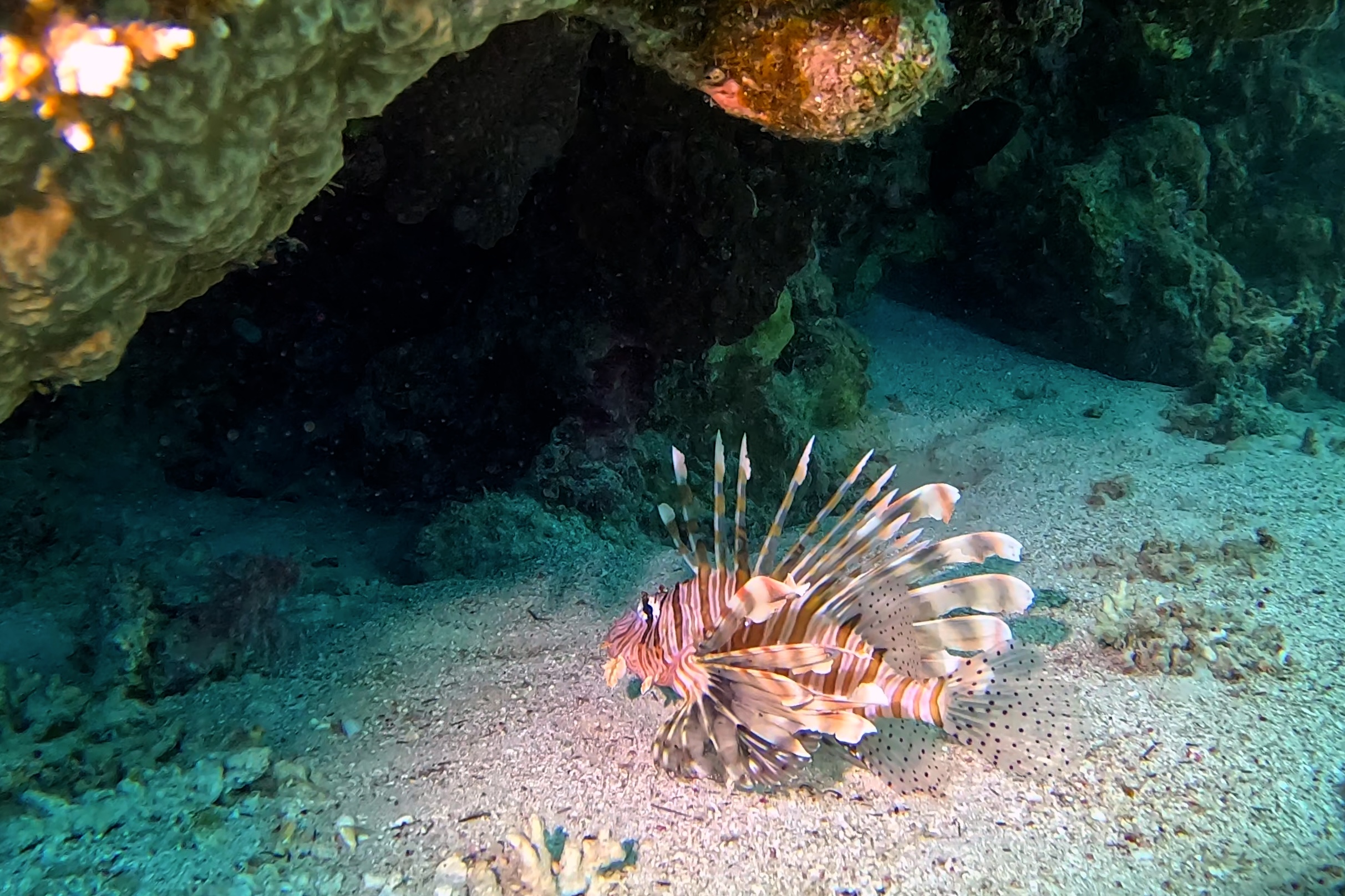
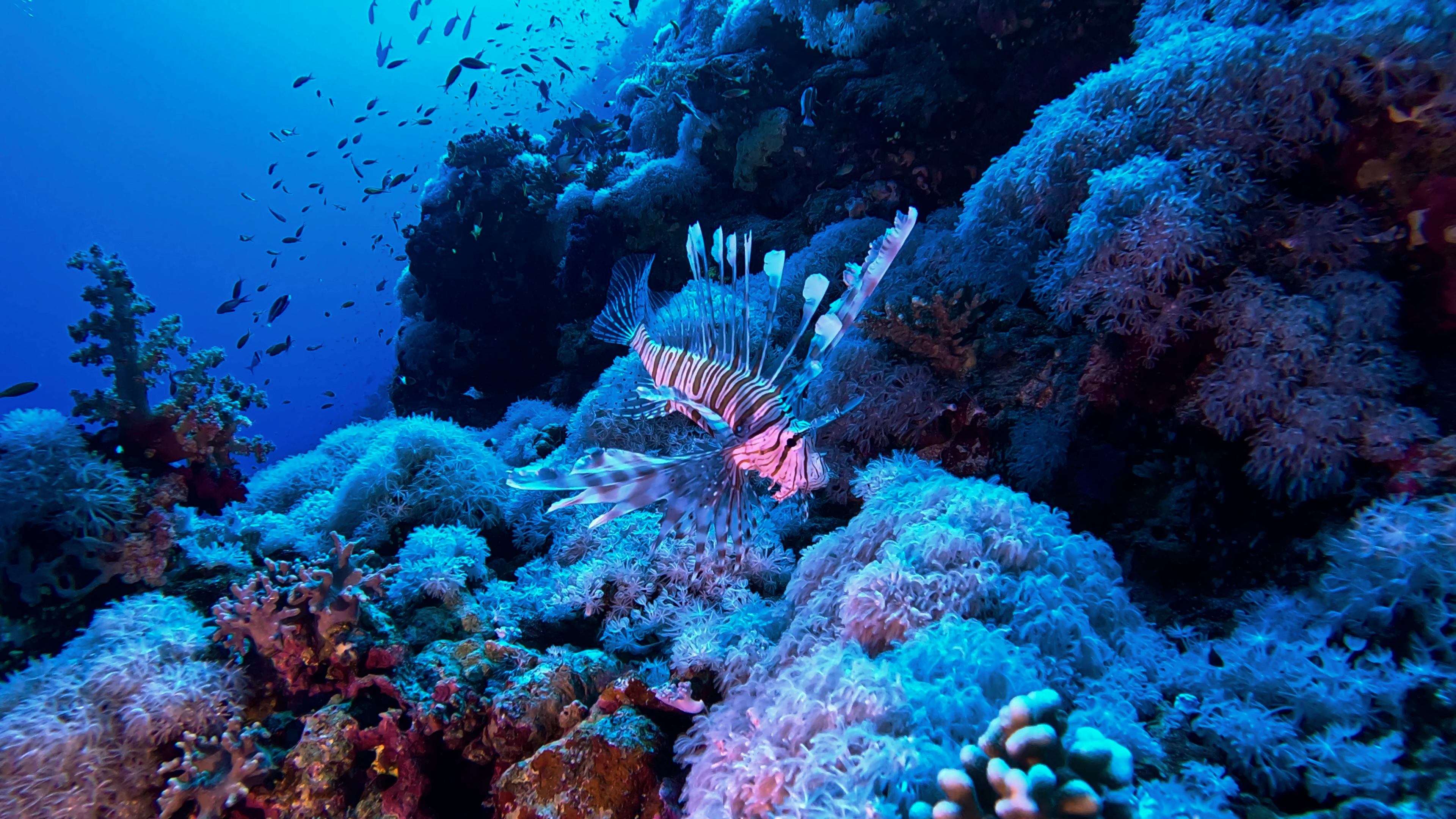
LYRETAIL ANTHIAS FISH
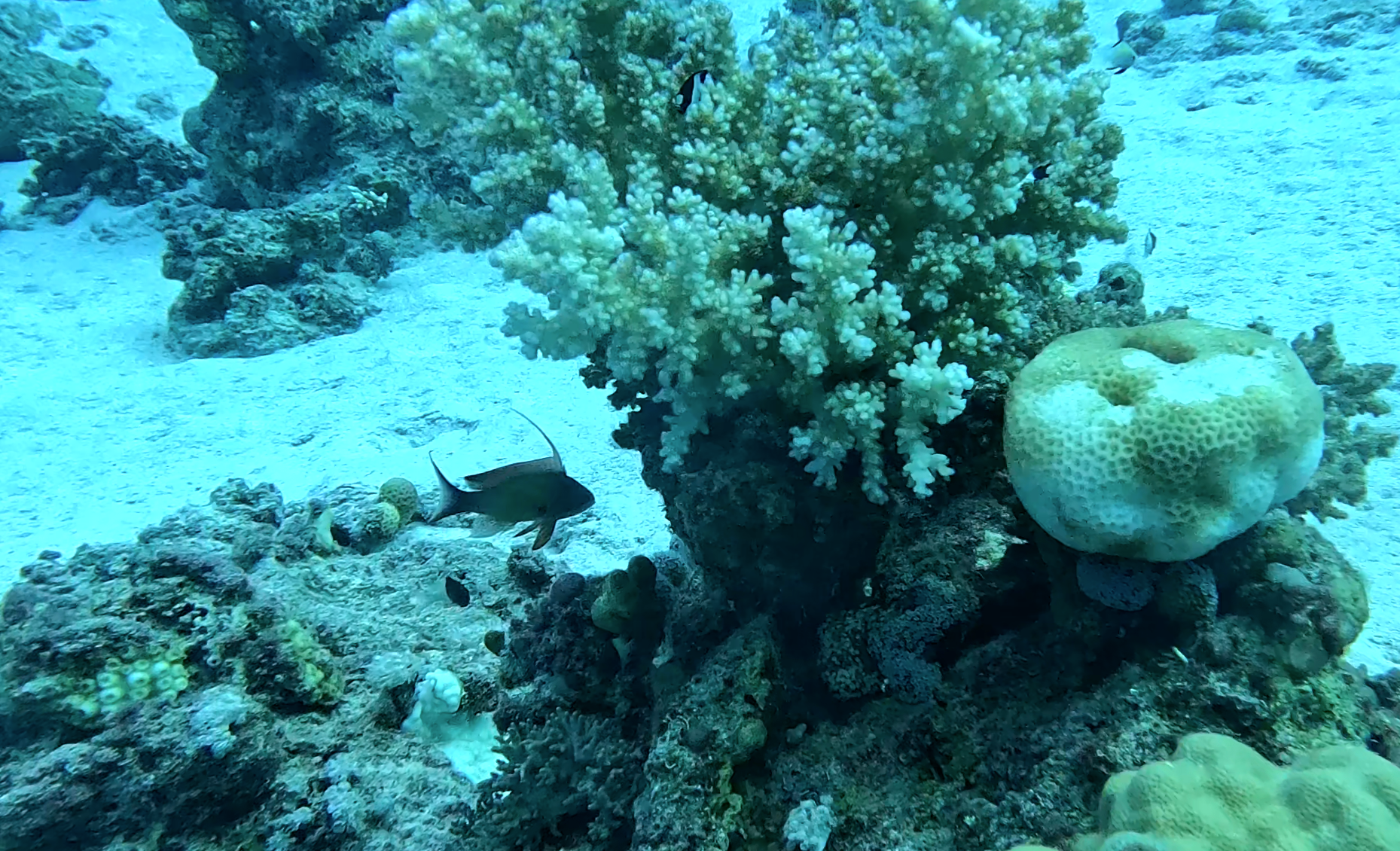
TENTACLED FLATHEAD FISH – CROCODILE FISH
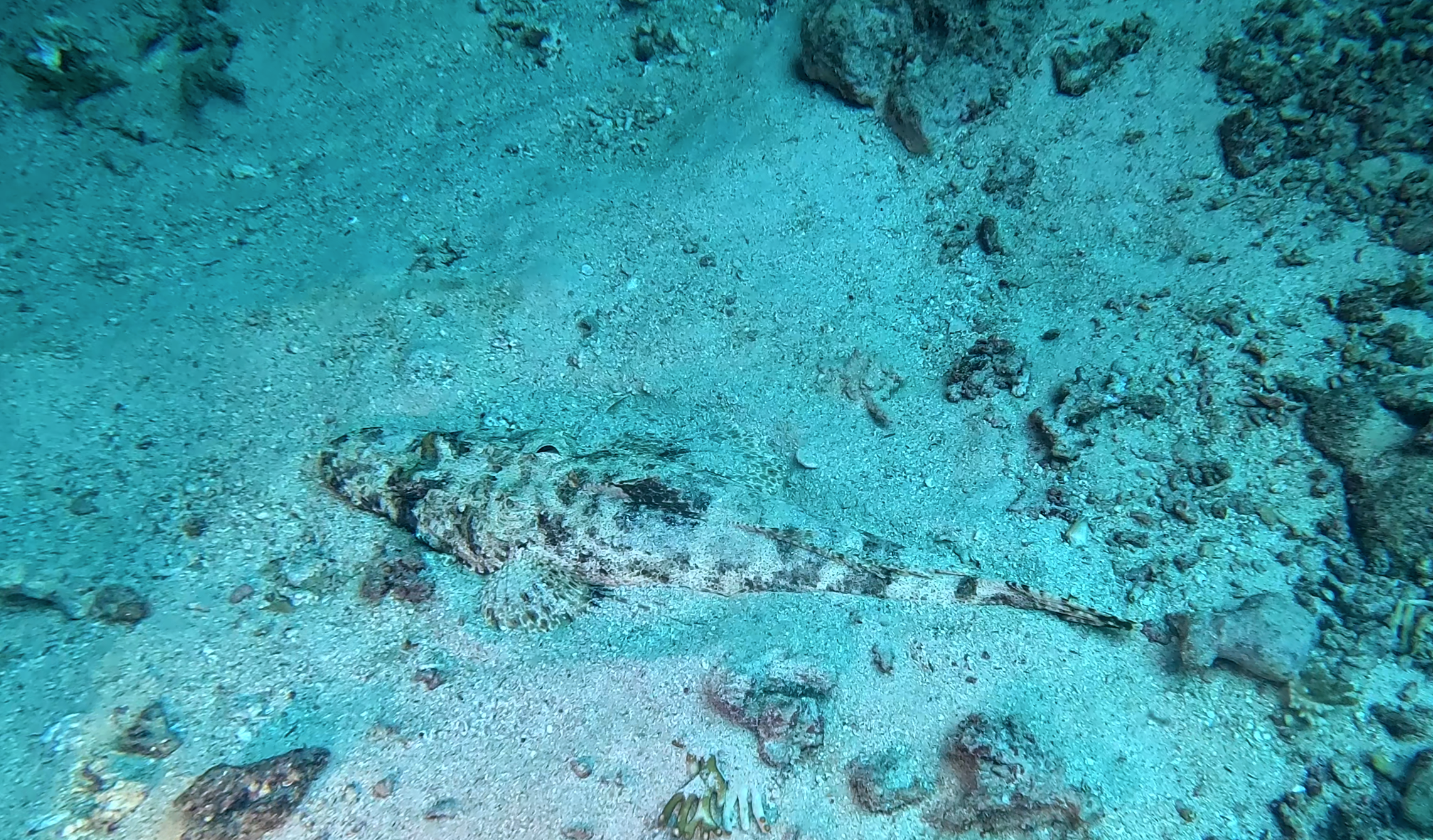
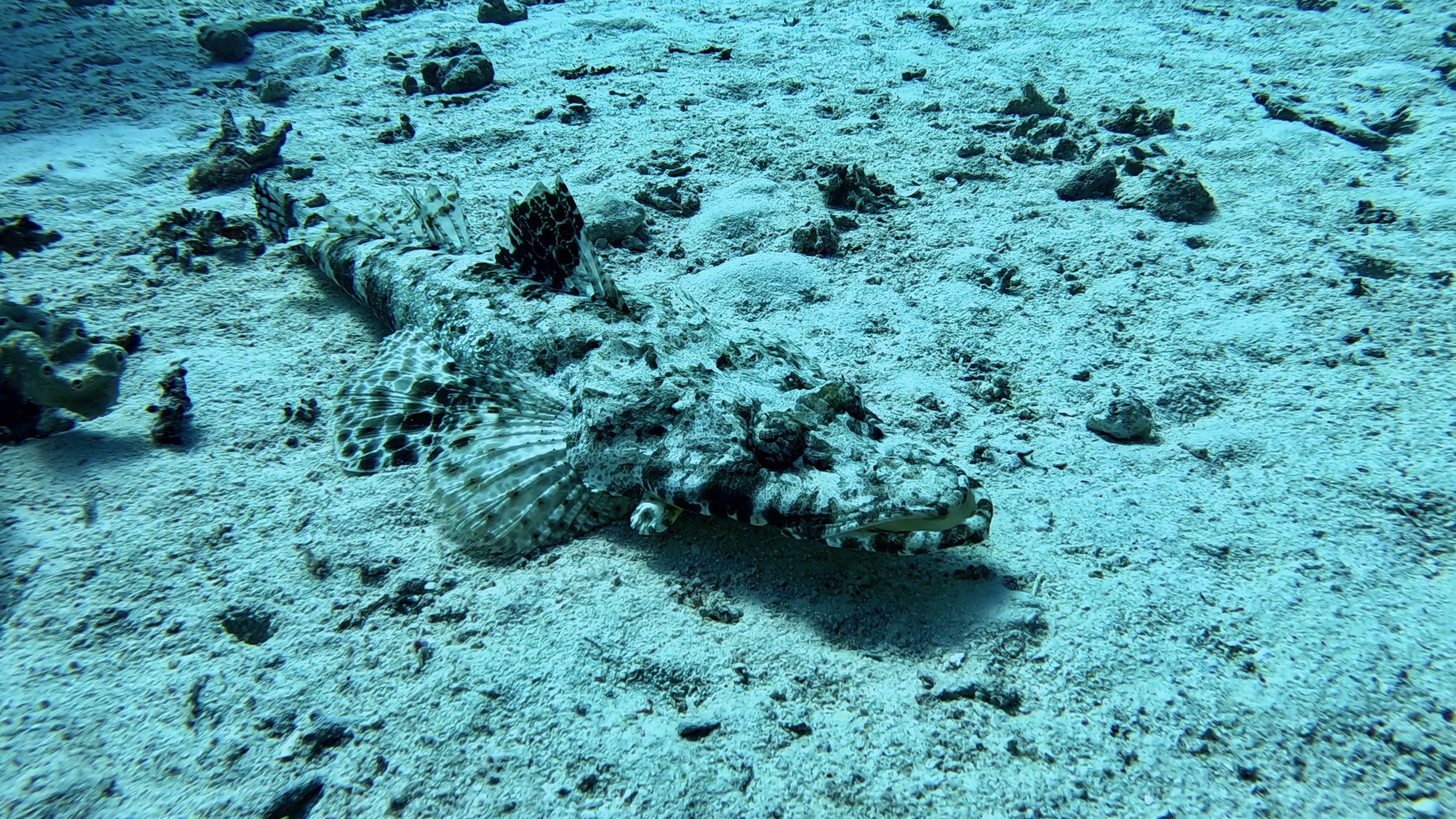
CREOLE WRASSE
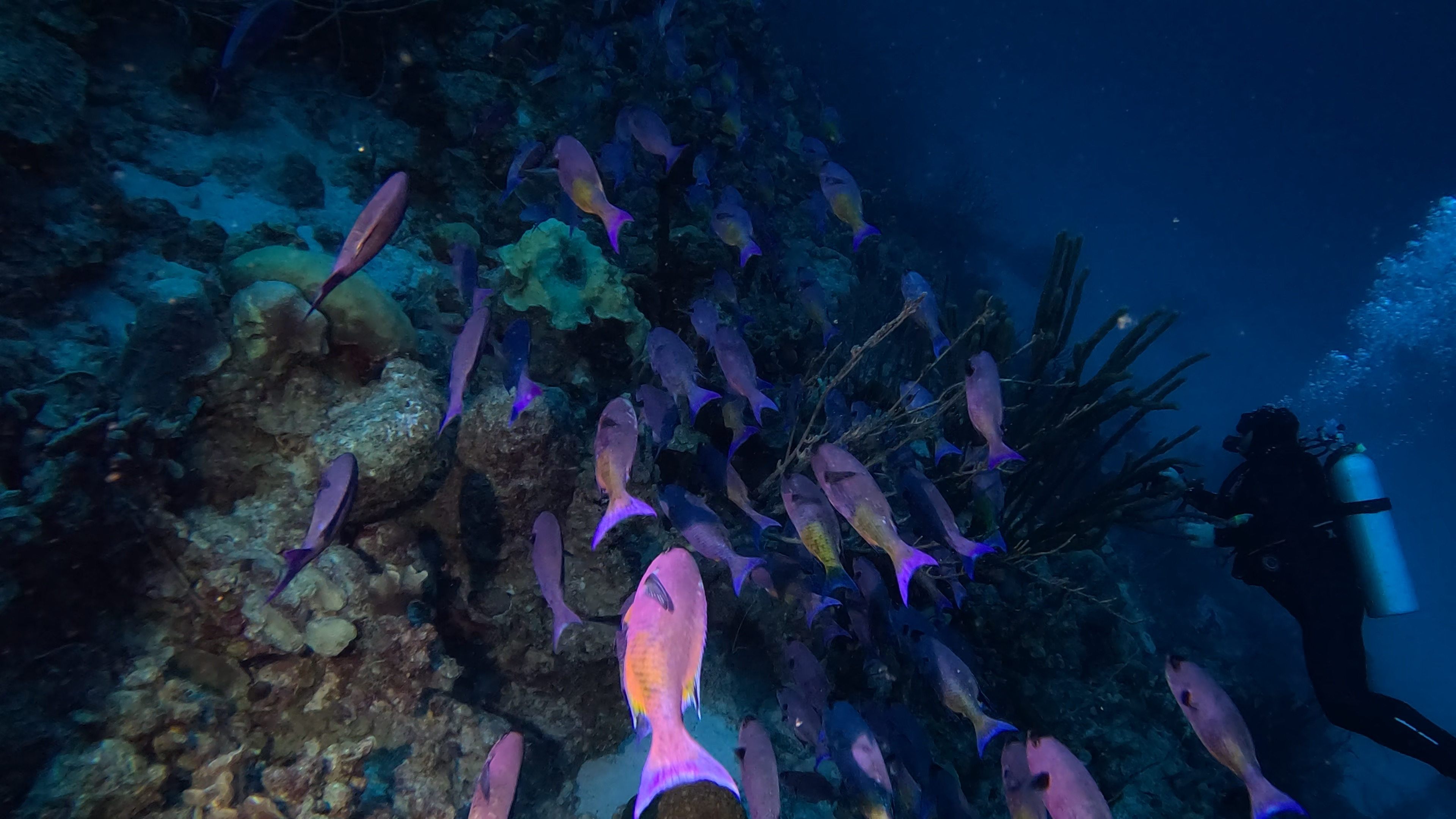
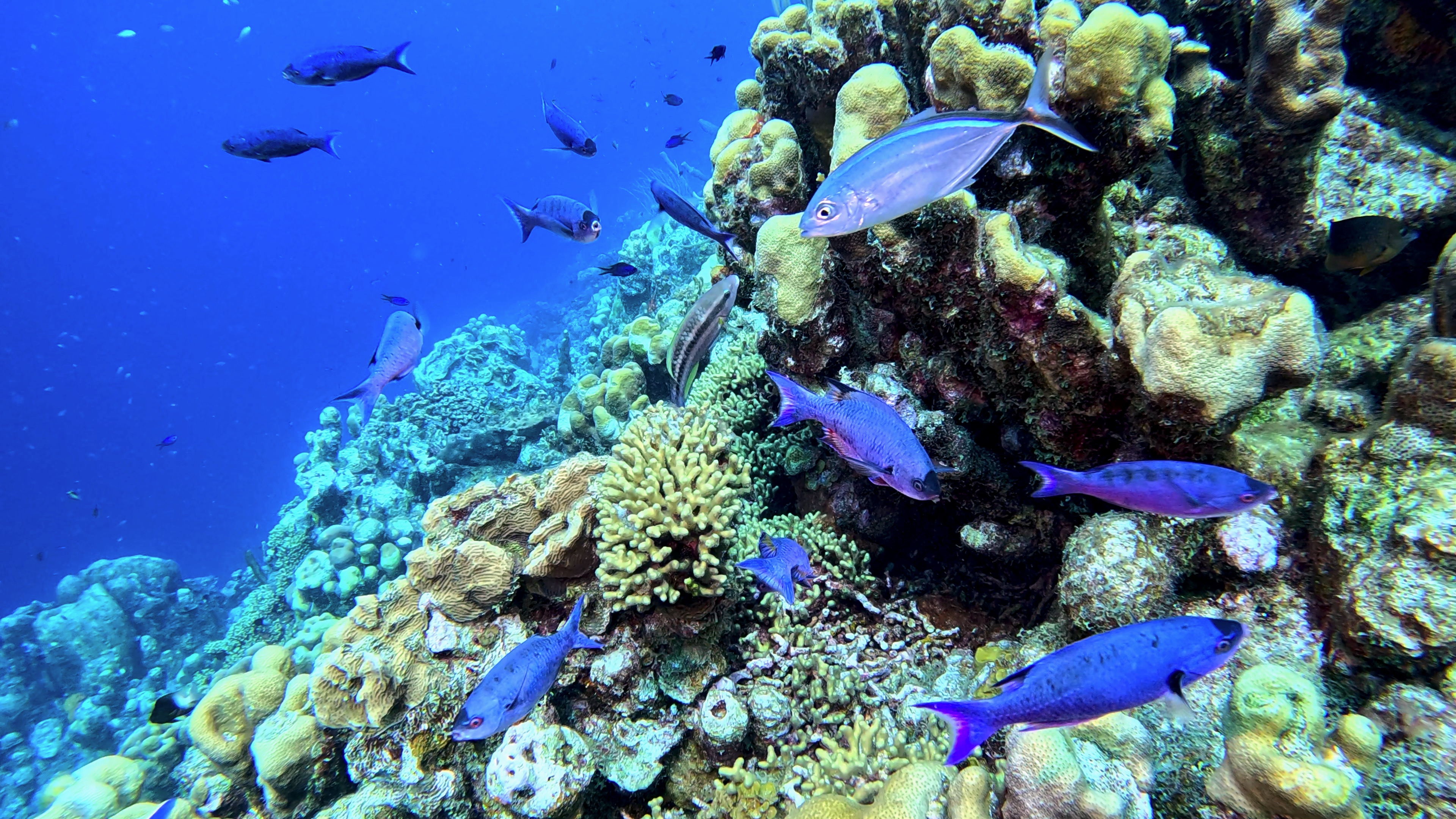
GOLD BAND FUSILER
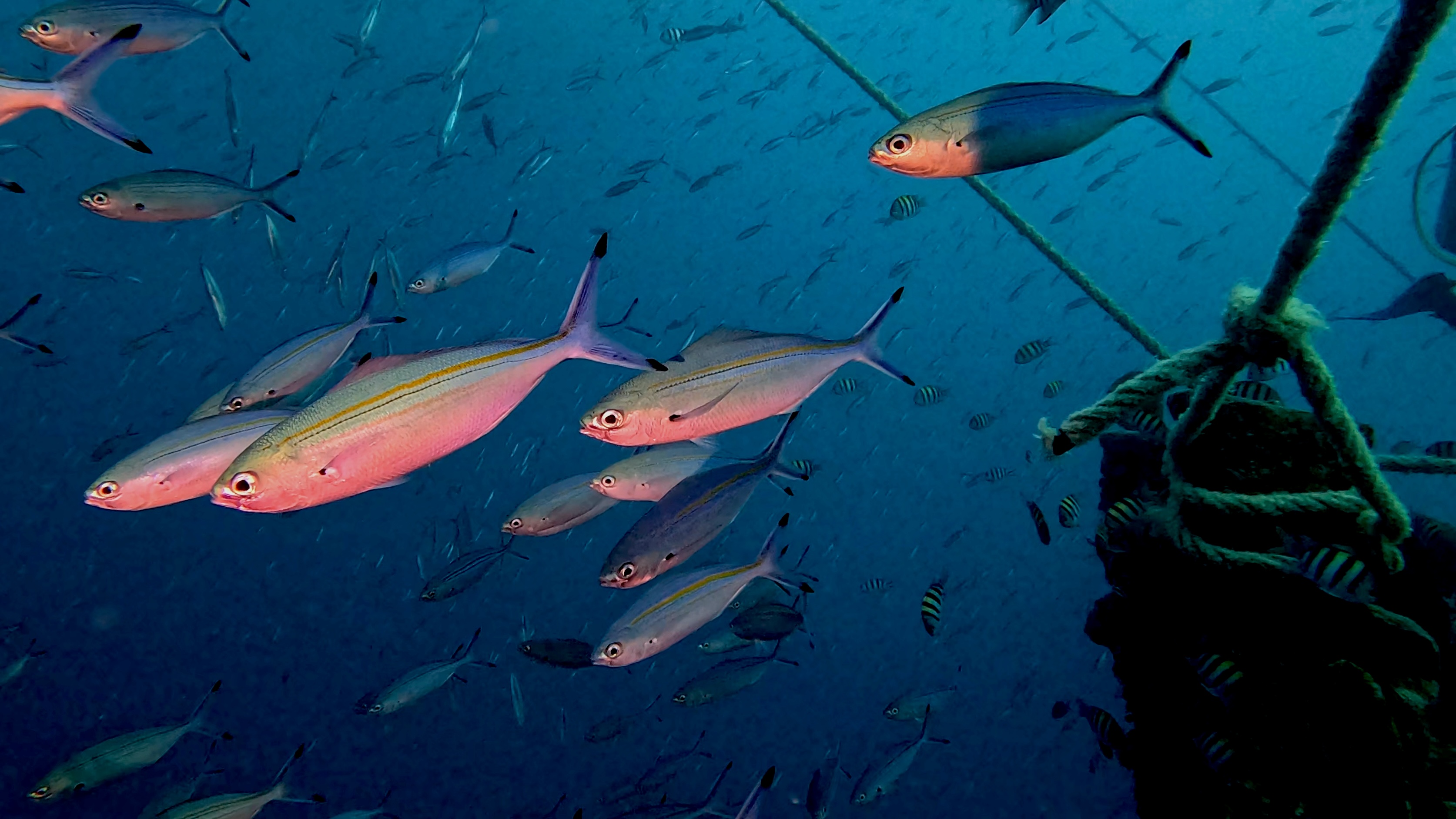
BLUE CHROMIS
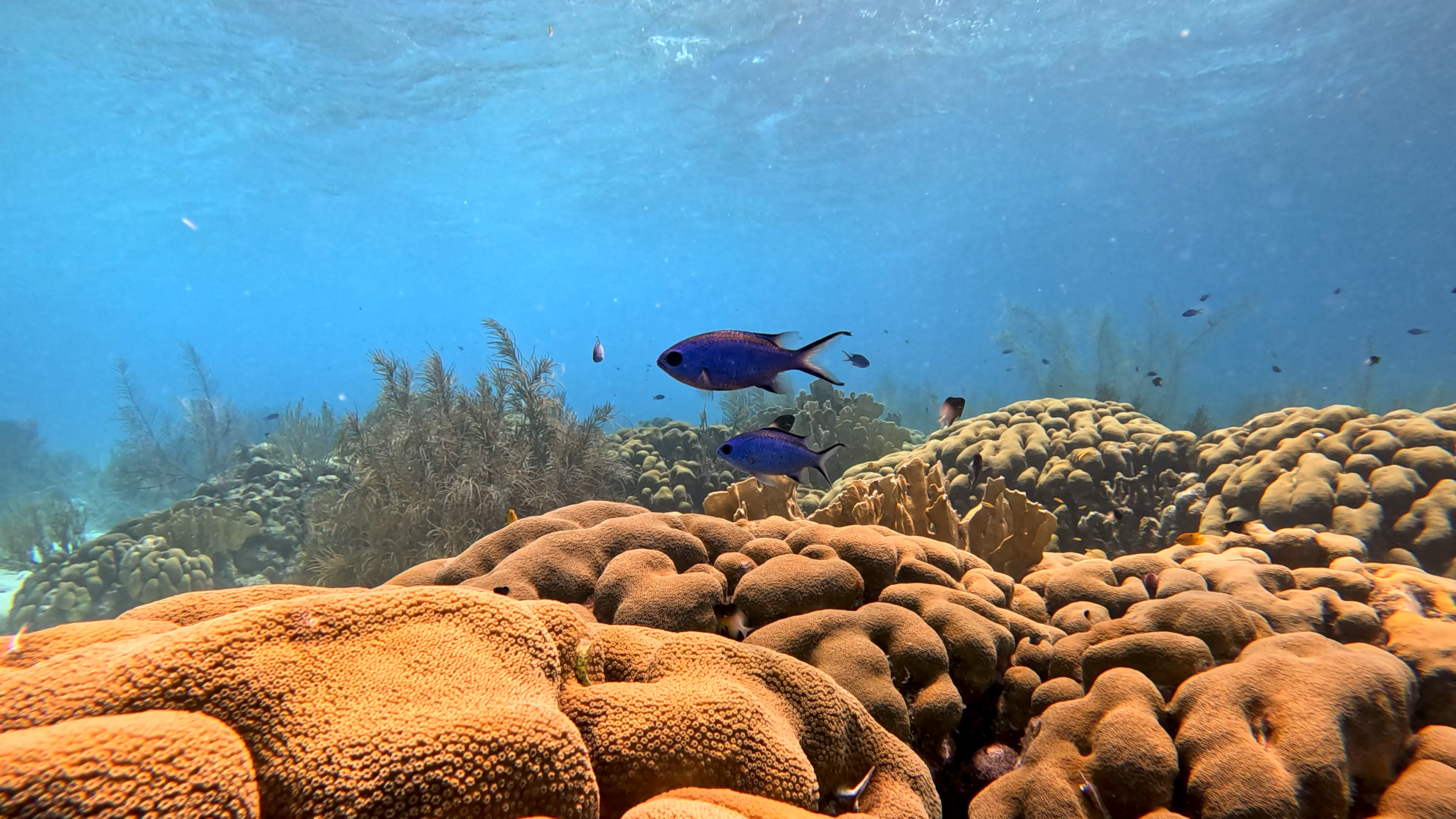
REGAL ANGELFISH
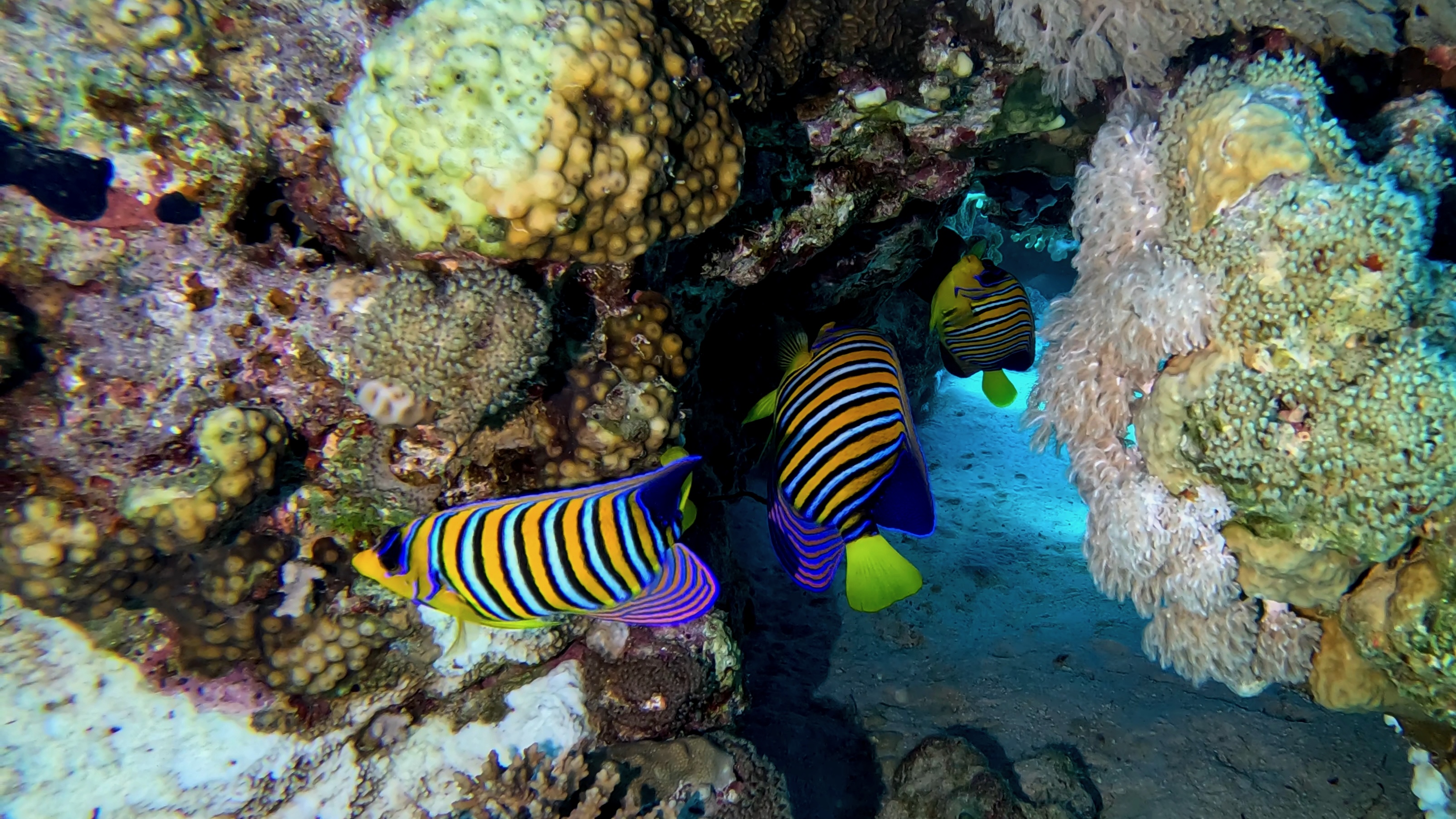
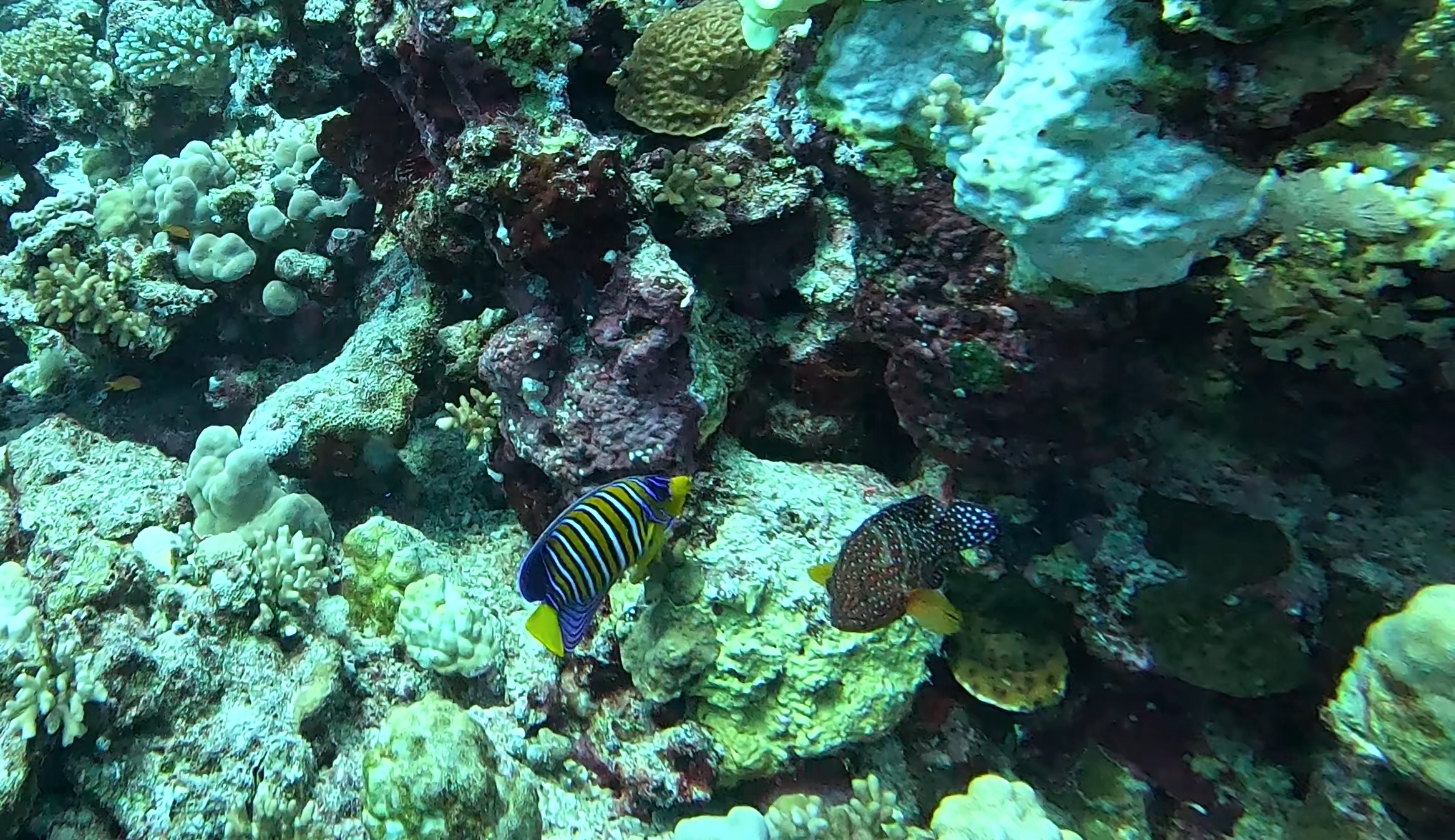
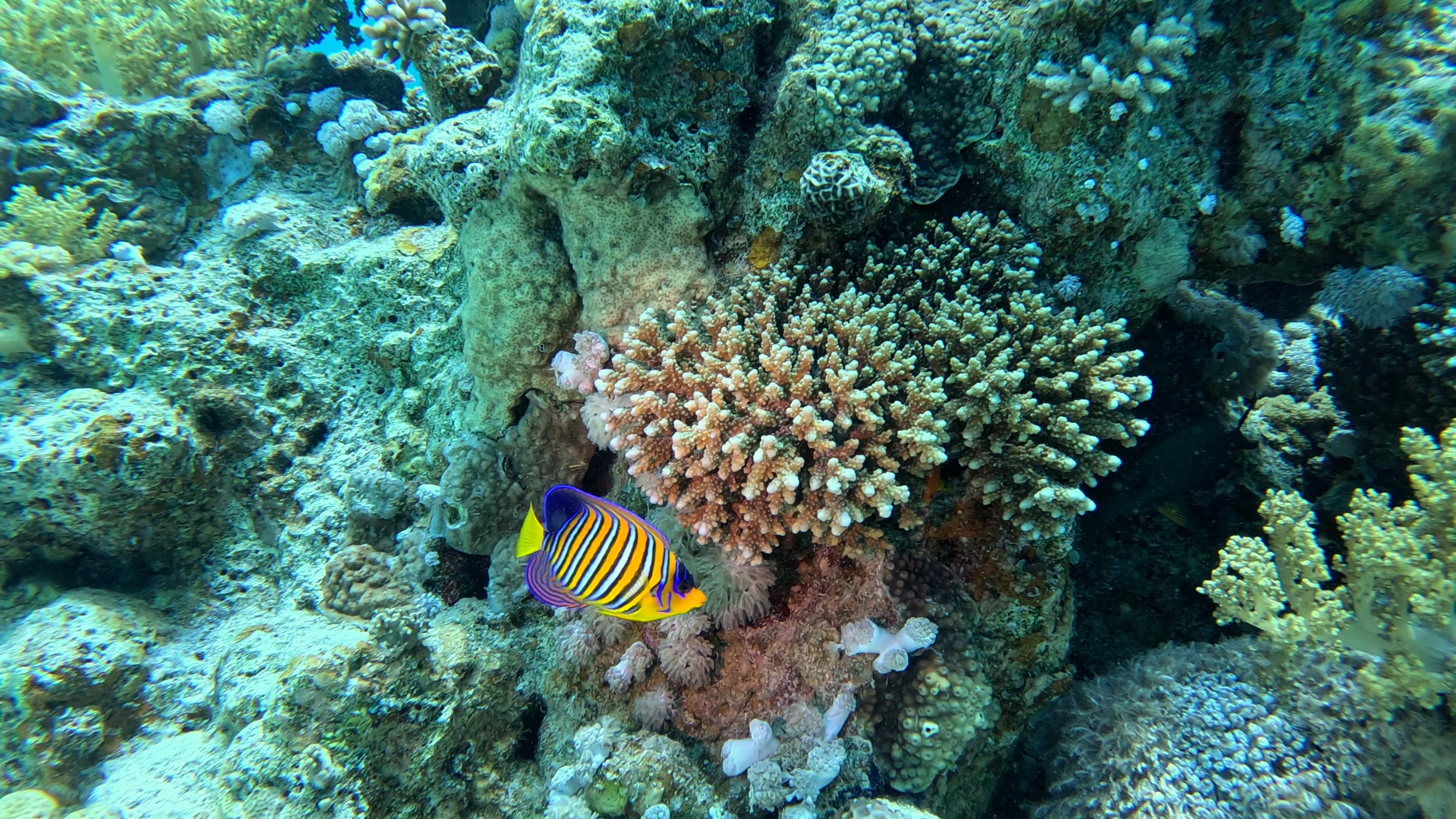
BLACK MARGATE
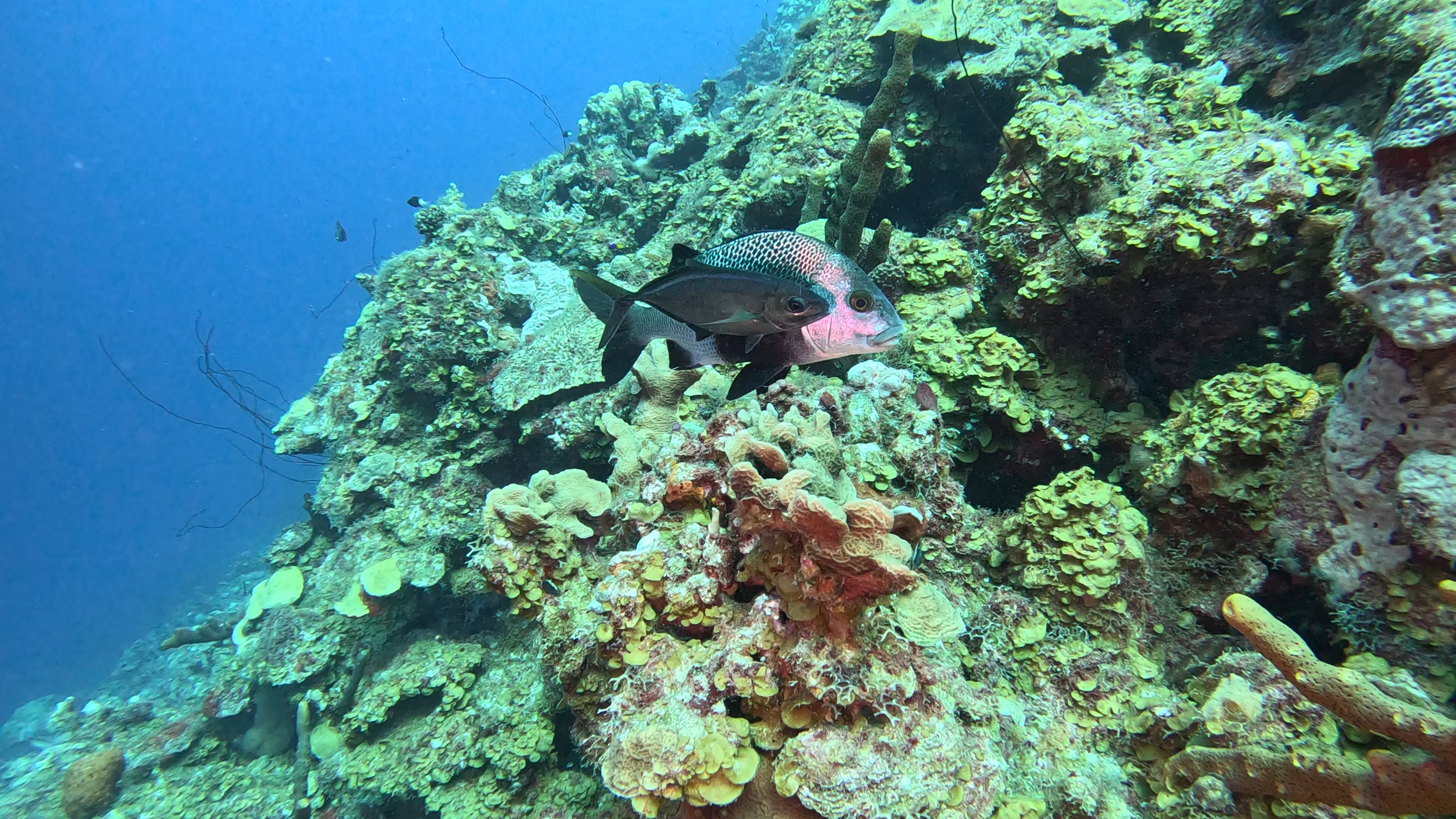
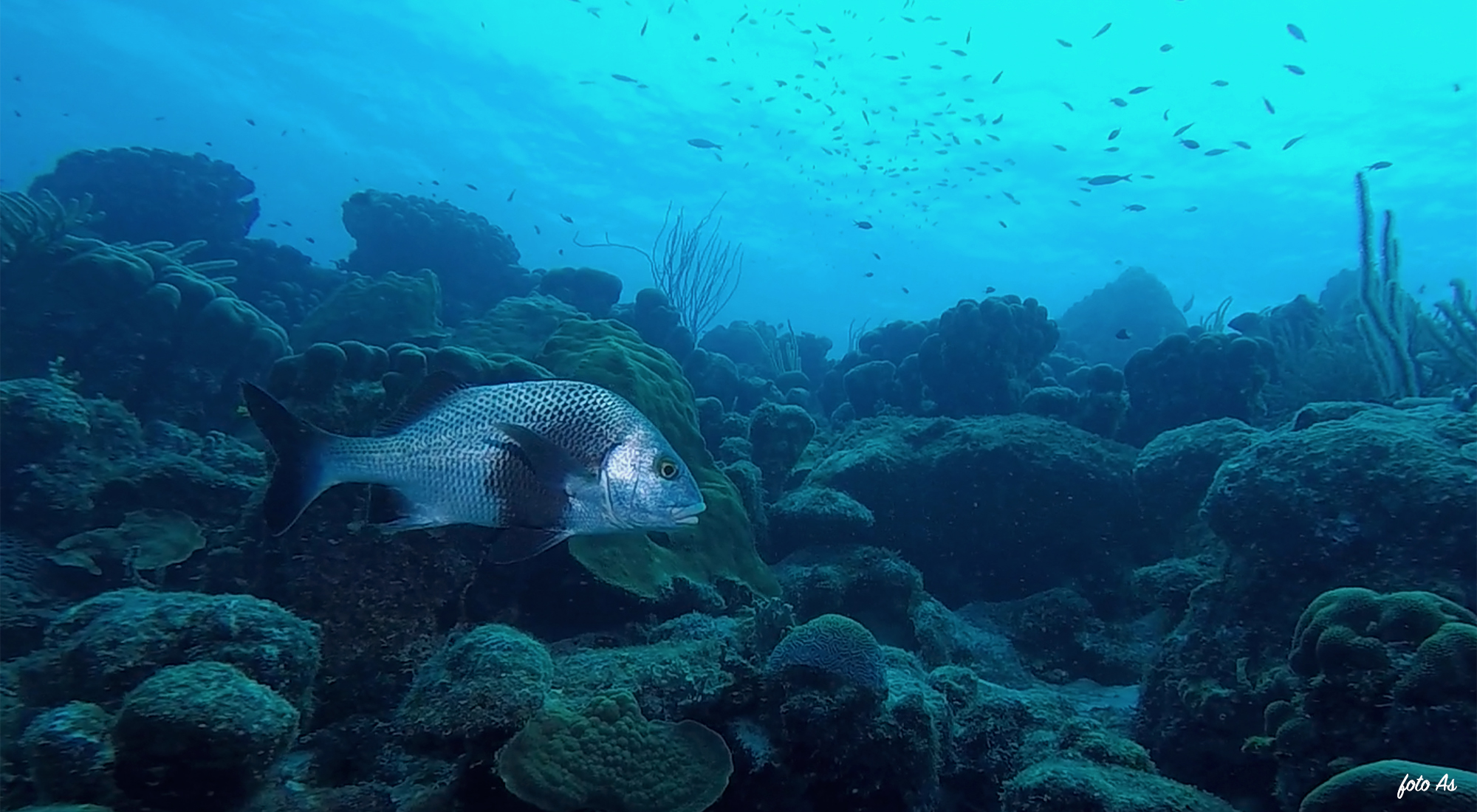
YELLOWTAIL SOURGEON FISH
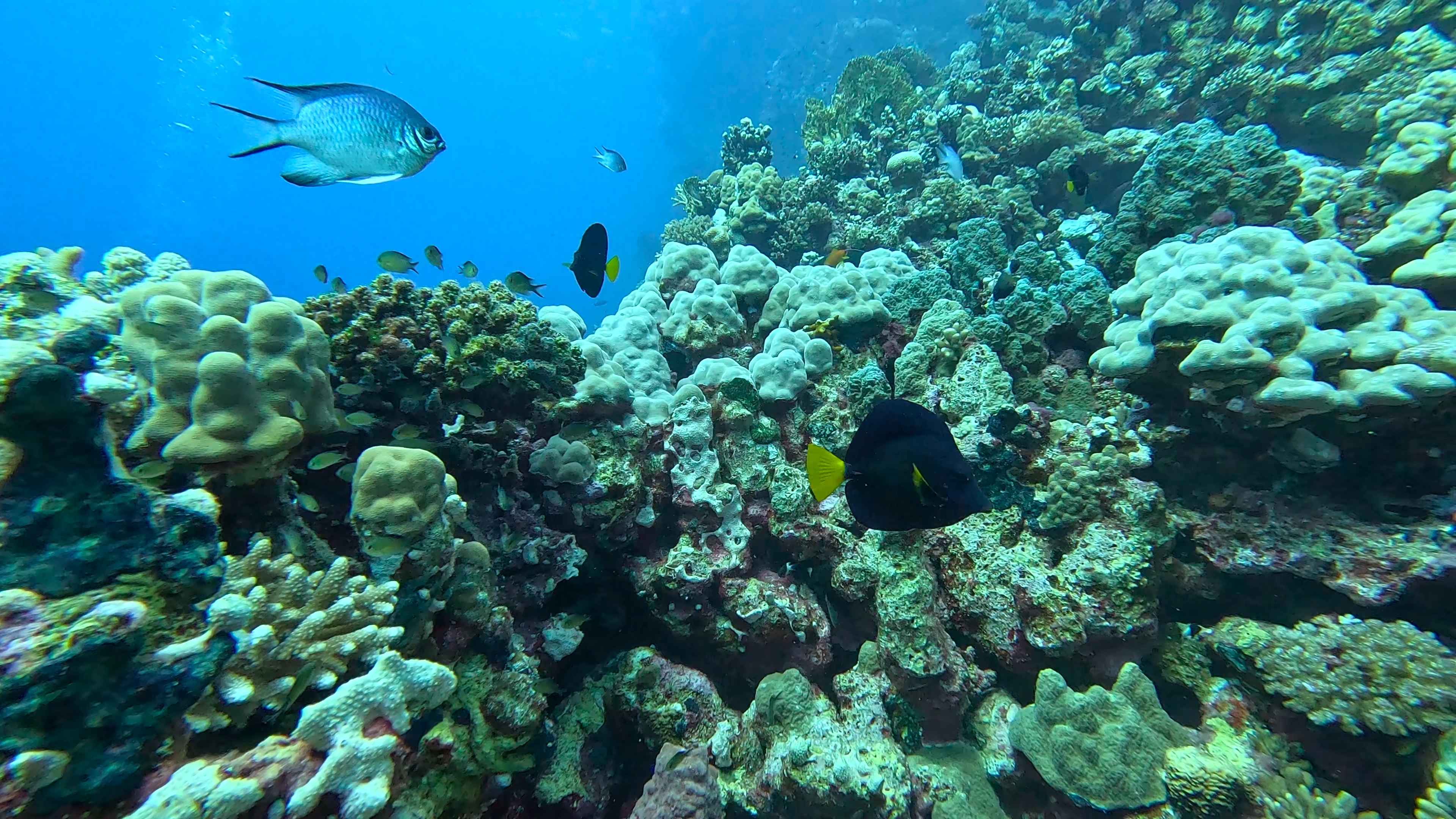
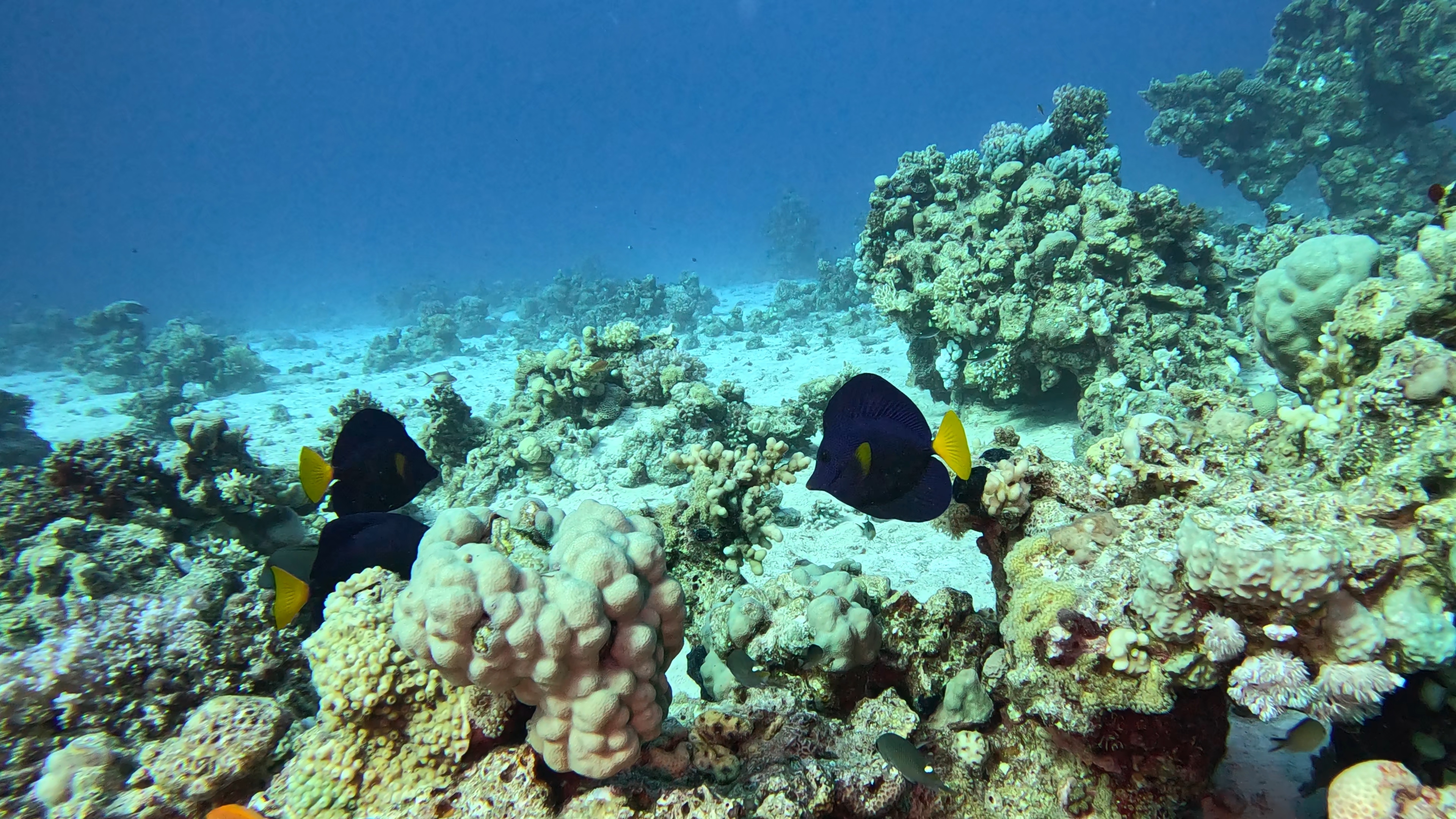
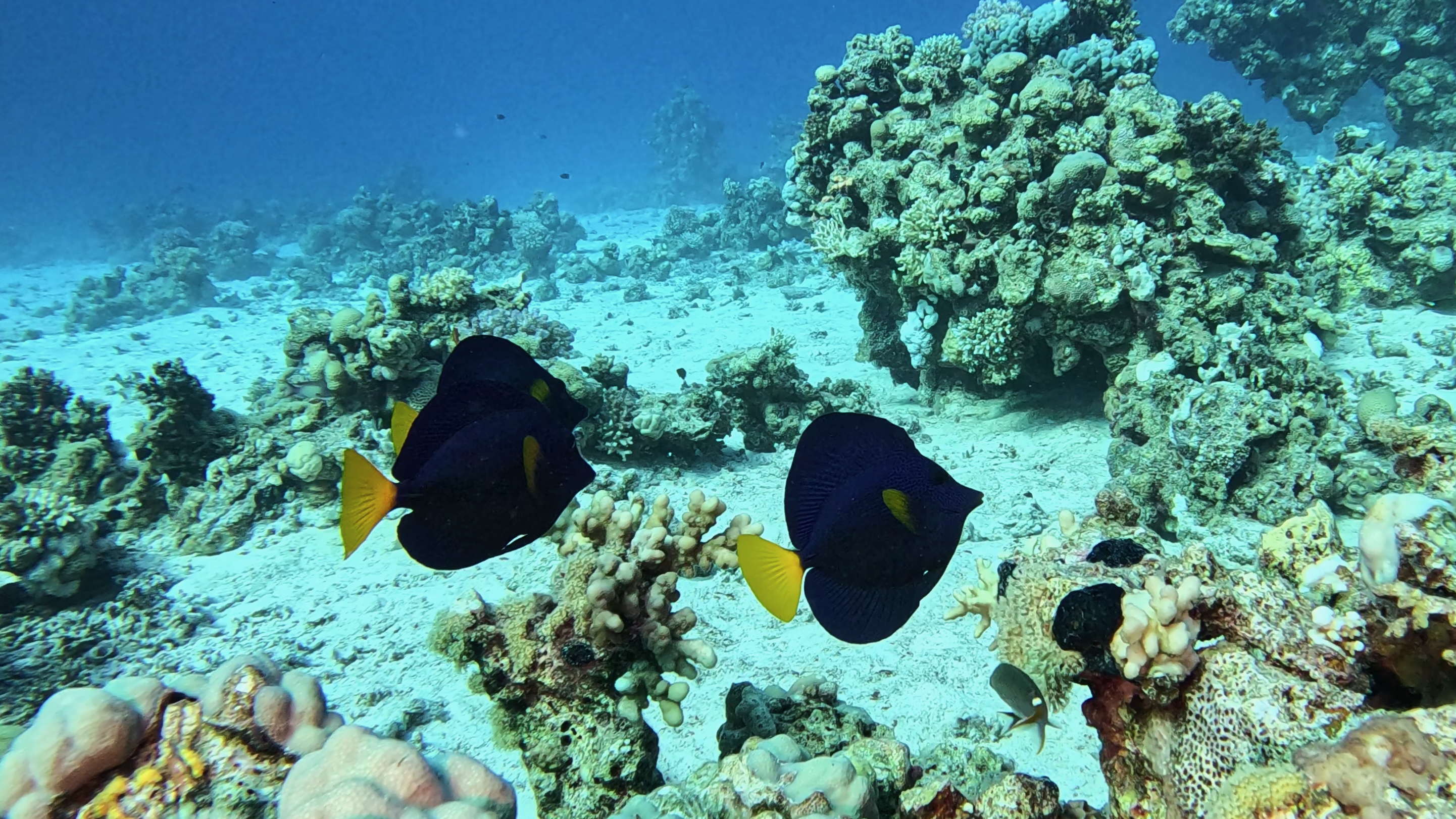
BIRDWRASE FISH
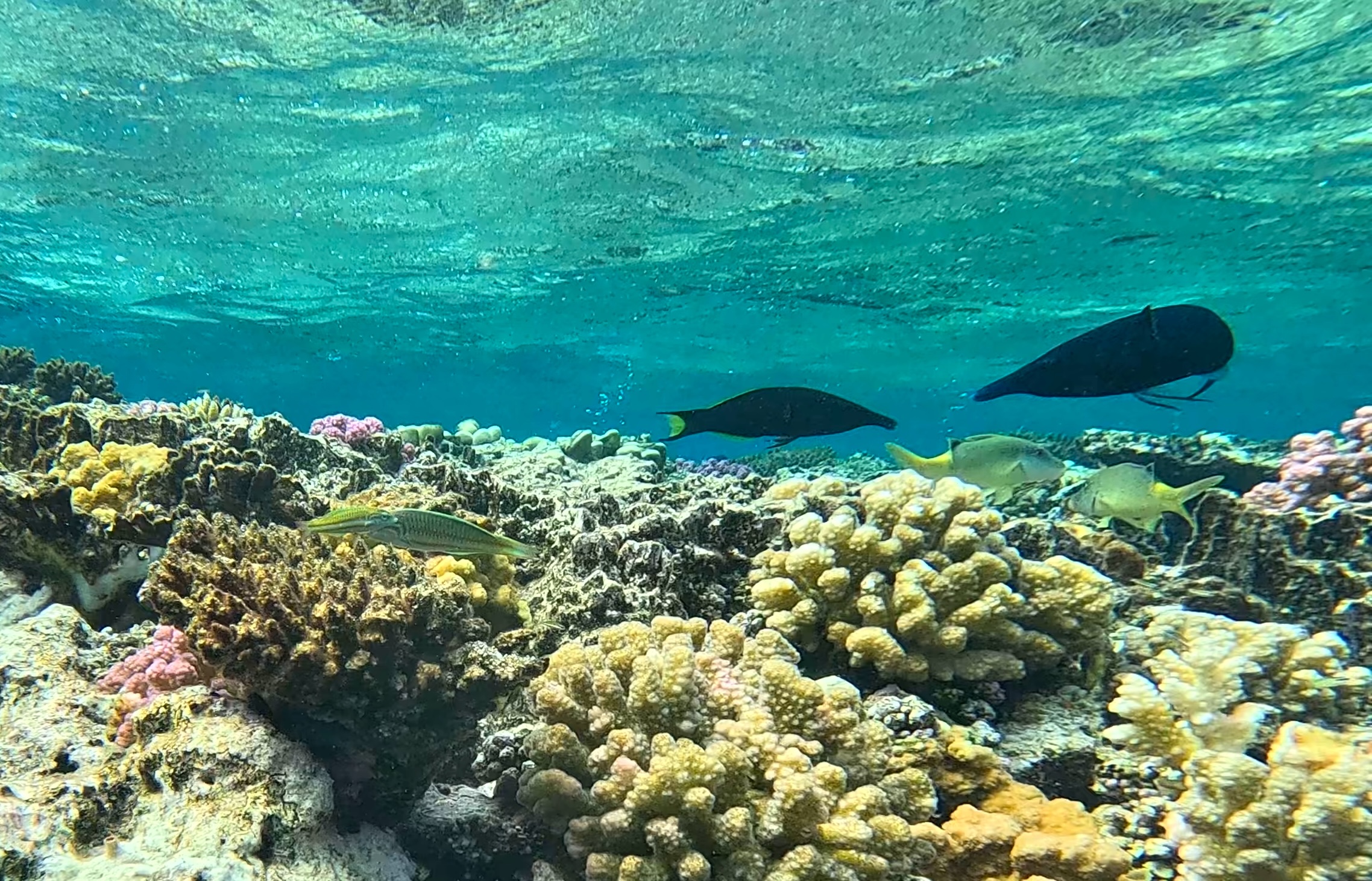
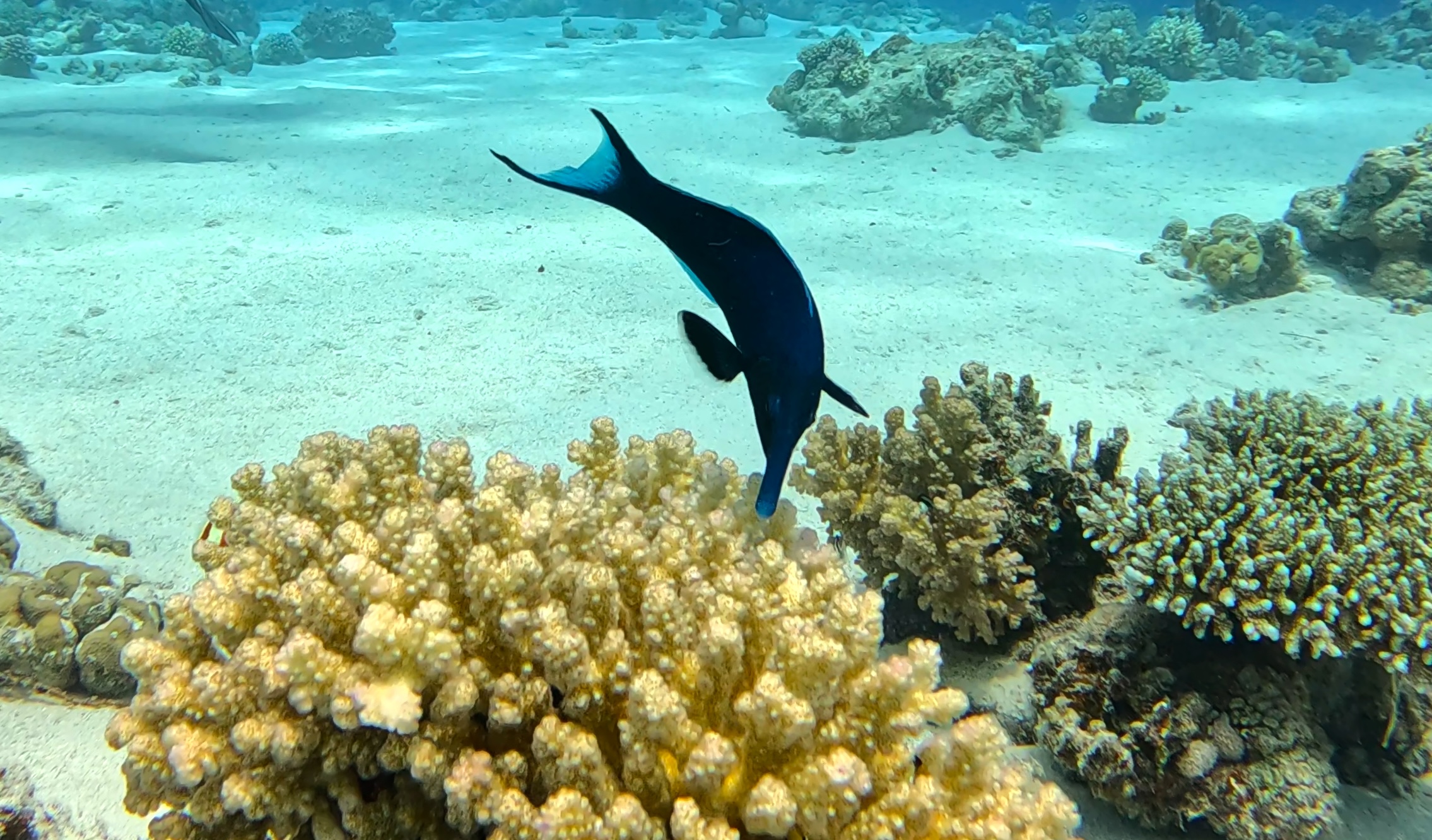
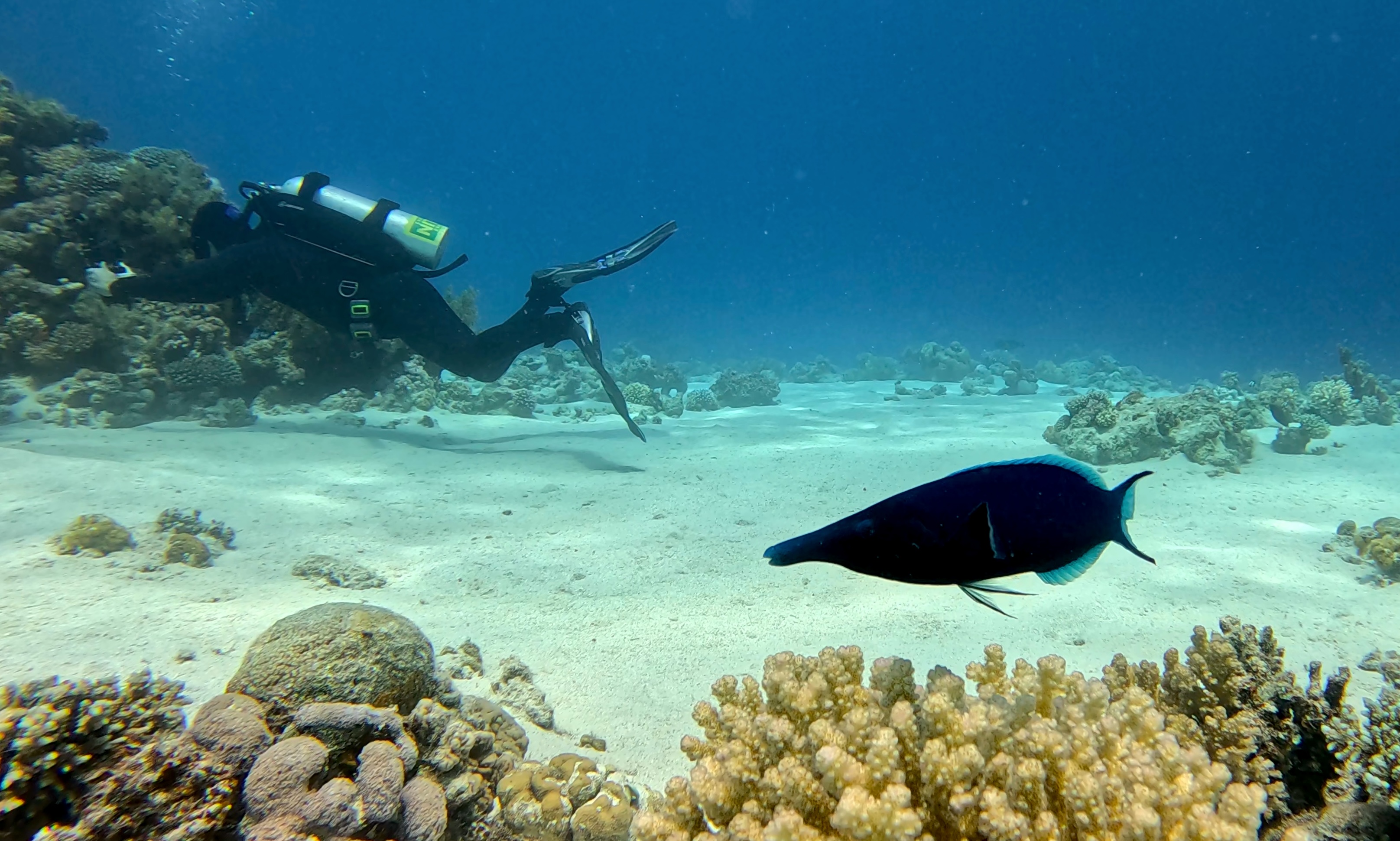
SLEEK UNICORN
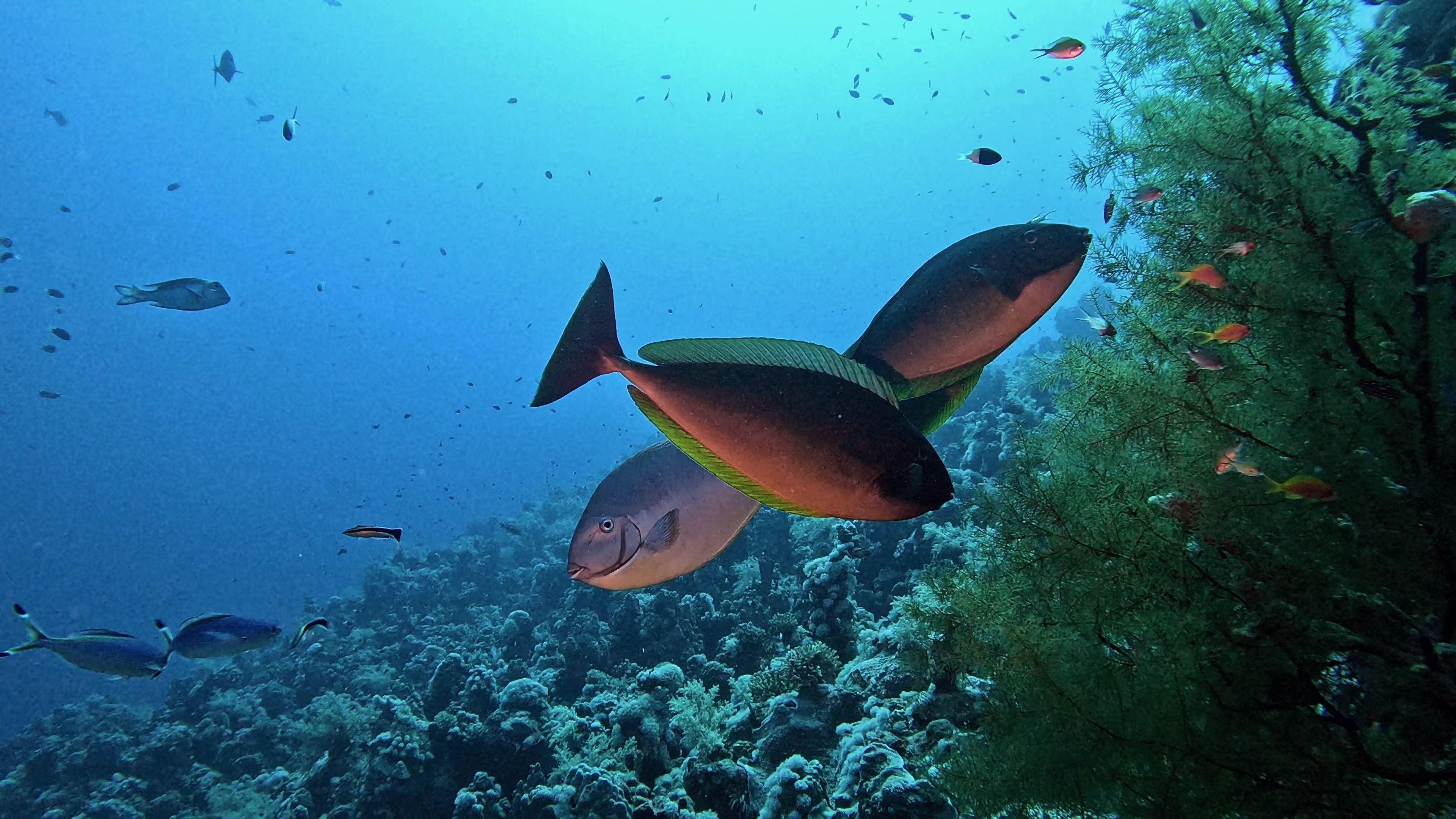
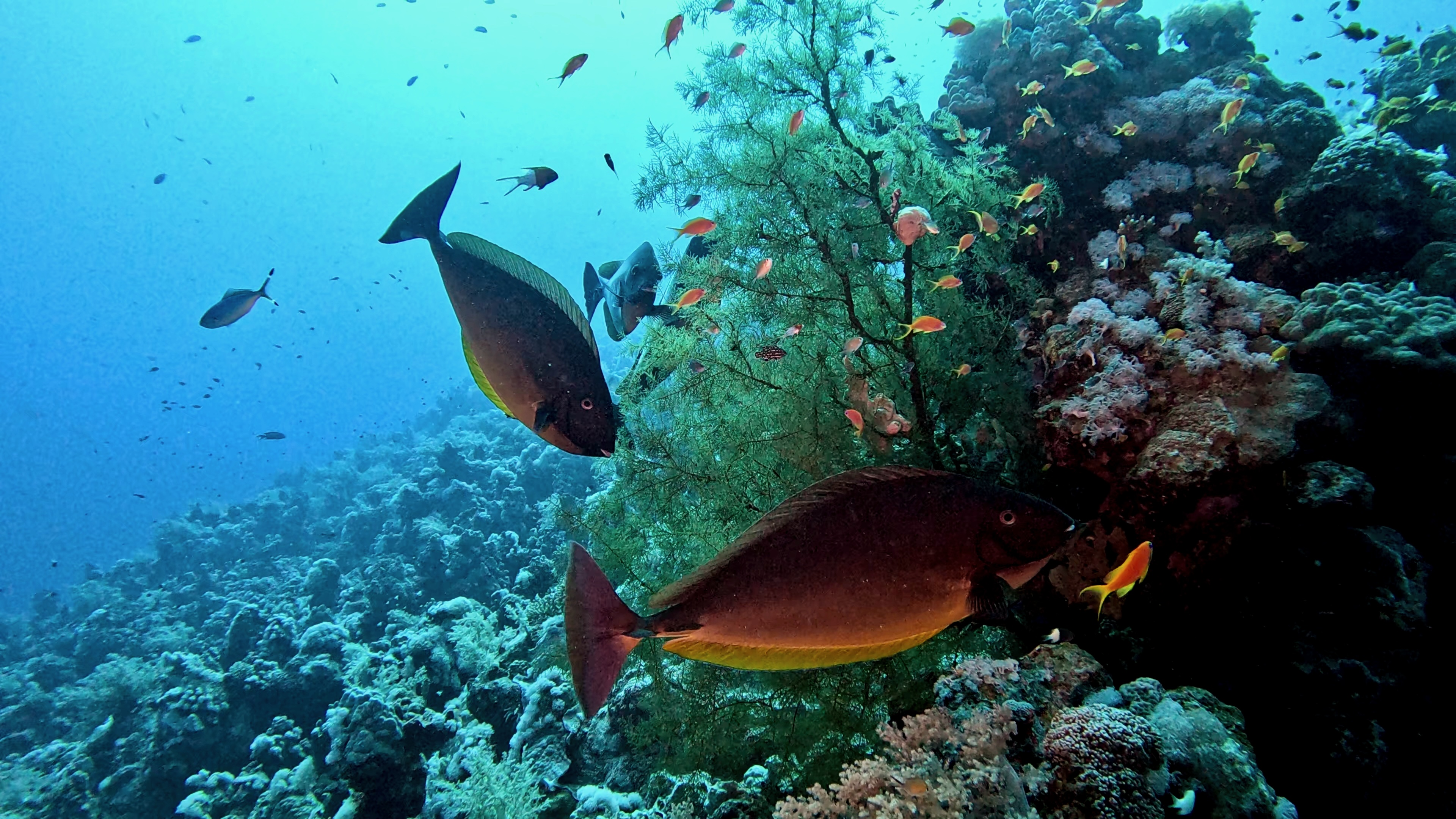
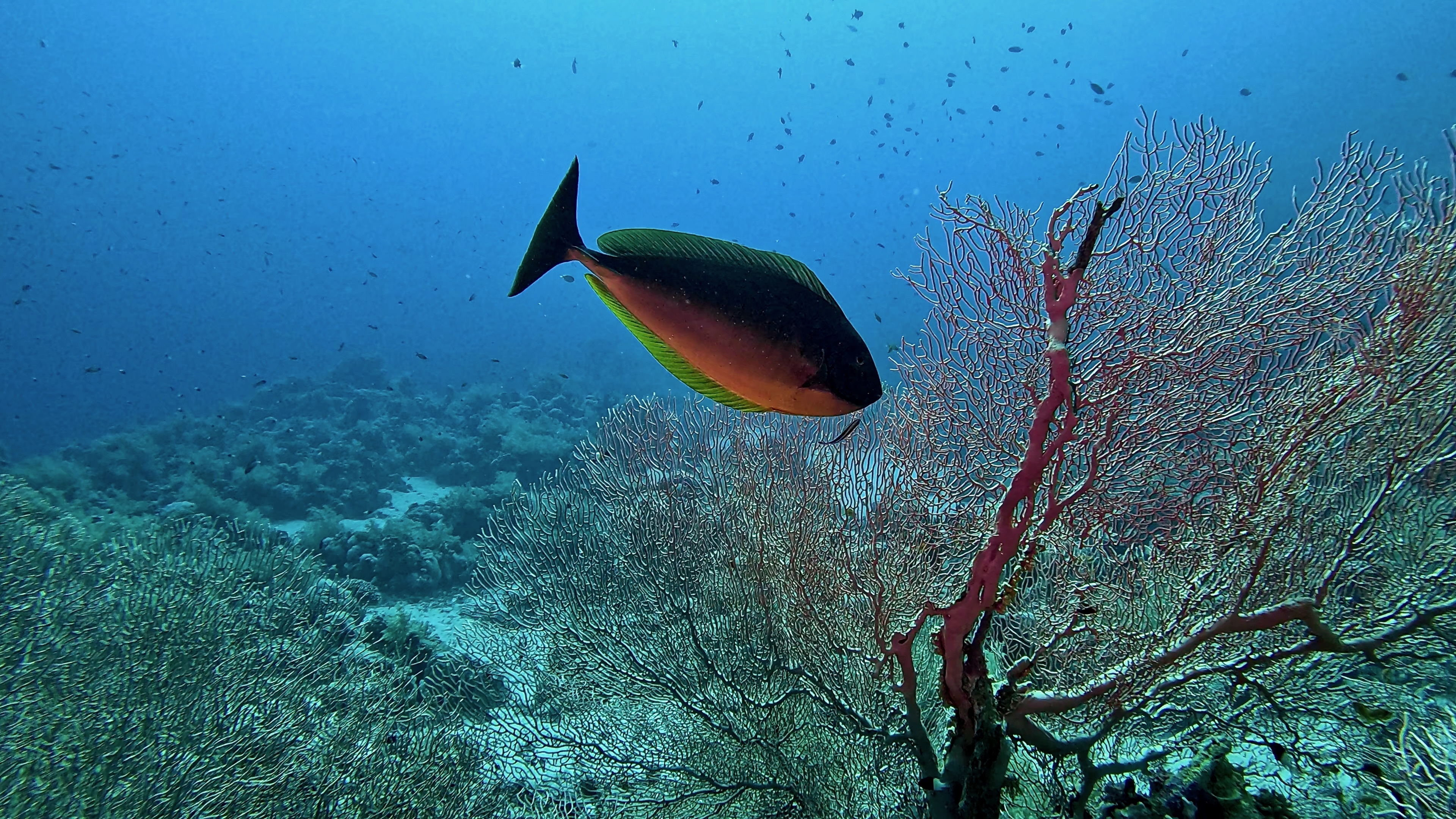
SPANISH DANCER RED SEA
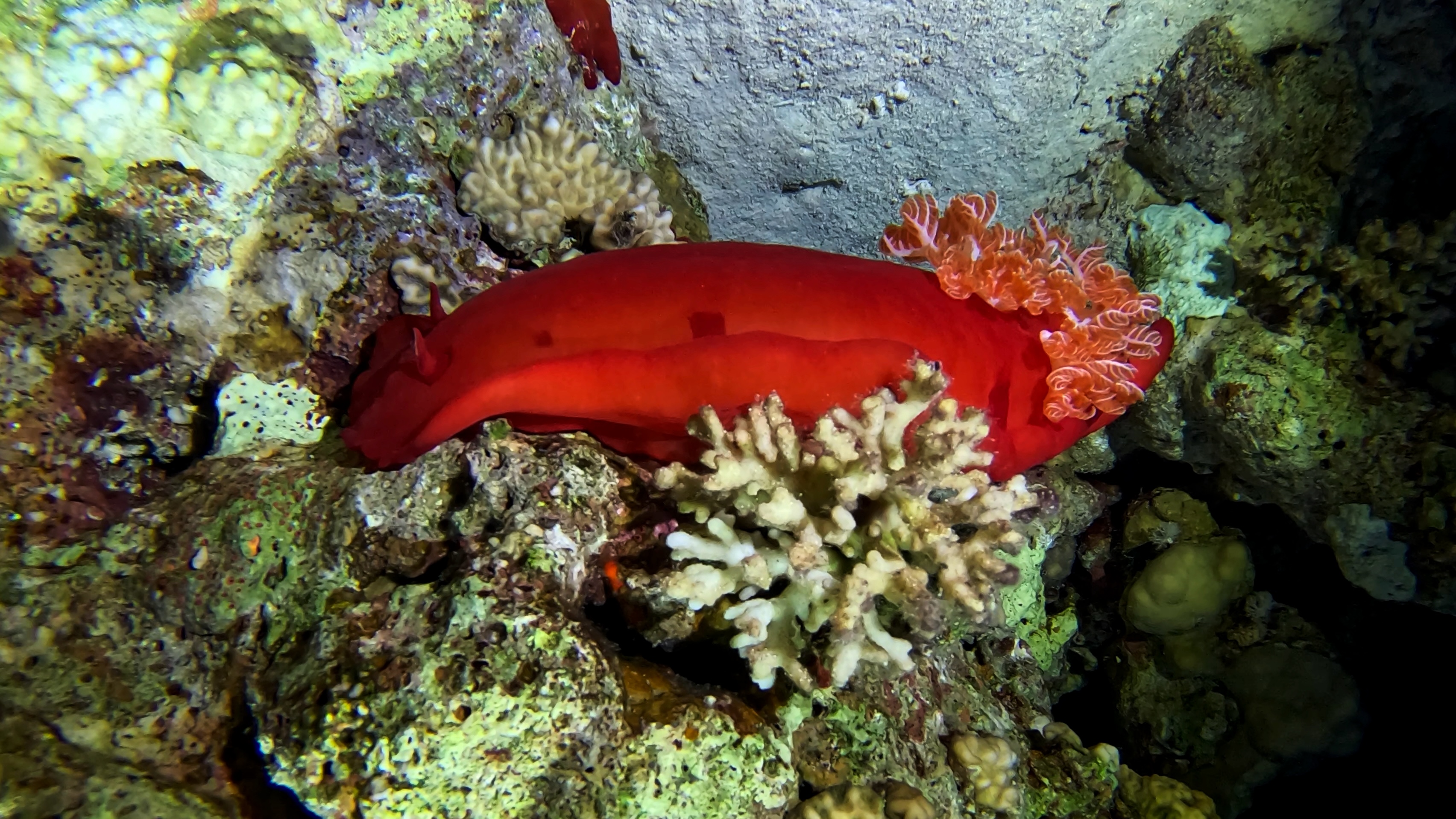
SQUID RED SEA FISH foto Aleš Sulič
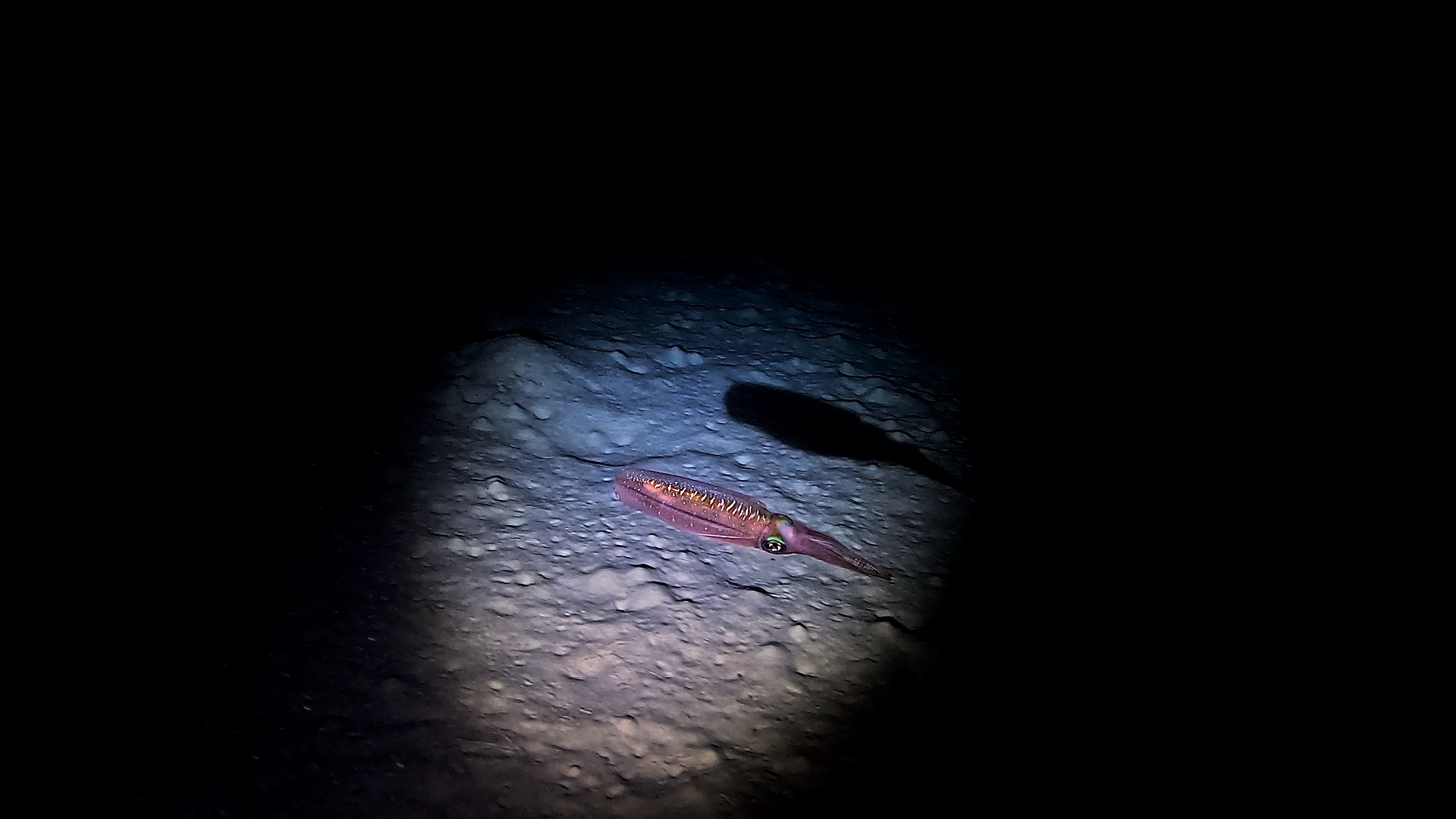
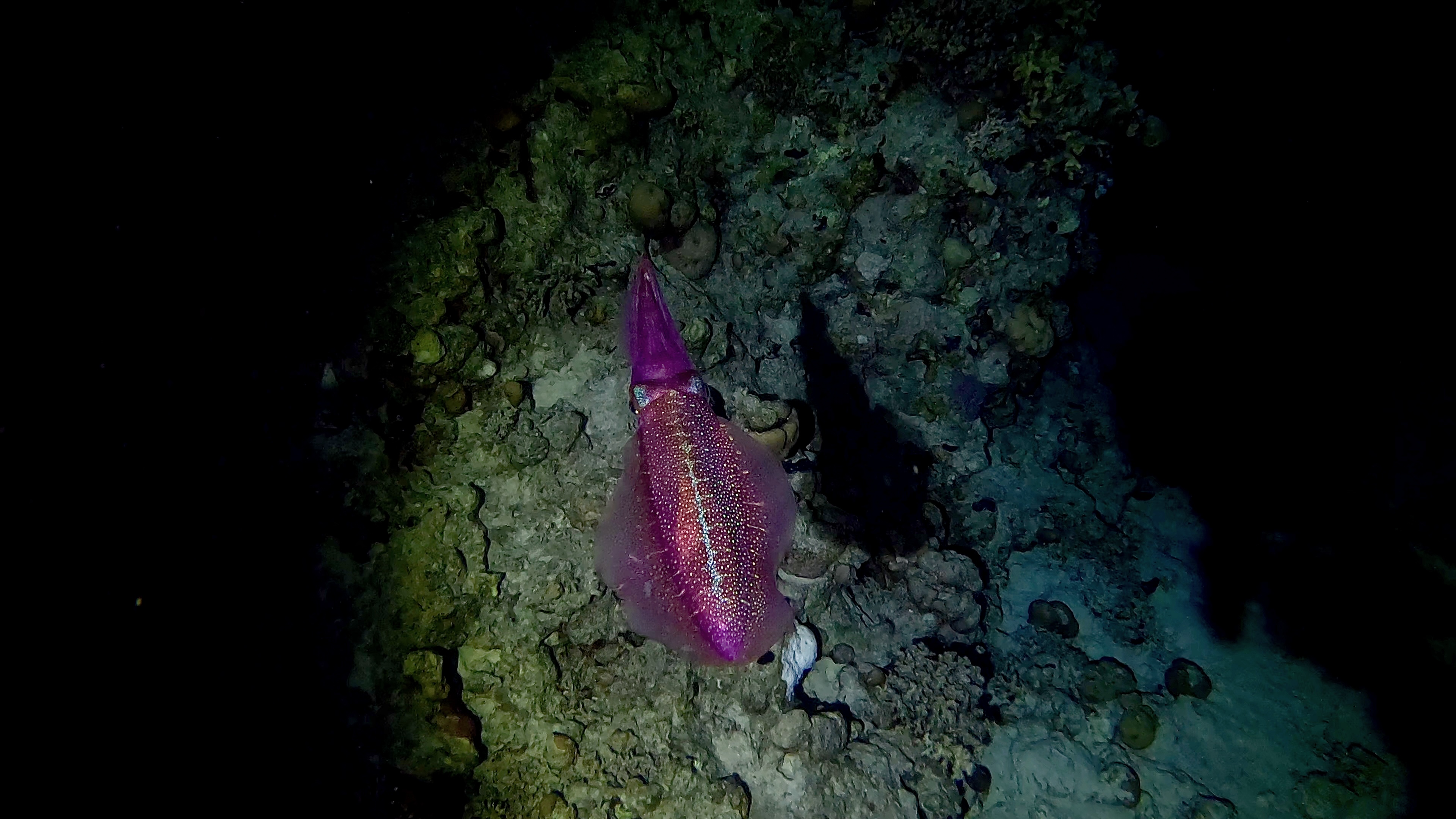
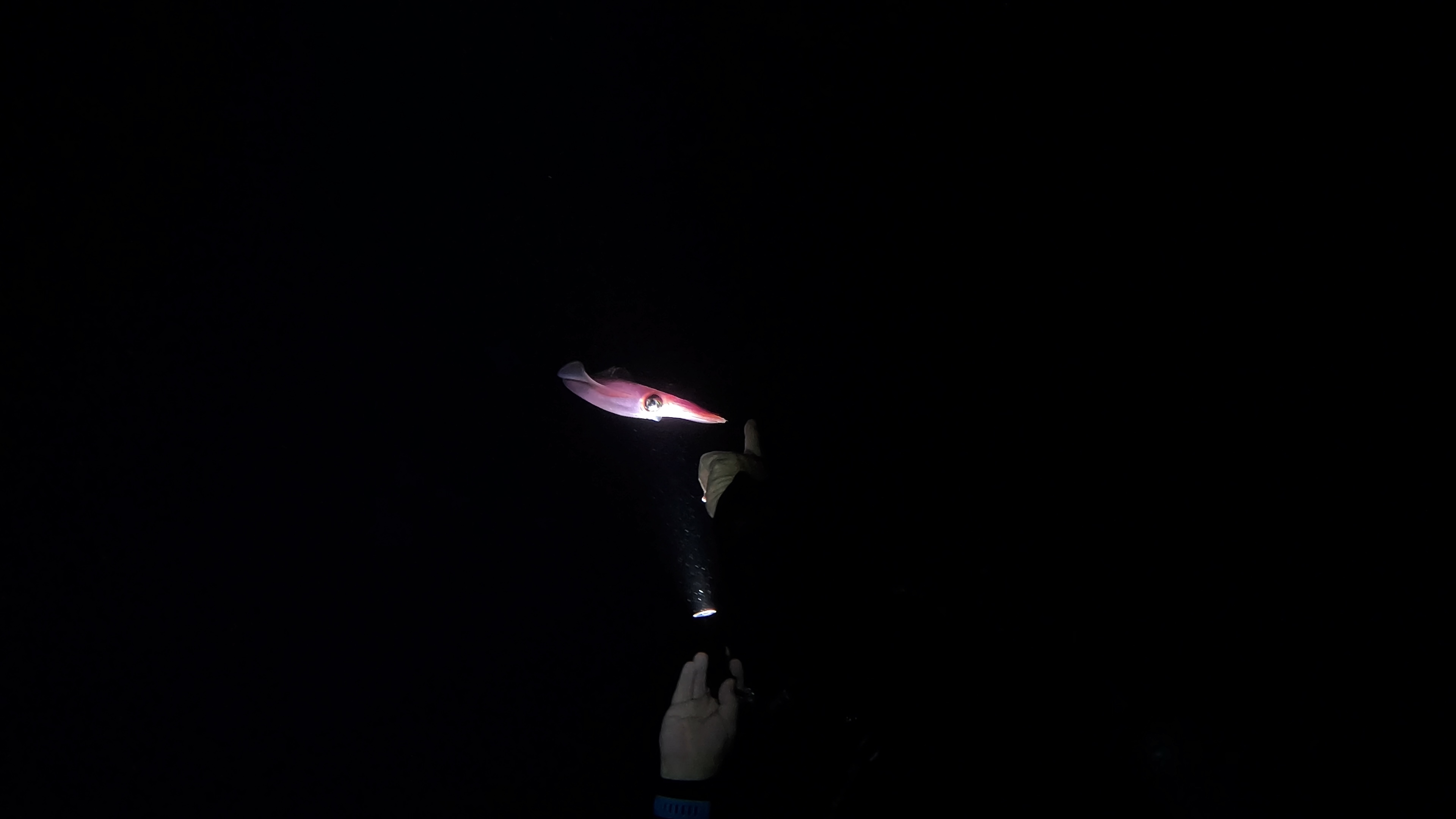
STARRY PUFFER
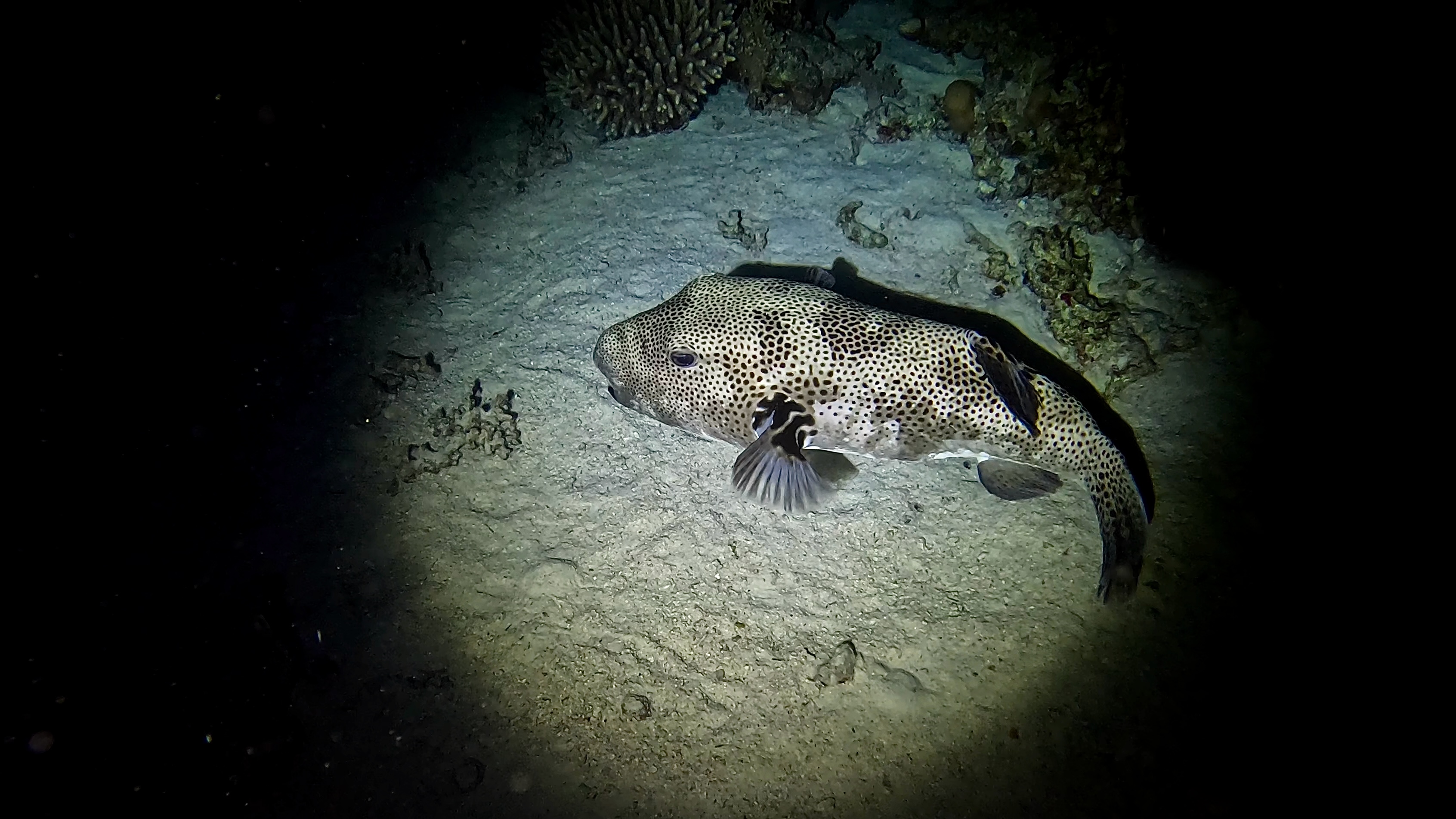
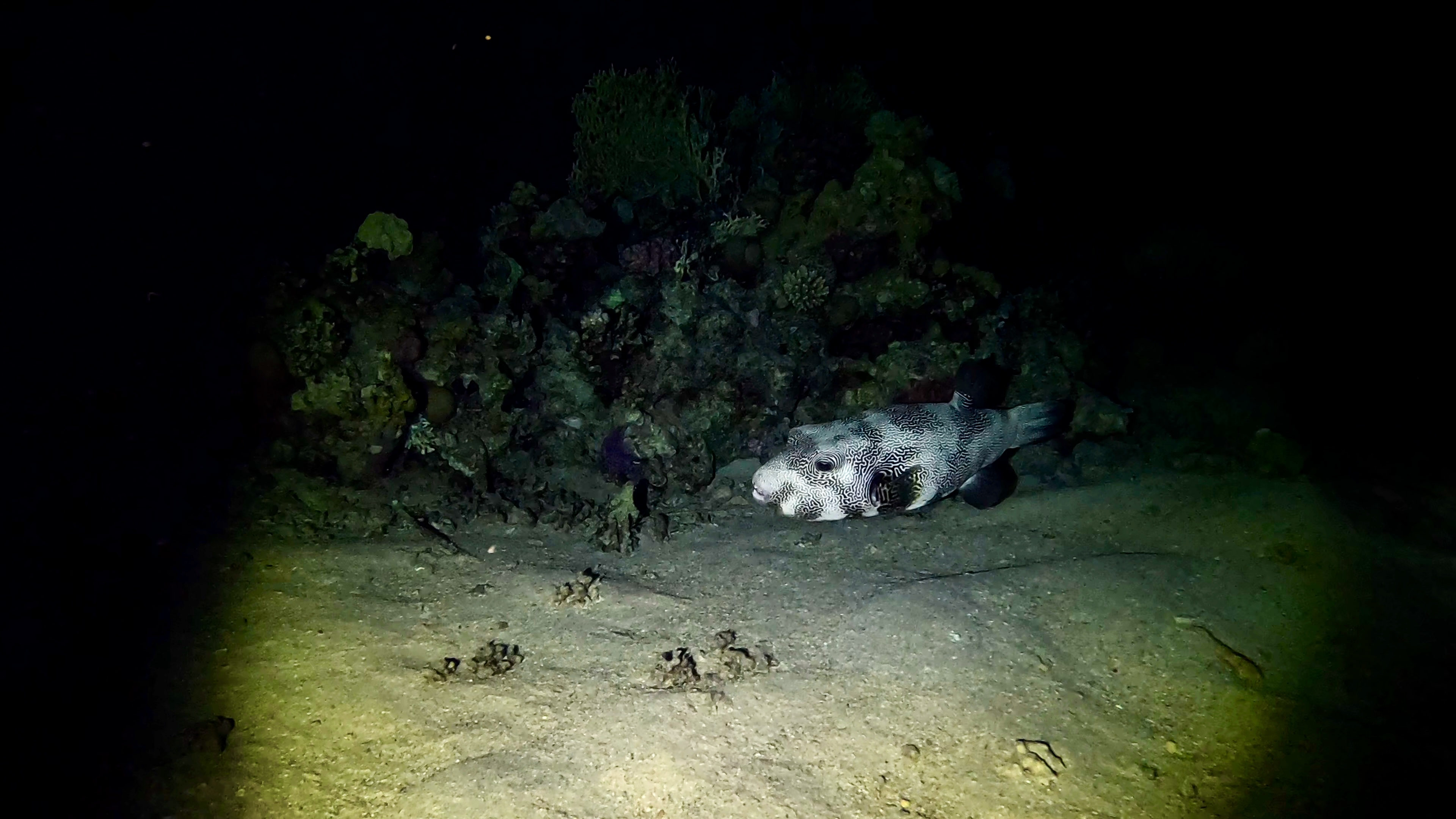
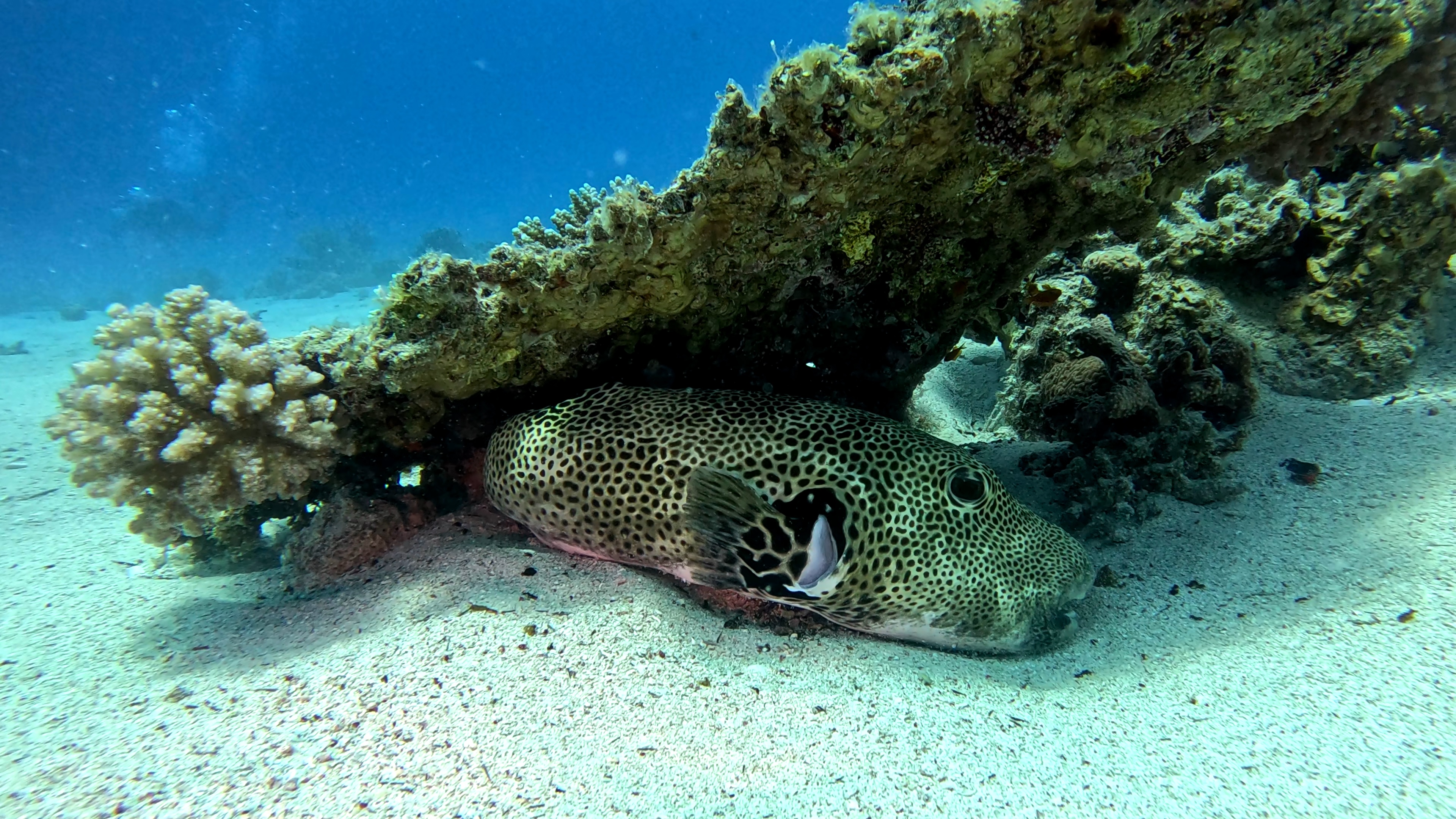
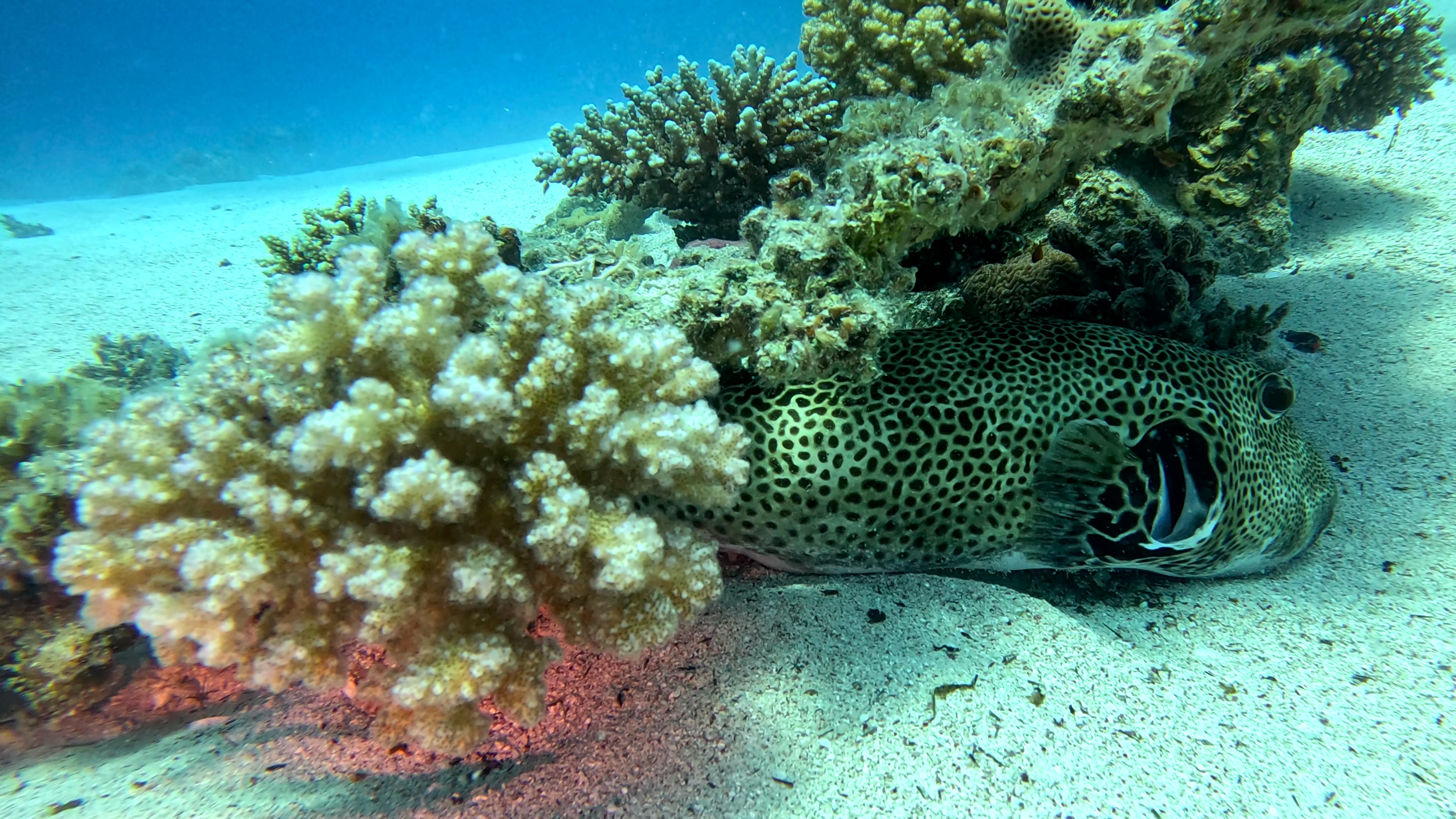
YELLOW MOUTH MORAY
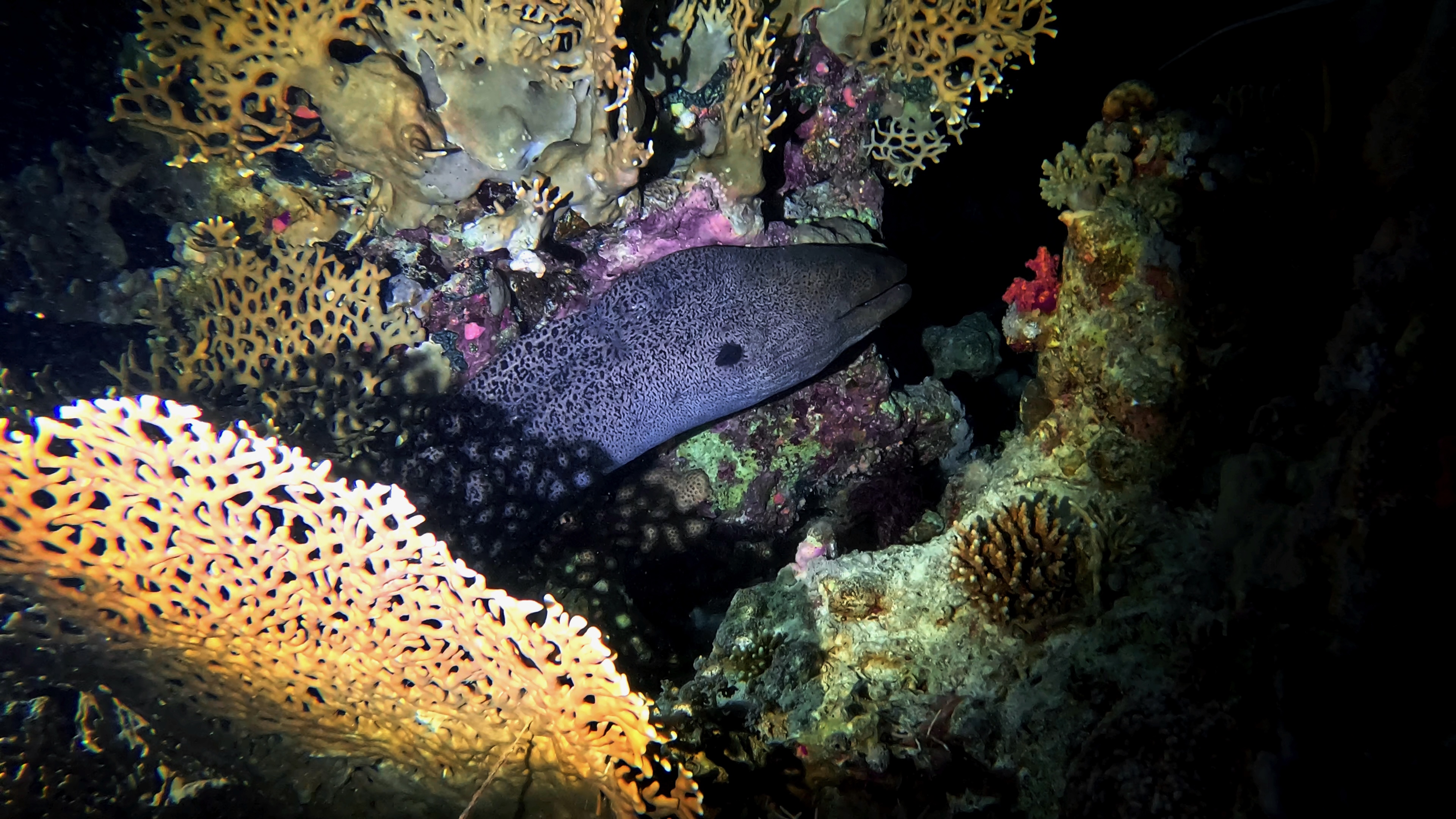
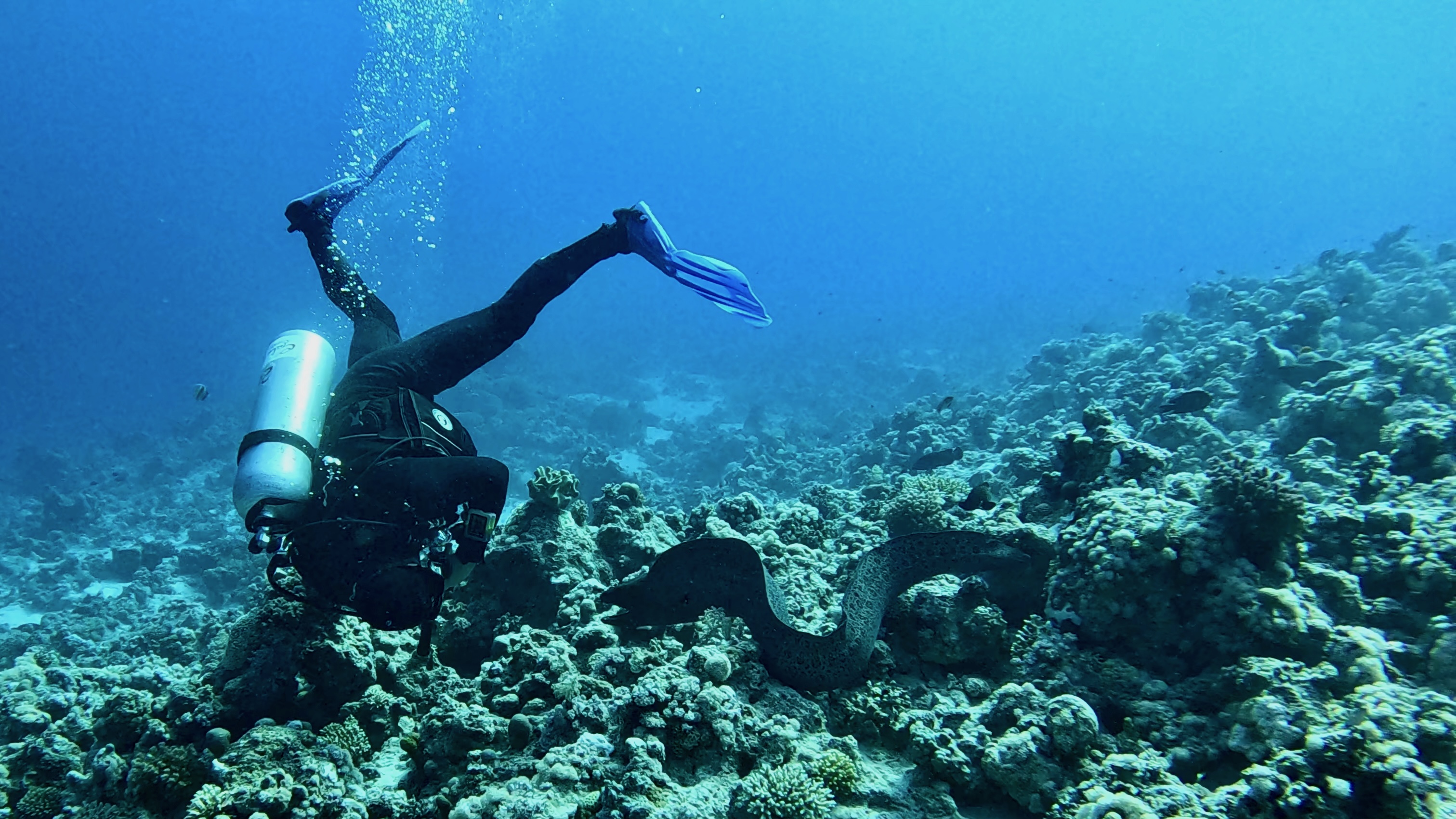
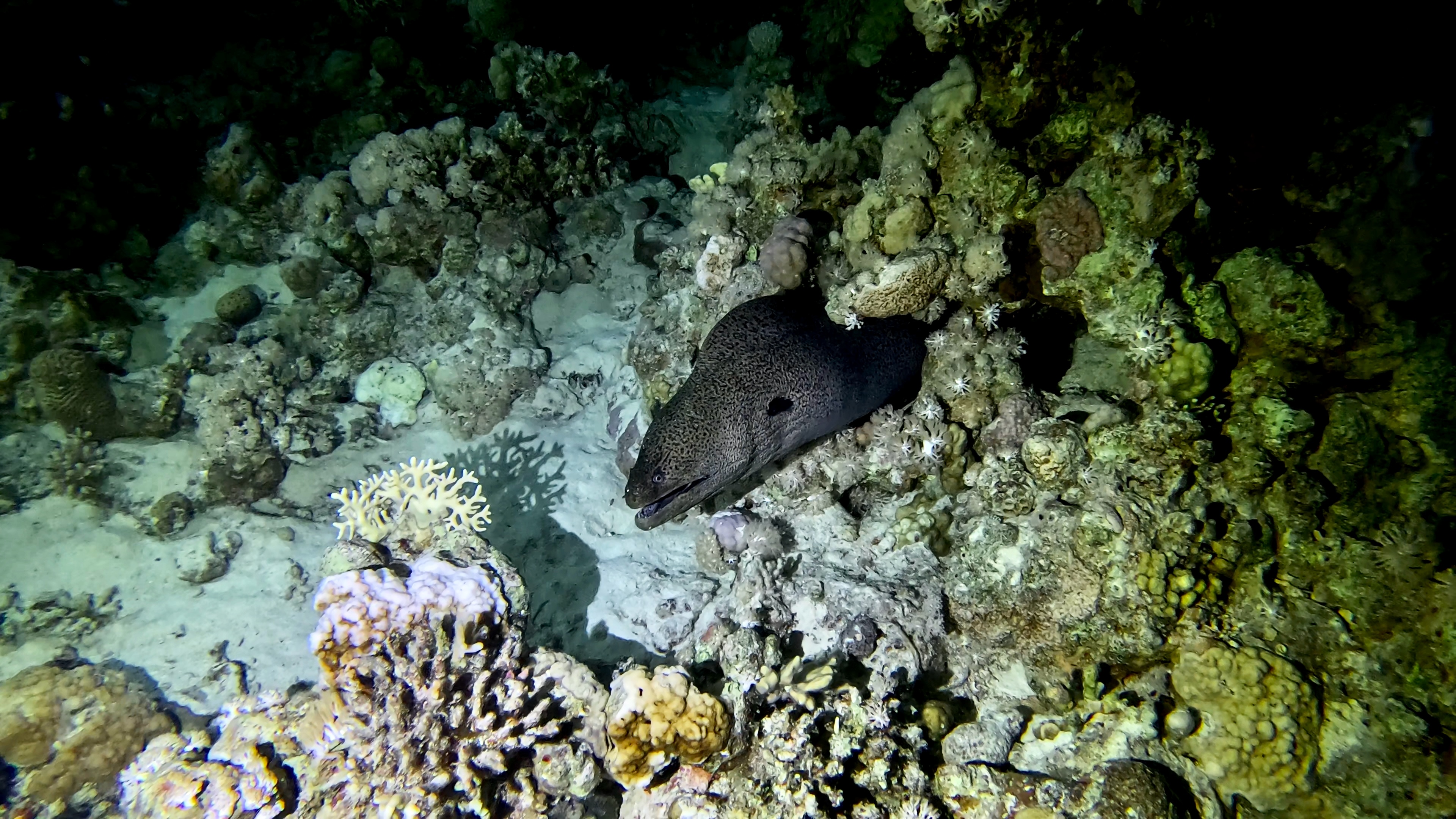
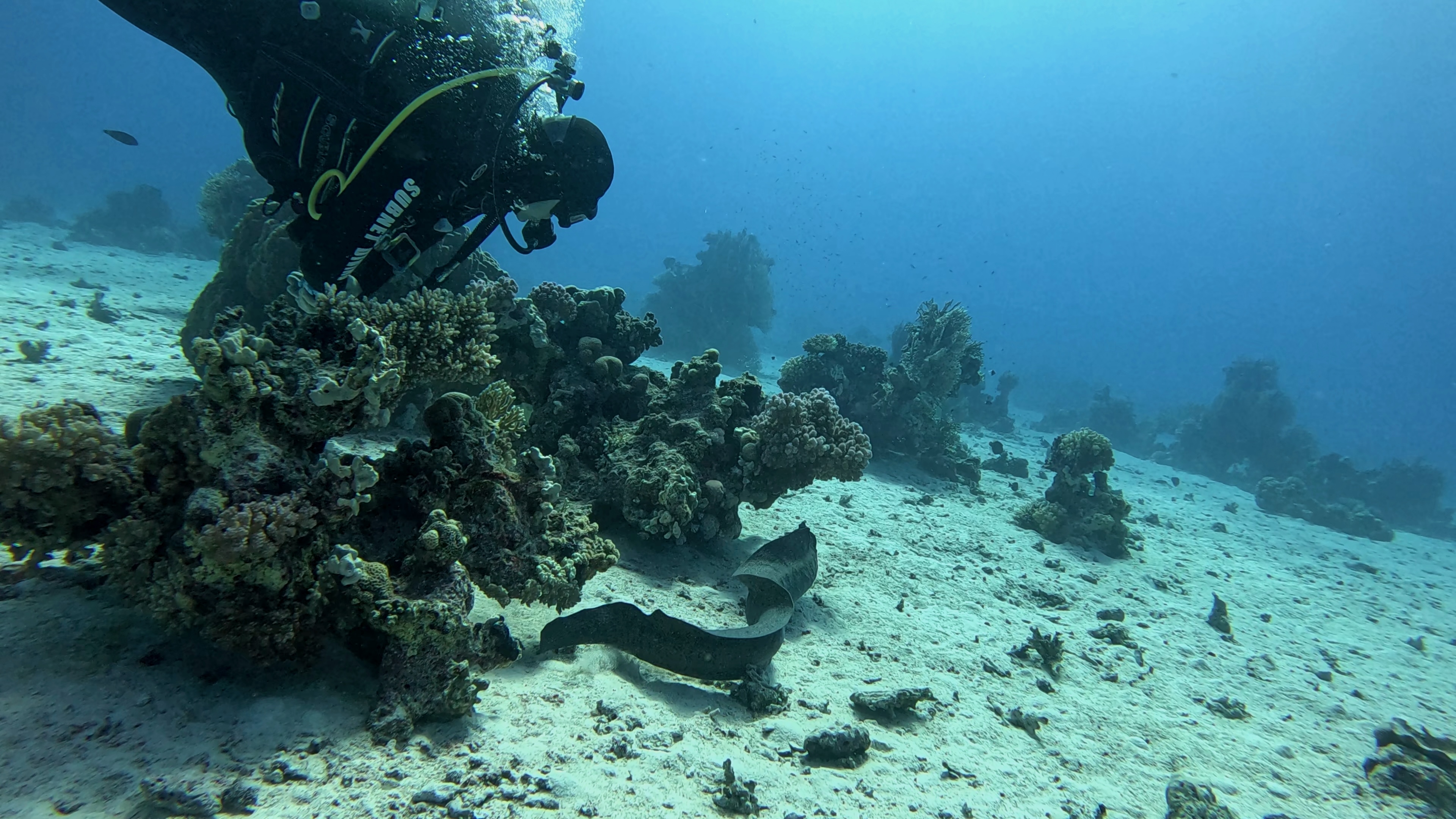
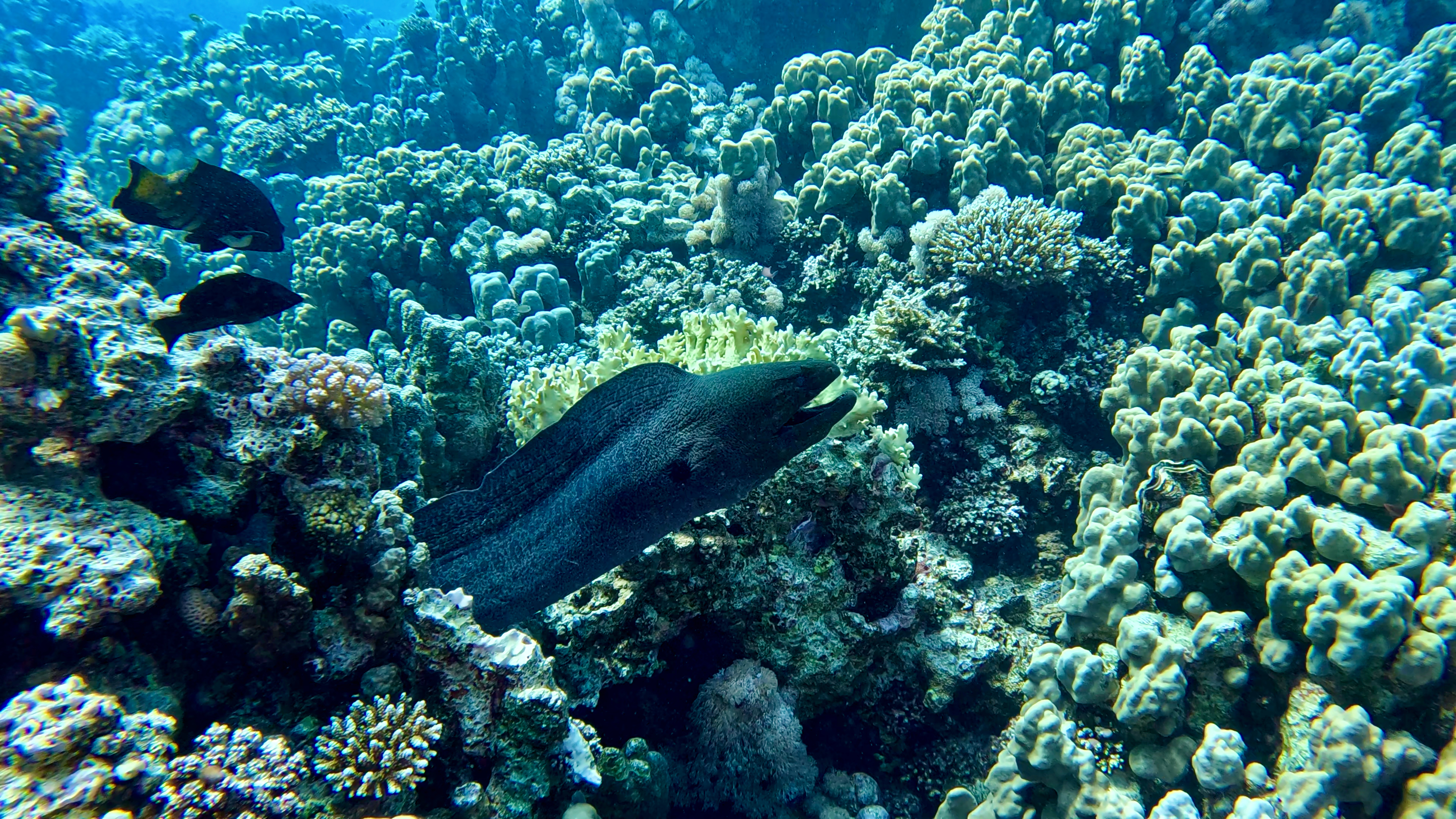
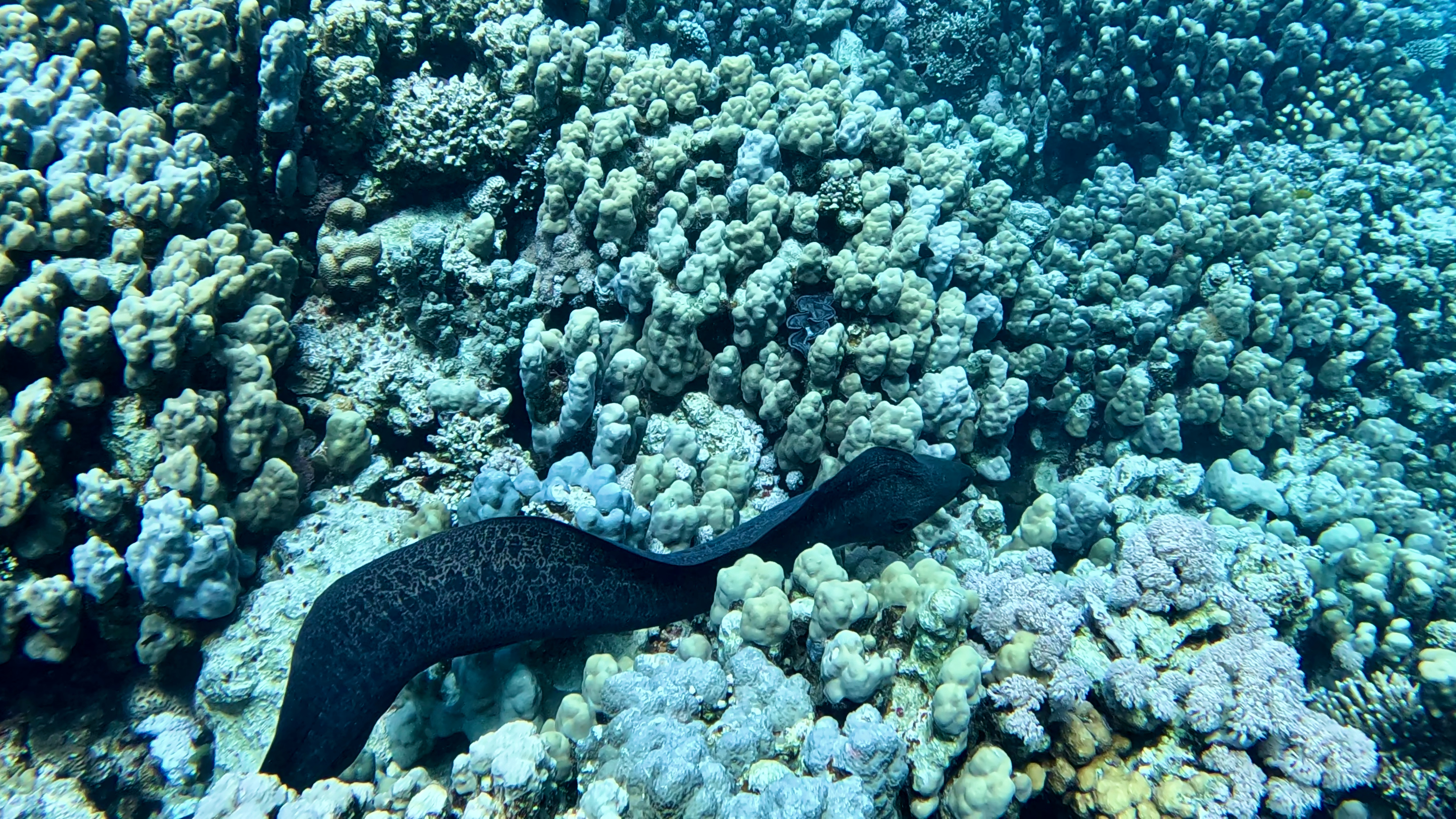
SINGJAW WRASSE FISH
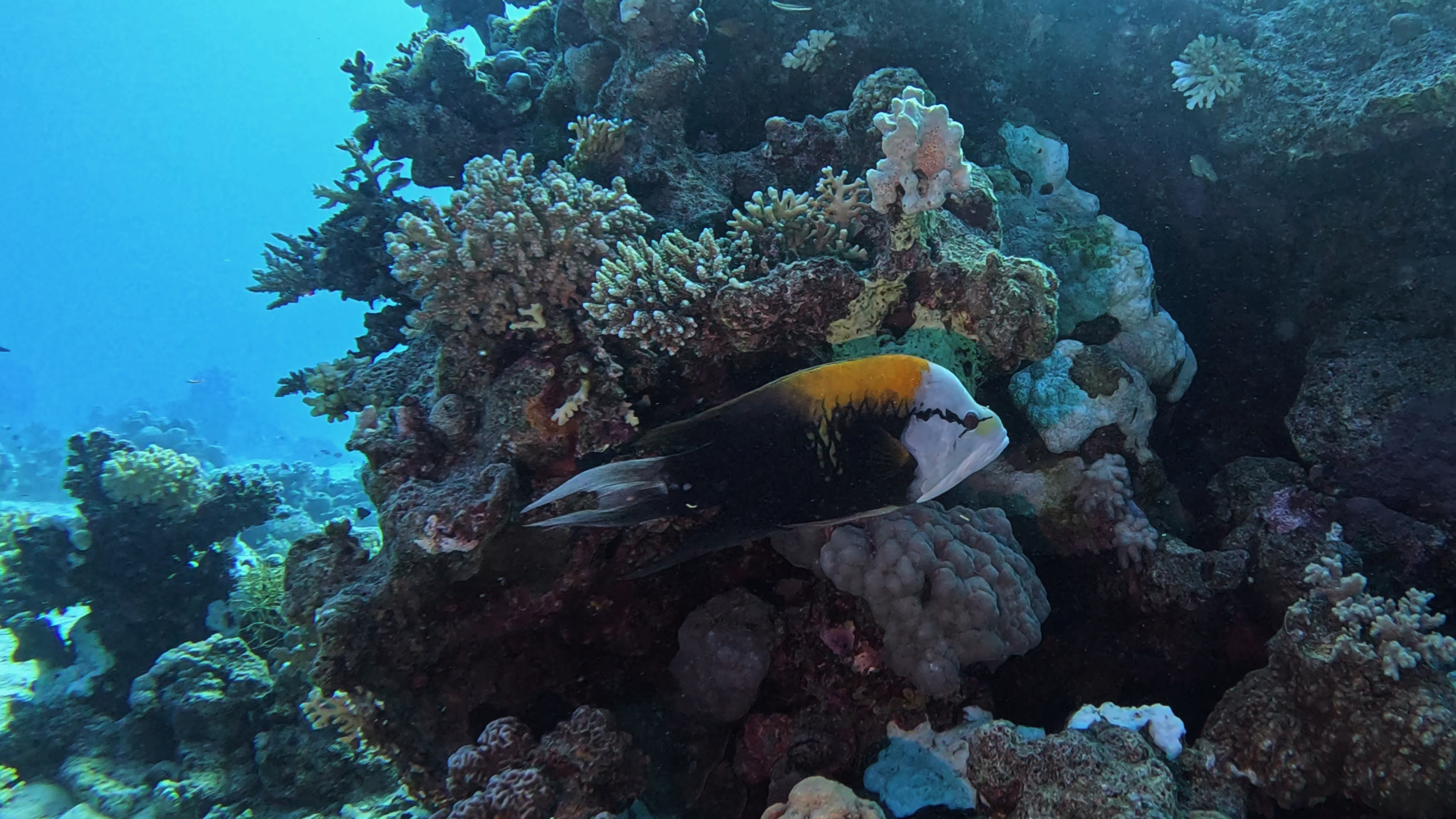
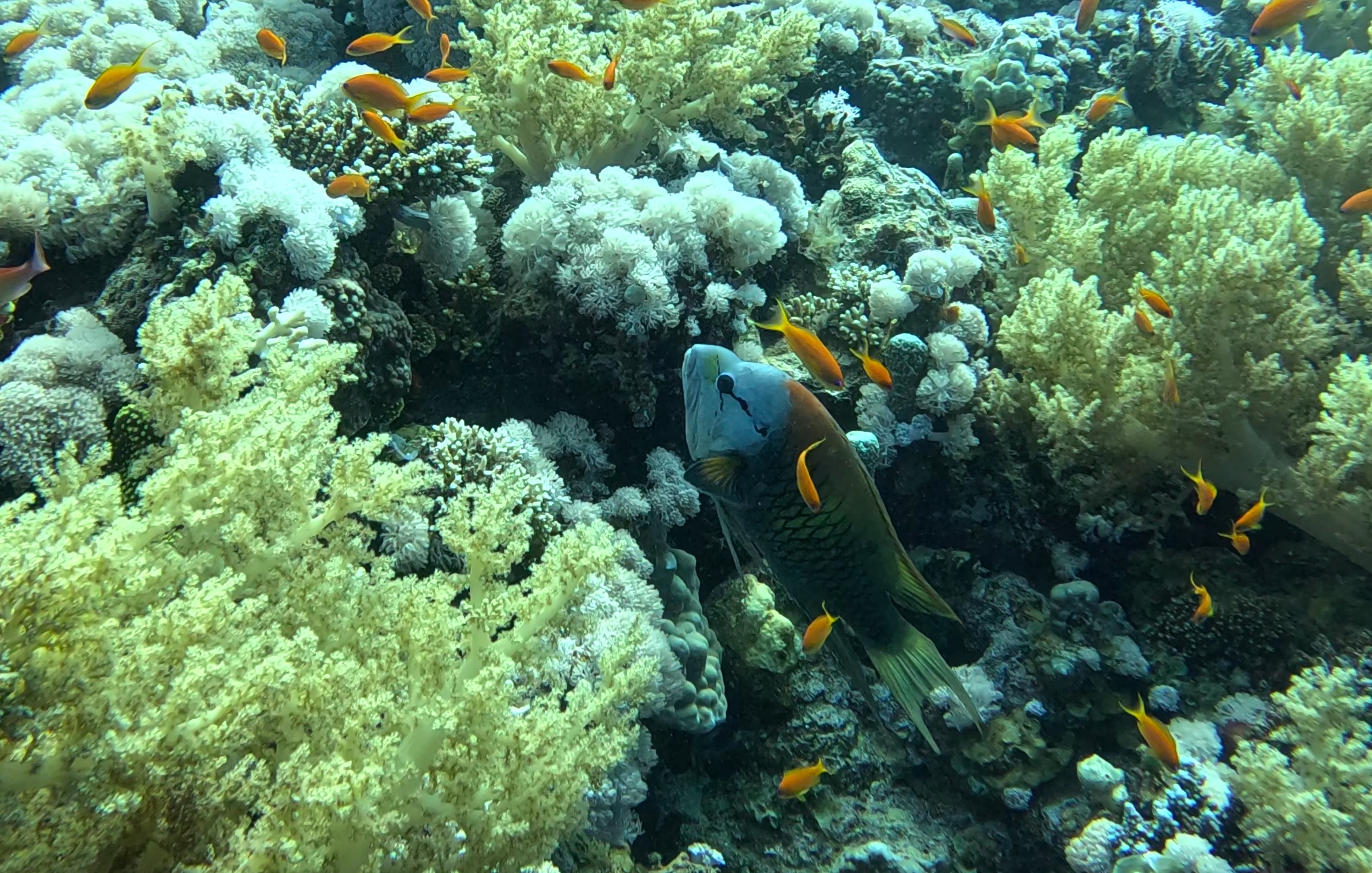
GIANT SWEETLIPS
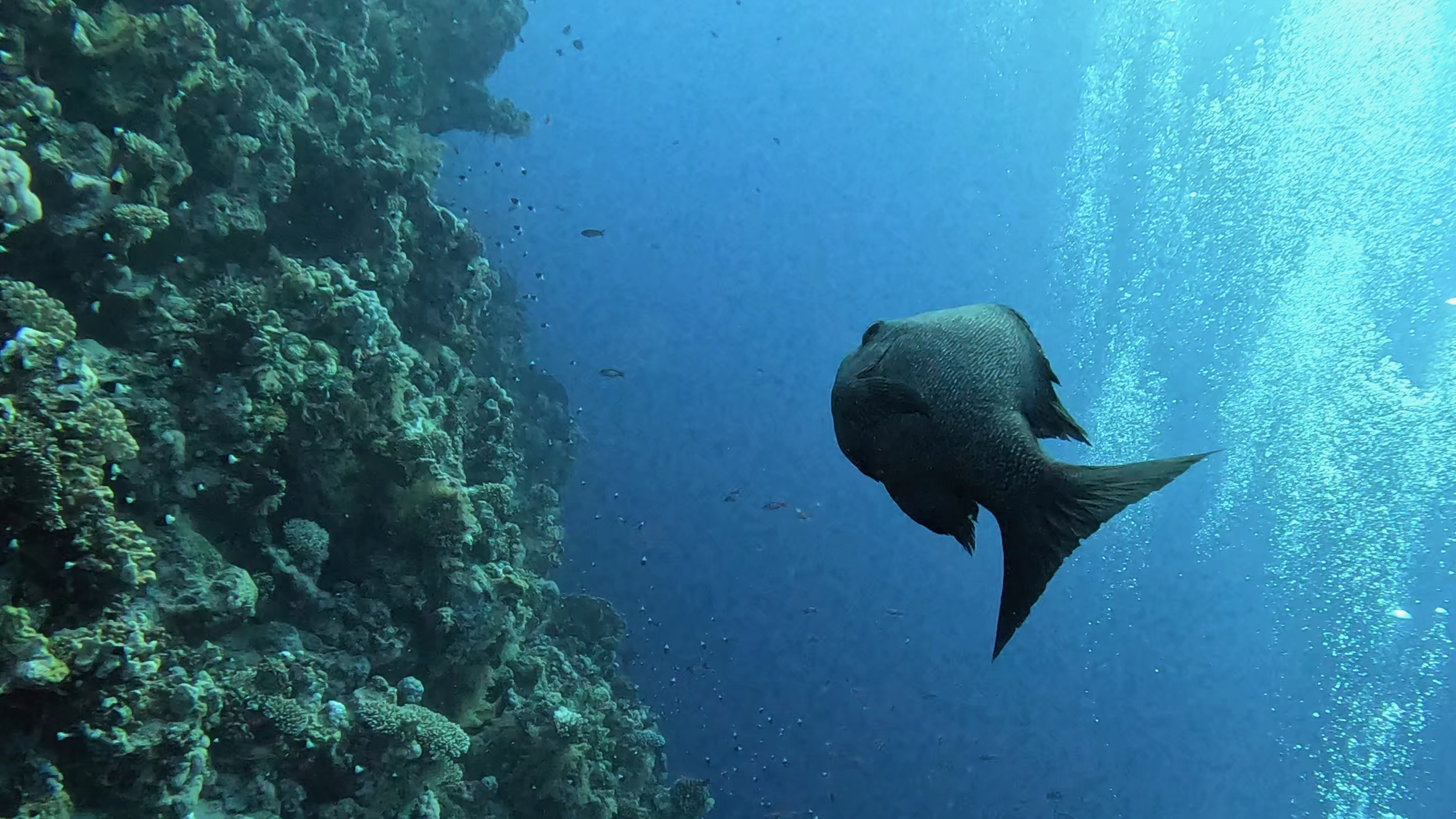
DAHAB BROOMTAIL WRASSE FISH foto Aleš Sulič
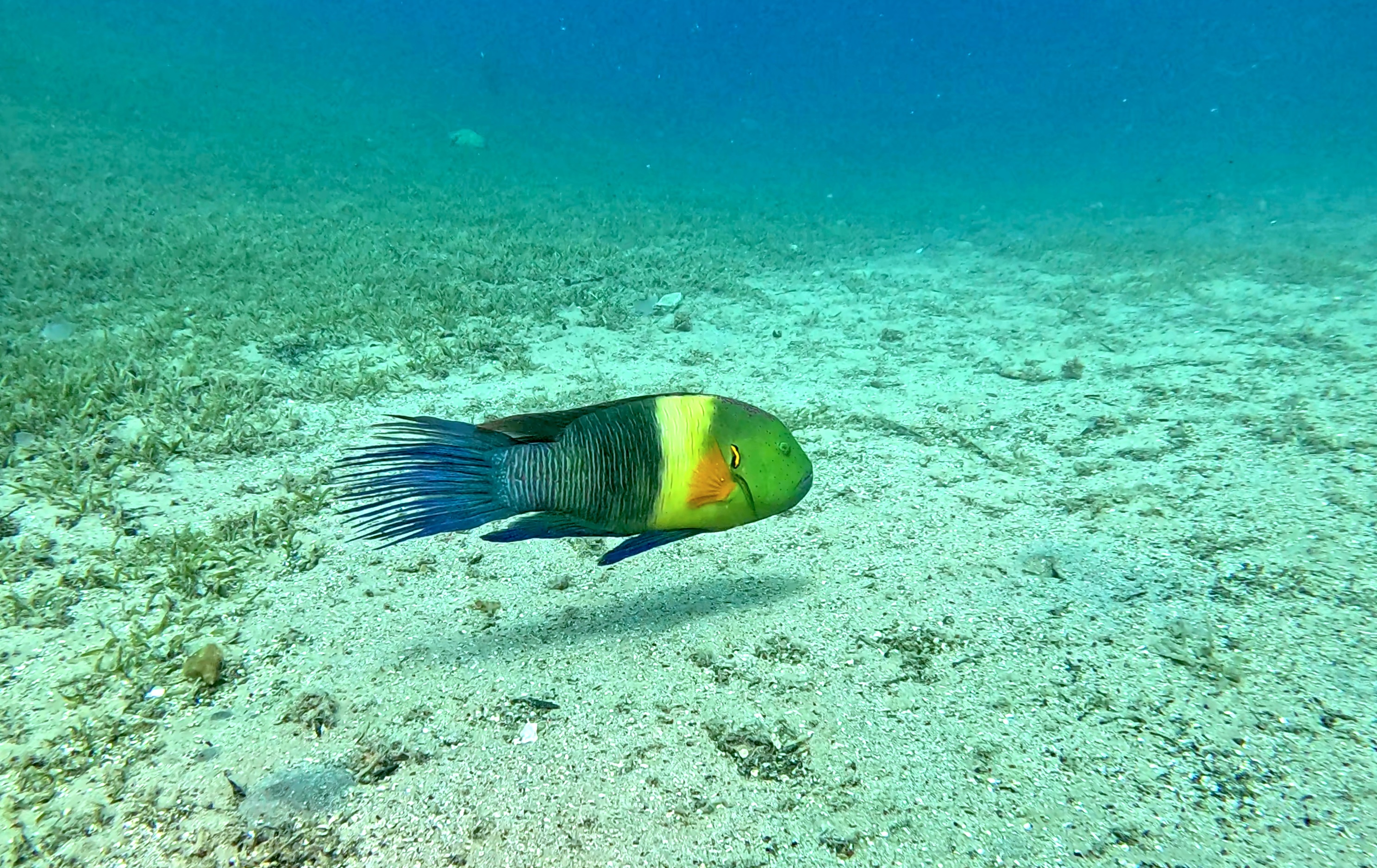
DAHAB BROWN MARBLED GROUPER foto Aleš Sulič
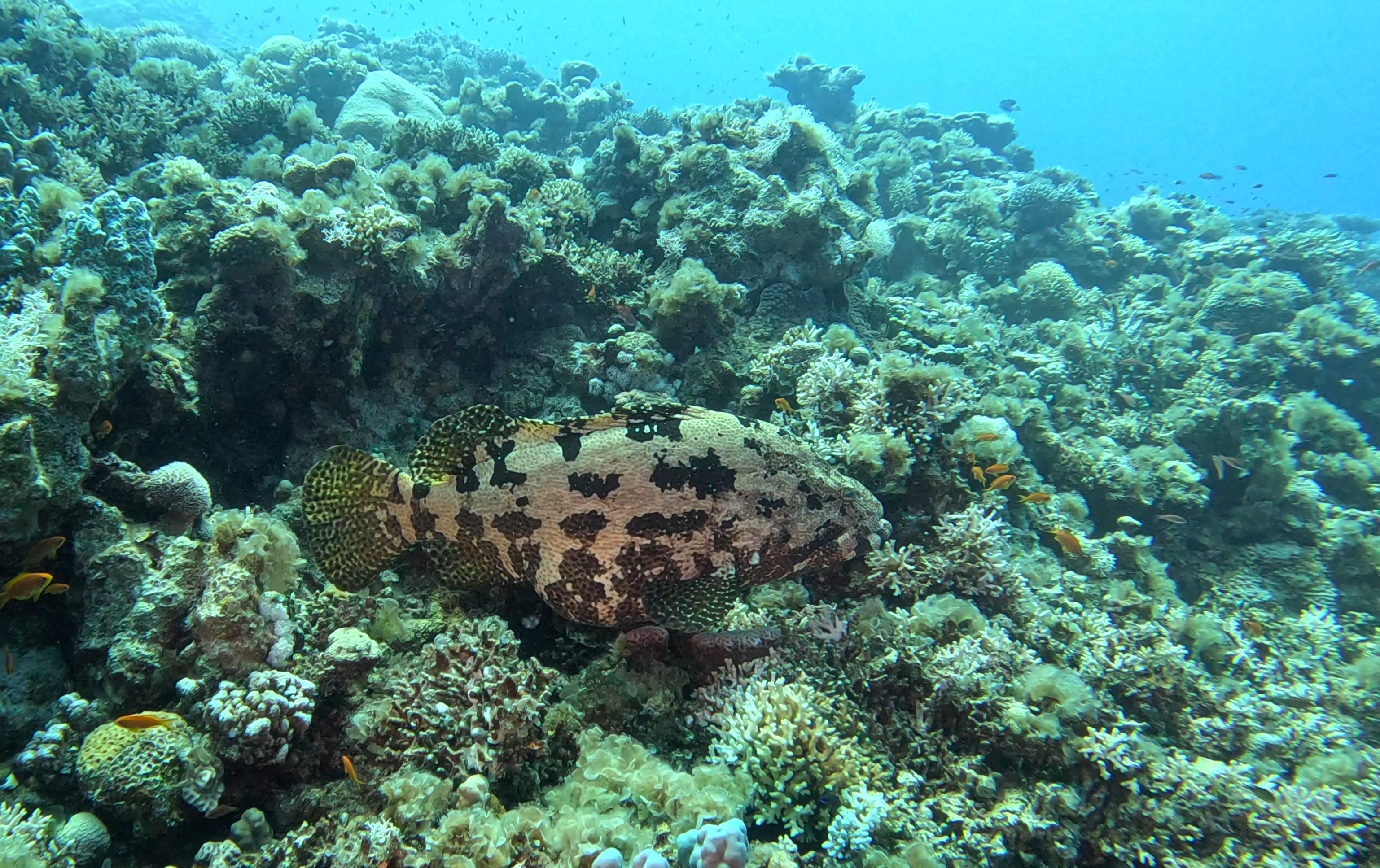
DAHAB LEEF LIZARDFISH photo Aleš Sulič
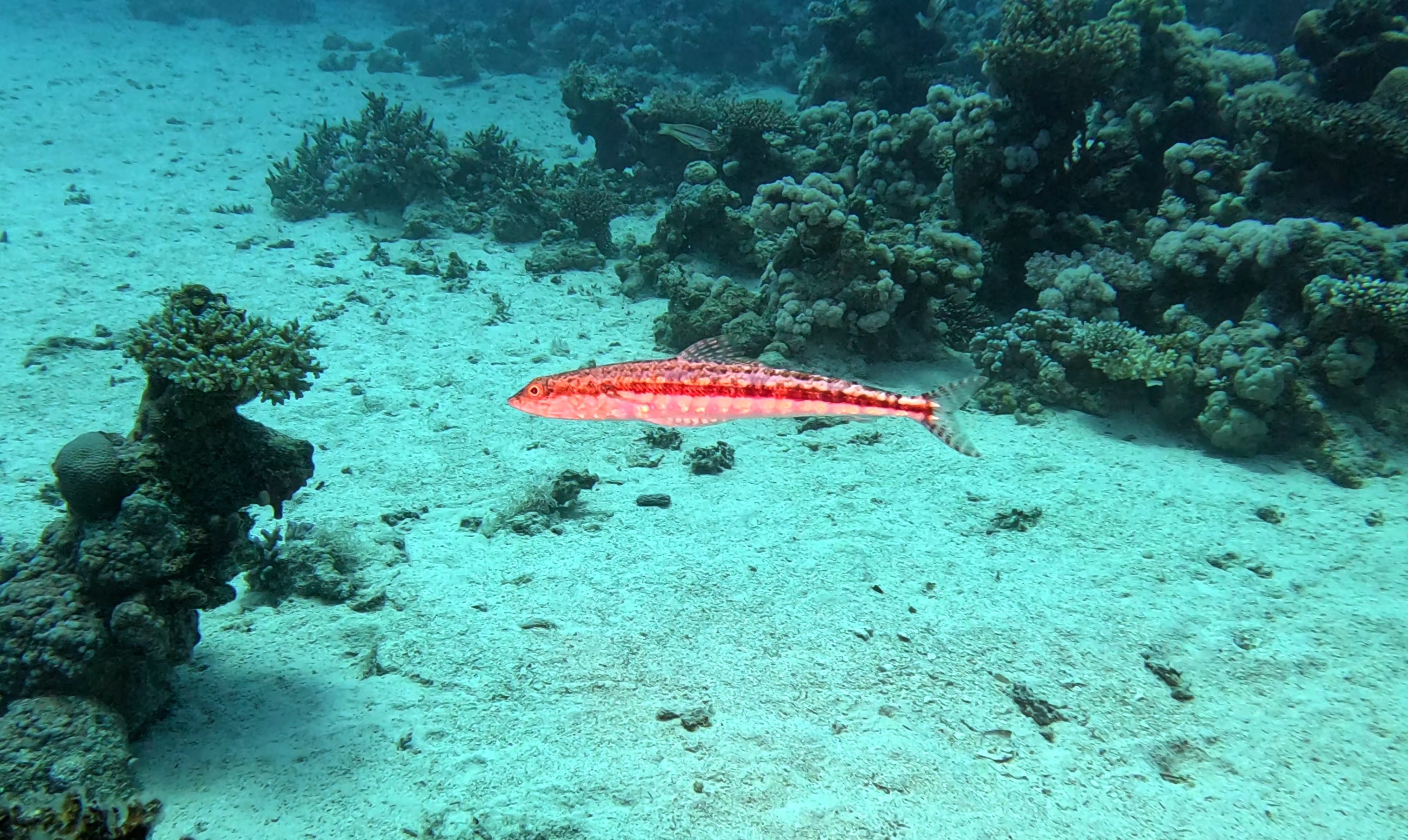
DAHAB LEOPARD SEA CUCUMBER foto Aleš Sulič
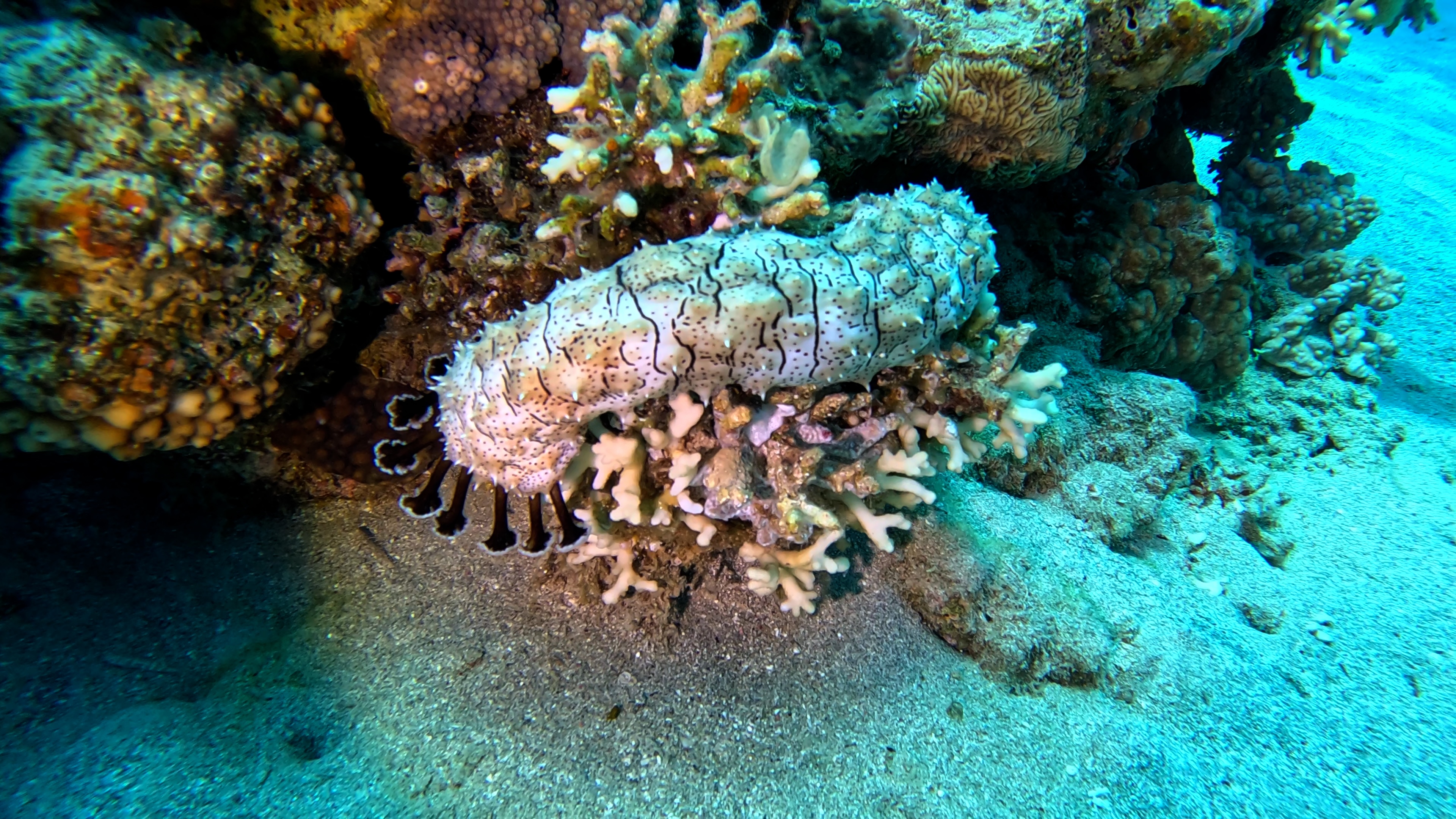
DAHAB SNOEFLAKE MORAY foto Aleš Sulič
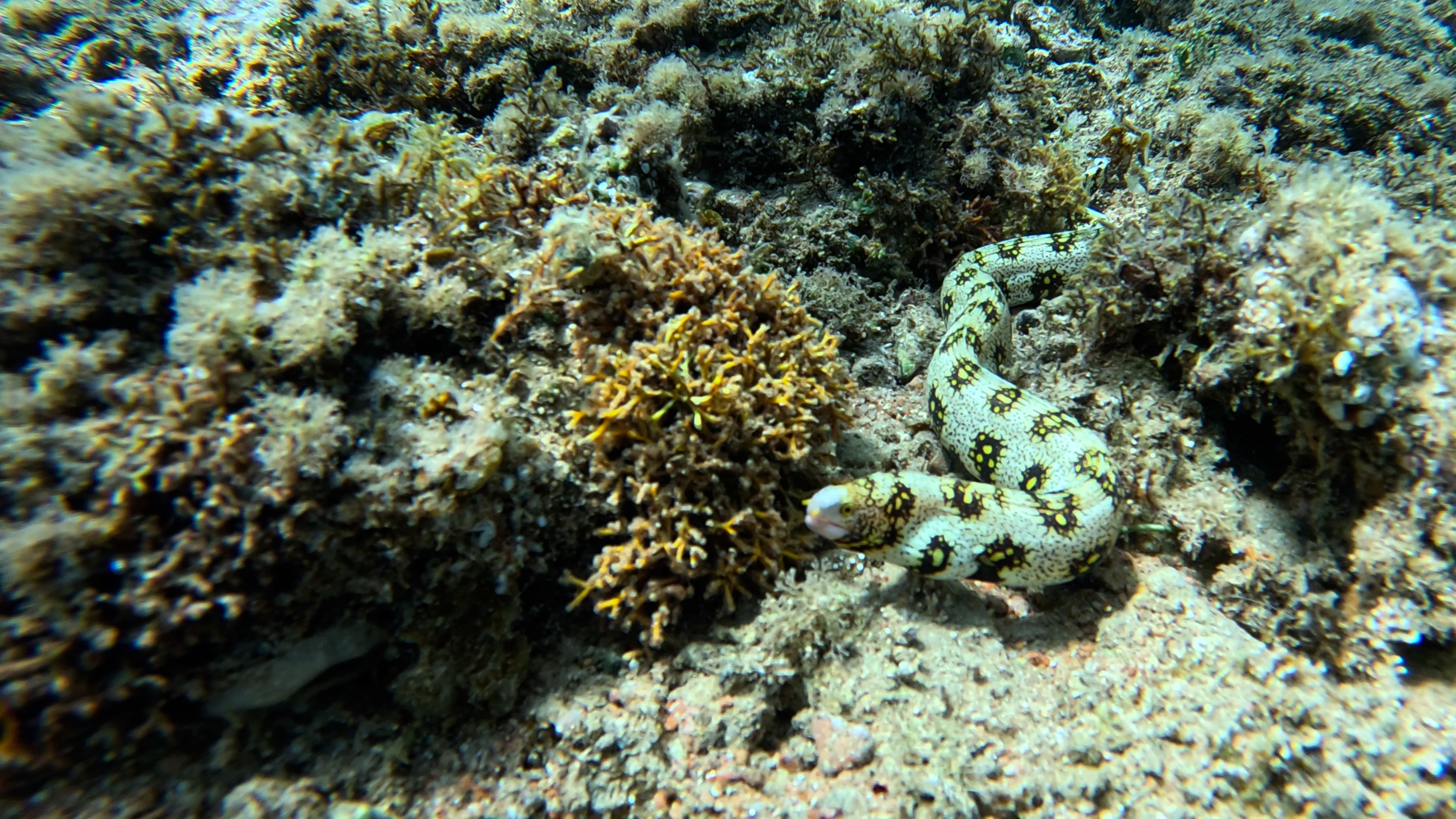
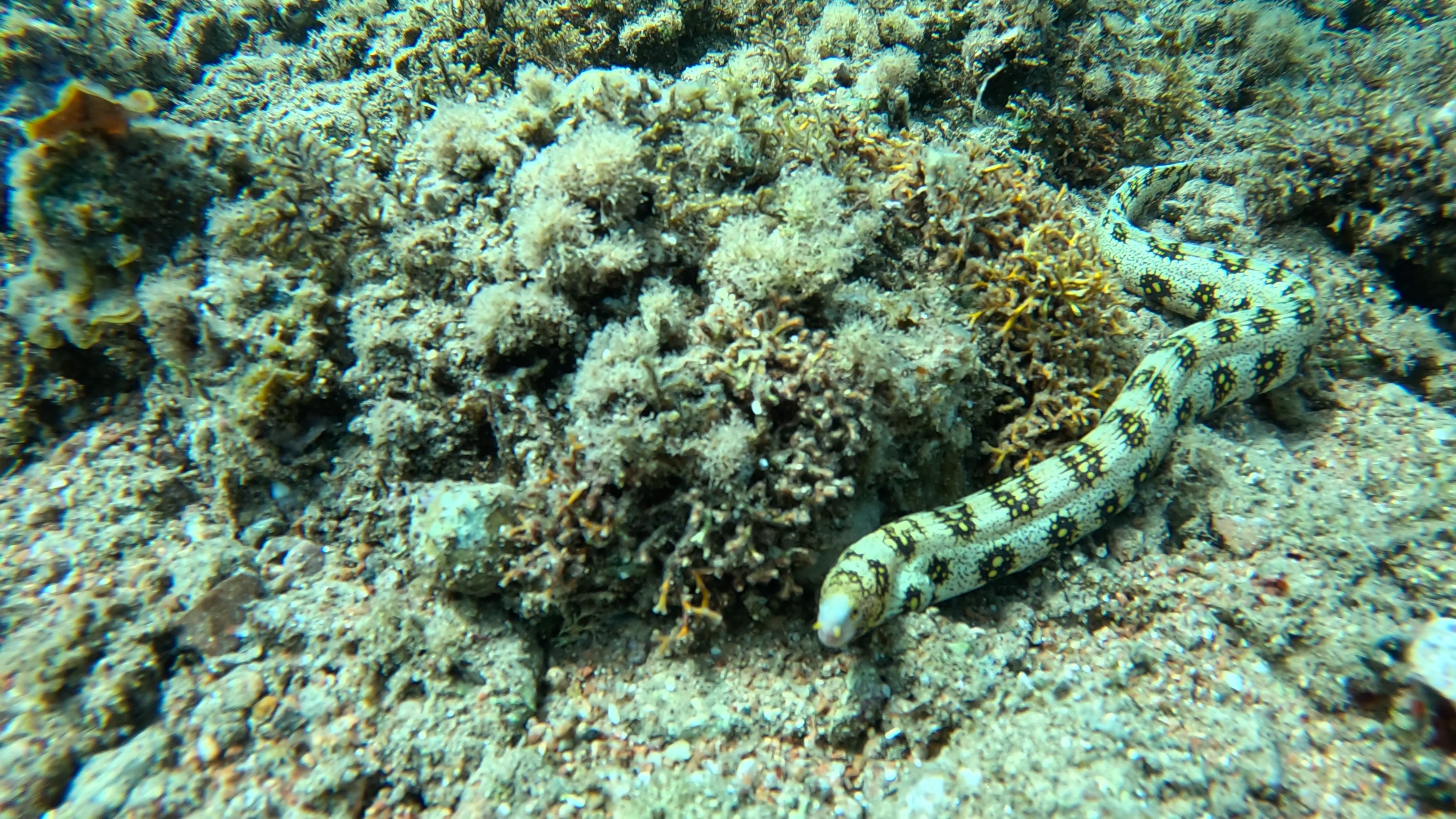
DAHAB SPANGLED EMPEROR foto Aleš Sulič
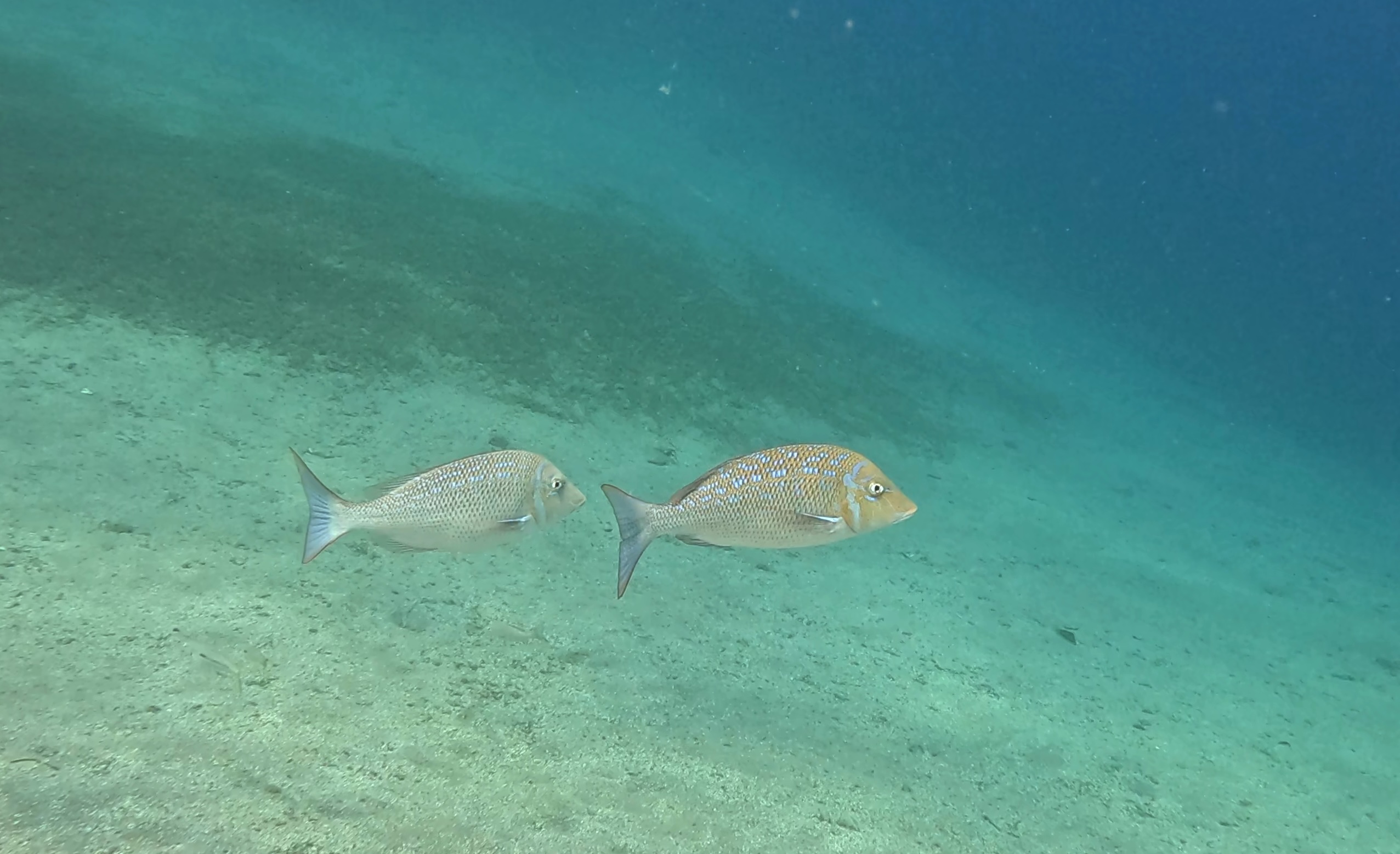
DAHAB STARRY MORAY foto Aleš Sulič
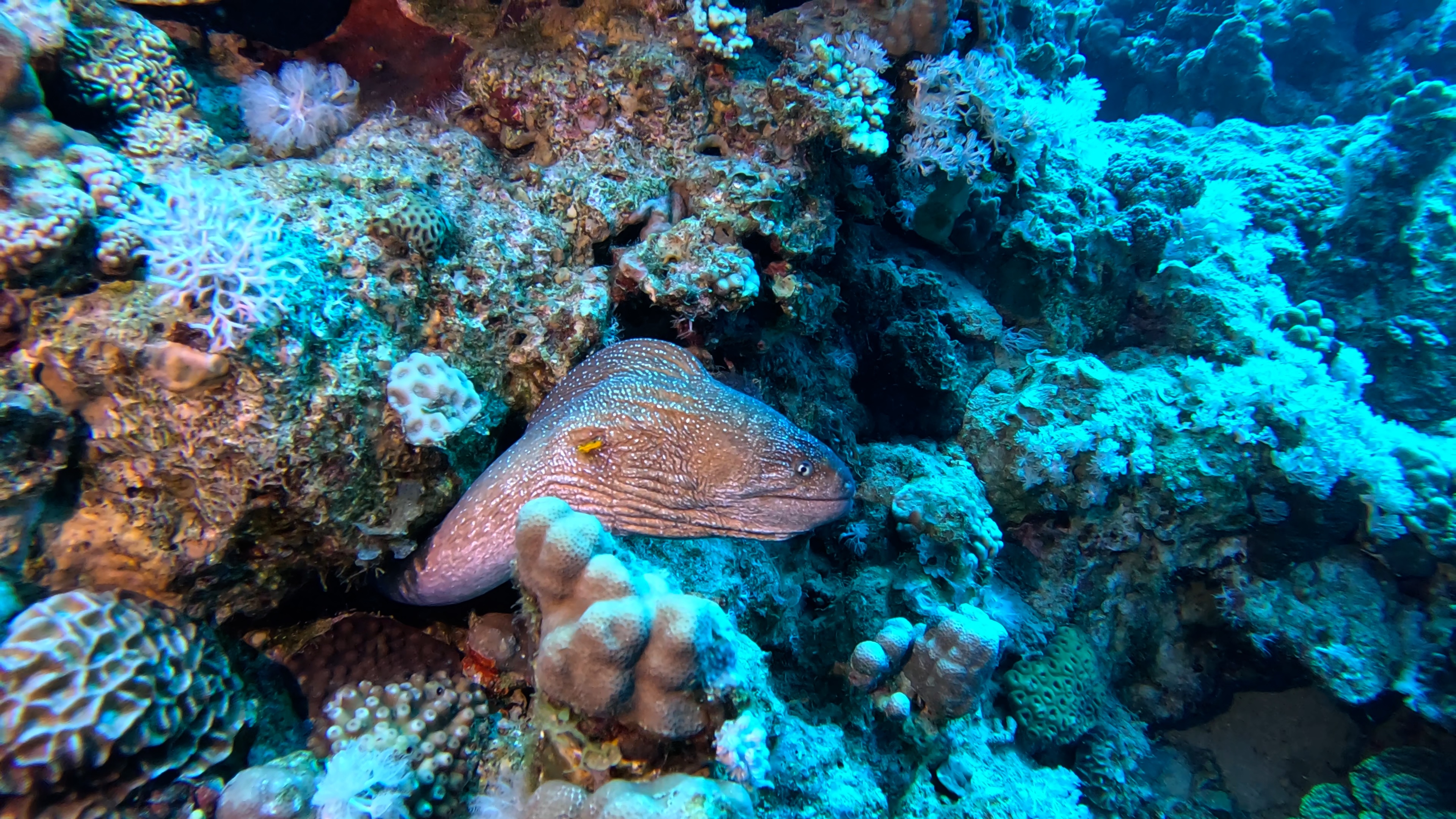
DAHAB THREADFIN BUTTERFLY FISH foto Aleš Sulič
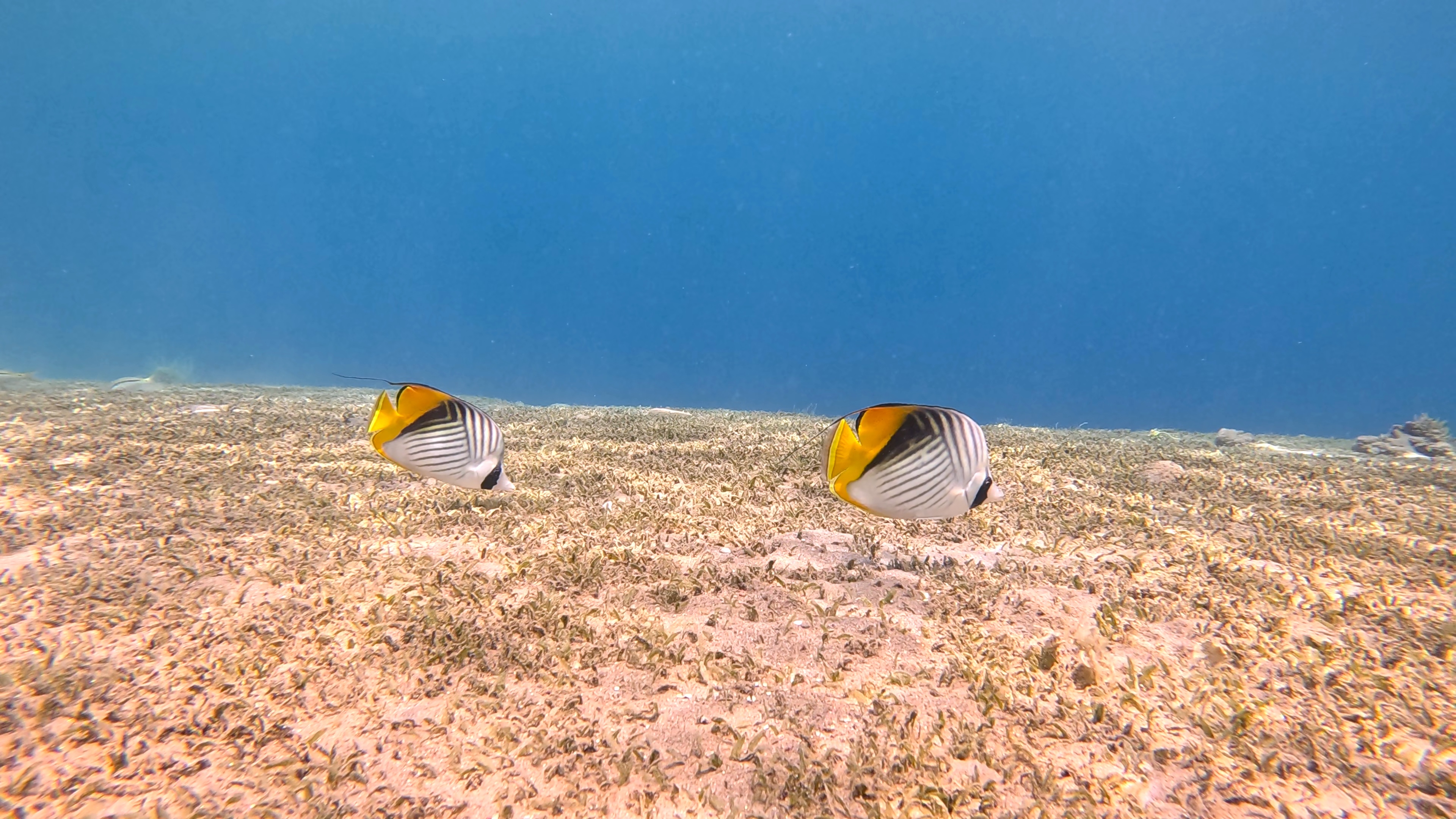
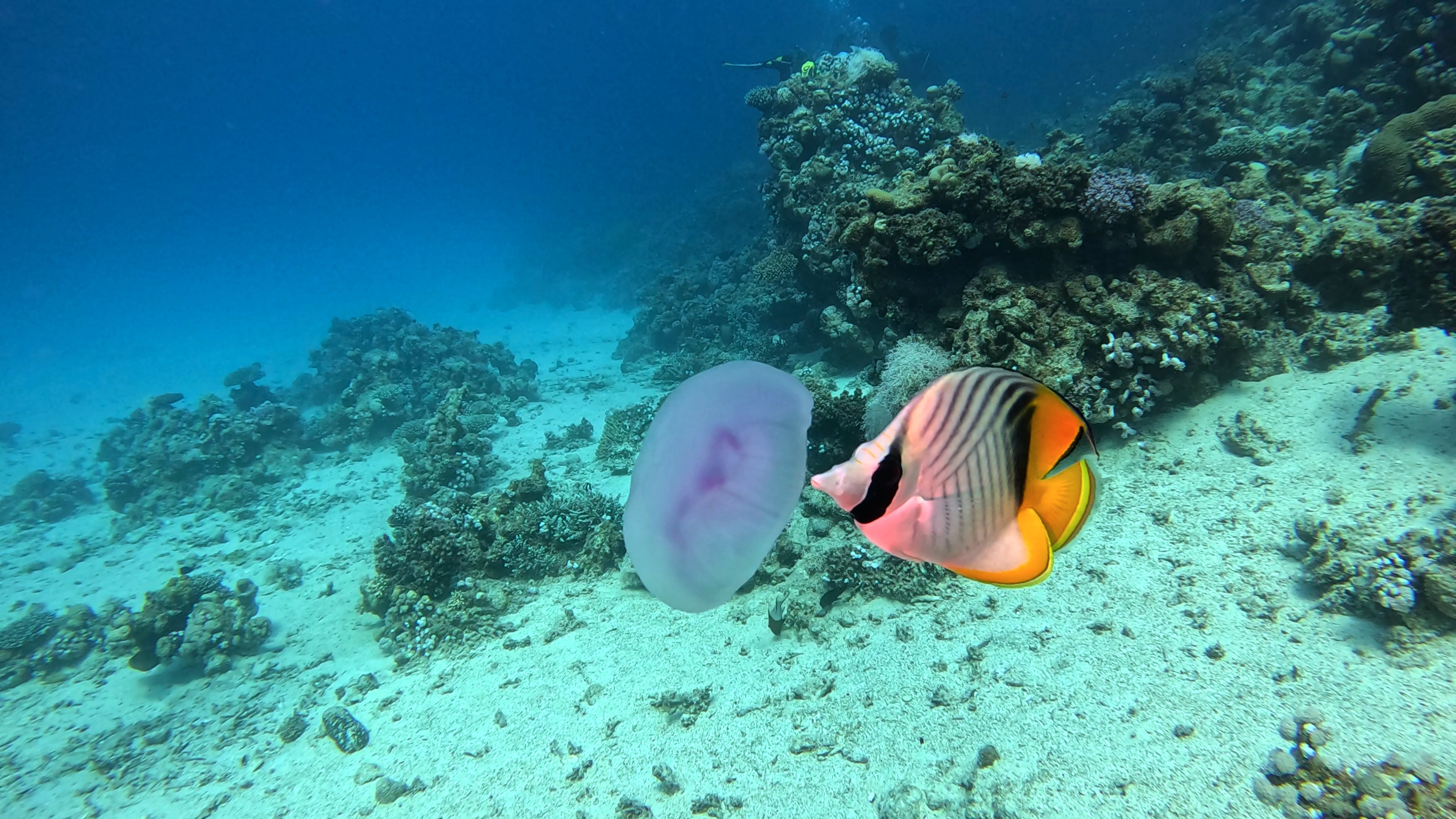
DAHAB white ramora fish FOTO ALEŠ SULIČ
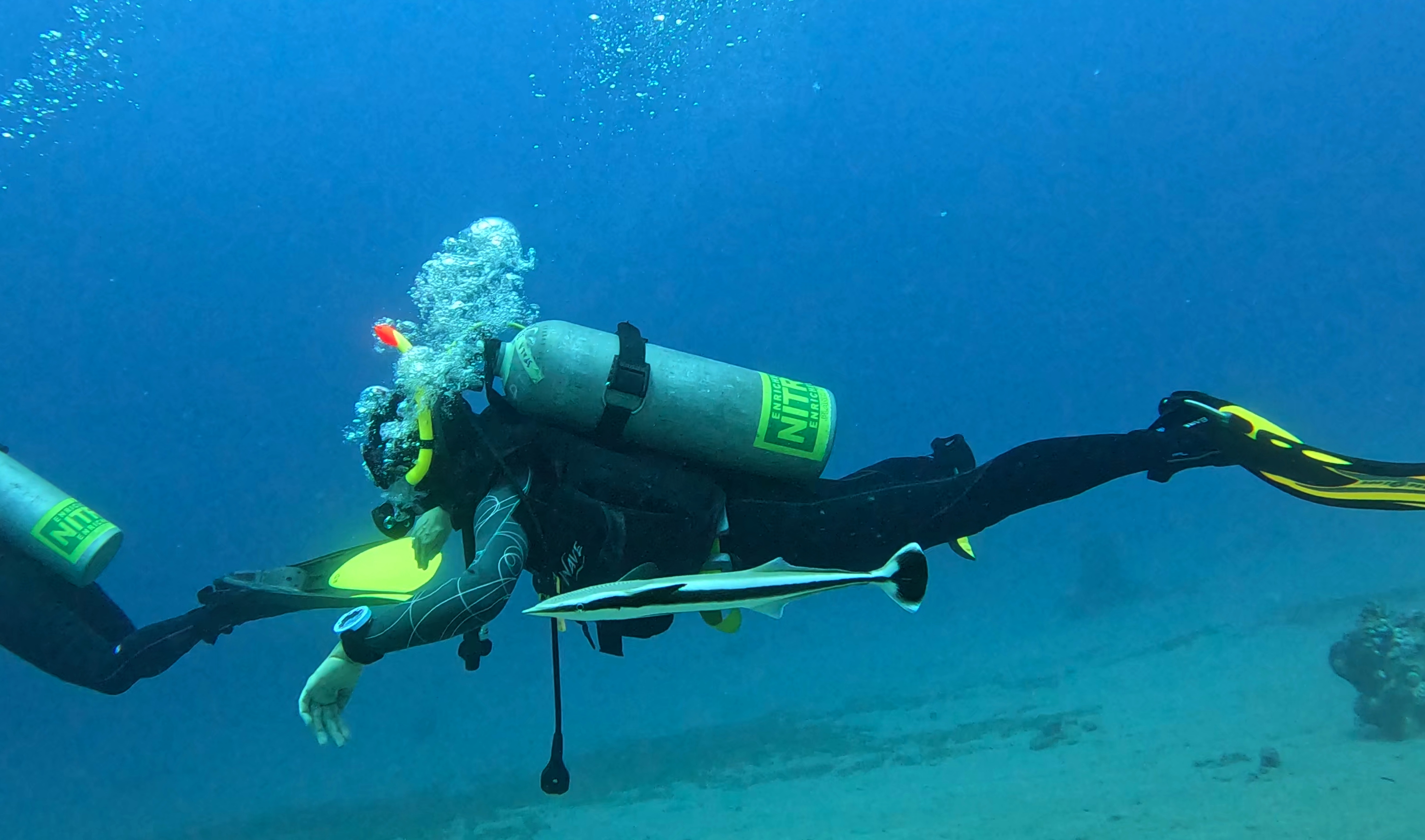
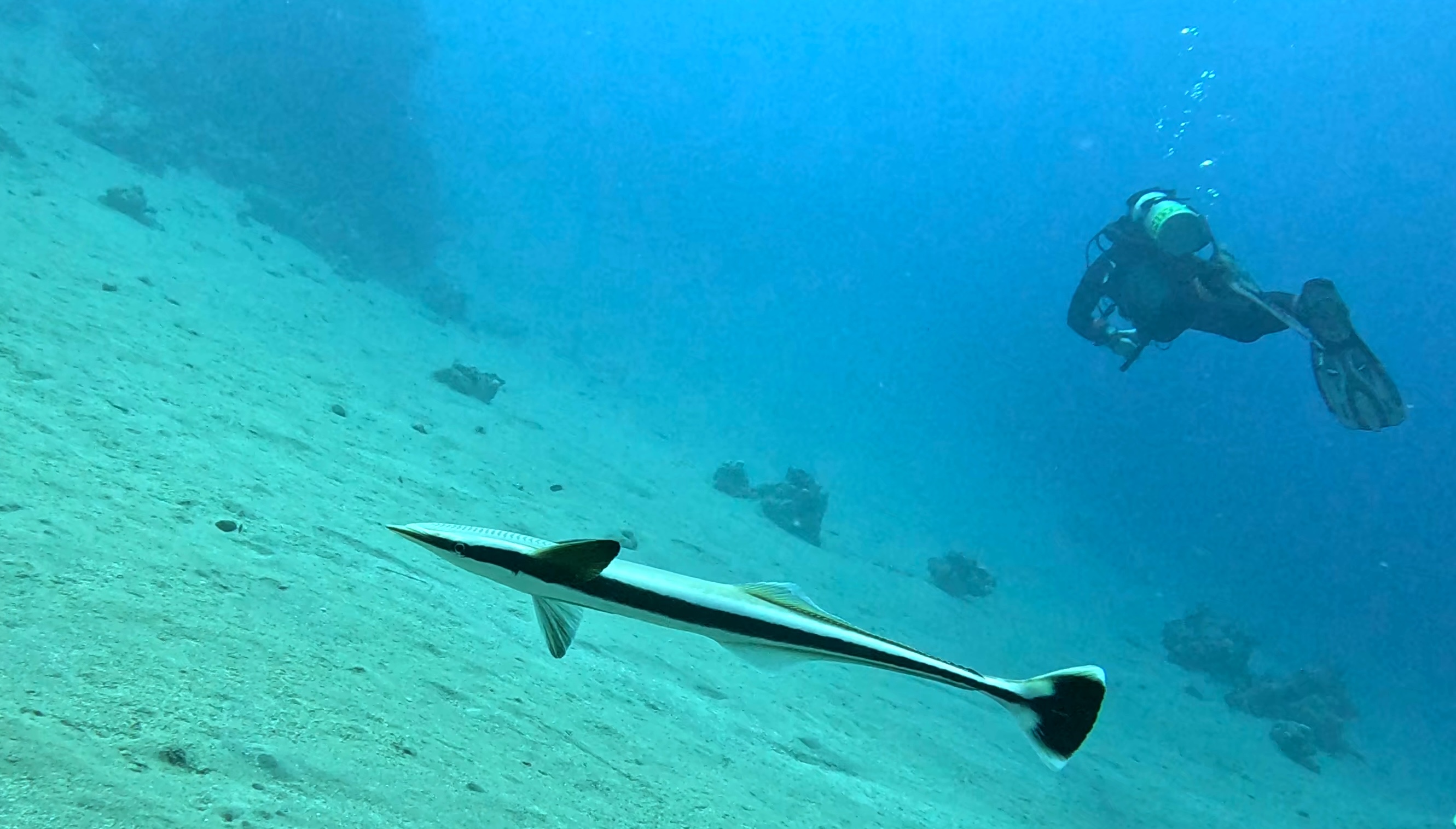
RED BREASTED WRASSE FISH DAHAB DIVING FOTO ALEŠ SULIČ
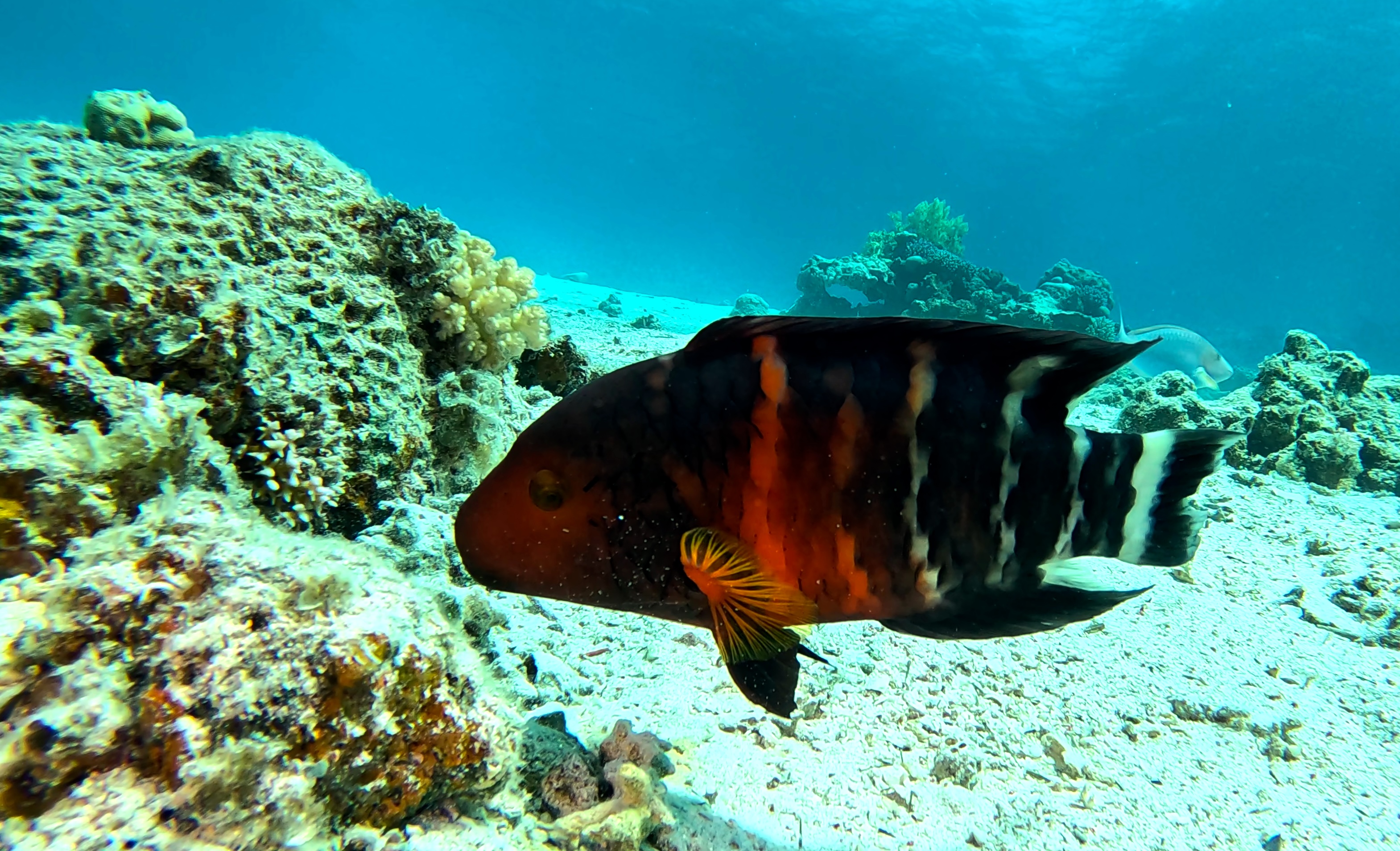
YELLOWTAIL WRASSE FISH foto Ales Sulic
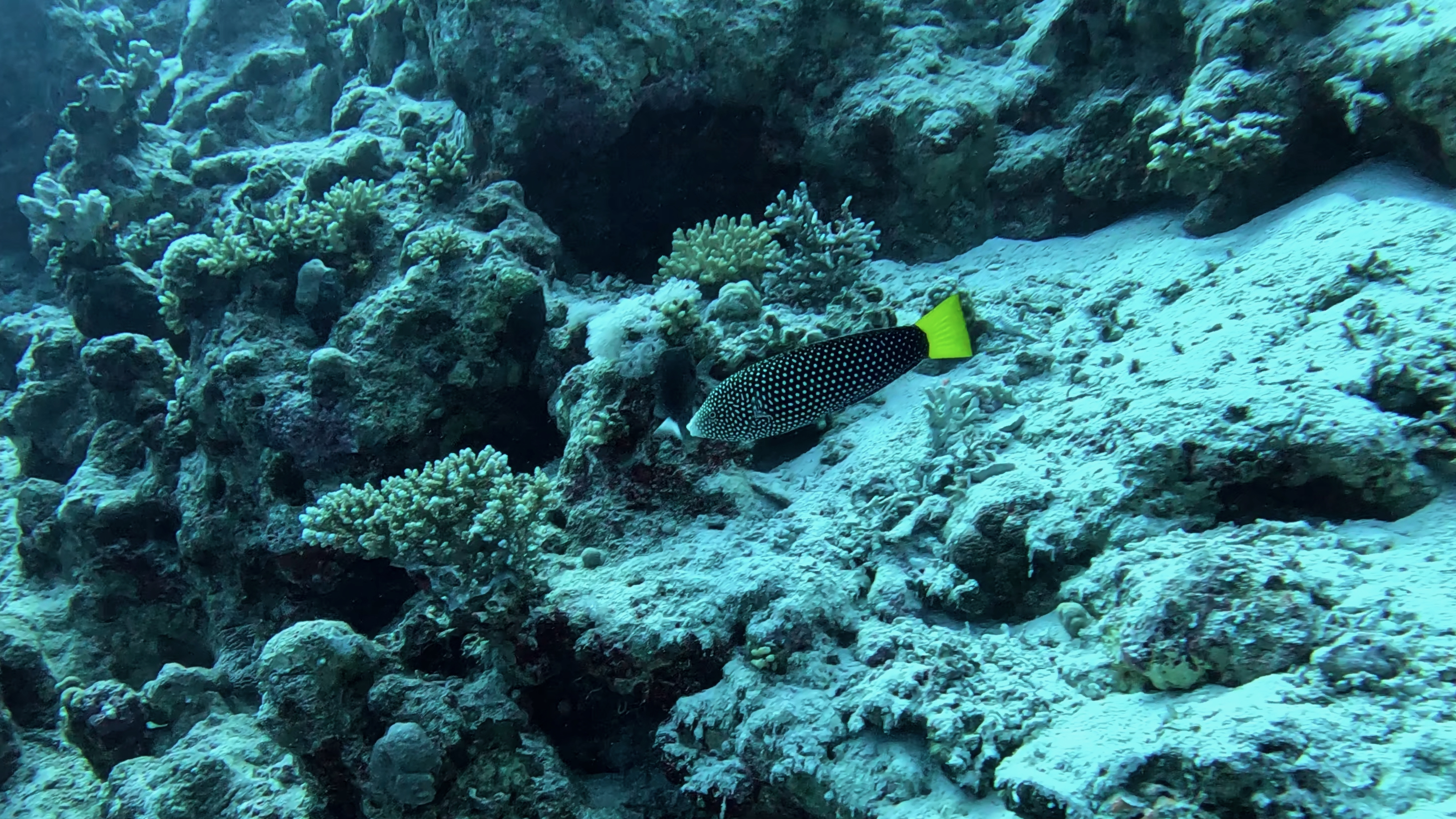
MACOLOR BLACK AND WHITE SNAPPER Night dive 2025 Red Sea foto Ales Sulic
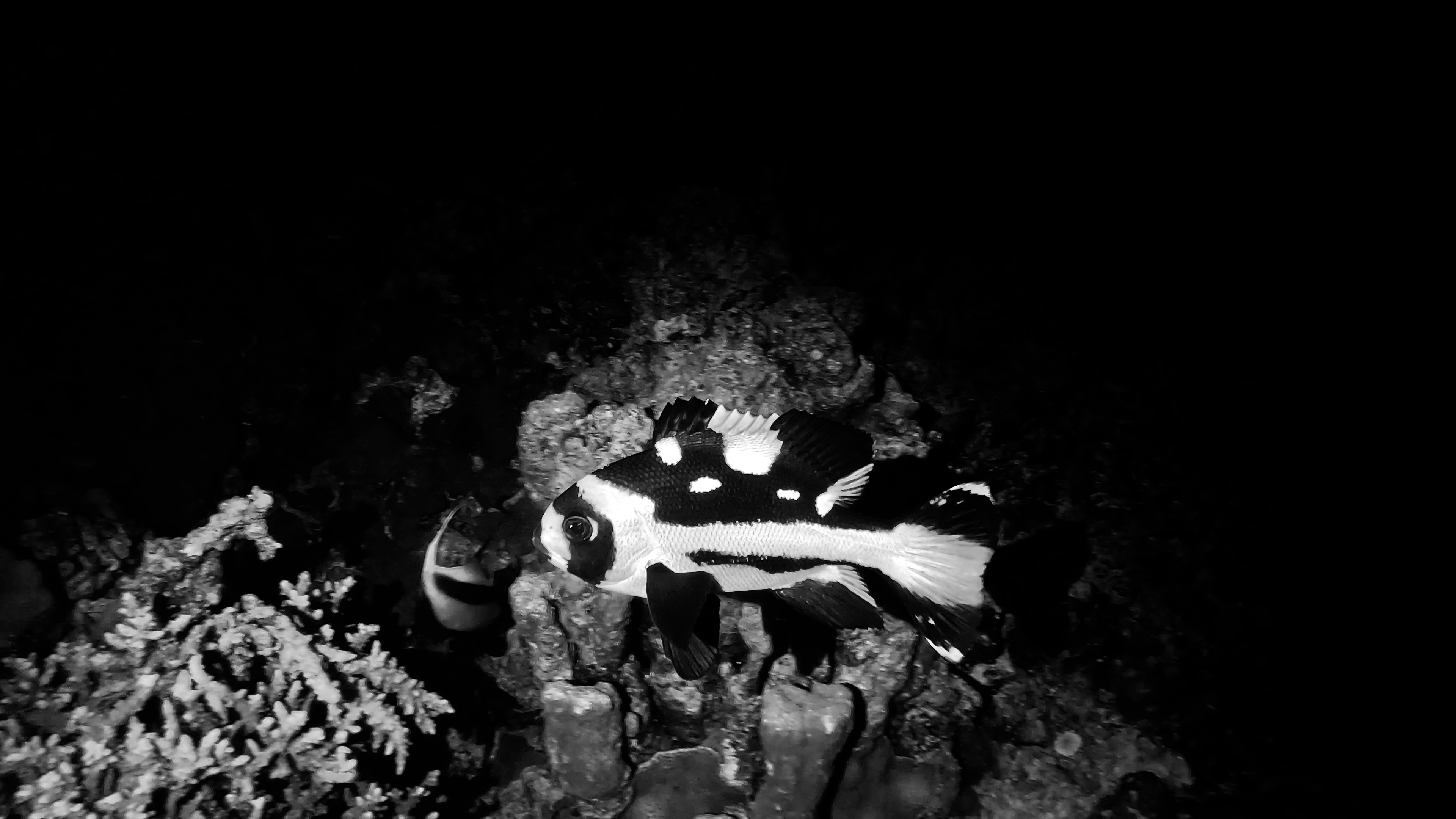
foto by Aleš Sulič All rights reserved 2025 ©
 svet pod vodo – Galerija podvodnih slik – Sladkovodne in morske ribe slike – Tropical fish gallery photos